
Why Your Toilet Keeps Clogging
If your toilet clogs again and again, the problem is usually non-flushables, a weak flush, a partial blockage past the bowl, or a vent issue. Here’s how to spot the cause and what to do next.
Nothing messes with a peaceful morning like a toilet that clogs, you clear it, and then it clogs again two days later like it is holding a grudge.
When a clog keeps coming back, it is rarely “bad luck.” In my experience, repeat clogs usually fall into one of four buckets: (1) something that should not be flushed, (2) a weak flush that cannot move normal waste, (3) a partial blockage farther down the line that keeps catching new material, or (4) a venting problem that messes with the drain flow. There are also less-common but very real culprits like roots, a belly in the line, a broken pipe, or just a toilet model that is a chronic underperformer. Let’s sort yours out.
Before you start
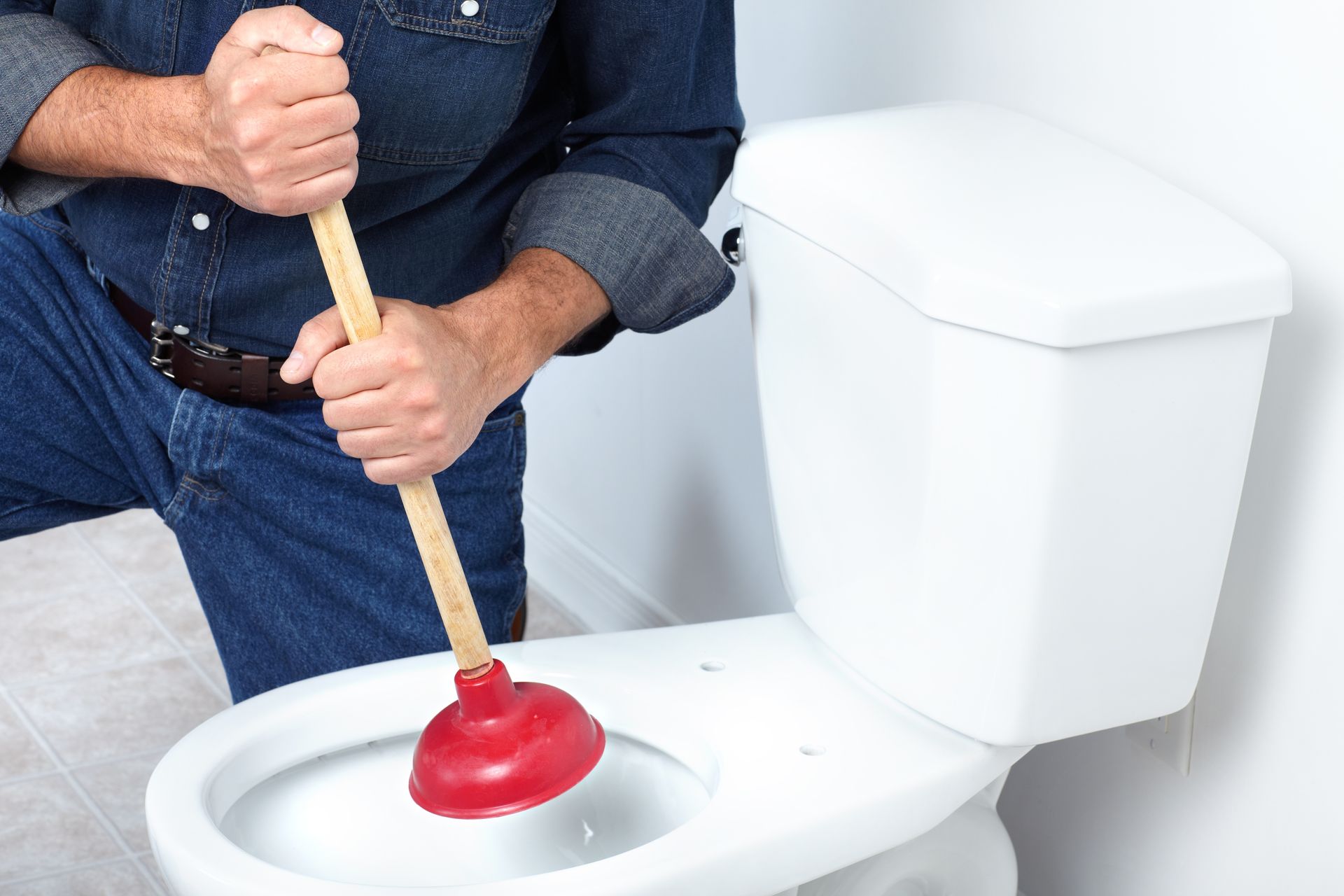
A repeat clog gets messy fast if you rush it. A couple quick moves make this a lot less stressful.
- Know the shutoff valve location. It is usually on the wall behind the toilet. If the bowl is rising, shut the valve off before you do anything else.
- Do not keep flushing to “see if it goes.” That is how you earn a cleanup.
- Protect the floor. Old towels or a small tray under the front of the toilet helps.
- Gloves are not optional. Also keep a small bucket nearby.
What repeat clogging usually means
If you plunge or auger the toilet and it works again, that tells us two helpful things:
- The toilet is not completely blocked forever. Water can still move through at least part of the path.
- Something is either getting reintroduced (non-flushables) or there is a restriction that keeps snagging debris (partial stoppage, bad flush, venting).
The trick is figuring out which cause fits your symptoms.
Cause #1: Non-flushables keep getting flushed
This is the most common one, especially in homes with kids, guests, or anyone who has ever trusted a package that says “flushable.” Your toilet might clear today and clog next week because the line is slowly accumulating material that never really breaks down.
What counts as non-flushable
- Wipes of any kind (baby wipes, cleaning wipes, “flushable” wipes)
- Paper towels and thick napkins
- Feminine hygiene products
- Q-tips, floss, cotton pads
- Kitty litter
- Grease (yes, some people do this)
- “Accidental toys” (if you have toddlers, you already know)
Clues this is your problem
- The toilet works fine for a while after you clear it, then clogs again seemingly at random.
- Plunging often works, but you need to do it repeatedly over time.
- There is a certain bathroom in the house that clogs more, usually the one guests use or the one closest to the playroom.
What to do
Start with behavior and a trash can, not a bigger plunger.
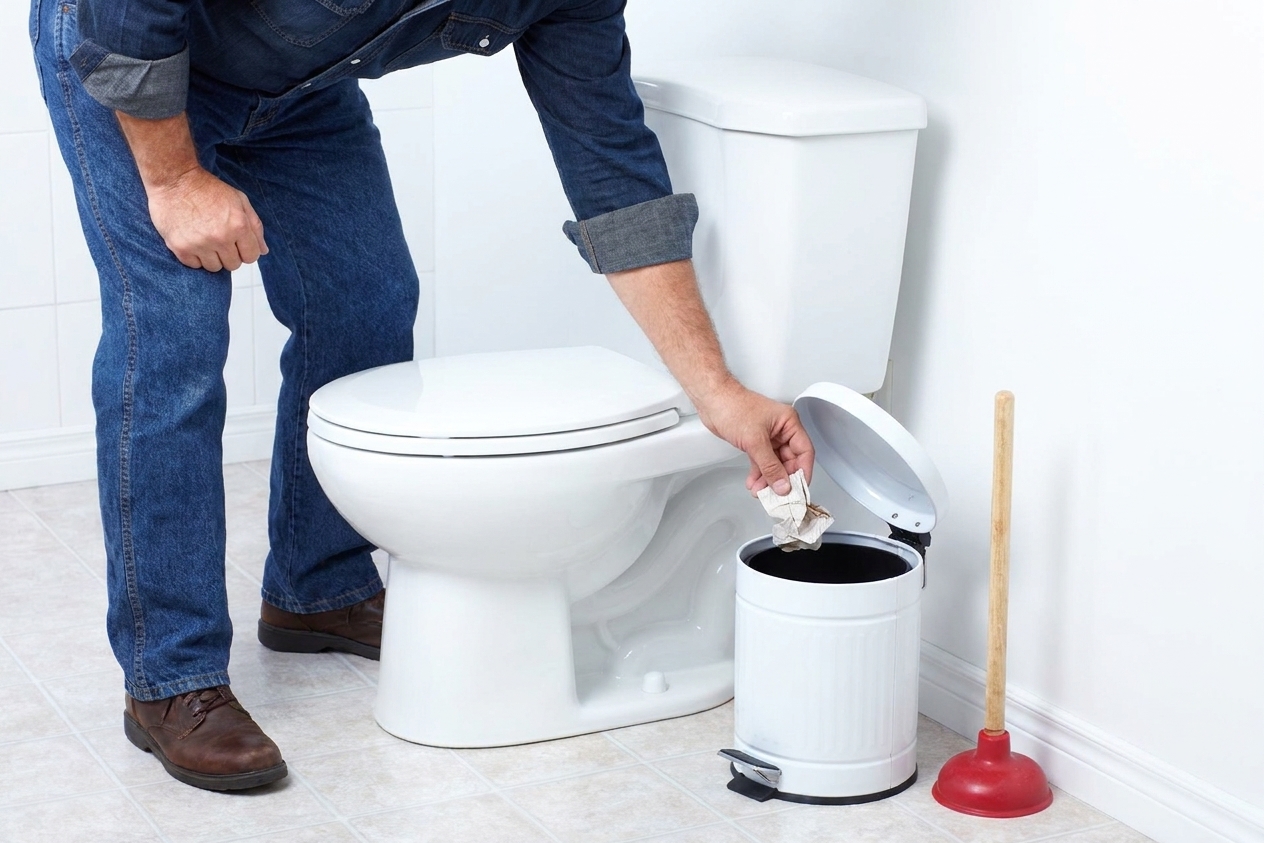
- Put a small lidded trash can next to every toilet, even in the “nobody uses this bathroom” bathroom.
- Have the wipes talk with the household. I do not care what the label says. Wipes belong in the trash.
- If clogs continue, assume something is already in the line and move down to the partial stoppage section below.
Cause #2: A weak flush
A toilet does not just need water. It needs enough water, fast enough, to push solids and paper through the trapway and into the drain line. If the flush is weak, normal waste can hang up and form a clog even when nobody flushed anything weird.
Clues you have a weak-flush toilet
- You need to hold the handle down to get a decent flush.
- The bowl clears slowly, or you get that weak swirl that never really commits to a siphon.
- It clogs more with larger loads of paper, even if it is just regular toilet paper.
- It got worse after adding in-tank drop-in tablets (the blue tablet thing), which are notorious for chewing up flappers and causing weird flush performance.
Common reasons for a weak flush
Low tank water level
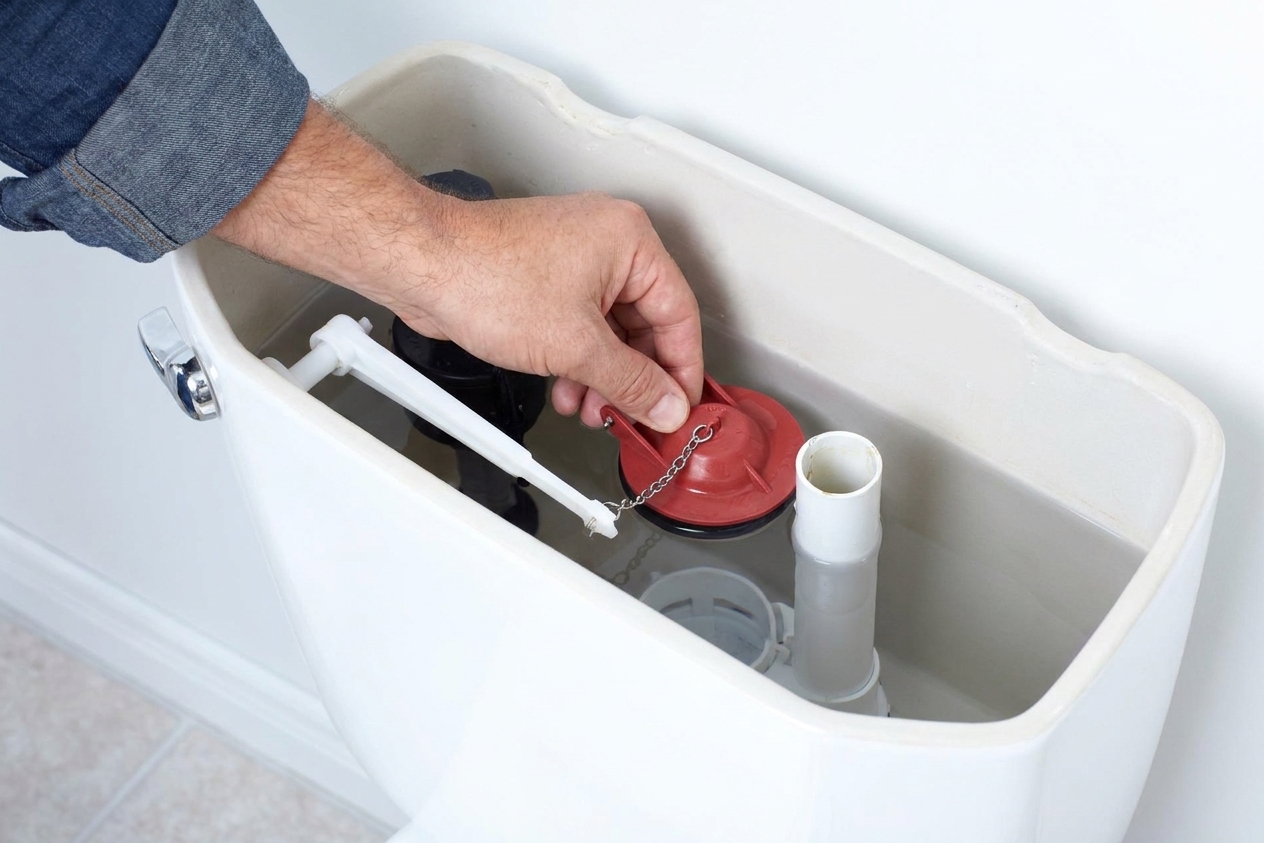
If the tank is not filling to the proper level, you are flushing with a smaller “bucket” of water each time. Check the water line mark inside the tank (many have one). Adjust the float if it is set too low.
Flapper closing too soon
If the flapper drops early, the flush cuts off before enough water dumps into the bowl. This is very common on older flappers, chains set too short, or flappers damaged by in-tank cleaners.
Rim jets or siphon jet partially blocked
Mineral buildup can block the small rim holes under the bowl lip and the siphon jet opening. Less flow means less push.
Low bowl water level
The bowl water level matters for a strong siphon, but if yours sits unusually low, start with the simple stuff first: make sure the refill tube is clipped into the overflow tube in the tank and is actually refilling the bowl after a flush. A low bowl level can also come from jet issues or a partial siphon problem. Venting can contribute to odd bowl-level behavior too, but I would check refill and jets before I blame the vent.
What to do next
- Pop the tank lid and watch a flush. You should see a strong, fast dump of water.
- Set the tank fill level correctly and verify the flapper stays open long enough.
- If you used drop-in tank tablets, remove them, then plan on replacing the flapper if it looks warped, slimy, or cracked.
- If weak flush and repeat clogs are both happening, keep reading. A partial stoppage can masquerade as a weak toilet.
Cause #3: A partial stoppage past the bowl
This is the classic “it plunges open, but it is still not right” situation. Think of it like a drain line with a speed bump. Water and smaller stuff can get past, but bigger stuff catches, builds up, and then you are clogging again.
Where partial stoppages usually happen
- In the toilet’s trapway (something lodged inside the porcelain path)
- In the closet bend (the 90-degree turn under the toilet)
- In the branch line that serves that bathroom
- At an old cast iron section with rough interior scaling
- At a belly or bad slope in the pipe that holds water and paper
- From root intrusion (more common on older sewer lines)
Clues the blockage is past the bowl
- The toilet gurgles or the water level bobs after flushing.
- The bowl drains slowly even when it is not fully clogged.
- You can clear it, but it clogs again within days, especially after a larger flush.
- Sometimes you notice other fixtures acting up nearby, like a tub that glugs when the toilet flushes.
Safety note: If you have sewage backing up into a tub or shower, stop using water and call a plumber. That can indicate a main line issue, and you do not want to turn your bathroom into a very expensive wading pool.
What to do
For the one-time clearing steps using a plunger and a closet auger, follow our dedicated guide: How to Unclog a Toilet.
For a repeat clog, here is the diagnostic angle:
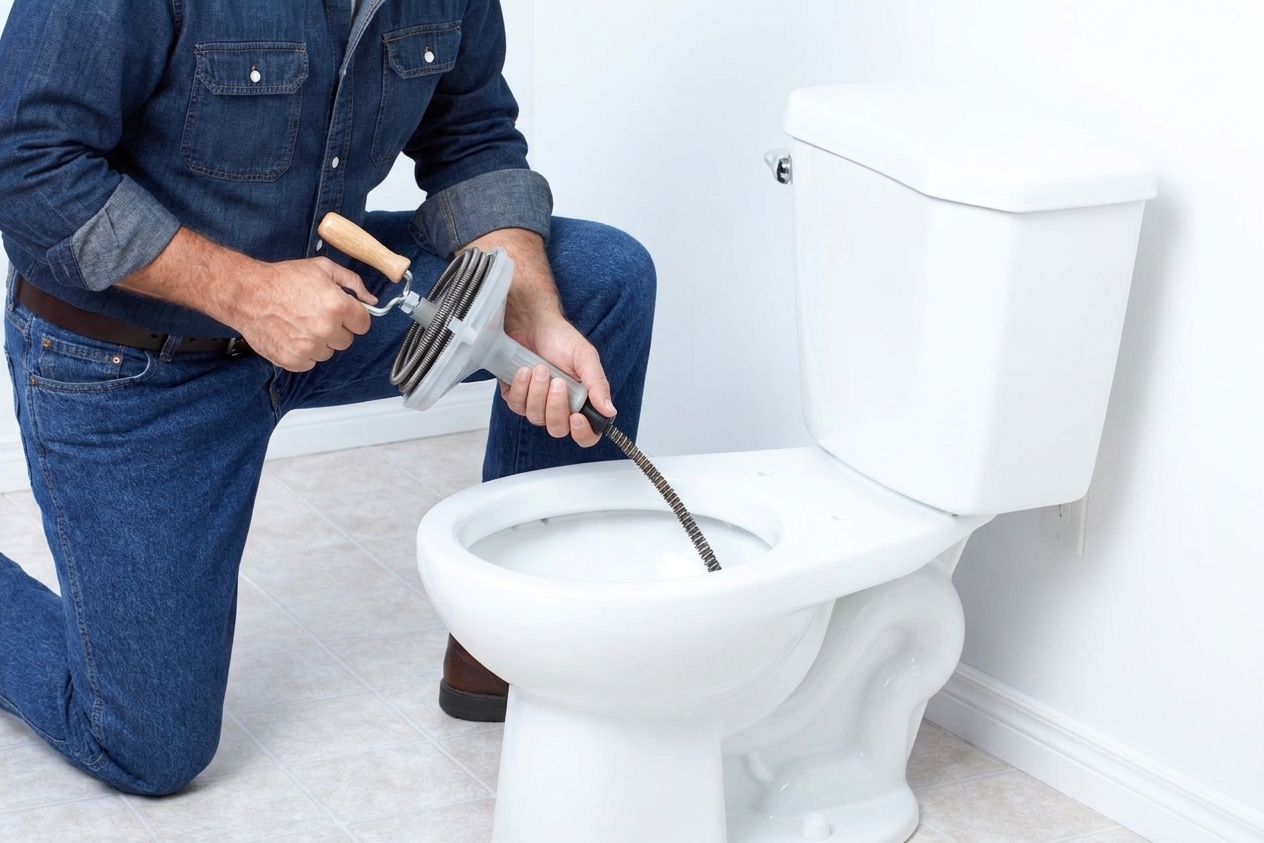
- If plunging works but only temporarily, plan on using a closet auger next time, not more plunging. Plungers are great at moving soft clogs. Augers are how you deal with an object or a stubborn snag point.
- If the closet auger pulls up wipes, floss, or a small toy, you found your recurring culprit.
- If the auger comes back clean and the toilet still clogs repeatedly, the restriction may be farther down the line. That is when a plumber’s camera inspection is worth its weight in gold.
Cause #4: A vent problem
Every plumbing system needs air. The vent stack lets air in so wastewater can flow out without fighting a vacuum. When venting is blocked or poorly designed, the toilet can flush weakly, gurgle, or leave waste behind that later becomes a clog.
Clues you might have a venting issue
- Gurgling sounds in the toilet or nearby sink when you flush.
- Bowl water level changes unexpectedly, either very low or occasionally higher than normal.
- You smell sewer gas sometimes (not always, but it can show up).
- Odd symptoms that come and go, like more gurgling during windy weather or after a bathroom has sat unused for a while. (That is usually airflow and trap behavior more than a literal “wind caused a clog,” but it is still a useful clue.)
Common vent causes
- Blocked roof vent from leaves, a bird nest, or even frost in cold climates.
- Undersized or improperly tied venting in older remodels.
- Air admittance valve problems (if your home uses them), though toilets are typically vented through a stack, not an AAV.
What you can do as a homeowner
- Listen for gurgling and note when it happens. Patterns help.
- Check other drains in the same bathroom. If the sink or tub also acts strange, venting or a branch line issue moves up the suspect list.
- Be cautious on the roof. Clearing a vent can be straightforward, but roof work is not the place to be brave. If you are not comfortable up there, hire it out.
Quick checks
If you want the fast “what do I do next” path, here it is:
- Repeat clogs after guests or kids use the bathroom: assume wipes or non-flushables first.
- Toilet flush feels weak, needs handle held down: check tank fill level, refill tube placement, and flapper performance.
- Toilet clears but drains sluggishly between clogs: suspect a partial stoppage in the trapway or farther down.
- Gurgling, changing bowl level, odd noises: venting or a larger drain/air balance issue.
Most common fix order
- Stop flushing wipes and add a lidded trash can.
- Fix the flush (tank fill level, refill tube, flapper).
- Use a closet auger if the clog returns.
- Call for a camera if it still keeps happening.
Toilet paper and prevention
Sometimes the “mystery” is just paper volume and timing, especially with kids.
- Use less paper per flush. A big wad is more likely to hang up on any rough spot.
- Double flush when needed. One flush for solids, a second for paper is not glamorous, but it works.
- If you have an older septic or older drain lines, consider a fast-dissolving toilet paper and avoid ultra-thick “luxury” rolls.
When to call a plumber
I am all for DIY, but I am also a fan of not turning a Saturday into a disaster movie.
- Recurring clogs despite using a closet auger correctly
- Any sewage backup into a tub, shower, or floor drain
- Multiple drains slow or gurgling at the same time
- Suspected vent blockage and you cannot safely check it
- Older homes with cast iron drains that may be scaled shut
A plumber can run a camera, locate the restriction, and tell you if you are dealing with roots, a belly, a broken section, or a localized snag point.
FAQ
Why does my toilet clog with just toilet paper?
If it is truly only toilet paper, look hard at flush strength and partial restrictions. A weak flush, low tank fill level, a refill issue, or a rough or partially blocked line can make normal paper pile up. Also consider switching to a septic-safe, fast-dissolving paper if you have an older system.
Can a low-flow toilet cause repeat clogs?
Some older low-flow models were notorious for weak waste carry. Newer high-efficiency toilets can flush extremely well, but a poorly performing model or one with a tank, flapper, or jet issue can absolutely contribute to repeat clogs.
Is it safe to use chemical drain cleaner in a toilet?
I avoid it. It is often ineffective on wipes, paper wads, and objects, and it can leave you with caustic water sitting in the bowl while you are trying to plunge or auger. Many manufacturers and plumbers advise against it for exactly that reason. Mechanical clearing is safer and more effective.
How do I know if the clog is in the toilet or the main line?
If only one toilet acts up, it is often local to that toilet or its branch line. If multiple fixtures are slow or backing up, that points toward a bigger line issue. As a simple gut check, if flushing the toilet makes a nearby tub or shower drain gurgle or back up, treat it like a bigger drain problem and stop using water until you know what is going on.