
Signs of Tree Roots in a Sewer Line
Learn the homeowner-visible signs of tree roots in your sewer line, what to check at the cleanout, what a camera inspection reveals, and when it’s time to repair the pipe.
The first time I ran into roots in a sewer line on a job, the homeowner swore it was “just a cranky toilet.” Then the tub started burping, the laundry standpipe backed up, and suddenly nobody wanted to be the one to pull the cleanout cap. If you have more than one drain acting up, tree roots are one of the big suspects because they typically do not stop at one little branch line. Most of the time, they show up where there is a larger, shared path out of the house.
One quick terminology note: when I say “main line” in this article, I mean the building sewer, the pipe that carries waste from your house to the city main or to your septic system.
Below are the most common signs you can see (or smell) without special equipment, plus what a camera inspection and mechanical root cutting typically confirm.
Quick reality check: why roots get into sewer pipes
Tree and shrub roots chase moisture. If your sewer pipe has a tiny opening, they can find it. That opening might be:
- A cracked pipe (common with older clay or cast iron, but plastic can crack too).
- A separated joint (older pipes often have joints every few feet).
- A failed transition where one pipe material changes to another.
You will also hear plumbers talk about a sag (a belly in the line). A belly is not usually the “entry point” for roots the way a crack or joint is, but it does hold water and sludge, which makes stoppages worse and can turn a minor root intrusion into a repeat offender.
Once roots get a toe-hold, they thicken into a net that grabs toilet paper and solids. That is when gurgling and multi-fixture backups start showing up inside the house.
Homeowner-visible signs of roots in the building sewer
1) Recurring backups that involve more than one fixture
This is the classic “it keeps coming back” pattern. You plunge, maybe you snake a toilet, things improve for a bit, then the next week it is slow again.
Root intrusion often shows up as multi-fixture symptoms, like:
- Toilet bubbles when the shower drains.
- Tub or shower backs up when the washing machine drains.
- Sink gurgles and the toilet water level rises or falls randomly.
- Water shows up in the lowest drain in the house (often a basement floor drain or a shower).
Can roots cause problems upstream of the “main” line? Sure. If the defect is closer to the house, you can get the same kind of symptoms. The point is that when multiple fixtures are involved, you are usually looking beyond a simple trap clog.
2) Gurgling drains and sewer smells, especially after heavy water use
Roots create a partial blockage that makes air and wastewater compete for space. That can cause gurgling in nearby drains. Sewer odor can tag along, particularly if the line is draining slowly and leaving waste behind longer than it should.
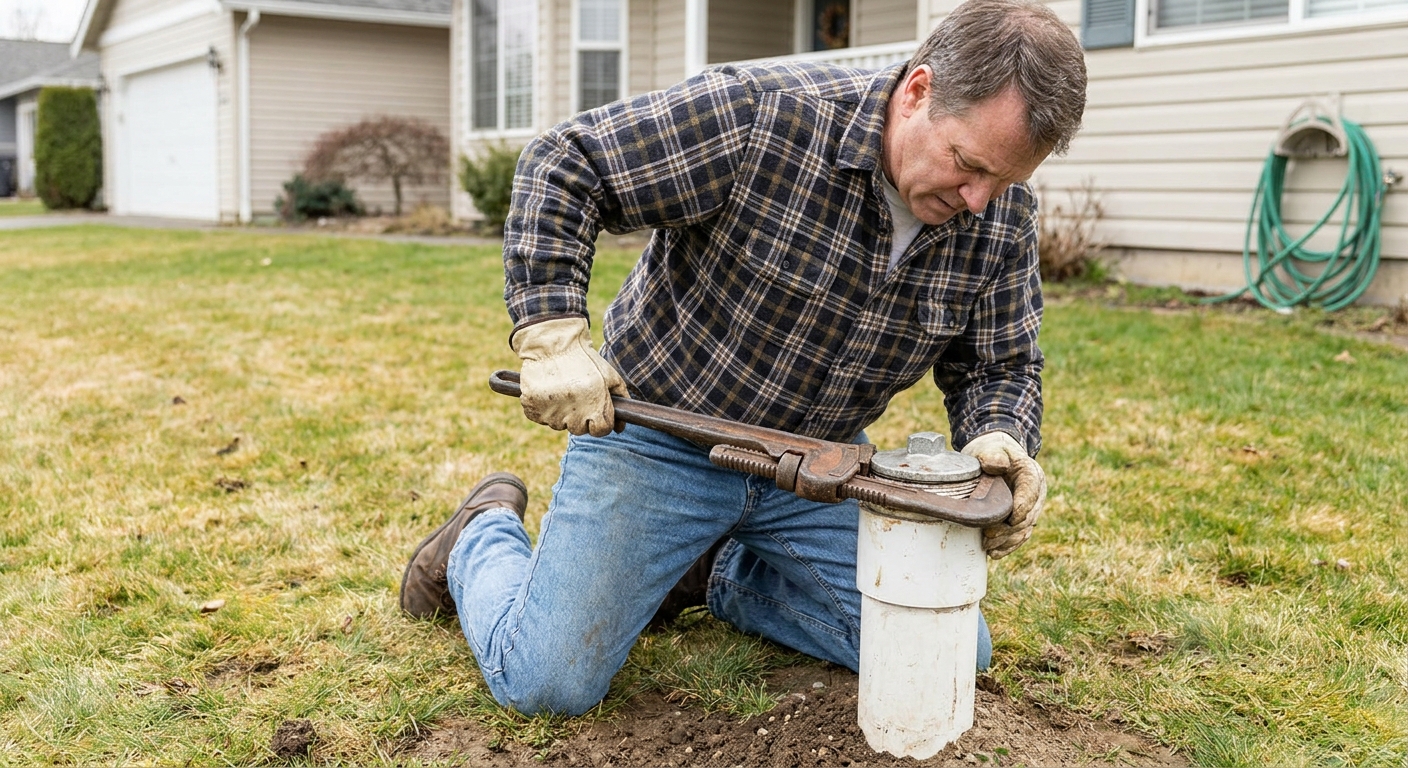
3) You find roots, paper, or sludge at the cleanout
If your home has a main cleanout (outside near the foundation, in a basement, or sometimes in a yard box), it can tell you a lot.
What you might see when you open the cap:
- Toilet paper bits clinging near the opening.
- Hairy, stringy root fibers or thicker tan roots.
- Black sludge coating the pipe wall.
- Standing water at the cleanout when no one is running water inside.
That last one is a good clue, but it is not exclusive to roots. Standing water can also happen with a belly, poor slope, or a partial blockage of some other kind.
Safety note: A cleanout can be under pressure if the line is backed up. Open it slowly, keep your face out of the line of fire, and wear gloves and eye protection. If the cap is stubborn, do not go full gorilla on it. Old fittings can crack, and that turns a bad day into a bigger bill. Keep kids and pets away from the area, too. If you have any doubt, stop and call a plumber. Sewage is not a “tough it out” kind of mess.
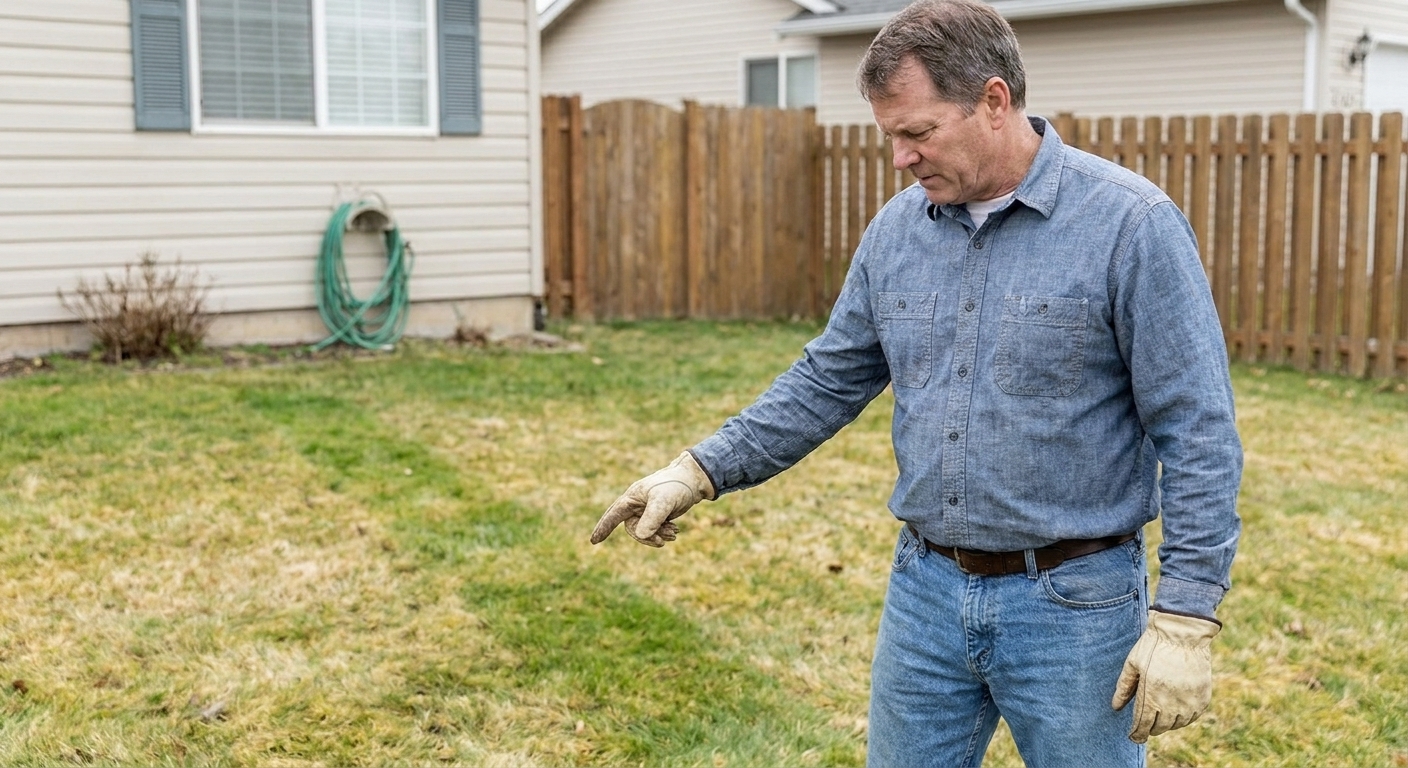
4) A suspiciously green strip or soggy patch in the yard
If your sewer line is leaking (often the same opening roots used to get in), you may notice a greener, faster-growing strip of grass over the pipe route. In drier stretches of summer, it can stand out like a neon highlighter. Sometimes there is also:
- A persistently wet area that does not match rainfall or irrigation.
- A soft spot in the soil.
- A faint sewer smell outdoors.
To be clear, a green strip does not automatically mean a broken sewer line. But when it teams up with repeated backups, it moves way up the suspect list.
Clues that point away from roots (sometimes)
I like to save people from chasing the wrong problem. Roots are common, but they are not the only cause of a building sewer slowdown.
- Only one fixture is slow: that is more often a local clog (hair in a shower trap, grease in a kitchen branch, etc.).
- Problem started right after flushing something weird: wipes, paper towels, hygiene products, and kids’ toys cause sudden stoppages.
- Brand new landscaping near the line: not impossible, but roots usually take time. New trees do not typically cause an immediate blockage, while older established trees absolutely can.
- You are on septic: a full tank, a clogged effluent filter, or a failing drain field can mimic “main line” symptoms. Roots can still be part of the story, but septic troubleshooting has a few extra steps.
How pros confirm root intrusion
Camera inspection: what it shows
A sewer camera inspection is the most direct way to answer the question: “Are there roots in there, and how bad are they?” A tech feeds a camera through the cleanout and records the run toward the street or septic tank.
What the camera can reveal:
- Root location (how many feet out and roughly where in the yard).
- Root severity (fine hair roots vs. thick masses).
- Pipe material and condition (clay, cast iron, PVC, Orangeburg in some older neighborhoods).
- Cracks, offsets, or separated joints that let roots in.
- Belly or sag where water sits in the line.
If you are deciding between “cut it and hope” and “repair it right,” the camera is the evidence you want.
Mechanical cutting: what it proves (and what it does not)
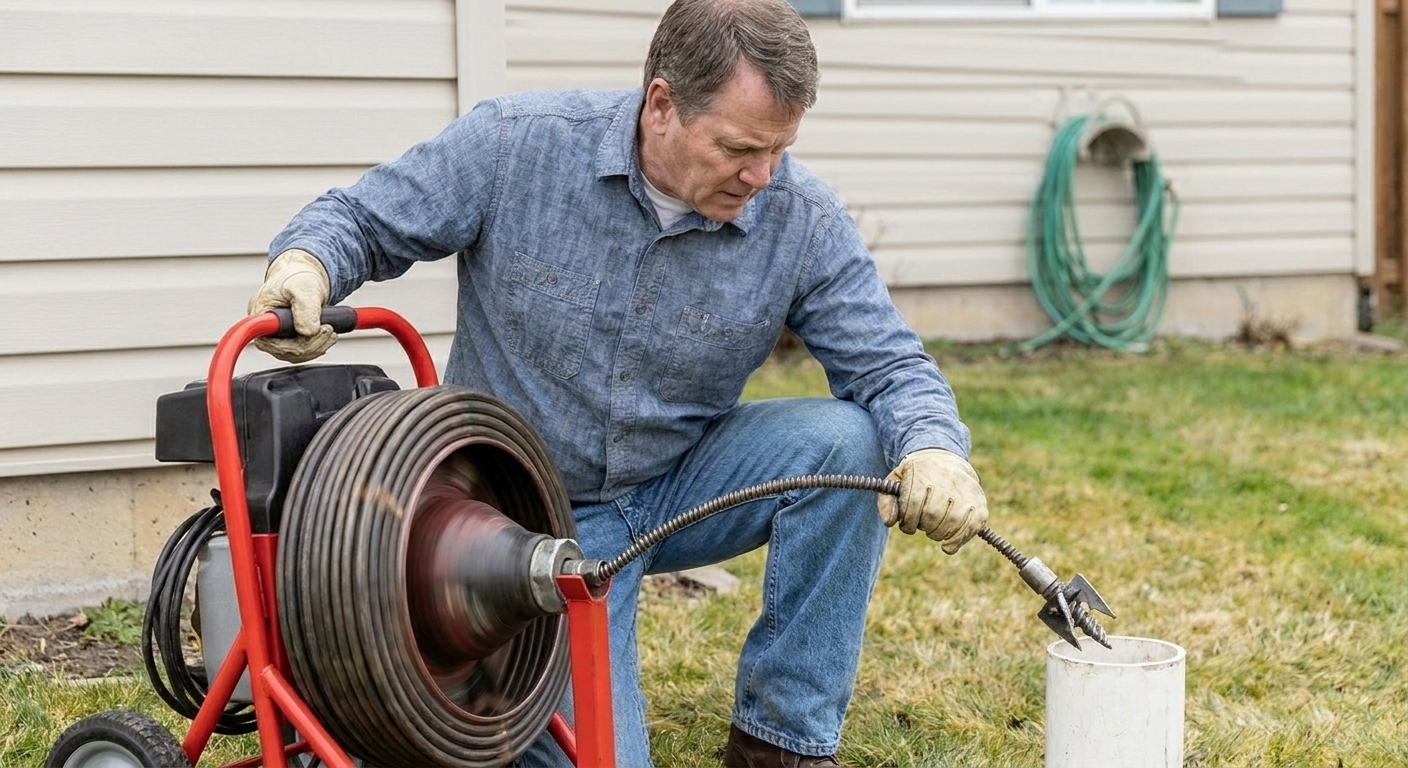
Root cutting is usually done with a drain machine (often called a sewer auger) fitted with a root-cutting blade. When a plumber pulls back the cable, you may see roots wrapped on it. That is a pretty solid confirmation.
But here is the catch: cutting roots does not fix the opening in the pipe. If the pipe has a separated joint or crack, roots can come back, sometimes fast. Think of it like trimming weeds but leaving the gap in the fence.
When cutting is enough, and when the pipe needs repair
Root cutting can be a reasonable choice when
- The camera shows minor to moderate roots and the pipe is otherwise aligned and intact.
- You need to restore flow quickly and buy time for a planned repair later.
- The problem is infrequent and you are comfortable with periodic maintenance.
In the field, some homes end up on a schedule, often around annually, but sometimes as often as every 6 months or stretched out to 24 months. It depends on tree species, soil moisture, and how damaged the pipe is.
Repair is usually the right call when
- The camera shows separated joints, a collapsed section, or a major offset where solids hang up.
- Roots are dense and recurring soon after being cut.
- There is a belly holding water and sludge in the line.
- You have sewage in the basement or repeated overflows at the cleanout.
At that point, the roots are a symptom. The real problem is that the pipe is letting groundwater in and sewage out.
Common repair paths you might hear about
- Spot repair: Dig and replace only the failed section (best when damage is localized and accessible).
- Full line replacement: Replace the entire run if the pipe is failing in multiple places.
- Trenchless lining (CIPP): A resin liner is installed inside the pipe to create a new pipe within the old one (not suitable for every collapse or material, but great in the right scenario).
- Pipe bursting: A new pipe is pulled through while breaking the old pipe outward (site conditions matter).
A reputable plumber will recommend an option that matches what the camera shows, not just the one they prefer to sell.
What you can do today (without making it worse)
Do this first
- Stop running water if you suspect a building sewer blockage. Every flush and every shower can turn a slow drain into a sewage cleanup.
- Check the lowest drain in the house (basement floor drain, lowest shower) for backup.
- Locate your main cleanout so a plumber is not hunting for it while the line is overflowing.
Avoid these common missteps
- Do not keep using liquid drain cleaners in multiple fixtures hoping it will “burn through roots.” They are not designed for that, and they can create a hazard for whoever opens the line later.
- Do not rent a small hand snake and expect it to clear roots in a main sewer. Main lines usually require heavier equipment and the right cutters.
- Do not ignore it once it becomes recurring. Root intrusion tends to escalate from “annoying” to “expensive weekend” at the worst possible time.
Prevention and mitigation (the honest version)
- The real prevention is fixing the defect: a repair or a liner stops the water leak and shuts the door roots are using.
- Be cautious about planting near the route: even “safe” trees can send roots surprising distances, but giving the sewer line some space helps.
- Maintenance can help: if you are not ready for a repair, periodic cutting and, in some cases, approved root treatments can slow regrowth.
FAQ
Can tree roots clog a sewer line even if I do not have big trees in my yard?
Yes. Roots can travel from a neighbor’s tree or from shrubs you would never suspect. If a root can reach moisture, it will try.
Is a green strip in the yard always a broken sewer line?
No, but it is a strong clue when paired with slow drains and recurring multi-fixture backups. A camera inspection is how you confirm what is actually happening.
If roots are in the line, does that mean I need to replace the whole sewer?
Not always. Sometimes a targeted repair at one bad joint plus root removal is enough. If the camera shows widespread cracking, offsets, or multiple root entry points, full replacement or a trenchless solution may make more sense.
Do chemical root killers solve the problem?
They can reduce root growth in some situations, but they do not fix the opening in the pipe. Treat them as a maintenance tool, not a cure. Rules vary by area, and some products are not allowed in some municipalities.
If you are on a septic system, be extra careful. Some chemicals can be hard on a septic tank’s biology or may not be appropriate for your setup. If you are considering a product, ask the plumber doing your camera inspection what is compatible with your pipe material, your system type, and local requirements.
The bottom line
If you are seeing repeated backups across multiple fixtures, finding rooty gunk at the cleanout, or noticing an extra-green stripe over the sewer route, roots are a very real possibility. The most useful next step is a camera inspection. It takes the guesswork out and tells you whether you can get by with cutting and maintenance, or whether it is time to repair the pipe so the roots stop coming back.
And if you are reading this because your basement floor drain is already making that ominous gurgle, go easy on the water until you get eyes on the line. Future you will be grateful.