A homeowner-friendly breakdown of what really clogs sinks, tubs, and toilets, plus simple prevention habits and safe DIY fixes before you call a plumber.
The Homeroom Fix
October 28, 2026
•
By Marcus Delgado
How to Unclog a Toilet
A toilet that will not flush is usually a clog in the trapway. Learn how to stop an overflow, plunge with a real seal, use a closet auger, avoid chemical cleaners, and spot signs the blockage is in the main drain.
The first time I clogged a toilet on a jobsite, I did what every panicked human does. I flushed again to “see if it goes.” It did not. It rose like a suspense movie and I learned two important lessons: most toilet clogs happen in the toilet’s trapway or right below it, and the fix is usually fast if you do the steps in the right order.
If your toilet will not flush, you are typically dealing with a blockage in the toilet trapway (the built-in curved passage inside the bowl) or in the closet bend right below it. Here is how I tackle it at home in my 1970s fixer-upper, starting with the simplest method and working up to the tool that almost always finishes the job.
Before you start: stop the overflow
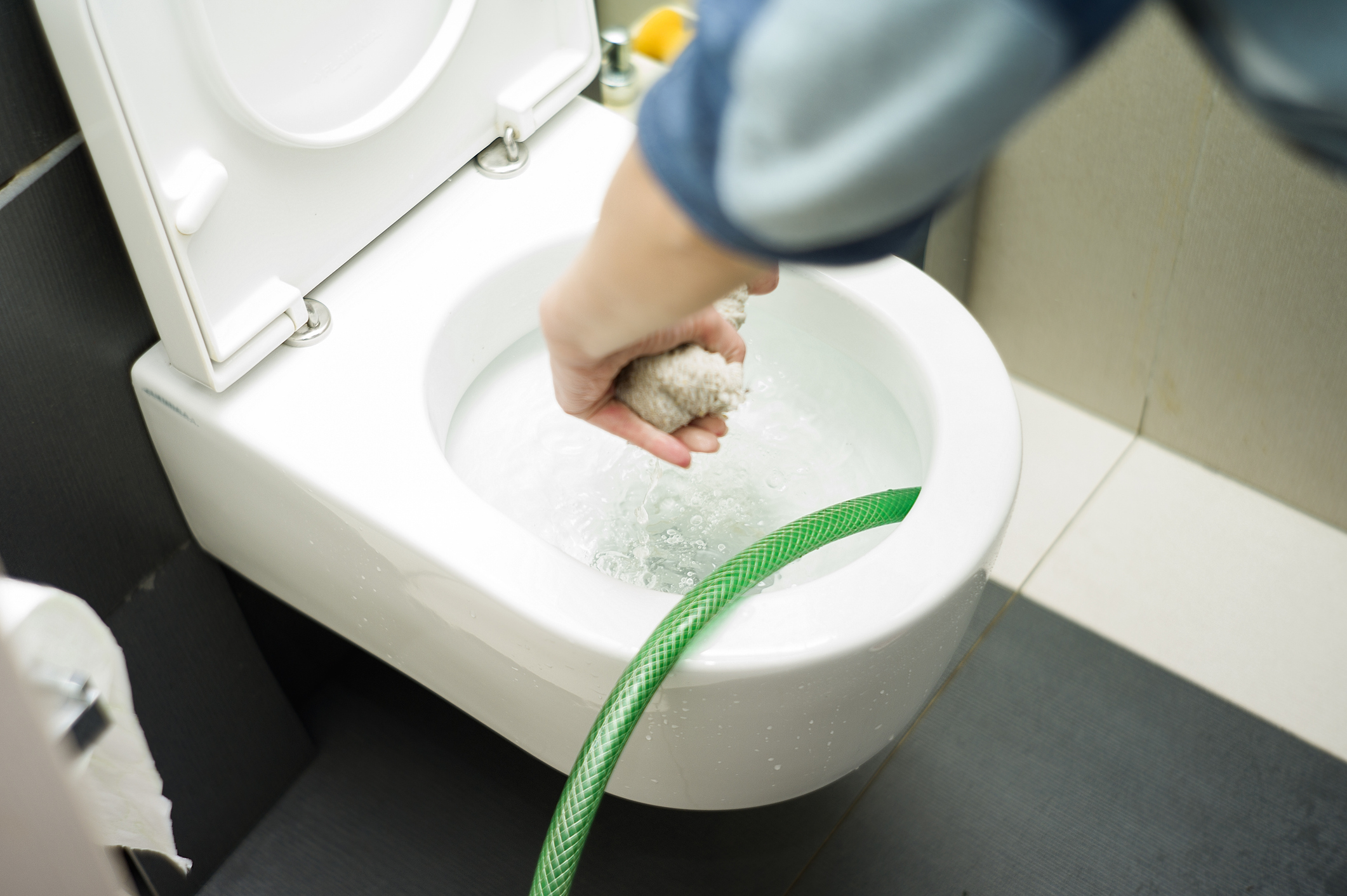
1) Stop the water fast if the bowl is rising
- Take the tank lid off and lift the float to stop the fill valve from adding more water.
- If the water is still coming in, turn the shutoff valve behind the toilet clockwise. If it is stiff, go slow and steady. Do not wrench on it.
2) Get the bowl to a workable level
You want the bowl about half full for plunging. Too low and you cannot build pressure. Too high and you are one bad push away from a floor disaster.
- If the bowl is too high, scoop water into a bucket with a small cup or container.
- If the bowl is too low, add water from a bucket until it is roughly halfway up the bowl.
Safety first Wear rubber gloves. Put old towels around the base of the toilet. If you have kids or pets, close the door. My dog Wrench treats toilet water like a forbidden snack, so I do not give him the option.
Start with the right plunger
If you only take one tip from this article, take this one: a toilet needs a flange plunger, not a flat sink plunger.
- Best tool: flange plunger (it has a rubber sleeve that fits into the toilet drain opening)
- Works poorly: flat-bottom “cup” plunger (great for sinks, frustrating for toilets)
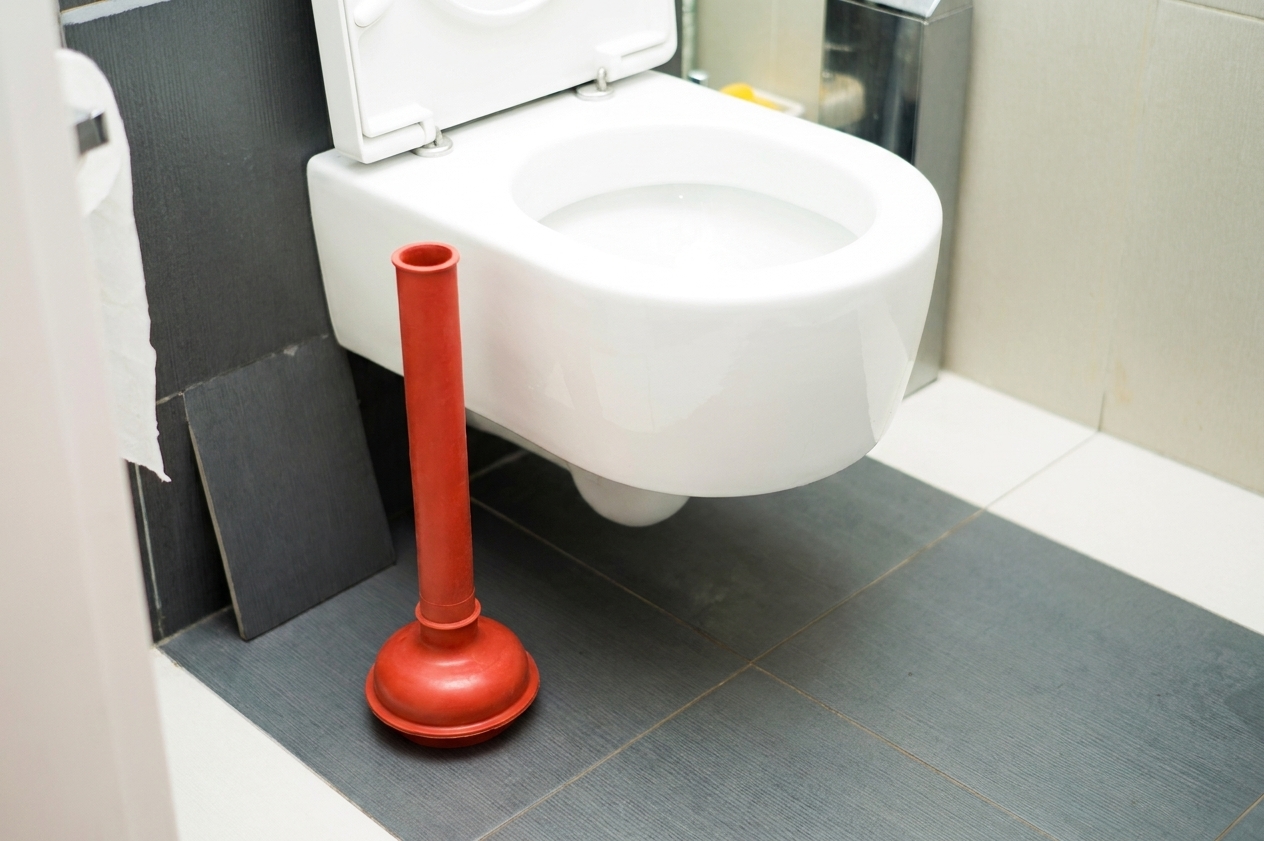
How to plunge a toilet
Step 1: Seat the plunger
Angle the plunger into the bowl so the rubber flange drops into the drain opening. You are trying to seal the outlet completely.
If the plunger is stiff, run it under hot water for a minute to soften it so it seals better.
Step 2: Start gently, then push and pull
Your first few motions should be gentle to avoid splashing. Once the seal is solid, do 10 to 20 strong strokes, keeping the cup submerged.
- Push to force water toward the clog.
- Pull to help break it loose and keep the seal tight.
Step 3: Repeat in sets
I usually do 2 to 3 sets of 10 to 20 strokes before I decide it is time to move on. If the bowl drains down noticeably between sets, you are making progress.
Step 4: Test the flush once
After a set of plunges, pause. Flush once. If it still will not go, do another set. If nothing changes after 2 to 3 solid sets and you are sure you have a seal, it is time to move up to the right tool.
Avoid the “machine-gun flush” Repeated flushing when the toilet is clogged is how you flood a bathroom. Plunge first. Test flush second.
What good progress looks like
- The water level drops between plunge sets
- You hear a deeper “glug” as air and water move past the obstruction
- The toilet eventually flushes normally and refills without the bowl rising
When plunging fails: use a closet auger
A closet auger (also called a toilet auger) is made specifically for toilets. It has a protective sleeve to help prevent scratches, and a cable that can navigate the trapway.
If I am dealing with a “toilet will not flush at all” situation, this is usually the fix.
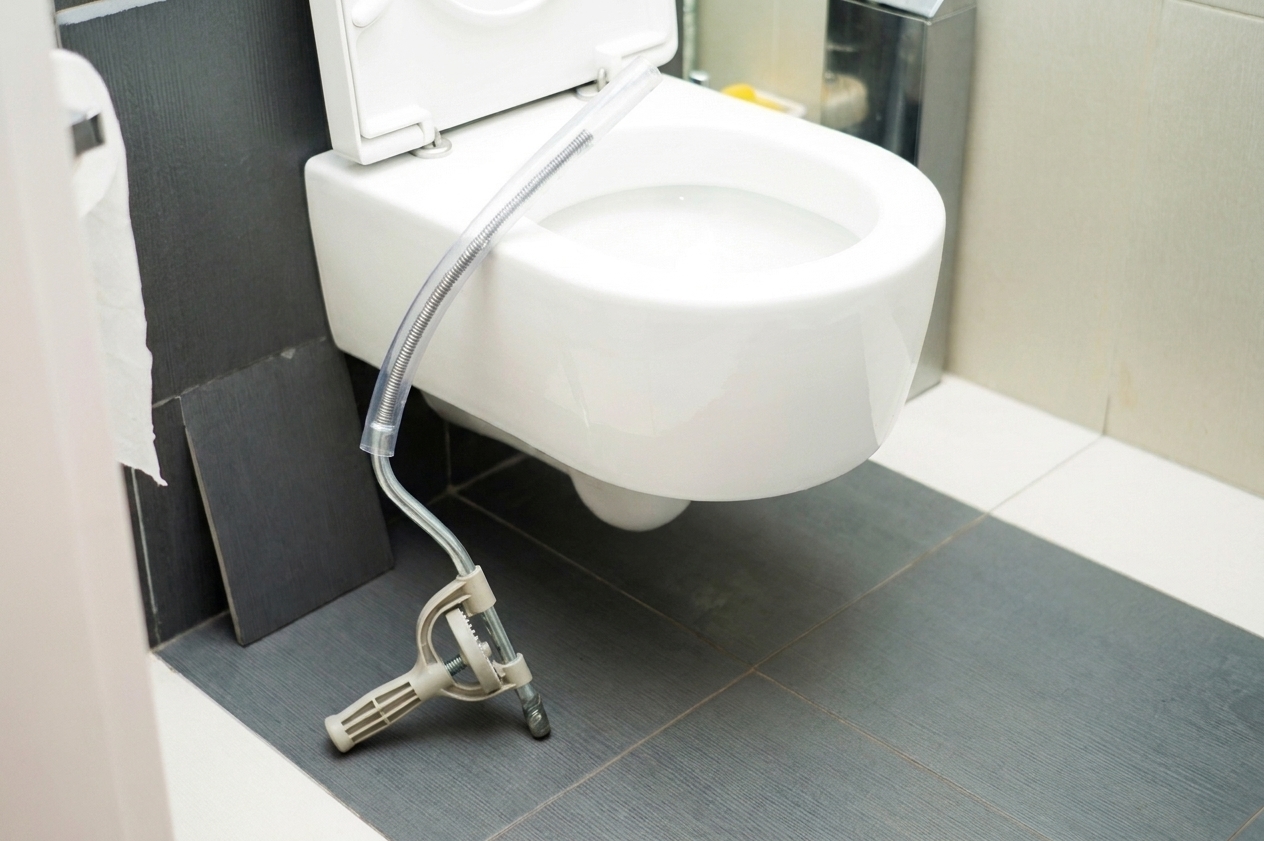
How to use a toilet auger
1) Position the auger correctly
Place the curved end into the bowl drain opening so the sleeve rests against the porcelain. The curve should follow the shape of the trapway.
2) Feed the cable while you crank
Gently push the cable in while turning the handle clockwise. Do not force it. If it stops, back off a little, crank again, and let it find the path.
3) Break up or retrieve the clog
When you hit the obstruction, you will feel resistance. Keep light pressure and crank to either snag the item or break up the waste.
- If you think it is something solid (toy, toothbrush cap, excessive paper), try to pull it back.
- If it is soft (waste buildup), work the cable back and forth a few times to break it up.
4) Retract, wipe, and try again if needed
Pull the cable back slowly. Have a trash bag ready and wipe the cable as it retracts. Yes, it is gross. Yes, it is still better than calling a plumber for a simple trapway blockage.
If you brought up paper, wipes, or anything chunky, run the auger once more to make sure you did not leave the “other half” behind.
5) Test with a bucket flush
Instead of immediately using the handle, pour a bucket of water into the bowl from a moderate height (about 12 to 18 inches). A strong, steady pour mimics a flush and helps confirm the path is clear.
Stop immediately if the water rises. If it whooshes down quickly, you are back in business.
If it is not a clog
A lot of people say “my toilet won’t flush” when what they really mean is “it flushes weak” or “the handle does nothing.” Before you go to war with a plunger, take 60 seconds and peek in the tank.
Handle does nothing
- Flapper chain came off or is jammed under the flapper
- Handle arm is loose inside the tank
- Flapper is stuck to the flush valve seat (common if the toilet has not been used in a while)
Flush is weak or barely swirls
- Tank water level is too low (adjust the float or check the fill valve)
- Rim jets are clogged from mineral buildup, especially in older homes with hard water
- Partial trapway clog that keeps coming back (this is where an auger helps)
If the tank level is low, fix that first. A toilet cannot siphon properly without enough water.
Hard clogs and mineral buildup
In older houses (hello, 1970s plumbing), you can get a mix of issues: a partial blockage in the trapway plus mineral scale that makes everything less forgiving. If you are constantly dealing with weak flushes and near-clogs even after you clear it, the long-term fix may be cleaning mineral buildup, improving flush performance, or, in stubborn cases, pulling the toilet to deal with an obstruction you cannot reach from the bowl.
What not to force down the trapway
Most toilet clogs are not mysterious. They are preventable. A toilet is designed to move water, human waste, and a reasonable amount of toilet paper. That is it.
Common clog culprits
- “Flushable” wipes (they are famous for clumping and hanging up in bends)
- Paper towels and shop towels
- Feminine hygiene products
- Diapers, even small ones
- Dental floss (it can rope other debris together)
- Cotton swabs and cotton balls
- Cat litter
- Kids toys, toothbrushes, bottle caps
- Grease or food scraps (more common with utility sinks, but it happens)
Rule of thumb If it did not come from your body or a toilet paper roll, it does not belong in the toilet.
Things to avoid
Avoid chemical drain cleaners
Chemical drain cleaners are a bad match for toilets. The bigger issue is not the porcelain, it is safety and downstream problems: chemicals can sit in the bowl and splash when you plunge or auger, they can burn skin and eyes, and they can damage rubber seals and make a plumber’s job more hazardous later.
If you have already added chemicals, wear eye protection and gloves and ventilate the room well before you do anything that might splash.
Avoid forcing the auger
Porcelain chips easily, and an auger can kink. Slow and steady wins.
Avoid using a flat sink snake
A standard drain snake can scratch the bowl and often cannot navigate the trapway cleanly. A closet auger is the right tool for this job.
After it clears
- Flush 2 to 3 times (or do 2 bucket flushes) to confirm consistent flow.
- Check for leaks around the base of the toilet. If it overflowed, water can sneak under and you want to catch that early.
- Clean and disinfect the surrounding floor and the tools you used.
Signs the clog is past the toilet
Sometimes the toilet is just the messenger. If the main line is partially blocked, the toilet is often the first fixture to complain because it moves a lot of water fast.
Clues it is not just the toilet trapway
- Other drains are slow, especially the tub or shower in the same bathroom.
- Gurgling sounds from the tub or sink when you flush.
- Water backs up into the tub or shower when the toilet is flushed.
- Repeated clogs that return quickly even after you clear the toilet.
- A floor drain or basement drain is backing up, or you smell sewage near it.
- Multiple toilets in the house are acting up.
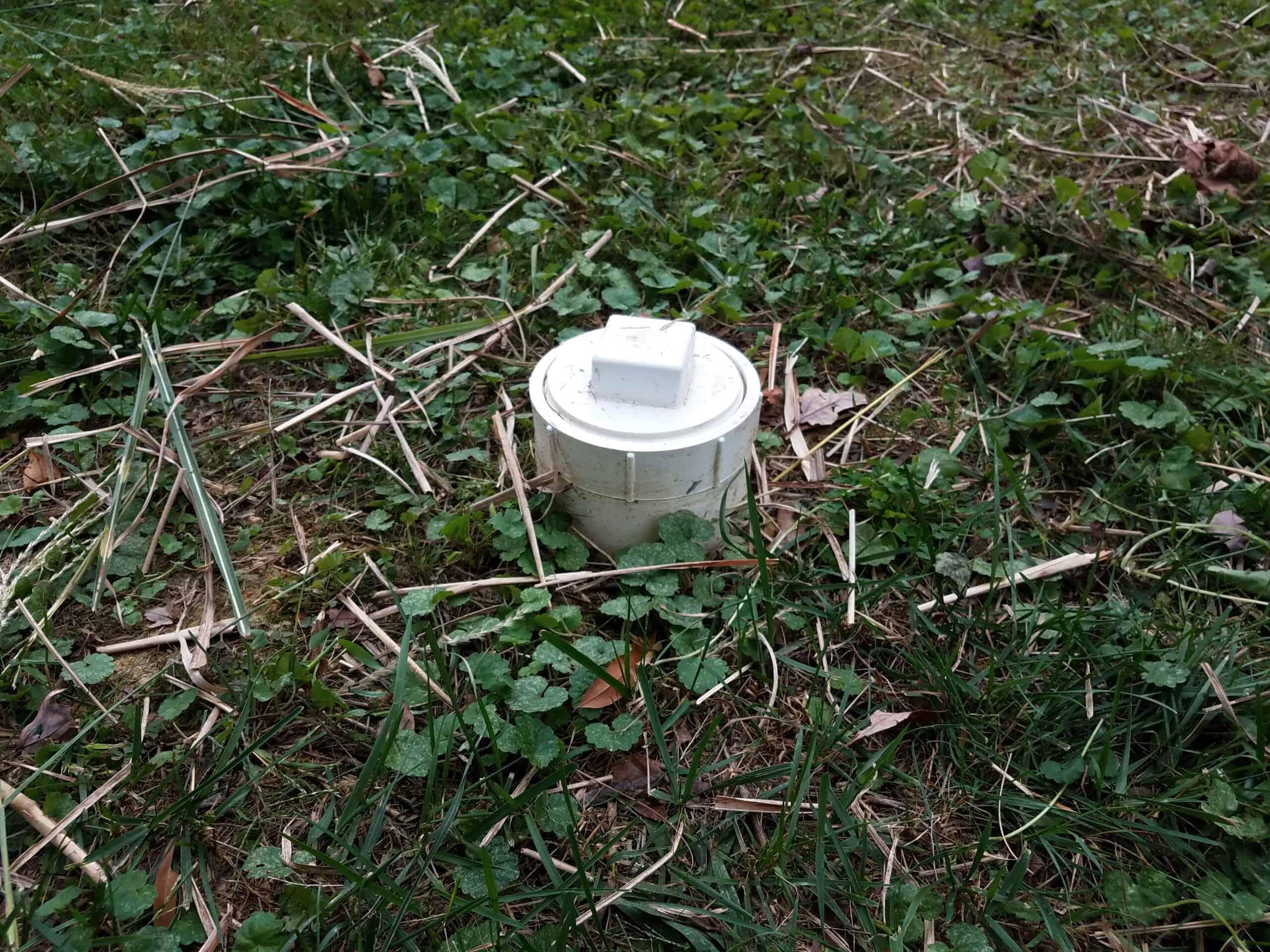
If you are seeing any of those, a closet auger may not reach the blockage. That is where a longer drain snake, a cleanout access point, or a pro with a camera and proper machine starts to make sense.
Call for backup If sewage is coming up in a tub, shower, or floor drain, stop using water in the house and call a plumber. That is a building drain issue, and continuing to run water can make the mess much bigger.
When to call a plumber
- You cannot close the shutoff valve, or it leaks when you touch it
- The toilet overflows more than once, or you cannot control the water level safely
- You hit a hard obstruction with the auger and it will not budge after a couple careful tries
- You suspect the toilet is rocking, the base is leaking, or the wax ring may have failed
- Clogs keep returning and other drains show symptoms too
Quick troubleshooting
Bowl fills but drains very slowly
- Try plunging with correct seal and proper bowl water level
- After 2 to 3 plunge sets, move to a closet auger
Weak flush and frequent near-clogs
- Check tank water level and flapper action
- Use less paper and avoid wipes
- Auger to remove partial blockage in trapway
- If other drains are slow too, suspect a main line issue
Overflows immediately when flushed
- Shut off water, lower bowl level, plunge carefully
- Auger if plunging fails
Handle does nothing
- Check chain, flapper, and handle arm connection inside the tank