Step-by-step ways to clear hair and soap scum from a shower drain using mechanical tools and gentle household ingredients, plus tips to prevent future clogs.
The Homeroom Fix
October 2, 2026
•
By Marcus Delgado
Things That Clog Drains
From kitchen grease to bathroom hair, here are the most common things that clog drains, why they cause problems, and how to prevent and fix clogs safely.

Marcus Delgado
Marcus Delgado is a former residential carpenter and lifelong DIY enthusiast who believes every homeowner has the power to transform their space. After a decade of swinging hammers for general contractors, he shifted gears to share practical, budget-friendly home improvement advice. When he's not renovating his own 1970s fixer-upper, you can find him hunting for salvaged wood or teaching weekend workshop classes.
If you have ever stood over a sink that is taking its sweet time, you already know the truth: drains do not “randomly” clog. They clog because we feed them the same usual suspects over and over. The good news is that most clogs are preventable, and many are fixable with basic tools and a calm, methodical approach.
Below are the most common things that clog drains, what they do inside your pipes, and what to do about them. I will also flag the stuff that can turn a small clog into a big plumbing bill.
Quick diagnosis first
Before you do anything, match your fix to your problem. This saves time and prevents the classic mistake: making a mess while the real clog is somewhere else.
- Slow drain: Usually buildup (soap scum, grease residue, hair). Good candidates for cleaning the stopper, plunging, or a small snake.
- Standing water and no movement: A more solid blockage. Skip “miracle” additives and go mechanical (plunger, snake, trap cleanout).
- Multiple fixtures backing up: Often a main line or branch line issue. This is where you stop experimenting and consider a plumber, especially if the lowest drain is involved.
The usual suspects in kitchen sink clogs
Kitchen drains clog because of a simple one-two punch: food particles plus fats. Add time and warm water cooling in the pipes, and you get sludge that grabs anything that passes by.
Grease, fats, and cooking oil
This is the heavyweight champ of clogs. Hot grease looks harmless when it goes down, but it cools and solidifies inside the pipe. Then it acts like sticky tape for food bits.
- Where it hits: Kitchen sink drain lines and the kitchen branch line in the wall.
- Why it is bad: It coats pipe walls, narrows the opening, and creates recurring clogs.
- Prevention habit: Pour cooled grease into a can or jar and toss it. Wipe greasy pans with a paper towel before washing.
“Garbage disposal can handle it” foods
Disposals are great at chopping, not making food disappear. These are the repeat offenders:
- Starchy foods: Rice, pasta, potatoes, oats. They swell and turn gluey.
- Fibrous foods: Celery, corn husks, asparagus, onion skins. They wrap around disposal parts and form ropes.
- Coffee grounds: They do not dissolve. They pack together like wet sand.
- Eggshells: The shells do not break down in a helpful way, and the bits can settle as gritty sediment, especially in the trap.
- Flour and dough: They become paste.
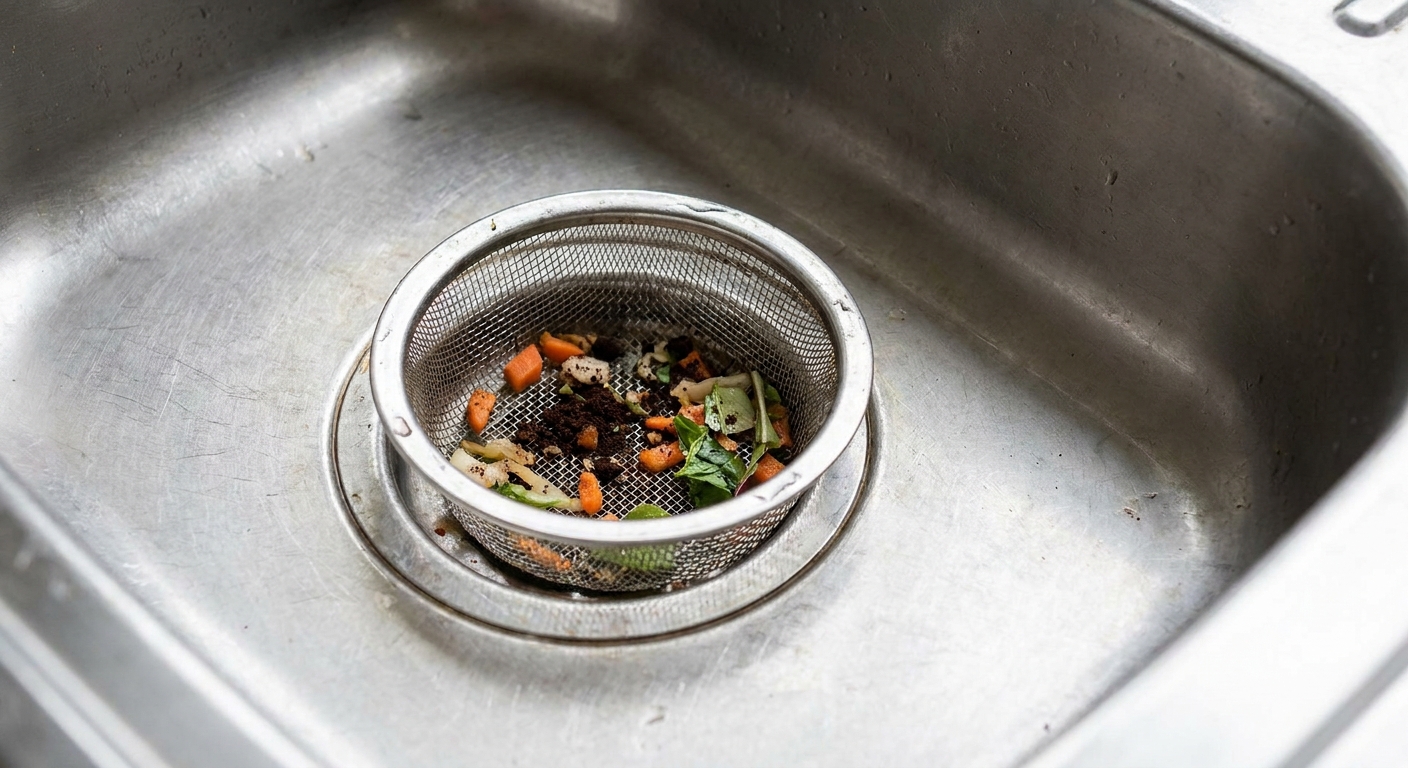
Food scraps that slip past the strainer
Tiny bits are not innocent. They collect in the P-trap under the sink and build a little compost pile that traps more debris.
Prevention habit: Use a simple mesh or basket strainer and empty it into the trash.
Soap scum plus minerals
In many homes, dish soap combines with hard water minerals and grease residue to create a waxy, stubborn coating. It is less dramatic than a wad of pasta, but it is great at making your drain slower every month.
Disposal jams vs drain clogs
If the disposal hums, trips, or will not spin, you may have a disposal problem, not a pipe clog. Two homeowner-friendly checks:
- Hit the reset button on the bottom of the disposal (usually a small red button).
- Use the Allen wrench slot under the unit (if yours has it) to free a jammed impeller, then run plenty of water and test again.
Unplug the disposal or switch it off at the breaker before you put hands or tools anywhere near the grinding chamber.
What clogs bathroom sinks and showers
Bathroom clogs are usually a mix of hair, soap scum, and whatever personal care products get rinsed down. The pipes are smaller than you think, so it does not take much.
Hair
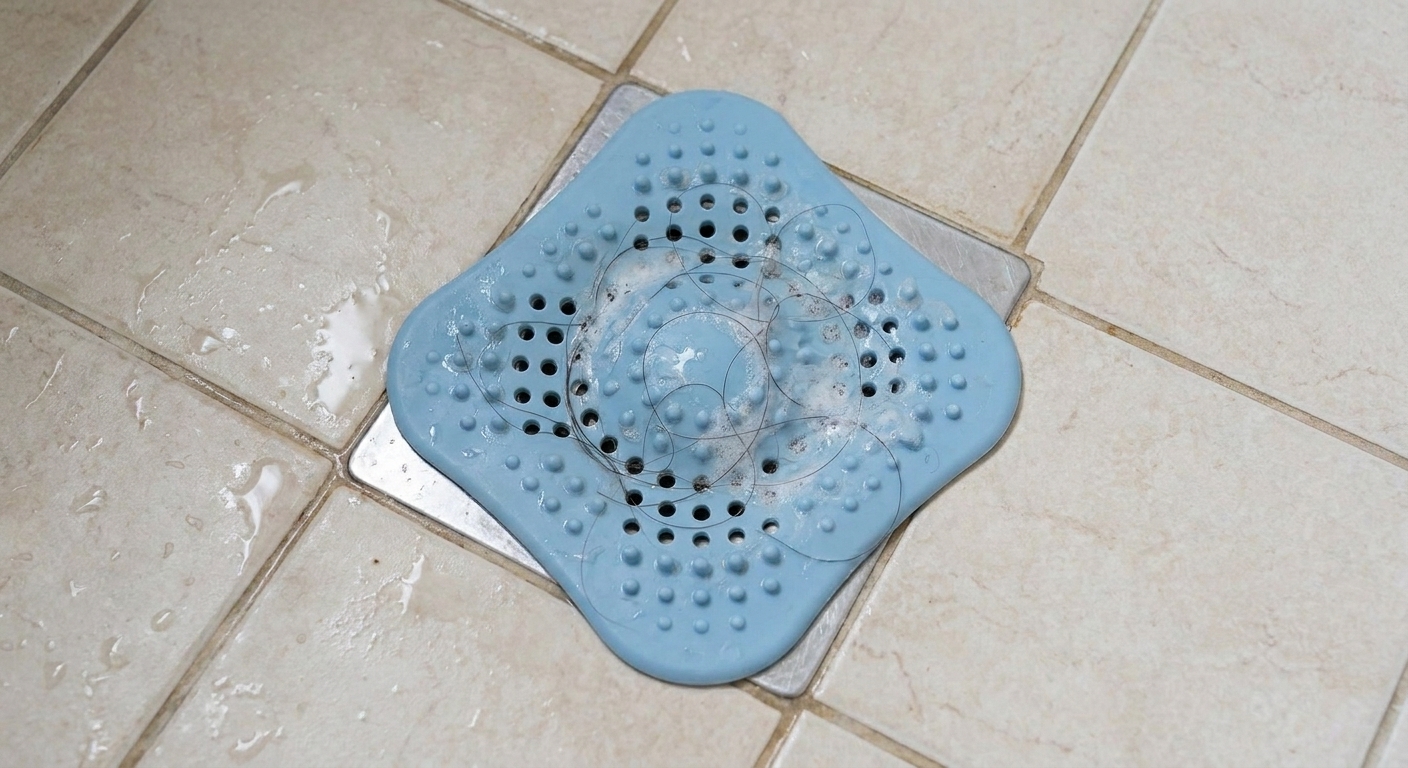
Hair is basically plumbing Velcro. It snags on rough spots, pop-up assemblies, and the drain crossbars in tubs. Add soap scum and it turns into a surprisingly tough rope.
- Where it hits: Shower and tub drains first, then bathroom sink pop-ups.
- Prevention habit: Use a tub hair catcher and clean it after each shower. It is gross for a moment, and then you do not think about it for months.
Soap scum
Bar soap is a common culprit because it contains fats that react with minerals in water. Liquid body wash can still leave residue, just usually less of the chalky buildup.
Pro tip: If your shower is draining slowly and you see a dull ring around the drain, soap scum is likely part of the story.
Shaving cream, beard trimmings, and makeup residue
These products can coat the inside of the drain. Makeup wipes and cotton rounds are also a problem when they get rinsed down “just this once.” They do not break down like toilet paper.
Dental floss
Floss does not dissolve. It can wrap around other debris and even snag at the trap or fittings. If you have ever pulled a clog that looks like a tiny bird’s nest, floss often helped build it.
Small objects
Bobby pins, jewelry backs, toothpaste caps, razor covers. They fall in, then become an anchor point for hair and gunk.
Toilet clogs: what should never be flushed
Toilets are not trash cans, even if they look convenient at 2 a.m. Toilets also have a built-in trapway with bends that can catch items long before they reach your main drain line.
“Flushable” wipes
These are famous for a reason. Even when they make it past your toilet, they can hang up downstream and combine with grease and debris.
- Rule of thumb: If it is not toilet paper, it goes in the trash.
Paper towels and tissues
Toilet paper is designed to break down quickly. Paper towels are designed to stay strong when wet. That strength turns into a clog.
Feminine hygiene products
Tampons and pads expand and can lodge in the trapway or farther down the line. Even “small” ones can cause big trouble.
Diapers, cotton swabs, and cotton balls
These are classic blockage-makers. Cotton products can clump and hold onto other debris.
Cat litter
Even the types marketed as flushable can swell and harden. Some litters also contain clay that settles like sediment in pipes.
Too much toilet paper at once
Even the right product can clog if you send down a big wad in one flush, especially in older toilets or low-flow models that are already struggling.
Safety note
When a toilet is clogging, do not keep flushing. Overflow cleanup is a fast way to ruin a perfectly good weekend.
Other sneaky clog-makers around the house
Some clogs are not about what goes down the drain today. They are about what accumulates quietly over months and then picks the worst possible moment to show itself.
Hard water scale
If you have hard water, minerals can build up on the inside of pipes and at aerators. This narrows the pathway and helps soap scum and grease residue stick.
Tree roots in sewer lines
Roots look for moisture. If your sewer line has a crack or an older joint, roots can slip in, grow, and catch toilet paper and waste. This is more common with older clay or cast iron lines, but any line with damage can be vulnerable.
Clue: You get recurring clogs in multiple fixtures, gurgling drains, or backups that seem worse after heavy use or after long rains when the ground is saturated.
“Chemical experiments” in the drain
Mixing products can create nasty reactions and still not solve the clog. Also, harsh chemical drain openers can damage some plumbing materials over time, especially older metal pipes. They can also be a bad match for septic systems, and they make the next step, like snaking the drain, more dangerous because you are working around caustic liquid.
If you use any chemical product, protect yourself. Gloves and eye protection are not overkill when splash risk is part of the deal.
Do not mix drain chemicals
Never mix bleach, ammonia-based cleaners, and drain openers. If you already poured something in and it is not working, pause. If the drain is still moving, you can rinse with plenty of water. If it is fully blocked, consider calling a pro rather than pushing chemicals deeper into the system.
How to prevent clogs without overthinking it
You do not need a fancy routine. You need a few habits that are easy enough to keep doing.
Kitchen prevention
- Scrape plates into the trash, not the disposal.
- Keep grease out of the sink. Wipe pans first.
- When you use the disposal, run plenty of water and keep it running for 10 to 15 seconds after you turn the disposal off.
- If your kitchen drain tends to get sluggish, an occasional rinse with hot tap water and a little dish soap can help move light residue. It is maintenance, not a cure, and it will not solve real grease buildup in the line.
Bathroom prevention
- Use a hair catcher in tubs and showers.
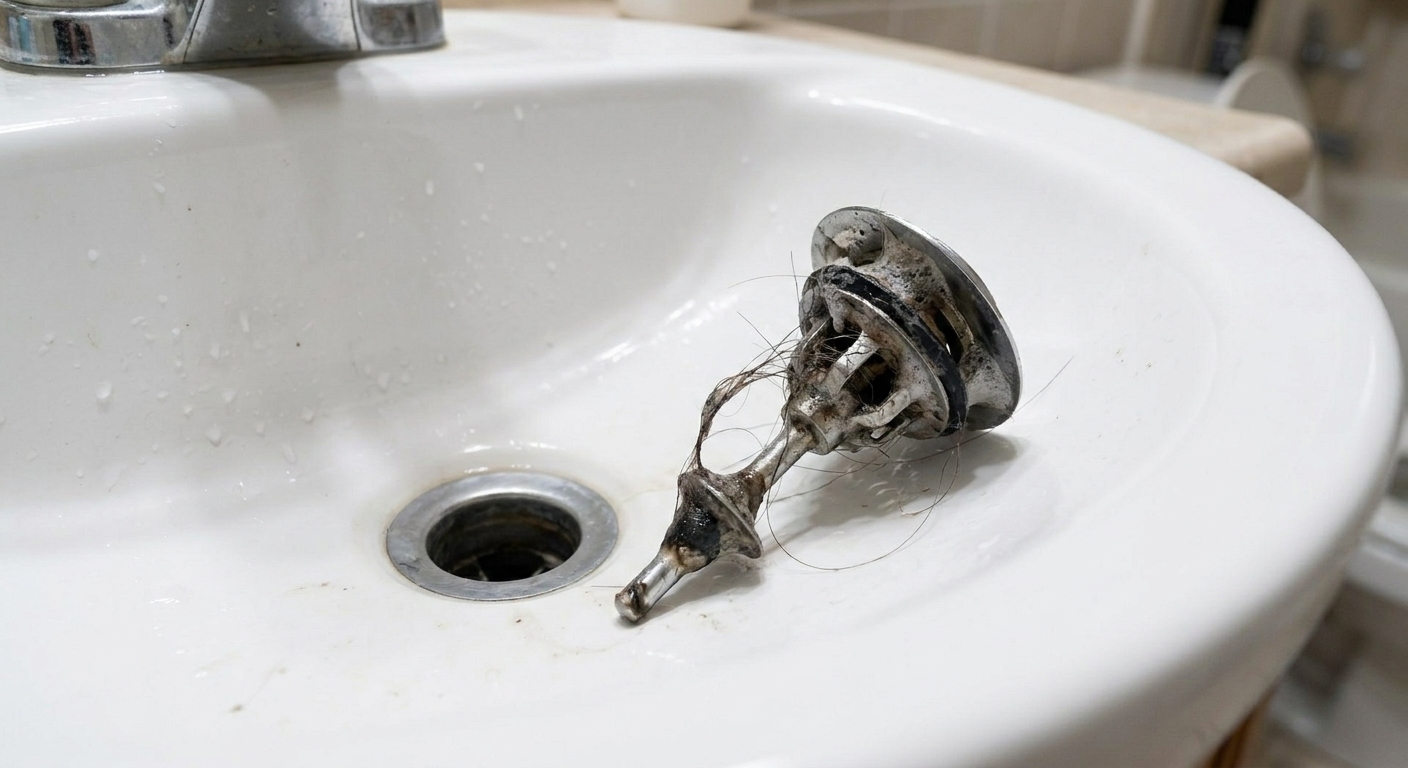
- Clean the pop-up stopper in bathroom sinks every few weeks.
- Keep floss, cotton products, and wipes out of the drain.
Toilet prevention
- Only flush toilet paper and what your body produced. Everything else gets trashed.
- If your toilet clogs easily, use less paper per flush and consider upgrading to a better-flushing model when the time is right.
Quick DIY fixes (safe, homeowner-level)
If your drain is slow or clogged, you can often clear it with a couple basic moves. Here is the order I recommend, from least dramatic to more involved.
1) Hot water, but be smart about it
For some sinks, hot tap water can help soften soap scum and light grease residue. Avoid pouring boiling water into PVC or ABS drain systems, and avoid it if the drain is fully blocked and the water will sit in the trap and fittings. If you have older plumbing or questionable glue joints, take the cautious route.
2) Plunger (the right one)
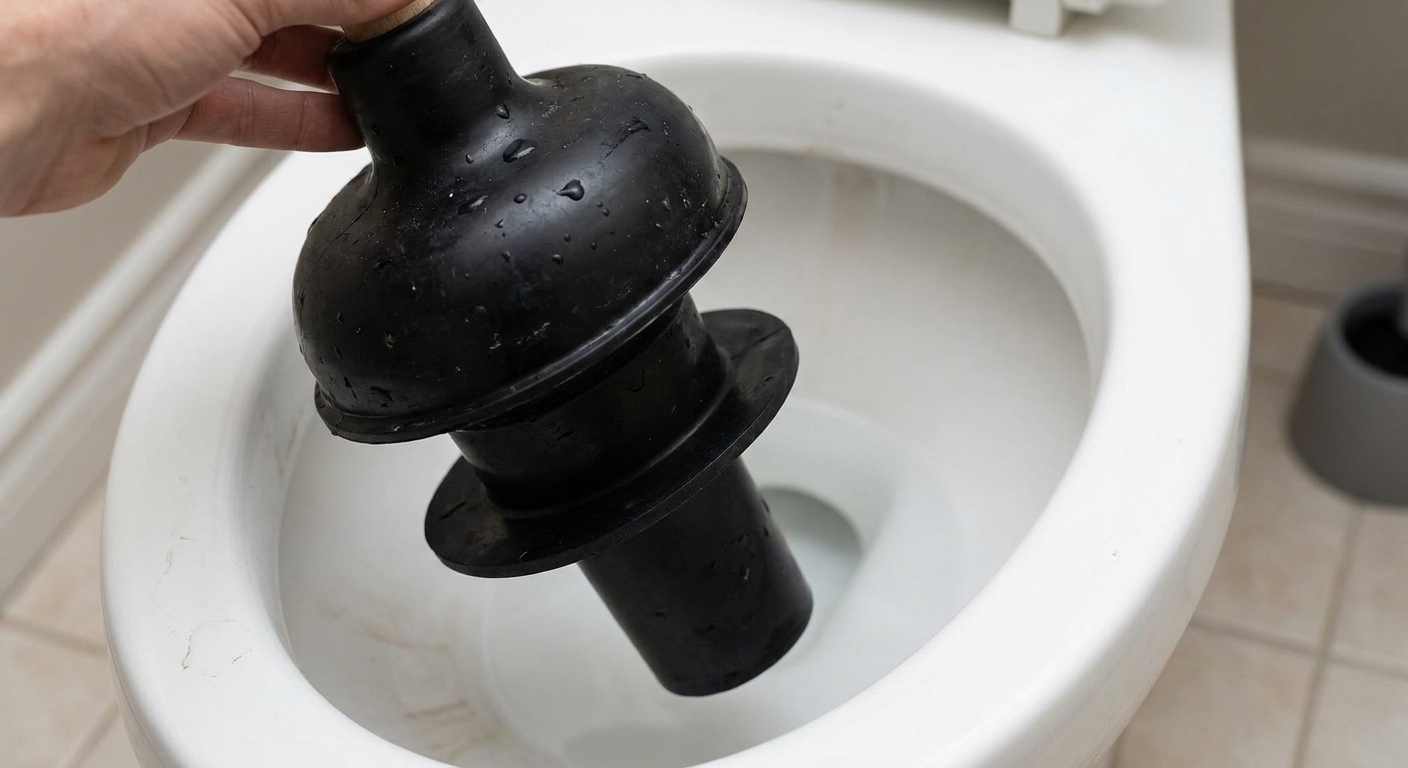
- For toilets: Use a flange plunger.
- For sinks and tubs: Use a cup plunger and cover the overflow opening with a wet rag for better suction.
- For double sinks: Block the other basin drain with a wet rag or stopper, or you will just push air back and forth instead of building pressure where you need it.
3) Clean the stopper and visible gunk
For bathroom sinks, remove the stopper and pull out hair. For tubs, lift the strainer and clear the hair ring. Wear gloves. This step solves more “mystery” slow drains than people want to believe.
4) Hand snake or small auger
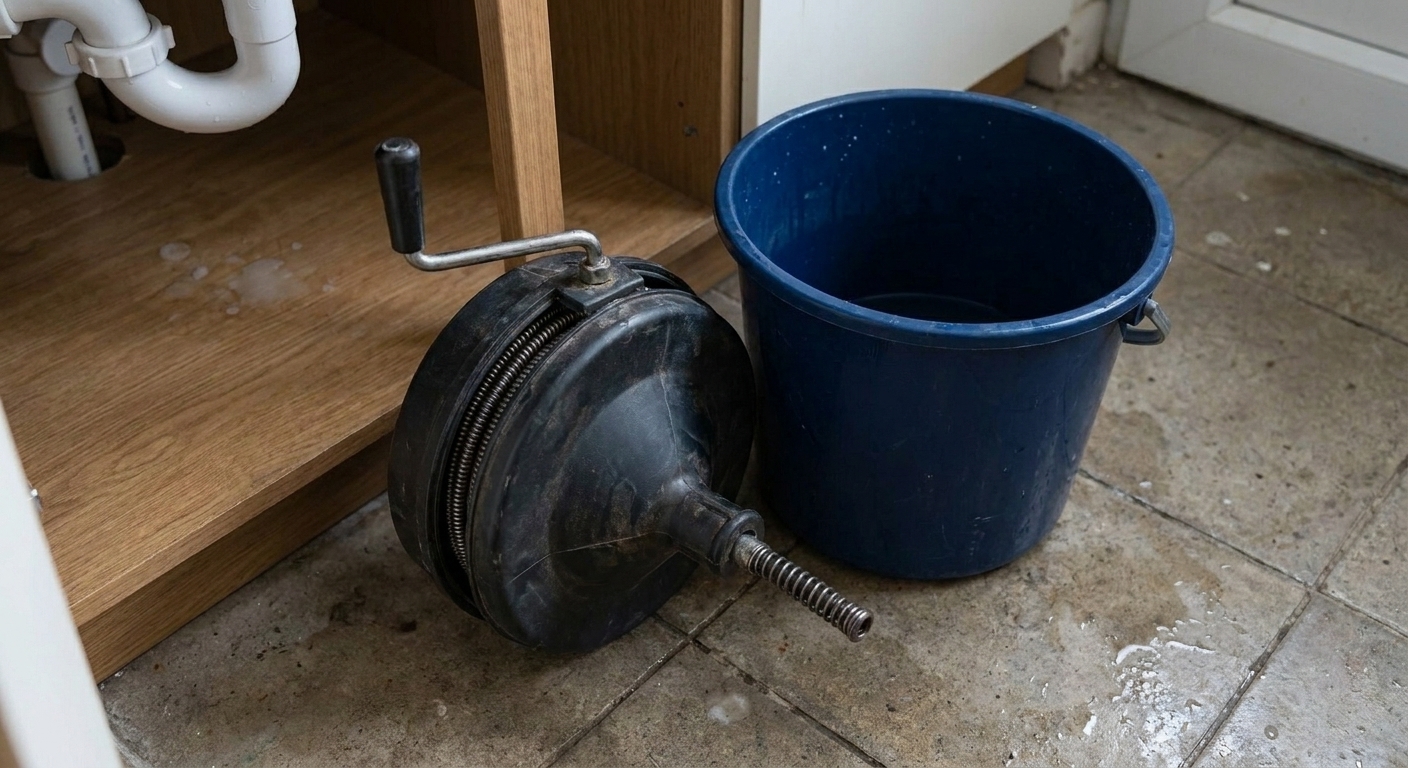
A simple hand snake is often enough for hair clogs and minor kitchen clogs. Feed slowly, rotate, and pull out debris in stages. If you used a chemical drain opener earlier, do not snake until you are sure the caustic liquid is cleared or diluted, because splashes are a real hazard.
5) Under-sink P-trap cleanout
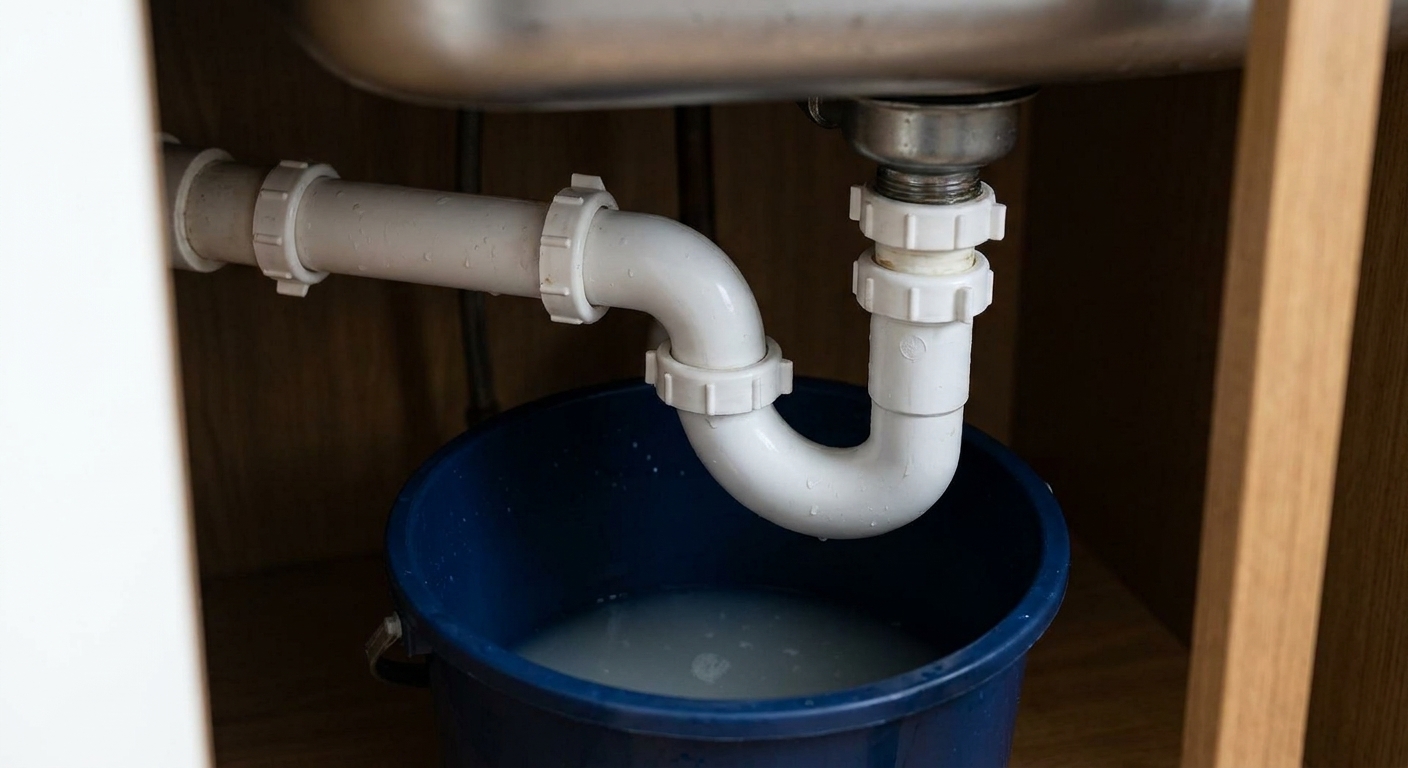
If the kitchen or bathroom sink is still clogged, the P-trap is a prime suspect. Place a bucket, loosen the slip nuts, and clean it out.
Important: This applies to slip-joint traps with removable nuts. If the trap is glued, stop and call a plumber. Cutting and rebuilding drain plumbing is a different project than a basic cleanout.
If you have a double sink: The clog is often in the trap or the tee between the bowls.
When it is time to call a plumber
I love DIY, but I love not flooding houses even more. Call a pro if:
- Multiple drains are backing up at once, especially the lowest drain in the house.
- Your toilet overflows or sewage backs up into a tub or shower.
- You suspect roots in the line or you have recurring clogs that return quickly.
- You tried a plunger and a snake and the drain is still not improving.
- There is a strong sewer odor you cannot trace, or you see water damage under fixtures.
FAQ
What is the number one thing that clogs drains?
In kitchens, it is grease and oil mixed with food scraps. In bathrooms, it is hair mixed with soap scum. Toilets are usually wipes or other non-flushable items.
Are drain cleaners safe to use?
Some can work on minor organic clogs, but they can also be harsh on pipes and dangerous to handle. I treat them as a last resort. Use gloves and eye protection, avoid mixing products, and skip them entirely if you are on a septic system or you think you will need to snake the drain afterward.
Does baking soda and vinegar unclog drains?
It can help with odors and light buildup, but it is not a reliable fix for a real clog like hair or grease. If the drain is slow because of slime or residue, it may help a little. If water is standing, you usually need mechanical action like plunging, snaking, or cleaning the trap.
Why does my drain clog again so quickly?
Usually because some of the blockage remained and is acting like a snag point. Another common cause is a partial blockage farther down the line, or buildup from grease residue, soap scum, or mineral scale that keeps grabbing debris.