
Why One Side of a Double Kitchen Sink Backs Up
If running one basin pushes water into the other but the drain still eventually clears, the problem is often in the continuous-waste tee or disposal elbow. Here is how to diagnose under-sink issues, vent clues, and when it might be a downstream clog.
Good grain. Great questions.
A double kitchen sink has a funny way of tattling on itself. You run water in one bowl and the other bowl starts rising like it is getting invited to the party. Meanwhile, the shared drain still moves water away eventually.
That pattern often means the trouble is right under the sink in the continuous-waste tee or at the garbage disposal elbow. But I will say this up front: a partial restriction downstream (in the trap arm or branch drain in the wall) can create the same “one side rises” behavior too. The goal is to use the symptoms to figure out where the bottleneck is.
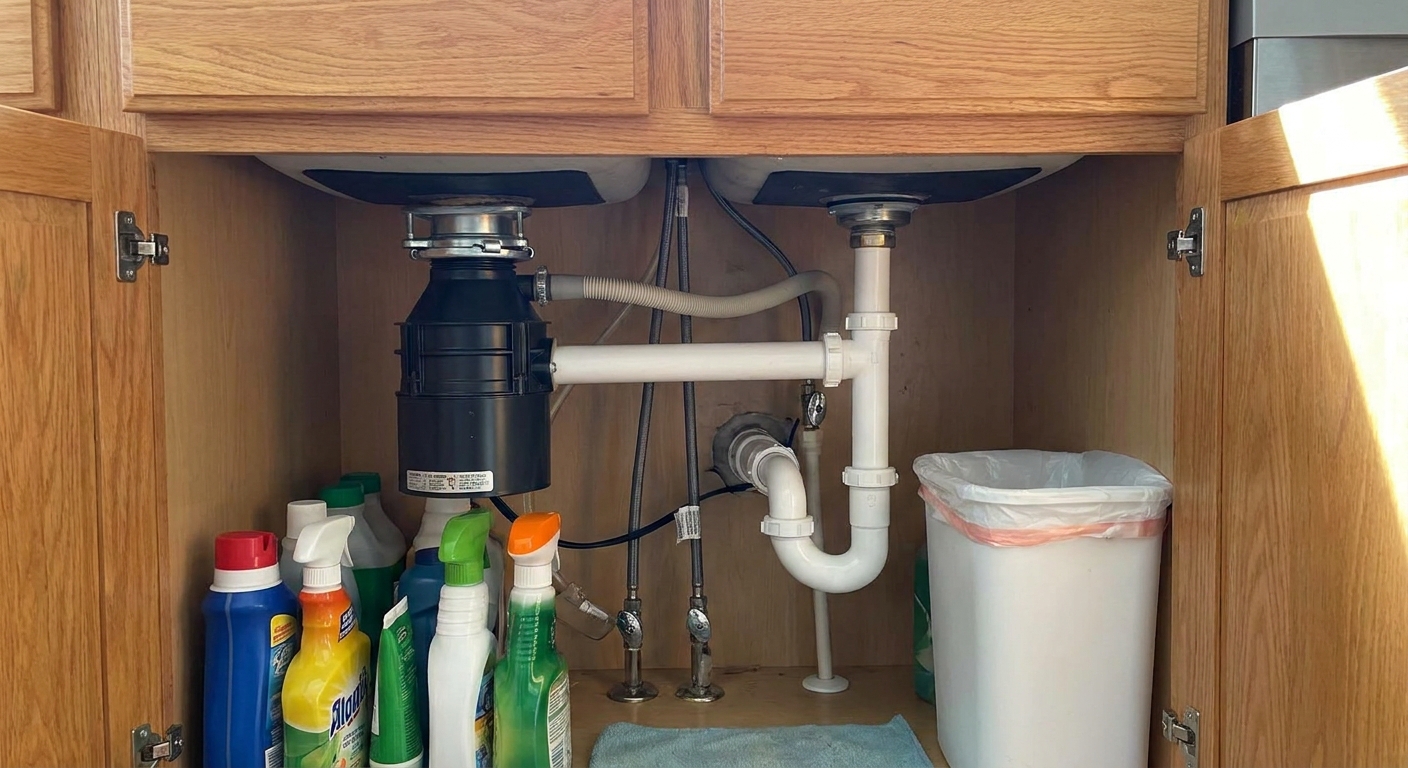
What cross-flow is (and why it happens)
When one bowl drains, it sends a surge of water into the shared piping. If that shared piping is partially restricted, the water takes the path of least resistance. Sometimes that path is straight across into the other bowl’s branch line, so the idle bowl fills temporarily.
This is different from the classic “everything backs up and stays backed up” clog. With cross-flow, you can often watch the system eventually catch up. It is just routing water the wrong way during the surge.
Quick anatomy: the parts that matter
Most double-bowl setups share a few common pieces:
- Each bowl tailpiece: the vertical pipe coming down from the strainer.
- Continuous waste: the horizontal run that ties the bowls together, usually with a tee at the center.
- Dishwasher inlet (sometimes): a small barb on the disposal or a branch tailpiece.
- P-trap: the curved section that holds water to block sewer gas.
- Trap arm: the pipe leaving the trap into the wall.
Cross-flow problems often live in the continuous-waste parts, not in the trap arm in the wall. But when both bowls are generally sluggish, the wall side moves up the suspect list quickly.
The most common culprit: a restricted tee
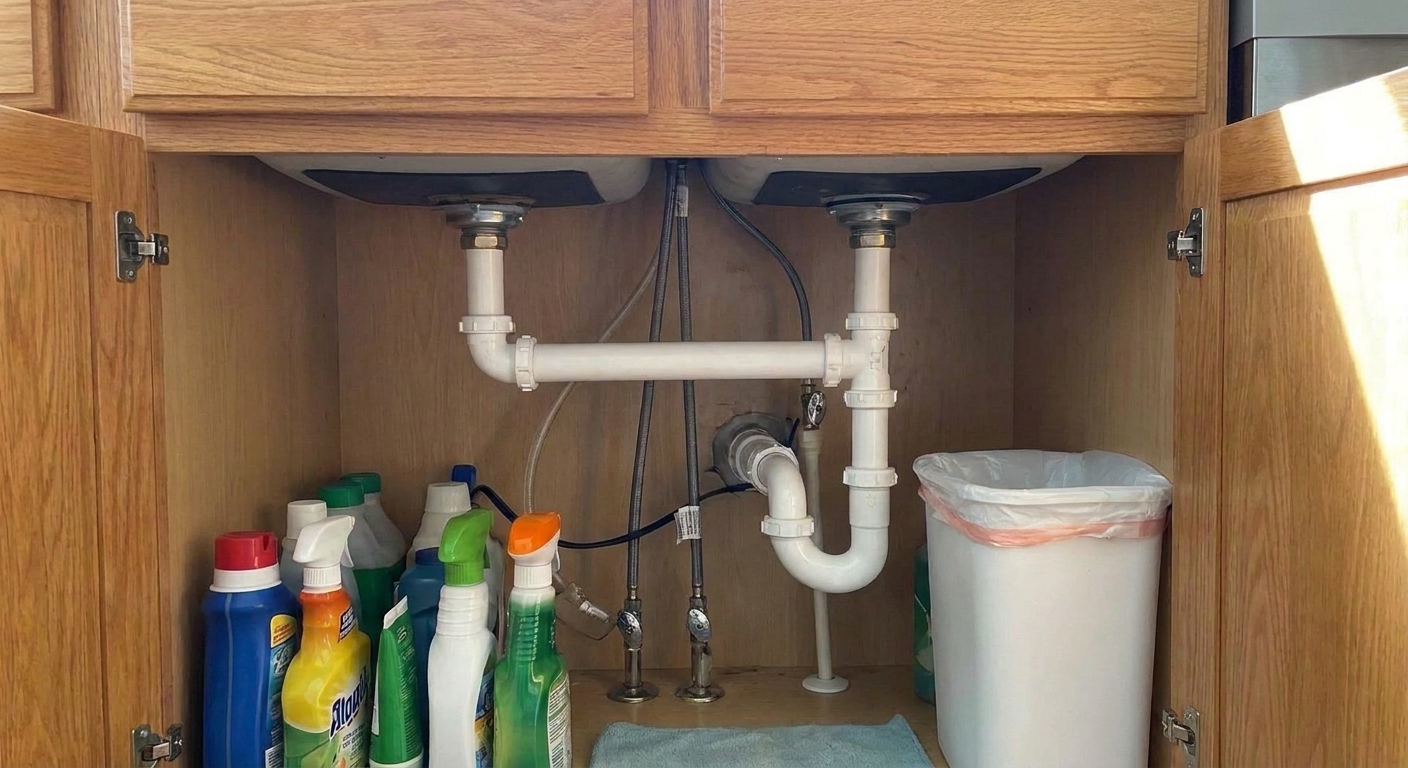
The continuous-waste tee is where one bowl’s discharge meets the other and heads toward the trap. If the tee is partially blocked, water draining from one bowl can get diverted across into the other bowl’s branch line.
What blocks a tee?
- Grease and soap sludge that builds up at the tee’s throat.
- Food debris that made it past a basket strainer or disposal.
- Improper slope where the horizontal waste line is back-pitched, encouraging buildup.
Clues it is the tee
- Water from the left bowl pushes into the right bowl (or vice versa) quickly, within seconds.
- If you drain both bowls at once, the system seems overwhelmed but still eventually drains.
- The disposal side might sound normal, but the opposite bowl “burps” water up.
What to do: Place a bucket under the trap, remove the slip nuts, and inspect the tee and the short horizontal continuous-waste section for buildup. Clean it thoroughly. If you find thick grease, do not just rinse it deeper into the line. Wipe it out.
A sneaky one: the disposal elbow is blocked
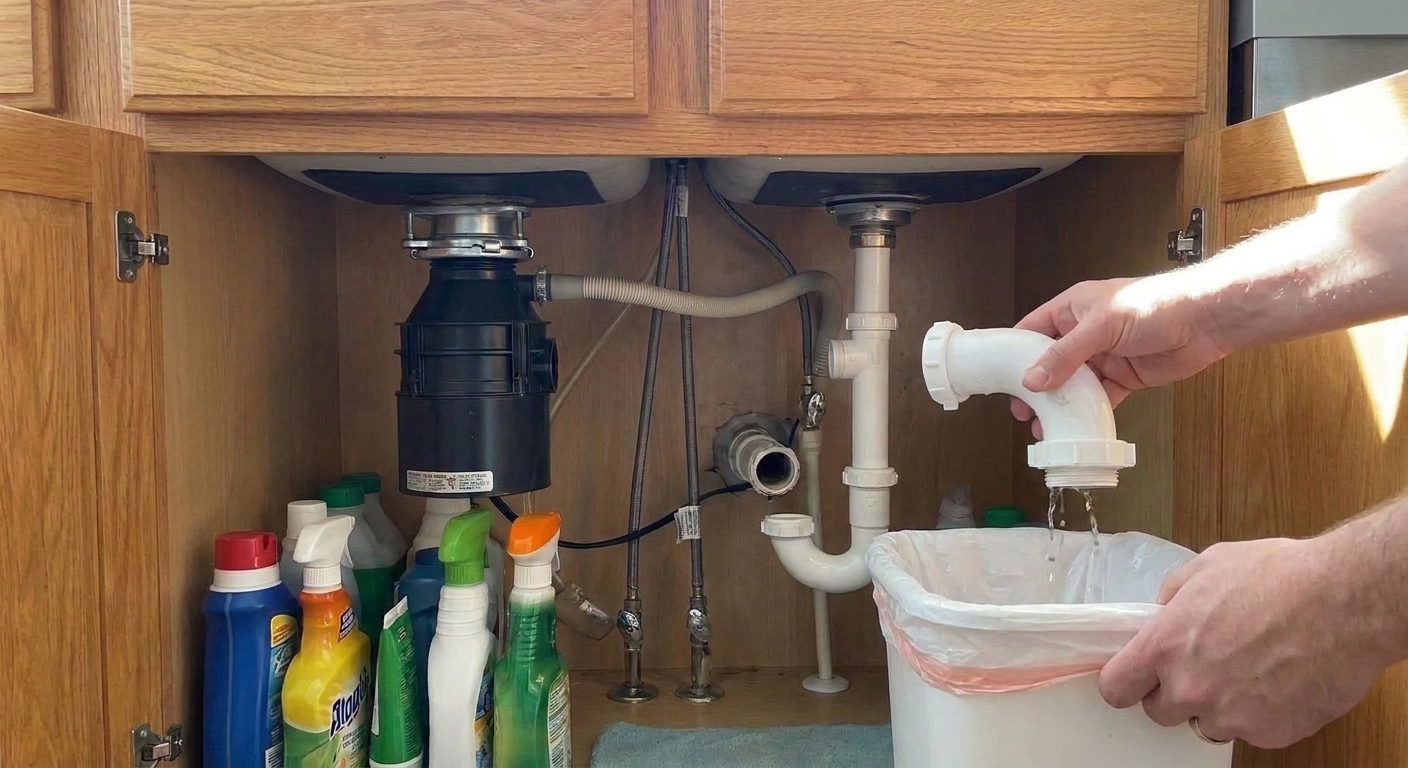
If you have a garbage disposal, there is usually a short elbow or discharge tube that runs from the disposal outlet to the tee or to the trap. That elbow can clog with fibrous food, rice, coffee grounds, egg shells, or a lovely paste of “a little bit of everything.”
How it shows up
- Run water into the non-disposal bowl and it backs up into the disposal side, sometimes rising into the disposal throat.
- Run the disposal and the water level might drop slowly, but you still get cross-flow during heavy draining.
Why this causes cross-flow
The disposal outlet is one of the main paths to the trap. If that outlet elbow is narrowed, the system cannot accept a sudden rush. The water stacks up at the tee and pushes into the other bowl line.
What to do: With power to the disposal turned off, remove the elbow at the disposal outlet and check inside. Clean it out and reassemble with a new gasket if needed.
Wrong tee or bad orientation
Sometimes nothing is “clogged,” but the plumbing geometry is working against you. If the wrong tee is used, the tee is flipped, or the continuous-waste run is forced into an awkward angle, one bowl’s discharge can shoot across into the other bowl’s line during a surge.
You will sometimes hear people call this a “baffled tee” issue. What they usually mean is a tee or kit fitting that is more directional or swept, or simply installed so the flow is aimed toward the trap instead of straight across.
Signs this is your issue
- The sink is newly installed or recently re-plumbed.
- Cross-flow happens even after you have cleaned the tee and elbows.
- The surge into the other bowl is consistent and repeatable, like a “water seesaw.”
What to do: Look at how the tee is oriented and whether the horizontal run has a gentle pitch toward the trap. Compare what you have to the manufacturer instructions for your disposal kit or sink drain kit. The fix is often as simple as rotating or replacing a fitting so the flow is guided toward the trap and the connections sit straight without stress.
Do not ignore vent clues
If you hear a lot of gurgling, see bubbles, or notice the sink draining better when you crack the stopper or run the other bowl a little, that is an “air problem” hint. A blocked vent, a failing AAV (air admittance valve), or an odd vent layout can make draining sluggish and unpredictable.
Venting issues do not usually create a clean, repeatable “water shoots into the other bowl” moment all by themselves. But they can make a minor restriction behave like a bigger one, and they can turn normal draining into a noisy mess.
How this differs from a clog past the trap
A clog past the P-trap (in the trap arm or the wall drain) often behaves like this:
- Both bowls drain slowly, not just one.
- If you fill one bowl and release it, the other bowl may rise because the backup is happening downstream and both bowls share that exit.
- After a while, everything stays high until the clog clears.
With the under-sink cross-flow issues above, you often see the opposite: one bowl drains “pretty okay,” the other bowl becomes the temporary overflow reservoir, and the system eventually catches up.
When plunging helps (and when it will not)
Plunging a double sink can help when you have a soft clog downstream of the trap. It is a poor tool for the under-sink problems above because:
- A blocked tee is often greasy buildup that just flexes and resettles. You need to remove and clean the parts.
- A clogged disposal elbow is a physical restriction in a short piece of pipe. Pressure waves from a plunger rarely clear it well.
- Wrong tee or bad orientation is not a clog at all. You can plunge until your apron strings fray and the water will still take the “across to the other bowl” route.
Proper double-sink plunging: Seal one bowl completely with a stopper or a wet rag, then plunge the other bowl. If you do not seal the second bowl, you are mostly just pushing air back and forth between basins.
A simple diagnosis checklist
Step 0: Quick safety setup
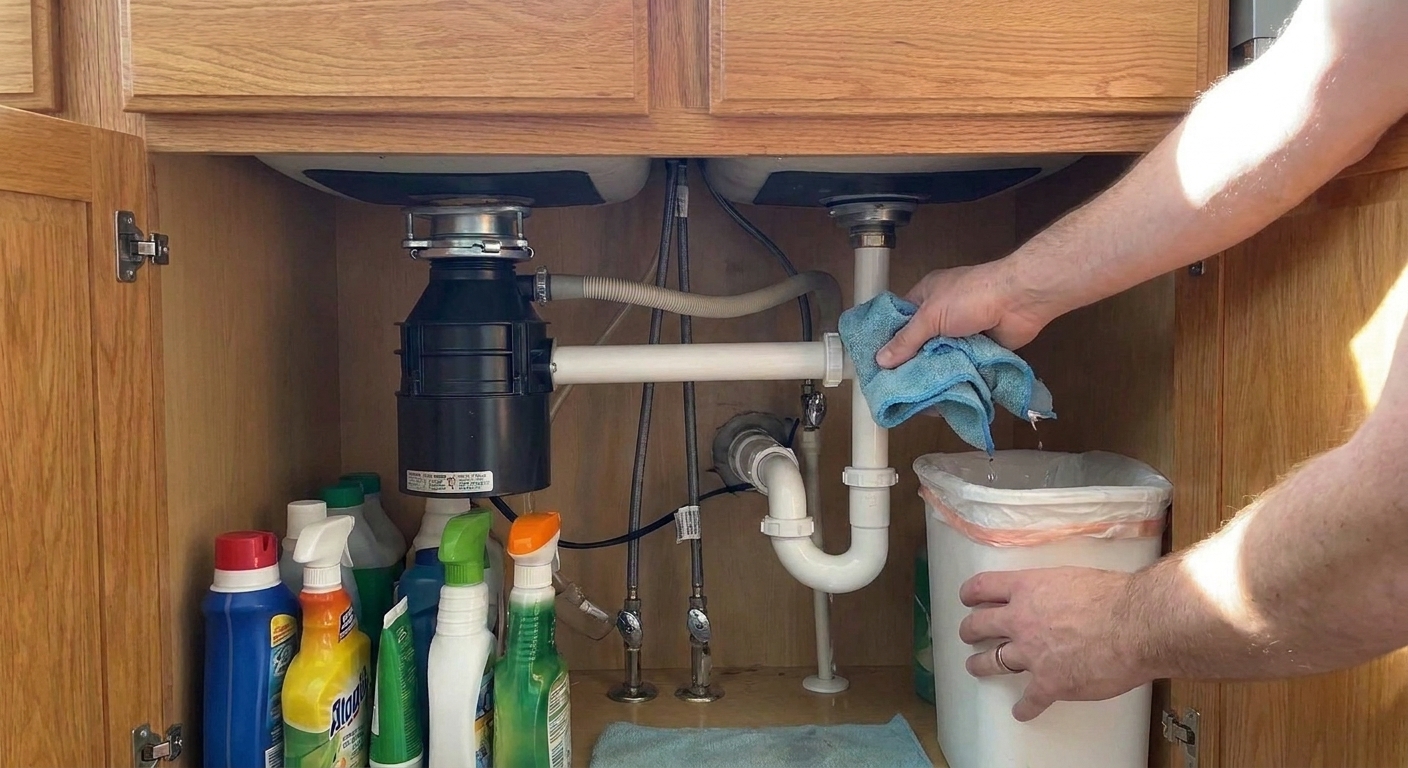
- Put a towel down and set a bucket under the trap.
- If you have a disposal, switch it off and cut power at the breaker if you can. Confirm it cannot turn on before you put your hands near it.
- Keep the bucket positioned so it does not end up directly under electrical cords or outlets in the cabinet.
Step 1: Confirm the pattern
- Plug the right bowl. Run water in the left bowl for 10 to 15 seconds and watch the right bowl.
- Repeat with the bowls reversed.
- Listen for gurgling and watch for bubbles. That is useful information later.
Step 2: Check the disposal side (if you have one)
- Look for standing water in the disposal throat when the other bowl drains.
- If the dishwasher hose connects to the disposal, make sure it is not kinked and the clamp is not pinching the hose.
Step 3: Inspect the tee and short elbows
- Loosen slip nuts by hand or with tongue-and-groove pliers.
- Remove, inspect, and clean the tee and any short elbows, especially the disposal discharge elbow.
- Check that the tee is oriented correctly and the horizontal run has a gentle pitch toward the trap.
Step 4: Dishwasher connection quick check
- If the dishwasher has been draining poorly too, check the dishwasher inlet barb at the disposal or branch tailpiece for gunk buildup.
- If the disposal was recently installed, confirm the dishwasher inlet knockout plug was removed. A stuck plug usually shows up as dishwasher backup, but it is worth ruling out while you are under there.
Step 5: Reassemble and test
- Hand-tighten slip nuts plus a small extra snug. Do not over-torque plastic.
- Run water in each bowl and then both bowls together to see if cross-flow is gone.
When to call a plumber
Get backup if any of these show up:
- Recurring cross-flow after you have cleaned the tee and disposal elbow and confirmed the fittings are oriented well.
- Leaks that persist even after re-seating washers and properly tightening slip joints.
- Gurgling in other fixtures, or slow draining throughout the kitchen, which can point to venting trouble or a deeper branch clog.
- Older metal piping that looks corroded or paper-thin, where disassembly can turn into an accidental remodel.
- Both bowls consistently slow even after under-sink cleaning. That is when a snake down the wall line or a camera inspection starts making sense.
FAQ
Why does water from one sink go into the other when the drain is not fully clogged?
Because the restriction is often right at the connection between bowls or at the disposal outlet. The system can still drain, but the initial surge cannot pass fast enough, so it pushes sideways into the other bowl line. A partial clog downstream in the wall can do this too, especially if both bowls are generally slow.
Is it normal for a little water to move into the other basin?
A tiny rise during a high-volume dump can happen, especially if one bowl is plugged and you release it quickly. But repeated, noticeable transfer during everyday use is a sign of restriction, poor geometry, or sometimes venting trouble.
Will Drano or chemical drain cleaner fix cross-flow?
Usually not. Grease buildup in a tee and food paste in a disposal elbow tend to respond better to disassembly and cleaning. Chemical cleaners can accelerate corrosion in older metal piping, can be hard on seals and disposal components, and can create a burn hazard for anyone opening slip joints afterward.