
What to Expect from a Sewer Camera Inspection
Learn how a sewer camera inspection works, what it can find (roots, breaks, bellies), typical costs, when to schedule one, and how to understand the findings.
Good grain. Great questions.
If your drains are acting moody, or you are buying a home and want fewer surprises, a sewer camera inspection is one of the clearest answers you can buy. It is not glamorous, but it is honest. A small camera takes a trip through your main sewer line and shows what is really happening down there so you can plan repairs, or avoid them.
Here is what to expect, what it can find, what it commonly costs, and how to read the results without needing a decoder ring.
What it is
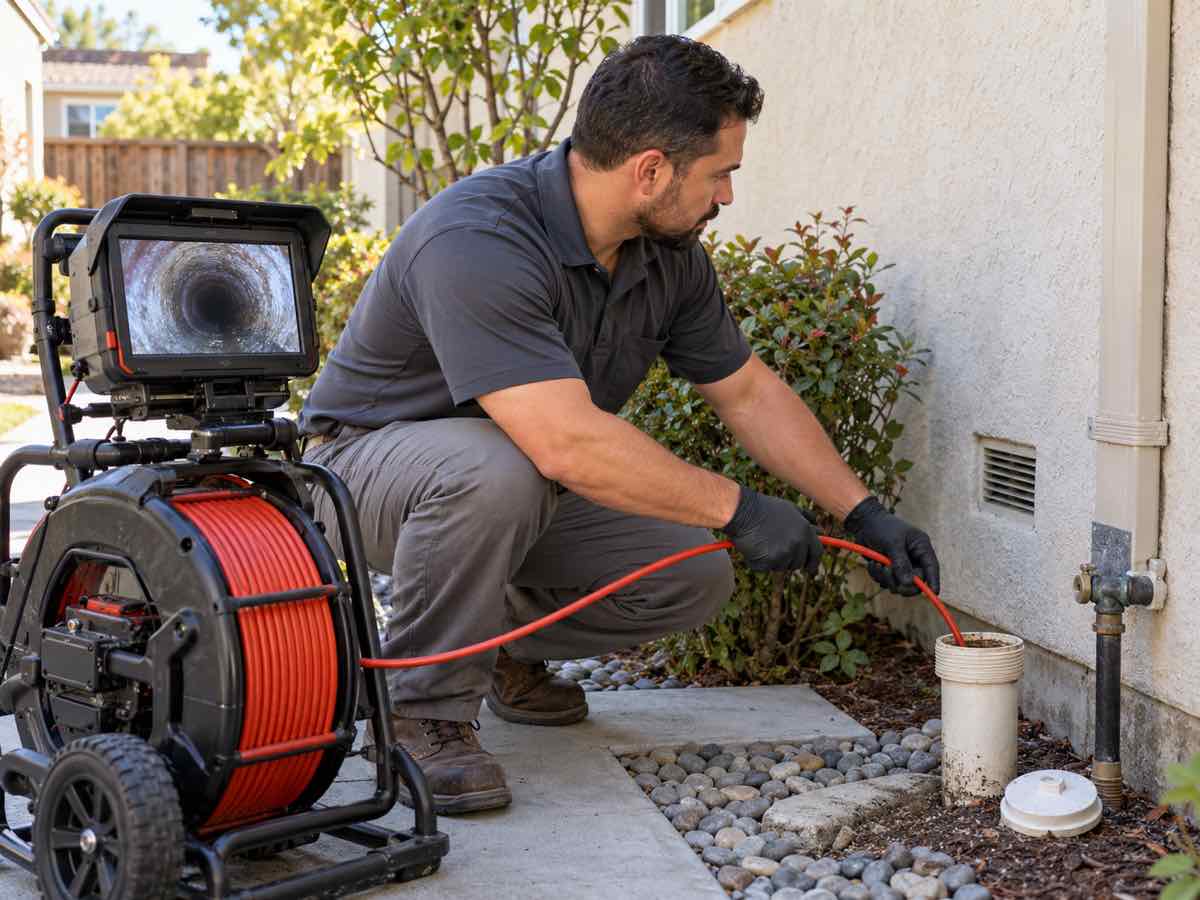
A sewer camera inspection, sometimes called a sewer scope, is when a plumber runs a waterproof camera head through your main sewer line. The camera sends live video to a monitor so the technician can see the pipe condition, locate problems, and estimate where issues are in relation to your home.
This inspection usually focuses on the main line from the house to the city connection (often called the tap) or the septic tank.
If you are new to the lingo:
- Cleanout: a capped access point on the drain line used for snaking, jetting, and camera work.
- City tap: the point where a home’s private sewer line connects into the public main.
How it works
1) Accessing the line
The technician needs an entry point. Common access points include:
- Exterior cleanout near the foundation or yard
- Basement or garage cleanout
- Roof vent stack (less common and more situational)
- Pulling a toilet to access a larger drain opening (sometimes used in older homes without a cleanout)
2) Running the camera
The camera is pushed through the pipe on a flexible rod or cable. As it moves, you will typically see pipe walls, joints, bends, and anything interrupting flow, like roots or buildup.
3) Locating the trouble spot
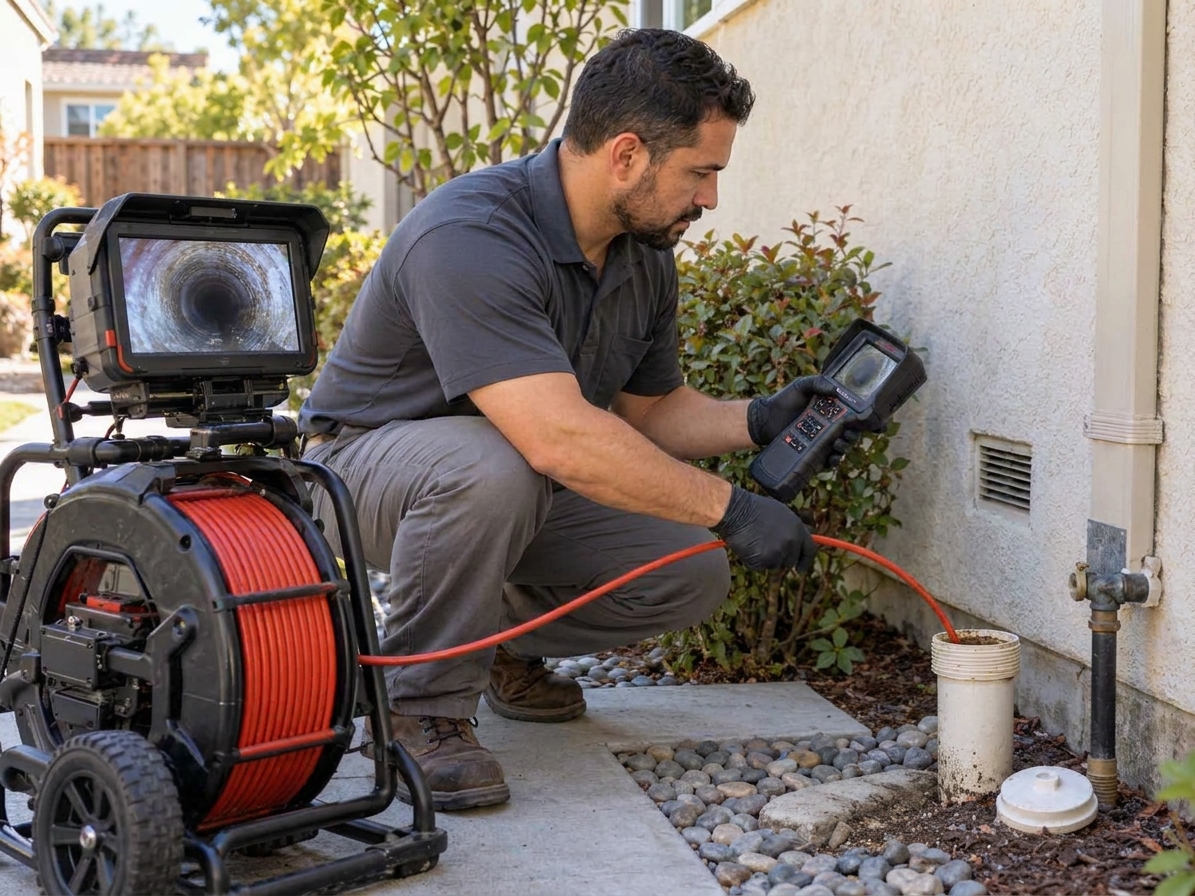
Many inspection cameras include a locator beacon in the camera head. The technician can walk above ground with a receiver to pinpoint the camera location and an approximate depth. This matters a lot if a repair is needed, because guessing where to dig is expensive.
4) Recording and notes
Some companies provide a video file, screenshots, or a written summary. Others simply show you the live feed and talk through what they see. If you are buying a home, ask ahead of time what you will receive so you can keep it with your home records.
What it can find
A camera inspection is excellent at identifying physical and flow problems inside the pipe. Common findings include:
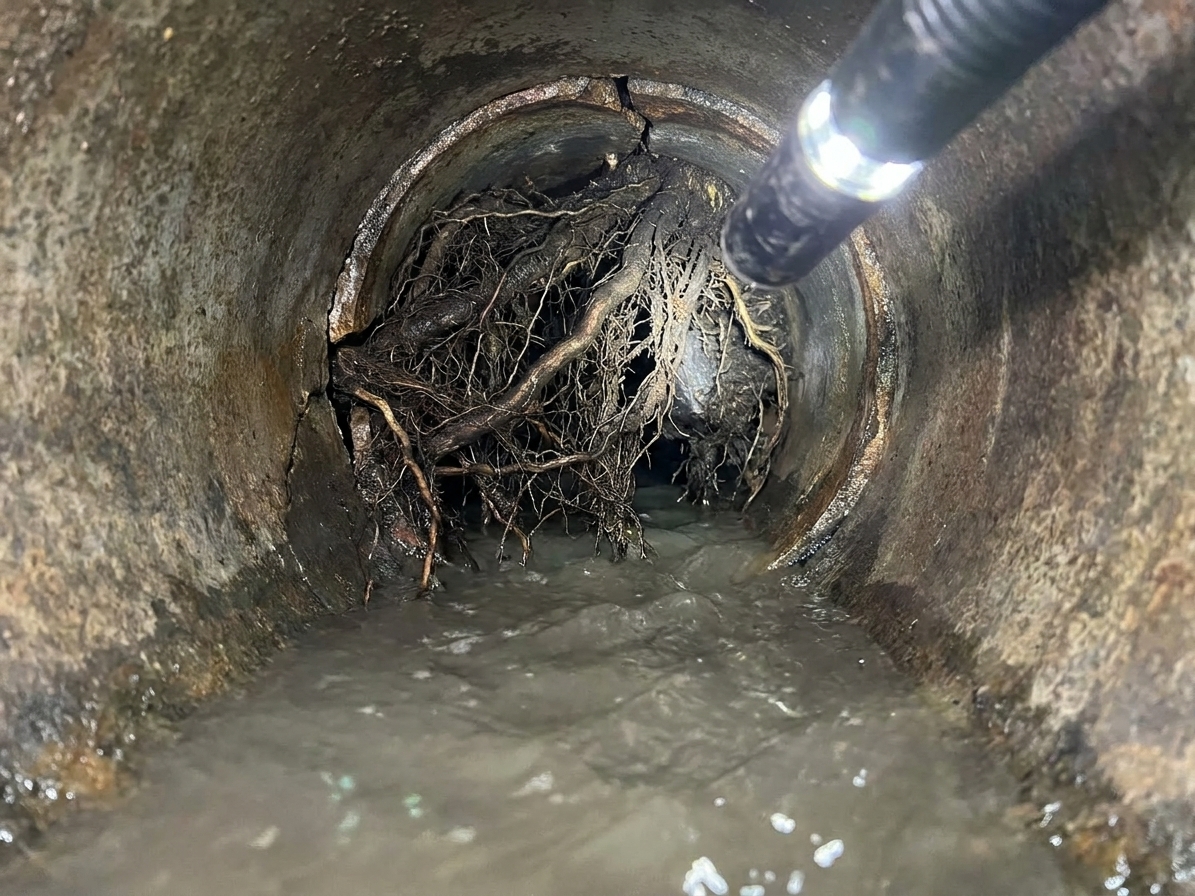
- Tree root intrusion at joints or cracks
- Grease or sludge buildup narrowing the pipe
- Foreign objects and obstructions
- Cracks and fractured pipe sections
- Offset joints where pipe sections no longer align
- Bellies or low spots where water collects and slows flow
- Corrosion or rough interior walls (common in older cast iron)
- Pipe collapse or severe deformation
- Improper connections or odd transitions between materials
One important limitation: a camera tells you what the inside looks like, but it does not always explain why it happened. For example, you might see an offset joint, but the cause could be soil movement, poor installation, or a previous repair settling.
What it cannot do
A camera scope is powerful, but it is not a crystal ball. A few realistic limitations:
- It can miss fine defects: hairline cracks, small holes, or leaks can be hard to confirm, especially if the pipe is wet or coated.
- It does not measure flow or leakage rate: you can often see evidence of infiltration, but not how much water is moving through a defect.
- It cannot guarantee future performance: you can clear roots today and still have them return if the joint or crack is still there.
- It may not show the whole line: standing water in a belly, heavy sludge, or a full blockage can stop the camera early.
- Responsibility lines are not always obvious: a scope can show where the problem is, but it does not automatically confirm whether it is on private pipe or public pipe unless the location is clearly tied to the property line and tap.
When to schedule one
Buying a home
If the house is older, has large trees, or has any history of backups, a sewer scope can be a very wise part of due diligence. A pretty kitchen does not cancel out a collapsed sewer line.
It is especially worth considering for:
- Older homes (often pre-1970 or pre-1980, depending on area and pipe material)
- Properties with mature trees between the house and street
- Homes with cast iron, clay, Orangeburg, or other older pipe materials
- Any home with a finished basement where a backup would be extra costly
Recurring clogs or slow drains
If you are plunging, snaking, or using drain cleaners on repeat, the system is telling you something. A camera inspection can confirm whether the issue is localized (one branch drain) or in the main line.
After a sewer backup
Once the immediate mess is handled, a camera inspection can help identify the cause so you are not cleaning up the same problem again next month.
Before landscaping or hardscaping
Planning a patio, driveway work, or a big tree planting? Knowing where your sewer line runs and what shape it is in can prevent a very expensive surprise later.
Before lining or trenchless repair
If you are considering pipe lining, bursting, or other trenchless options, the camera inspection helps confirm whether the pipe is a good candidate. Not every damaged pipe can be lined safely.
Heads up: If your home has no accessible cleanout, adding one can be a worthwhile upgrade. It makes future inspections and cleanings faster, cleaner, and often cheaper.
Typical cost
Costs vary by region, access, and how much work is needed to get the camera into the line. In many areas, a sewer camera inspection commonly falls in the $150 to $500 range when it is a straightforward job. In higher cost-of-living metros, or when a real-estate transaction adds rush scheduling and documentation, it can run higher. It can also be higher if the technician must pull a toilet, excavate a buried cleanout, or spend extra time due to a complicated blockage.
What affects price
- Access: An easy exterior cleanout usually costs less than pulling a toilet.
- Distance: Longer runs to the street or septic can mean more time.
- Documentation: Recorded video and a written report may cost more.
- Same-day service: Emergency scheduling can increase the price.
- Cleaning needed first: Some companies charge separately to snake or jet the line so the camera can see past sludge or a clog.
- Bundle pricing: Some plumbers discount the inspection if you also pay for a cleaning or repair.
If you are doing this as part of a home purchase, ask whether the price includes locating (marking the line path or trouble spot). Not every inspection includes it by default.
If the line is blocked
A camera can only see what it can reach. If the main line is fully blocked, the camera may stop at the clog. In that case, the technician might recommend:
- Snaking or augering to open the line
- Hydro jetting to clear heavy buildup and, in some cases, cut back soft root masses
- A second camera pass after clearing so the rest of the pipe can be evaluated
A real-world caution from the workshop bench: hydro jetting is not always the right tool. Fragile clay, Orangeburg, badly corroded cast iron, or partially collapsed pipe can be damaged by aggressive jetting, and jetting does not fix the underlying crack or joint where roots got in.
For homeowners, the key is this: clearing a clog is not the same as diagnosing why it happened. A good inspection often includes both steps, even if they happen on separate visits.
How to read the results
When you are reviewing the video or listening to the summary, focus on four practical questions.
1) What is the defect?
Ask for plain language: roots, crack, separation, belly, heavy scaling, collapse, or something else. If the answer is vague, ask what that defect does to flow and how it typically worsens over time.
2) Where is it?
Most pros will describe distance in feet from the cleanout or entry point, like “32 feet out.” That measurement is useful when comparing quotes or planning repairs.
3) How bad is it?
Not every defect is an emergency. A little root intrusion is different from a crushed section. Ask what failure looks like next and what timeline is realistic.
4) What is the next step?
There are usually a few categories of recommendations:
- Maintenance cleaning: for grease, mild roots, or buildup
- Spot repair: replace a short damaged section
- Rehab option: lining a section if the pipe is suitable
- Full replacement: for widespread failure, severe offsets, or collapse
Knob’s workshop rule: If the recommendation involves digging, ask them to show you the exact moment in the video where the defect appears, and ask how they determined the location. Clear video plus a clear location is what keeps a repair from turning into a treasure hunt.
Red flags and good signs
Good signs
- The technician explains what you are seeing as the camera moves.
- They measure distances and identify pipe material transitions.
- They can locate the camera from above ground when needed.
- You receive video or clear documentation if requested.
Red flags
- They rush, do not measure, and only give a vague “it’s bad.”
- They recommend a full replacement without showing clear evidence of failure.
- They will not discuss alternatives like cleaning, spot repair, or lining when appropriate.
- They cannot explain where the problem is located.
Questions to ask
- Will you provide the video file or photos?
- Does the price include locating and marking the problem area?
- What access point will you use? (cleanout, toilet removal, roof vent)
- What happens if the line is blocked? (separate fee to clear, rescope included or not)
- Do you check all the way to the city tap or septic tank?
- Can you identify the pipe material? (PVC, cast iron, clay, Orangeburg, etc.)
FAQ
Is it messy?
Usually it is fairly clean if there is a good exterior cleanout. If access requires pulling a toilet or working in a crawlspace, it can be more disruptive, but a careful pro will protect floors and clean up.
Can I do it myself?
Homeowner camera kits exist, but the learning curve is real. The bigger challenge is not seeing the pipe. It is correctly interpreting what you see and accurately locating it. If you are troubleshooting a persistent issue or buying a home, hiring a pro is often the better value.
Will it tell me if the pipe is leaking?
Sometimes. A camera can reveal cracks, separations, and intruding roots that suggest leakage. But it does not directly measure leakage rate. If there is a concern about groundwater infiltration, soil voids, or chronic wet spots, additional diagnostics may be needed.
How long does it take?
A straightforward inspection often takes 30 to 60 minutes. Some real-estate scopes can be quicker, while difficult access, heavy buildup, or a blocked line can push it longer.
Next steps and safety
A few practical guardrails while you sort out what the camera shows:
- Be careful with chemical drain cleaners: If you suspect a main-line issue, repeated chemical use can make a bad situation messier and, in some cases, harder or more hazardous for a tech to service. Use them sparingly, and follow label directions.
- Treat certain symptoms as urgent: sewage backing up into tubs or floor drains, multiple fixtures backing up at once, or wastewater in a basement is a stop-and-call situation.
- Know when to call the city: If the issue appears to be at or beyond the tap, or neighbors are reporting backups too, your local utility may need to check the public main.
Bottom line
A sewer camera inspection is one of the most practical “peek behind the wall” services a homeowner can schedule. It shows whether your main line is clear and intact, or whether roots, damage, or sagging pipe are quietly setting you up for backups.
If you take one thing from the workshop bench today, let it be this: ask for the location in feet and a clear explanation of the defect. When you have those two pieces, you can compare quotes, weigh repair options, and make decisions with a lot more calm.