
Is a Sewer Backup the City’s Problem or Mine?
A simple, homeowner-friendly way to tell if a sewer backup is coming from your private lateral or the city main using your cleanout, plus what proof the city will usually want.
The first time you see sewage where it absolutely does not belong, your brain does a fun little somersault: Is this on me… or is this on the city? I have been on both sides of that panic, once as the guy in work boots getting the call, and plenty of times as a homeowner standing in my own basement thinking, “Well, this is not the weekend project I had planned.”
The goal of this article is narrow and practical: how to use your cleanout to figure out whether the blockage is likely on your property (your private lateral) or out in the street (the city main). Not how to fix it, not what caused it, just how to sort out ownership and responsibility fast enough to make the right calls.
First, the boundary
Most homes tie into a public sewer system like this:
- Your plumbing drains flow out of the house into a building drain and then into the private sewer lateral (also called the service line).
- Your lateral runs from your house to the street and connects to the municipal sewer main.
In many towns, the homeowner owns and maintains the lateral from the house to the point where it meets the city main. In some areas, the city owns the section from the main to the property line, or to a curb cleanout near the sidewalk. There is no single national rule. The only reliable answer is your local ordinance and utility policy.
One quick vocabulary note, because I am going to use these words a lot:
- Upstream means toward the house.
- Downstream means toward the street and city main.
That said, the cleanout test below is still extremely useful because it gives you evidence of whether the backup is being pushed toward your house from the street (often a main or downstream issue) or whether sewage is stopping somewhere between your house and the street (often a lateral issue).
If you are on septic: this article does not apply the same way. There is no city main. If you are not sure which you have, check your closing paperwork or call your local utility. If it is septic, call a septic pro.
Your best line is the cleanout
A cleanout is a capped access point into the sewer line. If you can safely open one, it can tell you a lot about what direction the problem is coming from.
Where to look
- House-side cleanout: Often near the foundation wall, in a basement, crawlspace, utility room, or just outside the home.
- Property-line or curb cleanout: Sometimes near the sidewalk or in the yard closer to the street, occasionally in a small ground box with a plastic or cast-iron lid.
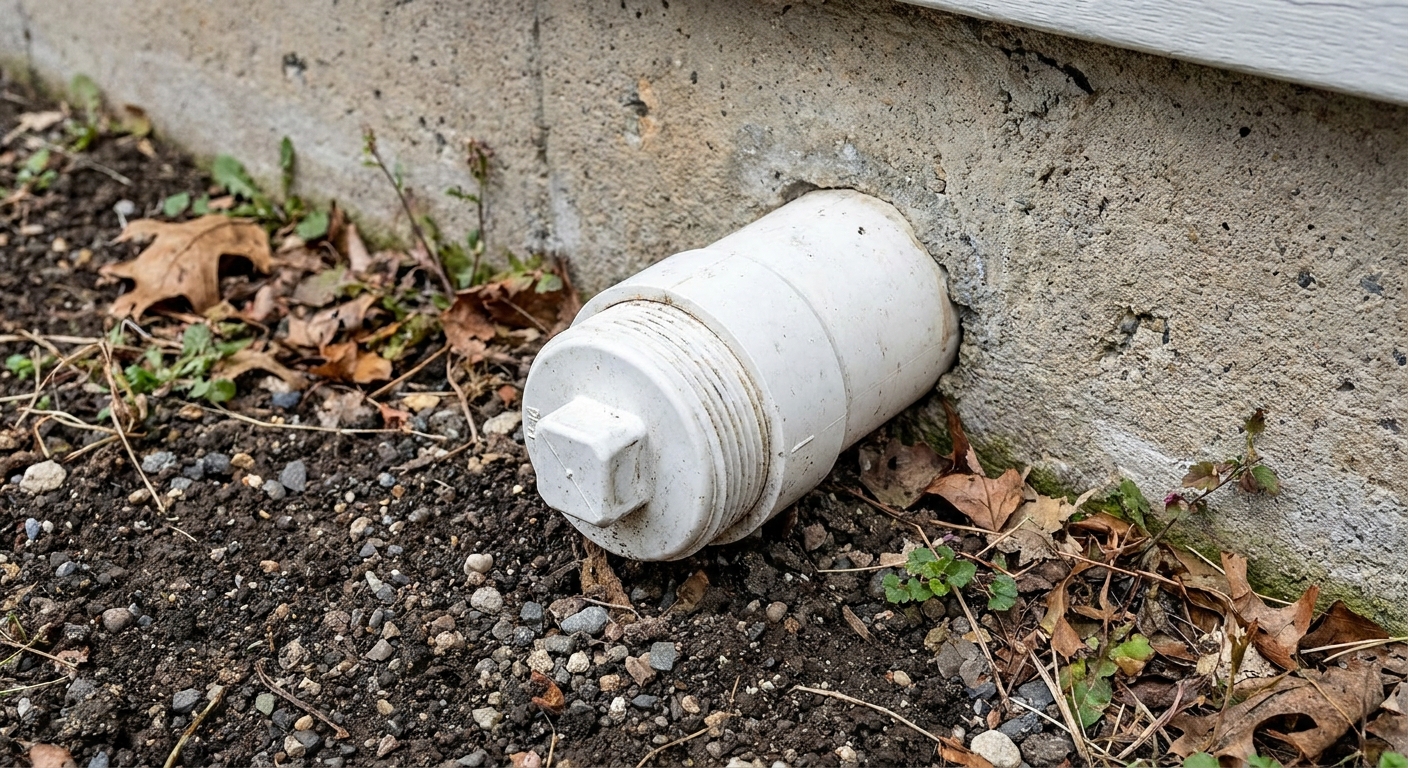
If you have both a house-side cleanout and a property-line cleanout, you are in great shape for troubleshooting responsibility. If you only have one, you can still learn something, just with less certainty.
Safety heads-up: A sewer cleanout can be under pressure during a backup. If you are not comfortable, stop and call a pro. Wear gloves and eye protection. Keep kids and pets away. Do not put your face over the cap while loosening it. If you are indoors, ventilate the area and avoid open flames or sparks because sewer gas can collect in confined spaces.
If you are hunting for a buried curb cleanout: do not start digging blindly. In many places, you can request utility locates (often via 811 in the U.S.) so you do not hit something you really do not want to hit.
What the cleanout tells you
Here is the plain-English concept: the cleanout is a window into the line at that exact spot. If the pipe is full right there, sewage is backed up past that point. If it is empty (or only has a small amount at the bottom), the backup is likely upstream of that spot.
Two important caveats, because real plumbing loves to stay humble:
- A full curb or property-line cleanout strongly suggests the restriction is downstream of the house, but it could still be on your side depending on where the ownership boundary is and where the blockage sits (for example, the short stretch between that cleanout and the main connection).
- An empty-looking cleanout is most meaningful if you have stopped using water for a while. A partial blockage can sometimes seep down slowly, then back up again when you run a lot of water at once.
If you can access a property-line or curb cleanout
This is the cleanest way to separate “mine” from “city” in a hurry.
Scenario A: Property-line cleanout is full
If you open the property-line cleanout and you see sewage standing high in the pipe or actively rising, that suggests the blockage is downstream of that point, meaning toward the street. That is when it makes sense to call the city, because the restriction is likely beyond the cleanout, even if the exact ownership line still needs confirming.
Scenario B: Property-line cleanout is mostly empty
If the property-line cleanout is empty (or you only see a little standing water at the bottom), but you are getting backups inside the home, the problem is more likely upstream of that cleanout. That usually means your private lateral between the house and that cleanout or a restriction inside the home’s drain system.
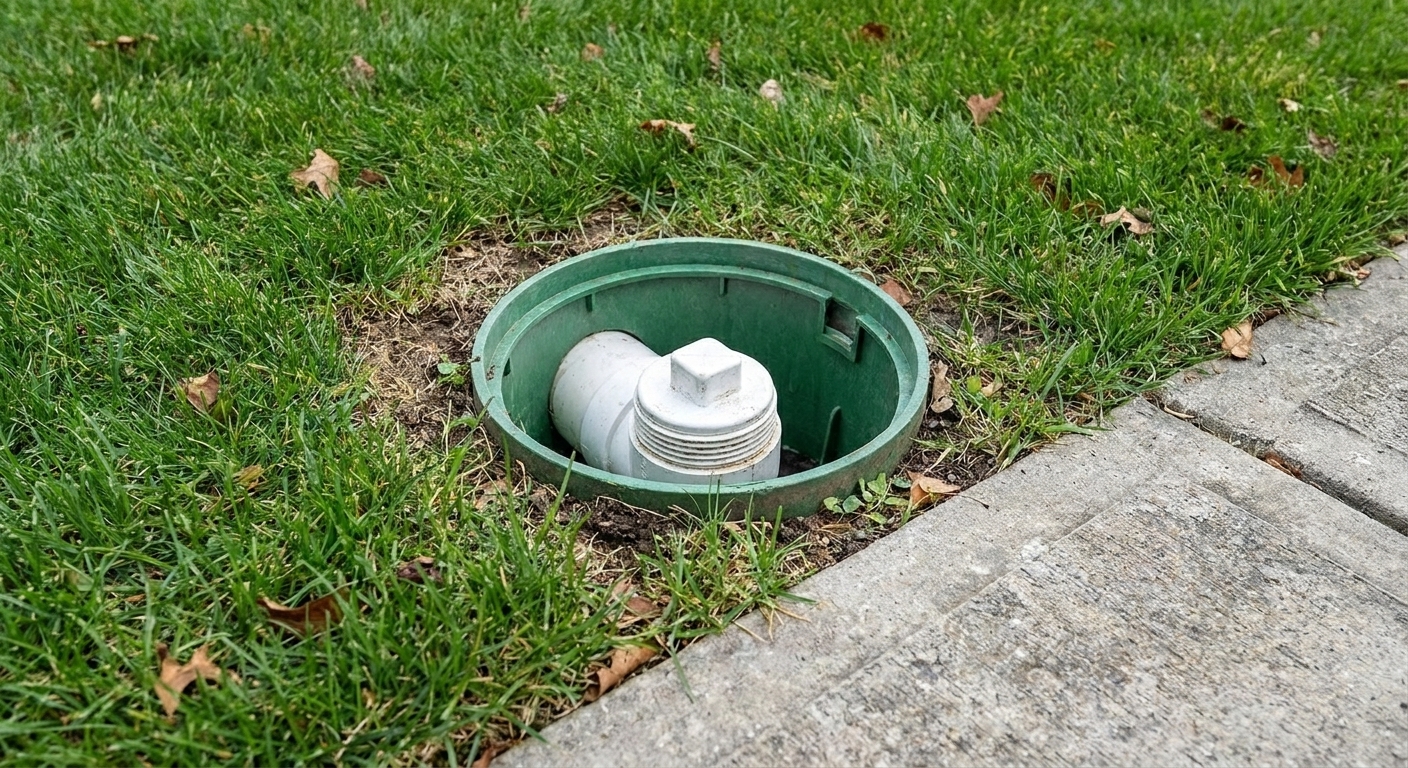
If you only have a house-side cleanout
A house-side cleanout can still help you decide what to do next, but it is not as strong as a property-line cleanout for proving where ownership changes.
Scenario C: House-side cleanout is full
If the line is full at a cleanout near the house, the blockage is downstream of that point. That could be in your lateral, or it could be in the city main. The cleanout alone cannot prove which one. What it does tell you is that the issue is not just one fixture branch line.
Scenario D: House-side cleanout is empty but fixtures back up
If the cleanout near the house is empty yet a specific drain backs up, your issue may be upstream in the home’s interior plumbing. That is typically homeowner responsibility, but again, this article is about responsibility testing, not repairs.
What the city will ask
City sewer crews are usually not trying to dodge responsibility. They are trying to avoid rolling a truck for an issue that is clearly private. The best thing you can do is provide clear, basic evidence.
What helps
- Location: Tell them whether you checked a property-line or curb cleanout (and where it is in relation to the sidewalk or street).
- Condition at the cleanout: Was it empty, just a little water at the bottom, or full to the top?
- Timing: When did it start? Did it happen suddenly?
- Neighborhood impact: Do any neighbors have the same problem at the same time? A street-wide issue points toward a main or downstream problem.
- Photos or video: A quick phone image of the open cleanout showing a full pipe versus an empty one can be useful.
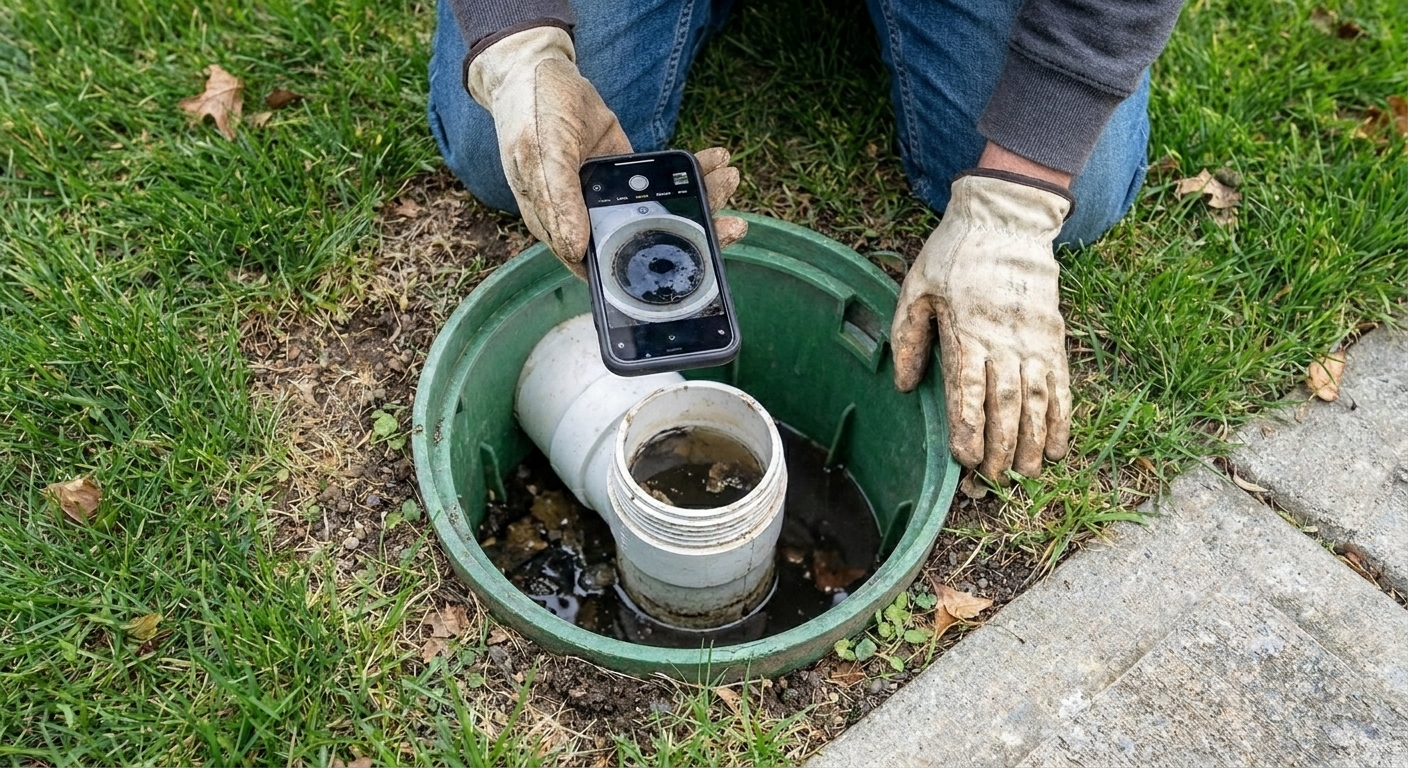
Keep it simple when you call: “My property-line cleanout is full” or “My property-line cleanout is empty but the basement floor drain is backing up.” Those sentences give dispatch something actionable.
Where ownership changes
Because this varies by municipality, I will describe the common patterns you will see, then tell you what to look up.
Common rules
- Homeowner to the main: Homeowner owns the lateral all the way to the connection at the city main. This is very common.
- Homeowner to property line: City owns from the property line to the main. Less common, but it exists.
- Homeowner to curb cleanout: The curb cleanout is treated as the handoff point. Policies differ on which side of the cleanout belongs to whom.
To verify your rule, look for your city or township’s “sanitary sewer service line” policy, ordinance language, or the sewer utility’s FAQ. If you call, ask specifically: “Where is the ownership boundary for the sanitary sewer lateral at my address?”
Quick decision tree
If your whole house is slow or backing up, use this to keep your head straight.
1) Find the most downstream cleanout you can safely access
- Best is a curb or property-line cleanout.
- Second best is an exterior cleanout near the foundation.
- Third best is a basement cleanout.
2) Check the level
- Full at property line: Likely downstream restriction. Stop using water and call the city with what you found.
- Not full at property line: Likely upstream of that point, often private lateral or interior drainage.
- Full at house-side only: Downstream of the house, could be lateral or main. Ask the city if there are known main issues, and be ready to document conditions at the property line if possible.
3) Document before anything changes
Once someone starts clearing lines, the “who owns what” evidence can disappear. A couple photos and a short note in your phone like “8:40 pm, curb cleanout full to top” can save you a lot of back-and-forth.
What success looks like
After this check, you should feel confident making the next call: either the city (likely downstream) or a plumber or drain service (likely upstream or private lateral).
When to call the city first
Even if you suspect it might be on your side, there are times I still call the city early, because it is faster to rule out a main problem than to pay for private work that did not need to happen.
- Multiple homes on your street are backing up at the same time.
- Your property-line cleanout is full and the level seems to be rising.
- Backups happen during heavy rain. This can be a sign of a surcharged public system (combined or overwhelmed), but it can also be related to private issues like root intrusion or inflow. Rain timing is a clue, not proof.
Stop using water: If sewage is backing up, do not keep running sinks, showers, dishwashers, or laundry. Every gallon you send down has to go somewhere, and that “somewhere” can be your floor drain.
FAQ
Does a basement backup mean it is the city’s fault?
No. A basement backup can be caused by a blockage in your private lateral just as easily as a problem in the main. The cleanout observation is what helps separate the two.
What if I cannot find a property-line cleanout?
Many homes do not have one that is obvious. You can check for a round lid near the sidewalk, look near the foundation for an exterior cleanout, or call the sewer utility and ask if a curb cleanout was installed for your address. If you only have a house-side cleanout, you can still gather useful info, but you may not be able to prove where the handoff is without additional inspection.
What kind of proof will the city accept?
Policies vary, but clear notes and photos of a full curb or property-line cleanout are often persuasive because they show the backup is beyond the point most homeowners control. If your cleanout is empty at the property line, that typically points away from a main issue, especially if you have not been running water for a bit.
Does homeowners insurance cover this?
Sometimes, but it depends on your policy and endorsements. Many policies require a specific sewer or water backup rider. For this article’s purpose: take photos, document timing, and keep any invoices if you end up needing them.
What if the city says it is my problem but I disagree?
Ask them to clarify the ownership boundary for your address and what evidence they need. Then focus on the most downstream access point you can document, ideally a property-line cleanout. Calm, specific details usually get you farther than arguing from the top of the basement stairs.