
Sewer Line Repair Cost
Typical sewer line repair costs often range from $1,500 to $8,000, with spot fixes lower and full replacement higher. See common price ranges for spot repairs, relining, and replacement, plus what drives the total and how to compare estimates.
Good grain. Great questions.
If you have tree roots, Orangeburg pipe worries, or a backup that made you learn new words like “cleanout,” the next question is always the same: what is this going to cost? Sewer line repair pricing can feel mysterious because it depends less on the idea of a sewer line and more on the exact reality in your yard: how deep it is, how long the damaged section is, and what has to be disturbed to get to it.
Below is a clear breakdown of common price ranges for spot repairs, trenchless relining, and full replacement, plus the factors that move the number up or down and how to compare bids like a calm, capable adult (even if you are currently stress-googling in your slippers).
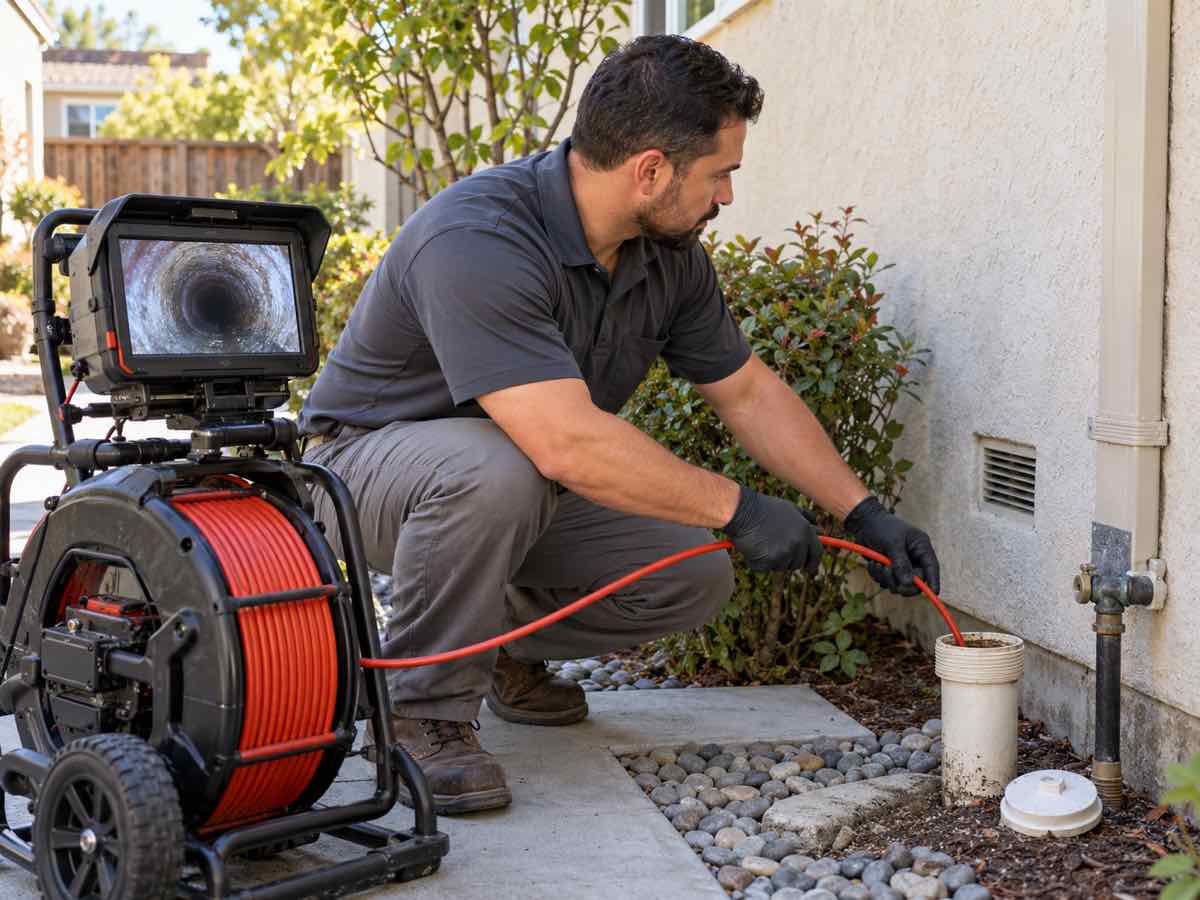
Typical sewer line repair cost ranges
Most homeowners often land somewhere between $1,500 and $8,000 for a sewer line repair, with smaller fixes below that and full replacements above it. Pricing varies sharply by region and jobsite conditions, especially local labor rates, frost depth, permitting fees, and how hard it is to access the line (tight urban lots tend to cost more than wide-open yards).
Here are the most common repair paths and what they commonly cost.
Spot repair (dig and fix a section)
Typical range: $1,000 to $5,000
A spot repair means the contractor excavates down to the problem area and replaces or repairs that portion of pipe. This is often used for:
- A single broken or collapsed section
- A separated joint (sometimes from shifting soil or root intrusion)
- A short segment of Orangeburg pipe that has failed
When it trends lower: shallow line, easy access, damage is close to a cleanout, and the fix is short.
When it trends higher: deeper line, damage is under a driveway or patio, or the repair requires shoring, bypass pumping, or significant restoration.
Trenchless relining (CIPP liner)
Typical range: $3,000 to $12,000
Relining, often called CIPP (cured-in-place pipe), involves cleaning the existing pipe and installing a resin-saturated liner that hardens into a new pipe inside the old one. This can be a great fit for:
- Cracks, small holes, and minor joint gaps
- Root intrusion that is recurring but not associated with a full collapse
- Longer runs where digging would be disruptive
Important: The pipe has to be in decent shape structurally, and the method still has real constraints. Relining eligibility can depend on pipe diameter, access (cleanouts and entry points), and whether the line has major deformation. If the line is heavily offset, has a belly (sag), or is collapsed, relining may not be possible without spot excavation first.
Pipe bursting (trenchless replacement)
Typical range: $4,000 to $15,000
Pipe bursting breaks the old pipe while pulling a new pipe through the same path. This replaces the line without excavating the full length, though you still need entry and exit pits.
This method can be a good fit when the existing pipe material is failing, but the route is fairly straight and accessible for the equipment.
- Common limitations: you need room for pits, the run cannot have too many tight bends, and the contractor has to choose a replacement material approved by local code (HDPE is common for bursting).
Full replacement (open trench)
Typical range: $6,000 to $20,000+
Full replacement means digging up the line and installing new pipe. Materials vary by local code and application. Many jobs use PVC, some areas allow ABS, and certain situations call for other materials such as HDPE (often with trenchless methods) or ductile iron.
Costs climb quickly if the sewer line runs under hardscape, mature landscaping, or requires deep excavation. In difficult cases, totals can exceed $25,000.
What drives sewer repair cost up or down
If two neighbors both say “sewer line repair,” they might be describing two completely different jobs. These are the biggest cost movers.
Depth
Deeper lines take longer to excavate and are more likely to require safety measures like shoring. Depth also increases time spent locating the pipe and managing spoil (the excavated soil).
Length of pipe affected
A 5-foot repair is not priced like a 50-foot liner. Even for trenchless methods, more length usually means more materials, more prep, and more time on equipment.
Access and obstacles
Easy access is a backyard with a clear path. Hard access is a line under:
- A driveway or street approach
- A patio, deck, or slab
- Retaining walls or tight side yards
- Fences that need removal and reset
Root intrusion severity
Roots are common, but pricing changes based on whether it is:
- Light roots that can be mechanically cut and then maintained
- Recurring roots requiring repair of joints or relining
- Roots plus damage, where the pipe is cracked, offset, sagging, or collapsed
Soil conditions and groundwater
Rocky soil, high groundwater, or saturated conditions can slow excavation and complicate repairs. In some cases, bypass pumping is needed to keep sewage moving during the work.
Permits, inspections, and code requirements
Many replacements and some major repairs require permits and a city inspection. Some municipalities also require specific pipe materials, cleanout placement, or backwater valve considerations.
Restoration: landscaping and hardscaping
One estimate might include restoring sod and basic backfill, while another may leave you with a trench and a polite wave goodbye. Restoration can include:
- Sod replacement or hydroseed
- Rebuilding a section of driveway or walkway
- Re-setting pavers
- Repairing irrigation lines
It is also common for concrete or asphalt restoration to be subcontracted or excluded entirely, so make sure you know where “done” stops.
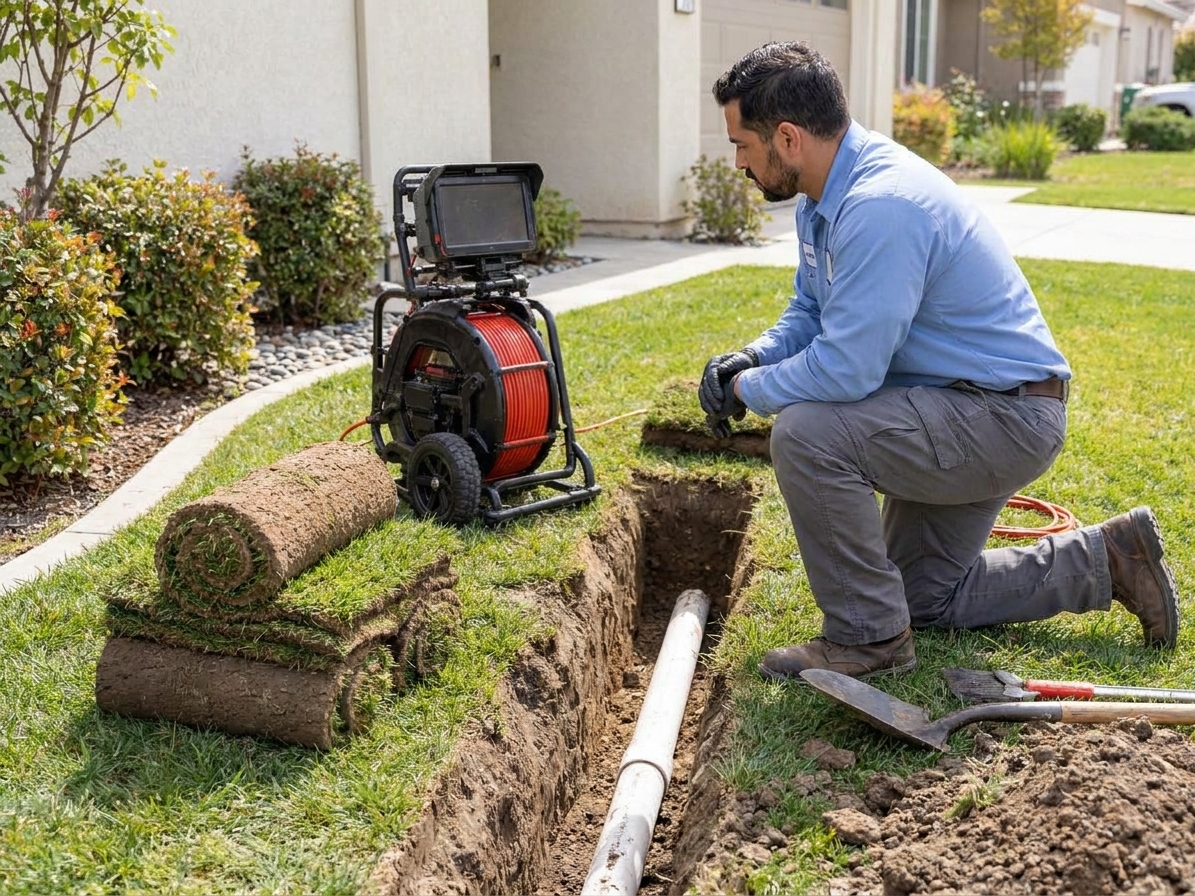
Spot repair vs relining vs replacement
The best option is the one that fits the condition of your pipe and gives you a repair that will last.
Spot repair makes sense when
- The problem is clearly localized
- The rest of the line is in good condition on camera
- Access is straightforward and restoration costs are limited
Relining makes sense when
- The pipe is mostly intact but has cracks, root intrusion, or failing joints
- You want to avoid tearing up landscaping or hardscape
- A longer section needs reinforcement, not just one point
- Also worth knowing: liners still need proper prep. Heavy root mass typically has to be cut out first, and you need usable access points for equipment.
Full replacement makes sense when
- The pipe is collapsed, badly offset, or has severe bellies (sags)
- The material is failing broadly (for example, deteriorated Orangeburg)
- You need a long-term reset and do not want repeated repair cycles
If a contractor recommends a full replacement without showing you camera footage or explaining what is structurally wrong, that is a “pause and ask more questions” moment.
Who is responsible for the sewer line
Before you sign anything, make sure the problem is actually on the portion you own.
- Common setup: homeowners are responsible for the building sewer from the house to the property line (or sometimes to the curb cleanout), and the city or utility is responsible for the main line in the street.
- Reality check: this varies by municipality and by how your neighborhood was built. Some homes have easements or unusual lot layouts that change where responsibility starts and ends.
If the backup is coming from the city main or from a shared line, your best “repair budget” move might be a phone call to the utility, not a trench in your yard.
What a camera inspection adds
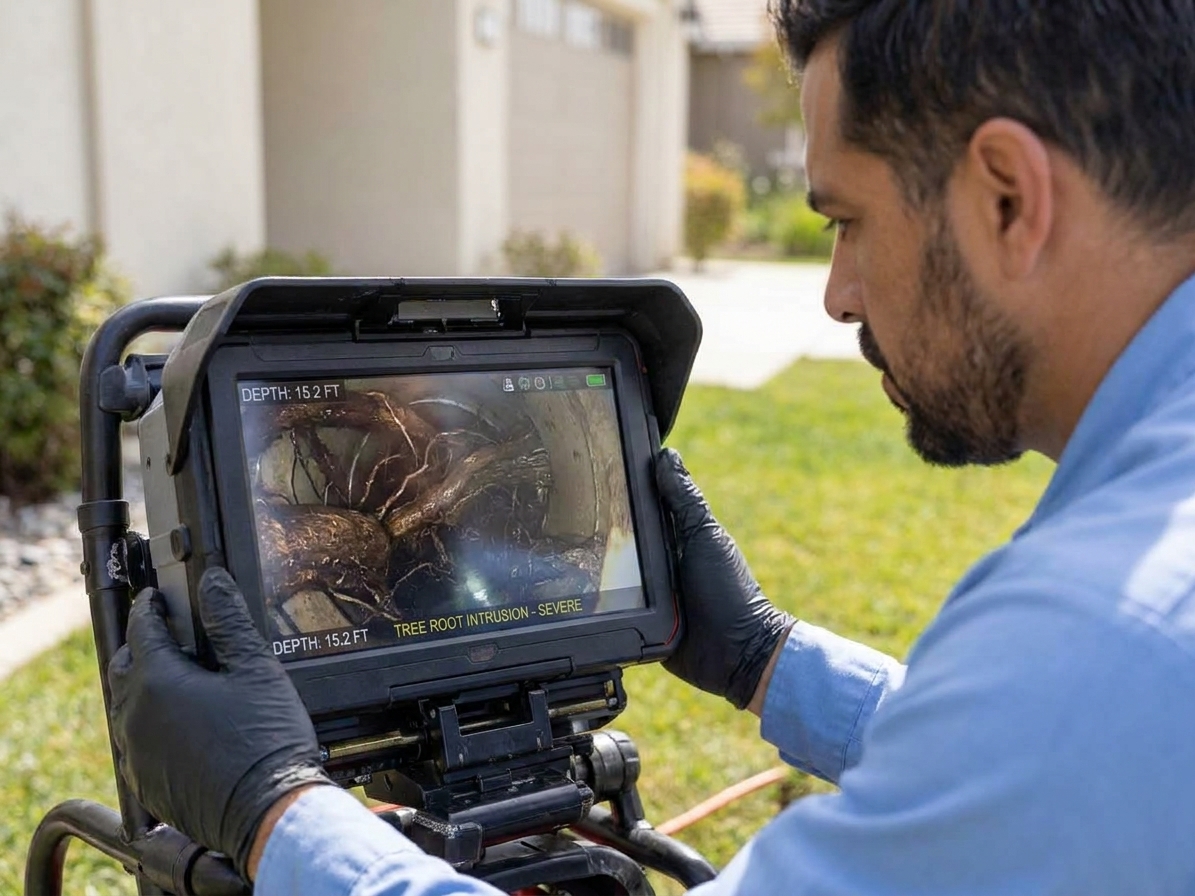
A sewer camera inspection is often the difference between a confident plan and an expensive guess.
Typical range: $150 to $500 (sometimes credited toward the repair if you hire the same company). Like everything else in this world, it varies by region and access.
What you get from a good inspection:
- Exact location of the defect, often with a locator above ground
- Type of problem: roots, cracks, offsets, collapse, belly (sag), grease buildup
- How much pipe is involved and whether there are multiple issues
- A baseline video you can use to compare bids or keep for your records
Ask for: a copy of the video or at least clear screenshots that show the problem area and distance counter reading from the cleanout.
How to compare sewer repair bids
When you are comparing estimates, you are not just comparing the bottom line. You are comparing scope. Two bids can be $3,000 apart and both be honest if one includes restoration, permits, or a longer repair segment.
Questions to ask every contractor
- What is the exact repair method? Spot repair, liner, pipe bursting, or full replacement.
- What length are you repairing? Feet matter. Ask for start and end points.
- What pipe material are you installing? And why that choice for your site and your code requirements.
- Is cleaning included? For liners, cleaning and prep are essential, not optional.
- Are permits and inspections included? If not, who pulls them and what do they cost?
- What is included in restoration? Backfill, compaction, sod, concrete, pavers, fencing, irrigation, and whether any trades are subcontracted.
- How will you protect the home during work? Dust control, access paths, and whether toilets can be used during the repair.
- What warranty is provided? Get it in writing. Ask what voids it.
Green flags in a bid
- Clear description of the defect and why the fix matches it
- Line-item pricing or at least a detailed scope of work
- Mentions of cleanup, disposal, compaction, and restoration details
- Explains contingencies: what happens if they uncover additional breaks
Red flags in a bid
- Vague scope like “repair sewer line” with no length, method, or location
- No mention of permits when your municipality typically requires them
- Pressure to sign immediately, especially before a camera inspection
- “This price is only good today” energy for a buried pipe problem
Cost add-ons that surprise homeowners
These items are not always included in the headline number, so they are worth asking about upfront. Consider these ballparks, not universal price tags.
- Cleanout installation: $500 to $2,500 depending on location and digging required
- Hydro jetting or heavy cleaning: $300 to $900+ depending on severity and access
- Driveway or concrete replacement: highly variable, often $1,500 to $6,000+ for demolition and repour of a section
- Tree removal or root barrier work: variable and often handled by a separate contractor
- Backwater valve: commonly $1,000 to $4,000 installed, depending on access and plumbing layout
If roots are the recurring villain in your line, also ask what they recommend for prevention after the repair. Some fixes remove roots, but do not address how they got in.
Money-saving moves that are smart
- Get the camera inspection first. You cannot bid accurately on what you cannot see.
- Ask for the problem to be marked on the ground. A locate can prevent unnecessary excavation length.
- Request “good, better, best” options. Many situations have more than one valid repair path.
- Clarify restoration in writing. The cheapest bid can become the most expensive once you add the yard back in.
- Handle non-sewer restoration yourself only if you truly want to. Some homeowners prefer to re-sod or replant, but know what is being left undone.
Also worth a quick check: some utilities and municipalities offer service line programs or warranties. Read the terms carefully, but it can be helpful to know what exists in your area before you pay out of pocket.
When sewer line repair is an emergency
Some sewer problems can wait for a few bids. Others should not.
Call for urgent help if you have sewage backing up into tubs or showers, multiple drains clogged at once, wastewater coming out of a cleanout, or wet, foul-smelling ground near the sewer path. Limit water use until it is assessed.
FAQ
Is trenchless always cheaper than digging?
Not always. Trenchless can be less disruptive, which can save money on landscaping and concrete restoration. But the method itself can cost more in materials and specialized equipment. The best value depends on access and the condition of the existing line.
Can tree roots be just cleaned out instead of repaired?
Sometimes, yes, especially if the roots are minor and the pipe is otherwise intact. But roots usually indicate an entry point like a joint gap or crack. If you keep needing root removal, a repair that seals the opening can be cheaper over time.
Does homeowners insurance cover sewer line repairs?
Often, standard policies do not cover wear-and-tear or root intrusion. Some insurers offer service line endorsements that may help. The only honest answer is: check your policy language and call your provider before authorizing major work.
How long do sewer line repairs take?
A simple spot repair can sometimes be completed in a day. Relining is often a one-day install as well, though cure time and return-to-service timing varies by resin type and temperature. Full replacements can take multiple days depending on length, depth, and restoration needs.
What should I do before the contractor arrives?
- Locate and clear access to the cleanout if you have one
- Move vehicles out of the way of likely work areas
- Mark irrigation heads and known underground lines if possible
- Ask whether you should limit water use during the inspection or repair