
Hydro Jetting vs. Snaking for Tree Roots in a Sewer
Tree roots confirmed in your sewer line? Compare snaking vs. hydro jetting: what each removes, how long results can last, typical costs, and when clearing roots just reveals a damaged pipe.
Good grain. Great questions.
If you have confirmed tree roots in a sewer line, the next decision is not whether the roots are real. It is how to clear them, and whether clearing them is buying time or just reopening a pipe that is already failing.
In workshop terms, this is like freeing a stuck drawer. You can shave the swollen spot (quick relief) or fix what caused it to swell (lasting relief). Snaking and hydro jetting both clear blockages, but they do it in very different ways, with very different results.
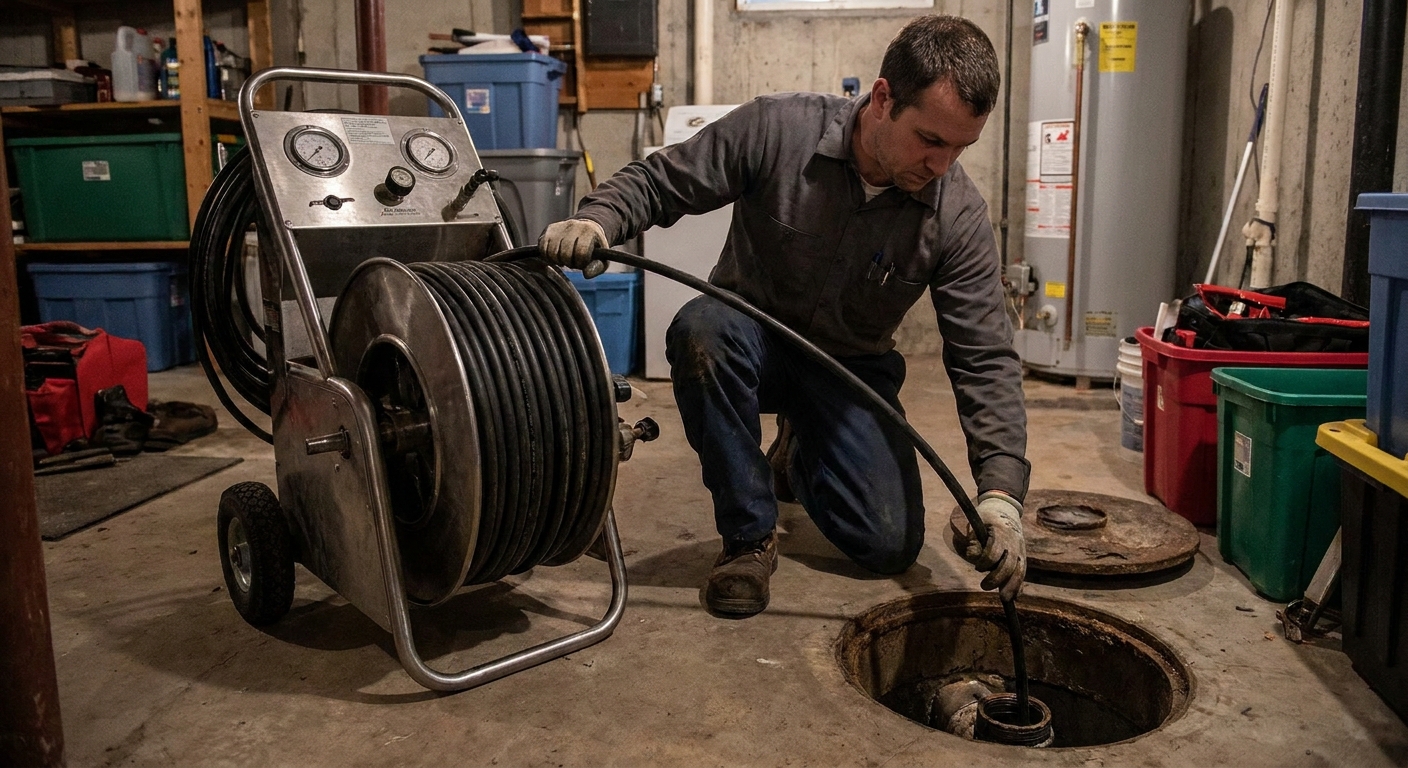
Before you start
If you are actively backed up, treat it like a contamination problem, not just an inconvenience.
- Stop using water in the home if drains are overflowing or toilets are rising. Every flush feeds the backup.
- Avoid contact with sewage. Keep kids and pets away. Wear gloves and wash up.
- Call for urgent help if sewage is coming up in multiple fixtures, you smell strong sewer gas, or water is spilling near a furnace, water heater, or electrical panels.
Quick answer: which is better for roots?
Snaking is usually the faster, cheaper way to punch through a root clog and get things draining again.
Hydro jetting is usually the more thorough way to clean the pipe interior after roots have invaded, which can mean a longer stretch before the next backup.
But neither method “solves” roots permanently if there is a crack, offset joint, or failed connection that keeps inviting roots back in.
What snaking removes
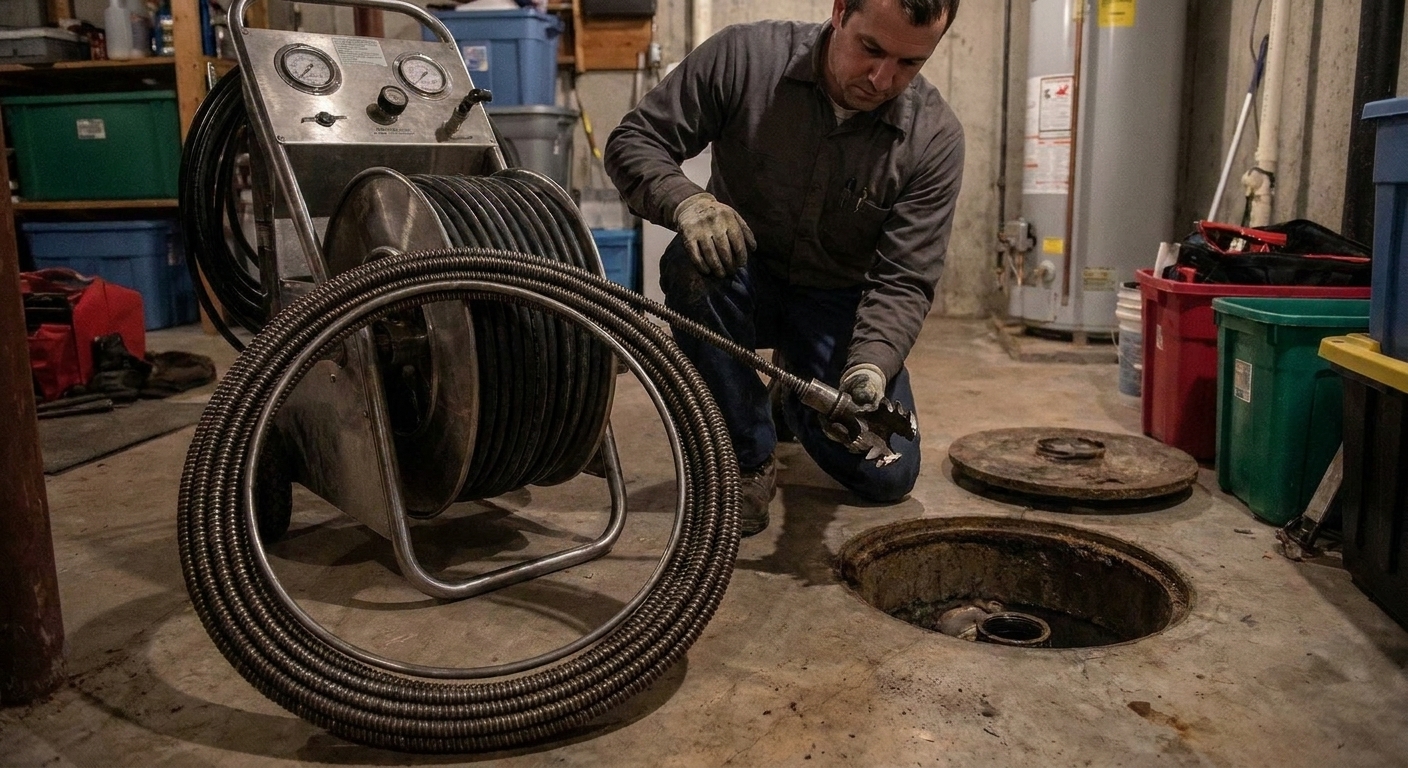
Drain snaking for roots is done with a motorized cable machine and a cutting head that spins. For tree roots, the goal is to cut a path through the blockage so waste and water can flow again.
Best at
- Cutting a channel through a root mass
- Breaking up localized clogs
- Emergency flow restoration when a line is backing up
Not so good at
- Scrubbing the full pipe wall clean
- Removing greasy sludge that roots love to grab onto
- Clearing long stretches of fine “hair roots” clinging along the line
Think of a snake as a rotating saw blade on a flexible shaft. It can cut, but it does not rinse. After snaking, it is common for cut root strands to remain attached at the entry point, ready to snag paper again.
What hydro jetting removes
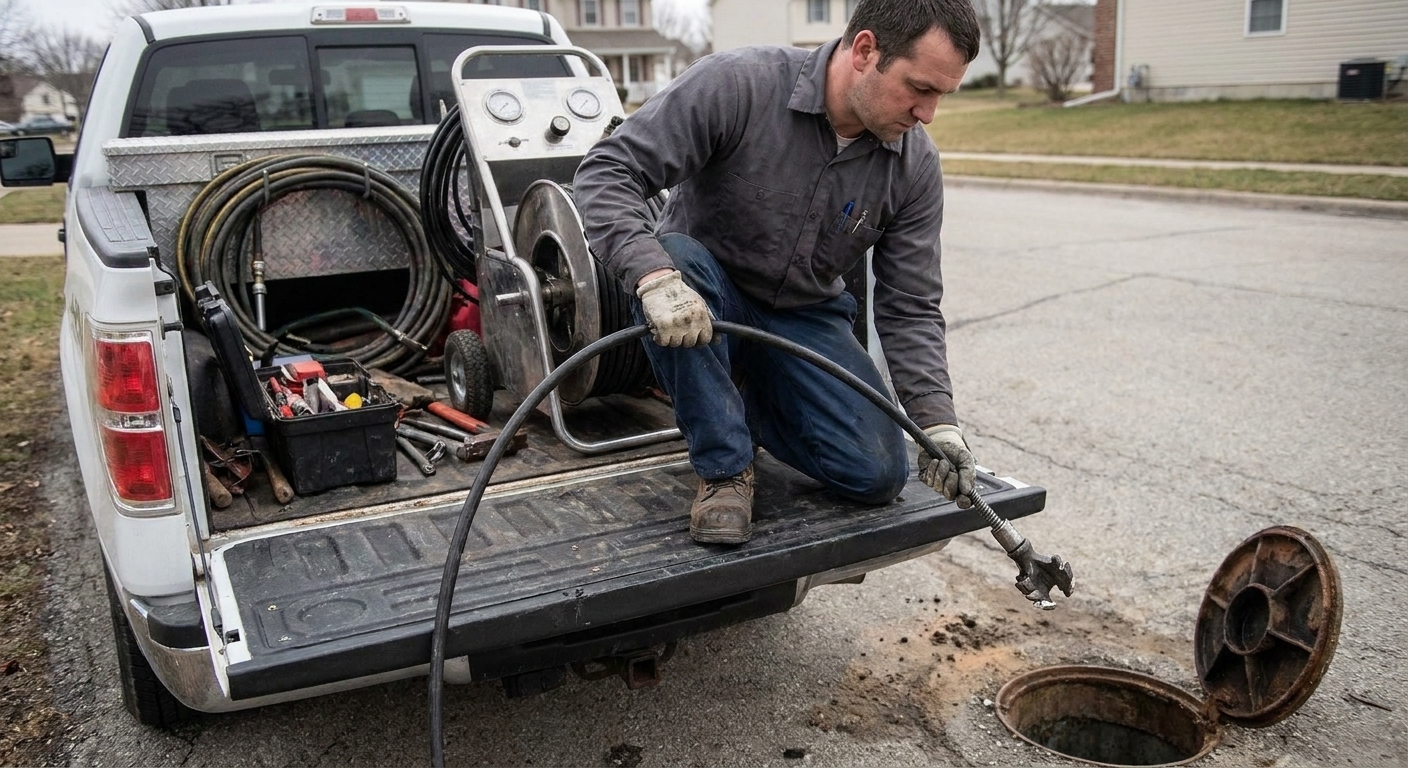
Hydro jetting uses a specialized hose and nozzle to blast high-pressure water through the pipe. Different nozzles aim jets backward to pull the hose forward and scour the walls, and sometimes forward to break through heavier buildup.
Best at
- Flushing out cut root debris so it does not settle downstream
- Cleaning the pipe’s interior surface more completely than a cable
- Removing soft buildup like grease, soap scum, and sludge that narrows the line
Not so good at
- Fixing the crack or joint failure where roots entered
- Helping if the line has a belly, a missing section, or a collapse
Hydro jetting is more like pressure-washing the inside of the pipe. When done correctly on a sound line, it is not inherently damaging. The risk shows up when a line is already deteriorated, or when the wrong nozzle and pressure are used on fragile material.
Pipe material matters
Not every sewer line should be treated the same.
- PVC and ABS typically tolerate jetting well when the operator uses appropriate pressure and technique.
- Clay tile can be vulnerable at joints and any cracked sections, even if parts of the run look fine.
- Cast iron may have corrosion, scaling, and thin spots that need a careful approach.
- Orangeburg is the one that deserves extra caution. It can deform or fail, and aggressive clearing can make a bad situation worse.
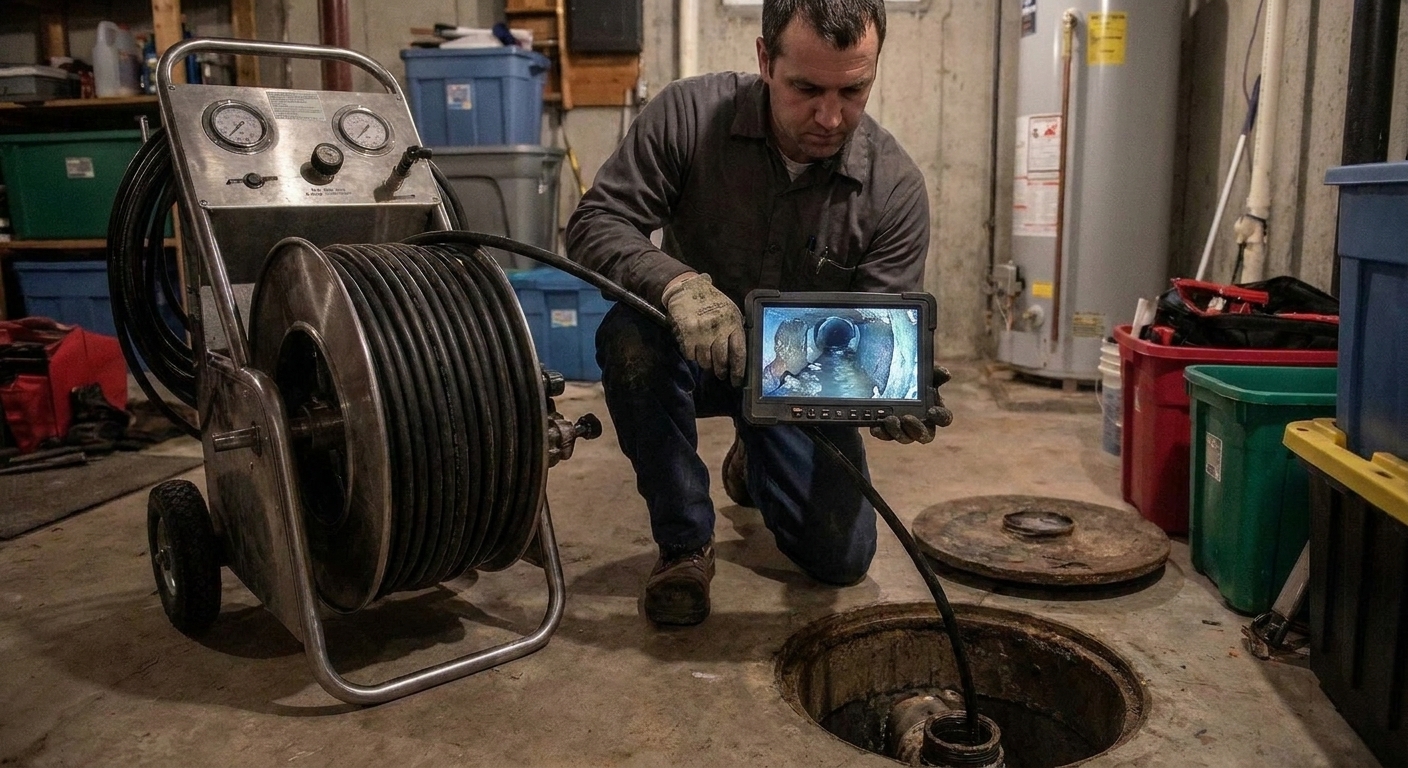
This is why “camera first” is more than a upsell in older neighborhoods. It is how you avoid blind force on a pipe that cannot take it.
How long results last
Root control is always a timing game. Roots come back fastest when there is a constant water source and a consistent opening to chase. Species, soil moisture, pipe material, and the size and location of the defect all matter.
Typical expectations
- Snaking: Often restores flow immediately. Recurrence can be anywhere from weeks to many months, and sometimes longer, depending on how aggressive the roots are and how open the entry point is.
- Hydro jetting: Often buys a longer stretch than snaking because more debris is washed out and the pipe wall is cleaner. The timeline still ranges widely, because it depends on the same entry point and conditions.
What makes either last longer
- A camera inspection that confirms what failed and where
- Removing as much root mass as possible, then flushing debris out
- Repairing the entry point (spot repair, lining, or replacement) when damage is present
Knob’s shop note (from the shop floor): If your line clogs again on a predictable schedule, that is not “bad luck.” That is a repeatable opening in the pipe doing repeatable root things.
Cost differences
Prices vary wildly by region, access, cleanout location, pipe size, and how far the blockage is from the access point. Still, the relationship is usually consistent:
- Snaking is typically cheaper than hydro jetting for root clogs because the equipment, setup, and time are often lower.
- Hydro jetting typically costs more because it is more equipment-intensive and may be paired with a camera inspection and additional setup.
If you are comparing estimates, ask what is included: cable size and cutter type, jetting duration, whether they are jetting the full run or just the problem area, and whether a camera is included before or after.
When clearing is only temporary
This is the part that saves homeowners the most frustration. If roots are in the line, there is usually a pathway: a crack, a separated joint, an offset section, or a connection that is no longer tight.
Less commonly, roots and debris can also get in through other openings, like a damaged cleanout cap or a compromised access point. Some older pipes also have multiple tiny gaps instead of one obvious failure.
Clearing roots is usually temporary when you have:
- Offset joints where one pipe section has shifted and created a lip
- Cracked clay, Orangeburg, or brittle cast iron that keeps degrading
- Separated joints that visibly gape on camera
- A belly where water sits and solids settle, feeding repeat clogs
- A partially collapsed section where the diameter is deformed
In these cases, snaking can cut a small tunnel through roots, and jetting can wash out more debris, but both are still working around a structural problem.
Heads up: If you are getting frequent backups, sewage odors, or multiple fixtures gurgling, treat it as more than a “clog.” A camera inspection is the clean way to stop guessing and avoid paying for the same clearing twice.
Which to choose
You need the fastest return to service
Start with snaking, especially if you are actively backed up. It is commonly the quickest way to get flow moving again.
You want the most thorough cleaning
Choose hydro jetting, especially if your line also has sludge, grease, or recurring slow flow. It tends to leave the pipe cleaner end-to-end.
You have an older or fragile line
Proceed carefully. A cable can still cause damage if misused, and high-pressure water can be risky when a pipe is already compromised. The best move here is often camera first, then choose the least aggressive method that achieves the goal.
You are clearing roots more than once a year
That is a strong hint you are past “maintenance” and into repair planning. Clearing roots repeatedly can be an expensive subscription to a problem that wants a structural fix.
Common sequencing
In a lot of real-world service calls, the best result is not snake or jet. It is snake then jet.
- Cable first to open the line and restore flow.
- Jet second to scour the walls and flush the cut debris downstream to the main.
- Camera inspection can be done before, after, or both. If the line is fully blocked, a tech may need to open it first before a camera can pass.
Questions to ask
- Will you run a camera inspection to confirm the location and condition of the pipe?
- Are you cutting roots with a proper root cutter head or just a small boring tip?
- If jetting, are you jetting the full run or only the immediate clog area?
- Will you show me before-and-after camera footage so I can see what changed?
- If roots are present, what do you see that indicates a crack, offset, separation, belly, or collapse?
FAQ
Does hydro jetting remove tree roots completely?
It can remove loose root debris and scour the pipe walls, but if a root is anchored through a crack, open joint, or other opening, the entry point still exists. Roots can return unless the pipe is repaired or protected with a long-term plan.
Is snaking bad for pipes?
It can be, depending on pipe condition and the cutting head used. Old clay tile, Orangeburg, and degraded cast iron deserve extra caution. A camera inspection helps prevent blind cutting into a weak section.
Should I use chemical root killer instead?
Chemical root treatments are a separate tool, usually used after a line is flowing, and often as maintenance. Common options include copper sulfate products and foaming root control herbicides. Follow label directions and local rules, and treat them as a way to slow regrowth, not a way to repair broken pipe.
If roots are confirmed, do I always need to replace the sewer line?
Not always. Some lines can be spot-repaired, lined, or maintained on a schedule. The deciding factor is what the camera shows. If the pipe is structurally compromised, repeated clearing is usually a short-term strategy.
Bottom line
Snaking cuts. It is often the quickest way to reopen a root-clogged line.
Hydro jetting cleans. It is typically the more thorough way to flush and scour the pipe after roots are present.
But if roots got in because the pipe is cracked, separated, offset, or collapsing, both methods can turn into repeat visits. Get eyes on the line, clear it appropriately, then make a plan that addresses the entry point if the pipe is telling you it is time.