
How to Find Your Sewer Cleanout
Learn where sewer cleanouts are usually located, how to recognize the cap, what the access point is for, and key safety steps before you open one.
Good grain. Great questions.
If you have a slow-drain mystery, a gurgle chorus, or a full-on backup, the fastest way to get oriented is to find your sewer cleanout. Think of it as your home’s access hatch to the main drain line. It is there so clogs can be cleared and the line can be inspected without pulling a toilet or opening walls.
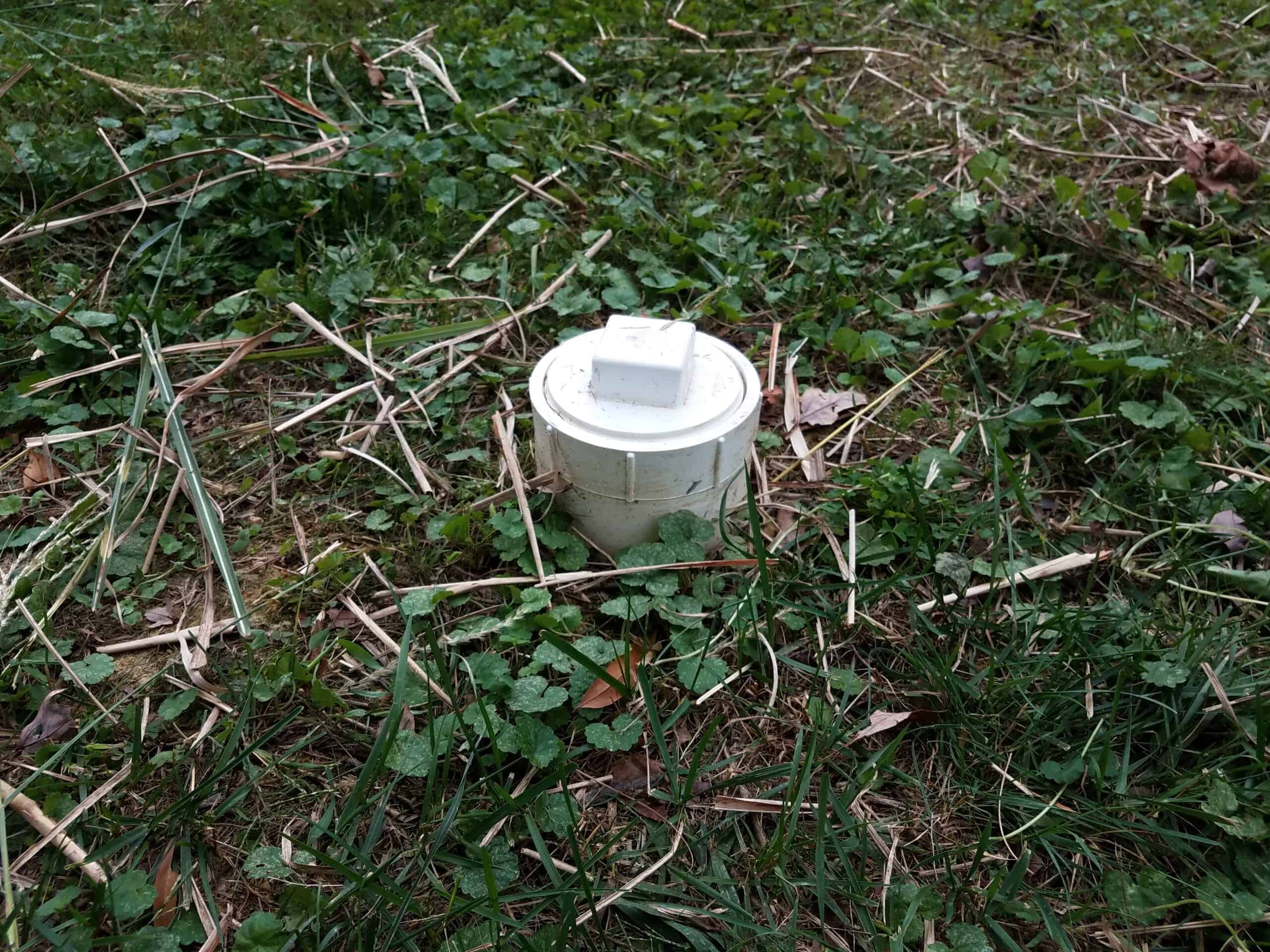
What a sewer cleanout is
A sewer cleanout is a capped access point connected to your home’s main drain line. Plumbers use it to:
- Snake or auger the line to clear clogs
- Hydro jet a line (when appropriate)
- Run a sewer camera to look for roots, breaks, or bellies
- Access the line safely during a backup (this is risky and often best left to a pro)
For homeowners, the cleanout matters because it can be the safest, least destructive entry point when there is a blockage. In many homes, an exterior cleanout near the foundation can also help you narrow down whether you are dealing with a single branch clog inside the house or something happening in the main line. It will not always tell you who is responsible (you vs. the city) but it can quickly reduce the guesswork.
Typical places to look
Cleanouts vary by region, home age, and whether your house has a basement or slab. If you only remember one rule, make it this: cleanouts are usually on the path between the house and the street sewer connection.
1) Outside near an exterior wall
Many homes have a cleanout just outside the foundation, often:
- Near the bathroom side of the house
- Near where the main stack would drop down
- Along a side yard, a few feet from the wall
You may see one cleanout or a pair (two pipes close together). A pair can mean there is access for different directions (upstream toward the house and downstream toward the street) or separate branches. Configurations vary, so treat it as a clue, not a guarantee.
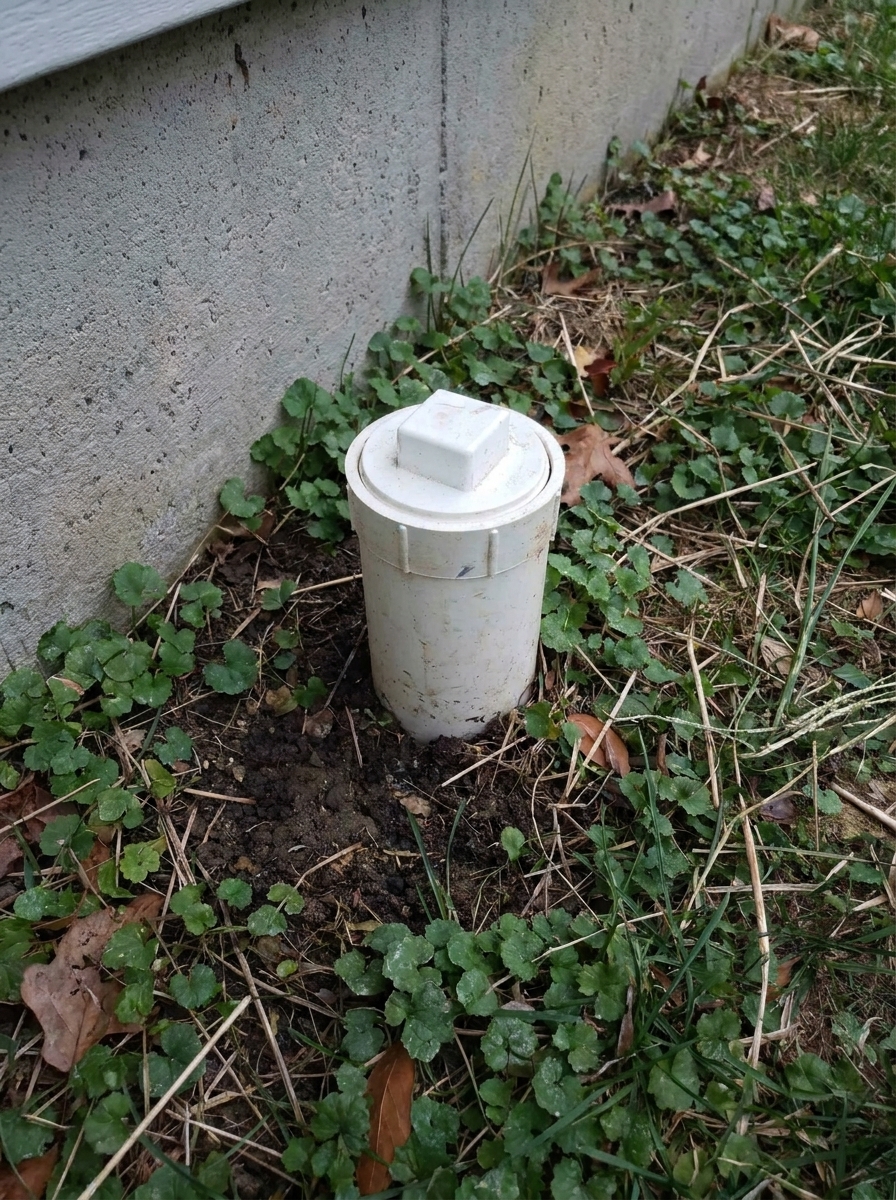
2) Basement floor or mechanical area
In homes with basements, a cleanout may be:
- On a main drain line running along the basement wall
- Near the floor where the line exits the foundation
- In a utility or laundry room close to the main stack
Look for a capped fitting on a large diameter pipe, often 3 to 4 inches.
Older-home note: In older basements you may see cast iron with a brass or iron plug, a cleanout that has been painted over, or a capped access tucked into a small floor box. And yes, some older homes truly do not have an easy, modern cleanout.
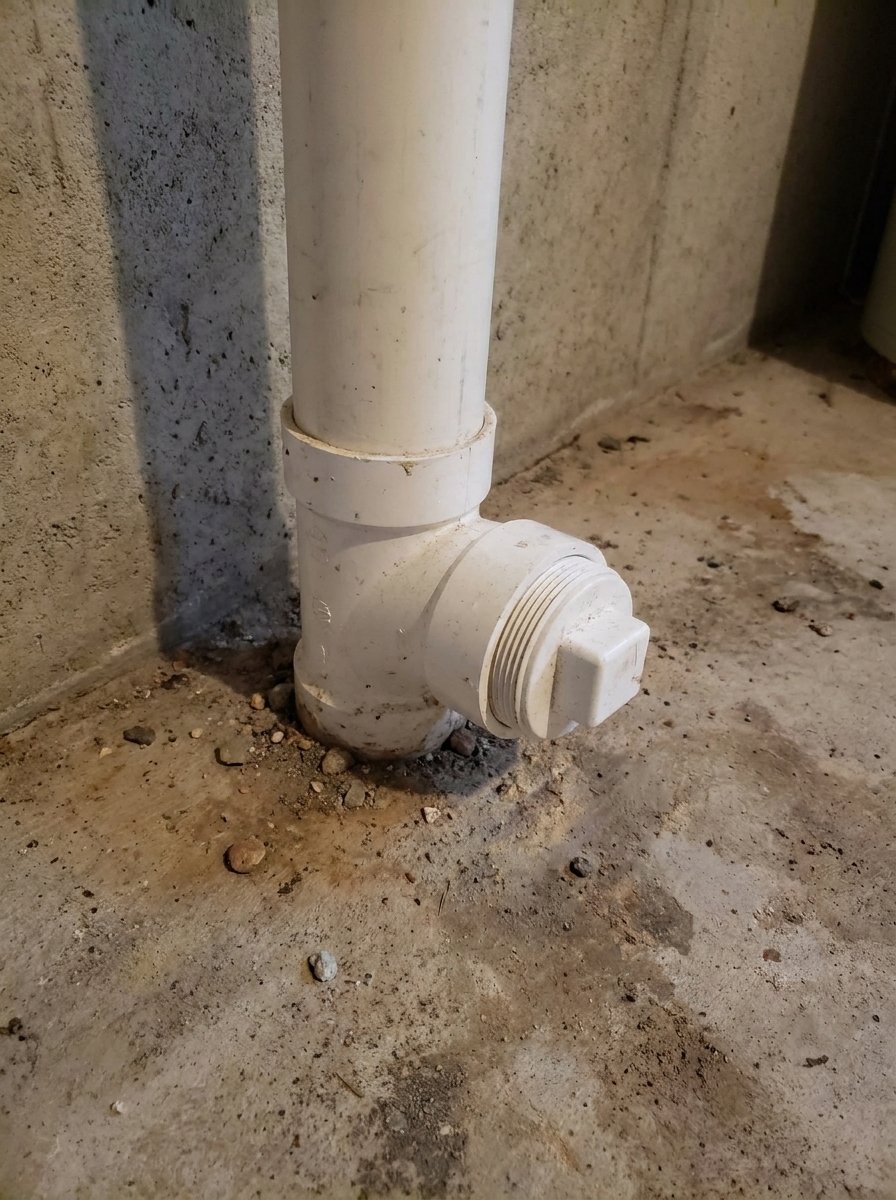
3) Crawl space near the main drain line
Crawl spaces often hide cleanouts along the main run. Bring a bright flashlight and look for:
- A large drain pipe heading toward the street side of the home
- A capped wye or tee fitting pointing upward or at an angle
If your crawl space is tight or damp, this is a good moment to decide whether you want a pro to handle the opening step. Cleanouts can release sewage if the line is blocked.
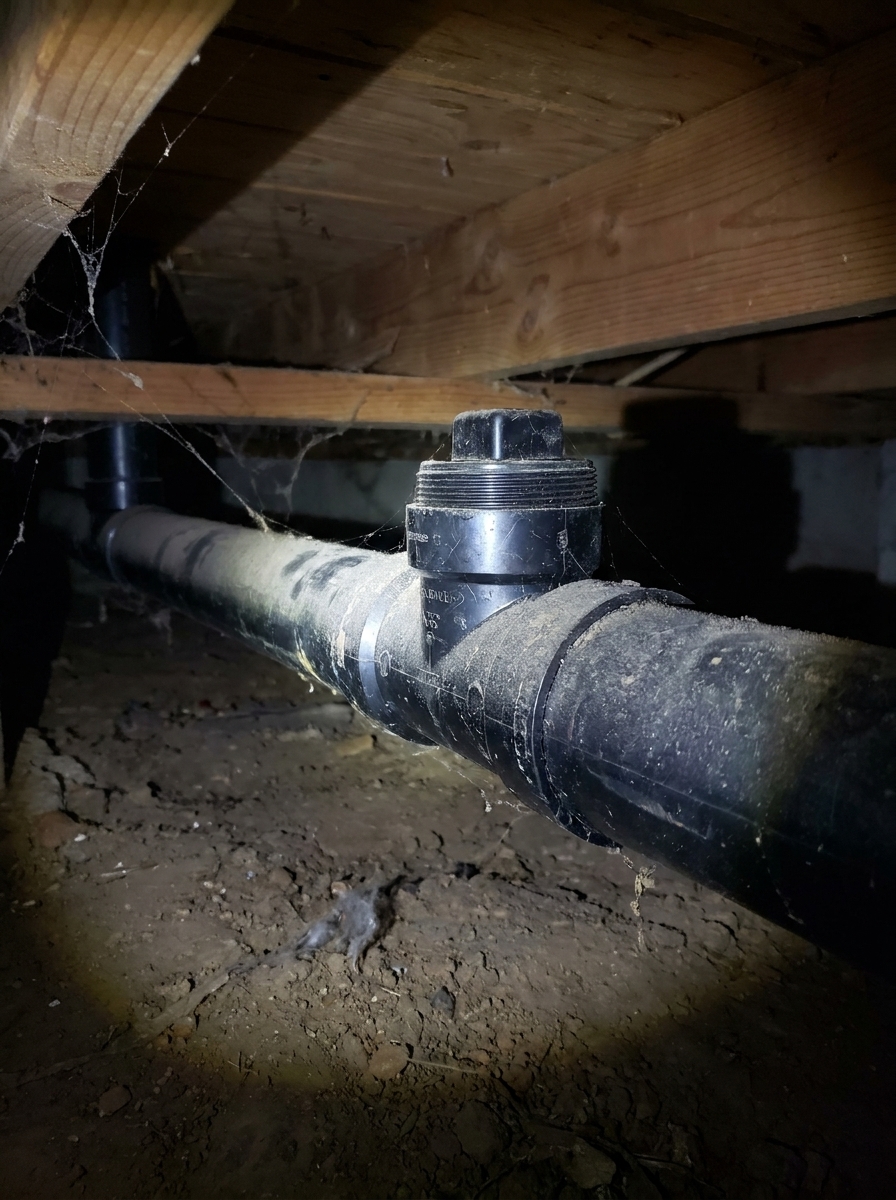
4) Yard cleanouts near the sidewalk
Some properties have a cleanout in the yard closer to the street, sometimes called a yard cleanout or part of the building sewer run. You might see:
- A short pipe with a cap nearly flush with the ground
- A round irrigation-style box with a lid covering the access
- A cap hidden by grass or mulch
These are easy to mow over or bury over time, so scan for subtle circles or squares in the lawn.
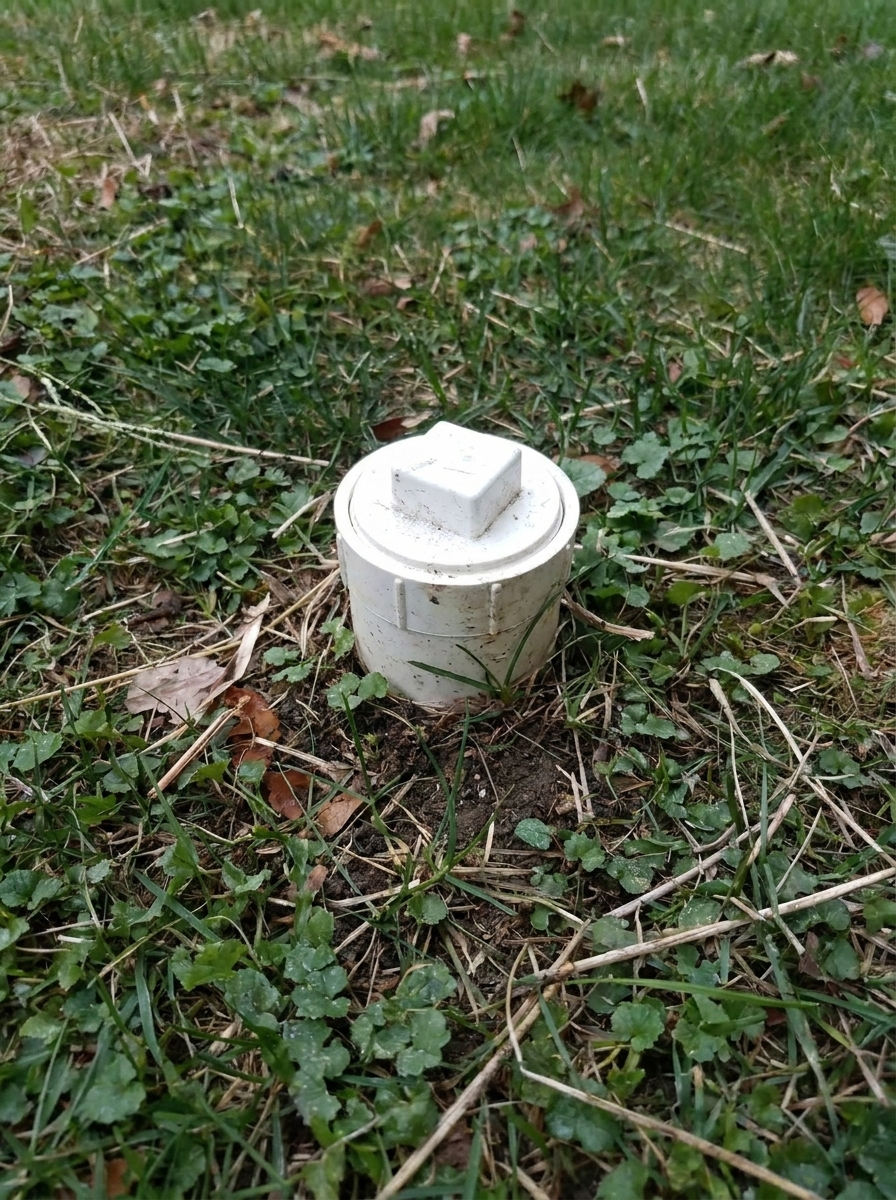
How to spot a cleanout cap
Cleanouts are simple, which is good news. Common clues:
- Material: PVC (white), ABS (black), or cast iron (dark metal)
- Size: often 3 to 4 inches in diameter for a main line (other sizes exist)
- Cap style: threaded plug (often square or hex head) or a smooth round cap
- Fitting shape: often on a wye or tee fitting, with the cap pointing up or at a 45-degree angle
What it usually does not look like: a small 1 to 2 inch capped pipe (often irrigation or HVAC condensate), a gas shutoff, or an electrical conduit.
Quick tracing method
If you are not spotting anything right away, use this order:
- Find the biggest vertical drain pipe inside (the main stack). In many homes it is near a bathroom wall.
- Track where it would leave the building, then check the opposite side of that wall outside.
- Walk the line toward the street. Many cleanouts are placed somewhere along that run for access.
- Check where the main drain exits the foundation. It is usually low on the wall, and it is not the same as gas, electric, or HVAC penetrations.
If your home has additions, the main drain may not follow the most obvious path. In those cases, basement or crawl space access can be the easiest way to visually follow the pipe.
If you are still coming up empty, you can also check records. Some cities or counties have sewer lateral cards, as-builts, or permit drawings that show where the sewer line runs and where cleanouts were installed.
Before you open it
Heads up: A clogged sewer line can put the cleanout under pressure. Opening the cap can release sewage quickly and forcefully. If you suspect an active backup, consider calling a plumber.
If you still need to open a cleanout, stack the odds in your favor:
- Stop using water in the home first. No flushing, no laundry, no showers.
- Wear protection: gloves and eye protection at minimum.
- Ventilation: sewer gas is unpleasant and can be hazardous in enclosed spaces. If indoors, open windows.
- Go slow: loosen the cap gradually to relieve any pressure.
- Have a plan: towels, a shallow pan, and a way to step back if it starts to spill.
Also, do not use open flames near a cleanout. Sewer gases can include flammable components in some cases, and it is not worth finding out the hard way.
How to open the cap
Cleanouts vary, but the goal is always the same: controlled loosening.
Tools you might need
- Large adjustable wrench or pipe wrench
- Channel-lock pliers
- Cleanout plug wrench (for square or recessed plugs)
- Penetrating oil (for stubborn metal plugs)
- Rags and a small bucket or pan
Steps
- Clear the area so you have stable footing.
- Clean around the cap so dirt does not fall into the pipe.
- Turn slowly counterclockwise. If you hear hissing or see seepage, pause.
- Let pressure bleed off before fully removing the cap.
- Set the cap somewhere clean. You will want a good seal when reinstalling.
If the plug will not move, forcing it can crack an older fitting, snap a plug head, or even shear a plastic fitting. That is a good line-in-the-sand moment to call a pro.
If a cap is cracked, cross-threaded, or missing, replace it with a like-for-like threaded plug that fits properly. Avoid improvising with the wrong size. A bad cap can leak sewer gas and it can be a bear to remove later.
Cleanout or something else?
A few things homeowners frequently mistake for a sewer cleanout:
- Irrigation lines: smaller diameter, often near sprinkler valves
- Outdoor drain grates: yard drains are not the same as a sewer cleanout
- Septic risers: larger lids or risers, often multiple, and usually not right tight to the foundation, although septic systems can still have cleanouts near the house
- Roof vent pipe: this is on the roof and is not an access point for snaking from outside
If you are unsure, do not open random caps. When in doubt, take a clear photo and show it to a plumber or your local permitting office for guidance.
When to call a plumber
Finding the cleanout is a win. Opening it is optional. Call a plumber if:
- Sewage is backing up into tubs, showers, or floor drains
- Multiple fixtures are clogged at once
- The cleanout is in a crawl space with poor access
- You cannot loosen the cap without extreme force
- You suspect roots, a collapsed pipe, or repeated backups
A sewer camera inspection is often the fastest way to stop guessing, especially if the same problem keeps coming back.
FAQ
Do all houses have a sewer cleanout?
Many do, but not all older homes have an accessible, obvious cleanout. Some are buried, covered by landscaping, or located in a basement or crawl space. A few houses simply lack a modern, easy-access cleanout.
Can there be more than one cleanout?
Yes. You might have one near the house and another closer to the street, or additional cleanouts for branch lines or additions.
Should a cleanout be capped at all times?
Yes. The cap helps prevent sewer gas from escaping and keeps debris and pests out. If your cap is missing or cracked, replace it.
Is the cleanout on my property or the city’s?
It depends on local rules and where the line changes from private to municipal responsibility. A cleanout near your foundation is usually yours. A cleanout near the sidewalk could be either, depending on how your area is set up.
A final shop-note from Knob
If you can find your cleanout before there is an emergency, you are already ahead. Give it a quick look on a calm afternoon, clear away mulch or storage that blocks access, and make a mental note of what tool would fit the cap. Future-you will be impressed.