
How to Tell If You Have Orangeburg Sewer Pipe
Orangeburg pipe can deform and fail even without tree roots. Learn the telltale signs: home age, cleanout clues, symptoms, and what a sewer camera shows.
The first time I heard the word “Orangeburg,” I figured it was a paint color. Then I met it the way most homeowners do: through slow drains, mystery backups, and a plumber saying, “I’ve got bad news.” Orangeburg sewer pipe is one of those old building materials that seemed like a great idea at the time and turned into a real headache decades later.
If you’re trying to figure out what kind of sewer line you have, Orangeburg is worth ruling in or out early. Not because it always fails tomorrow, but because when it fails, it tends to fail in a way that is hard to ignore and expensive to patch around.
What Orangeburg is
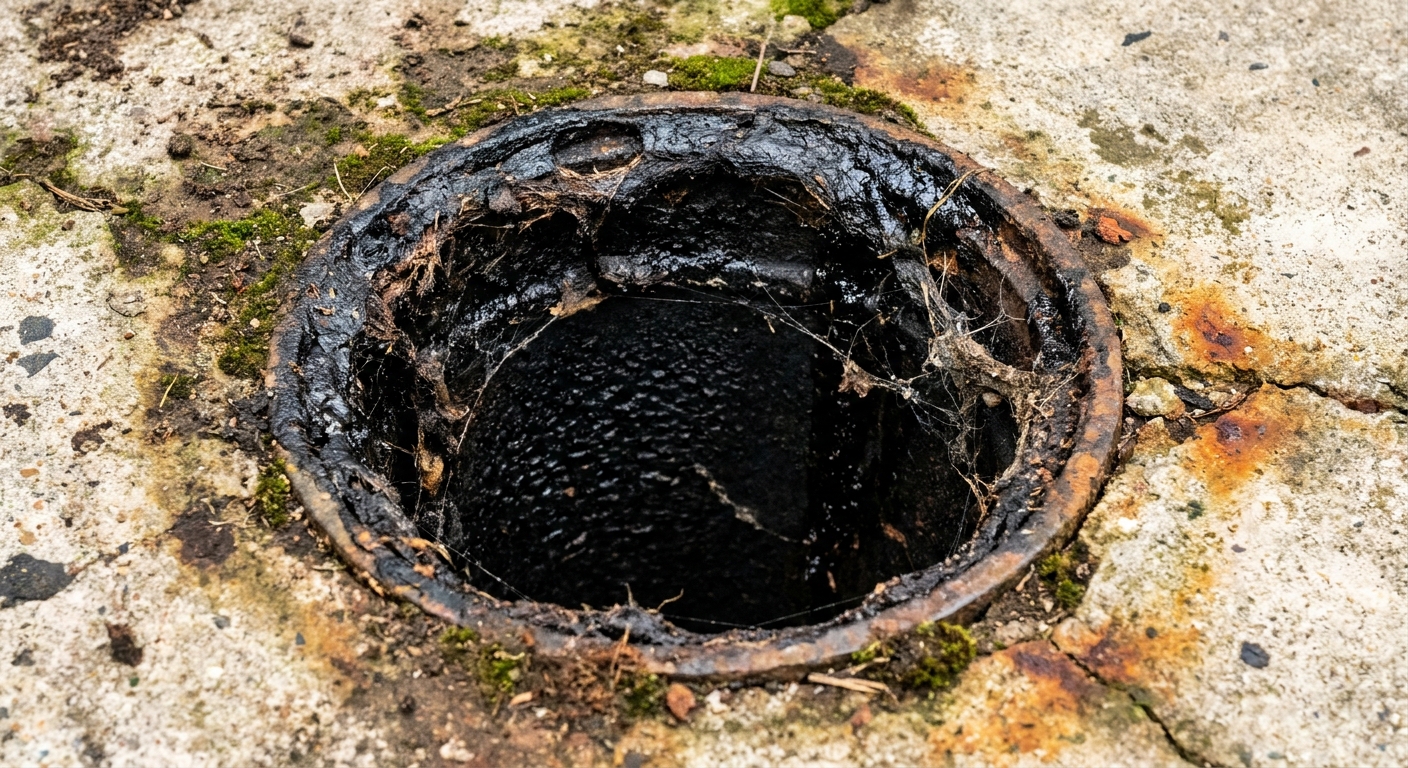
Orangeburg is a type of bituminous fiber pipe. Think layers of wood pulp or paper fiber pressed into a tube and saturated with tar-like bitumen. It was used for sewer laterals, meaning the line from your house to the city main or to a septic tank, because it was cheap and easy to install.
It is not clay. It is not cast iron. It is not PVC. It is basically tar-impregnated fiber, and time is not kind to it.
Why it fails
Orangeburg tends to fail for a few reasons that often stack up:
- It softens and deforms over decades from moisture, heat, and soil pressure.
- It can delaminate internally, creating a rough surface that catches solids.
- It ovalizes, meaning the round pipe slowly squishes into an egg shape.
- It can blister, buckle, or collapse, sometimes into a nearly flat shape.
And here’s the key point that trips people up: Orangeburg can collapse even without tree roots. Roots can absolutely make it worse, but this pipe material can fail all on its own simply from age and ground load.
Common symptoms
If you are wondering whether it is time to investigate, these are the patterns I see most often with failing main lines, including Orangeburg:
- Recurring “main line” clogs that come back weeks or months after a snaking.
- Gurgling in toilets or nearby drains when you run a sink, tub, or washer.
- Slow drains across multiple fixtures, not just one sink.
- Lowest drain wins, where the basement shower or floor drain backs up first.
- Sewage smells that come and go, especially after heavy use.
- Wet spots or extra-green strips in the yard above the lateral route.
None of these prove Orangeburg, but they are good reasons to scope the line instead of guessing.
Clue 1: House age
Orangeburg pipe was used roughly from the 1940s into the 1970s, with the heaviest use generally around mid-century and plenty of regional variation. Some areas phased it out earlier, and some installations lingered later depending on supply and local practice.
Quick gut-check:
- House built 1945 to early 1970s? Orangeburg is on the suspect list.
- House built after the 1970s? Less likely, because PVC and other materials took over.
- House built pre-1940? More likely clay or cast iron, unless the line was replaced later.
This is not proof, just a reason to look closer.
Clue 2: Cleanout look
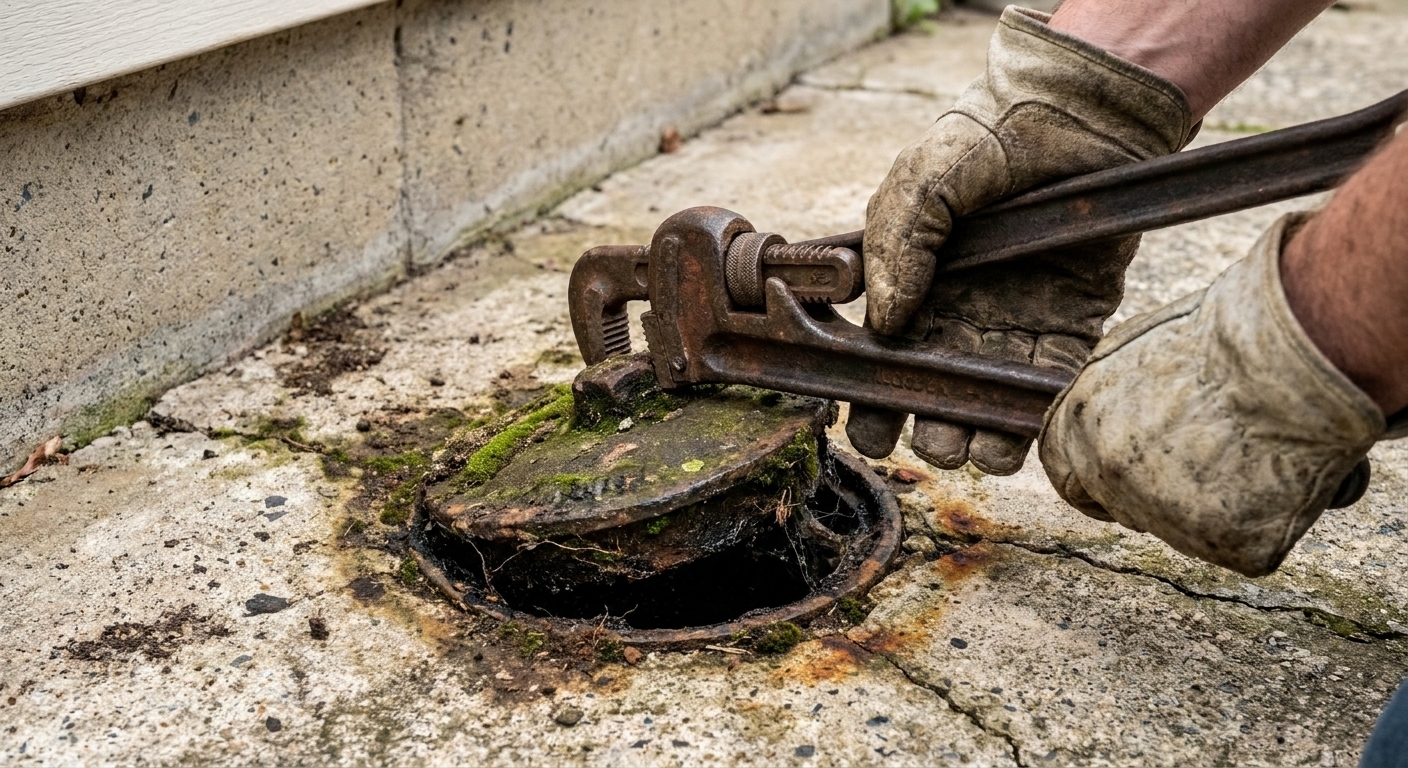
If you have an accessible cleanout, basement floor, crawl space, or yard near the foundation, it can offer a strong hint. You are not trying to diagnose the whole line from one opening, but Orangeburg has a look that is pretty distinctive once you know what to watch for.
The “tar paper” look
Orangeburg often looks like dark brown or black compressed fiber. Homeowners describe it as:
- Tar paper
- Roofing felt
- Cardboard soaked in asphalt
- A black, fibrous tube instead of a hard, slick pipe
You may also see an edge that looks slightly fuzzy or layered rather than crisp like plastic or clay.
Safety note Sewer gases are real. If you open a cleanout, wear gloves, avoid breathing directly over the opening, and keep ignition sources away. If the cleanout is under pressure or you suspect a blockage, stop and call a pro. A pressurized cleanout can turn into an instant sewage fountain.
Clue 3: Camera inspection
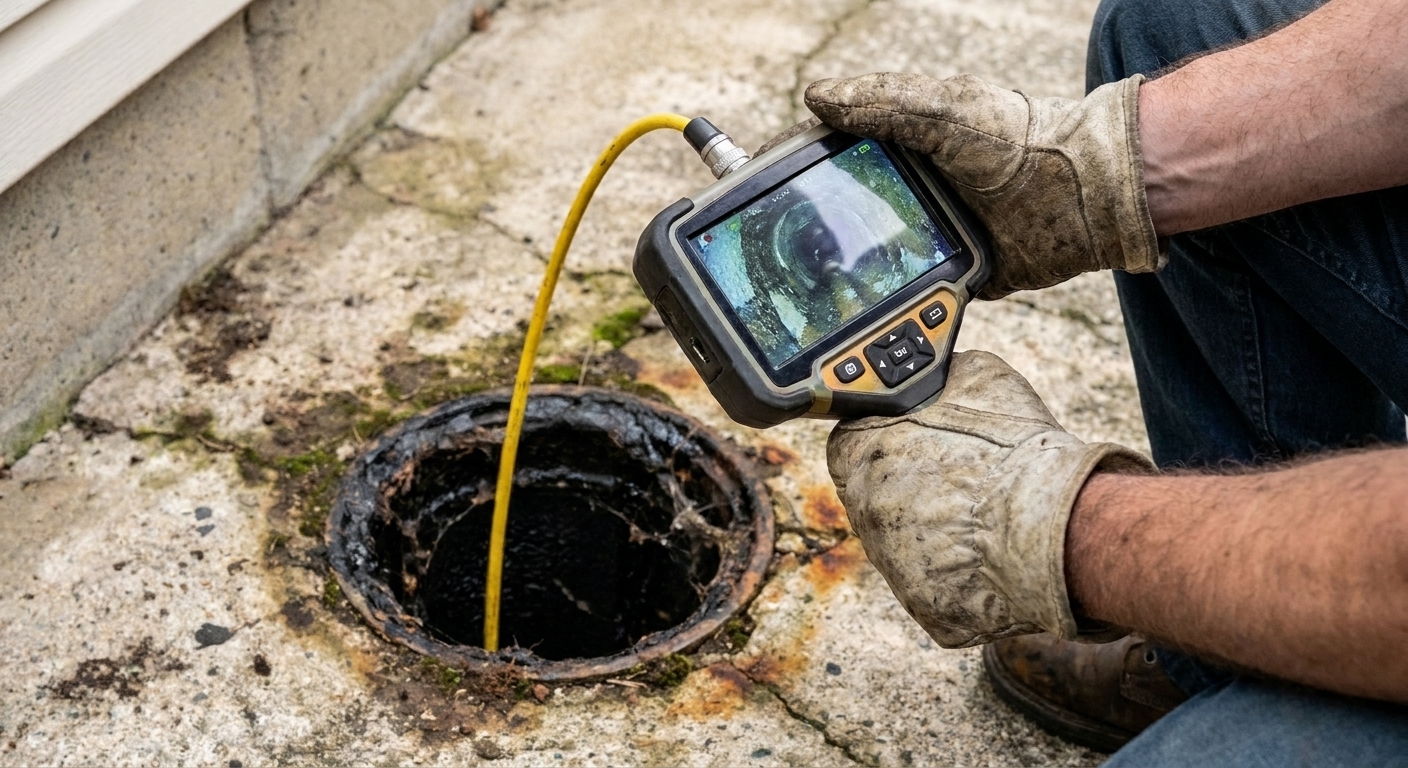
If you want the closest thing to a yes or no answer, schedule a sewer camera inspection. This is especially smart if you are buying a home in an older neighborhood, or if you have recurring drainage issues that never quite go away.
What Orangeburg looks like on camera
On video, Orangeburg typically does not look like a smooth, hard pipe. Common camera findings include:
- Oval sections where the pipe is no longer round.
- Wrinkles or ripples along the wall, like the pipe is sagging inward.
- Blistered walls where layers have separated or swelled.
- Pinched areas where the opening narrows dramatically.
- Soft-looking interior texture that seems more like pressed fiber than fired clay or metal.
If the tech calls it “fiber pipe,” “bituminous fiber,” or “Orangeburg,” ask them to pause and show you a clear section on the screen. A good operator can point out deformation and explain what it means for flow.
Why it fails without roots
With many sewer materials, people jump straight to “roots.” With Orangeburg, the bigger villain is often the pipe itself.
Orangeburg is weaker than clay, cast iron, or modern plastic. Over time:
- Soil pressure from above slowly compresses it, especially if the soil is heavy or the trench wasn’t bedded well.
- Repeated wet-dry cycles and constant moisture exposure break down the binder and fibers.
- Minor ground movement can deform it because the pipe does not have much structural rigidity.
So yes, a big maple can absolutely speed up the failure. But I have seen Orangeburg lines deform in yards with no trees nearby, simply because decades have passed and gravity does what gravity does.
Repair vs replacement
This is where it gets practical. The “right” solution depends on what shape the pipe is in, how much of it is Orangeburg, and whether it is already collapsing.
When lining can work
A cured-in-place liner, often called CIPP, can sometimes be used if the pipe still has enough shape to act like a mold. In other words, the line may be rough and slightly deformed, but it is still open and continuous.
Lining is most likely to be considered when:
- The camera can pass through the whole run.
- The pipe is not severely pinched.
- There is not a major offset or break that blocks the pathway.
- There are not significant bellies or sags holding standing water for long stretches.
When lining will not work
If Orangeburg is collapsed or nearly closed off, lining is usually not an option. A liner cannot create a usable pathway out of a section that is basically pancaked shut, and many installers will not warranty a liner in pipe that is already structurally gone.
Lining also tends to be a no-go when:
- The camera cannot get through a section at all.
- There are severe pinch points that block cleaning and prep.
- The pipe has separated or the pathway is blocked by a hard collapse.
- There are missing sections or voids that would leave the liner unsupported.
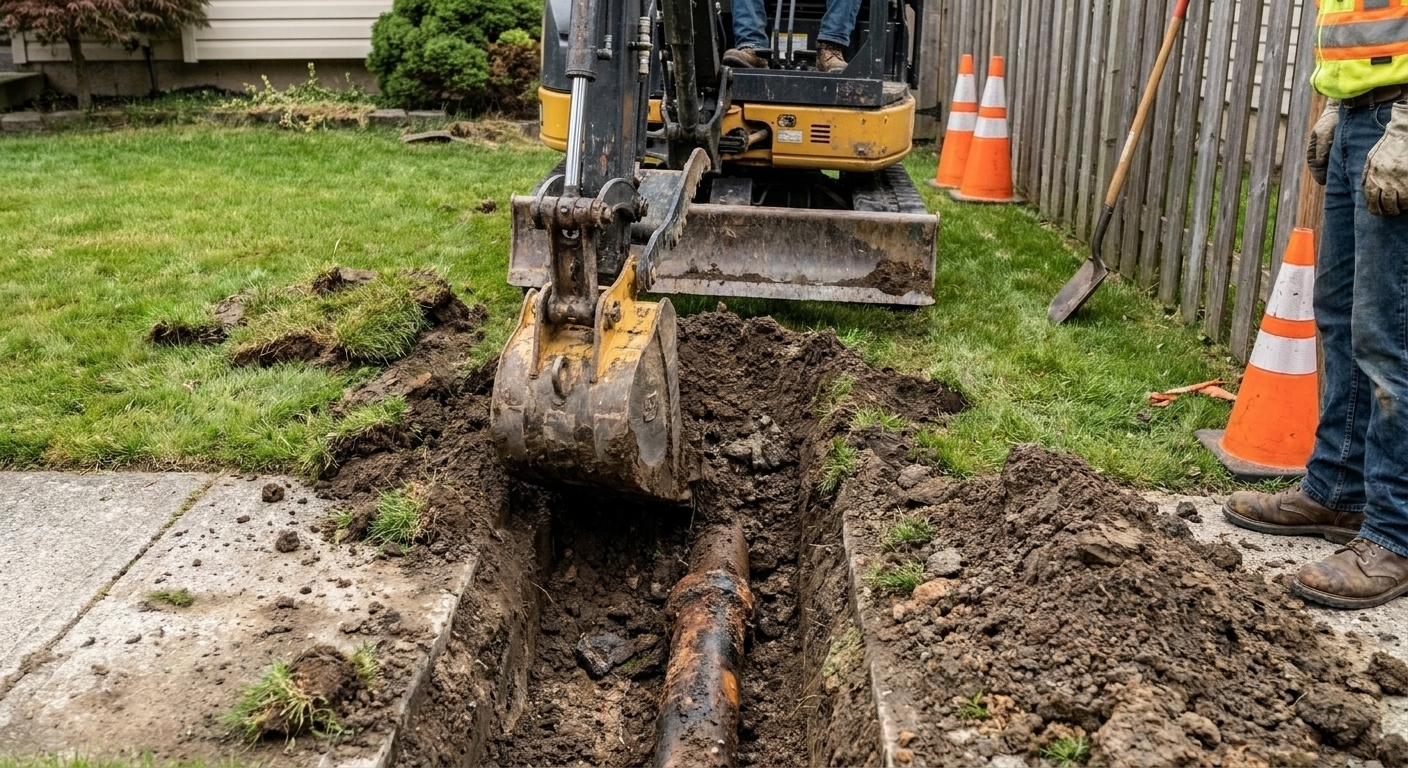
In those cases, you are typically looking at spot repair with excavation if the damage is localized, or full replacement of the lateral.
Another trenchless option: Pipe bursting
If lining is off the table, ask whether pipe bursting is an option. This method breaks the old pipe and pulls a new pipe through the same route. It can be a good fit for some Orangeburg replacements, but feasibility depends on depth, bends, nearby utilities, and what sits above the line.
Confirm without guessing
If you want to move from suspicion to certainty, here’s the clean, homeowner-friendly order of operations I recommend.
1) Check paperwork
If you have any records from prior owners, plumbers, or the city, look for words like Orangeburg, bituminous fiber, or fiber conduit. Sometimes a prior repair invoice tells the whole story.
2) Ask your city
Some municipalities keep records of sewer laterals, past permits, or neighborhood-era construction materials. It is not guaranteed, but it is worth a phone call.
3) Get a camera inspection
Ask for the footage or stills. You want something you can reference later, especially if you get multiple quotes. If the contractor offers a location estimate for defects, even better.
4) Ask one key question
“Is the line deformed, or is it collapsed?”
Deformed might buy you time or allow trenchless options. Collapsed is usually the point where you plan a replacement, not another cleaning.
Who owns the sewer lateral
This surprises a lot of people: in many places, the homeowner is responsible for the sewer lateral from the house all the way to the city main, often including the section under the yard and sometimes under the sidewalk. In other areas, the city owns part of that run.
Before you approve a big repair, ask your municipality where responsibility changes, and whether a permit and inspection are required. It can save you from paying for the wrong segment, and it can also prevent problems when you sell.
Orangeburg vs other pipes
If you are trying to compare what you see on camera to other materials, here are some quick identifiers.
- PVC smooth, bright, consistent diameter, glued or gasketed joints.
- Cast iron dark metal interior, often rough or scaly with age, heavy and rigid.
- Clay hard surface, distinct joints every few feet, often orange-brown.
- Orangeburg dark, fibrous look, can appear warped, oval, blistered, or pinched.
If you are ever unsure, don’t feel bad. Pipe identification is one of those things that looks obvious only after you have seen it a few times.
Cost drivers to know
Prices are all over the map, so I am not going to throw out a number that may not match your market. But when you are comparing quotes, these are the factors that usually move the price the most:
- Length and depth of the lateral.
- Access, including whether it runs under a slab, porch, driveway, or mature landscaping.
- Method, excavation vs lining vs bursting.
- Permits, inspections, and the city connection requirements.
- Restoration, concrete, asphalt, sod, or fencing.
When to act
Finding out you have Orangeburg is not a reason to cancel your weekend plans and start digging the yard on Saturday morning. It is a reason to get informed, document what you have, and plan smart.
Call a plumber now if
- You have an active backup into a tub, shower, floor drain, or basement toilet.
- You suspect the line is collapsed and fixtures are not draining at all.
- You smell strong sewer gas and cannot identify the source.
Plan soon if
- A camera shows clear ovalizing or major narrowing.
- The line has recurring blockages and the camera shows deformation.
- You are planning major landscaping, a driveway redo, or a foundation project and you want to avoid rework later.
You can usually breathe for a minute if
- The camera shows Orangeburg but it is still open enough to flow properly.
- You have no history of backups and drains are behaving normally.
- You have a plan to re-scope periodically, especially before buying or before major renovations.
Marcus’s rule of thumb If a sewer camera shows a nice, open pathway, I focus on planning. If it shows a pipe that is steadily narrowing, I focus on timing and budgeting for replacement sooner rather than later.
FAQ
Is Orangeburg the same as “tar paper pipe”?
Pretty much. “Tar paper pipe” is a common nickname for Orangeburg because the material looks like tar-saturated paper fiber.
Will snaking or hydro jetting fix Orangeburg?
It can clear a blockage, but it does not restore the pipe’s shape. If the line is already compromised, aggressive cleaning can make things worse. This is a case where you want a pro to match the cleaning method and pressure to what the pipe can handle.
If I have Orangeburg, should I replace it even if it is not clogged?
Not automatically. Confirm its condition with a camera first. If it is already deforming significantly, replacement planning is smart. If it is still holding shape, you may be able to monitor and budget rather than rush.
How long does Orangeburg last?
Many Orangeburg lines made it 30 to 50 years, and some lasted longer. But once the material starts to soften and deform, the failure curve tends to steepen.