
How to Thaw a Frozen Plumbing Vent
If drains gurgle only during deep freezes, your roof vent may be frosted shut. Here is how to safely thaw it with warm water, not a torch, plus how to tell ice from a nest or leaves.
Every winter in Michigan, I get at least one message that goes something like: “My toilet burps, the sink gurgles, and it only happens when it is brutally cold.” That pattern is a big clue. When fixtures act up only during a hard freeze, the problem is often not your drain line. It is the plumbing vent on the roof getting narrowed or capped by frost.
The good news: a frozen vent is usually fixable without tearing into walls. The bad news: it involves roof work, and you have to be smart about safety and heat. I will walk you through how to thaw a frozen plumbing vent, why a torch is the wrong tool, and how to tell ice apart from a leaf or nest blockage.
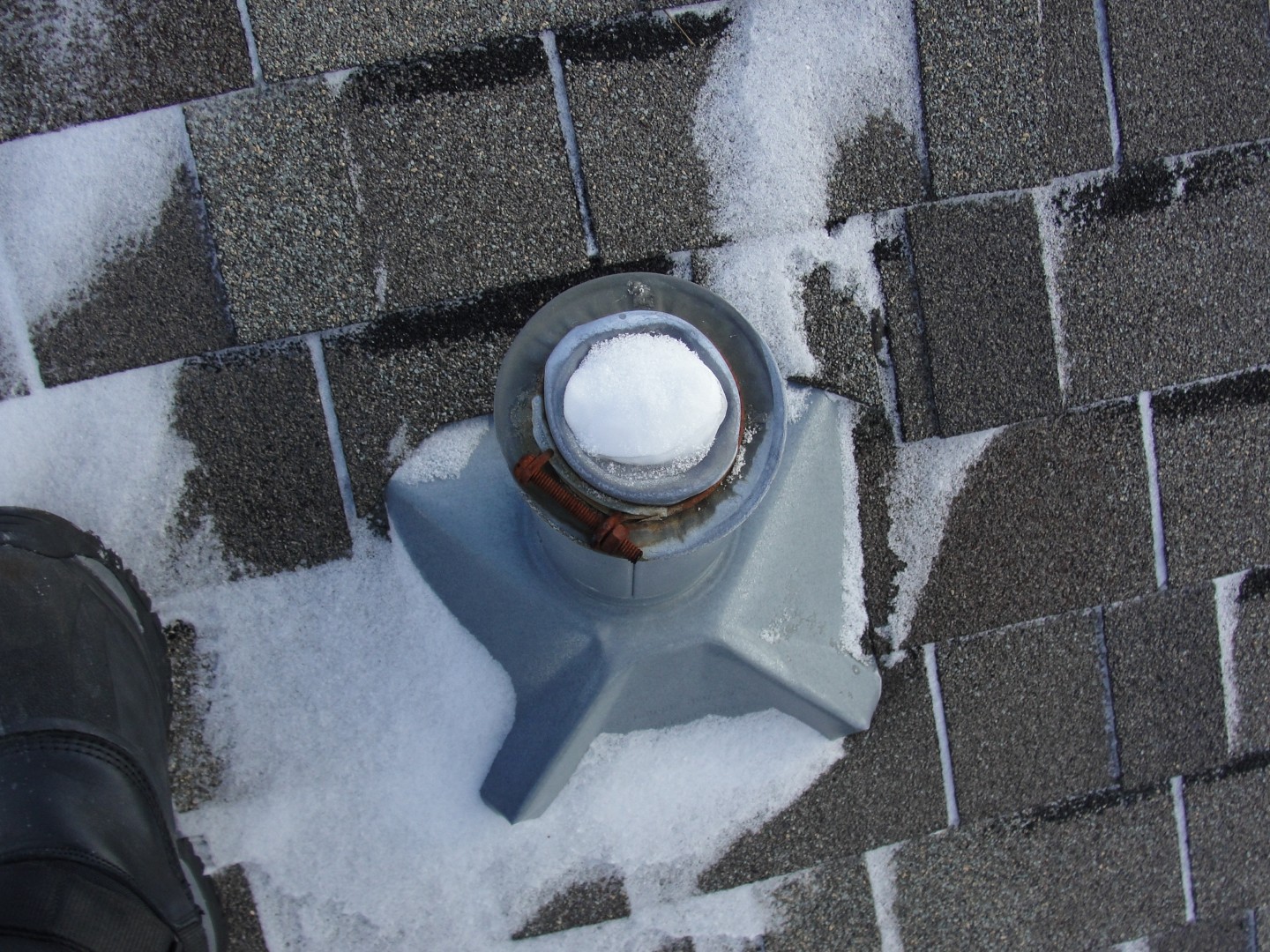
What it looks like inside
Your plumbing vent is the pipe that runs up and out through the roof to let sewer gases escape and to let air into the drainage system. When it is blocked, drains can get slow and noisy because the system is struggling to breathe.
Common symptoms during a deep freeze
- Gurgling from a sink, tub, or toilet after you flush or drain water
- Slow draining in more than one fixture
- Toilet bowl water level that seems to rise or fall a little
- The problem comes and goes, and it is worst during the coldest nights
If your home drains fine when temperatures climb back above freezing, that is a strong hint you are dealing with frost or ice at the top of the vent, not a permanent clog deeper in the pipe.
Ice vs. debris: tell the difference
I like to separate vent problems into two buckets: winter ice narrowing the opening and physical debris (leaves, a bird nest, a tennis ball, you name it). The fix can look similar, but the clues are different.
Signs it is ice or frost
- Symptoms show up only during sustained sub-freezing weather
- It is worse after heavy snow or wind-driven frost
- The issue improves on its own during a thaw
Signs it is debris (not ice)
- Symptoms started in mild weather and never fully go away
- You have a history of birds nesting near the roofline
- You recently had roof work done and something may have dropped in
If you suspect debris and not ice, you will want a different approach than the warm-water thaw described below, like careful removal from the roof opening or a plumbing snake used appropriately. This guide focuses on winter ice, since that is a different beast.
Before you climb
Working on a roof in winter is no joke. Snow, frost, and cold shingles can turn a simple job into a trip to the ER.
Safety comes first: If the roof is steep, icy, high, or you do not have solid access, skip the hero move and call a plumber or roofer. The vent will still be there after the sun comes up and the roof warms a bit.
Do not get on the roof if
- The roof surface is icy or has hidden slick patches
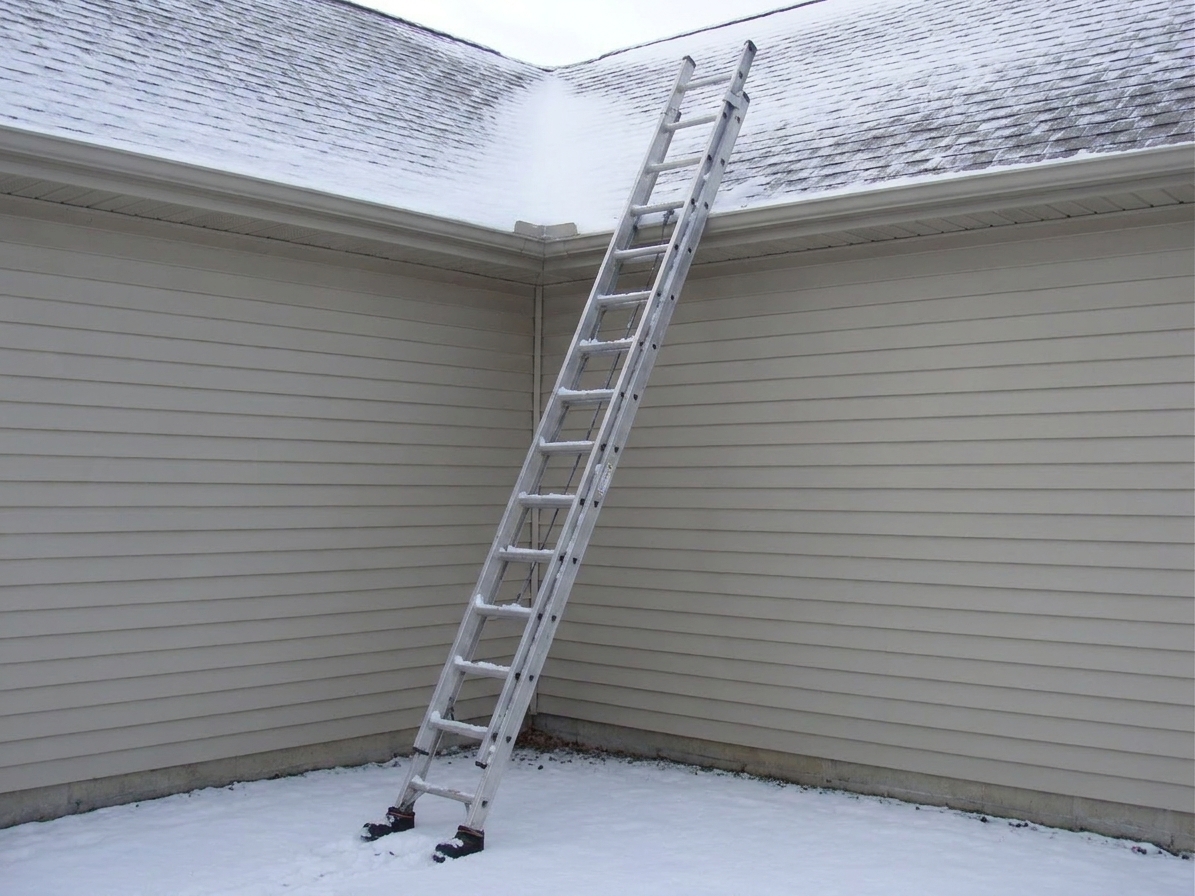
- You cannot set the ladder on solid, level ground
- You are alone at home
- You are not comfortable working at height
Helpful gear if you do go up
- Sturdy extension ladder and a way to stabilize it
- Boots with good traction
- Work gloves that still let you grip
- Eye protection
- A bucket or thermos for warm water
- A small funnel that fits the vent (optional but helpful)
One more safety note: do not confuse a plumbing vent with a furnace flue or other exhaust vent. Plumbing vents are typically plastic or cast iron and connect to your drain system. Flues are often metal and connect to fuel-burning appliances. If you are not sure what you are looking at, stop and get help.
If you can safely access your attic, another way to confirm the right vent is to follow the vertical drain stack up through the attic to where it exits the roof. That can save you from guessing on the roofline.
Thaw it with warm water
This is the simplest, most homeowner-friendly method when frost has tightened up the opening near the roof termination.
Step 1: Confirm the right pipe
Most plumbing vents are typically 1.5 to 4 inches in diameter and come straight through the roof, usually near a bathroom or kitchen stack. If you have multiple roof penetrations, do not assume the first pipe you see is the culprit. Sometimes the one serving the problem bathroom is on the other side of the ridge.
Step 2: Check the top opening
Look for a visible ice “cap,” rime frost, or a narrowed opening. Sometimes you will see a donut of ice around the inner diameter. Other times it looks like the pipe is open, but a plug has formed a little deeper down.
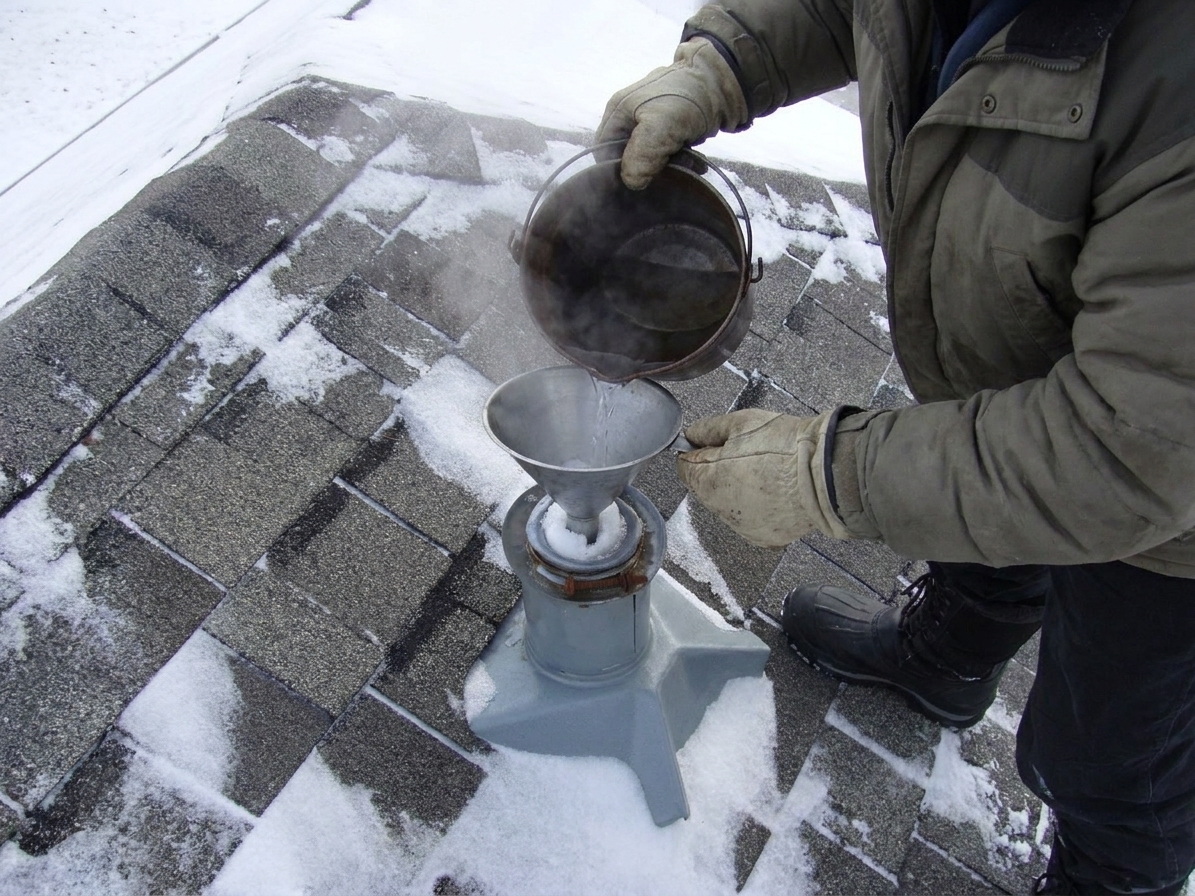
Step 3: Pour warm water down the stack
You want warm to hot tap water, not boiling. Boiling water can be risky on cold plastic and can also be a scald hazard on a roof.
- Pour slowly, a little at a time
- Pause between pours to let heat soak into the ice
- Repeat until you suspect the ice has loosened
A funnel can help keep the water going into the pipe instead of onto the shingles. Try hard to keep spills to a minimum. Any water that runs onto the roof can refreeze fast and turn your walking path into a skating rink.
Step 4: Listen and test from inside
If you have someone inside, have them listen at the problem fixture and do a quick test flush or run water. When the vent opens up, the gurgle often disappears fast.
What success usually looks like: the “glug-glug” stops, the toilet flushes without that hollow sucking sound, and the sink or tub drains more smoothly.
Step 5: Repeat if needed
It can take several rounds, especially if the frost extends down into the attic portion of the stack. If you are dumping a lot of water with no improvement, stop and reassess. At that point, the vent may be blocked by something other than ice, or the ice may be deeper and need professional tools.
Skip the torch
I get the temptation. A little flame seems like it would make quick work of ice. But on a roof, a torch is one of those tools that can turn a minor plumbing annoyance into a serious fire.
The risks are real
- Roof fire: Shingles, underlayment, and roof decking are all combustible
- Melting damage: Many vents are PVC, which can deform and leak when overheated
- Cracking risk: Rapid temperature changes can stress cold materials
- Hidden ignition: Heat can travel to dry wood or insulation below
Warm water is slower, but it is controlled and far less likely to damage your roof or vent system.
What not to do
- Do not chip at PVC with a screwdriver or metal tool. It is easy to crack the pipe or the roof boot.
- Do not dump chemicals (drain opener, antifreeze, salt). They can damage plumbing, roofing, or landscaping, and they do not solve the underlying issue.
- Do not aggressively run a snake from the roof unless you know what you are doing. It is possible to get hung up, damage fittings, or push a problem deeper.
If warm water does not do it
When the vent is deeply iced over, the blockage may be farther down than warm water can reach effectively before it cools.
Safer next steps
- Try another round with hotter (not boiling) water and a funnel to reduce heat loss
- Clear snow around the vent so the sun and air can help
- Wait for a warmer window if the symptoms are manageable
- Call a plumber if drains are backing up, you smell sewer gas, or multiple fixtures are affected
Stop if you see backup: If water is rising in a tub, shower, or floor drain, stop using plumbing fixtures and call for help. A vent issue can mimic a clog, and you do not want sewage backing up into the house.
Prevent it next time
Some homes freeze vents once in a blue moon. Others do it every winter, especially when the vent is undersized, very exposed, or runs through a cold attic.
Simple prevention tips
- Keep the vent termination clear of snow: After big storms, safely knock down drifted snow around the pipe from the ground if possible
- Insulate and air-seal around the vent in the attic: This can help keep the attic segment from turning into a condensation and freeze zone
- Check vent size and termination details: In some climates and layouts, increasing vent diameter near the roof, adjusting termination height, or correcting layout issues can reduce freeze-ups. This should be a plumber conversation and needs to follow local code.
- Make sure bathroom fans vent outdoors: Dumping moist air into the attic can contribute to frost issues up top
If it happens repeatedly, it is worth having a plumber look at the venting layout. Chronic freeze-ups are usually a design or insulation issue, not bad luck.
FAQ
Can a frozen plumbing vent cause sewer smell in the house?
Yes. Poor venting can create pressure problems in the drain system. Negative pressure can siphon water out of traps, and positive pressure can push air and odors back through traps.
Also, do not assume a frozen vent is the only cause of odor. Sewer smell can come from a dried-out trap, a cracked vent, a failed wax ring, or other defects. If the smell is strong or persistent, take it seriously and get help.
How long does it take to thaw a frozen vent?
Light frost at the top can clear in minutes. A deeper ice plug can take multiple warm-water pours over 15 to 30 minutes, sometimes longer. If you are not making progress, stop and call a pro.
Is it safe to pour boiling water down a roof vent?
I do not recommend it. Boiling water is a scald risk on a roof, and sudden high heat on a cold plastic vent can cause damage. Use hot tap water instead.
Could this be a clogged drain instead of a vent?
It could. The big clue for a frozen vent is that the gurgling or slow drain shows up only during hard freezes and improves when temperatures rise. If the issue is constant regardless of weather, investigate a drain clog or other plumbing issue.