
Why One Room Isn’t Getting Cold Air
If one room has weak or no AC airflow while the rest of the house is cool, start here. Check a closed damper, a disconnected duct branch, and a blocked register, in that order.
Good grain. Great questions.
If the rest of your house is cooling fine but one room feels like it’s on a different thermostat, you are most commonly looking at a branch airflow problem. One supply run is being choked, blocked, or has come apart, so that room never gets its share of conditioned air.
That said, a stubborn warm room can also come from a room load issue (big west window, poor insulation), a supply temperature issue (duct picking up heat in a hot attic), or controls (zoning, a closed motorized damper). The steps below help you sort “not enough air” from “air is fine, but the room is harder to cool.”
In the shop I like to troubleshoot in a strict order so you do not tear into ceilings when the fix is a lever you can move with one finger. Here’s the order that solves most “one dead register” situations.
Before you start: confirm the type of problem
Do these quick checks first. They keep you from chasing ducts when the problem is actually return air, a door pressure issue, a temperature issue, or a closed vent.
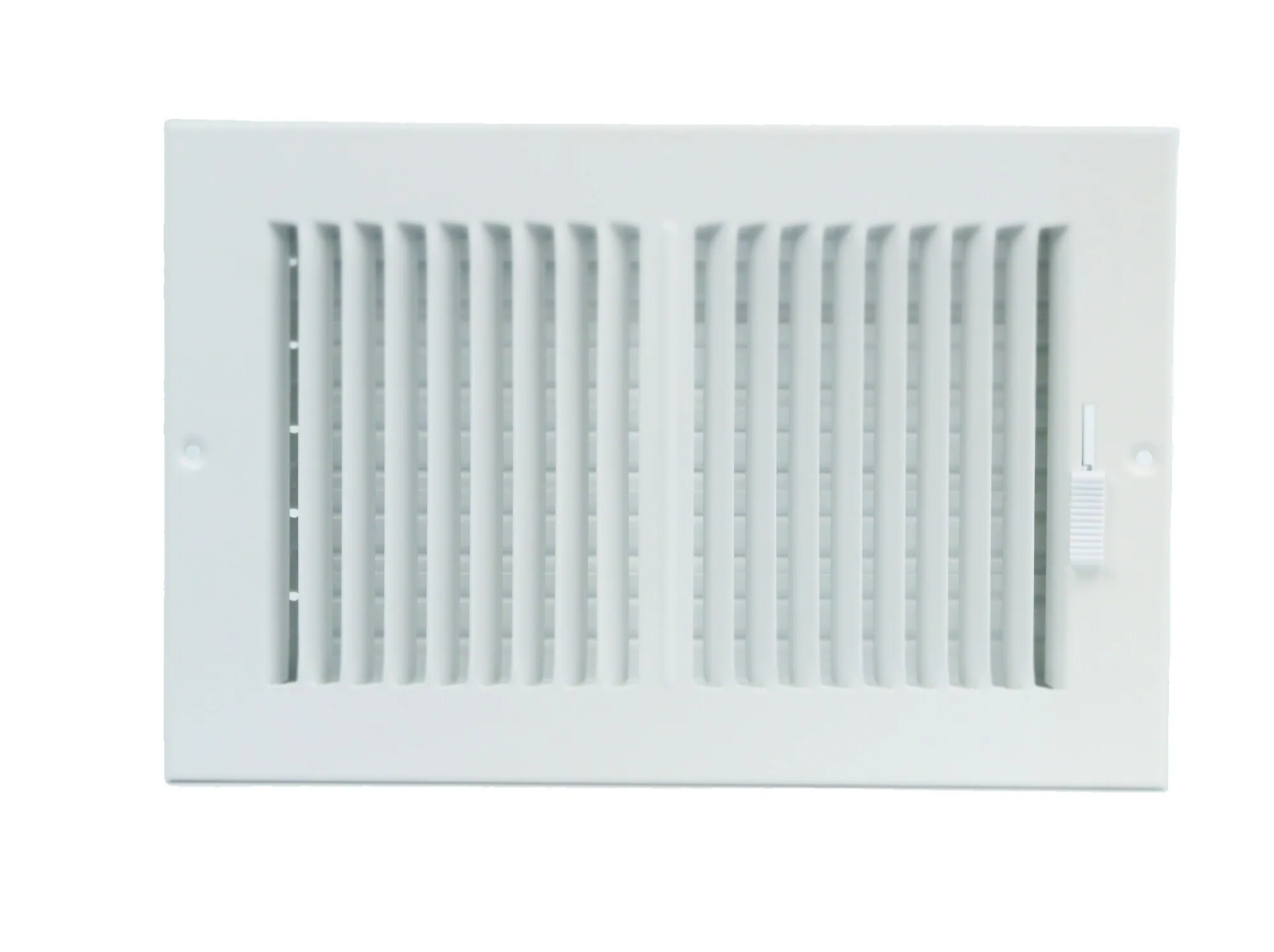
- Compare airflow at two vents. With the system running and the fan blowing, hold a tissue near the problem room supply register and then a nearby good register. If the tissue barely moves in the problem room but flutters elsewhere, you have a localized supply restriction.
- Compare supply temperature. If airflow feels similar but the room stays warm, check whether the air coming out feels as cold as other rooms. For a quick sanity check, hold a basic thermometer at the register for a minute and compare rooms. Big differences can point to duct heat gain, leakage, or a disconnected insulation jacket.
- Check the obvious vent setting. Many registers have a small lever or wheel that closes the damper built into the grille. Make sure it is actually open.
Safety note: If you are going to open ductwork, turn the HVAC system off at the thermostat first. Sheet metal edges are sharp, and flex duct can hide screws and staples. Also, if you see old, frayed duct wrap that looks like it could be asbestos (common in older homes), do not disturb it. Call a pro.
Step 1: Check the branch damper
When one room goes weak while others are fine, a closed or partially closed damper is the cleanest explanation. Many homes have manual balancing dampers on individual branches, especially near the main trunk line in the basement, crawlspace, or attic.
What a damper looks like
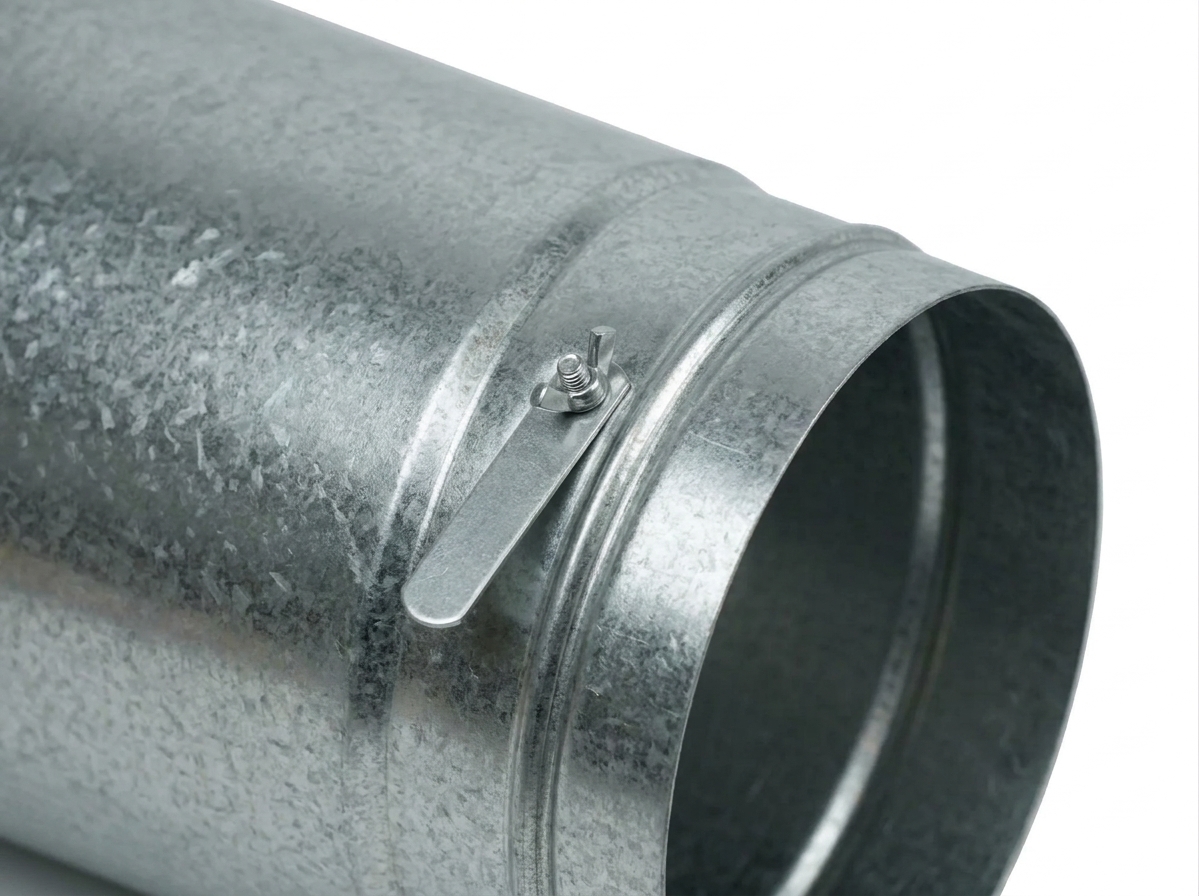
On round metal duct, the damper is often a short section with a small handle on the outside. On rectangular duct, it may be a lever connected to an internal blade. Sometimes it is labeled, but often it is just a bare handle with a screw to lock it in place.
How to tell if it is open
- On many round duct dampers, the handle is usually parallel to the duct when open and perpendicular when closed.
- It is not universal. Handles get installed at odd angles. If there is a stamped indicator, use it. If not, loosen the locking screw and gently rotate the handle. You should feel the blade change position inside.
If you find a closed damper
Open it fully, tighten the locking screw, then run the system for 10 to 15 minutes and recheck airflow at the register.
My small-but-mighty tip: If someone “balanced” the system for winter heat, that same damper position can starve a room in summer cooling.
Step 2: Check for a damaged branch duct
If the damper is open and the register is still weak, the next most common culprit is a duct that is disconnected, kinked, or crushed somewhere between the trunk and the room.
Where to look first
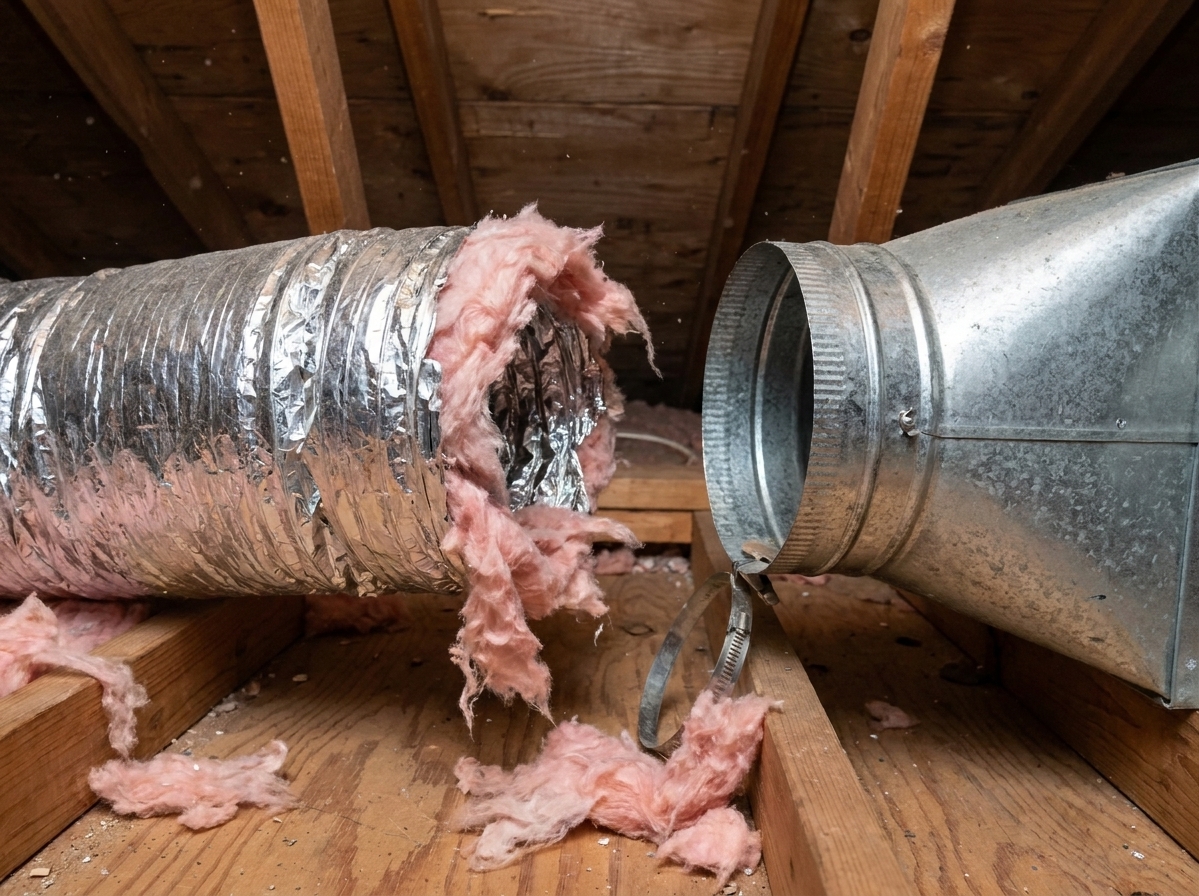
- Attic runs: Flex duct can get stepped on, stored on, or pulled loose near a boot. A hot attic also punishes poor insulation, which can make supply air warmer by the time it reaches the room.
- Crawlspaces: Flex duct can sag hard, tear, or collect water and belly. If you find water, look for roof leaks, plumbing leaks, a missing vapor barrier jacket, or a disconnected run pulling in humid air.
- Basements and utility rooms: Connections near the plenum and trunk lines can loosen over time.
Easy clues you have a disconnect
- The problem room register has almost no air at all.
- You feel cold air dumping into an attic, crawlspace, or basement when the system runs.
- There is a new dusty streak or a whistling sound near a joint.
What you can fix yourself
If you can safely reach the duct connection, many disconnects are a straightforward reattach:
- Slide the inner liner of the flex duct back over the metal collar.
- Secure it with a UL 181B listed clamp or band (a proper mechanical clamp beats a generic zip tie).
- Seal the joint with UL 181 rated foil tape or mastic. Do not use cloth “duct tape.”
- Pull the insulation back over the connection and tape the outer jacket so the vapor barrier is continuous.
If you find a branch that is badly crushed, kinked, or holding water, it is often better to replace that section than to “massage” it back into shape.
Step 3: Check the register and boot
If the duct run is intact, the restriction can be right at the room. A blocked register can look open from across the room but still be nearly sealed.
Common blockers
- Furniture and rugs: Especially with floor registers. A bed skirt can do a surprisingly good job of sealing a vent.
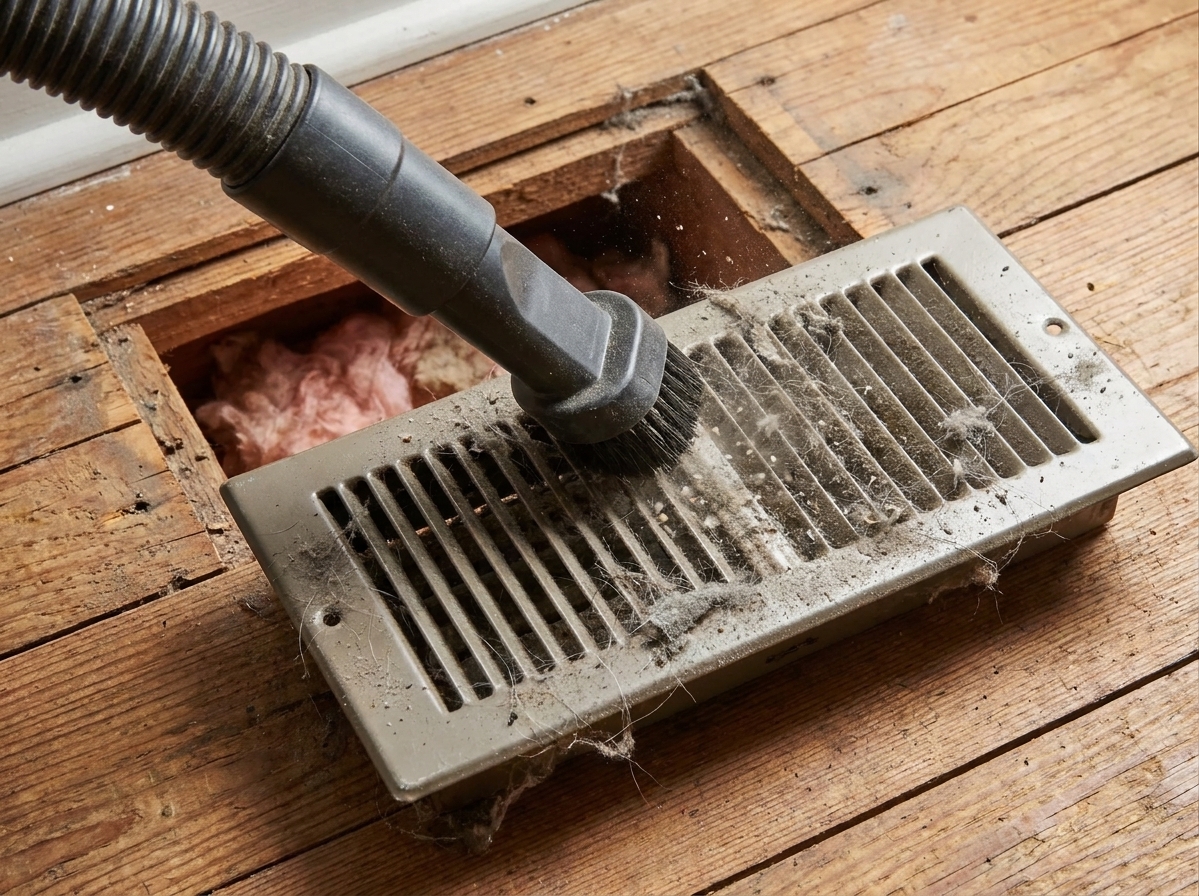
- Dust and debris: Pet hair mats and renovation dust can build up on the grille and inside the boot.
- Closed internal grille damper: Some registers have a damper that slides shut even when the louvers look open.
Quick cleaning check
- Turn the system off.
- Remove the register grille (usually two screws).
- Vacuum the grille and the visible inside edges of the boot.
- Look inside with a flashlight for obvious obstructions like insulation, a dropped toy, or a chunk of drywall.
Other causes to consider
If you have verified an open damper, an intact duct, and a clear register, a few less-obvious problems can still single out one room.
Room load is higher than the rest
Some rooms are simply harder to cool: lots of glass, direct afternoon sun, a bonus room over a garage, or thin attic insulation. If airflow seems decent but comfort is poor, look at blinds, air sealing, insulation, and window exposure. HVAC cannot outrun a big heat gain forever.
Undersized or poorly run duct
Long duct runs with lots of bends or an undersized branch can deliver weak airflow even when nothing is “wrong.” This shows up most in far bedrooms, bonus rooms, and additions. A pro can confirm with static pressure and airflow readings and may recommend resizing, adding a run, or adjusting balancing dampers.
Leaky duct joints on that run
A duct can be connected but still leaking enough air to starve the room. Look for loose foil tape, gaps at boots, or dusty streaking at seams. Sealing with mastic is often the most durable fix.
Return air problems in that room
A room can feel warm if air cannot leave it easily. If closing the door makes the room hotter or makes airflow noisier, the room may be getting pressurized. Signs include:
- The door feels like it “pushes back” when you close it with the system running.
- There is no return grille in the room and the gap under the door is tiny.
- Airflow improves when the door is open.
Common solutions include a larger undercut at the door, a transfer grille, or a dedicated return. Those are worth discussing with an HVAC contractor because return design affects comfort and equipment performance.
Filter or blower issues (usually whole-house)
A very dirty filter or a struggling blower usually reduces airflow everywhere, but the farthest rooms can show it first. If your filter looks like a felt blanket, change it and recheck airflow before you go deeper.
A simple 10-minute checklist
If you want the short version to take to the utility room, here you go.
- Register open? Louvers and any built-in grille damper fully open.
- Damper open? Find the branch damper and set it fully open.
- Duct connected? Check attic, crawlspace, or basement for a loose, crushed, kinked, or water-bellied run.
- Boot blocked? Pull the grille, vacuum, and check for debris.
- Supply temp normal? Compare the vent air temperature to a nearby room.
- Door effect? If door position changes comfort, suspect return air or pressure issues.
When to call a pro
Call for HVAC service if any of these are true:
- You cannot safely access the ductwork (tight attic, unsafe crawlspace, exposed wiring).
- You find a major disconnect or damaged duct that needs replacement.
- You find standing water in ductwork or signs of a leak source you cannot identify.
- The room still has weak airflow after the three main checks and you suspect sizing or design issues.
- You hear loud whistling, rattling, or banging in the duct when the blower runs.
A technician can measure airflow, static pressure, and temperature split to pinpoint whether the issue is branch restriction, leakage, blower performance, duct heat gain, or duct design.
FAQ
Why is only one vent not blowing cold air?
Most often it is a closed branch damper, a disconnected or crushed duct, or a blocked register. If airflow is fine but the air is warmer than other rooms, consider duct heat gain in an attic, missing duct insulation, or leakage on that run.
Can a dirty air filter cause one room to be warm?
It usually reduces airflow everywhere, not just one room. But the farthest room can feel it first, so it is still worth checking filter condition as part of the basics.
Should I close vents in other rooms to force air into the hot room?
It can help a little in some homes, but it can also raise static pressure, increase noise, and in cooling season can contribute to coil icing. Use it as a temporary comfort tweak, not the main repair.
Why does my room cool better with the door open?
That points to an airflow path problem. The room may not have enough return air pathway back to the system, so air cannot circulate well when the door is shut.