A homeowner-friendly tutorial for safely opening and cleaning your outdoor AC condenser coils to improve airflow, efficiency, and unit life.
The Homeroom Fix
September 25, 2026
•
By Marcus Delgado
AC Running But Not Cooling? 7 Fixes to Try First
AC running but the house still feels hot? Try these 7 practical fixes first, from thermostat settings to dirty coils and airflow issues, plus clear signs it is time to call a pro.

Marcus Delgado
Marcus Delgado is a former residential carpenter and lifelong DIY enthusiast who believes every homeowner has the power to transform their space. After a decade of swinging hammers for general contractors, he shifted gears to share practical, budget-friendly home improvement advice. When he's not renovating his own 1970s fixer-upper, you can find him hunting for salvaged wood or teaching weekend workshop classes.
When your AC is running nonstop but your house still feels like a toaster, it is usually one of a handful of common issues. Some are quick wins you can handle in five minutes. Others are “stop now and call a pro” situations because they involve refrigerant, electrical parts, or risking damage to the system.
I will walk you through seven fixes in the order I would check them at my own place. Most take 5 to 30 minutes, and you do not need fancy tools. You do need to be honest with yourself about safety and limits, because no amount of DIY pride is worth a fried compressor.
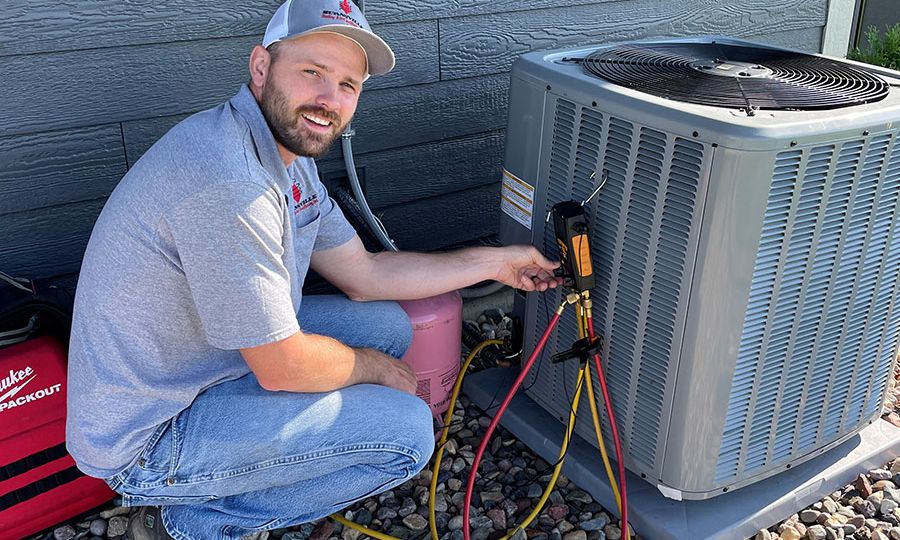
Before you start: two quick safety rules
- Turn off power before touching anything inside. For the indoor unit, use the furnace or air handler switch and the breaker. For the outdoor unit, pull the disconnect block near the condenser and switch off the breaker if you will be cleaning around the fan.
- If you see ice, hear hissing, or smell burning, stop. Ice points to airflow or refrigerant issues. Hissing can be refrigerant. Burning smells can be electrical. Those are not “push through it” moments.
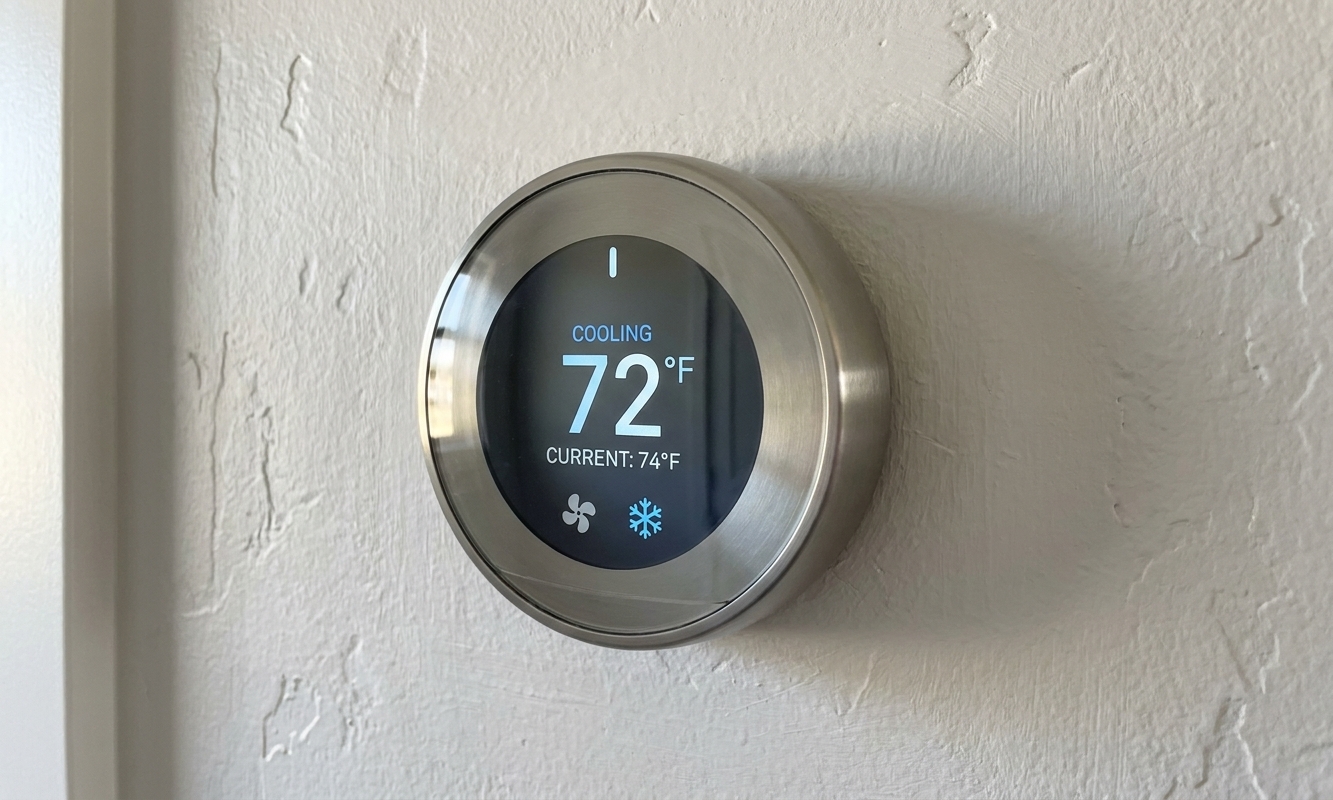
Fix #1: Make sure the thermostat is not sabotaging you
This sounds too simple, but I have personally seen “AC not cooling” solved by a thermostat setting more times than I care to admit.
What to check
- Mode: For troubleshooting, set it to Cool (not Auto) so you know it is actually calling for cooling.
- Fan setting: Start with Auto. If it is set to On, the blower may run continuously and make the air feel warmer and more humid between cooling cycles.
- Temperature: Set it at least 3 to 5 degrees below the room temperature for testing.
- Delay and lockouts: Some smart thermostats have minimum compressor on or off times. If you just changed settings, give it a few minutes before assuming nothing is happening.
- Batteries: If the thermostat uses batteries, swap them. Low batteries can cause odd behavior.
DIY tip: If you have a smart thermostat, check the schedule. A “sleep” schedule set to 78°F can feel like a system problem at 2 p.m.
Fix #2: Replace a dirty air filter (and check the right size)
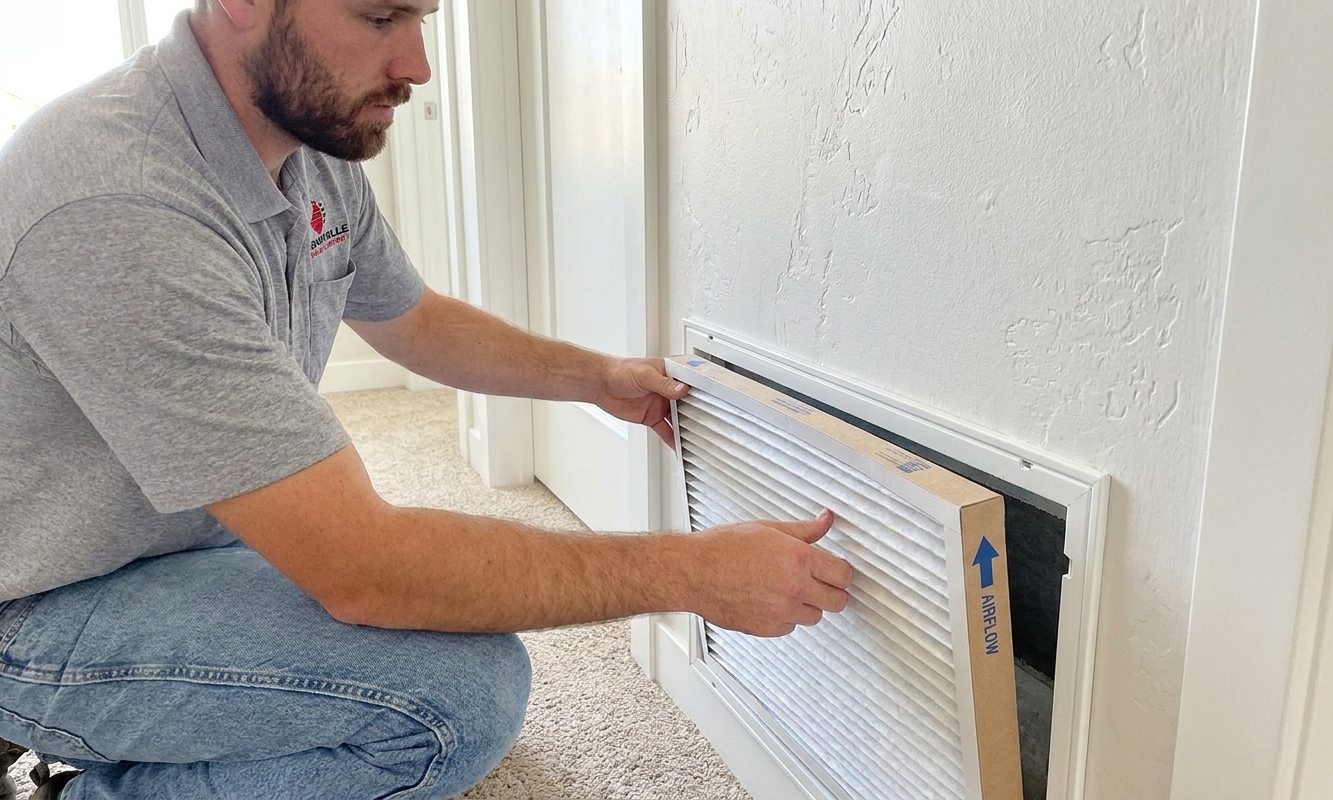
A clogged filter is the most common airflow killer. Low airflow can also cause the evaporator coil to freeze, which then blocks airflow even more. It is a vicious cycle, like trying to breathe through a pillow.
What to do
- Turn the system off.
- Remove the filter and hold it up to a light. If you cannot see light through much of it, replace it.
- Make sure the arrow on the filter points toward the blower (airflow direction).
- Confirm the size matches what your system takes. A filter that is too small can let air bypass and load up the coil with dust.
Heads up: Super high-MERV filters can restrict airflow on some systems. If your system struggles after upgrading filters, try a basic pleated filter and talk to an HVAC tech about proper filtration for your setup.
Fix #3: Look for a tripped breaker or pulled disconnect
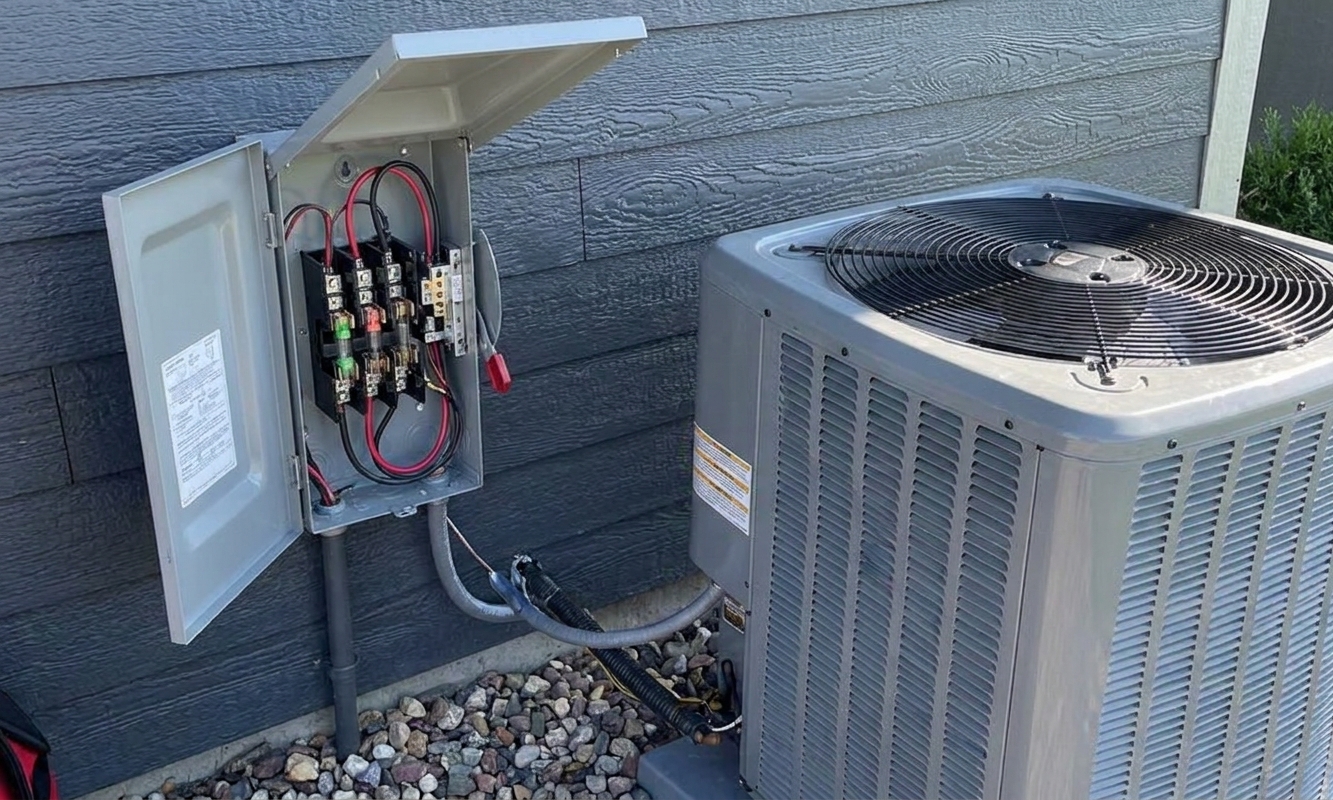
Sometimes the indoor fan runs but the outdoor unit is not actually operating. That creates the exact symptom you feel: air is moving, but it is not cold.
How to check
- At the electrical panel: Find the AC and furnace or air-handler breakers. If one is tripped, reset it by turning it fully off, then on.
- At the outdoor unit: Check the disconnect box near the condenser. Make sure the disconnect is fully seated and switched on, if it has a switch.
Stop and call a pro if: A breaker trips again quickly. That can mean a short, a failing motor, or a capacitor issue. Repeated resets can damage equipment and are a fire risk.
Fix #4: Clean the outdoor condenser coil (and give it breathing room)
Your condenser needs to dump heat outdoors. If the fins are packed with cottonwood fuzz, grass clippings, or a season’s worth of yard gunk, the system cannot shed heat efficiently. The AC will run and run, but cooling will be weak.
Quick cleaning steps
- Turn off power at the disconnect and breaker.
- Clear plants, leaves, and clutter within at least 2 feet around the unit.
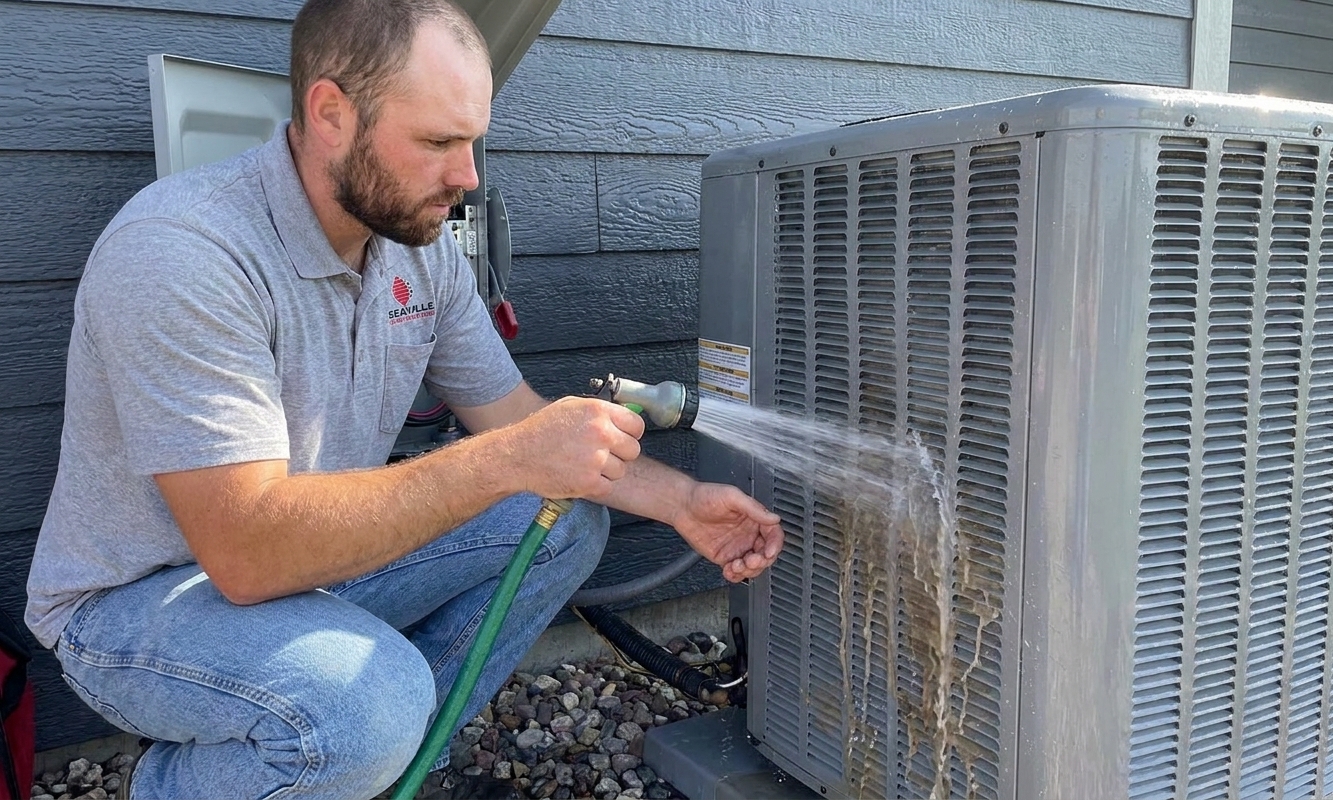
- Gently rinse the coil with a garden hose. For most homeowners, that means rinsing from the outside of the unit inward using low to moderate pressure.
- If you are trained, comfortable, and can safely remove the top grille without stressing wires, an inside-out rinse can push debris back out the way it came in. If not, do not force it. The gentle outside rinse is still worthwhile.
- If the coil is greasy or very dirty, use a foaming condenser coil cleaner (follow the label) and rinse.
Do not: Use a pressure washer or shove a screwdriver into the fins. Bent fins reduce airflow.
Fix #5: Check supply vents and return air for airflow problems
Central air is a loop. You need cold air going out and warm air coming back. If returns are blocked, rooms can feel stuffy and the system can struggle to cool.
Things to check inside
- Supply vents open: Make sure registers are not closed in multiple rooms. Closing too many can raise system pressure and reduce overall performance.
- Return vents clear: Move furniture, rugs, and laundry piles away from return grilles.
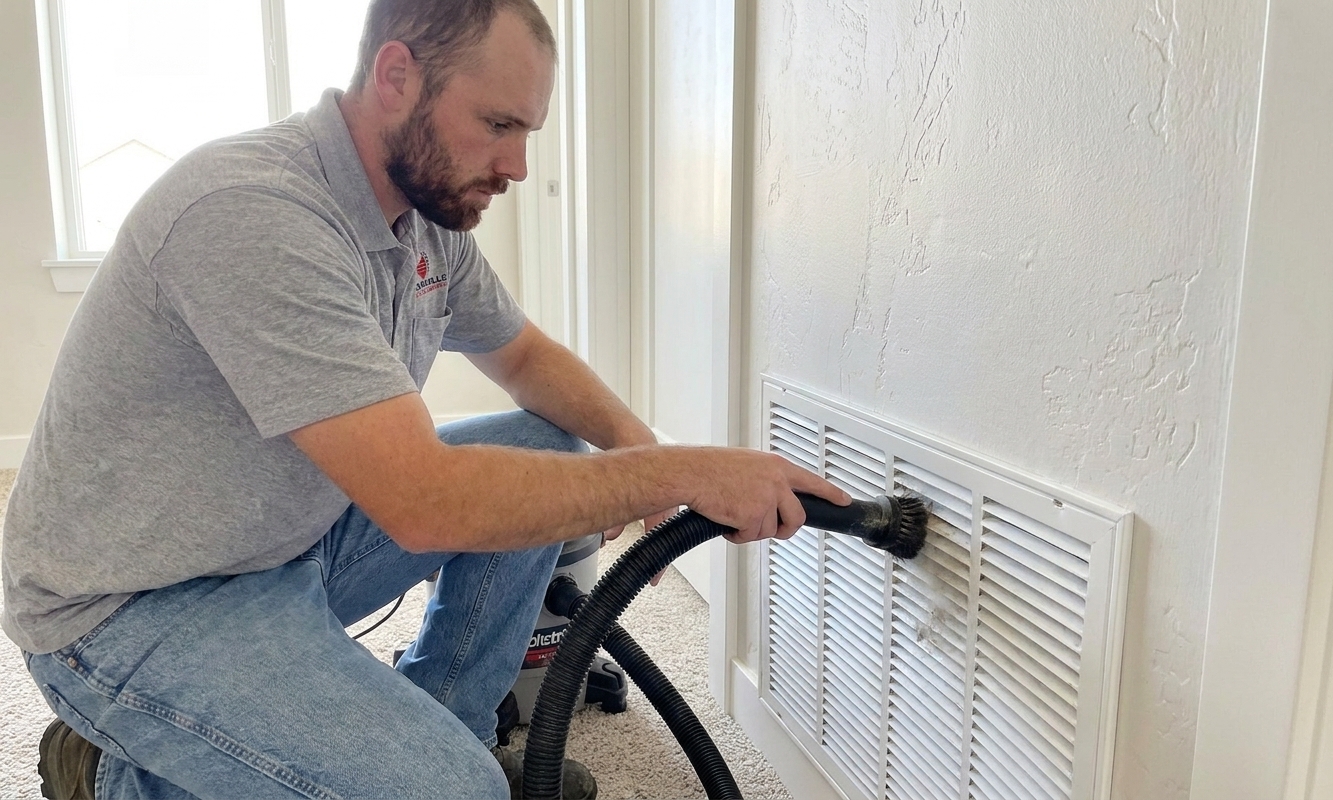
- Dirty return grilles: Vacuum the grille face. It helps more than you would think.
- New obstacles: A recently installed bookshelf or a toddler’s “blanket fort” can block airflow like a champ.
If only one room is hot: That is less likely to be refrigerant. It is more often a closed register, a duct issue, poor balancing, or a room that gets blasted by sun.
Fix #6: If the indoor coil is frozen, thaw it the right way
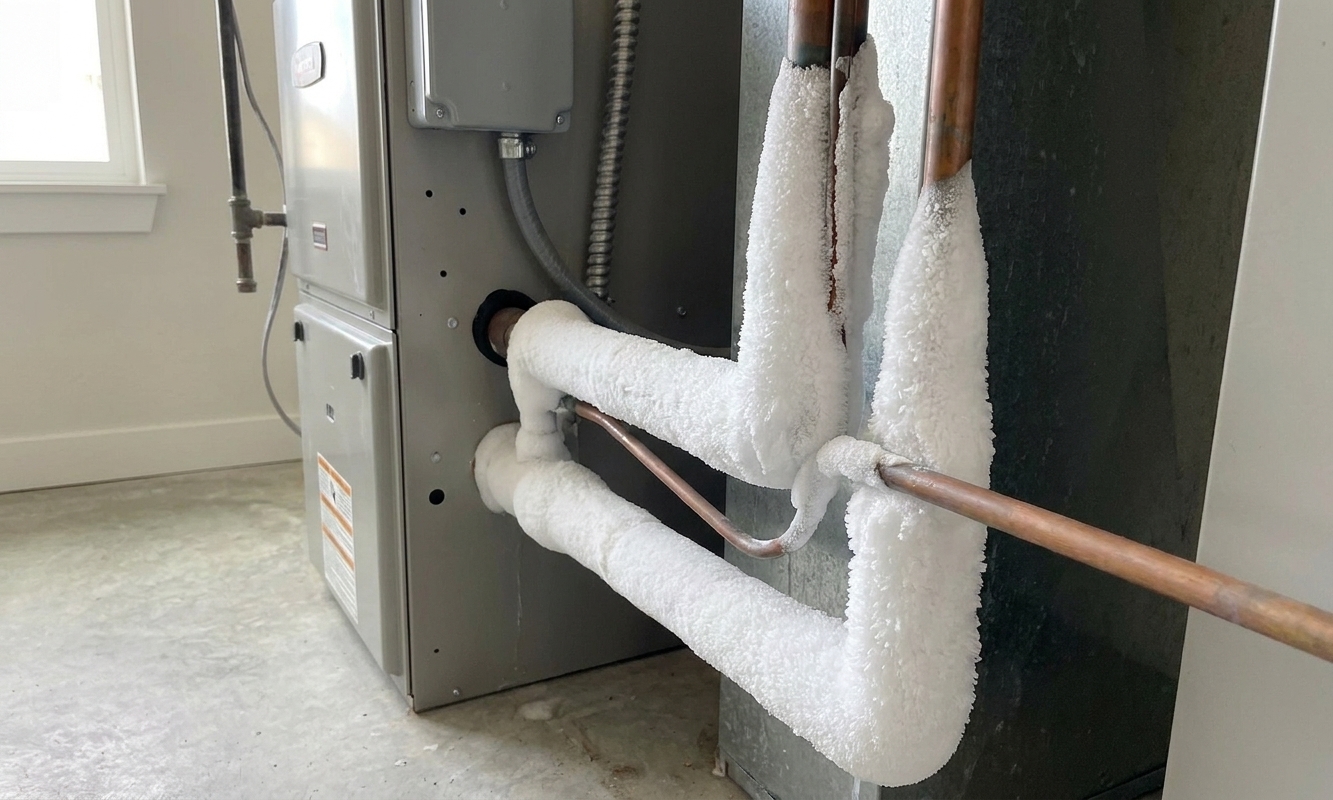
If you have weak airflow and the larger insulated suction line near the indoor unit is icy, or you see frost on the refrigerant lines or indoor coil area, your system is likely frozen. Running it while frozen can damage the compressor.
How to thaw safely
- Turn Cool off at the thermostat.
- Set the fan to On to move air over the coil and speed thawing.
- Let it thaw fully. This can take a few hours.
- Replace the air filter if it is dirty and make sure vents are open.
- After thawing, set the thermostat back to Cool and monitor.
If it freezes again within a day or two, you likely have an underlying issue like low airflow (dirty evaporator coil, blower problem, duct restriction) or low refrigerant. That is pro territory.
Fix #7: Confirm the outdoor unit is actually running (fan and compressor)
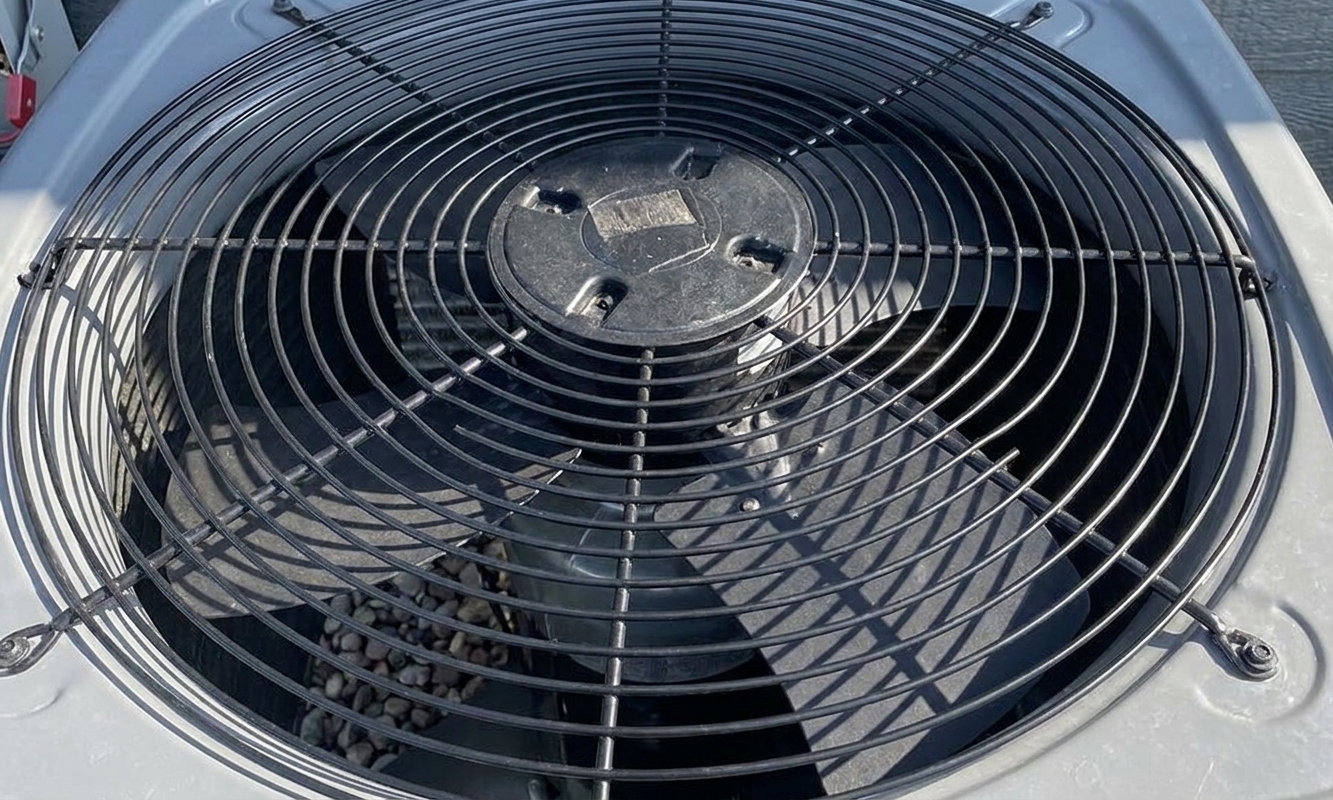
Here is the sneaky one: the thermostat calls for cooling, the indoor blower runs, but outside the condenser fan is not spinning or the compressor is not kicking on. You will get room-temperature air indoors and a whole lot of frustration.
What you can check
- Listen outside: You should hear the fan and the steady hum of the compressor when cooling is on.
- Look through the top grille: The fan should be spinning.
- Feel the lines (carefully): After running for 10 to 15 minutes, the larger insulated line should feel cool to cold. If it is not, the system may not be moving heat.
Do not DIY capacitors. A failed capacitor is common and often the cause of a dead fan, but capacitors can store a dangerous charge even with power off. If the outdoor unit is not running right, it is time to call an HVAC pro.
One more sneaky cause: a clogged drain or float switch
In many systems, a clogged condensate drain can trip a float switch (a safety shutoff). Depending on the setup, you may get an odd mix of symptoms, like the blower running but cooling shutting down to prevent overflow.
- What you might notice: A wet area near the indoor unit, a full drain pan, or a safety switch with a little red indicator light.
- What to do: If you are not sure what you are looking at, do not guess. Water plus electrical parts is not the place to freelance. Call a pro, or at least shut the system off and investigate carefully with power cut.
When to call a pro right away
I love a good DIY save, but these signs mean it is time to bring in an HVAC technician:
- Ice keeps coming back after filter and airflow checks.
- Hissing sounds near the indoor or outdoor unit.
- Oily residue on refrigerant lines or around fittings.
- Breaker trips repeatedly or you smell burning.
- Outdoor unit is not running or makes loud grinding, squealing, or clanking noises.
- System is 10 to 15+ years old and cooling has slowly gotten worse. You may be looking at a failing compressor, leaking coil, duct issues, or a blower problem.
What a pro often checks next: refrigerant charge and leaks, capacitor and contactor health, evaporator coil and blower wheel cleanliness, duct leakage or disconnected ducts (especially in attics), and system sizing versus the home’s heat load.
A realistic expectation check (so you do not chase a ghost)
Here is the most useful rule of thumb: many properly working central AC systems deliver about a 15 to 20°F temperature drop between the return air going into the system and the supply air coming out, once it has been running steadily under normal airflow and humidity.
That number is often called Delta T, and it is not the same thing as “your home will always be 20 degrees cooler than outside.” How close your indoor temperature can get to your thermostat setting depends on the heat load, insulation, windows and sun exposure, humidity, duct condition, and whether the system is sized and installed well.
A quick homeowner test: check the temperature difference between the air going into the return and the air coming out of a nearby supply vent after 10 to 15 minutes of steady running. If you are only seeing a small change, that supports the idea that something is off.
FAQ
Why is my AC blowing air but not cold air?
Most often it is restricted airflow (dirty filter, blocked returns, dirty coil), a dirty outdoor condenser coil, a tripped safety like a float switch, or the outdoor unit not running properly. Less commonly, it is low refrigerant from a leak or an electrical part failure.
Should I turn my AC off if it is not cooling?
If you see ice anywhere on the lines or indoor unit, yes, turn cooling off and thaw it. If it is simply not keeping up but everything is running normally, you can keep it on while you do basic checks like filter and condenser cleaning. If breakers trip, shut it down and call a pro.
Can low refrigerant cause AC to run but not cool?
Yes. Low refrigerant often leads to poor cooling and can cause the indoor coil to freeze. Refrigerant is not a DIY top-off situation. It should be leak-tested, repaired, and charged to spec by a licensed tech.
How often should I change my AC filter?
A good rule of thumb is every 1 to 3 months. If you have pets, renovations, or allergies, lean toward more often. If the filter looks loaded after a few weeks, that is your schedule.
My quick “no-sweat” checklist
- Thermostat on Cool for testing, fan on Auto, batteries good
- New, correctly sized air filter installed
- Return vents and supply vents open and unblocked
- Outdoor unit has power and is running
- Outdoor coil rinsed clean and area cleared
- No ice on lines or indoor unit
- No water overflow at the indoor unit or tripped float switch
If you work through that list and you are still sweating, you have done the right homeowner stuff. At that point, a service call is not defeat. It is smart damage control.