
Why Won’t My Air Conditioner Turn On?
AC totally silent? Walk through the fast DIY checks: thermostat settings and batteries, breakers, outdoor disconnect, condensate float switch, and what a humming condenser usually means.
The worst kind of AC problem is the one where nothing happens. No fan. No hum. No click. Just a warm house and a thermostat that looks innocent.
I have been there in my own 1970s Michigan fixer-upper, standing in the hallway like the world’s least effective weather wizard, jabbing the thermostat buttons and hoping cold air will appear through sheer confidence.
The good news: a central AC that will not turn on is commonly a simple power, control, or safety switch issue. Below is the exact order I use to troubleshoot, starting with the easiest and most likely fixes.
Before you start: quick safety rules
Air conditioners mix high voltage power, moving parts, and stored electrical charge. You can do several safe homeowner checks, but know when to stop.
- Turn off power at the breaker before opening any HVAC panels.
- Do not touch capacitor terminals or wiring inside the outdoor unit. Capacitors can hold a charge even with power off.
- If you smell burning, see melted wire insulation, or hear buzzing at the breaker panel, stop and call a pro.
When to call for help immediately: If your breaker trips repeatedly, the outdoor unit makes a loud electrical buzzing, or you see ice on refrigerant lines, shut the system off and schedule service. Repeated resets can damage parts or create a fire risk. If you do have visible ice, switch the thermostat to Off (cooling off) and set the fan to On to help it thaw while you wait for service.
Start here: is it totally silent?
This guide is for the “dead silent” scenario, meaning:
- The indoor air handler does not run (no airflow from vents)
- The outdoor condenser does not run (no fan, no hum)
- You do not hear clicking when the thermostat calls for cooling
If your system does start but shuts off quickly, or it runs but does not cool, you are in a different troubleshooting lane. For now, we are chasing the “no response at all” problem.
Quick note: This is written for the common split system setup (indoor furnace or air handler plus an outdoor condenser). If you have a package unit (all-in-one outdoor unit, sometimes rooftop), you will not have a furnace switch and indoor cabinet in the same way. You can still follow the thermostat and breaker checks, then move to the outdoor disconnect and call for service if it stays dead.
Step 1: Check the thermostat
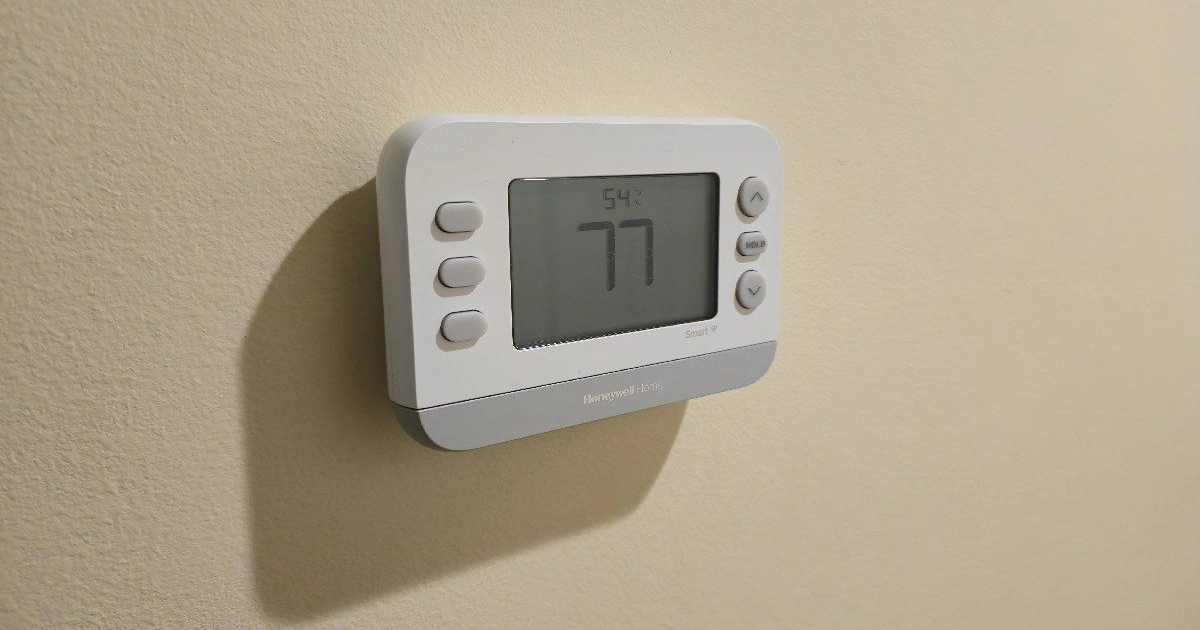
Confirm settings
- Set Mode to Cool (not Heat or Off).
- Set the temperature at least 5 degrees below the room temp.
- Set Fan to Auto for this test.
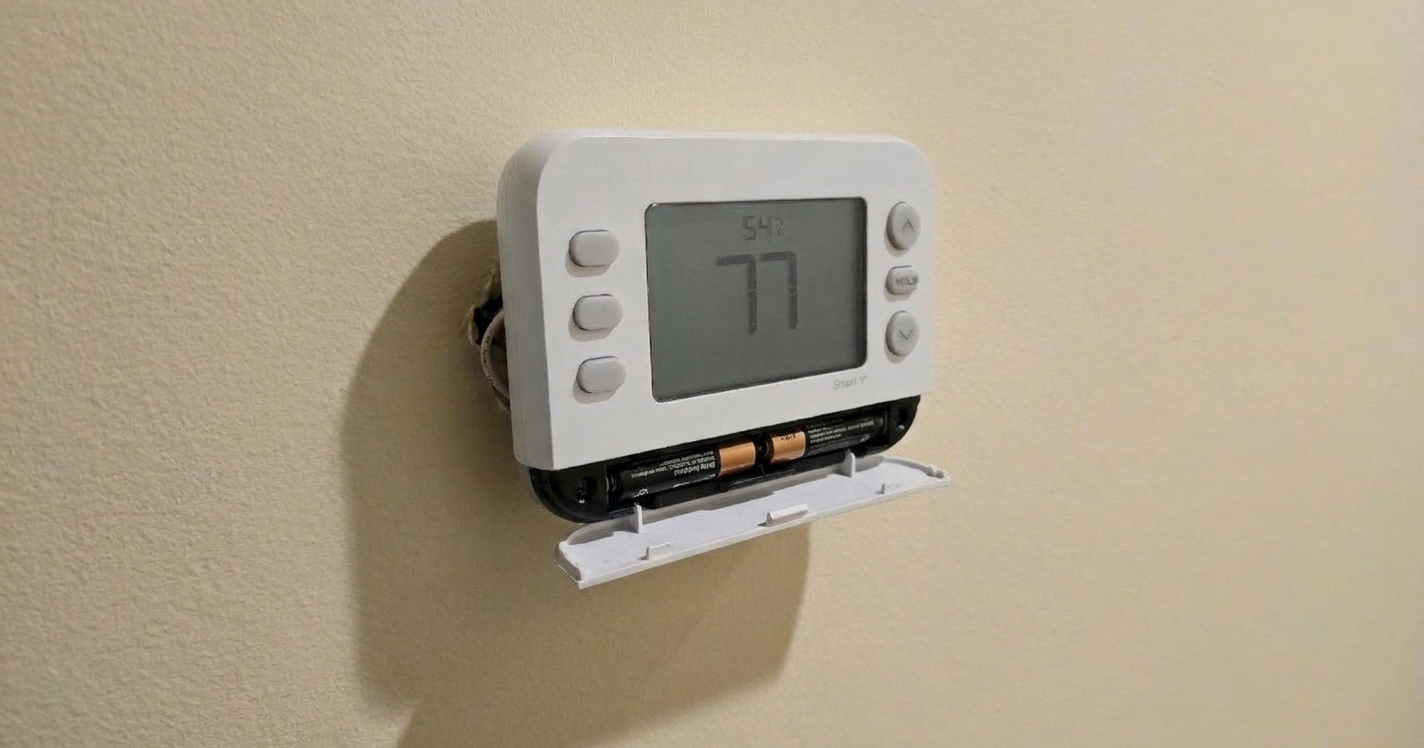
Replace thermostat batteries
If your thermostat uses batteries, replace them even if the screen still works. I have seen thermostats light up but fail to send a cooling call when batteries are weak.
Tip: After changing batteries, give the system a minute. Some thermostats have a short built-in delay to protect the compressor.
Step 2: Check breakers and the furnace switch
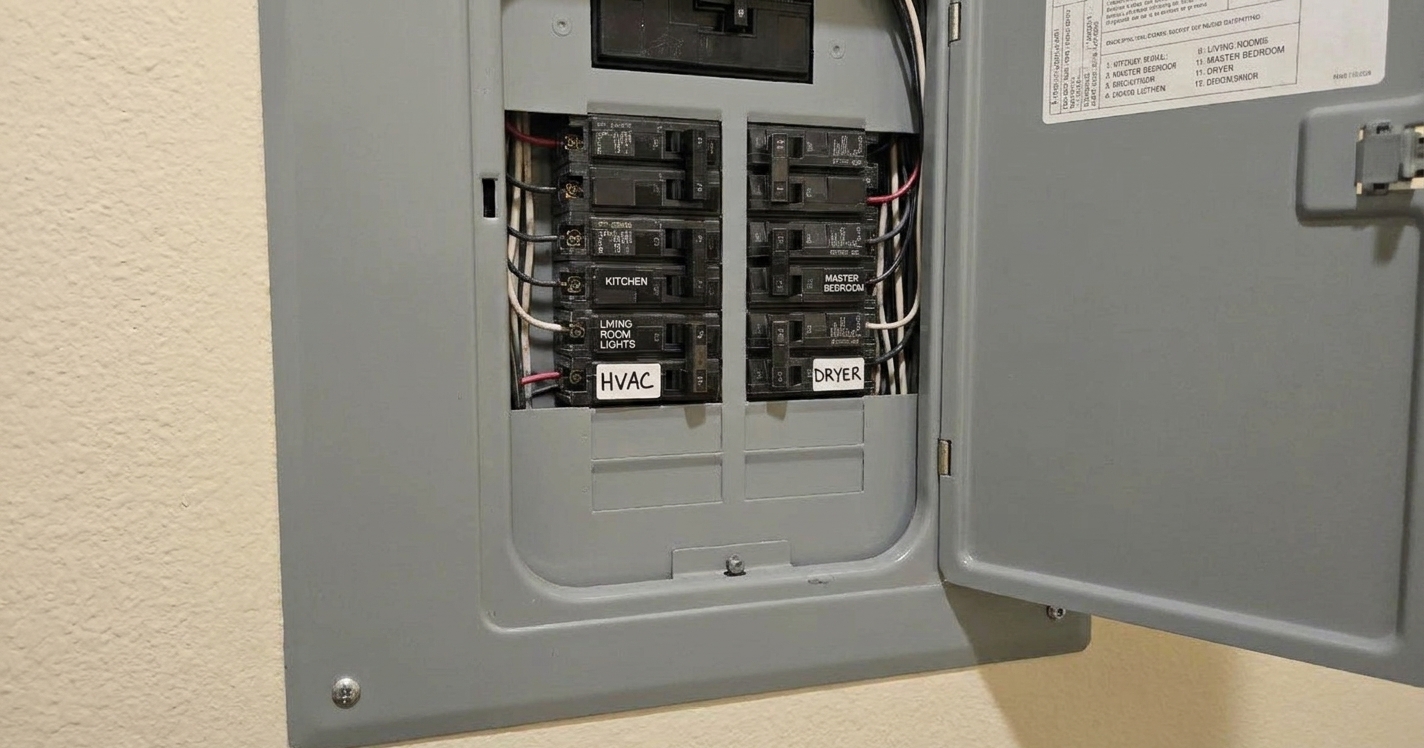
Reset the breaker correctly
Go to your main electrical panel and look for breakers labeled AC, condenser, furnace, air handler, HVAC, or heat pump.
- Flip the suspect breaker all the way OFF.
- Then flip it firmly back ON.
Some breakers look ON even when tripped, so the full OFF then ON motion matters.
Find the furnace or air handler power switch
Many systems have a normal-looking wall switch on or near the furnace or air handler. It is often at the top of the basement stairs or on a nearby joist. It can get bumped during storage moves or cleaning.
Step 3: Make sure the indoor unit has power
Your outdoor AC cannot do much if the indoor air handler is not powered.
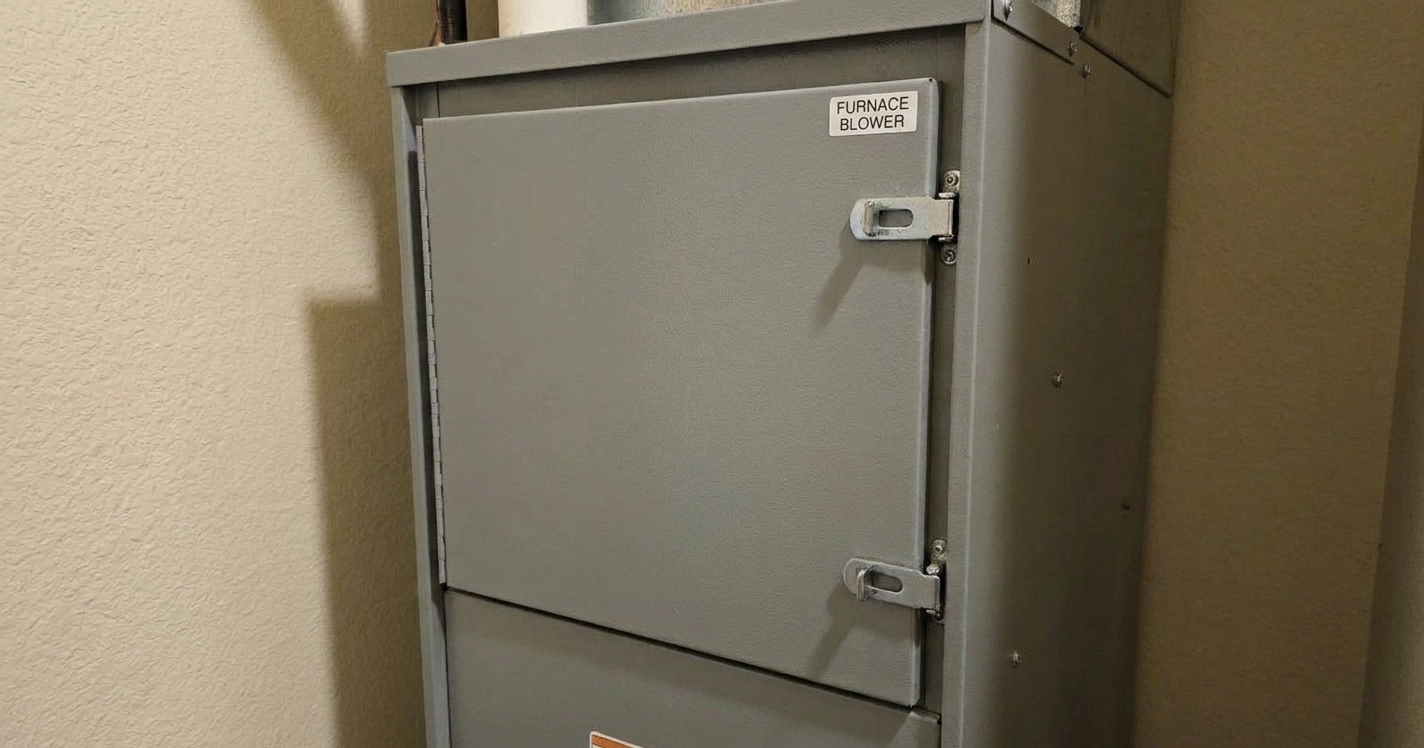
Check the furnace door switch
Many furnaces have a safety switch that cuts power if the blower door is not seated properly. If you changed the filter recently, make sure the access panel is snug and fully latched.
Look for water near the unit
If there is standing water around the furnace or air handler, do not ignore it. That often ties directly into the next step, the condensate float switch.
Step 4: Check the outdoor disconnect
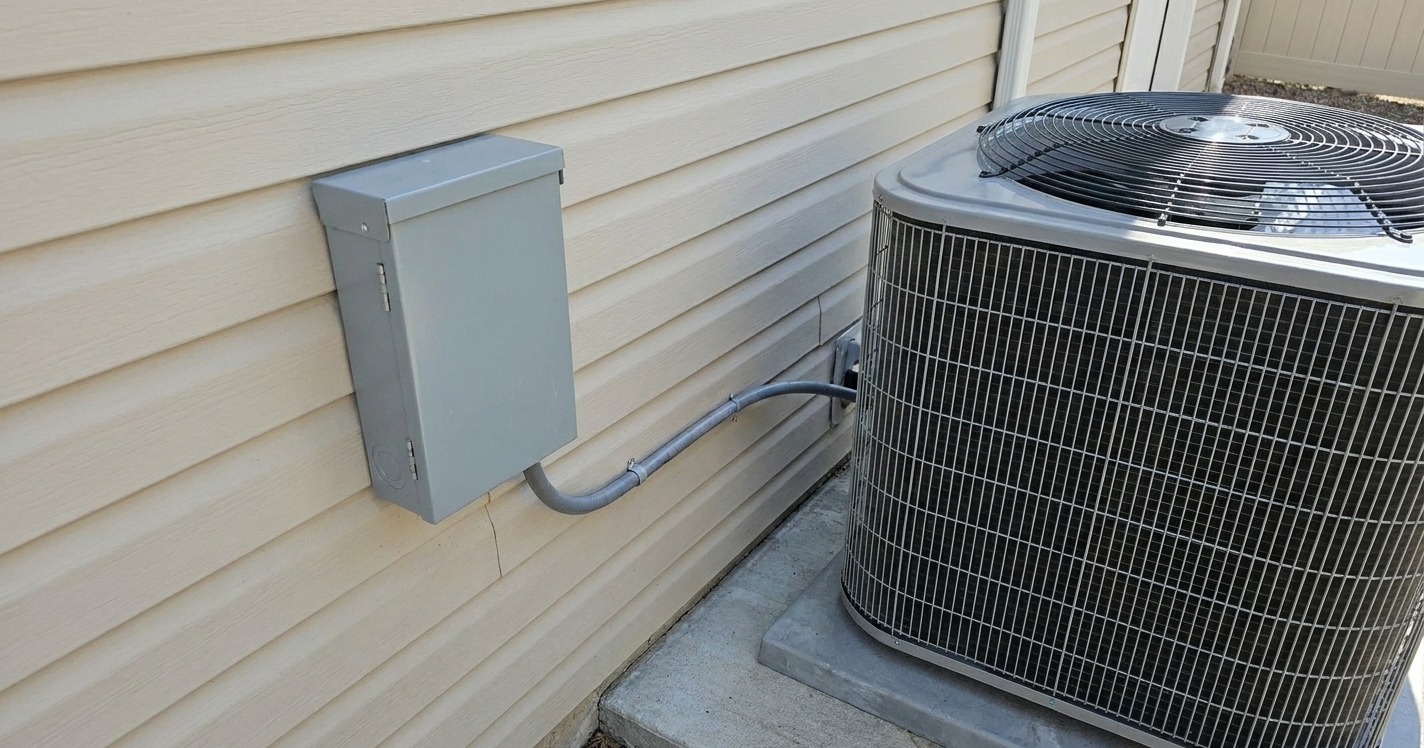
Next to the outdoor condenser, you will usually see a small gray metal box. That is the disconnect. It lets a technician shut power off outside.
- If it has a pull-out handle, make sure it is pushed fully in.
- If it has a switch, make sure it is ON.
These can be turned off during service and accidentally left off. Also, curious kids and ambitious yard work can bump them.
Safety reminder: Even with the disconnect off, parts of the box may still have live power upstream. Do not touch exposed terminals. If the cover is missing or the box is damaged, stop and call an electrician or HVAC technician.
Step 5: Check the condensate float switch
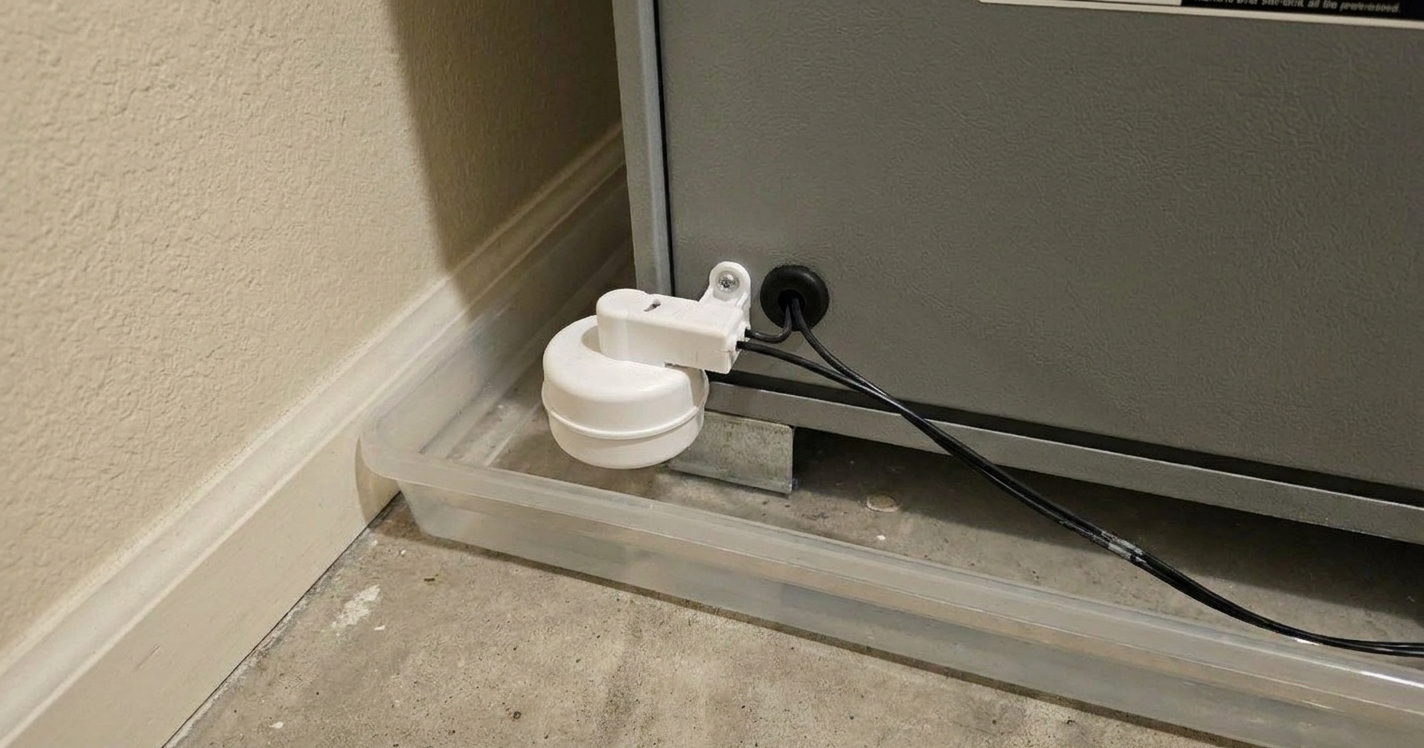
If your air conditioner is silent and you have an indoor unit in an attic, closet, or basement, you may have a condensate float switch. This is a safety device that shuts the system down if the drain is clogged and water backs up. It prevents ceiling stains and floor damage.
Important nuance: Float switches are not universal, and they are not always wired the same way. Some shut down the entire system, while others only interrupt cooling (you might still get blower operation, but no outdoor unit).
How to spot this issue
- The thermostat looks normal and is calling for cool.
- The breaker is not tripped.
- The system will not start, or cooling will not start.
- You see water in the drain pan, or the PVC drain line looks gunky.
Where to find it
Common locations:
- In the secondary drain pan under an attic air handler
- Clipped to the side of a pan near the evaporator coil
- Inline on the condensate drain pipe (a small switch with wires coming out)
What you can do safely
- Turn the system off at the thermostat.
- Check the drain pan. If it is full, carefully remove water with towels or a wet dry vacuum.
- Clear the drain line if you are comfortable: a wet dry vac at the outdoor drain termination can often pull the clog out.
- Once water is removed and the float drops, the system may come back to life.
If the pan refills quickly, you have a persistent clog or a broken drain setup that needs attention.
If it hums but will not start
This is a different symptom than “totally silent,” but it is so common that it is worth calling out.
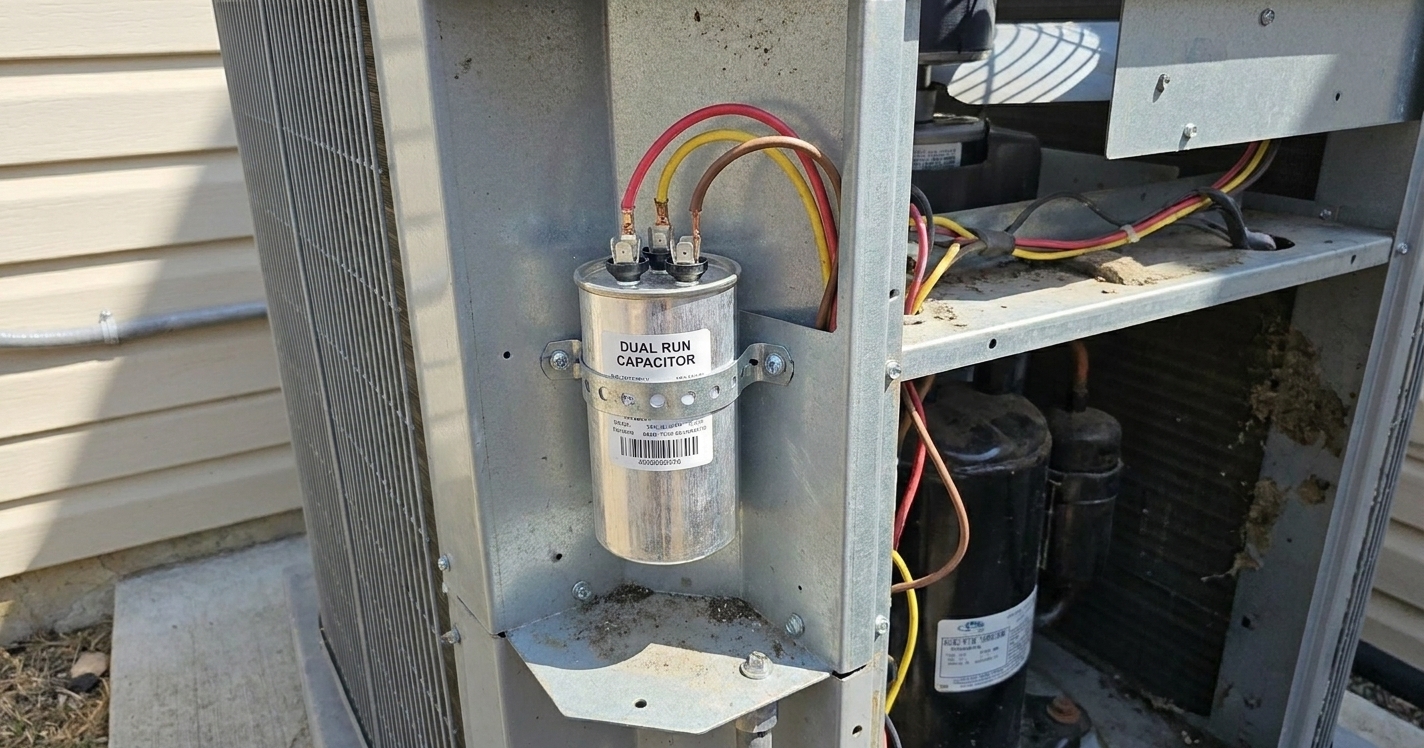
If you hear a steady hum from the outdoor condenser and the fan is not spinning, the culprit is often a bad run capacitor (or, less commonly, a seized fan motor or compressor issue).
Do not DIY a capacitor replacement unless you know what you are doing: Capacitors can store dangerous energy. The safe homeowner move is to shut the system off and call an HVAC technician. If you do open the panel, do not touch terminals or attempt to discharge anything without proper training and tools.
Helpful note for your service call: Tell the technician “outdoor unit hums, fan is not spinning, system will not start.” That information speeds up diagnosis.
Other reasons it will not turn on
Blown 24V fuse on the control board
Many furnaces have a small automotive style fuse on the control board that protects the 24-volt thermostat circuit. If it is blown, the thermostat can lose control of the system. This is usually caused by a short in thermostat wiring or a miswired accessory.
This is fixable, but if you are not comfortable working inside the furnace cabinet, call a pro.
Loss of 24V power (transformer or control issue)
If nothing low voltage responds and you never hear any click anywhere, a failed 24V transformer or a control board problem can be the root cause. This is firmly in “call a pro” territory, but it is helpful to know it exists because it can look exactly like a mysterious total shutdown.
Outdoor contactor failure
An outdoor contactor can fail open, which can make the condenser act dead even when the thermostat is calling. Diagnosing this requires working around high voltage inside the outdoor unit, so it is not a safe homeowner check. If you have confirmed thermostat settings, breakers, switches, and the disconnect, this is a common next suspect for a technician.
Dirty filter (usually not a total no-start)
A clogged air filter typically causes weak airflow, poor cooling, and sometimes coil freeze-up, not a completely dead system. Still, if it has been a while, changing the filter is cheap insurance and can prevent the next problem.
Time delay
Many thermostats and outdoor units have a built-in delay of 3 to 5 minutes before restarting after a power loss. If you just reset a breaker, give it a few minutes before deciding nothing changed.
Quick troubleshooting order
If you want the short version, here is the order I recommend:
- Thermostat: set to Cool, lower setpoint, replace batteries
- Breakers: AC and furnace/air handler (and heat pump if labeled), full reset
- Furnace switch: confirm ON
- Furnace door panel: seated correctly
- Outdoor disconnect: ON and fully inserted
- Condensate float switch: check pan and drain line (if you have one)
- If outdoor unit hums: stop and call for capacitor or motor diagnosis
- If still dead silent: call a pro to check 24V power and the outdoor contactor
FAQ
Why would my AC stop working all of a sudden and not turn on?
The most common “sudden” causes are a tripped breaker, a bumped furnace switch, dead thermostat batteries, or a condensate float switch tripping because the drain line clogged. Less commonly, a 24V transformer, control board, or outdoor contactor failure can also present as a no-response situation.
My thermostat is on, so why is nothing happening?
A thermostat can light up but still fail to send a proper cooling call if the batteries are weak, settings are incorrect, or the 24-volt control circuit has an issue (like a blown fuse on the furnace control board).
Can I just keep resetting the breaker?
If it trips once, a single reset is reasonable. If it trips again, stop. Repeated tripping usually means a real electrical or motor problem that needs diagnosis.
What if the outdoor fan spins but the compressor does not start?
That often points to a capacitor or compressor start issue. Shut it down and schedule service. Running with a struggling compressor can cause bigger, more expensive damage.
Tell me what you are seeing
If you want a more tailored next step, tell me:
- Is the indoor blower running?
- Is the outdoor unit completely silent, clicking, or humming?
- Any standing water near the furnace or in an attic pan?
- Did this start after a power outage or storm?
With those details, I can usually narrow it down to two or three likely culprits fast.