
Why Is the Upstairs Hotter Than the Downstairs?
If your AC cools the first floor but the second floor stays warm, the cause is often airflow or attic and window heat gain. Here’s how to check registers, returns, dampers, ducts, and attic issues.
In my 1970s Michigan fixer-upper, I learned this one the hard way: the downstairs can feel like a meat locker while the upstairs feels like a sun-baked treehouse. And when the air conditioner is clearly cooling part of the house, that temperature split is most often not an “AC is broken” problem. It’s usually a “where is the air going, and what heat is getting in” problem.
Below are the most common reasons the second floor stays hot when the first floor cools just fine, plus the checks you can do without turning your weekend into an HVAC apprenticeship. I also included a short list of less common but very real equipment and control issues that can mimic the same symptoms.
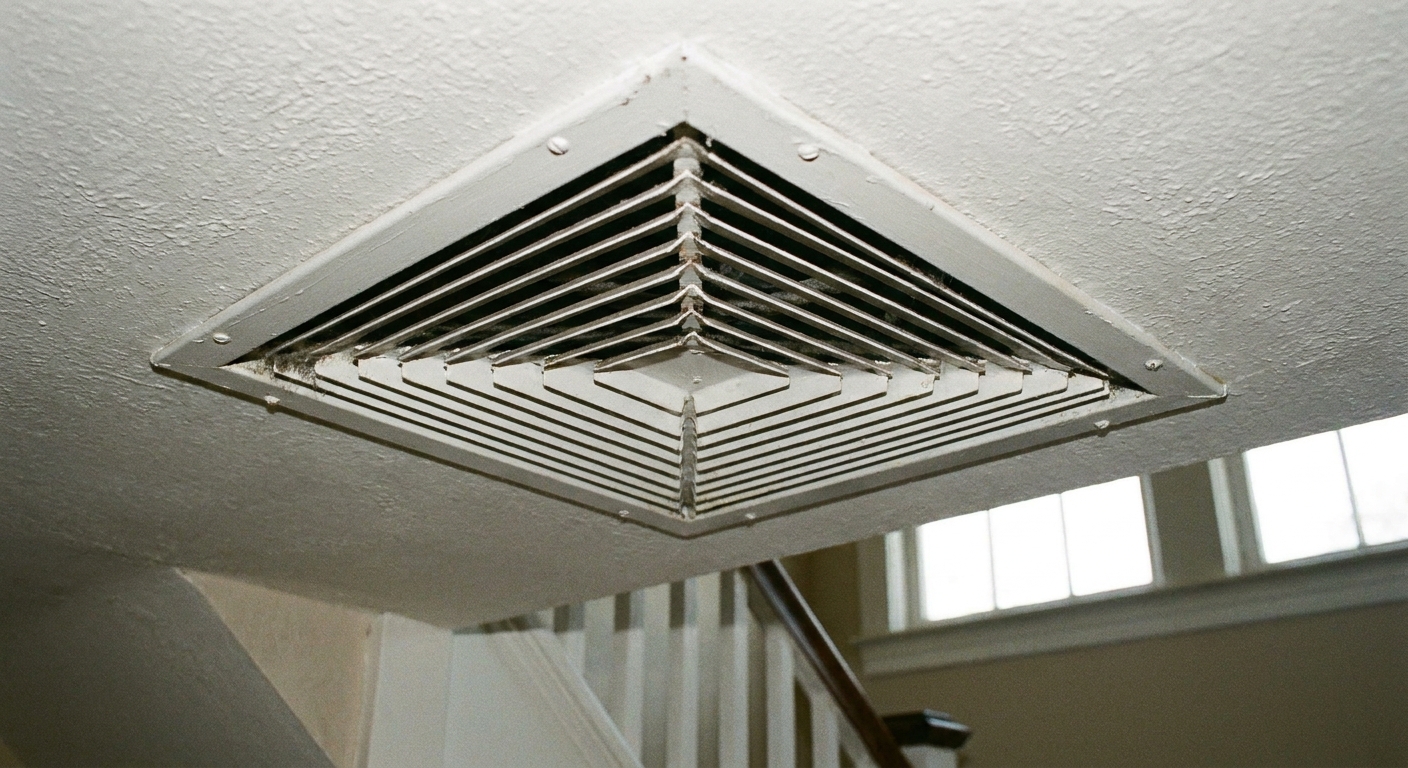
Heat rises, airflow still wins
Yes, warm air naturally rises. But in a properly balanced system, the upstairs still gets enough cool supply air and enough return airflow to pull warm air back to the equipment.
When the downstairs cools and the upstairs doesn’t, it usually means one or more of these is happening:
- The upstairs supply air is restricted (closed or blocked registers, dampers, crushed duct).
- The upstairs cannot return air back to the system (weak return path).
- Cold air is leaking out before it reaches upstairs rooms (duct leaks, often in a hot attic).
- The attic is dumping heat into the second floor faster than your system can remove it (attic heat gain).
- Less commonly, a control or equipment issue is limiting overall performance in a way the first floor “hides” better than the second.
1) Closed or blocked upstairs registers
This sounds too obvious, but it’s the most common culprit I see in real homes. People close upstairs vents thinking it will push more cooling downstairs, or a vent gets bumped shut during cleaning, furniture shuffles, or carpet work.
What to check
- Every upstairs supply register: Make sure it is fully open. The little lever should allow the fins to open wide, not half-mast.
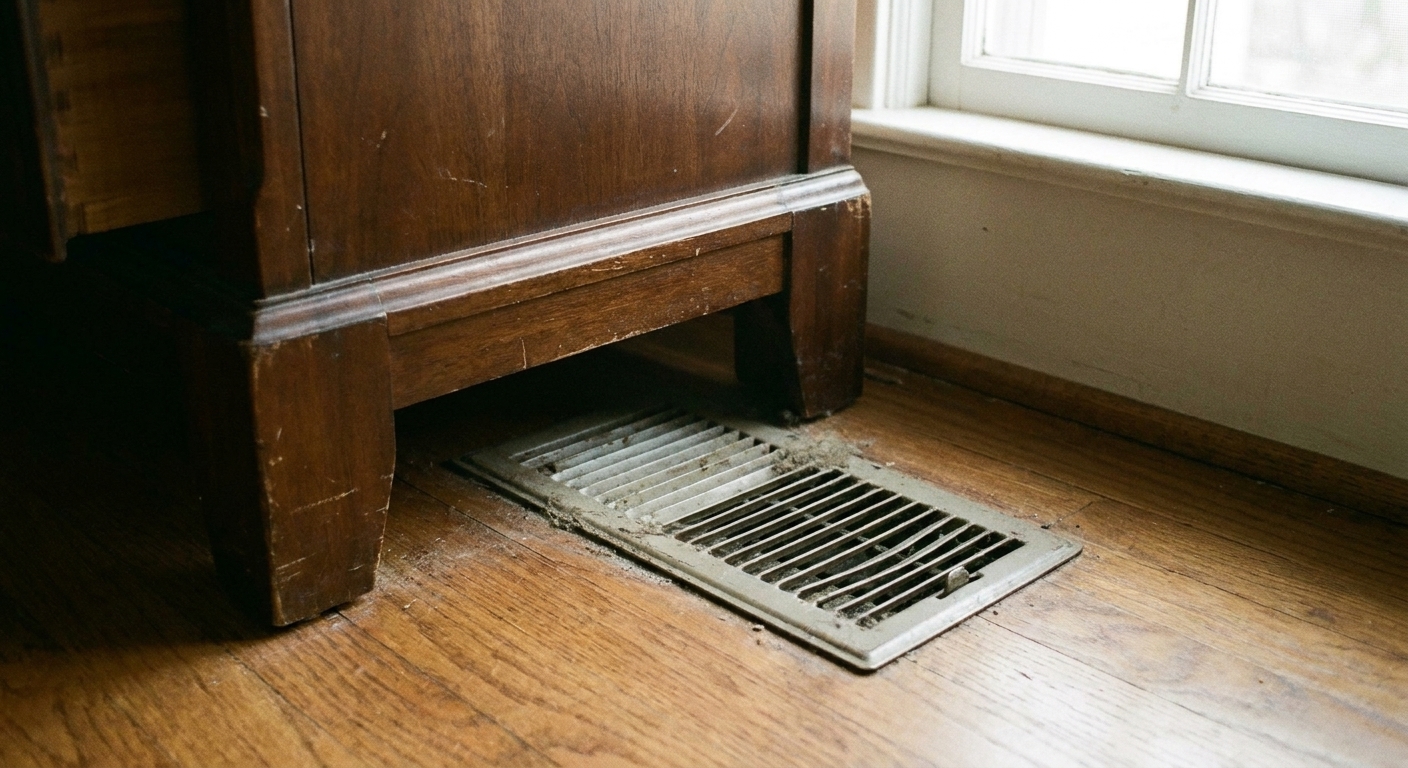
- Furniture and rugs: Beds, dressers, toy bins, and thick rugs can smother a floor register and kill airflow.
- Dirty register grilles: A mat of dust and pet hair can reduce flow more than you’d think.
What to do
- Open upstairs supplies fully and leave them open for a few days to judge results.
- For floor registers, leave clear space around the grille so air can actually enter the room.
- Vacuum the grille and inside the boot (the metal box below the register) with a hose attachment.
My rule of thumb: Don’t try to “fix” a warm upstairs by closing a bunch of downstairs vents. You can raise static pressure in the ducts, which can reduce total airflow and amplify duct leakage.
2) Weak return airflow upstairs
Your HVAC system is a loop: it supplies cool air to rooms and returns warmer air back to the system to be cooled again. If the upstairs does not have a good return path, cool air might not circulate well. Rooms pressurize, airflow at the supply can drop, and warm air hangs around where you sleep.
This happens a lot when:
- There is only one big return downstairs and bedroom doors are closed at night.
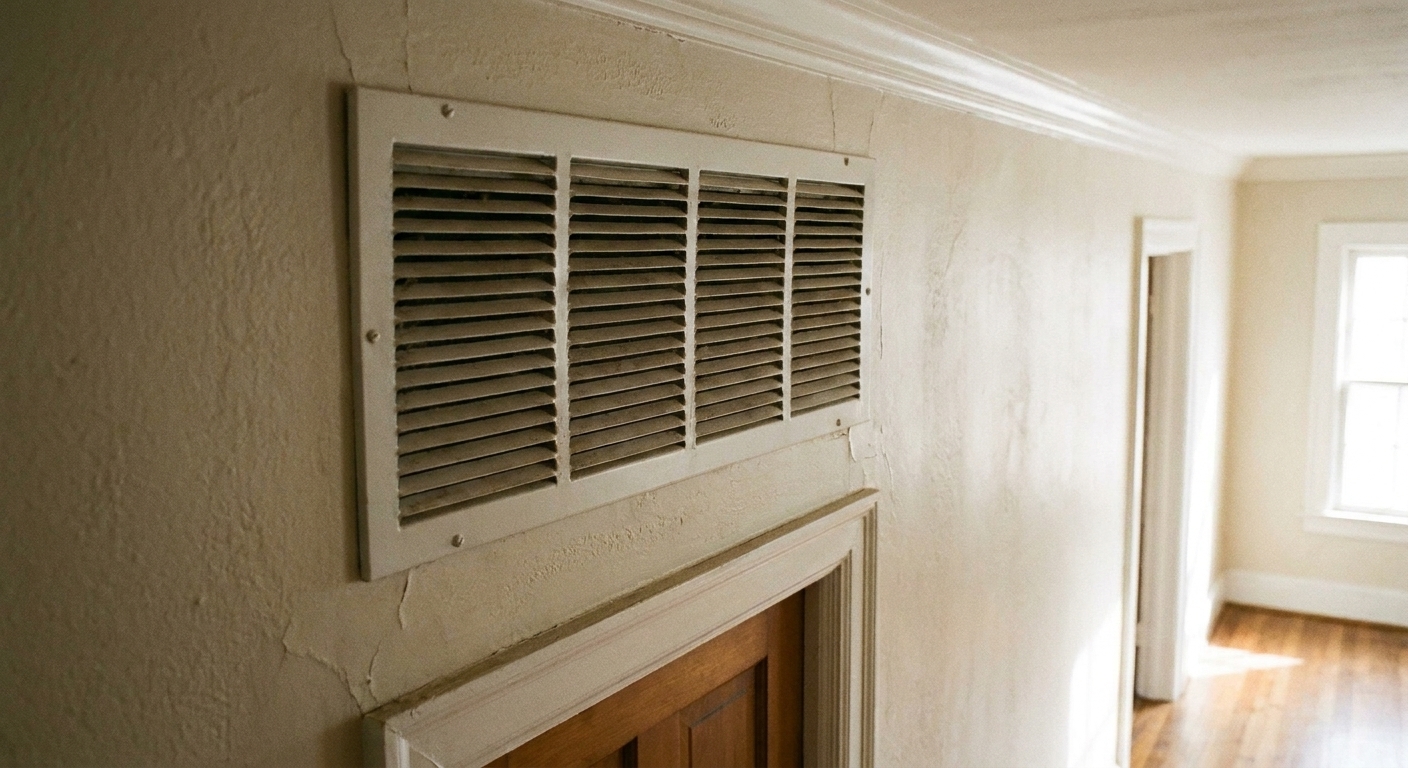
- Upstairs returns exist but are undersized or blocked.
- Returns are poorly located for how the house actually behaves. For example, bedrooms have decent supply vents, but the only upstairs return is a small grille in a hallway that is separated by closed doors, so air cannot easily make it back.
Quick homeowner checks
These are clues, not final diagnoses. Real confirmation is measured airflow or pressure, but these can point you in the right direction.
The “door push” clue
With the system running, close an upstairs bedroom door slowly. If it feels like the air is pushing back on you or the door wants to swing, that room may be getting pressurized because air cannot escape to a return.
The tissue check at returns
Hold a tissue near the upstairs return grille (if you have one) while the fan is running. You should feel a noticeable pull. A return that barely tugs the tissue is a sign the return path may be weak, blocked, or undersized.
What to do
- Keep doors open when possible, especially during the hottest part of the day.
- If you must close doors, consider adding a return path like a jumper duct, transfer grille, or undercutting a door. This is one where a good HVAC pro earns their keep.
- Replace dirty return filters or clean return grilles. (Some systems have a filter at the return grille, others at the furnace or air handler.)
Safety note: Do not add transfer grilles or door undercuts in ways that pull air from garages or combustion appliance rooms. You never want to create a pathway for fumes into living spaces. When in doubt, call a pro.
3) Dampers and zoning issues
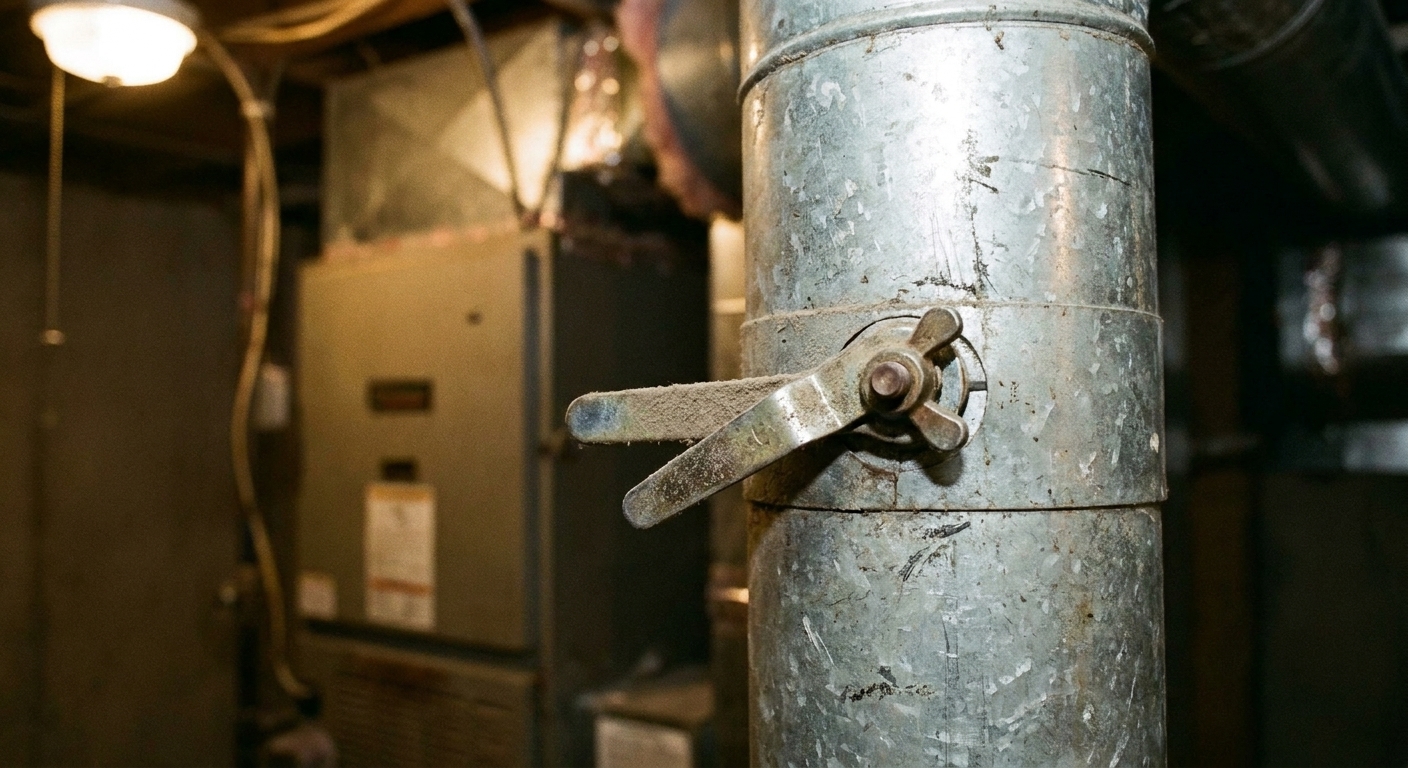
If your home has a zoned system, or even just manual balancing dampers in the ductwork, a stuck damper can absolutely make the first floor comfortable while the second floor struggles.
What to check
- Zoned system: Confirm the thermostat that controls the upstairs is calling for cooling, and listen for dampers opening when that zone runs. A failed actuator can leave an upstairs damper mostly closed.
- Manual balancing dampers: If you have accessible round ducts near the air handler with little lever handles, make sure the lever is not set to mostly closed for the upstairs branch.
- Recent changes: If someone “balanced” the system last season, they might have tuned it for heating comfort and accidentally starved the upstairs in cooling season.
If you are not sure what you are looking at, do not start randomly cranking levers. Take photos of damper positions first so you can put things back.
4) Duct leaks in a hot attic
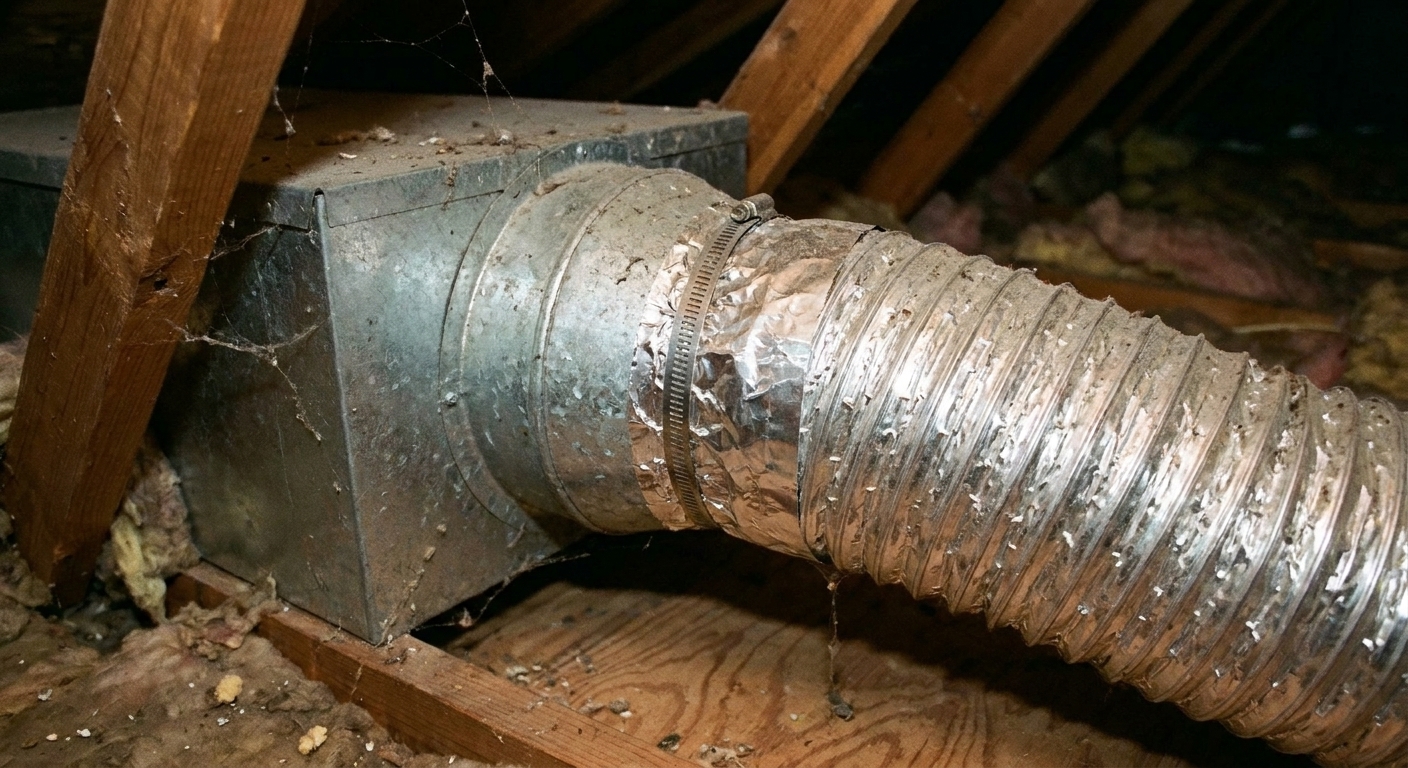
If your second-floor ducts run through an attic, you are trying to deliver cold air through one of the hottest spaces in the house. Any leaks, loose connections, or missing insulation around those ducts can dump conditioned air into the attic. Meanwhile the rooms upstairs get the leftovers.
Even small leaks add up because attic ductwork is often under pressure when the AC is running. The result is classic: downstairs cool, upstairs warm.
Signs you might have leaky attic ducts
- Upstairs vents have weak airflow compared to downstairs.
- The system seems to run a long time and the upstairs never quite catches up.
- Some rooms upstairs are much worse than others, especially the farthest rooms from the air handler.
- You see dusty streaks or dark smudges around duct joints where air is escaping and pulling dirt.
What to check
- Obvious disconnects: Flex duct pulled loose from a collar, torn inner liner, or a joint held together with one strip of failing tape.
- Crushed flex duct: Flex duct kinked or flattened by storage items or someone crawling across it.
- Missing or thin insulation: Bare metal ducts or thin wrap in an attic is a performance killer.
What to do
- Seal duct joints with mastic (duct sealant) or UL 181 rated foil tape. Standard cloth duct tape fails in heat.
- Re-seat and clamp flex duct at collars using a proper draw band or clamp, then seal.
- Straighten flex duct runs where possible. Gentle sweeps beat tight bends.
If you open the attic hatch and feel a blast of cool air, you likely found a major leak.
5) Attic heat gain
Even if airflow is decent, the second floor can still lose the battle if the attic is roasting and that heat is pouring into the ceiling and knee walls. The AC is removing heat from the air, but the attic is constantly adding more heat back into the upstairs rooms.
One important nuance: attic ventilation helps in some cases, but it usually cannot make up for poor air sealing and insulation. If hot attic air is leaking into the house, or the ceiling plane is under-insulated, ventilation alone is rarely a magic fix.
This is especially common in:
- Homes with dark roofing and full sun exposure
- Bonus rooms over garages
- Finished rooms with sloped ceilings
- Older homes with lots of attic bypasses and air leaks
What to check
Attic access hatch and pull-down stairs
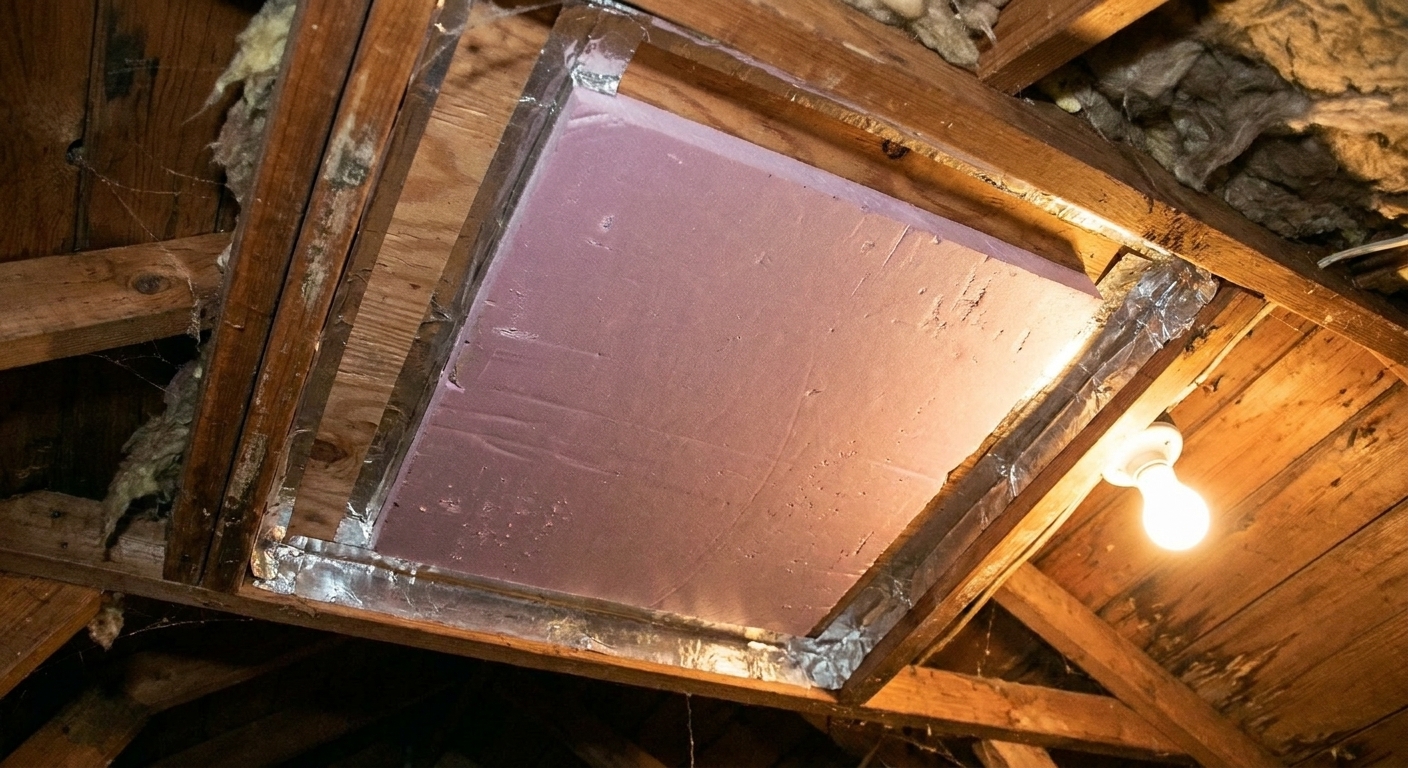
If your attic hatch is uninsulated or poorly sealed, it is basically a hot-air skylight. Put your hand around the perimeter on a hot day. If you feel warm air spilling into the hallway, seal and insulate that access.
Bathroom fans and recessed lights
Bath fans that dump into the attic, leaky fan housings, and older recessed lights can all allow attic air to communicate with the living space. That means heat, and sometimes humidity, gets a free pass into the upstairs.
Ventilation basics
If soffit vents are blocked by insulation or ridge vents are ineffective, attic temps can spike. Clearing soffits and adding baffles can help keep airflow paths open, but do not skip air sealing and insulation.
What to do
- Seal and insulate the attic hatch using weatherstripping and a rigid foam cover or an insulated attic stair tent.
- Make sure bath fans vent outside through a proper roof cap or wall cap.
- Clear soffit vents if insulation is jammed into them, and use baffles to keep airflow paths open.
6) Solar gain and windows
Sometimes the upstairs is hot because it is getting hammered by the sun. West and south facing upstairs bedrooms can overheat even with decent airflow, especially if you have big windows, minimal shade, or older glass.
What to check
- Does the hottest room line up with afternoon sun exposure?
- Are blinds open during peak sun?
- Do you feel radiant heat standing near the glass?
What to do
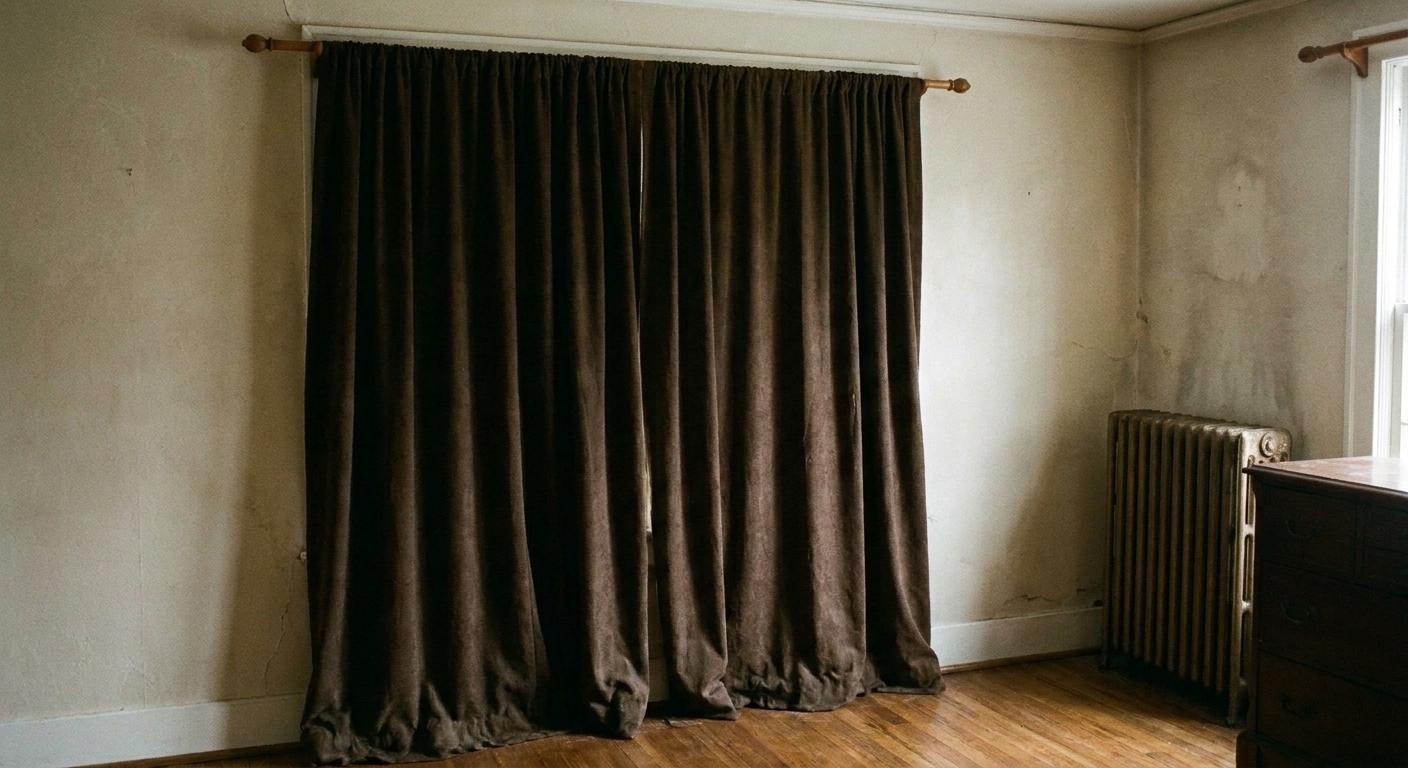
- Close blinds or curtains in the hottest part of the day, especially on west-facing windows.
- Consider blackout curtains or a snug cellular shade for stubborn rooms.
- If you want a longer-term improvement, exterior shading (awnings, shutters, trees) often beats interior fixes.
Quick decision guide
- If airflow is weak at the upstairs register: think registers, dampers, duct kinks, duct leaks, and return path problems.
- If airflow feels strong but the room is still hot: think attic heat gain, insulation and air sealing gaps, and solar gain at windows.
A simple troubleshooting order
If you want a practical sequence that catches the common stuff fast, here’s the order I use:
- Open and clear all upstairs registers and remove obvious blockages.
- Check thermostat basics: confirm it is set to Cool, and compare Auto versus On for the fan. “On” can sometimes make comfort worse by re-evaporating moisture off the coil between cooling cycles. Also make sure the thermostat is not being blasted by a nearby supply vent or in direct sun.
- Check return airflow and do a “doors open” test for a day or two.
- Check dampers if you have zoning or manual balancing levers.
- Compare airflow upstairs vs downstairs by feel, or with an inexpensive anemometer if you want to get nerdy.
- Inspect attic ductwork for disconnects, crushed sections, and leaky joints.
- Address attic heat entry points like the hatch, fan penetrations, and obvious air leaks.
- Manage solar gain in the worst rooms with shades or curtains during peak sun.
Many homes have more than one issue. It’s not unusual to find a half-closed register and a leaky duct joint up in the attic.
What not to do
- Do not close a bunch of vents to “force” air upstairs. It can reduce overall airflow and make leakage worse.
- Do not use cloth duct tape on ducts in hot spaces. Use mastic or UL 181 foil tape.
- Do not bury or modify recessed lights unless you know they are rated for insulation contact and are installed correctly.
- Do not seal or foam around combustion venting or create return paths that pull from garages or mechanical rooms.
When to call an HVAC pro
I’m all for DIY, but some fixes are best done with the right tools and training, especially when comfort complaints involve duct sizing, dampers, or airflow measurements.
Consider calling a pro if:
- You’ve verified vents are open and returns are not blocked, but upstairs airflow is still weak.
- Your ducts are in the attic and you suspect widespread leakage or poor layout.
- You have a zoned system and suspect a damper or control issue.
- One upstairs room is consistently 8 to 10 degrees hotter than the rest of the second floor.
- It has always been this way, even after basic fixes. That can point to a design limitation like undersized upstairs ductwork or an HVAC system that is marginal for the home’s layout.
Ask for a tech who will talk in terms of airflow and balancing, not just “your unit is fine.” A good contractor can measure static pressure, verify blower setup, check duct leakage, and spot return path problems quickly. They can also look for less obvious performance killers like a dirty evaporator coil or blower wheel, or issues with refrigerant charge.
FAQ
Should I close downstairs vents to force more air upstairs?
Usually, no. Closing too many vents can raise static pressure, reduce overall airflow, and make duct leaks worse. If you want to experiment, do it lightly, one or two vents at a time, and watch for reduced airflow everywhere.
Why is the upstairs hot even at night?
If it stays warm overnight, that points more toward airflow and return issues or attic heat still radiating into the second floor. If the attic access and ductwork are leaky, that heat hangover can linger well after sunset.
Does a dirty filter cause upstairs to be hotter?
It can. A clogged filter reduces total airflow, and the second floor is often the first to suffer because it’s farther from the equipment and ducts are commonly routed through hotter spaces. If you cannot remember the last filter change, start there.
Why are some upstairs rooms hotter than others?
That’s a clue the issue is distribution, not the AC itself. Look for crushed or disconnected ducts feeding the worst room, blocked registers, long duct runs, weak return paths, or a room with major sun exposure.
Neighbor-to-neighbor takeawayIf the downstairs is comfortable, your AC is doing its job somewhere. Now the goal is to make sure the upstairs is actually getting its share of cool air, and that the attic and sun are not undoing all that work from above.