
Why Does My Hot Water Smell Like Rotten Eggs?
If the rotten-egg smell only shows up on the hot side, it usually points to your water heater. Learn the quick hot vs. cold test, why an anode rod can cause odor, and when to flush, disinfect, or replace parts.
Good grain. Great questions.
If your hot water smells like rotten eggs, but the cold water smells fine, you can usually stop blaming your nose and start blaming your water heater. That sulfur smell is most often hydrogen sulfide gas, and it tends to show up when warm water, certain minerals, and the inside of a tank heater get cozy together.
Let’s sort it out like we would on a workbench: confirm where the smell starts, then pick the right fix, from a simple flush to an anode swap.
First: confirm it is only the hot water
This takes two minutes and saves you from chasing the wrong problem.
The hot vs. cold tap test
Pick one sink you do not use all the time (a bathroom sink is great).
Run cold water for 30 seconds, then fill a clear glass and smell it.
Run hot water until it is fully hot, fill a second clear glass, and smell it.
For a cleaner read, walk away for 3 to 5 minutes, then smell each glass again. Hydrogen sulfide can become more noticeable as it off-gasses.
If only the hot glass smells, the water heater is the prime suspect. If both hot and cold smell, the odor is likely coming from your incoming water supply (well water issues, municipal source, or plumbing biofilm), not just the heater.
Check more than one fixture
Do the same test at a second faucet. If every hot tap smells, that again points to the heater. If it is only one faucet, the issue can be local to that fixture (more on that later).
Why hot water gets the rotten-egg smell
That rotten-egg odor is typically hydrogen sulfide gas (H2S). Hot water makes it easier to notice because heat drives gases out of solution, like fizz leaving a soda faster when it warms up.
When the smell appears only on the hot side, it usually comes from one of these water-heater-specific causes.
1) The anode rod reacting with your water
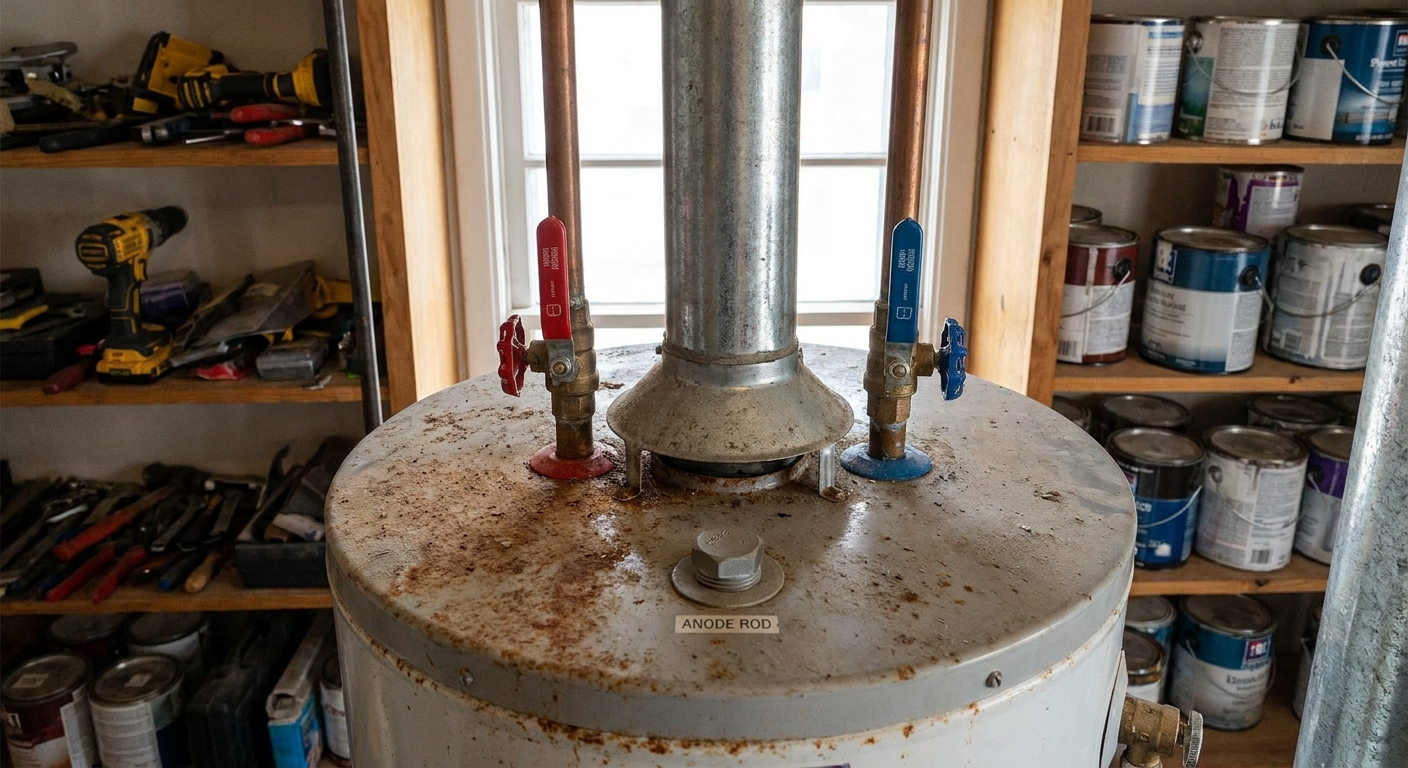
Inside most tank water heaters is a sacrificial anode rod, commonly magnesium, aluminum, or an aluminum-zinc blend. Its job is to corrode instead of your tank. Good deal for the tank. Sometimes a bad deal for your nose.
In some water conditions, a magnesium anode can help drive a reaction that produces hydrogen sulfide. This is more common with certain well waters, but it can happen with municipal water too depending on chemistry.
Clues it might be the anode:
- The smell is strongest from the hot water everywhere.
- The water is otherwise clear (no discoloration).
- The odor may have started not long after a new heater was installed or after an anode replacement.
2) Bacteria in the water heater tank
Certain sulfur-reducing bacteria can live in low-oxygen environments and contribute to hydrogen sulfide production. A tank water heater can become a nice home for them, especially if:
- The heater has been set to a lower temperature for long periods.
- The home has been vacant and the water sat.
- Sediment has built up in the tank.
This is not the same as “sewage smell from a drain.” This odor can come out of a clean faucet even when the drain is fine, because the smell is in the water itself.
3) Sediment and scale feeding the problem
Minerals settle at the bottom of the tank over time. Sediment does not directly create sulfur gas on its own, but it can:
- harbor bacteria,
- reduce heating efficiency,
- create hotspots that change how water and metal surfaces interact.
If your heater has not been flushed in a while, a flush is a smart next step.
What to do next (in the right order)
Here is the “least invasive first” lineup. You do not need to do everything at once. Start with confirming the source, then pick the next step based on what you find.
Quick decision guide
- Flush helps and it stays better: keep up with periodic flushing.
- Flush helps but smell returns: disinfect the tank, then reassess.
- Smell keeps coming back, especially on a newer heater: suspect the anode rod and consider changing type or switching to a powered anode.
- Hot and cold both smell: look upstream (well water, treatment equipment, supply) and consider testing.
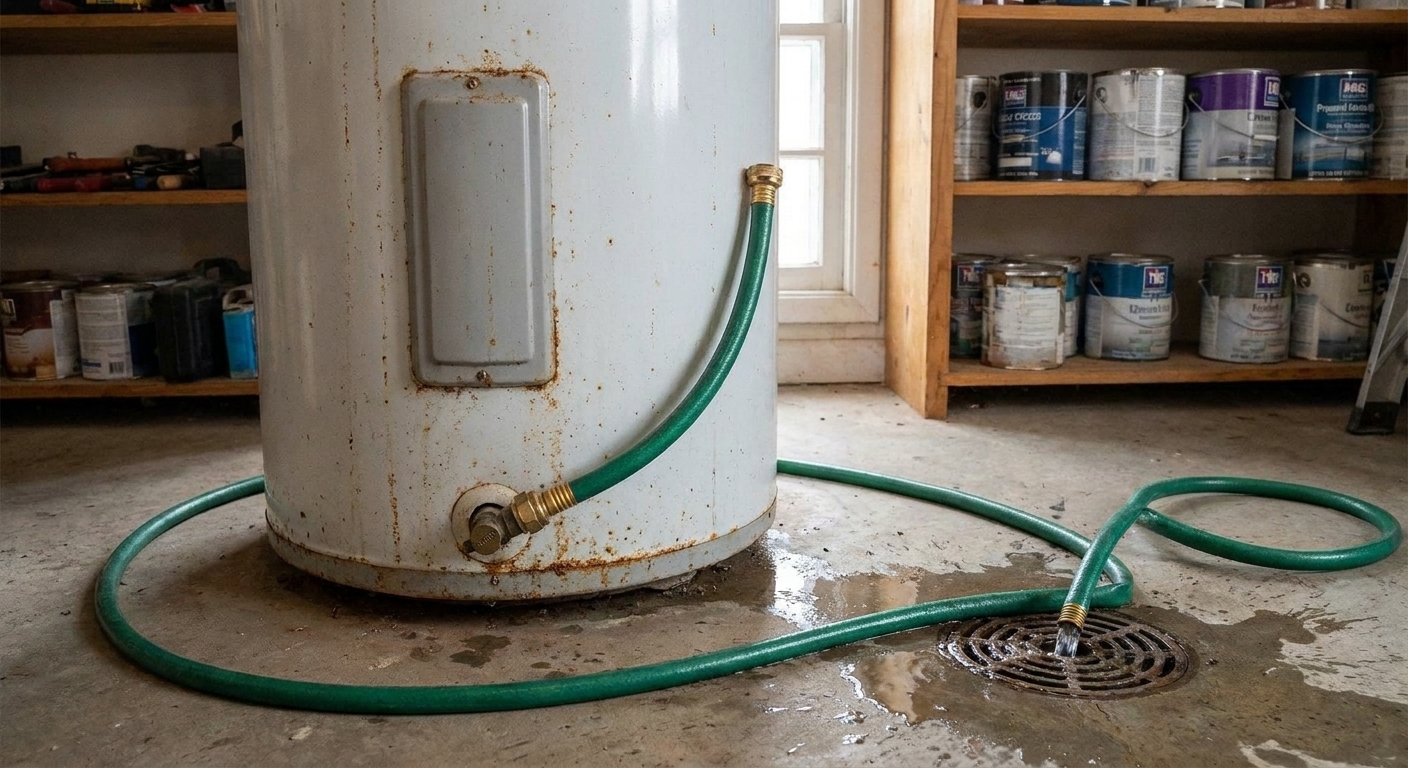
Step 1: Flush the water heater tank
A flush clears out sediment and can noticeably reduce odor if bacteria and buildup are part of the cause.
Tools you will want: garden hose, bucket (optional), work gloves, and a flathead screwdriver (sometimes helpful for a stubborn drain valve cap).
Basic approach:
- Turn the heater off. For electric, shut it off at the breaker. For gas, set the control to the off position per your unit’s instructions.
- Let the water cool if you can. Draining a hot tank can scald you and can damage some hoses or floor drains.
- Shut off the cold water supply to the heater.
- Connect a hose to the drain valve and run it to a safe drain location.
- Open a hot faucet in the house to relieve pressure, then drain the tank.
- Briefly open the cold supply to stir sediment, then drain again until water runs clearer.
If the smell improves but comes back, you likely have a recurring source (bacteria, anode reaction, or both).
Step 2: Disinfect the tank (when odor is stubborn)
If flushing helps only temporarily, disinfecting can knock back sulfur-related bacteria living in the tank.
Because dosing, contact time, and flushing steps vary by tank size, plumbing layout, and whether you are on septic, this is one of those jobs where the smartest move is to follow your water heater manufacturer’s procedure or have a plumber handle it. This is especially true for power-vent models, complex recirculation loops, and homes with iron or sulfur treatment equipment.
Safety reminder Turn off power at the breaker for electric heaters or follow your gas unit’s shutdown procedure before you work on the heater. Hot water can scald. If you are not confident about shutoffs or relighting steps, call a plumber. Never mix cleaners. If you are on septic, avoid dumping a large, concentrated slug of chlorinated water into the system. Spread flushing out and follow local guidance.
If you want to DIY it anyway, do not guess. Use the manufacturer method for your model or get a plumber to specify the bleach amount and how long to let it sit. “Measured amount” only counts when it is measured against your tank and your setup.
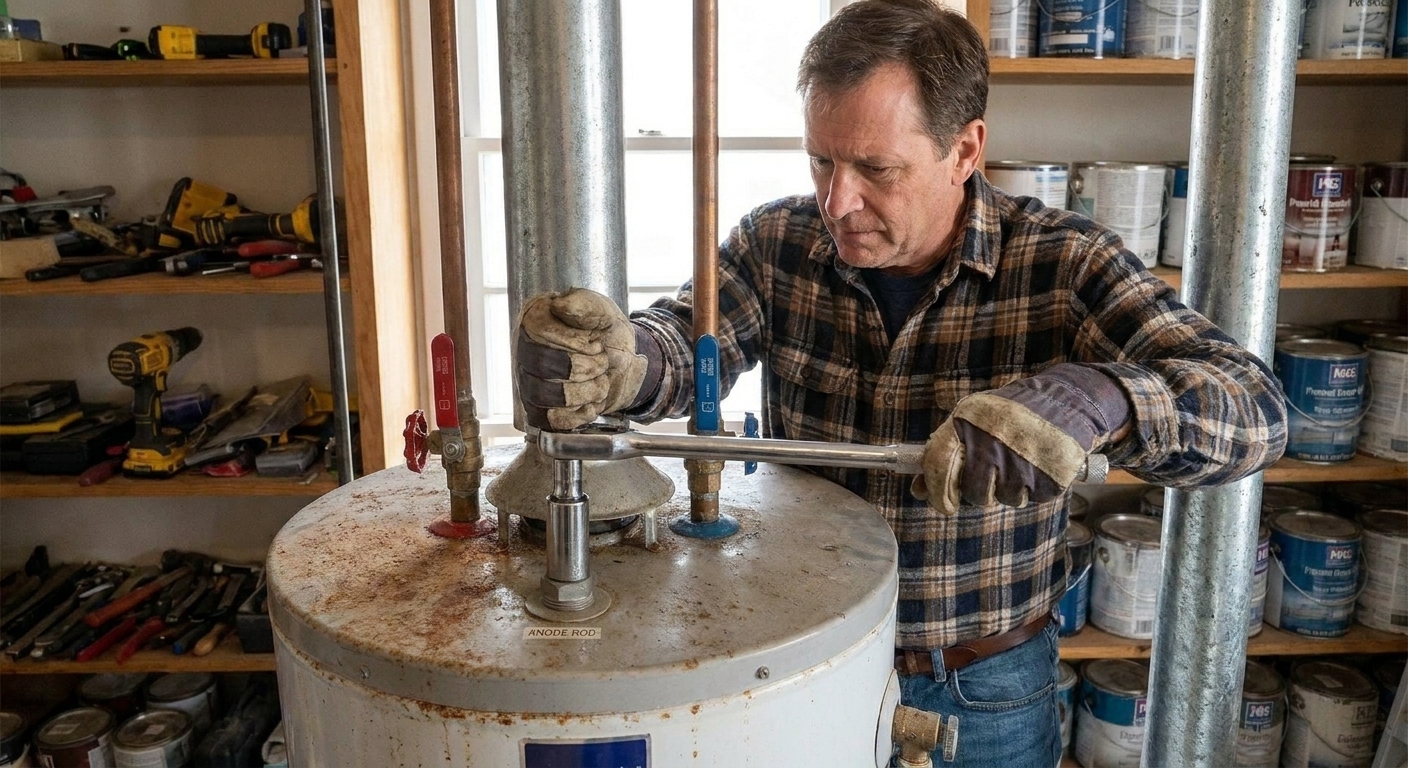
Step 3: Replace or change the anode rod
If the smell is clearly tied to the hot side and keeps returning after flushing or disinfection, the anode rod is a top suspect.
Tools you will want: correct size socket (often 1 1/16 inch), breaker bar or impact wrench, and Teflon tape or pipe dope approved for potable water.
Common fixes:
- Swap a magnesium anode for an aluminum or aluminum-zinc anode (often used specifically to reduce odor issues).
- Install a powered anode rod (an electronic anode) in some situations. These are designed to protect the tank without the same chemical reactions.
Tradeoffs worth knowing: Aluminum or aluminum-zinc can reduce odor in many cases, but some homeowners prefer to avoid aluminum in drinking water systems. Powered anodes cost more up front, but they can be the cleanest long-term fix when odor keeps returning.
Notes from the shop bench: Anodes can be stubborn. You may need a breaker bar, an impact wrench, and enough overhead clearance to pull the rod out. In tight spaces, segmented anode rods exist.
Also, if you have a water softener, keep an eye on anode life. Softened water can be more aggressive and can make an anode disappear faster, which changes both corrosion protection and odor behavior.
Quick troubleshooting: what the details are trying to tell you
If the smell is worst first thing in the morning
Water that sits in a warm tank overnight can accumulate more odor. This points toward bacteria, an anode reaction, or both.
If the smell is only at one faucet
Check the aerator on that faucet. Biofilm can build up in the screen and trap odors. Unscrew it and clean it (or replace it). Also consider whether that fixture has a rarely used branch line where water sits.
If it smells like eggs and you also see rusty water
Rusty or brown hot water can indicate tank corrosion, heavy sediment, or an anode that is long past its prime. Odor plus discoloration is a good reason to get the heater inspected, especially if it is older.
If both hot and cold smell like sulfur
That usually points upstream: well water, water treatment equipment, or the municipal supply. A water test or a call to your water provider can help narrow down whether hydrogen sulfide, sulfate, iron bacteria, or other issues are involved. On well systems, fixes can include aeration, activated carbon, or oxidation and filtration setups, depending on what the test shows.
When to call a pro
Some rotten-egg problems are very fixable DIY, but call a plumber if:
- You smell gas near the water heater or suspect a venting issue.
- The heater is leaking, rumbling loudly, or showing signs of significant corrosion.
- You are not comfortable shutting off gas, electricity, or water and following the proper relighting steps for your exact model.
- The anode rod is seized and you cannot loosen it without risking damage to the tank or plumbing.
FAQ
Is rotten-egg smell in hot water dangerous?
The smell is usually hydrogen sulfide gas. At typical household water levels it is more of a nuisance than an acute danger, but it can indicate bacterial activity or water chemistry issues that deserve attention. If the smell is strong, persistent, or accompanied by other symptoms (discoloration, illness concerns), consider water testing and professional guidance.
Will turning up the water heater temperature fix it?
Sometimes higher temperatures can slow bacterial growth, but it is not a guaranteed fix, and higher temps raise scald risk. Many households target about 120°F (49°C) for comfort and scald reduction. Sanitizing temperatures are higher and should be done cautiously, ideally with a mixing valve and with guidance from your heater manufacturer or a pro. Do not crank temperature settings as your only plan. Flushing, disinfection, and addressing the anode are more targeted solutions.
Can a new water heater cause this smell?
Yes. A new heater with a fresh magnesium anode can react with certain water and produce odor. If the smell began soon after installation and only affects hot water, an anode change is a common solution.
Does a tankless water heater get sulfur smells too?
It can. Odor is often tied to source water chemistry (especially if both hot and cold smell), but tankless units can still build up scale or biofilm that contributes to funky smells. If only the hot side smells with tankless, check for scaling, maintenance needs, and whether the smell is actually coming from a particular fixture or branch line.