
Hot Water Pressure Low but Cold Is Fine?
Strong cold water but weak hot at the same faucet usually points to a restriction on the hot side. Use this step-by-step guide to check valves, faucet cartridges, mixing valves, and water heater issues safely.
If the cold water at a faucet is strong but the hot side feels like it is running through a coffee straw, that is a great clue. It usually means your home’s overall water pressure is fine. Something is restricting flow only on the hot side.
When homeowners say “low hot water pressure,” what they are usually experiencing is low hot water flow: it takes longer to fill a pot, the shower drops to a trickle, or the sink just never gets that full-stream blast on hot.
I see this a lot in older houses like my Michigan 1970s fixer-upper. Homeowners assume the water heater is dying, but plenty of times it is a simple valve issue or a worn-out faucet cartridge doing the damage.
Below is how I troubleshoot it in the real world, starting with the fastest checks and moving toward the more involved ones.
First: one faucet or the whole hot side
Before you touch anything, do a quick two-minute “map” of the problem:
- Test hot flow at multiple fixtures: a bathroom sink, kitchen sink, tub or shower, and a laundry sink if you have one.
- Note the pattern: is it only one faucet, only one bathroom, or every hot tap in the house?
This matters because the likely causes change:
- One faucet only: most often the hot side of the faucet valve or cartridge is restricted.
- Multiple fixtures, hot only: often a partially closed valve, a restriction near the water heater, or a hot-side component like a mixing valve or heat trap that is getting clogged.
Safety note Hot water can scald. If you are working around a water heater, be cautious and take your time. For electric water heaters, shut off power at the breaker before opening any access panels. For gas water heaters, do not adjust the gas control beyond normal on and off functions unless you are qualified. If you smell gas, leave the area and call your gas utility or a plumber.
Quick wins: valves not fully open
I’m not above admitting this is the one that gets me sometimes. A valve gets bumped during cleaning, a handyman “temporarily” shuts something off, or an old valve slowly fails internally.
1) Check the water heater cold inlet valve
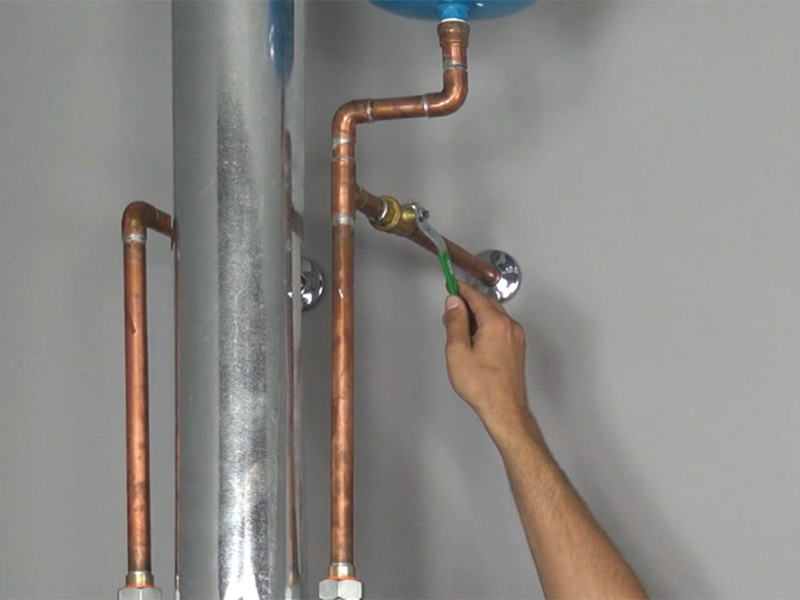
Most water heaters have a shutoff valve on the cold water supply line entering the top of the tank. If it is not fully open, your hot water flow everywhere will suffer.
- Ball valve (lever handle): the handle should be parallel to the pipe when fully open.
- Gate or stop valve (round handle): turn counterclockwise until it stops gently. Do not crank it like you are opening a pickle jar.
If you have a very old gate valve that is stiff or won’t fully open, it may be failing internally and restricting flow even when it looks “open.” That is a plumber fix for most homeowners, but it is useful to know what you’re looking at.
2) Check any hot-side shutoffs or mixing valves
Depending on how your plumbing is set up, you might have:
- a hot water shutoff near the water heater
- a thermostatic mixing or tempering valve
- branch shutoffs feeding a bathroom group
If only one area of the house has weak hot flow, look for a local shutoff under the sink, in the basement ceiling below that bathroom, or near the manifold if you have a home-run plumbing setup.
Mixing valve failure mode to know: a scaled-up or failing thermostatic mixing valve can restrict hot flow, cap temperature, or cause weird temperature swings. If you have one and hot flow dropped off house-wide, it is worth putting it on the suspect list.
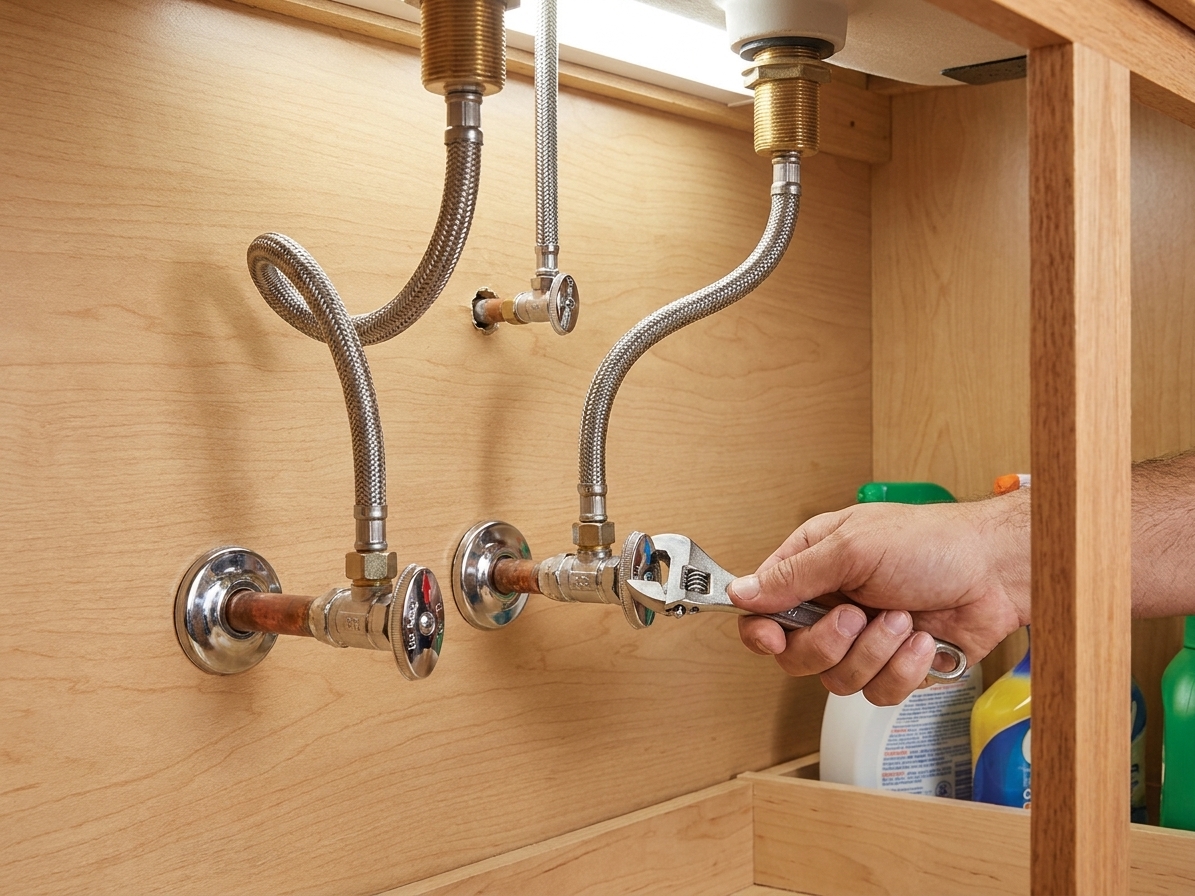
3) Under-sink angle stops: good clue, not always the culprit
If only one faucet has weak hot, check the hot angle stop under that sink. Make sure it is fully open. If it is an older multi-turn valve, it can sometimes restrict flow even when “open” due to mineral buildup or a deteriorating washer inside.
Tip: If you rarely touch those valves, don’t force them. A stuck valve that snaps or starts dripping can turn a quick DIY check into an emergency trip to the hardware store.
If it’s one faucet: the cartridge is often clogged
When cold water is strong at that same faucet, the restriction is frequently inside the faucet or its hot-side supply path, not in the home’s main water pressure. Hot water tends to leave mineral scale faster, so the hot passages and screens can gunk up sooner.
Common signs it’s the cartridge
- Hot water starts strong for a second, then drops off
- Only the hot side is weak, cold is normal
- Other faucets have normal hot flow
A fast way to separate “valve” vs “faucet”
If you want to avoid taking a faucet apart right away, you can do a simple isolation test.
- Shut off the hot angle stop under the sink.
- Place a bucket and towel under the valve.
- Disconnect the hot supply line from the faucet (not from the valve), aim it into the bucket.
- Briefly open the hot angle stop and observe the flow into the bucket, then shut it back off.
If the bucket flow is strong, your restriction is likely in the faucet cartridge or the faucet body. If the bucket flow is weak, the angle stop or supply line is a more likely culprit. Be ready for splashes, and do not walk away with a valve open.
What you can do
The exact steps depend on your faucet brand and style, but the general approach is:
- Shut off the hot and cold angle stops under the sink.
- Relieve pressure by opening the faucet.
- Disassemble the handle to access the cartridge or stem.
- Inspect the cartridge for debris and mineral buildup, and check inlet ports for blockage.
- Rinse and reassemble, or replace the cartridge if it is worn.
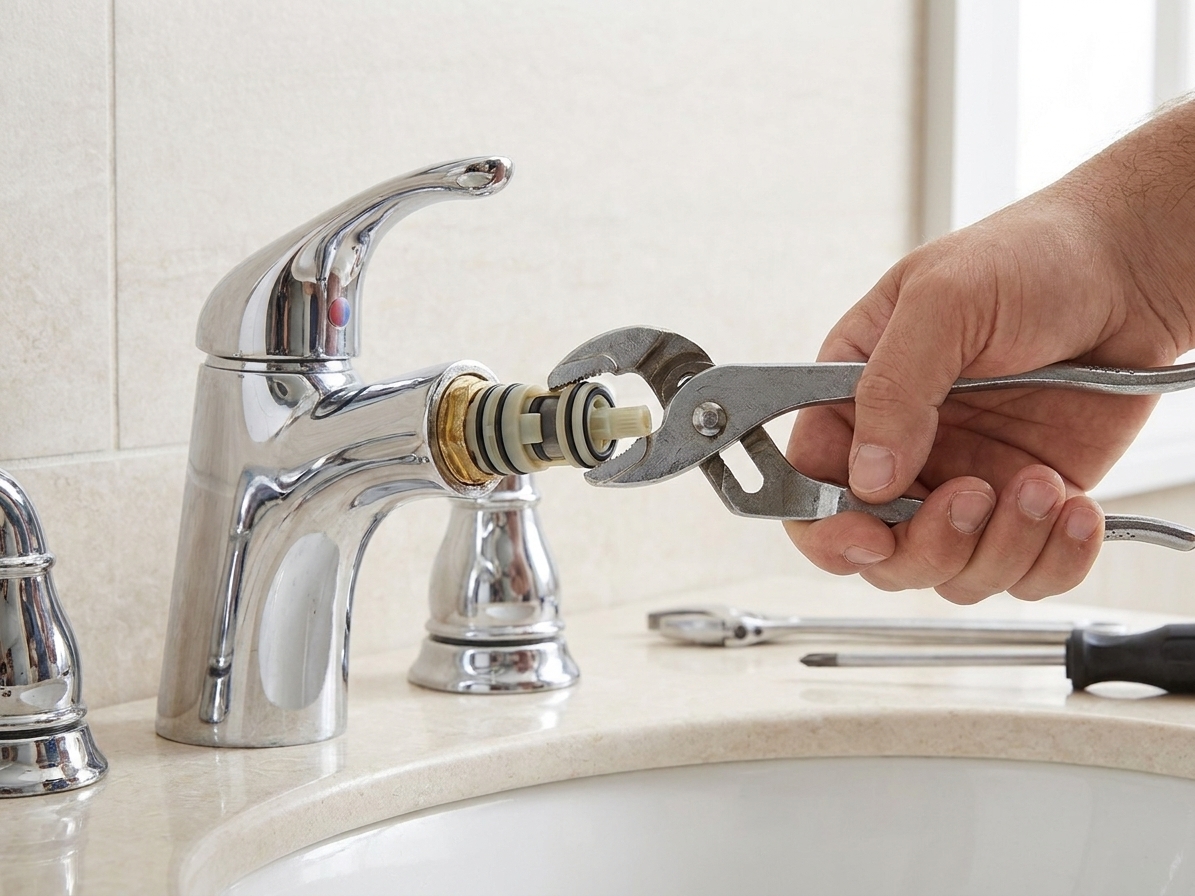
If the faucet is older, replacement cartridges can be a little treasure hunt. I always recommend taking the cartridge with you to match it, or identifying the faucet brand and model before you buy parts.
Do not forget shower valves
If your problem shows up most in the shower, the culprit is often the shower valve cartridge or a pressure-balance spool that is partially clogged with grit. The pattern can look like weak hot flow, temperature that hunts around, or a shower that only feels “right” in one handle position.
A note about aerators
A clogged aerator usually reduces both hot and cold together because both pass through the same screen at the spout. Since your cold is fine, the aerator is less likely to be the main issue, unless the faucet’s internal hot-side passages are clogging before the mixed water ever reaches the spout.
If it’s multiple fixtures: check near the water heater
If hot flow is weak at several faucets but cold is strong everywhere, the restriction is usually closer to the water heater or in the hot distribution piping. Here are the big ones I see.
1) Partially closed valves or restricted fittings at the heater
Even if the cold inlet valve is “open,” a failing old shutoff can restrict flow internally. The same goes for a hot-side valve, if you have one. Restrictions can also happen at heater connections in certain setups.
2) Sediment in the water heater
In many areas, minerals in the water settle out and build up at the bottom of the tank. Heavy sediment is best known for causing noise, reduced efficiency, and shortening the heater’s life. It can contribute to hot-flow issues, but usually in an indirect way: debris gets stirred up and migrates into valves, heat traps, mixing valves, or fixture cartridges where it causes restrictions.
Clues you may have heavy sediment:
- rumbling or popping sounds from the tank during heating cycles
- water that looks rusty or gritty at the start of hot draws
- frequent hot-side clogs at faucet cartridges or shower valves
Flushing a tank can help, but it is not always a magic reset button, especially on older heaters that have not been maintained. If you are not comfortable draining and flushing, call a plumber and ask specifically about sediment and the condition of the drain valve.
3) A failed dip tube (tank-style heaters)
This is a sneaky one. Inside most tank-style water heaters is a plastic dip tube that directs incoming cold water down near the bottom of the tank. If it cracks or breaks, the cold water can short-circuit near the top, stirring up debris and creating odd hot-water behavior.
Dip tube problems are more famous for lukewarm showers and reduced hot water quality, but fragments can also clog aerators, cartridges, and valves. If your hot side is acting strange at multiple fixtures, it is one more thing to keep in mind, especially on older heaters and certain older designs.
Clues:
- white plastic flecks in faucet screens or cartridges
- hot water temperature seems inconsistent
- multiple fixtures develop hot-side restrictions over time
4) Heat traps and inlet screens
Some water heaters have heat traps or fittings designed to reduce heat loss. Over time, those parts can become restricted by scale or debris. This is more of an “inspect and confirm” item for a plumber, but it is worth mentioning if your hot flow dropped gradually and your heater is older.
5) Mixing valves and recirculation check valves
If you have a thermostatic mixing valve, a stuck element or internal scale can restrict flow or cause weird hot behavior house-wide. If you have a hot water recirculation system, a stuck check valve or an unintended crossover can also create symptoms that feel like weak hot flow or slow hot delivery. These are less common than a bad cartridge or half-closed valve, but they are absolutely real.
6) A partially blocked hot outlet line
Galvanized steel piping, older fittings, and even a failing shutoff can develop internal buildup that narrows the pipe like cholesterol in an artery. If your home has older plumbing materials, it is possible the hot side is simply more scaled up than the cold.
A simple troubleshooting order
If you want a clean, low-stress plan, here is the order I’d follow on a Saturday morning:
- Test multiple fixtures to learn if it is one faucet or the whole hot side.
- Verify the water heater cold inlet valve is fully open.
- If it’s one faucet, check the hot angle stop and consider the quick bucket test, then inspect or replace the faucet cartridge.
- If it’s a shower, suspect the shower cartridge or pressure-balance spool early.
- If it’s many fixtures, look for restrictions near the heater: shutoffs, mixing valve, heat traps, or sediment-related debris.
- If problems persist, have a plumber evaluate old valves, mixing valves, recirculation check valves, and scaled piping.
When to call a plumber
I love a good DIY win, but I also love not turning a small problem into a flooded basement. Bring in a pro if:
- the water heater shutoff valve will not move or starts leaking when you touch it
- you have a gas water heater and need work done around gas piping or the draft hood
- you have an electric water heater and the repair requires opening panels or working near wiring
- hot flow is weak at every fixture and the cause is not obvious after basic checks
- you suspect severely scaled galvanized piping, which can require larger sections of replacement
- you see signs of a failing water heater like leaking, corrosion around fittings, or unreliable heating
FAQ
Can a water heater cause low hot water pressure?
It can cause weak hot water flow, yes. A partially closed inlet valve, restrictions at the heater connections, a clogged mixing valve, or debris from sediment can reduce hot flow across multiple fixtures. True pressure is measured with a gauge, but what most people notice is reduced flow at the hot taps.
Why would only the hot side be low at one sink?
Most commonly: the hot angle stop is partially closed or failing, or the faucet cartridge has debris or mineral buildup in the hot inlet passages.
Could a filter, softener, or PRV cause hot-only weak flow?
Usually those affect both hot and cold, but odd plumbing layouts can create weird exceptions. For example, if the hot side has its own restrictions, check valves, or a mixing valve downstream of other equipment, you can end up with hot-side symptoms that feel worse than cold. If your setup includes a whole-house filter, softener, pressure-reducing valve, mixing valve, or recirculation loop, mention that to a plumber during diagnosis.
Is weak hot water flow dangerous?
Usually it is more annoying than dangerous, but it can be a warning sign of a failing shutoff valve, heavy sediment sending debris into the hot side, or deteriorating plumbing. If you see leaks, corrosion, or you smell gas near the heater, treat it as urgent.
Will flushing the water heater fix it?
Sometimes. If sediment is contributing by sending debris into your hot-side components, flushing can help. But if the main issue is a bad valve, a clogged cartridge, a stuck mixing valve, or scaled piping, flushing alone won’t solve it.