
How to Clean a Smelly Garbage Disposal
Get rid of rotten-food odor fast by cleaning the splash guard, upper chamber walls, and stopper, plus a quick check for sewer gas from a dry P-trap.
If your garbage disposal smells like something crawled in there and gave up, you are not imagining it. Most disposal stink usually comes from a thin film of rotting food slime stuck to a few places you do not usually look at: the grind chamber walls near the top, the underside of the rubber splash guard (baffle), and the stopper. The good news is you can clean all of that in 10 to 20 minutes with stuff you already have.
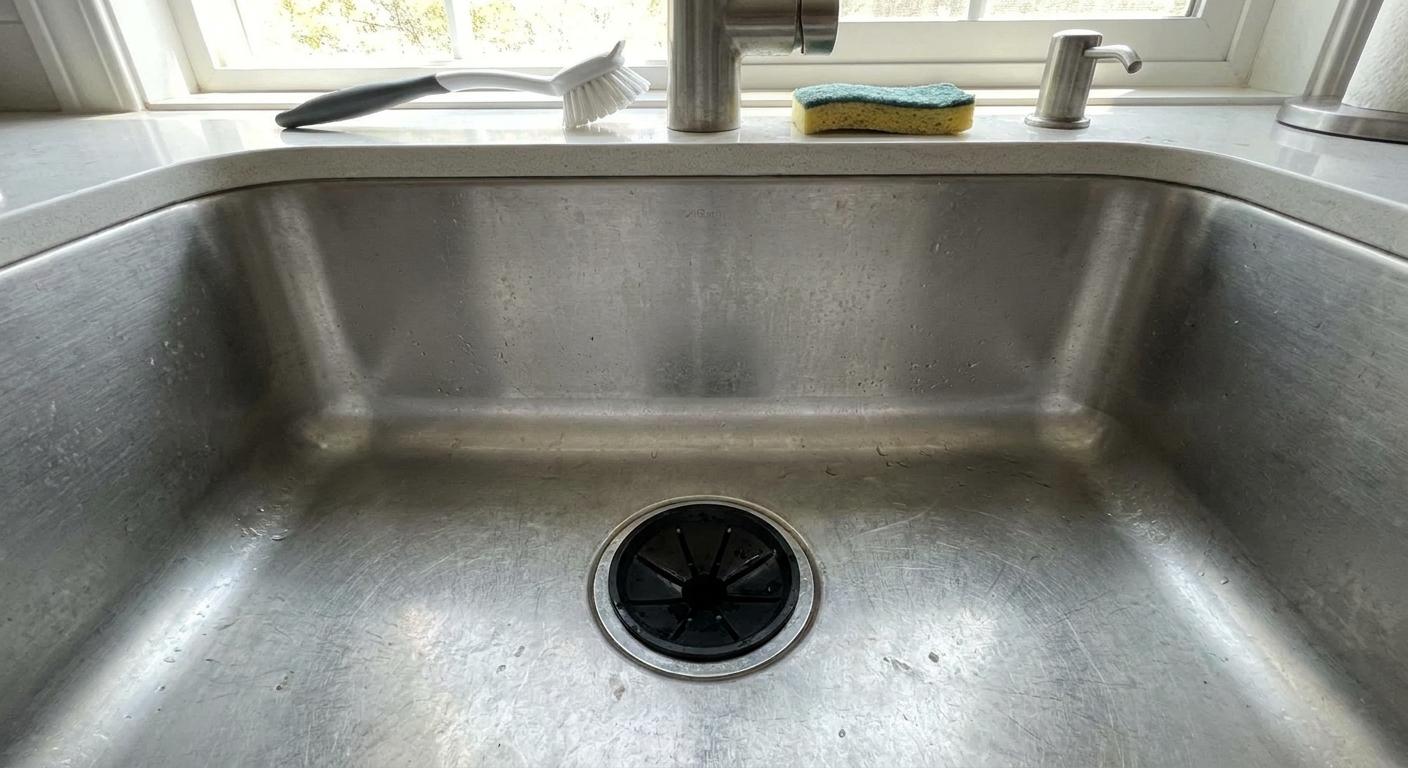
First, figure out what kind of smell you have
This matters because not every odor is a cleaning problem.
Rotten food smell (most common)
Smells like spoiled onions, old potato peels, or a wet compost bucket. Usually strongest right at the sink opening. This article fixes that.
Sewer gas smell (stop and check this instead)
Smells like sewer or “rotten eggs” and may be stronger in the cabinet under the sink or in other drains too. If that is what you are dealing with, cleaning the disposal might help a little, but it will not solve the root cause.
If it smells like sewer gas: Check whether the P-trap under the sink is dry (common in rarely used sinks). Run water for 30 to 60 seconds to refill the trap. If the smell persists, check for obvious issues like a loose slip-joint nut, a cracked trap, or a bad seal. If you also notice gurgling in nearby drains, you may have a venting issue and it is time to troubleshoot the plumbing, not the disposal.
Safety before you put your hands anywhere near the drain
- Turn the disposal off at the switch and keep it off.
- Unplug it under the sink if you can reach the cord. If it is hardwired, switch off the correct breaker.
- Never stick your hand into the grind chamber. Even when it is off, there are sharp edges and you do not need fingers down there to clean it.
What you need
- Dish soap
- An old toothbrush, bottle brush, or small dish brush
- Baking soda (optional but helpful)
- White vinegar (optional)
- Ice cubes
- Coarse salt (optional)
- One citrus peel (lemon, lime, or orange)
- A few paper towels or a rag
Skip harsh drain chemicals unless your disposal manufacturer specifically says they are OK. Even when they are “safe for disposals,” they often do not address the main issue, which is the greasy biofilm on the baffle and upper walls.
Step 1: Clean the stopper and sink flange
Pull out the stopper and wash it like a dirty dish. You would be amazed how much stink lives on that little ring.
- Scrub the stopper with dish soap and hot water.
- Wipe the metal sink flange and the top lip of the disposal opening.
- Rinse and set the stopper aside.
Step 2: Scrub the underside of the splash guard
That rubber flappy piece at the drain opening is the splash guard, also called a baffle. The top may look fine, but the underside is where the slime sets up shop.
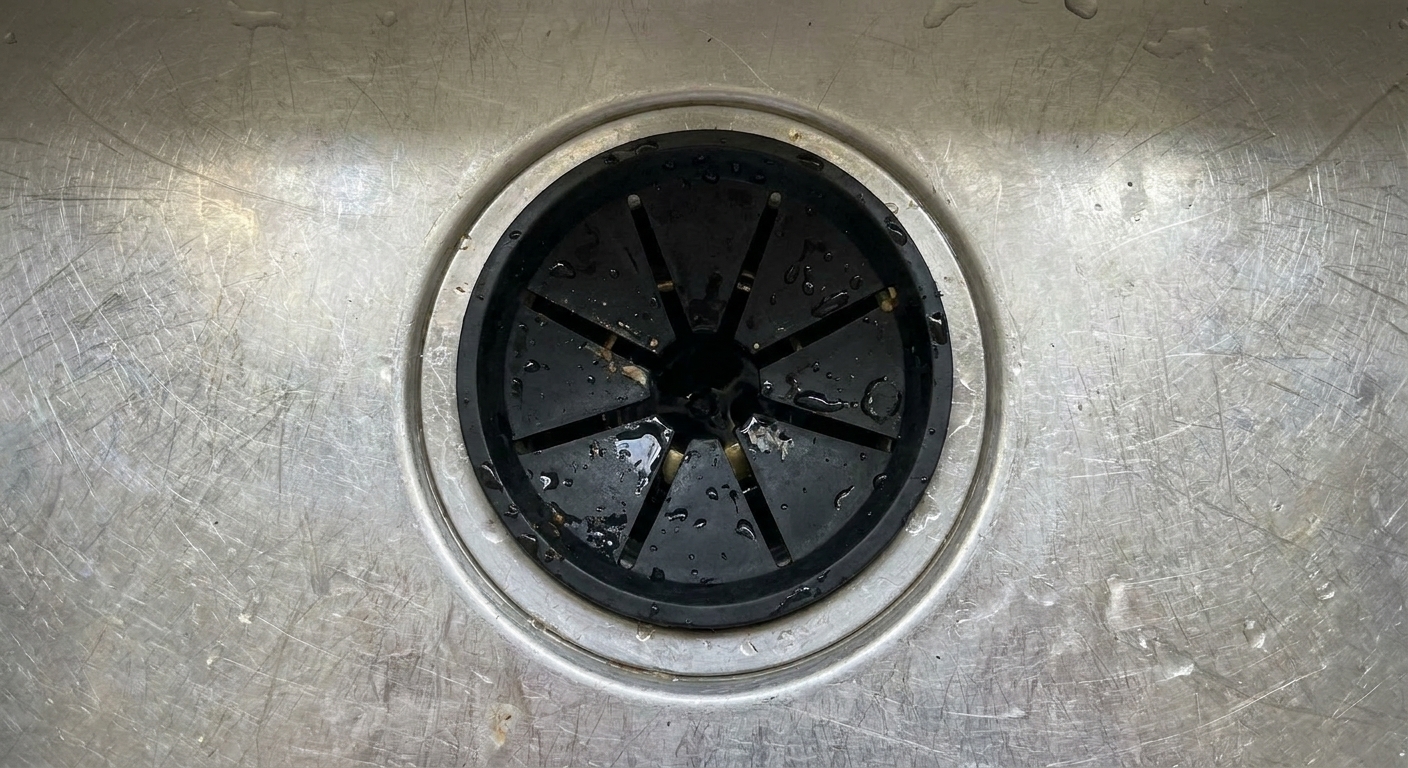
How to clean it
- With the disposal off and unplugged, fold the rubber flaps up and scrub the underside with a toothbrush or small brush and dish soap.
- Work all the way around the ring. You are aiming for “squeaky clean,” not “kind of wiped.”
- Rinse with hot water.
Tip from my carpenter brain: If the guard is removable on your model, take it out and wash it at the sink. If it is not meant to come out, do not force it. Scrub in place.
If you do remove it, make sure it is seated flat and fully snapped back in. A baffle that is not seated right can splash and leak stink back up at you.
Step 3: Degunk the grind chamber walls
The grinding plate itself is not usually the stink culprit. The stench comes from the food film on the walls and just under the guard.
- Squirt a good amount of dish soap into the drain.
- Run hot water for 20 to 30 seconds to warm everything up and help cut grease.
- Use your brush to scrub as far as it comfortably reaches along the visible inner ring and underside of the guard area.
You are not trying to reach the bottom. You are trying to remove the greasy layer right where scraps stick.
Step 4: Ice and citrus scrub
This is my favorite low-effort way to knock loose residue and freshen the smell. Ice helps agitate and scour the chamber and move junk through, and citrus peel adds a clean scent while it does it.
One quick water note: Hot water is fine for cleaning and rinsing. When you actually turn the disposal on to grind, use cold water.
- Turn the cold water on to a steady stream.
- Add 2 cups of ice into the disposal.
- Add 1 tablespoon of coarse salt (optional, but it boosts the scrub).
- Toss in a few pieces of citrus peel. Avoid dumping in a whole mountain of peel at once.
- Turn the disposal on and let it run until you no longer hear ice rattling.
- Keep water running another 10 to 20 seconds, then turn it off.
Note: Citrus is for freshening, not disinfecting. The physical scrubbing is what actually removes the odor source.
Another note: Most disposals can handle ice, but if your manufacturer warns against it, follow their guidance.
Optional deep deodorize: baking soda and vinegar rinse
If the smell is better but not gone, this can help loosen more gunk near the top of the unit. It is not magic, but it is a decent follow-up.
- Pour 1/2 cup baking soda into the disposal.
- Add 1 cup white vinegar.
- Let it foam for 5 to 10 minutes.
- Flush with hot water for 30 seconds.
If it still smells: what to check next
1) The baffle is worn out
If the rubber splash guard is slimy even after cleaning, torn, or permanently funky, replacing it can be the final fix. Some models have a removable baffle, and replacements are usually inexpensive. Just match the part to your disposal model so it fits and seals correctly.
2) There is buildup in the dishwasher inlet (if connected)
If your dishwasher drains through the disposal, gunk can collect in that small side inlet path. An ice scrub may help flush some residue through, but the real fix is often clearing the inlet nipple or cleaning the hose. If you are not comfortable pulling hoses, this is a good time to call a plumber.
3) The smell is actually from the drain, not the disposal
Run water into the sink without using the disposal. If the odor comes back quickly, you may have biofilm in the trap arm or a venting problem. That is a drain issue.
Habits that keep a disposal from stinking
- Run cold water before, during, and 10 to 15 seconds after using the disposal.
- Do not treat it like a trash can. Scrape plates into the bin or compost first.
- Once a week: a quick squirt of dish soap and a 15-second cold-water run goes a long way.
- Once a month: do the ice scrub (even without citrus).
What not to put in a disposal
This is where a lot of “mystery smells” start.
- Grease and oil: They coat the unit and the drain line.
- Fibrous stuff: Celery, corn husks, artichoke leaves, onion skins. They can wrap and trap gunk.
- Coffee grounds: They settle into a sludge that holds odors.
- Eggshell membranes: The shell itself is usually not the main issue, but the membrane can cling and collect slime.
- Starchy pastes: Rice, pasta, potato peels in bulk. They can gum up and rot.
Your disposal does not need to smell like a lemon grove, it just needs to smell like nothing. “Like nothing” is the real win here.
Quick FAQ
Can I pour bleach down my garbage disposal?
I would not. Bleach does not remove greasy food film well, and it can be hard on rubber parts. Dish soap, brushing, and the ice scrub method work better for the kind of gunk that causes disposal odors.
Should I use hot water when running the disposal?
Use cold water while grinding. Cold water helps fats and grease stay more solid so they move through instead of coating the plumbing. Hot water is fine for rinsing afterward, especially when you are cleaning.
Why does it smell worse right after I run it?
Because you stirred up the biofilm. That is a clue the stink is on the guard and upper chamber walls. Scrub those areas, then do the ice scrub to flush it out.