Step-by-step ways to clear hair and soap scum from a shower drain using mechanical tools and gentle household ingredients, plus tips to prevent future clogs.
The Homeroom Fix
September 22, 2026
•
By Marcus Delgado
Dishwasher Not Draining: What to Check First
Dishwasher holding water? Start with simple checks, then move to the filter, air gap, drain hose, and garbage disposal connection. Safe, step-by-step fixes before calling a pro.

Marcus Delgado
Marcus Delgado is a former residential carpenter and lifelong DIY enthusiast who believes every homeowner has the power to transform their space. After a decade of swinging hammers for general contractors, he shifted gears to share practical, budget-friendly home improvement advice. When he's not renovating his own 1970s fixer-upper, you can find him hunting for salvaged wood or teaching weekend workshop classes.
If you open the dishwasher and find a sad little pond at the bottom, you are not alone. The good news is many “not draining” problems come down to a few very fixable things: a clogged filter, a kinked hose, a blocked connection at the sink or garbage disposal, or a gunked-up air gap.
We are going to start with the easy stuff you can check in 5 to 10 minutes, then work our way deeper. No heroics required.
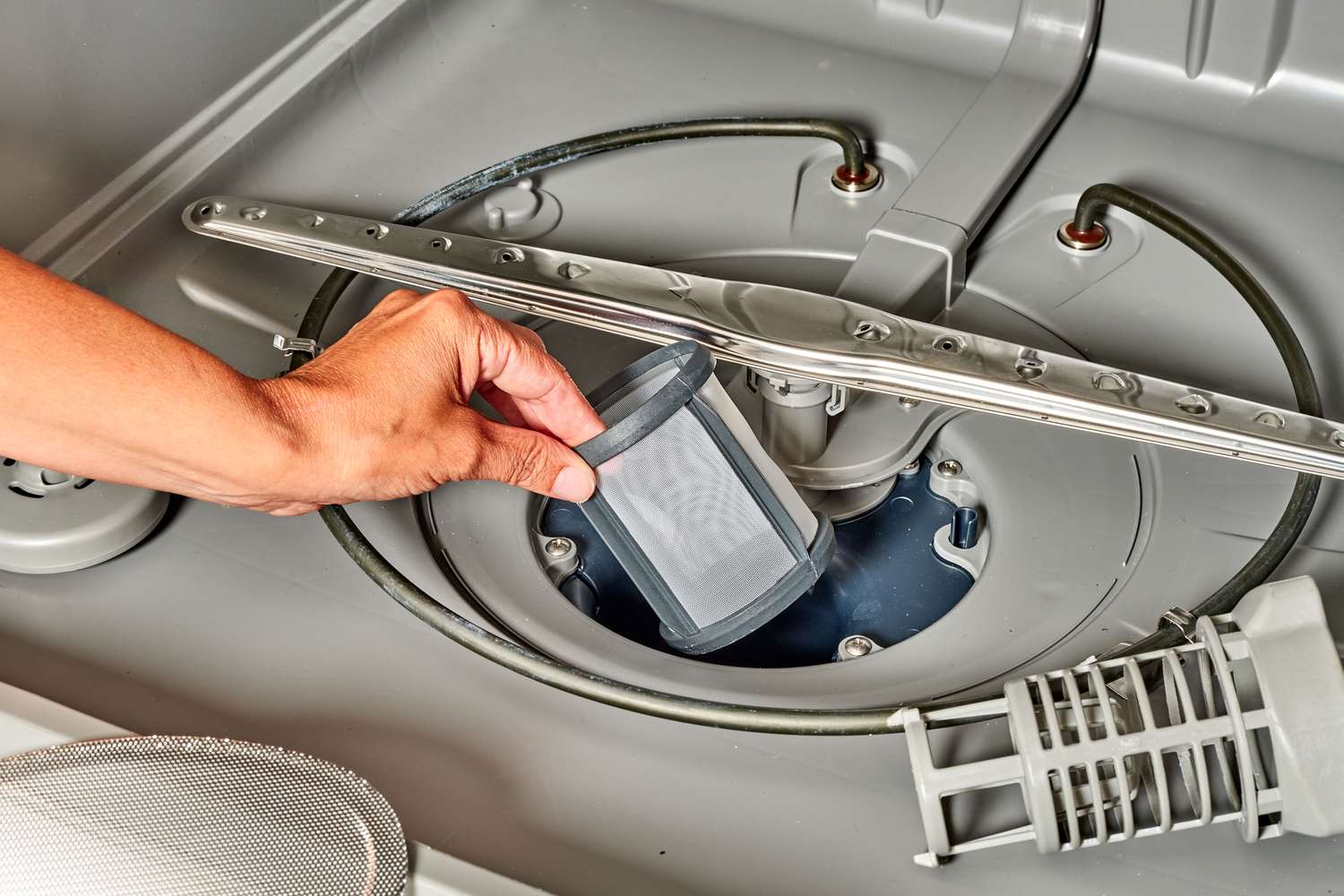
Safety first (do this before you poke around)
- Kill power: Flip the dishwasher breaker off. Dishwashers have sharp edges inside and you will likely have wet hands. This is not the time for live electricity.
- Turn off the water (optional but smart): Under the sink, shut the dishwasher supply valve if you are going to move hoses around.
- Protect your floor: Put down a towel and keep a shallow pan nearby. Any drain work can spill or release water.
Quick reminder If you smell burning, see smoke, or notice the unit repeatedly trips the breaker, stop and call a repair tech.
Start here: quick checks that fix a lot of “no drain” calls
1) Is it actually done draining yet?
It sounds silly, but it is common: a cycle got interrupted, the door was opened mid-drain, or the unit is stuck in a pause.
- Close the door firmly.
- Restore power.
- Run Cancel/Drain (wording varies by brand). Let it run until the drain cycle ends, often 2 to 5+ minutes depending on the model.
- Listen for the drain pump and check the sink or disposal area for water movement.
- Open the door and see if the water level dropped.
If it drains now, you likely had a hiccup, not a clog. If it still holds water, keep going.
2) Check your sink and disposal first
If your kitchen sink is slow to drain too, the issue may be your house drain, not the dishwasher. If the sink or disposal line is restricted, the dishwasher may drain poorly, drain slowly, or back up.
- If the sink is backed up, clear that clog first (plunger, drain snake, or a plumber if needed).
- If the sink drains fine, move on to dishwasher-specific checks.
3) Look for obvious stuff in the bottom of the tub
Pull out the bottom rack and do a quick scan for anything that could block the sump area: labels, broken glass, popcorn kernels, twist ties, toothpicks. I have personally pulled a surprising number of cherry pits out of dishwashers.
Heads up If you suspect broken glass, wear gloves and use a flashlight. Do not swipe around with your bare hand.
4) Quick check: the float
Many dishwashers have a small float (often a little dome) in the bottom of the tub that helps prevent overfilling. If it is stuck up because of gunk or a stray utensil, it can cause weird behavior.
- Look for a float near the front corner of the tub (varies by model).
- Gently lift it and let it drop. It should move freely.
- Remove any debris around it, then retry Cancel/Drain.
Clean the filter and sump (most common DIY fix)
If your dishwasher has a removable filter, clean it first. A clogged filter can slow draining or stop it altogether.
1) Remove the bottom rack
Set it aside so you can reach the drain area comfortably.
2) Pull the lower spray arm (if needed)
Some models lift off, some have a nut or clip. If it resists, do not force it. Check your manual or look for a simple locking tab.
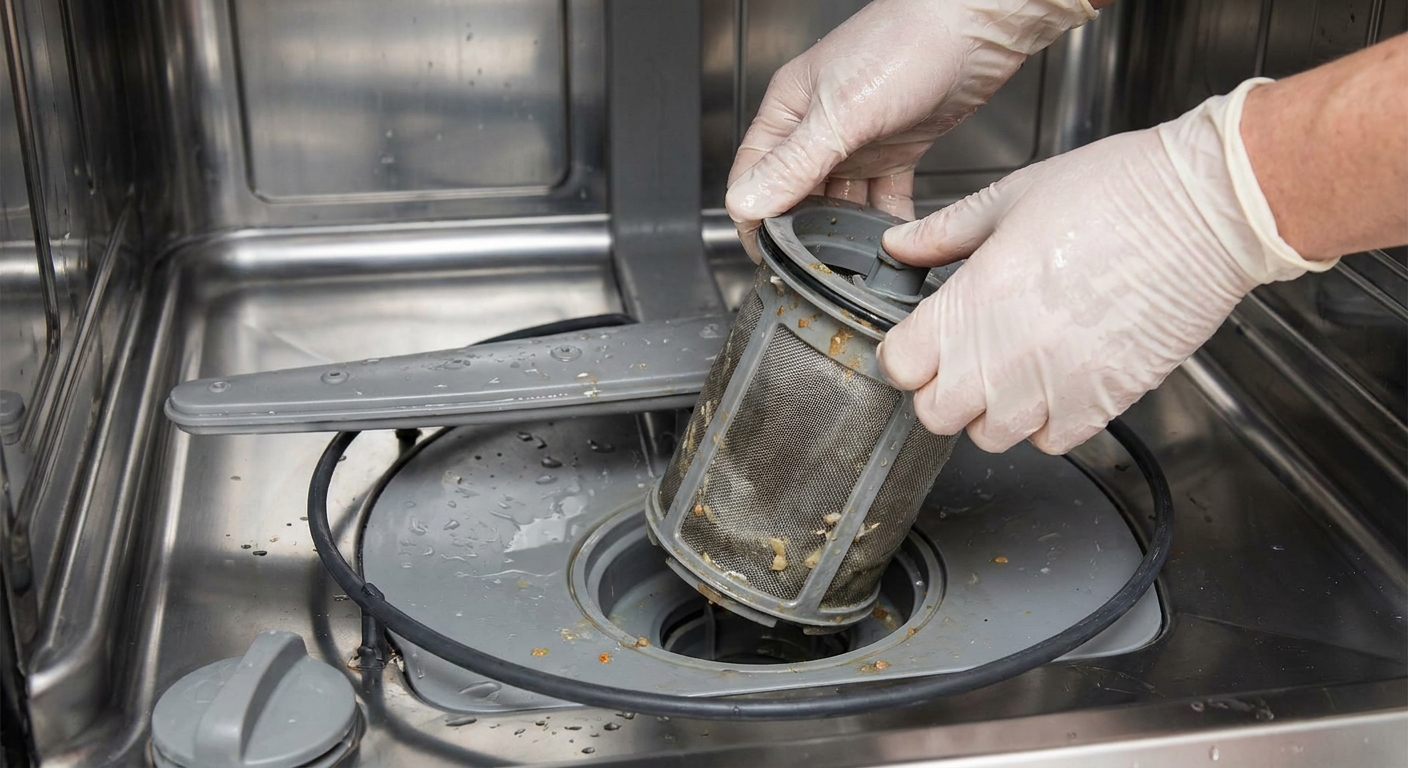
3) Remove the filter
Most filters twist a quarter-turn and lift out. You may have an upper and lower filter piece.
4) Wash it like you mean it
- Rinse under hot tap water.
- Scrub with a soft brush or old toothbrush.
- If it is greasy, soak 10 minutes in hot water with a drop of dish soap.
5) Clean the sump area
With the filter out, wipe out gunk around the sump (the recessed area under the filter). You are looking for food sludge, a label, or anything lodged near the small drain openings.
6) Reinstall and test
Reinstall the filter fully and snugly. Put the spray arm and rack back in, then run Cancel/Drain again.
If it drains now, you just saved yourself a service call. Keep that filter on a monthly cleaning schedule if your household runs the dishwasher hard.
If it still will not drain: check the drain hose
If the filter is clean and you still have standing water, the next suspects are the drain hose routing, a kink, or a clog.
What you are looking for
- Kinked hose behind the dishwasher
- Crushed hose from the unit being shoved back too tightly
- No high loop (or failed air gap) causing water to flow back into the dishwasher
- Clogged hose with grease or food sludge
1) Confirm the high loop (or air gap)
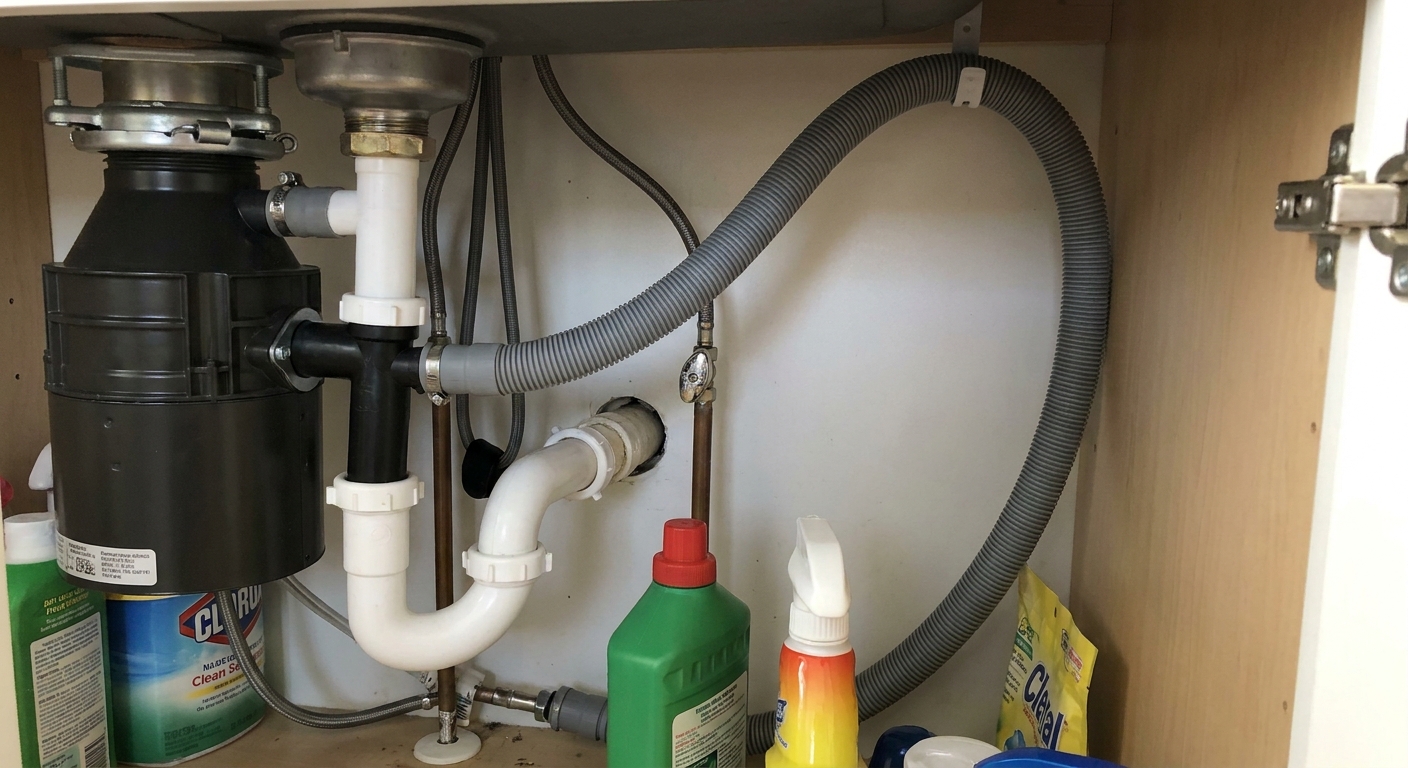
Under the sink, the dishwasher drain hose should rise as high as possible under the countertop before it drops down to connect to the drain or disposal. This helps prevent dirty sink water from backflowing into the dishwasher.
- If it is sagging low, use a strap or zip tie to secure it high.
- If you have an air gap on the sink, jump to the next section to clean it.
Code note: Some areas require an air gap instead of (or in addition to) a high loop. If you are unsure, check local plumbing code or ask a plumber.
2) Check for a kink behind the dishwasher
Pull the dishwasher out only if you are comfortable doing it. Go slow.
- Turn power off at the breaker.
- Remove the toe-kick panel at the bottom front (usually a couple screws).
- If the dishwasher is mounted to the counter, remove the mounting screws.
- Carefully slide the unit out a few inches and look for a kinked hose.
Straighten the hose and try a drain cycle. You should hear the pump and see water flow into the sink/disposal connection.
3) Clear a clogged drain hose (safe DIY approach)
If you suspect a clog, you can disconnect the drain hose under the sink and flush it.
- Put a towel and a shallow pan under the connection.
- Loosen the hose clamp where the drain hose connects to the disposal or sink tailpiece.
- Pull the hose off and let any water drain into your pan.
- Check the hose end for gunk. Clean it out.
- Flush the hose with hot tap water from the sink sprayer or a funnel (skip boiling water, which can soften some hoses).
Reconnect the hose and run a drain test.
Do not use harsh drain chemicals in the dishwasher. They can damage seals and hoses and create a nasty splash hazard when you open things up.
Air gap: quick clean (if you have one)
If you have a small air gap fitting on the sink or countertop (usually a little metal or plastic cap), it can clog with gunk and block draining or cause dirty water to burble up at the sink.
- Kill power to the dishwasher (breaker off).
- Twist or lift off the air gap cap (most pop off).
- Look inside for debris. Clean it out with a small brush or pipe cleaner.
- Rinse the air gap with hot tap water.
- If it still seems blocked, remove the air gap cover and check the short hose running from the air gap to the disposal or drain for clogs or kinks.
Reassemble, then run Cancel/Drain and watch for steady flow into the drain connection.
Garbage disposal connection: the sneaky culprit
If your dishwasher drains into a garbage disposal, this is a very common failure point, especially after a new disposal install.
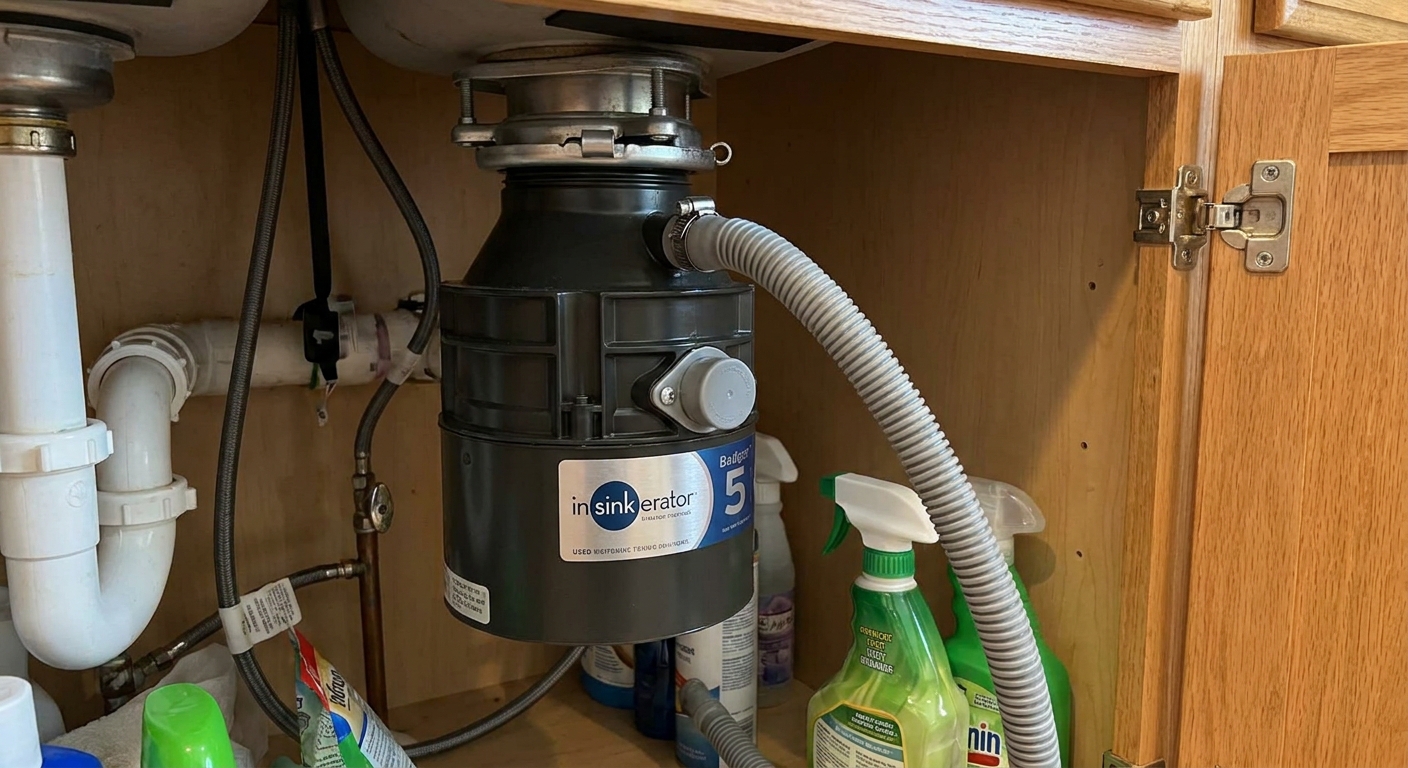
1) Run the disposal first
If the disposal is clogged, the dishwasher cannot drain properly. Run cold water and turn on the disposal for 10 to 15 seconds. Then try Cancel/Drain on the dishwasher.
2) Check for the knockout plug (new disposal install)
Brand-new disposals ship with a plastic knockout plug in the dishwasher inlet. If it was never punched out, the dishwasher cannot drain at all.
How to tell: Your dishwasher never drained properly from day one after a disposal replacement.
How to fix (if you are comfortable):
- Turn off power to the disposal at the breaker or unplug it.
- Remove the dishwasher drain hose from the disposal inlet.
- Use a screwdriver and hammer to tap the plug inside the inlet until it pops free.
- Fish the plug out from inside the disposal (needle-nose pliers help).
- Reconnect the hose and clamp.
Safety note Never put your hand inside a disposal. Even unplugged, treat it like it can bite.
What about the drain pump?
If you have done the steps above and the dishwasher still hums but does not move water, you may be looking at a drain pump issue or a blockage at the pump impeller.
Some homeowners can access and clear a small obstruction, but the exact steps vary a lot by model. If you are hearing any of these, it may be time to call in help:
- Loud grinding during drain
- Repeated error codes related to draining
- No sound at all during the drain portion of the cycle
- Water draining very slowly even with a clean filter and clear hose
If you want to DIY further, look up your model number and search the manual for “drain pump access.” If it requires flipping the dishwasher on its side, working around electrical connectors, or opening the pump housing, I generally recommend a repair tech unless you are very comfortable with appliance work.
Fast troubleshooting checklist
If you just want the punch list, here is the order I would do it at a friend’s house:
- Run Cancel/Drain and give it time to finish (often 2 to 5+ minutes).
- Listen for the drain pump and look for water flow into the sink/disposal plumbing.
- Check if the sink drains normally (and run the disposal if you have one).
- Pull the bottom rack and remove debris.
- Check the float moves freely.
- Remove and clean the filter and sump.
- If you have an air gap, clean it.
- Verify the high loop under the sink (and check local code on air gaps).
- If a disposal was recently installed, knock out the dishwasher inlet plug.
- Inspect the drain hose for kinks and clogs, then flush it with hot tap water.
When to call a pro (and what to tell them)
Call a repair tech if you have standing water after cleaning the filter and confirming a clear hose, air gap, and disposal connection, or if you suspect a pump or control issue.
When you call, these details help them show up ready:
- Dishwasher brand and model number (usually on the door edge)
- Does it make a draining sound, hum, or stay silent?
- Is the water mostly clean or full of food debris?
- Any error code displayed (and whether it says “drain” or shows a tap/drain icon)
- Whether it drains into a garbage disposal, an air gap, or a sink tailpiece
FAQ
Why is there water in the bottom of my dishwasher after a cycle?
A small amount of water in the sump area can be normal on some models. A noticeable pool that covers the filter area, or several inches of water across the tub bottom, usually means a partial or full drain blockage. When in doubt, check your manual for what your model considers “normal.”
Can I shop-vac the water out?
Yes, and it makes the rest of the work less messy. Use a wet/dry shop vac only, not a regular vacuum. Power off the dishwasher first.
My dishwasher drains sometimes, but not always. What does that mean?
Intermittent draining can point to a filter that clogs quickly, a hose that shifts and kinks when the unit moves, a partially clogged air gap, or a drain pump starting to fail. Clean the filter and check hose routing first.
Will vinegar or baking soda fix a dishwasher that will not drain?
They can help with mild odor or light grime, but they rarely fix a true drain blockage. Mechanical cleaning of the filter, sump, air gap, and hose is usually the real solution.