
Why Won’t My Garbage Disposal Turn On?
If your garbage disposal is completely silent, this guide walks you through safe, step-by-step checks: outlet power, GFCI (including upstream), switch or air switch, breaker reset, and the red reset button. Learn when it is time to replace it.
If your garbage disposal will not turn on and it is totally silent, no hum, no click, no drama, that is a different problem than a disposal that hums but will not spin. Silent most often means it is not getting power, the overload has tripped, or the motor has failed internally.
I have lived this one. In my 1970s Michigan fixer-upper, I once tore half the cabinet apart convinced the disposal had died, only to find the outlet was controlled by a wall switch I did not know existed. Humbling, yes. Fixable, also yes.
First, confirm what “won’t turn on” means
These quick observations steer you to the right fix.
- Silent (no hum, no vibration): power issue, tripped overload, bad switch, air switch issue, loose wiring, dead motor.
- Hums but does not spin: power is present, the flywheel is jammed, or (on some models) a start capacitor is failing.
- Leaks from the housing: not an electrical problem. You are dealing with seals, cracks, or plumbing connections.
This article is for the first case: silent and dead.
Safety: two things I want you to do before touching anything
Safety first: Electricity and water share a zip code under your sink. Before you put hands on wiring, turn off the disposal circuit at the breaker. If you need to test power, do it deliberately and keep your hands dry.
- Never reach into the disposal even if it is “dead.” Treat it like it could start.
- Use a flashlight so you are not feeling around blindly near wiring and sharp metal edges.
Step-by-step checks
1) Is it plugged in, and is the plug tight?
It sounds silly until you find a bottle of cleaner or a trash can bumped the cord loose.
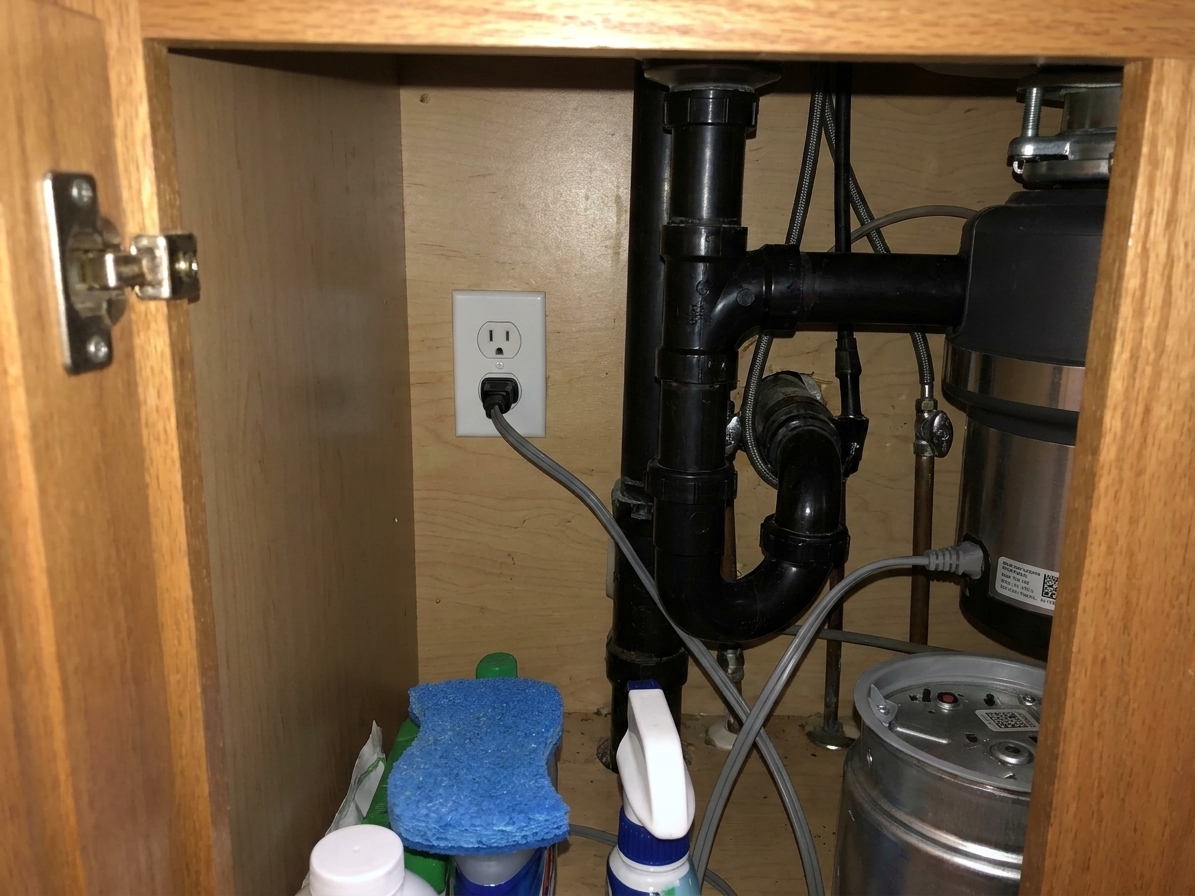
- Look for a cord coming off the disposal and into an outlet inside the sink base cabinet.
- Unplug it and plug it back in firmly.
- If the cord is pinched or damaged, stop and replace the cord kit or the disposal, depending on model.
2) Check the outlet for power (and the GFCI)
Many disposals plug into a GFCI outlet under the sink, but they can also be fed from a GFCI outlet upstream (like a counter receptacle) or protected by a GFCI breaker in the panel. When the GFCI trips anywhere in that chain, the disposal can go silent.
- Press RESET on any GFCI outlet under the sink.
- If there is no GFCI under the sink, check nearby kitchen counter GFCIs and press RESET there too.
- If you have a GFCI breaker, check the panel for a tripped one and reset it per the label.
- Plug a small lamp or phone charger into the disposal outlet to see if it is live.
If you have a non-contact voltage tester, you can also verify power at the outlet without plugging anything in, but the lamp test is usually straightforward.
3) Make sure the switch is actually sending power
If the outlet has power but the disposal is silent when you flip the switch, the switch or the wiring between the switch and outlet could be the issue.
Quick checks you can do without opening walls:
- Flip the switch slowly a few times. A worn switch can feel loose or inconsistent.
- If the disposal plugs into a switched outlet, verify the outlet is actually switched. Some kitchens have a “mystery switch” that controls nothing because the disposal was removed years ago.
- If there is a second switch (or an air switch button on the counter), test that too.
If you have an air switch: look under the sink for the small air tube that runs from the countertop button to the air switch module. If that tube has popped off or is cracked, the button can do nothing, and the disposal will sit there silently. Push the tube back on firmly and look for obvious splits.
At this point, if you are comfortable with electrical work, you can turn the breaker off and inspect the switch box for loose connections. If you are not comfortable, this is a good moment to call an electrician. A service call is cheaper than guessing with live wires.
4) Check your breaker (and do a real reset)
Disposals draw a decent surge on startup. If something jammed last time it ran, it can trip the breaker.
- Find your kitchen or disposal breaker.
- Turn it fully OFF.
- Turn it back ON.
If it trips again immediately when you try the switch, leave it off and move to the “when to stop” section below. Repeated trips can indicate a short, a failing motor, or a wiring problem.
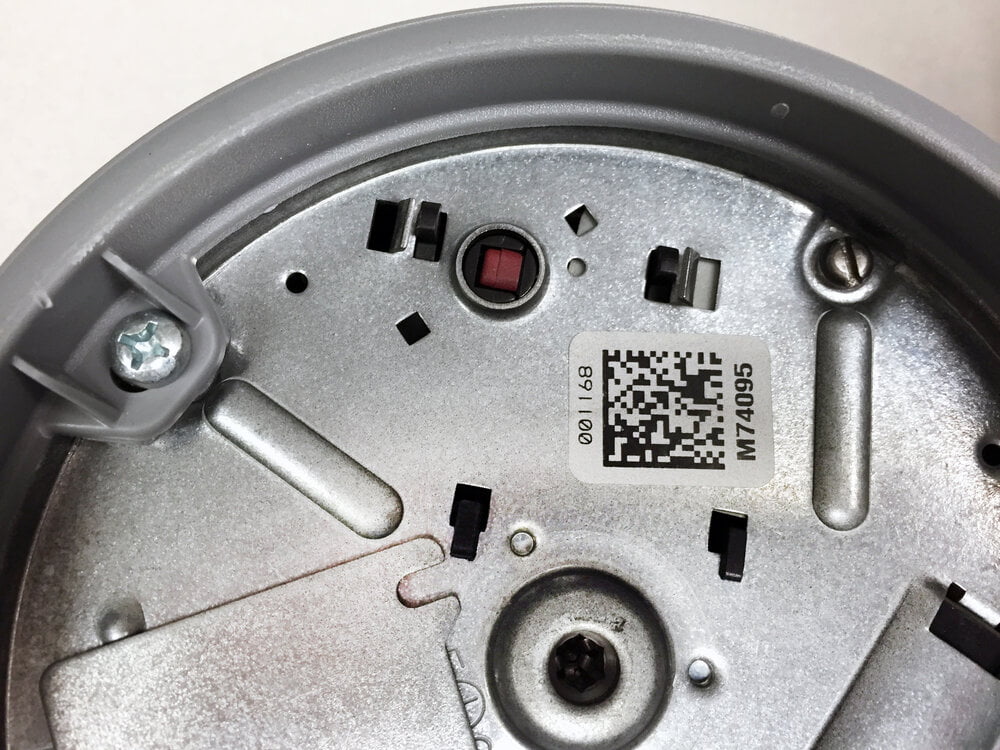
5) Press the reset button on the disposal
Most disposals have an overload protector on the bottom. If it trips, the unit will be dead silent until you reset it.
- Turn the disposal switch OFF.
- Look under the unit for a small red (sometimes black) reset button.
- Press it. You may feel a click.
- Wait 10 to 15 seconds, then try the switch.
If it runs after resetting, keep an ear out the next few uses. Overload trips usually happen for a reason, like a jam, a spoon, or a disposal that is aging and struggling on startup.
If there is power but it is still silent
If your outlet is live, the breaker holds, the switch is good, and the reset button will not bring it back, you are likely looking at one of these:
- Failed internal wiring or burned motor windings (common after years of use or repeated overloads).
- Failed start components on some models (varies by design). Many homeowners replace the whole disposal instead of diagnosing internal electrical parts.
- Hardwired connection issue if your unit is wired directly instead of plugged in. A loose wire nut in the junction box can kill power to the motor while everything else “looks fine.”
If you have confirmed power at the disposal itself and it is still completely dead, replacement is usually the practical path.
When to stop DIY troubleshooting If the breaker trips repeatedly, you smell burning, you see melted insulation, or your cabinet has any signs of water near wiring, turn the breaker off and call a pro.
Hardwired vs plugged-in
Most DIY-friendly troubleshooting is easiest when the disposal plugs into an outlet. If you do not see a plug at all, your disposal may be hardwired.
Signs it is hardwired:
- No cord and no plug visible.
- A flexible metal conduit or cable goes directly into the disposal wiring compartment.
- There is a small junction box or cover plate on the side or bottom where wires enter.
If you decide to inspect a hardwired connection, turn the breaker off first and confirm power is off before you open any cover plate. Diagnosing hardwired units often involves testing for voltage with a multimeter. If that sentence makes you uncomfortable, you are not alone. This is where most homeowners wisely tap out.
Replace or repair?
I am all for repairs, but disposals are one of those appliances where replacement can be the most practical move.
Replacement is worth considering if:
- The unit is about 8 to 12 years old (typical range, but it depends on brand, use, and what goes down the sink).
- It is silent even with confirmed power at the unit.
- The reset button trips repeatedly with normal use.
- You have any leaking from the disposal body (not the plumbing connections). That usually means the housing or seals are failing, and a rebuild is rarely worth it.
Quick FAQ
Why did my garbage disposal stop working suddenly?
The most common sudden causes are a tripped GFCI (sometimes upstream), a tripped breaker, or the disposal’s overload protector tripping. Start with those before assuming the motor is dead.
Where is the reset button on a garbage disposal?
Usually on the bottom of the unit, facing the floor. It is often red and slightly recessed.
My disposal is silent but the lights on the switch plate still work. Does that matter?
Not much. The disposal may be on a different circuit than the light, or the switch may not actually be delivering power to the disposal outlet. You still need to verify power at the outlet or wiring compartment.
Can a clogged drain make the disposal not turn on?
A clog can make a disposal struggle or jam, but it will not usually make it completely silent. Silent points to power, a tripped overload, or internal electrical failure.
The order to remember
If you only remember one thing, make it this sequence:
- Outlet (plug seated, outlet has power, GFCI reset)
- Switch (works, air switch tube connected, wiring intact)
- Breaker (full reset)
- Disposal reset button
- Then consider hardwired connections or replacement
Take it one step at a time. The goal is not to prove you are a hero under the sink. The goal is to get your kitchen back without guessing.