
What Not to Put in a Garbage Disposal
Avoid jams, clogs, and buildup with this clear list of what not to put in a garbage disposal, plus what to toss in the trash or compost instead.
I grew up in a house where the garbage disposal was treated like a tool, not a magic hole. My grandpa’s rule was simple: if it swells, strings, or turns to concrete when it cools, it does not belong down there. After ten years building and remodeling kitchens for other folks, I can tell you that rule saves a lot of late-night sink panic.
A garbage disposal is basically a small grinder that whips food scraps into tiny pieces and sends them into your drain line. It is not a blender, and it is definitely not a trash can. The items below either jam the grind chamber, chew up the shredding parts, or create paste and sludge that clings to pipes.
Quick septic note: If you have a septic system, be extra conservative. Disposals add more solids to the tank, which can mean more frequent pumping and more chances for problems downstream.
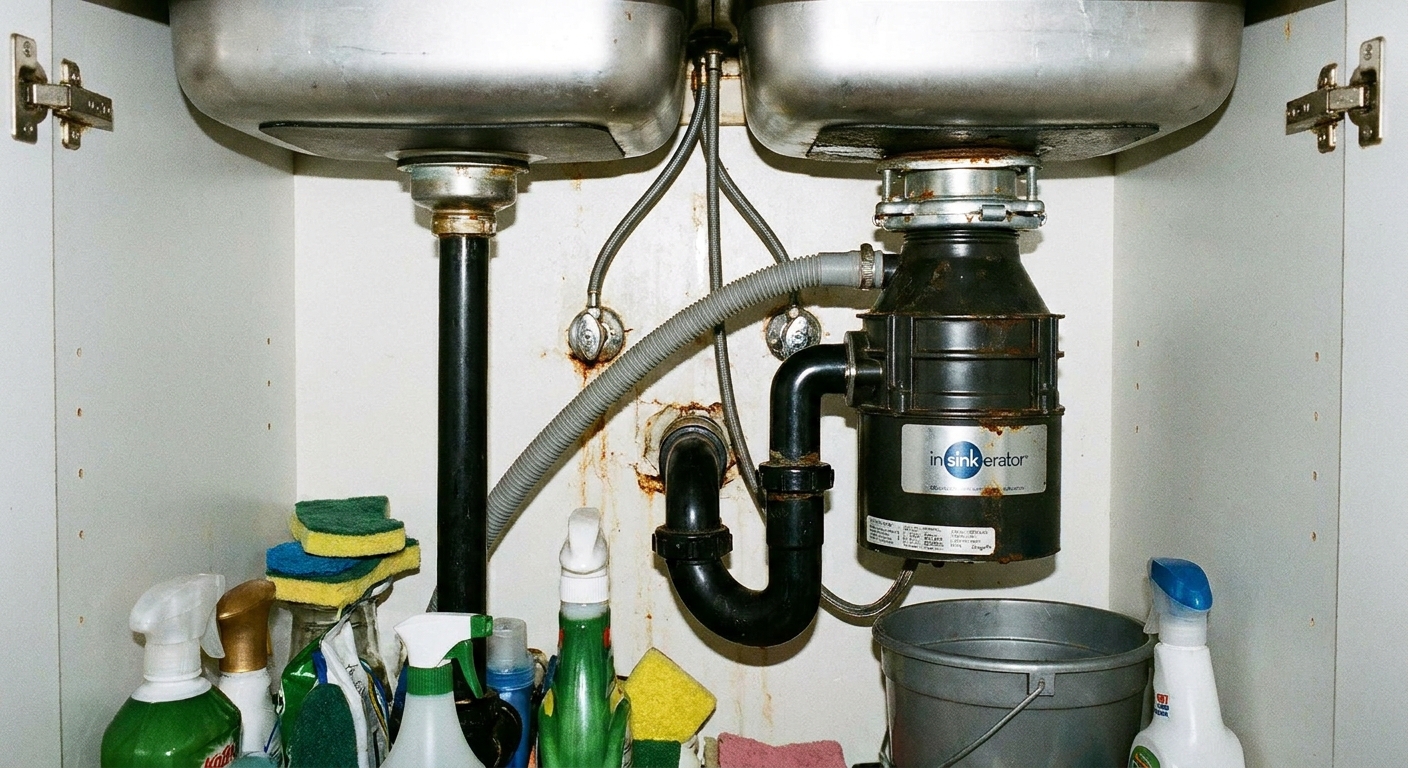
The quick rule of thumb
- Good for the disposal: small, soft scraps in small amounts, with plenty of cold water.
- Bad for the disposal: anything fibrous, starchy and expandable, greasy, hard, or non-food.
If you are ever unsure, the safest “instead” is the trash. If you compost, a lot of this belongs there too, where accepted.
Fibrous foods that jam
These do not grind cleanly. They shred into long strands that can wrap around the impeller and clog the discharge elbow or drain line just below the disposal.
Celery, asparagus, and stringy veggies
- Why they are a problem: the fibers turn into rope-like strands.
- Throw it away instead: compost where accepted, otherwise trash.
Corn husks and corn silk
- Why they are a problem: tough fibers bind up the grind ring and can mat into a clog.
- Throw it away instead: compost where accepted, otherwise trash.
Artichoke leaves
- Why they are a problem: fibrous, bulky, and slow to break down.
- Throw it away instead: compost where accepted, otherwise trash.
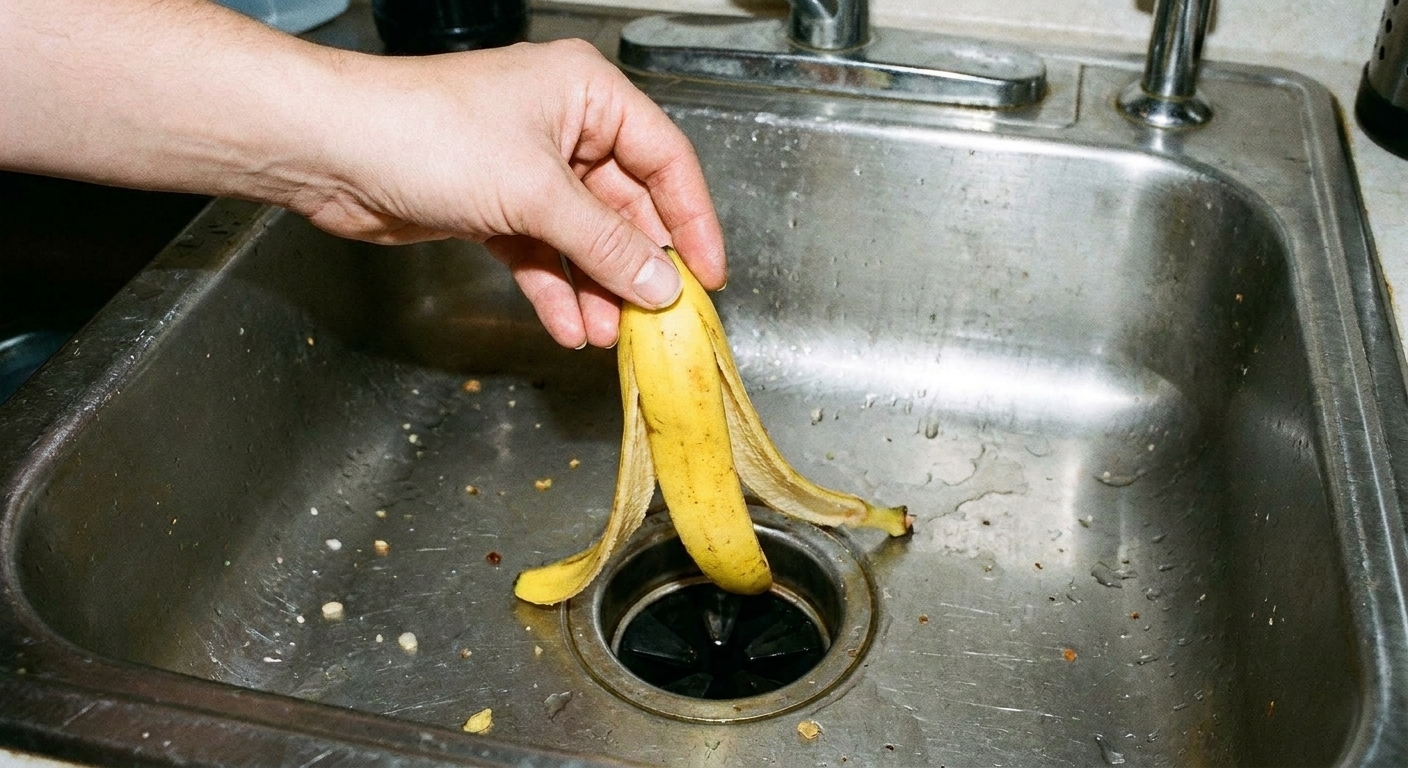
Onion skins, banana peels, and potato peels
- Why they are a problem: peels are a double whammy. Many are fibrous and slippery, which helps them ride the walls of the drain line and collect other gunk.
- Throw it away instead: compost where accepted, otherwise trash.
Starches that turn to paste
Starchy foods can grind up fine, but that is the problem. They become a thick paste that sticks to the inside of your disposal and drain line like wallpaper glue.
Rice
- Why it is a problem: cooked rice swells with water and forms a heavy sludge. Uncooked rice can absorb water and swell later in the trap or branch line.
- Throw it away instead: trash, or compost where accepted.
Pasta and noodles
- Why it is a problem: they expand, go gummy, and love to collect in the P-trap.
- Throw it away instead: trash.
Potatoes and other starchy chunks
- Why it is a problem: mashed potatoes and thick potato scraps become paste. Raw chunks can bounce around and jam.
- Throw it away instead: compost where accepted, otherwise trash.
Beans, oats, and other swelling foods
- Why it is a problem: they absorb water and thicken, which can cause your sink to drain slowly over time.
- Throw it away instead: trash.
Grease, fat, and oily foods
This is the big one. Warm grease goes down liquid, then cools and coats your pipes. Add a little rice paste or coffee grounds and you have a clog that acts like concrete.
Cooking oil, bacon fat, meat drippings
- Why it is a problem: it solidifies and narrows the pipe, especially in colder climates and during winter.
- Throw it away instead: let it cool and toss it in the trash in a sealed container, or wipe the pan with a paper towel and trash the towel.
Oily leftovers and dressings
- Why it is a problem: tuna oil, salad dressing, and greasy pan sauces still behave like grease in your plumbing. They coat the grind chamber and give other scraps something to stick to.
- Throw it away instead: scrape or pour into the trash first (use a container if needed), then rinse the plate or pan.
Butter, shortening, and mayo-heavy scraps
- Why it is a problem: fats cling to the grind chamber and trap food particles.
- Throw it away instead: scrape into trash first.
Important: Hot water and dish soap can move grease farther down the line, but it does not make it disappear. It just relocates the clog.
Hard items that damage parts
Most disposals do not have sharp blender-style blades. They use a spinning plate with impellers and a shredder ring, and those parts still take a beating. Hard items can dull the ring, jam the chamber, or crack components.
Bones
- Why they are a problem: they are hard, irregular, and can wedge between the shredder ring and housing. Some high-horsepower units claim they can handle small chicken bones, but it is still hard on the disposal and the drain line.
- Throw it away instead: trash.
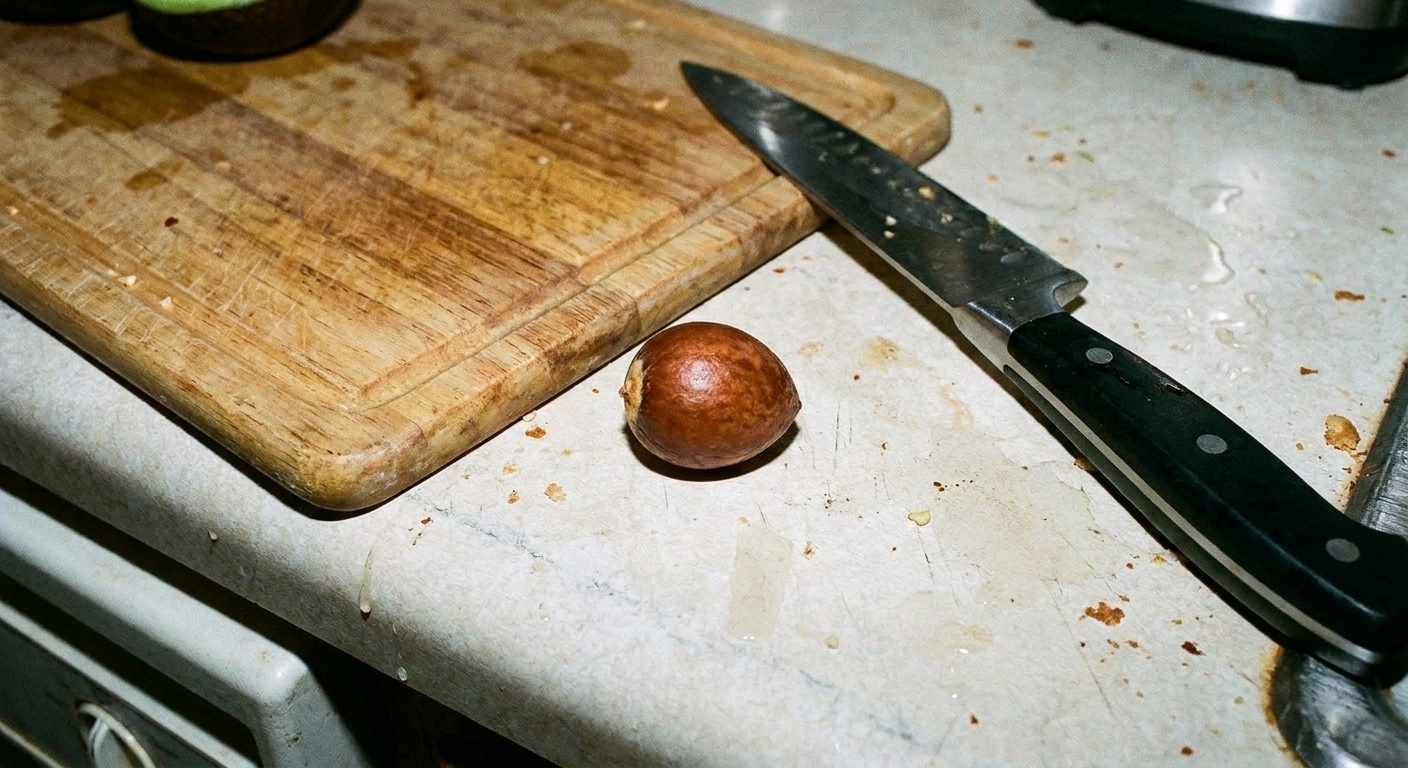
Fruit pits and hard seeds
- Why they are a problem: like bones, they can lock the impeller and make the disposal hum without spinning.
- Throw it away instead: trash.
Shells (clam, oyster, mussel)
- Why they are a problem: very hard and sharp-edged, and fragments can lodge in the grind area.
- Throw it away instead: trash.
Grit that builds up
Some items are not dangerous to the motor, but they settle out in the P-trap and horizontal runs and slowly build a clog. This is especially true in older plumbing or any sink that already drains a little slow.
Coffee grounds
- Why they are a problem: they do not dissolve. Plumbers commonly warn that they pack down like wet sand and contribute to buildup over time.
- Throw it away instead: compost where accepted, otherwise trash.
Eggshells
- Why they are a problem: they are a debated one. In my experience, the membrane can wrap around parts, and crushed shell can settle like gritty sediment, especially in slower drains.
- Throw it away instead: compost where accepted, otherwise trash.
Seafood grit and sandy rinses
- Why they are a problem: any grit washed down tends to settle in the trap.
- Throw it away instead: dump grit into the trash first, then rinse lightly.
Stuff that turns to sludge
Even if these grind, they tend to coat the disposal and linger. The result is that funky smell that keeps coming back no matter how much you run the water.
Big batches of scraps
- Why it is a problem: disposals like small batches. Overloading can stall the unit and leave a thick layer of mush inside.
- Throw it away instead: scrape plates into the trash first, then use the disposal for the small bits.
Soft, sticky foods
- Why it is a problem: nut butter globs, thick hummus, and dough smear and cling to the grind chamber and baffles.
- Throw it away instead: trash.
Non-food items
This is the “please do not ask me how I know” category. Non-food items jam disposals, damage seals, and can create safety hazards.
- Metal, glass, plastic (bottle caps, twist ties, utensil pieces): trash.
- Paper towels, napkins, wipes (even “flushable”): trash.
- Dental floss and hair: trash.
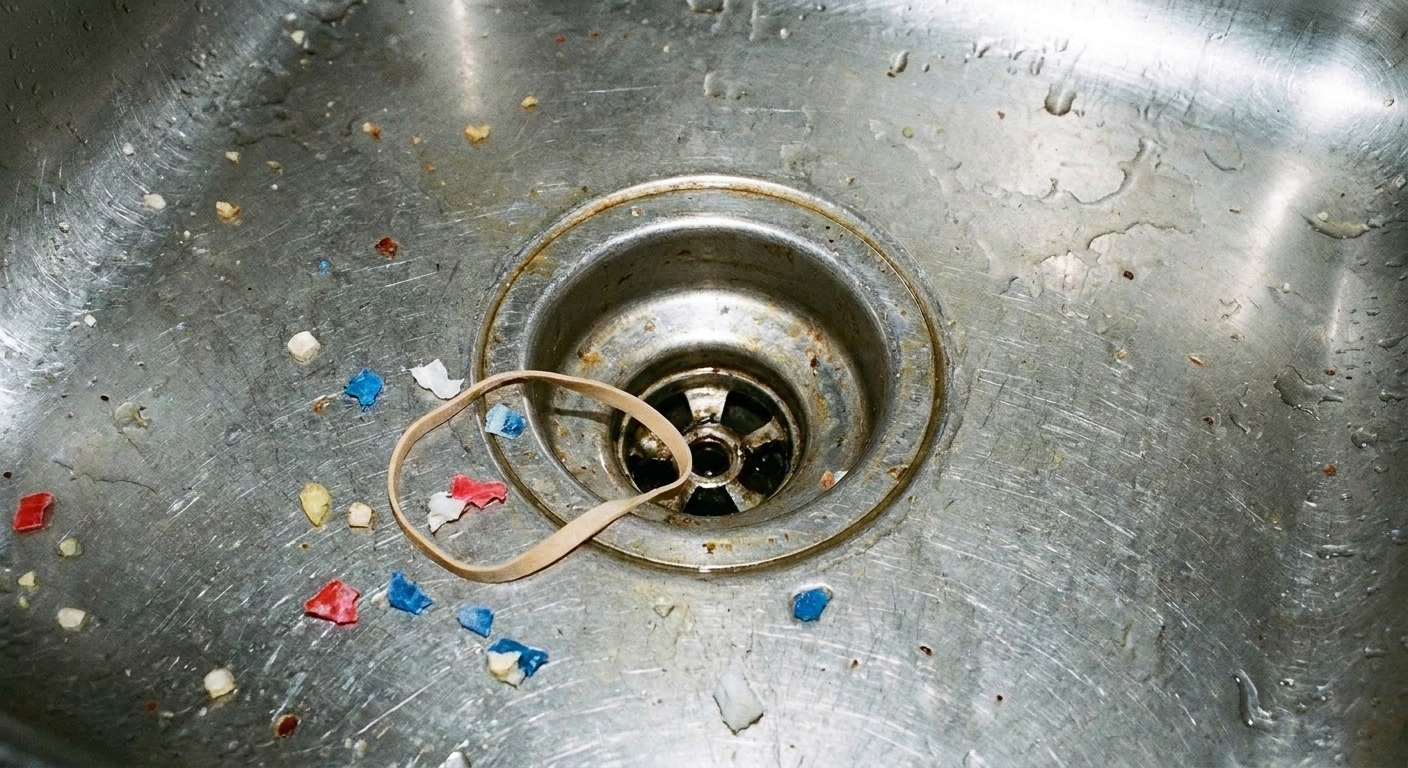
- Rubber bands: trash.
- Produce stickers: trash.
- Cigarette butts: trash.
- Medication: follow local disposal guidance, but not the sink and not the disposal.
What to use instead
If you want a dead-simple approach, here is how I teach it in weekend workshops.
Trash
- Grease, oil, and fatty scraps
- Bones, pits, shells
- Pasta, rice, large starchy leftovers
- Sticky foods like dough and thick dips
- Any non-food items
Compost (if you compost)
- Most fruit and veggie scraps, including peels
- Coffee grounds and eggshells, where accepted
Disposal (small amounts)
- Soft produce bits, a few at a time
- Small crumbs from rinsing a plate
- A little citrus peel once in a while, if your drain is in good shape
How to use it safely
- Run cold water before, during, and for 10 to 20 seconds after.
- Feed small batches. If it sounds strained, you are overdoing it.
- Scrape first, grind second. The disposal is for what you missed, not the whole plate.
- Skip the “hot grease with soap” trick. It still cools and sticks later.
- Avoid harsh chemicals. Do not make bleach or drain cleaner part of your routine. If you have a clog or persistent odor, use disposal-safe methods or call a pro.
My homeowner mantra: Your garbage disposal is a grinder attached to a drain pipe. Treat it gently and it will quietly do its job for years.
When to stop and call a pro
This article is about what not to put in, not repairs, but it helps to know when you are in “shut it down” territory.
- It hums but will not spin after you turned it off and tried again.
- You smell burning or the unit trips the reset repeatedly.
- Water backs up into the sink quickly, especially if it affects other drains.
- Visible leaking from the disposal body, not just a loose clamp.
Safety first: Do not put your hand inside a disposal. If you need to look for a jam, shut off power at the switch and the breaker before you do anything under the sink.
In those cases, stop running it. Repeated attempts can overheat the motor or push a clog deeper into the line.
FAQ
Can I put lemon peels in the garbage disposal?
In small amounts, a little citrus peel is usually fine, but it is still fibrous. I treat it like a rare treat, not a habit. If you have a septic system or your disposal already drains slowly, toss peels in the trash or compost instead.
Can a garbage disposal handle eggshells?
Some people do it with no issues, but plenty of plumbers advise against it. The membrane can wrap around parts, and the crushed shell can settle in the trap. Trash or compost is the safer call.
Is it OK to put potato peels down the disposal?
I do not recommend it. Potato peels are famous for turning into a starchy paste and contributing to clogs. Compost or trash them.
What about small bits of meat?
A few tiny scraps that rinse off a plate are fine, but avoid grinding big amounts, fatty cuts, or skin. Fat is the main enemy, not the protein.
Are ice cubes good for cleaning a disposal?
Ice is not magic, but a few cubes can help knock gunk off the inside. I would not call it a cleaning plan on its own, and it will not fix a slow drain. If your disposal already sounds rough or is jam-prone, skip the ice and focus on using it gently with plenty of cold water.