
Can You Run a Whole-House Fan with the Air Conditioner On?
Running a whole-house fan and central AC at the same time usually wastes energy. Learn how the fan changes ventilation load, humidity, and what to do instead.
Good grain. Great questions.
You can run a whole-house fan while the air conditioner is on, but in most homes it is the HVAC version of leaving the fridge door open while you cook. It usually makes the AC work harder, not less.
Here is the clean rule I keep on the workbench: run the whole-house fan when you want outdoor air in. run the AC when you want the house closed to outdoor air.
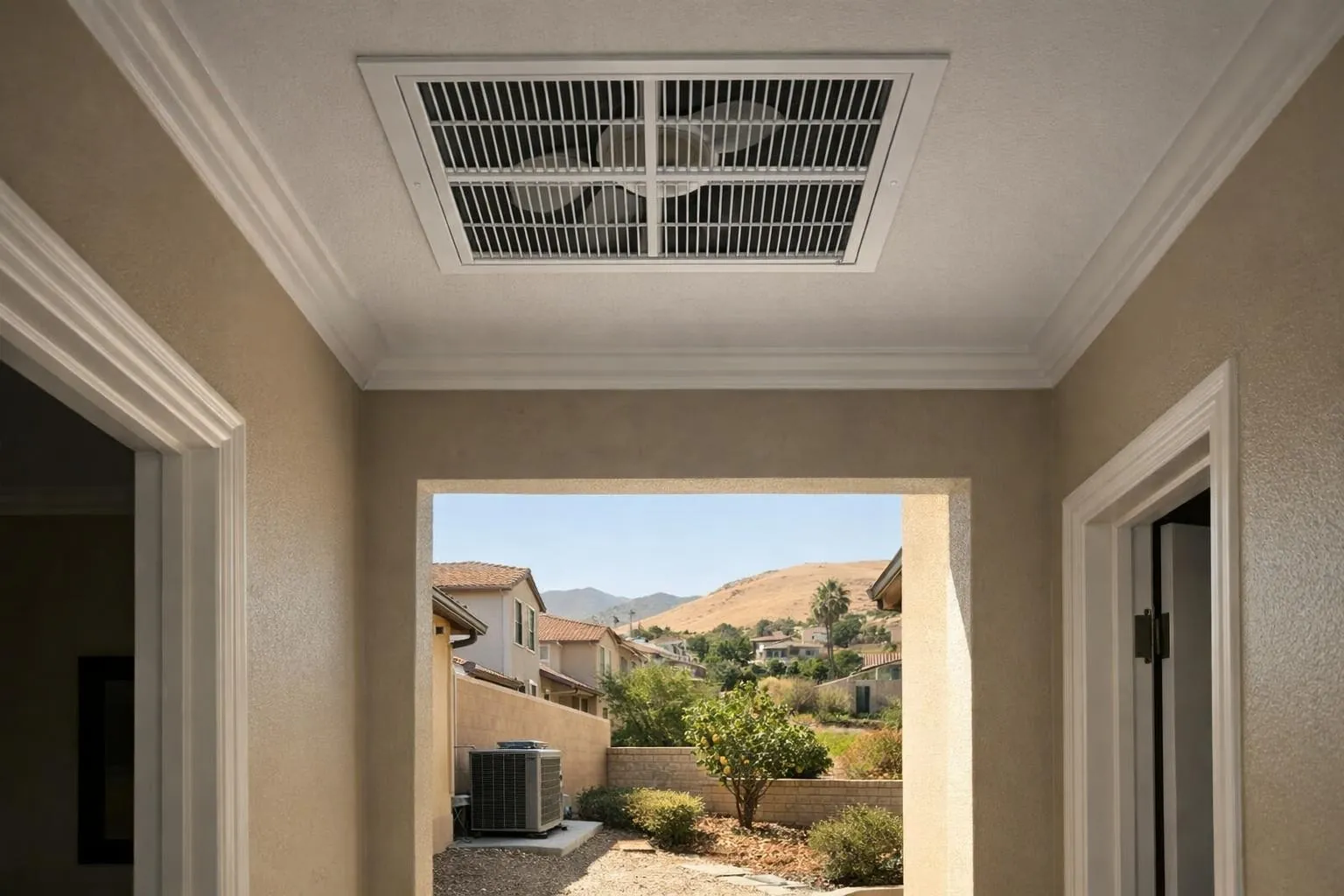
What a whole-house fan does
A whole-house fan is a big exhaust fan mounted in the ceiling (often in a hallway) that pulls air from your living space up into the attic and out through attic vents.
That upward exhaust creates negative pressure in the house, so replacement air has to come from somewhere. That somewhere is the outdoors, through whatever windows or doors you open.
- Windows open: outdoor air enters the house.
- Fan on: indoor air is pushed into the attic.
- Result: the whole house gets flushed with outside air, fast.
This is why whole-house fans can feel amazing in the evening or early morning when outside air is cooler and drier than the air trapped indoors.
What happens if the AC is on too
Central AC is designed to cool and dehumidify a mostly closed, controlled indoor air volume. When you turn on a whole-house fan, you are intentionally breaking that “closed box” assumption by forcing ventilation and infiltration.
When both run together, the fan keeps dragging in unconditioned outdoor air, and the AC has to remove the heat (and often moisture) you just brought in.
The load goes up
The key problem is simple: you are adding a big outdoor-air load that the AC now has to handle.
- Sensible load: lowering the temperature of incoming warm air.
- Latent load: removing humidity from incoming moist air (a big deal in many climates).
Even if the outdoor temperature seems close to your thermostat setting, humidity can make the AC run much longer and feel less comfortable.
Negative pressure can be a safety issue
A whole-house fan creates strong negative pressure. If you have natural-draft combustion appliances (some older water heaters, furnaces, or fireplaces), that depressurization can increase the risk of backdrafting, where combustion gases spill into the home instead of going up the flue. The risk depends on appliance type (sealed combustion and direct-vent are generally less susceptible), house leakage, and how much airflow the fan is moving.
Safety note: If you smell exhaust, notice soot, or have a carbon monoxide alarm warning, turn the fan off and ventilate safely. If you are unsure whether your appliances are sealed combustion or could backdraft, ask an HVAC pro to confirm venting and combustion-air setup.
Not enough open windows can pull air from leaks
A whole-house fan needs makeup air. If you do not give it enough open window area, the house can go more negative than it should. Air will then sneak in through the easiest paths, which can include leaky ceiling penetrations and attic bypasses. That is how you end up with dusty, hot, attic-flavored air in the living space. It is not coming “through the fan.” It is coming through leaks because the fan is starving for air.
It can also make interior doors slam or become hard to open.
Pick one mode at a time
Use the whole-house fan when outdoor air helps
- Outside air is cooler than inside, typically evenings, nights, and early mornings.
- You want to flush out heat that built up during the day.
- It is a lower-humidity time of day in your area.
Think of this as free cooling when conditions cooperate.
Use the AC when you need control
- Outside air is hotter than inside.
- Outside humidity is high and you need drying as much as cooling.
- Air quality is poor (smoke, heavy pollen, dust), and you want to keep the house closed.
Think of this as seal and condition.
Knob’s bench ruleWhole-house fan equals open windows. AC equals closed windows. If you are doing one, you are usually not doing the other.
When both might overlap
There are a few edge cases where the overlap is brief or accidental rather than “the plan.”
You are switching modes
It is common to use the whole-house fan to purge hot indoor air (say, 10 to 30 minutes), then shut it off, close windows, and let the AC maintain comfort. During that changeover, you might have a few minutes of overlap if the thermostat calls for cooling.
If you want to avoid overlap, set the thermostat to “off” or raise the setpoint while the fan runs, then restore it after windows are closed.
You want fast cooling and outdoors is truly better
If it is genuinely cooler outside and humidity is reasonable, the whole-house fan alone is usually the faster, cheaper tool. Running the AC at the same time typically adds cost with little benefit, because the fan is constantly replacing conditioned air with new air.
You have balanced ventilation
Some homes use balanced ventilation (like an ERV or HRV) that can run alongside AC because it exchanges energy and controls airflow. A whole-house fan is not that. It is a big open-window exhaust system.
How to use it without waste
Do a quick outside check
- If outside feels cooler than inside, the fan can help.
- If outside feels like a hot, damp towel, stick with AC.
Open enough windows for makeup air
Give the fan room to breathe. A practical starting point is to open several windows a few inches, spread across the house, then adjust for comfort and airflow. Manufacturer specs vary by fan CFM, but the goal is the same: easy, intentional outdoor air in, not mystery air through leaks.
Make sure the attic can exhaust the air
The fan is pushing a lot of air into the attic. If attic venting is limited, performance suffers and you can get more attic heat and noise. Good soffit and ridge or gable venting matters here.
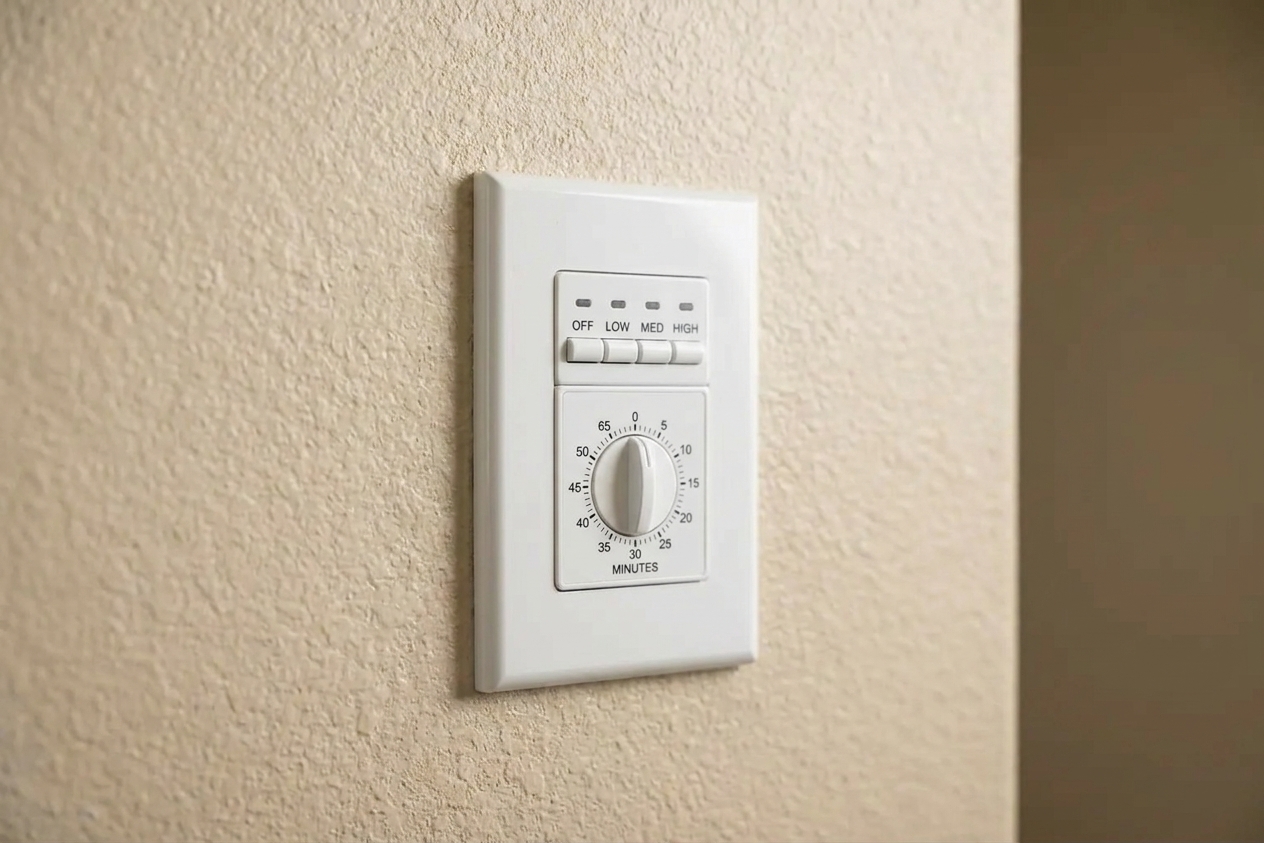
Use a timer
Many whole-house fans have timers or multi-speed controls. A timer is your friend because it prevents “oops, we left it on all night” and lets you run a short purge cycle.
Close up the house when you switch back to AC
Once the fan is off, close windows and exterior doors before expecting the AC to hold temperature and humidity.
Watch for common clues
- AC runs forever after fan use: windows are still cracked, or the house is still full of warm outdoor air.
- House feels sticky: the fan brought in humid air, and the AC now has to dehumidify it.
- Dusty smell: not enough window opening, so air is being pulled from unwanted places through leaks.
FAQ
Will running both damage my AC?
Usually it will not “break” the AC, but it can drive longer runtimes because you are feeding the house a steady stream of outdoor heat and humidity. Over time, more runtime is more wear. The bigger day-to-day issue for most households is energy waste and humidity comfort.
Will running both cool the house faster?
Not in the way you want. The fan can cool fast when outdoor air is cooler than indoor air. But if the AC is trying to cool air that the fan keeps replacing with outdoor air, the AC is chasing a moving target.
What if my whole-house fan has a “cooling” or “AC assist” setting?
Some controls are labeled in a way that suggests teamwork. The physics does not change: if the system is pulling in outdoor air through open windows, you are increasing the load the AC must handle. Treat it like two different modes, not partners.
What if my windows are closed and I run the fan anyway?
A whole-house fan needs makeup air. With windows closed, it will try to pull air from wherever it can, which can mean the attic or other leaky pathways. That is uncomfortable at best and can be a safety concern in certain homes. Use it as designed, with intentional window openings.
Bottom line
If your central AC is on, you generally should not run a whole-house fan at the same time. The fan pulls outdoor air in and exhausts conditioned air out, which increases the cooling and dehumidifying load on the AC.
Use the whole-house fan when outdoor air is your ally. Use the AC when you need the house sealed and controlled. Pick one lane, and your comfort and utility bill will both look better.