
Why Your Toilet Tank Fills So Slowly
If your toilet tank takes minutes to refill but eventually shuts off, the problem is usually restricted water flow or a failing fill valve. Try these quick checks: angle stop, supply line, and fill-valve inlet screen.
Good grain. Great questions.
If your toilet tank takes several minutes to refill but eventually stops, you are usually dealing with a restriction in the water supply, not a “running toilet” problem. That said, a tired fill valve can also slow down while still shutting off, so we will keep that on the table too.
Below are three common culprits, in the order I like to check them: a partly closed angle stop (shutoff valve), a kinked or clogged supply line, and a clogged fill-valve inlet screen. Each one includes a simple test you can do without becoming a full-time plumber.
Before you start: what “slow fill but it shuts off” means
A normal toilet tank typically refills in well under a couple minutes. If yours takes three, five, ten minutes, then finally reaches the waterline and stops, the fill valve is probably still capable of shutting off. It is just not getting enough water fast enough, or the valve is wearing out internally.
Most of the time, you are looking for one of these:
- The shutoff valve is not fully open (or is failing internally).
- The supply line is kinked or partially blocked.
- Debris is lodged in the fill valve’s inlet screen (if your model has one), starving the valve.
Quick safety note: Before loosening any supply connection, turn the angle stop clockwise to OFF and keep a small bowl and towel nearby. A little spill is normal. A surprise spray is not.
Tools and supplies (nice to have, not fancy)
- Towel and small bowl
- Adjustable wrench or channel-lock pliers
- Flashlight
- An old toothbrush (for cleaning a screen)
- Optional: a new toilet supply line (if yours is kinked or crusty)
Most checks take 5 to 15 minutes.
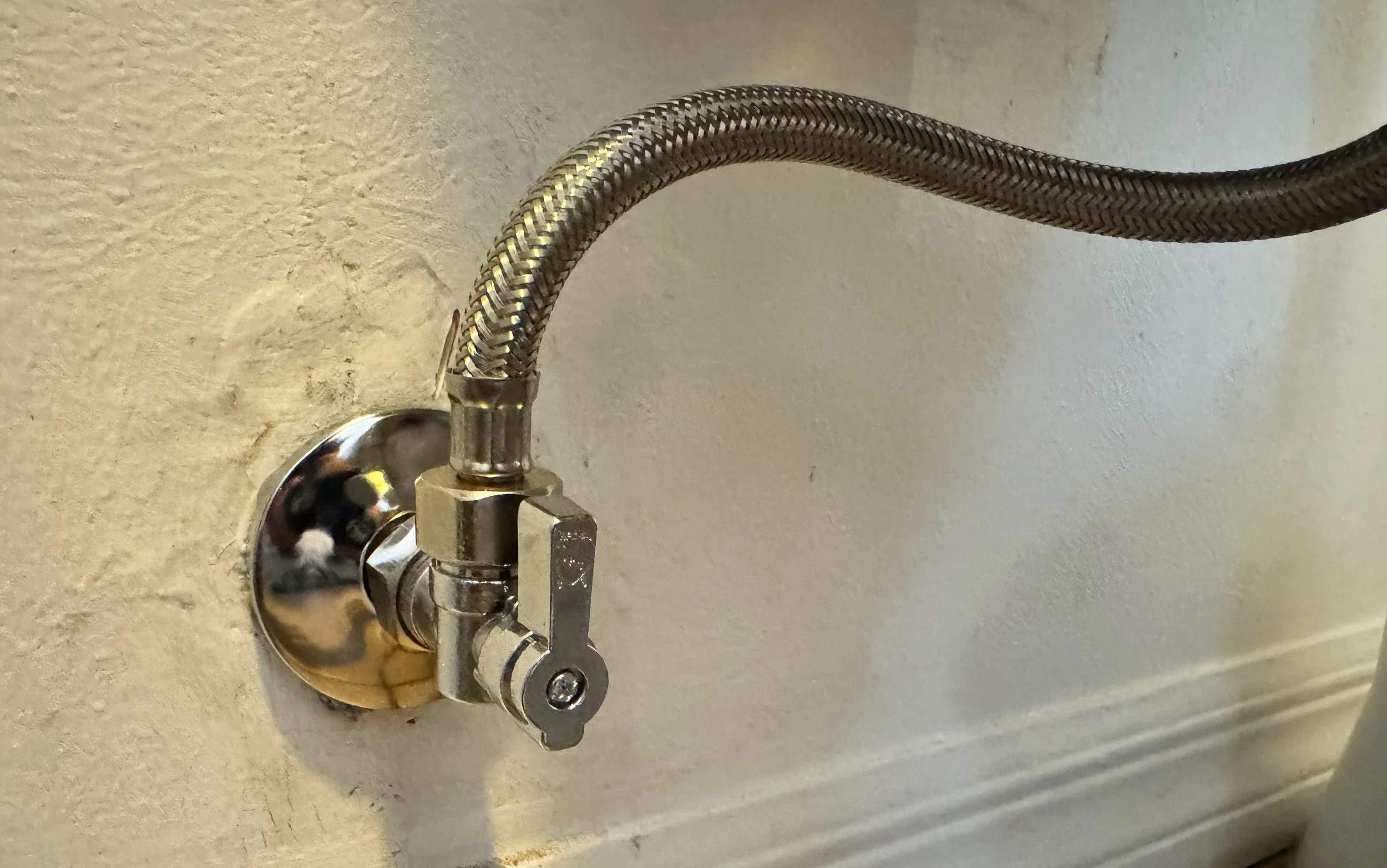
1) Partly closed angle stop (toilet shutoff valve)
The angle stop is the small valve on the wall or floor behind the toilet. If it is not open all the way, your tank fills like it is sipping through a straw.
Simple test
- Remove the toilet tank lid and set it somewhere safe.
- Flush, then watch the refill. While it is refilling, reach down and find the angle stop.
- Open the valve fully, but do it the right way for your style of valve:
- Multi-turn valve: Turn it counterclockwise until it stops, then stop. Do not force it.
- Quarter-turn valve: Rotate the handle until it is fully open, which is typically when the handle is parallel to the outlet. Do not crank past the stop.
- Listen and watch: the refill stream should strengthen and the fill time should improve.
If opening it helps immediately, you likely found your issue.
If the valve feels sticky or does nothing
Older multi-turn valves can clog internally or fail so they do not open fully even when the handle is turned all the way. If you open it fully and the fill is still slow, move to the next check. If the valve leaks around the handle or will not turn smoothly, it may need replacement, but that is a separate repair from a slow fill.
2) Kinked or restricted toilet supply line
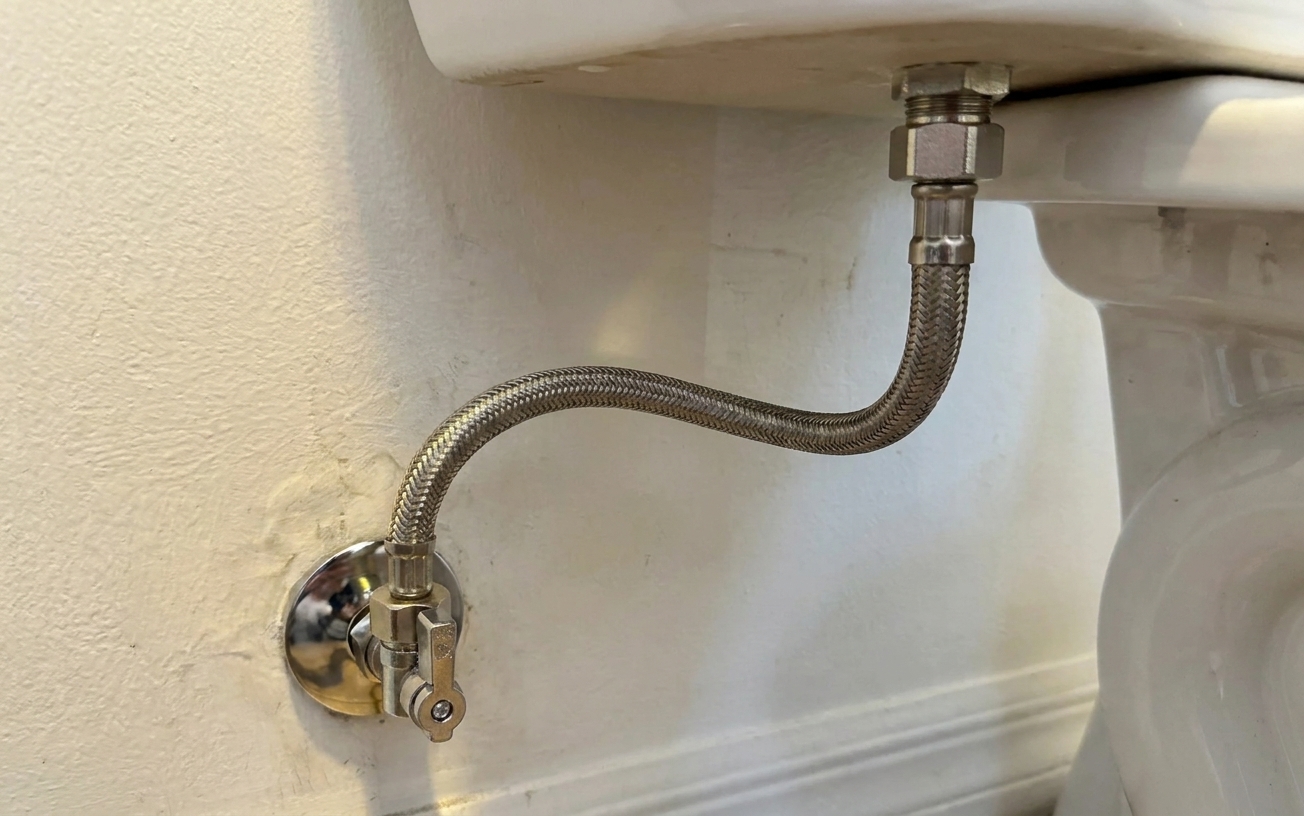
The supply line runs from the angle stop to the bottom of the toilet’s fill valve. A kink, sharp bend, or internal buildup can cut flow dramatically.
What to look for
- Kinks behind the toilet where the line is bent too tightly
- Crushing if the toilet was pushed back and pinched the line
- Old rigid lines that do not like being repositioned
Simple test
- With the tank lid off, flush and let the tank start refilling.
- Look at the supply line path. If you see a kink, carefully straighten it (do not yank the valve or tank connection).
- If straightening changes the refill sound and speed right away, the line is your culprit.
Stronger test (a bit messier, but clear)
- Turn the angle stop OFF (clockwise) until it stops.
- Place a bowl under the connection at the bottom of the tank.
- Loosen the nut that connects the supply line to the fill valve shank (under the tank). A little water will drain out.
- Point the supply line into the bowl and hold it firmly.
- Crack the angle stop ON just a tiny amount for a second or two and observe the flow into the bowl, then shut it back off.
What you want: a solid, steady stream.
- Strong stream: the stop and supply line are probably fine, and the restriction is more likely at the fill valve itself (screen or internal wear).
- Weak, sputtery, or fading stream: restriction is likely at the angle stop, in the supply line, or it could be a broader low-pressure issue.
Go easy on the valve: Do not open the angle stop full blast with the line loose. You only need a brief flow check, and you want to avoid whipping the line or spraying the room.
If the line is visibly kinked or old, replacing it is often the fastest fix. Flexible braided stainless lines are common and forgiving, as long as the length is correct and the bends are gentle.
3) Clogged fill-valve inlet screen (the sneaky one)
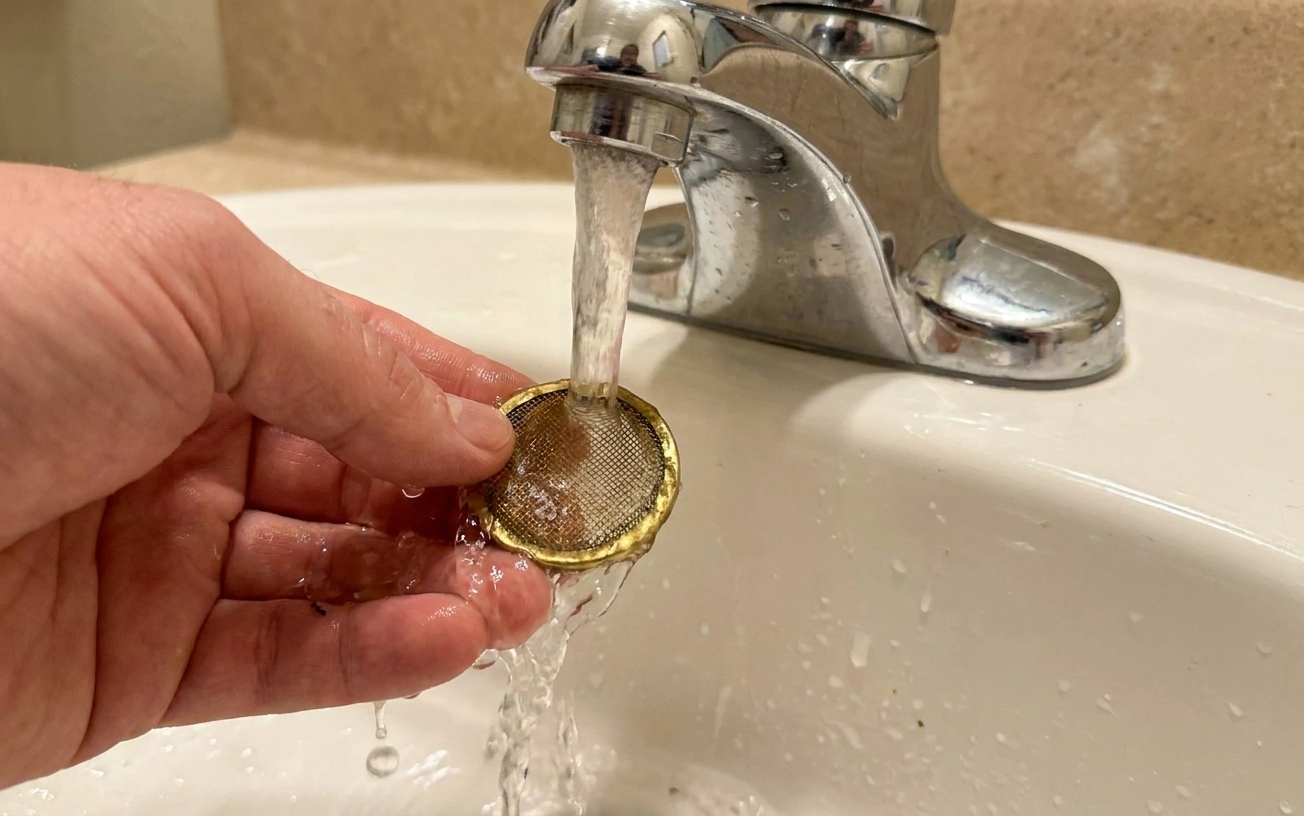
Some modern fill valves have a small screen where water enters the valve. Sediment from the plumbing can lodge there, especially after water work in the house or a street-side repair. When that screen clogs, the tank fills slowly but still shuts off normally.
Simple test
This is less about “testing” and more about a quick clean. If your angle stop is open and your supply line looks fine, cleaning the inlet area is the next best bet. If you have the model instructions handy, this is the moment to follow them.
How to clean it (general method)
- Turn the angle stop OFF.
- Flush the toilet and hold the handle down to drain as much tank water as possible.
- Disconnect the supply line from the bottom of the fill valve shank (under the tank).
- Look into the fill valve inlet. Depending on model, you may see a small screen inside the threaded inlet.
- Carefully pull the screen out with needle-nose pliers only if it is designed to be removable. If it does not want to come out easily, do not destroy it.
- Rinse the screen under running water and lightly scrub with an old toothbrush.
- Reinstall the screen, reconnect the supply line, then turn the angle stop ON and test the refill.
If the tank fill improves dramatically after cleaning, you have solved it. If the screen was packed with grit, it is also a clue that flushing the line briefly (into a bowl) before reconnecting can help keep it from clogging again.
One more caution: If plastic parts look brittle, cracked, or heavily mineral-crusted, replacement is often safer than trying to disassemble further. Also, when reconnecting, snug is good. Overtightening plastic shanks or nuts can crack them.
When to replace the fill valve instead of cleaning
If you clean the screen (if your valve has one), confirm the angle stop is fully open, and confirm strong flow from the supply line, but the tank still refills slowly, the fill valve itself may be worn or partially blocked internally.
Replacement makes sense when:
- The valve is old and cleaning does not help
- The valve refills inconsistently, sometimes fast, sometimes slow
- You see cracking, heavy mineral buildup, or a float mechanism that sticks
Fill valves are relatively affordable and widely available. If you are comfortable with basic shutoff and reconnection, this is a manageable DIY. If you are not, a plumber can swap one quickly.
Red flags that mean “pause and get help”
- The angle stop will not shut off or the handle spins freely without changing flow
- Water leaks at the valve, supply line connections, or under the tank after tightening
- Corroded or fragile piping at the shutoff valve (especially older metal piping)
- Multiple fixtures have low flow after recent plumbing work, suggesting a wider issue
If you are not sure whether it is just the toilet, do a quick reality check: turn on a nearby bathroom sink faucet. If that flow is also unusually weak, you may be chasing a bigger pressure or supply problem.
Slow fill is usually a small restriction, but you do not want to turn a 10-minute fix into a wall repair.
FAQ
How long should a toilet tank take to fill?
There is variation by toilet and home water pressure, but “several minutes” is typically too slow. If it suddenly got slower, that points strongly to a restriction like a partly closed valve, kinked line, debris at the fill valve inlet, or a fill valve starting to fail.
My tank fills slowly, but only sometimes. What gives?
Intermittent slow fill often points to debris shifting around, a fill valve that binds occasionally, or a supply line that kinks when the toilet is nudged. Start with the angle stop position and a quick visual on the line path.
Should I mess with the float height to speed up fill?
Float height mainly sets the shutoff water level. It does not usually fix a slow fill caused by restricted flow. If you want the tank to fill faster, focus on improving the water supply to the valve or replacing a worn fill valve.
Is a slow fill the same as a running toilet?
No. A running toilet typically means the tank does not stop filling or water is leaking into the bowl continuously. A slow fill that does stop is most often a supply restriction or a weakening fill valve.
Can the refill tube placement cause weird behavior?
Yes. If the small refill tube is shoved too far down into the overflow pipe, it can create a siphon that messes with water level behavior. It usually does not cause a truly slow fill by itself, but it can confuse the symptoms, so make sure the tube is clipped at the top of the overflow and not sealed into it.
The quick checklist (if you only have 5 minutes)
- Open the angle stop fully (multi-turn counterclockwise to stop, quarter-turn handle parallel to outlet).
- Look for a kinked or pinched supply line and straighten it gently.
- If still slow, shut off water and check for a clogged fill valve inlet screen (if your model has one).
- If supply flow is strong but fill is still slow, consider replacing the fill valve.
Slow fills are rarely mysterious. They are usually just a small bottleneck hiding in plain sight. Find it, clear it, and your tank will get back to filling like it has somewhere to be.