
Why Your Garbage Disposal Keeps Tripping the Breaker
If your garbage disposal trips the kitchen breaker (not just the red reset button), you likely have an overload, a short, moisture in the wiring area, or a failing motor. Here’s how to troubleshoot safely and when to call an electrician.
The first time I ran into a garbage disposal that kept tripping the breaker (not just the little red reset button), it was at a buddy’s house. He was convinced the disposal was toast. Turns out the disposal was only half the problem. The real issue was a kitchen circuit that was already overloaded, and the disposal was just the last straw.
That is the big takeaway: a disposal that trips the breaker over and over is often a circuit fault or overload, not a simple jam. A jam usually makes the disposal hum or stall and the disposal’s own reset pops. A panel breaker trip means the circuit is seeing too much current. That can be from an overload, a short, or (if you have a GFCI or AFCI breaker) a ground fault or arc fault.
Safety first
Electricity and water live very close together under a sink. If you smell burning, see smoke, find wet wiring, or the breaker trips instantly when you turn the disposal on, stop troubleshooting and call a licensed electrician.
Breaker trip vs. red reset
Your garbage disposal has two different “protection” systems:
- The disposal’s reset button (usually red) is a thermal overload. It pops when the motor overheats or stalls.
- The circuit breaker in your electrical panel trips when the circuit draws too much current. If the breaker is a GFCI or AFCI type (common in many areas under newer electrical codes), it can also trip when it senses certain ground or arc faults.
If the breaker is the thing that keeps tripping, your disposal might still be the culprit, but you have to treat it like an electrical problem, not just a stuck spoon.
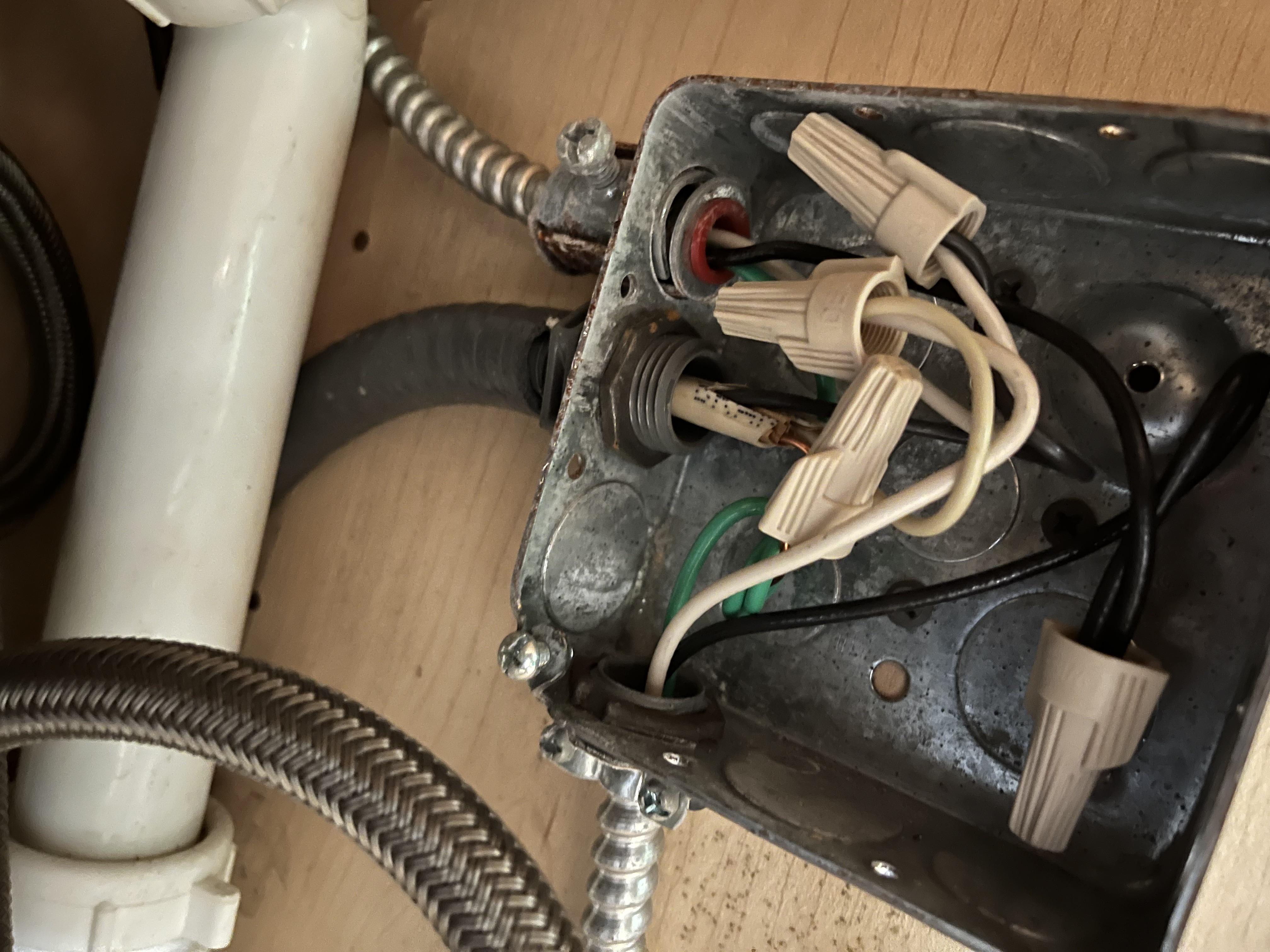
Quick checks first
1) Notice when it trips
- Trips instantly when you flip the switch: suspicious for a short, moisture, bad wiring, or failed motor.
- Runs for a few seconds then trips: could be a jam, worn internals, failing motor, or overload.
- Trips only when other things run (toaster, microwave, kettle): points to a shared or overloaded kitchen circuit.
2) Make sure you are not mixing up resets
Some homes have a wall switch for the disposal and a GFCI outlet under the sink that protects it. A tripped GFCI can look like a “dead disposal,” but it is not the same as a breaker trip.
- If a GFCI tripped, you reset it at the outlet.
- If a breaker tripped, you reset it at the electrical panel.
3) Reset the breaker correctly (once)
When you reset a tripped breaker, push it firmly to OFF first, then back to ON. If it trips again right away, do not keep cycling it. Repeated trips can heat up wiring and connections.
Cause 1: A jam and high draw
Yes, a jam can trip a breaker, especially if someone keeps holding the switch on while it is stuck. A stalled motor pulls high current. In some cases, the disposal’s internal overload may not trip before the breaker does.
How to check for a jam safely
- Turn off power to the disposal at the breaker.
- Look down into the disposal with a flashlight. Remove obvious objects with tongs, not your fingers.
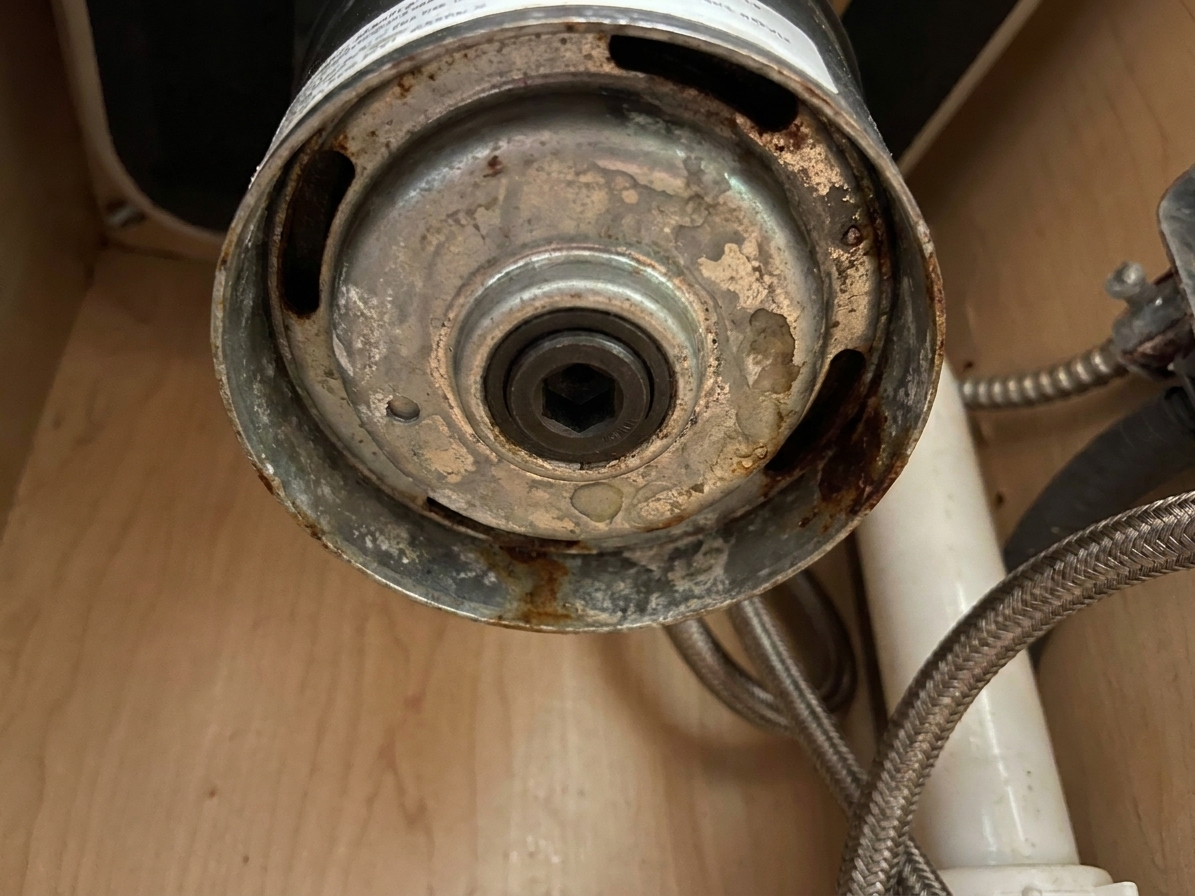
- Use the hex key on the bottom of the disposal (most units have a port) and work it back and forth until it spins freely.
- Restore power and test with a steady stream of cold water.
If it clears and the breaker stays on, you likely had a plain old jam. If it clears but still trips, keep going. Something else is going on.
Cause 2: Too much on one circuit
Kitchens are notorious for circuit crowding, especially in older homes. If the disposal shares a circuit with heavy hitters like a microwave, toaster oven, kettle, or even the dishwasher, you can hit the breaker limit fast.
What it looks like
- The disposal works sometimes, but trips when another appliance runs.
- The breaker might be labeled “Kitchen outlets” or something vague and covers multiple things.
- You can reset it, but it trips again during normal cooking.
What you can do (homeowner-friendly)
- Unplug countertop appliances on that circuit and try the disposal again.
- If the dishwasher is on the same circuit, avoid running the dishwasher and disposal at the same time and see if the problem disappears.
- If your disposal plugs in, you can plug a small lamp into that same outlet to see if the outlet is dead or flaky. (No tools required.)
My rule: if the disposal only trips when other appliances are running, you are probably dealing with a load problem, not a disposal problem.
Long-term, the fix is usually adding or correcting circuits, or putting the disposal on its own dedicated circuit where required or recommended. That is electrician territory in most situations.
Cause 3: Moisture where it should not be
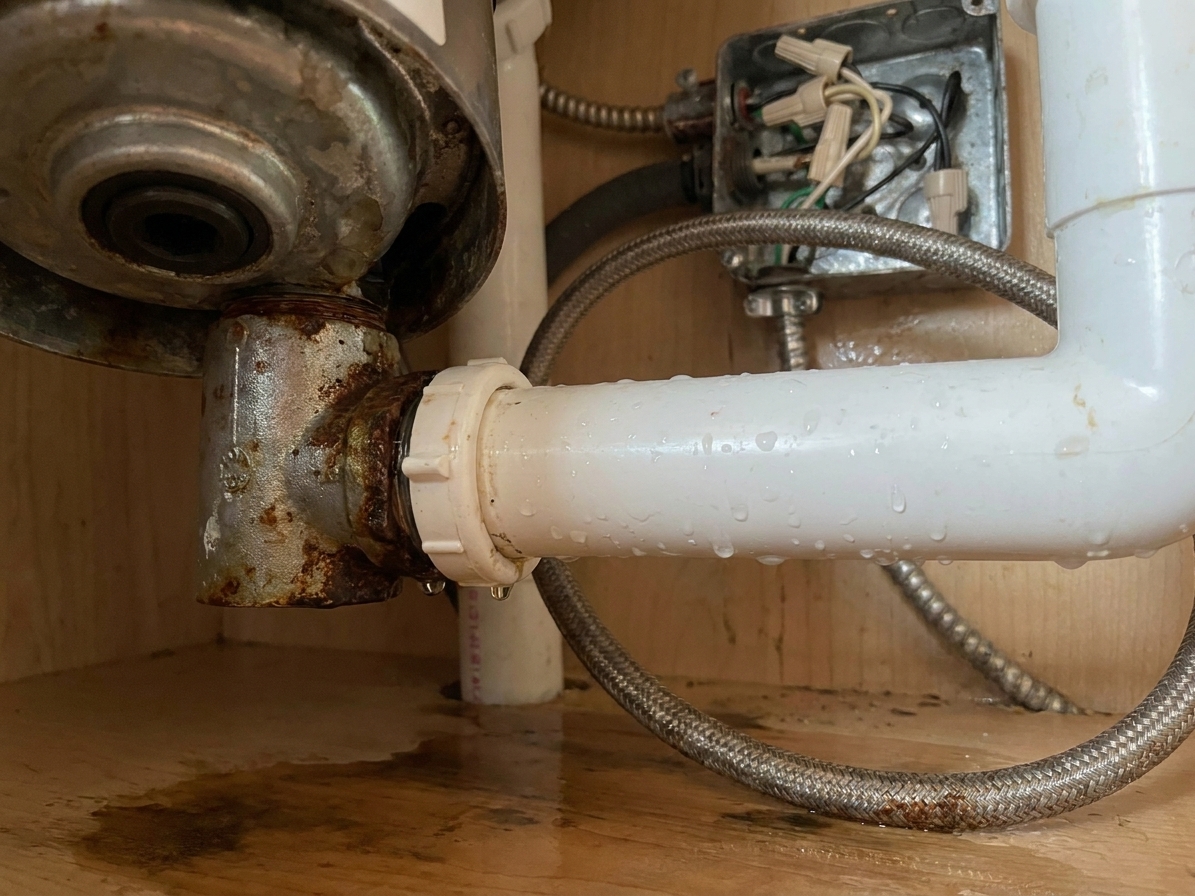
A garbage disposal lives in a splash zone. If water gets into the motor housing or junction box, it can create a short or a fault condition that trips protection devices.
Common ways water gets there
- A slow leak from the sink flange or mount.
- A leak at the dishwasher inlet connection.
- A leak at the discharge pipe connection.
- Water dripping onto the disposal wiring compartment.
What to check
- Shut off power at the breaker.
- Feel around the disposal body, especially near the bottom and the wiring cover. Look for dampness, rust streaks, or mineral trails.
- Check the cabinet floor for water. If there is standing water, dry it out and find the leak source.
Stop here if anything electrical is wet
If you find wet wiring, a wet junction box, or water dripping onto electrical parts, do not power it back on. Call an electrician and a plumber if needed. Water plus energized wiring is not a DIY learning moment.
Cause 4: Short or damaged wiring
If the breaker trips quickly and consistently, a short is high on the suspect list. Shorts can happen inside the disposal, in the wall switch, in the cable under the sink, or at wire connections.
Warning signs
- Breaker trips immediately when you flip the switch.
- You smell burning plastic or see discoloration near the wiring cover.
- The switch feels weird, crackles, or the disposal cuts in and out.
What you can do without opening boxes
- Turn off the breaker.
- Inspect the visible cable for nicks, pinch points, or chewed insulation.
- If the unit plugs into an outlet, check that the cord is not damaged and the plug is not scorched.
- Pay attention to the wall switch itself. A loose connection (including a backstabbed connection on some switches) or a worn switch can cause intermittent problems and heat.
Beyond that, you are into electrical diagnostics. If you are not comfortable working inside a junction box with the power off and verifying it is truly off, this is the moment to bring in an electrician.
Cause 5: Failing motor or easy stalling
Disposals do not last forever. As they wear out, bearings get rough, internal seals can fail, and the motor can start drawing more current than it should. A breaker trip after a few seconds of struggling is a classic “motor is on its way out” symptom.
Also, a smaller disposal is not automatically “wrong,” but lower horsepower units can stall more easily when they get bogged down. More stalling means more high-current moments, which can mean more trips.
Clues the disposal itself is the problem
- It is loud in a new, ugly way: grinding, squealing, or a heavy hum.
- It struggles even with small food scraps.
- You have to reset it often, and now it is starting to trip the breaker too.
- There is evidence of leaking from the bottom of the unit.
If your disposal is older, replacement can be the most practical fix. If a brand-new disposal trips the breaker too, you almost certainly have a circuit or wiring issue that needs attention.
Cause 6: Breaker type or breaker trouble
Sometimes the breaker is part of the problem. Breakers can become more prone to tripping due to age, heat stress, corrosion, or a poor connection at the panel. And if you have a GFCI or AFCI breaker, certain motor loads and wiring quirks can trigger trips that a basic older breaker might never have noticed.
- An older breaker might start tripping at loads it used to tolerate.
- In many areas, newer electrical code editions require GFCI and or AFCI protection in kitchens, which changes what can cause a trip.
This is another area where I recommend an electrician. Testing and replacing breakers is straightforward for a pro, but it is not a great place to learn if you are not already confident working in a panel.
My troubleshooting order
If you want a simple plan that does not spiral into “I accidentally remodeled my kitchen,” here is my step-by-step order:
- Reset the breaker once. Turn it fully OFF, then ON. If it immediately trips again, stop and investigate. Do not keep flipping it.
- Check for a jam with power off. Free it with the hex key.
- Reduce load: unplug other appliances on that circuit and try again.
- Check the obvious electrical points: plug, outlet, and wall switch behavior (without opening boxes).
- Look for leaks and moisture under the sink. If anything electrical is wet, stop.
- Listen and observe: does it struggle, hum, or smell hot? A failing motor may be the cause.
- If the breaker keeps tripping, treat it as an electrical fault and call a pro.
When to call an electrician
I am all for DIY. I also like homeowners staying alive and keeping their insurance company happy. Call an electrician if:
- The breaker trips instantly every time you hit the switch.
- You see burn marks, melted insulation, or smell burning.
- There is water in or around the disposal wiring area.
- The disposal is hardwired and you are not comfortable opening the wiring compartment.
- The kitchen circuit seems overloaded and you suspect the disposal is sharing a circuit without enough capacity.
- You have repeated trips on a GFCI or AFCI breaker and cannot identify a clear cause.
One more practical note: if the breaker trips repeatedly, it is telling you something. Repeated trips can heat up wiring and connections, and that is not a game worth playing.
FAQ
Can I just replace the disposal if it keeps tripping the breaker?
Sometimes, yes, especially if the motor is failing. But if the new disposal trips the breaker too, you still have a circuit issue. If you are seeing instant trips or any sign of moisture or wiring damage, address the electrical side first.
Why does my disposal trip the breaker but not the red reset button?
The breaker is protecting the circuit from too much current. The red button is protecting the motor from overheating. A short or overload can trip the breaker without ever heating the motor enough to pop the reset. And if your breaker is GFCI or AFCI, it may trip on a fault condition the red button does not monitor.
Is it normal for a disposal to be on the same circuit as the dishwasher?
It depends on your home’s wiring and local code, but it is common in older kitchens. It is also a common source of trips when both run at the same time. If your setup is having issues, an electrician can advise whether you need dedicated circuits or other corrections.
What if it only trips when I am running lots of hot water?
That makes me suspicious of a leak or moisture issue. Hot water can make marginal seals drip more, and repeated dampness around the wiring compartment can create fault conditions. Shut off power and look carefully for signs of water.