A safe, simple clearing sequence for a stopped-up kitchen sink, including plunging both basins, cleaning the trap, and checking garbage disposal connections.
The Homeroom Fix
October 28, 2026
•
By Marcus Delgado
Why a Garbage Disposal Hums but Won’t Spin
If your garbage disposal hums but won’t spin, it’s usually jammed or overheated. Learn how to cut power, reset it, free the flywheel with a hex key, and tell a jam from a clogged drain line.
A humming garbage disposal is one of those sounds that instantly raises your blood pressure. The good news is the hum is actually a clue. In plain English, it usually means the disposal is getting power and trying to run, but something is keeping the grinding plate (the flywheel turntable inside) from turning.
I have freed up more jammed disposals than I can count, both on job sites and in my own 1970s Michigan fixer upper. Most of the time, you can fix this in 10 to 20 minutes with the right safety steps and a little patience.
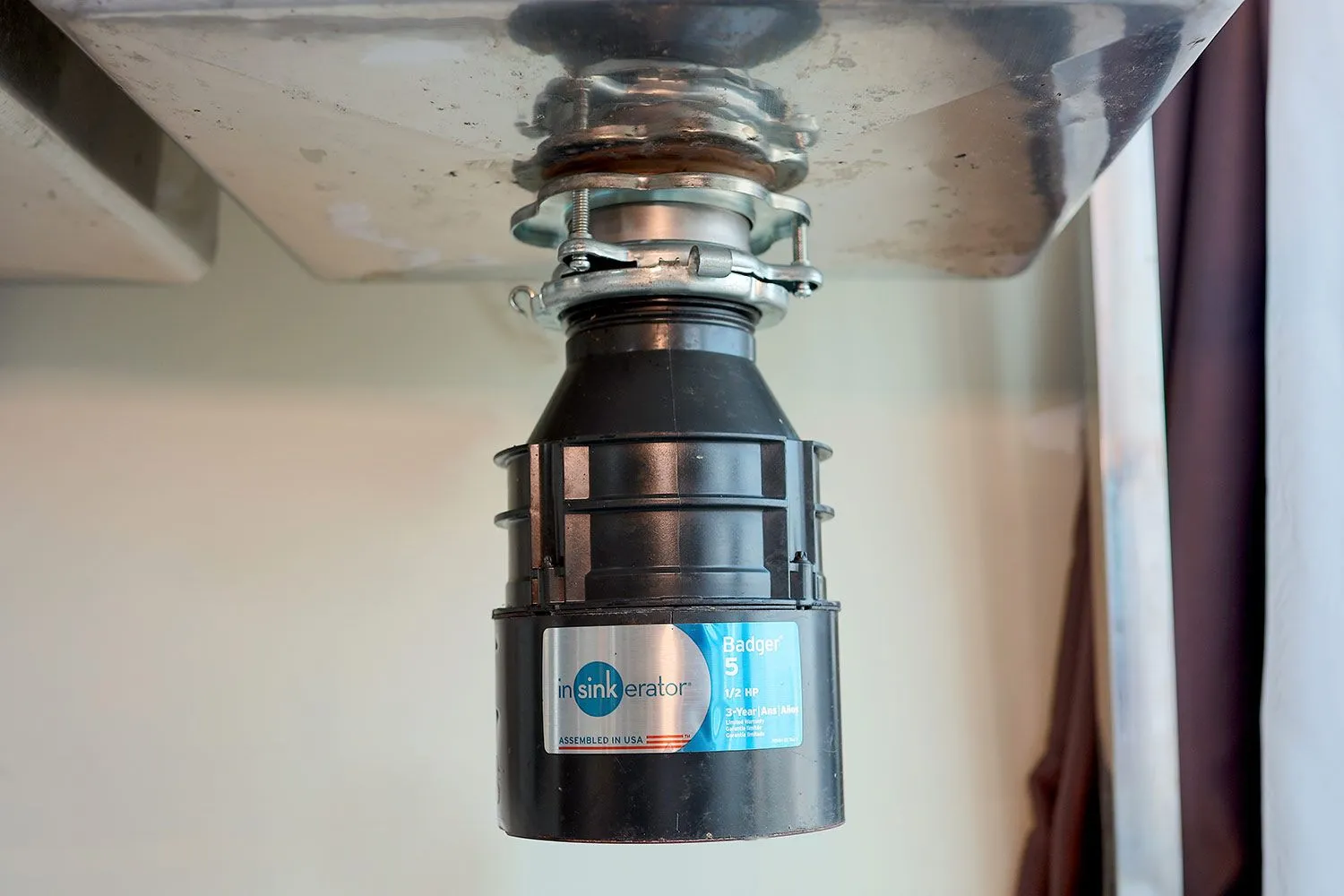
What the humming sound means
When a disposal hums but does not spin, one of these is happening:
- The motor is powered but the grinder is jammed. Something is wedged between the impellers and the grind ring, or the flywheel is stuck.
- The motor overheated and tripped the internal overload. The unit may hum briefly or not start at all until it is reset.
- The start components inside the motor are failing. Some motors will hum because they cannot get the extra kick needed to begin spinning. In real life, this usually ends in replacement because those parts are not meant to be homeowner serviceable.
- The motor is burned out. You might hear a hum or just a dead unit, often with other warning signs.
Most homeowners are dealing with the first one: a simple jam.
Safety first: kill the power
Before you stick your hand or a tool anywhere near the disposal, cut power. Do not trust the wall switch alone.
- Unplug it under the sink if it has a cord and plug.
- If it is hardwired, turn off the breaker to the disposal circuit.
- To confirm it is dead, briefly flip the wall switch after unplugging or shutting off the breaker, with your hands completely clear of the sink opening.
Never reach into a disposal. Even with the power off, sharp edges and trapped objects can slice you up. Use tongs, pliers, or a grabber tool.
If the sink is full of water: treat it like a caution flag. Shut off power first, then scoop or bail out enough water so you can work without splashing. Do not put hands into standing water when you are not 100 percent sure the unit is de-energized.
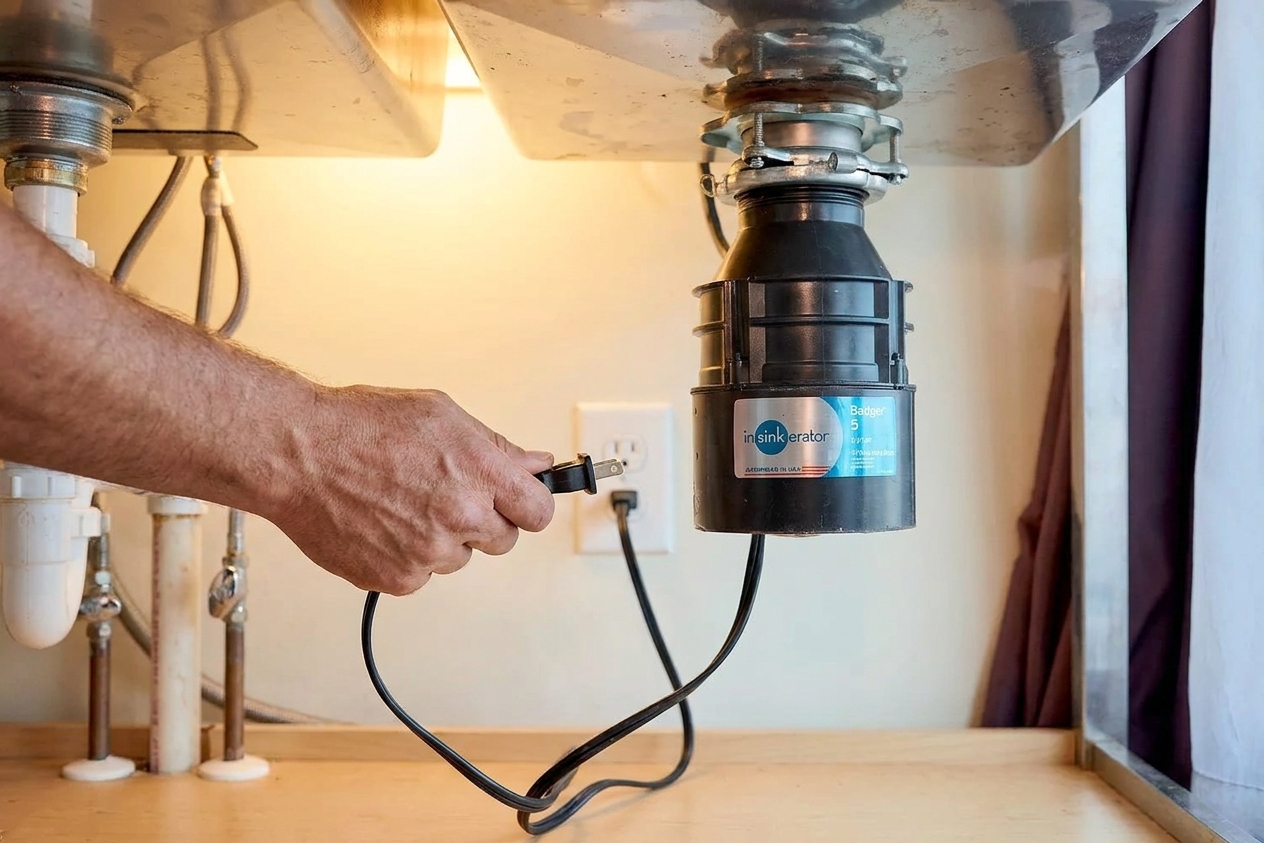
Quick checks: outlet and reset
1) Confirm you actually have power
If you hear a hum, you probably have power, but it is still worth confirming:
- Make sure the disposal is plugged in firmly.
- Check if the outlet is controlled by a wall switch (a common setup under sinks).
- Check for a tripped GFCI. Sometimes the disposal is on a nearby GFCI outlet, even if the disposal outlet itself is not.
- If your disposal plugs into a GFCI outlet, press Reset on the outlet.
2) Press the disposal’s reset button
Most disposals have a small red (sometimes black) reset button on the bottom of the unit. If the disposal overheats or stalls, this pops out.
- With power off, feel for the reset button on the underside.
- Press it in until it clicks.
- Wait 5 to 10 minutes if the unit feels hot, then restore power and test.
If it still hums, move on to freeing the flywheel. Reset buttons do not remove jams, they just protect the motor.
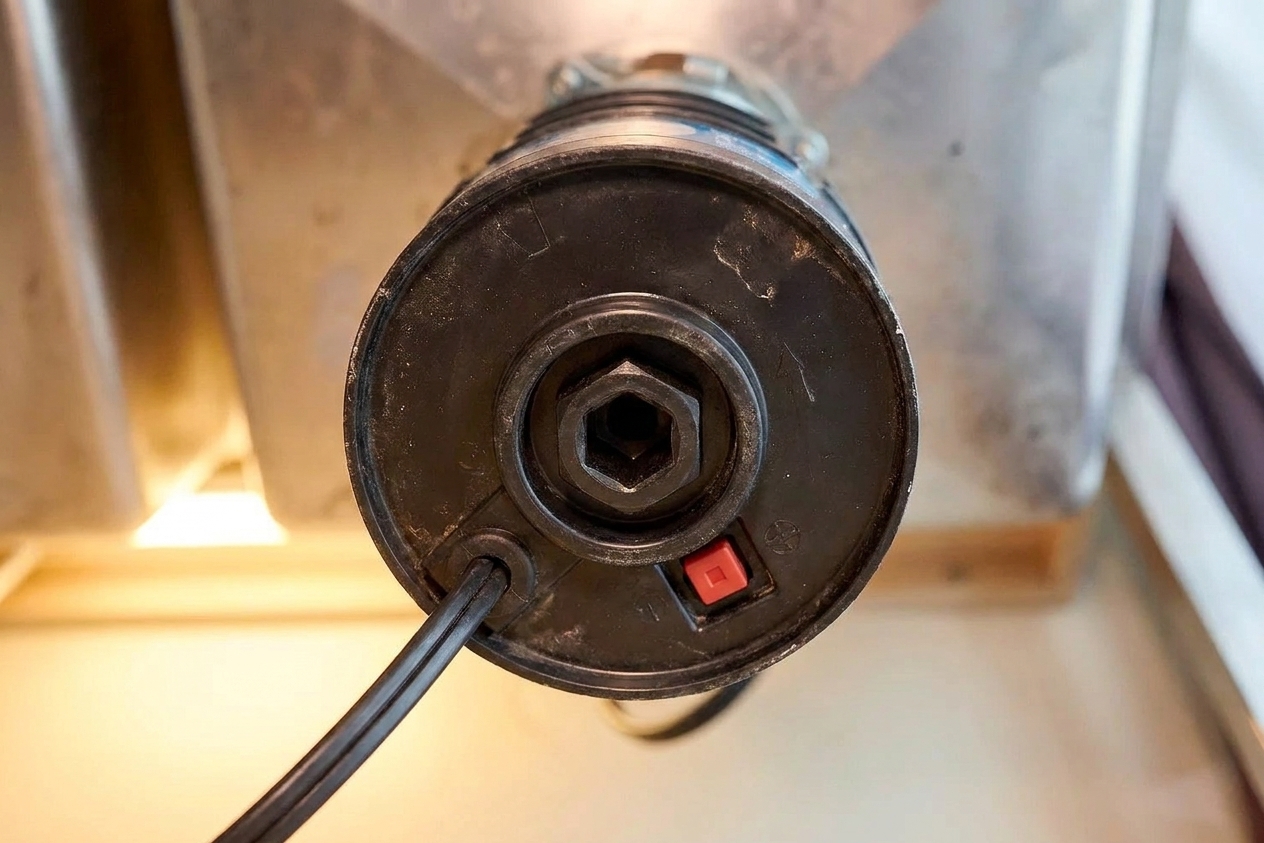
How to unjam it
This is the fix that solves the vast majority of humming disposals.
What you need
- An Allen wrench (hex key) that fits the disposal. Often it is 1/4 inch (many InSinkErator style units), but check your model.
- Or the manufacturer’s jam wrench if you still have it
- Tongs or needle nose pliers for grabbing debris
- A flashlight
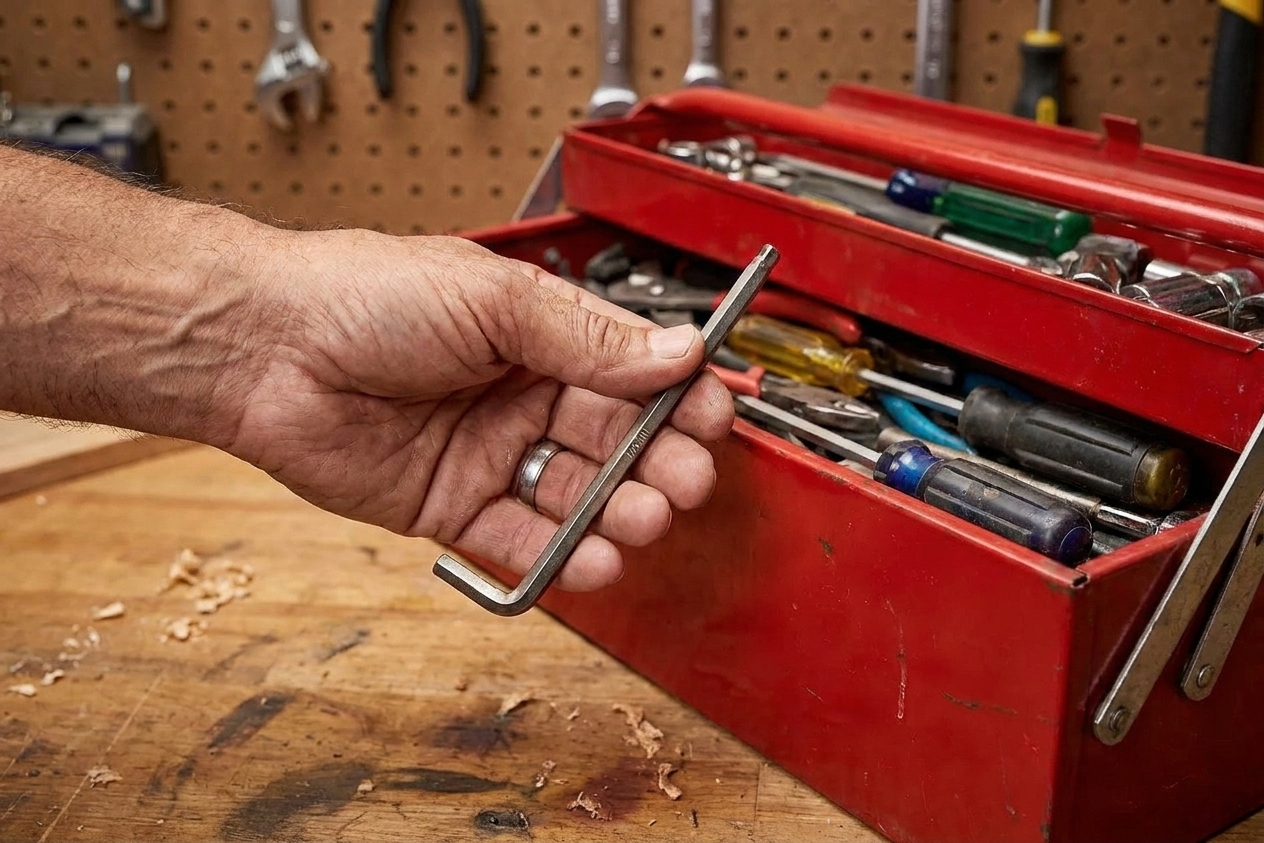
Step-by-step: free the flywheel
- Power off. Unplug or shut off the breaker.
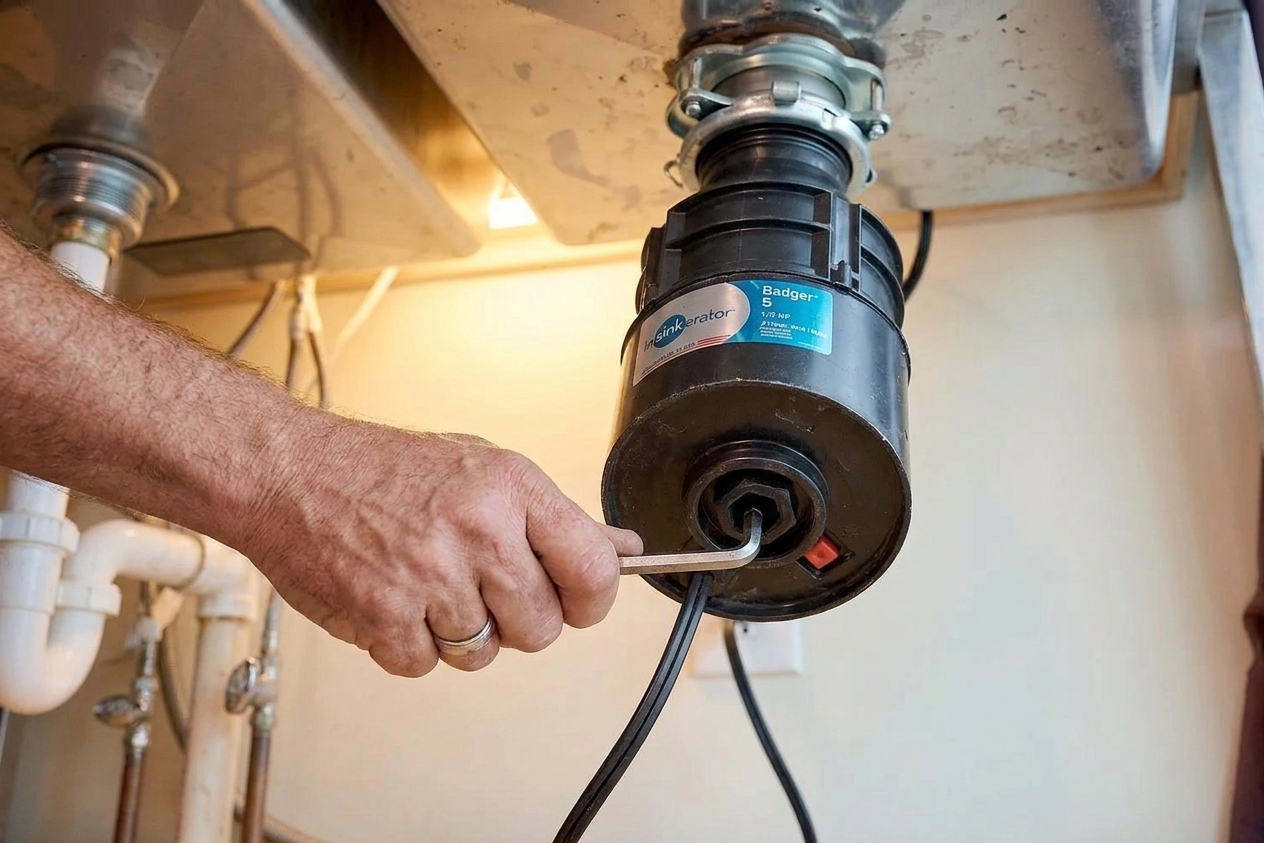
- Look for the hex socket. Under the disposal, near the center, there is usually a recessed hex fitting. Not every model has one, so if you do not see it, check your manual or the manufacturer site for the approved unjamming method.
- Insert the hex key. Push it in fully so it seats.
- Work it back and forth. Turn the wrench clockwise, then counterclockwise. You are trying to break the jam loose, not set a speed record.
- Keep turning until it moves freely. Once it spins smoothly in both directions, the jam is usually cleared.
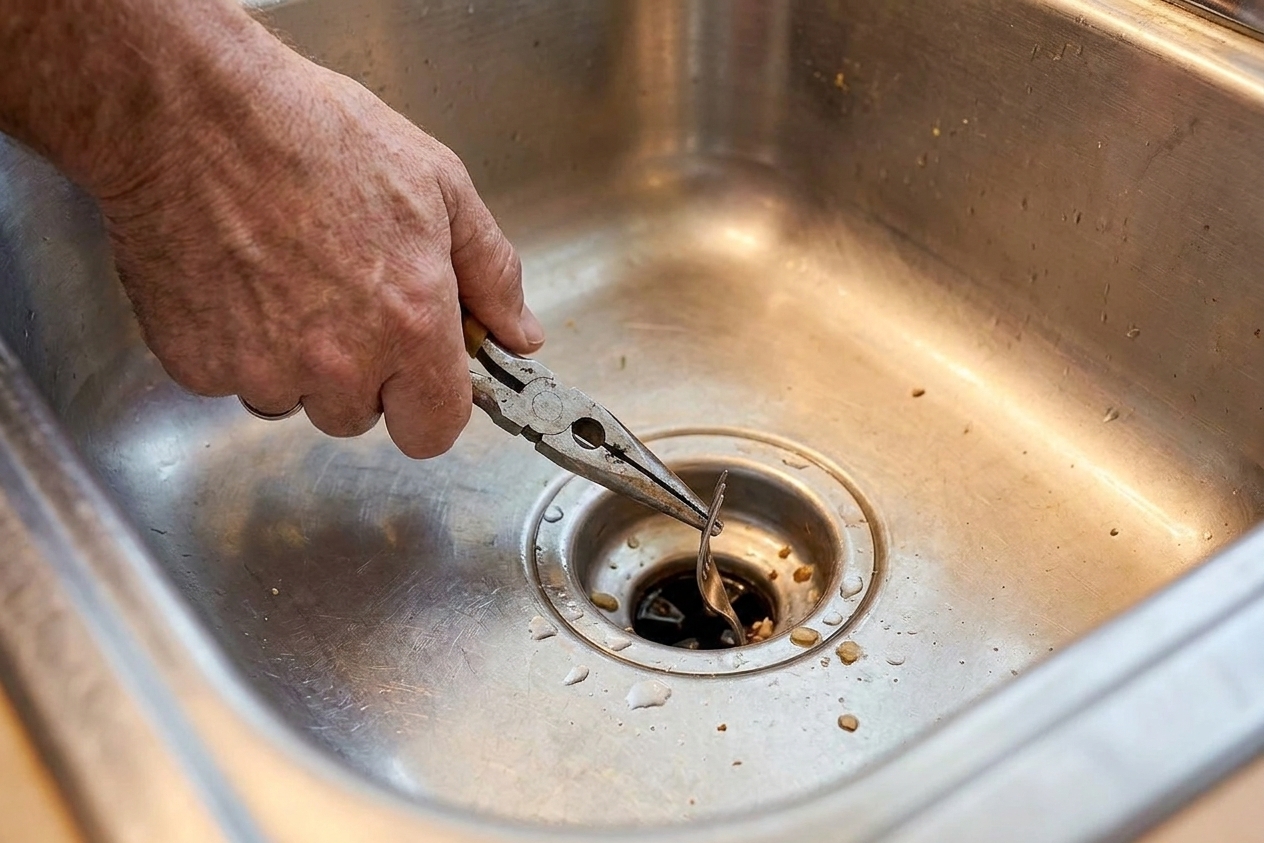
- Remove the obstruction from above. Shine a flashlight down into the disposal and use tongs or pliers to pull out whatever is in there.
- Press reset. If the reset button popped, press it back in.
- Restore power and test. Run a thin stream of cold water and flip the switch in short bursts.
Do not use a broom handle in the disposal. People recommend it because it sometimes works, but it can splinter, wedge deeper, or slip and smack your sink. Use the hex port or the manufacturer jam wrench instead, and use tongs from above for debris.
What you can remove with power off
Once the flywheel can move, you still need to remove the object that caused the jam, or it will happen again.
Common culprits
- Small bones or fruit pits
- Twist ties and produce stickers
- Forks, spoons, and bottle caps (it happens)
- Broken glass
- Hard seed shells (peach pits are notorious)
How to remove it safely
- Use tongs for most items.
- Use needle nose pliers for thin objects like twist ties.
- Wear cut resistant gloves if you have them, especially if there could be glass.
- Use a flashlight so you are not guessing.
If you see a lot of gunk packed in there, scoop it out with tongs. Do not blast it deeper by running the disposal repeatedly.
Jam vs drain clog
These get mixed up all the time. A jam means the disposal cannot spin. A drain clog means water cannot leave the sink. You can have one, the other, or both.
Signs your disposal is jammed
- You flip the switch and it hums but the grinding plate does not move.
- It may trip the reset button quickly.
- You may feel the unit vibrate slightly but not run.
Signs your drain line is clogged
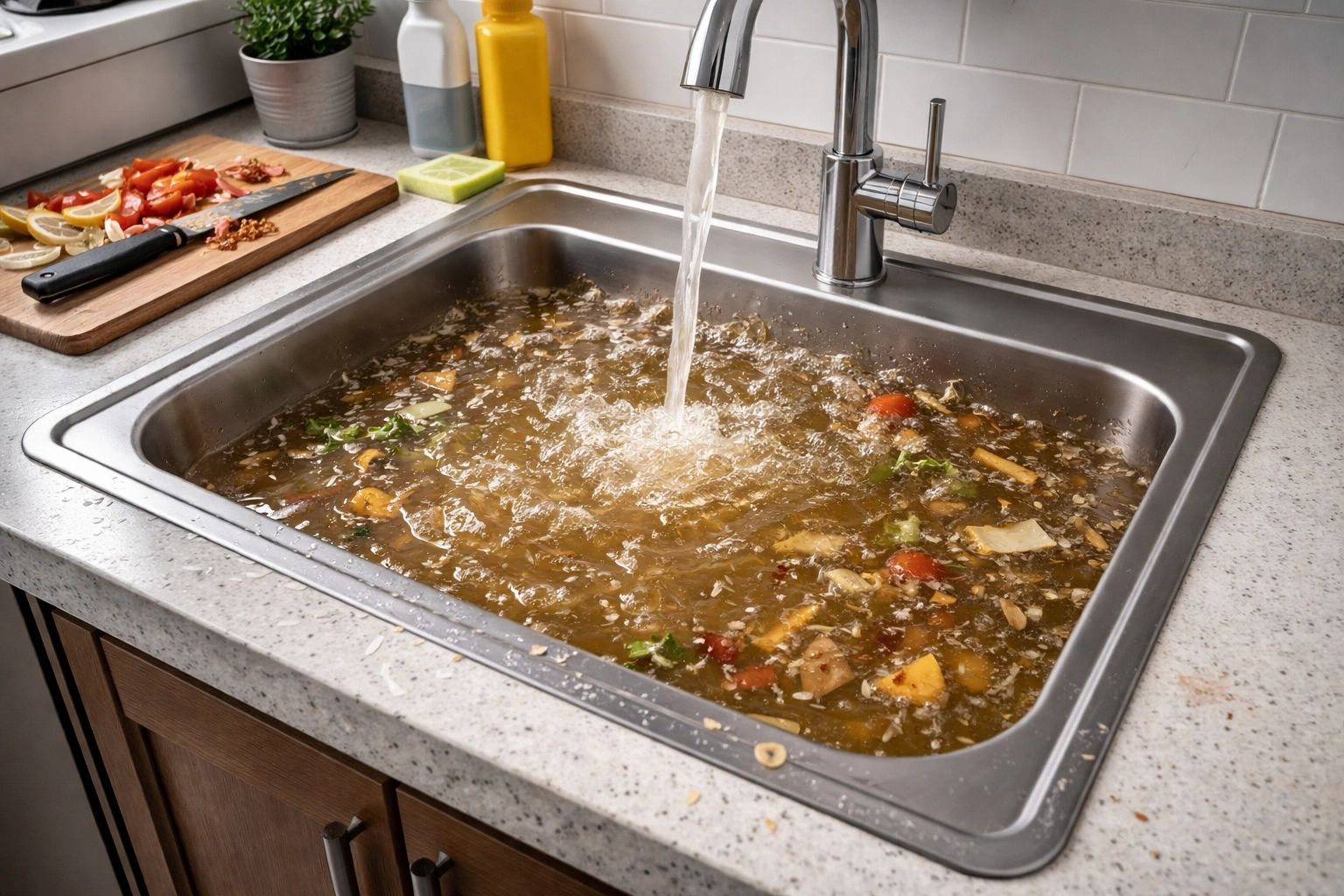
- The disposal runs normally but the sink drains slowly or backs up.
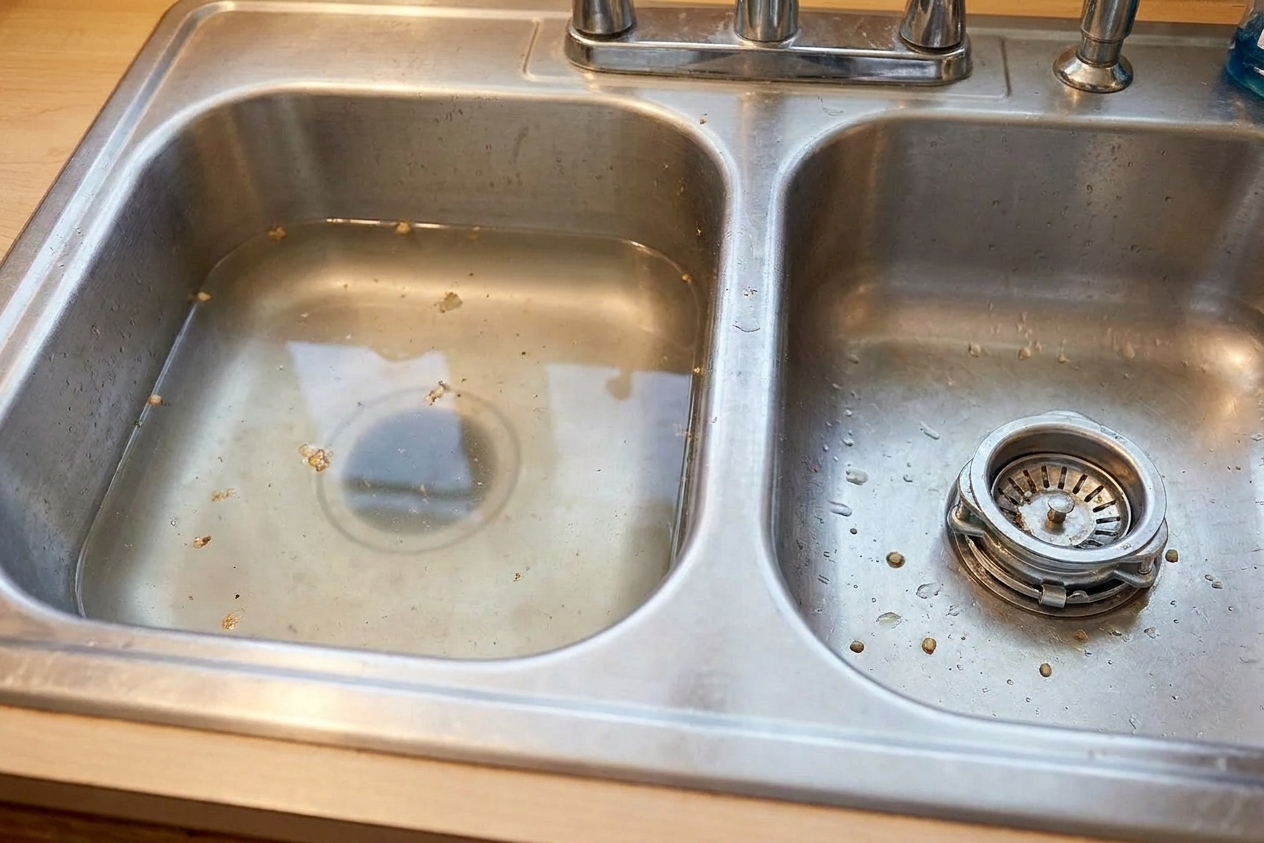
- Water backs up into the other basin on a double sink.
- The dishwasher drains and water shows up in the sink, especially if the disposal inlet is blocked.
A better quick test
- First answer this: can you free the flywheel with the hex key or jam wrench? If it will not move, you have a jam or a seized unit, regardless of how the sink drains.
- Next, after clearing debris and resetting: run cold water and test the disposal. If it spins and sounds normal, your motor and jam issue are likely handled.
- Then check drainage: if the disposal runs but the sink still drains poorly, look downstream. The P-trap, trap arm, or branch line is likely clogged.
Also check the other classic culprit: the dishwasher knockout plug inside the disposal inlet. If you recently installed a new disposal and your dishwasher will not drain, that plug may still be in place. That is a different issue than a humming jam.
If it still will not turn
The flywheel will not budge
If you cannot move it at all, even with steady pressure, something may be tightly wedged or the bearings may be seized.
- Try rocking the wrench back and forth with short movements.
- Look down the throat with a flashlight and see if you can spot the object.
- If you suspect glass or a metal object, do not keep forcing it. Pull what you can out first.
The reset keeps popping
This usually means the motor is drawing too much current, commonly because:
- The jam is not fully cleared.
- The unit is overheating.
- The motor windings are failing as the disposal ages.
You hear hum, then silence, then hum again
That can be an overheating cycle. Let it cool, reset it, and try again after the jam is cleared. If it repeats, the motor may be on its last legs.
When replacement makes sense
Sometimes the disposal is telling you it is done. Here are signs the motor may be burned out or failing beyond a simple jam fix:
- It hums even after being fully unjammed, and the flywheel turns freely with the hex key.
- It trips the reset immediately with no load.
- You smell hot electrical odor from under the sink.
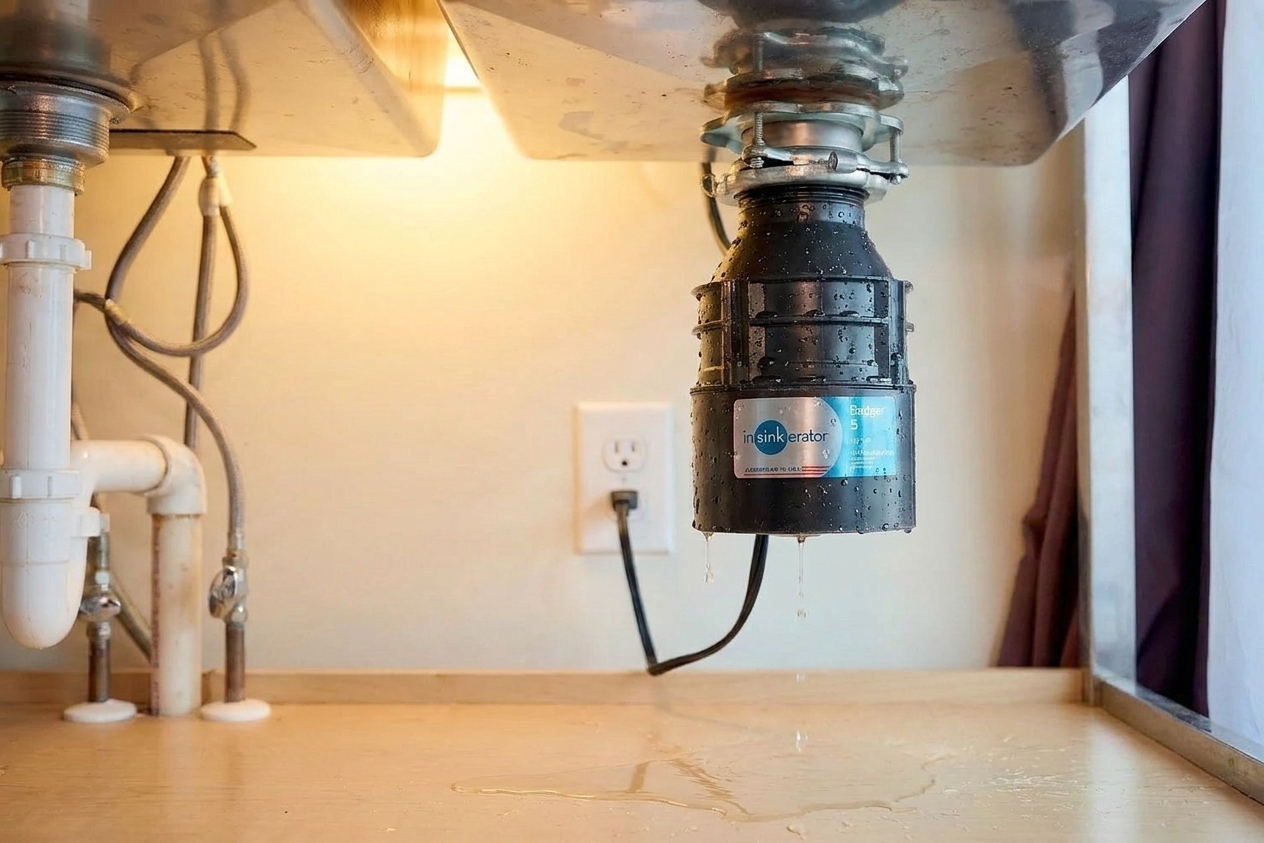
- There is visible leaking from the disposal body, especially around the bottom seal or housing.
- It is an older unit and has a history of frequent resets and weak grinding.
At that point, I usually recommend replacement over repair. Most disposals are not designed for economical motor rebuilds, and water plus electricity is not a place to get experimental.
If you see leaking and electrical issues together, stop. Shut off power at the breaker and plan to replace the unit or call a pro.
Prevent the next jam
Disposals are tough, but they are not magical trash cans. A few habits will cut down on humming, jams, and clogs.
- Run cold water before, during, and for 15 to 30 seconds after using the disposal.
- Feed slowly. A handful at a time beats stuffing the whole plate.
- Avoid fibrous foods like celery, corn husks, onion skins, and artichokes. They love to wrap around impellers.
- Skip the grease. Pouring fats down the drain is a fast track to a clogged line.
- Watch the hard stuff like bones and pits, especially with smaller disposals.
If you want a simple rule: if it would make a mess in your vacuum, it will probably make a mess in your disposal.
FAQ
Should I keep flipping the switch if it just hums?
No. That is how you overheat the motor and trip the reset, or worse, damage the unit. Cut power and unjam it.
Is it normal for a disposal to hum briefly on startup?
A short sound at startup can be normal, but a steady hum with no spinning is not. That is a jam or a motor problem.
Can I use Drano or chemical drain cleaner to fix this?
Not for a humming jam. Chemical cleaners do not unstick impellers, and they can create a safety hazard if you later have to open plumbing or splash the basin.
My sink is full of water and the disposal is humming. What do I do?
Shut off power first (unplug or breaker). Scoop out enough water to work safely, then clear the jam with the hex key or manufacturer jam wrench and remove the obstruction with tongs. Once the disposal spins, test drainage. If it runs but still will not drain, you likely have a clog in the trap or drain line.