
Why Your Dishwasher Isn’t Cleaning Dishes
If your dishwasher runs and drains but dishes still come out dirty, check spray arms, detergent release issues, water temperature, low fill, and loading mistakes that block the jets.
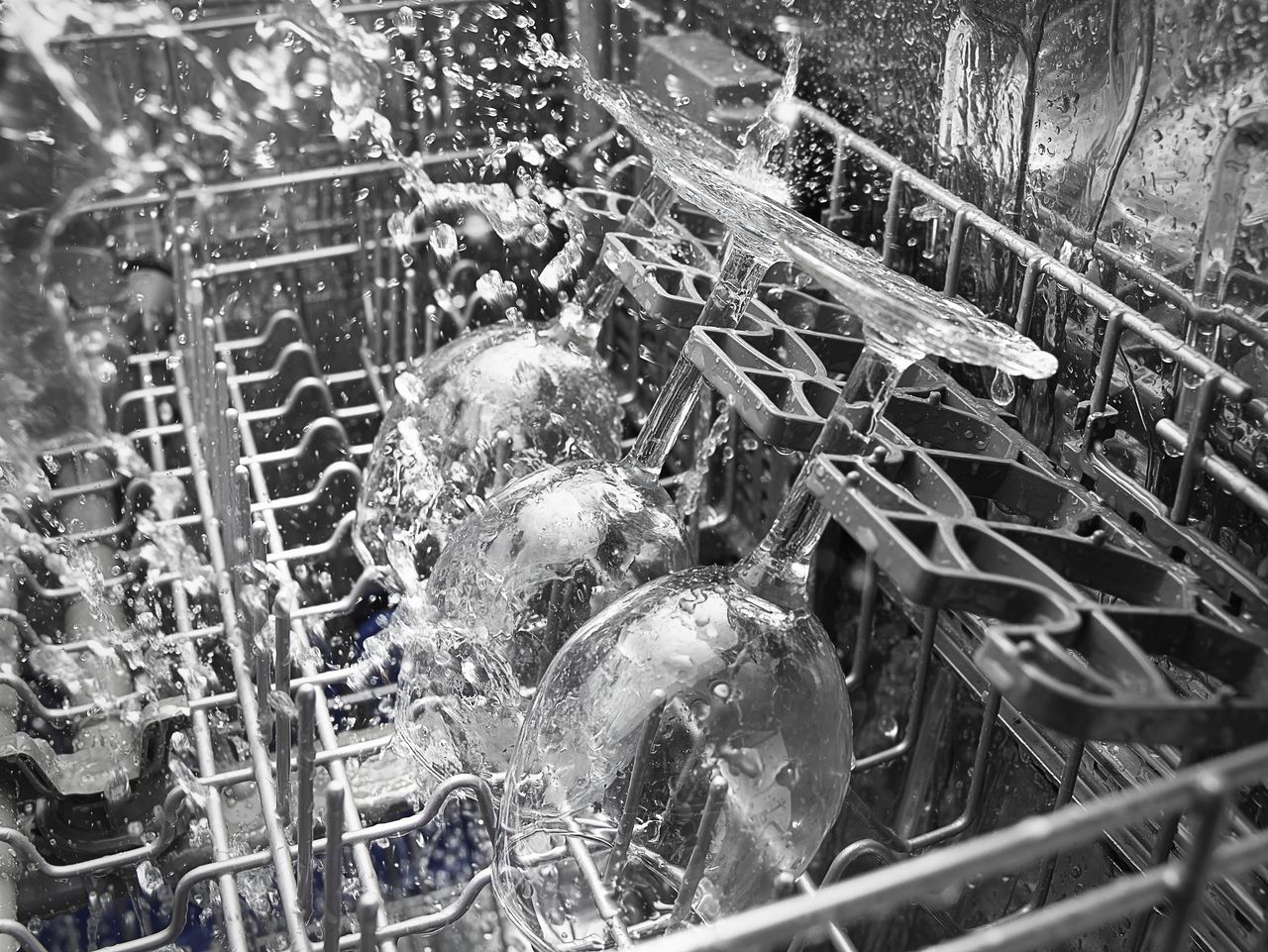
The most frustrating dishwasher problem is the one that looks like it’s working. The cycle runs, it sounds normal, it drains, and then you open the door to find dried oatmeal on bowls and “mystery freckles” on your glasses.
When a dishwasher runs and drains but doesn’t clean, the culprit is usually one of four things: blocked spray, detergent not releasing, water not hot enough, or loading that blocks the jets. We’ll walk through each one in the order I’d check them in my own kitchen.
Start with a quick 5-minute reality check
Before we go deep, do these quick checks first. They solve a surprising number of “my dishwasher is broken” weekends.
- Remove the bottom rack and spin the spray arm by hand. It should rotate freely without hitting anything.
- Look for tall items blocking rotation, like a sheet pan, cutting board, or a big serving spoon.
- Confirm you actually have detergent in the cup and it is not caked into a hard brick.
- Run hot water at the kitchen sink until it’s hot, then start the dishwasher. This helps if your kitchen is far from the water heater.
If dishes improve after doing just these steps, you’re already closing in on the issue.
Blocked spray arms: one of the most common causes
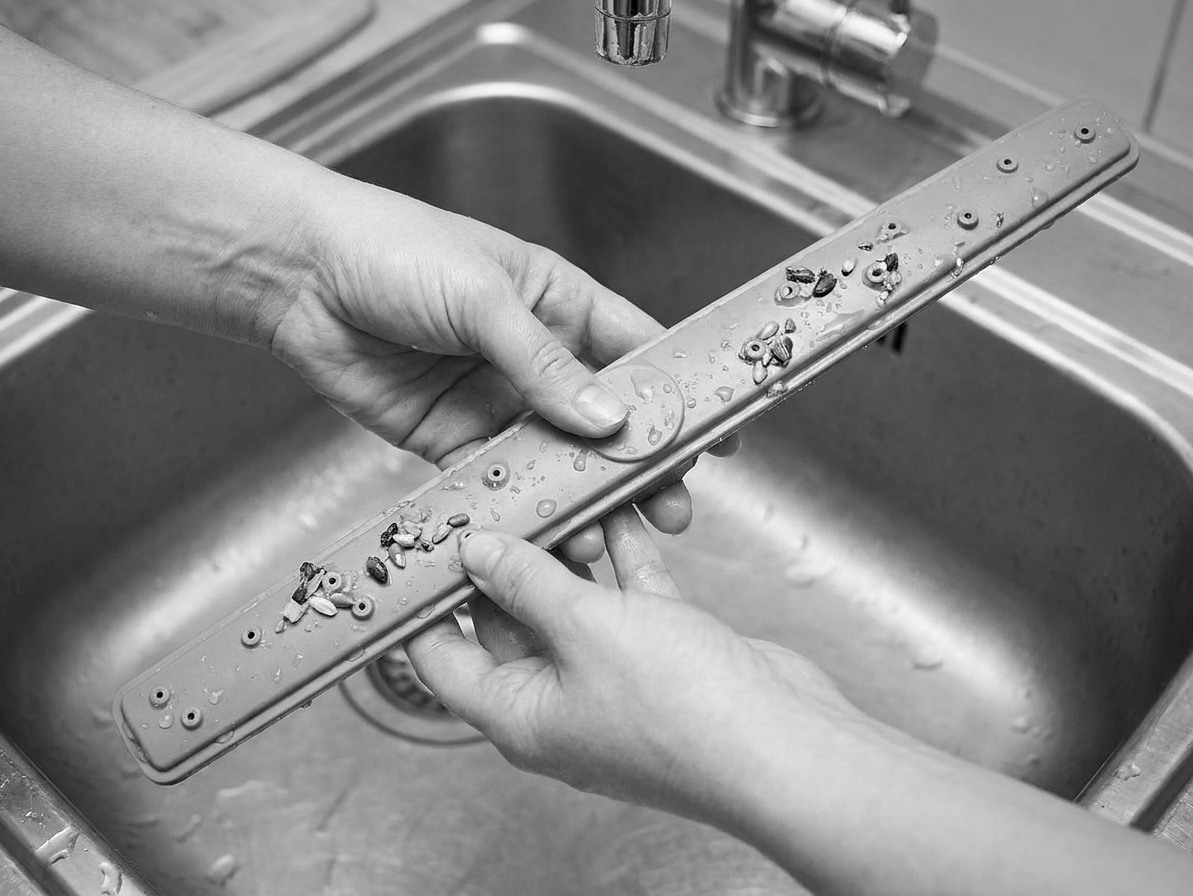
Your dishwasher cleans by blasting pressurized water through small holes in the spray arms. If those holes clog with seeds, labels, broken glass, or mineral buildup, the machine can run a full cycle and still leave food stuck on.
How to check the spray arms
- Bottom spray arm: Pull out the bottom rack. Inspect the arm for cracks and for gunk packed into the holes.
- Upper spray arm: Slide out the top rack and look underneath. Many models have a spray arm attached to the rack or to the ceiling of the tub.
- Spin test: With racks in place, spin each arm by hand. If it hits dishes, the arm can stop during the cycle and leave entire sections dirty.
How to clean clogged spray holes
- Turn off power to the dishwasher at the breaker if you’ll be removing parts near wiring, and let the unit cool.
- Remove the spray arm if your model allows it. Many twist off or release with a center nut.
- Rinse under hot water and pick out debris with a toothpick or wooden skewer.
- For mineral buildup, soak in white vinegar for 20 to 30 minutes, then rinse thoroughly.
- Reinstall and verify free rotation.
DIY note: If you find cracks in the spray arm, cleaning won’t fix it. Cracks reduce pressure and can spray water in the wrong direction. Replacing a spray arm is usually a straightforward, homeowner-friendly repair.
Detergent not releasing or dissolving
If the detergent never releases, you basically ran a long rinse cycle. If it releases but doesn’t dissolve, you get gritty residue and sad, streaky dishes.
What to look for
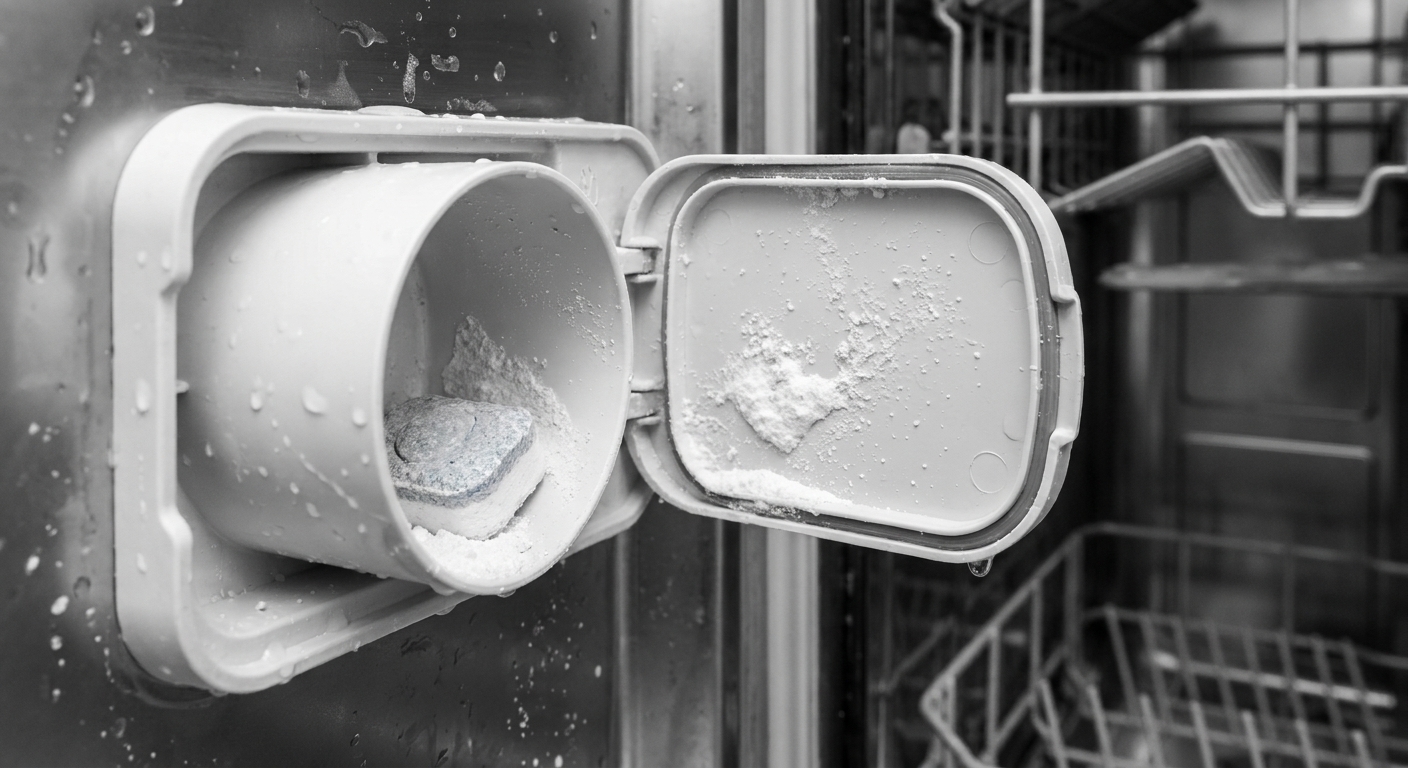
- Closed cup after a cycle: The latch never opened, or it was blocked.
- Half-dissolved tablet: The cup opened late, water was not hot enough, or the tablet got stuck in the cup.
- Caked detergent in the cup: Moisture got in between loads, or detergent is old and clumpy.
Common causes and fixes
- Something is blocking the door. A large cutting board, cookie sheet, or tall plate on the lower rack can stop the cup from popping open. Reload so the detergent door has a clear path.
- The latch is gummed up. Clean around the latch with warm water and a soft brush. Avoid forcing it. If it feels sticky or weak, the dispenser may be wearing out.
- You are using a tablet in a finicky dispenser. Some dispensers do better with powder or gel, especially if the spring is getting tired. Try switching detergent type for a few cycles as a test.
- Not enough water or weak spray at the start. If the wash pump is struggling, detergent may not flush out properly. Check spray arms first since they are the easiest win.
Low water temperature
Dishwashers need hot water to dissolve detergent, melt grease, and help enzymes do their job. If the water is lukewarm, you can end up with cloudy glassware, greasy film, and food still stuck to plates.
What temperature should it be?
A good target is about 120°F at the kitchen tap. Many dishwashers then heat the wash water higher during the cycle (especially heavy or sanitize options), but starting with reasonably hot incoming water helps a lot.
How to check it (quick and accurate)
- Run your kitchen faucet on hot until it’s fully hot.
- Use a simple kitchen thermometer to check the hot water at the tap.
- If you want a rough, non-thermometer check, start the dishwasher and after about 10 minutes carefully crack the door and feel for strong heat and steam. Expect the cycle to pause when you open the door, so close it promptly.
If the water seems cool, it could be a hot water delivery issue (long pipe run, water heater setting, hot water being used elsewhere), but it can also be a dishwasher-side problem like a failed heater, thermostat/thermistor, or control not energizing heat.
Fixes that often help
- Run hot water at the sink first before starting the dishwasher, especially in winter or if your kitchen is far from the water heater.
- Check your water heater setting if your household water is generally lukewarm.
- Use the right cycle. “Eco” and “Quick” cycles often run cooler. Try “Normal” or “Heavy” for testing.
- Skip heavy pre-rinsing. Scrape chunks off, but don’t wash the dishes clean in the sink first. On some machines, enzyme detergents actually perform worse when there is nothing for them to work on.
Safety reminder: Do not crank your water heater beyond safe household settings without understanding scald risk, especially with kids or older adults in the home. If you change the heater temperature, do it carefully and test at taps.
Low fill and water level issues
If the dishwasher doesn’t fill high enough, the pump can’t build good pressure. It will still run and drain, but cleaning will be weak across the whole load.
Signs to watch for
- The wash sounds thin or hissy instead of a strong, sloshy spray sound.
- Detergent doesn’t dissolve well even when your tap water is hot.
- Dishes are equally dirty everywhere, not just in one corner or rack.
Easy homeowner checks
- Check the float. Many dishwashers have a small float in the bottom (often a little dome). Make sure it moves freely and is not jammed by debris.
- Listen at the start. You should hear a fill, then the wash motor kick on. If it barely fills, the issue can be a clogged inlet screen, a failing inlet valve, or a float switch problem.
If you suspect a fill problem and basic cleaning does not help, that is usually the point where I stop and call for service, because inlet valves and electrical tests are not everyone’s idea of a relaxing afternoon.
Loading that blocks the jets
Dishwashers are not magic boxes, they are more like rotating lawn sprinklers with a very strong opinion about angles. If you block the spray arms or stack items so water cannot reach dirty surfaces, the machine will “wash” for two hours and accomplish very little.
Loading rules I teach in my weekend workshops
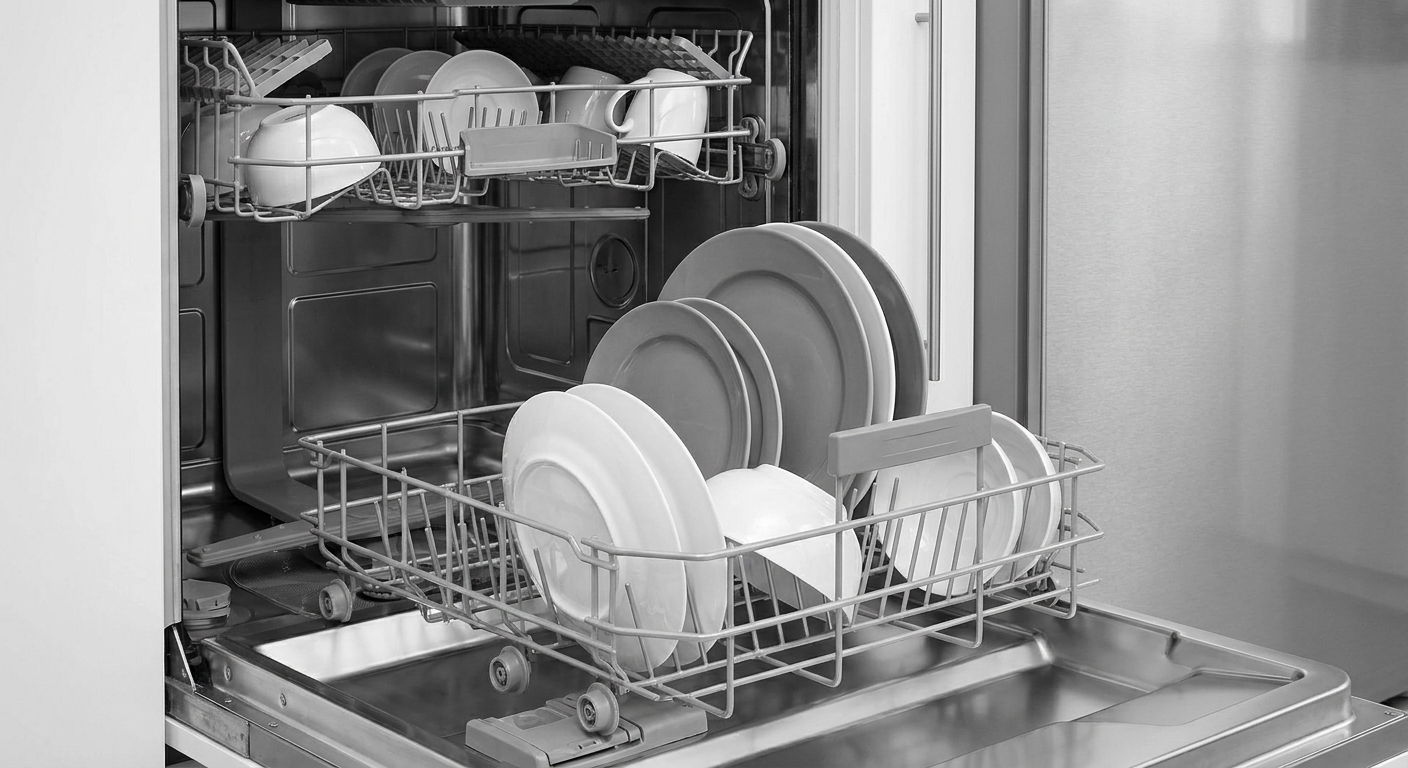
- Do not block the center spine of the bottom rack. Tall pans and cutting boards belong on the sides or the back, angled so water can pass.
- Face dirty surfaces toward the center. The strongest spray patterns usually sweep inward.
- Do not nest bowls and spoons. If two items touch tightly, water cannot get between them.
- Keep the top rack clear under the upper spray arm. Over-tall items below can stop it from spinning.
- Leave room for the detergent door to open. One sheet pan can sabotage an entire load.
Other quick checks
Clean the filter
Many newer dishwashers have a removable filter in the bottom. If it is packed with food debris, water flow can suffer and you can get redepositing grit on dishes.
- Pull out the bottom rack.
- Twist and lift the filter (design varies).
- Rinse under hot water and scrub with a soft brush.
- Reinstall firmly so it seals.
Check rinse aid (especially with hard water)
Rinse aid is not just for shine. It helps water sheet off dishes, which reduces spotting and filming and can improve drying.
Hard water scale buildup
If you have hard water, mineral scale can quietly reduce cleaning performance over time, especially in spray arms, the filter area, and on the heating element. If vinegar soaks of the spray arms help, consider running a periodic descaling or dishwasher cleaner cycle and adjusting detergent and rinse aid to match your water hardness.
Run a cleaning cycle
If your dishwasher smells funky or has visible buildup, run a dishwasher cleaner cycle (or an empty hot cycle with a dishwasher-safe cleaner product). Built-up grease and minerals can reduce performance over time.
Not covered here: standing water
If your main symptom is water left in the tub at the end of the cycle, that’s a different troubleshooting path involving draining, the air gap or high loop, and possible clogs in the drain hose or pump area.
When to call for service
If you have confirmed the spray arms are clear, the detergent dispenser is working, water is hot, the machine is filling normally, and loading is not blocking anything, but cleaning is still terrible, the issue may be a weak wash pump, a failing inlet valve, a heater/temperature sensor problem, or a control issue that is not running the wash motor at full strength.
- Call for service if you hear unusual grinding, the wash sounds “too quiet” during the main wash, the unit is tripping breakers, or the water never seems to heat up.
- Consider replacement if the dishwasher is very old and needs a major pump or control board repair.
FAQ
Should I pre-rinse my dishes?
Scrape off chunks, yes. Full-on pre-rinsing, usually no. Heavy pre-rinsing can reduce performance on some machines because enzymes need some soil to work on.
Why are my glasses cloudy even when plates look clean?
Cloudiness is often hard water mineral deposits or etching. Try rinse aid, confirm water temperature, and reduce detergent if you have very soft water. Etching is permanent, but mineral film can often be removed with vinegar soaks.
What if my detergent pod is stuck in the dispenser?
That almost always points to a blocked dispenser door, a cold start, or weak spray at the beginning of the cycle. Re-check loading near the dispenser and try running hot water at the sink before starting the next load.