
Why Won’t My Garbage Disposal Grind Food?
If your garbage disposal spins and drains but leaves food chunks in the sink, the issue is often stuck or worn impellers, a worn grind ring, less common internal wear, or tough scraps and poor feeding technique. Here’s how to diagnose it and when replacement makes more sense.
Good grain. Great questions.
If your garbage disposal is doing the “polite spin” and everything drains, but you keep finding chunks parked in the sink, you are not dealing with the classic jam or the dreaded hum. You are dealing with a grinder that is moving, but not chewing.
In most kitchens, that points to a handful of usual culprits: impellers (the swinging lugs that do the smashing) that are stuck or worn, grind surfaces that are worn smooth, a less-common internal drive issue, or plain old operator error (feeding it things it does not like). Let’s sort it out.
Confirm the symptom
This page is for a disposal that:
- Spins when you flip the switch
- Sounds normal or at least not alarmingly loud
- Drains, but leaves bits of food behind
If your disposal hums but does not spin, rattles like there’s a spoon in there, or is silent, those are different problems and belong on their own fix-it tracks.
Also worth a quick look: sometimes the disposal is doing its job, but food is getting caught above it. Check the sink strainer area and the rubber splash guard for trapped scraps that can look like “it didn’t grind.”
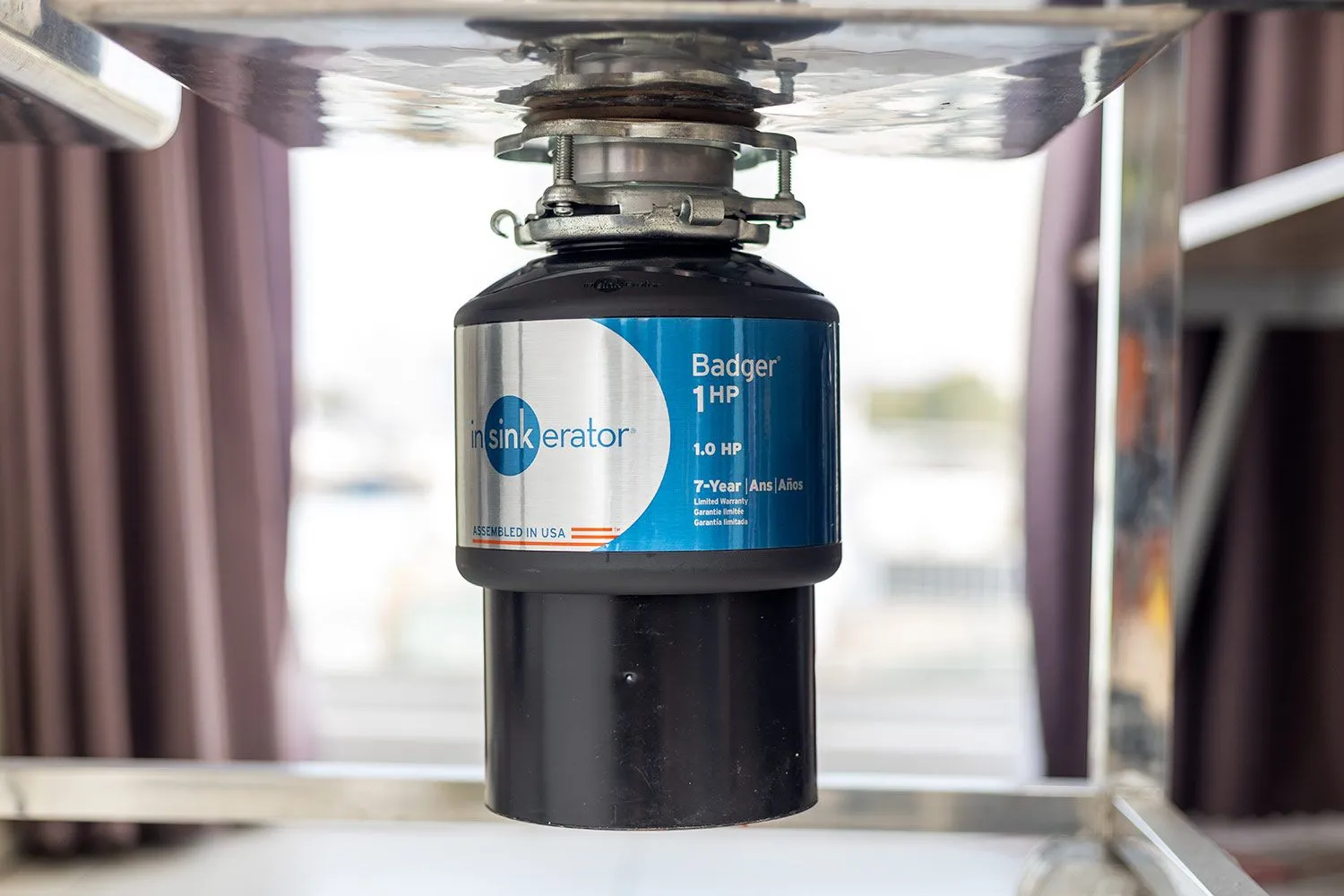
Safety and setup
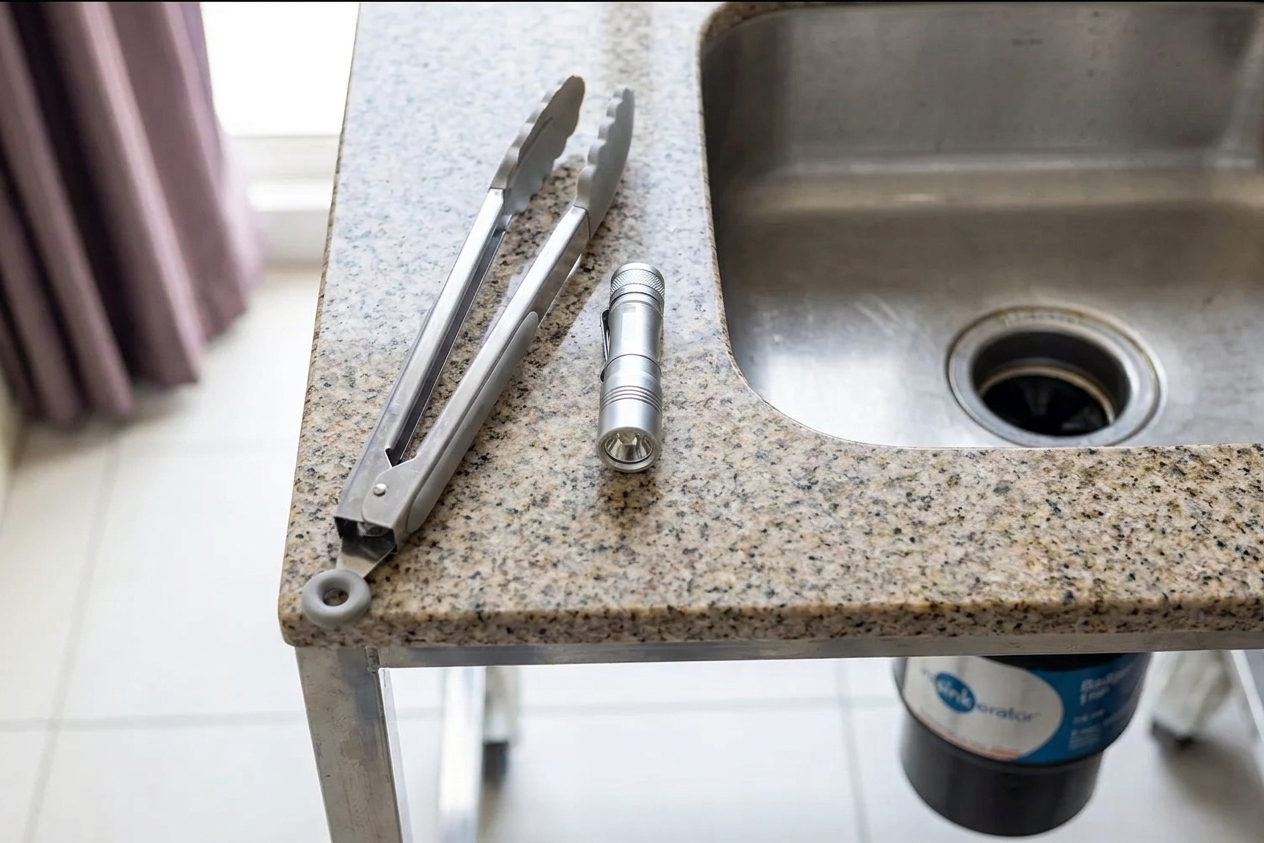
Before you go poking around where sharp metal lives:
- Turn power off at the switch, then unplug the disposal if you can reach the plug. If it is hardwired, switch off the correct breaker.
- Never put your hand into the disposal chamber.
- Use a flashlight to inspect, and use tongs or needle-nose pliers to grab anything you spot.
When you are ready to test grinding, run cold water in a steady stream.
Cause 1: Stuck or worn impellers
Inside most disposals, the “grinders” are not blades. They are small metal lugs that swing out as the turntable spins, smashing food against the grind ring. Many models have two primary lugs, and some have more.
Over time, those lugs can wear down, get rounded, or get so gunked up that they do not swing freely. The motor still spins, so it sounds fine, but the unit loses its bite.
Signs
- The disposal runs with a normal smooth sound, but food just swirls.
- You need to run it much longer than you used to.
- Soft scraps grind, but anything fibrous or dense comes back in chunks.
What to do
- Clean the chamber well. With power off, scrub the splash guard and the upper chamber walls. Grease and starchy paste can keep lugs from swinging.
- Free up sticky lugs. Use a wooden spoon handle to gently nudge each lug (through the drain opening) and see if it swings.
- Try an ice flush if your manufacturer allows it. With power on and cold water running, toss in a few handfuls of ice cubes. Some owners add a little coarse salt. If your manual discourages ice, skip this step. Stop if anything sounds harsh.
If the lugs are physically worn or the unit is simply old and underpowered for how you use it, replacement is usually the realistic fix. These parts are not typically serviced piece-by-piece on common residential units.
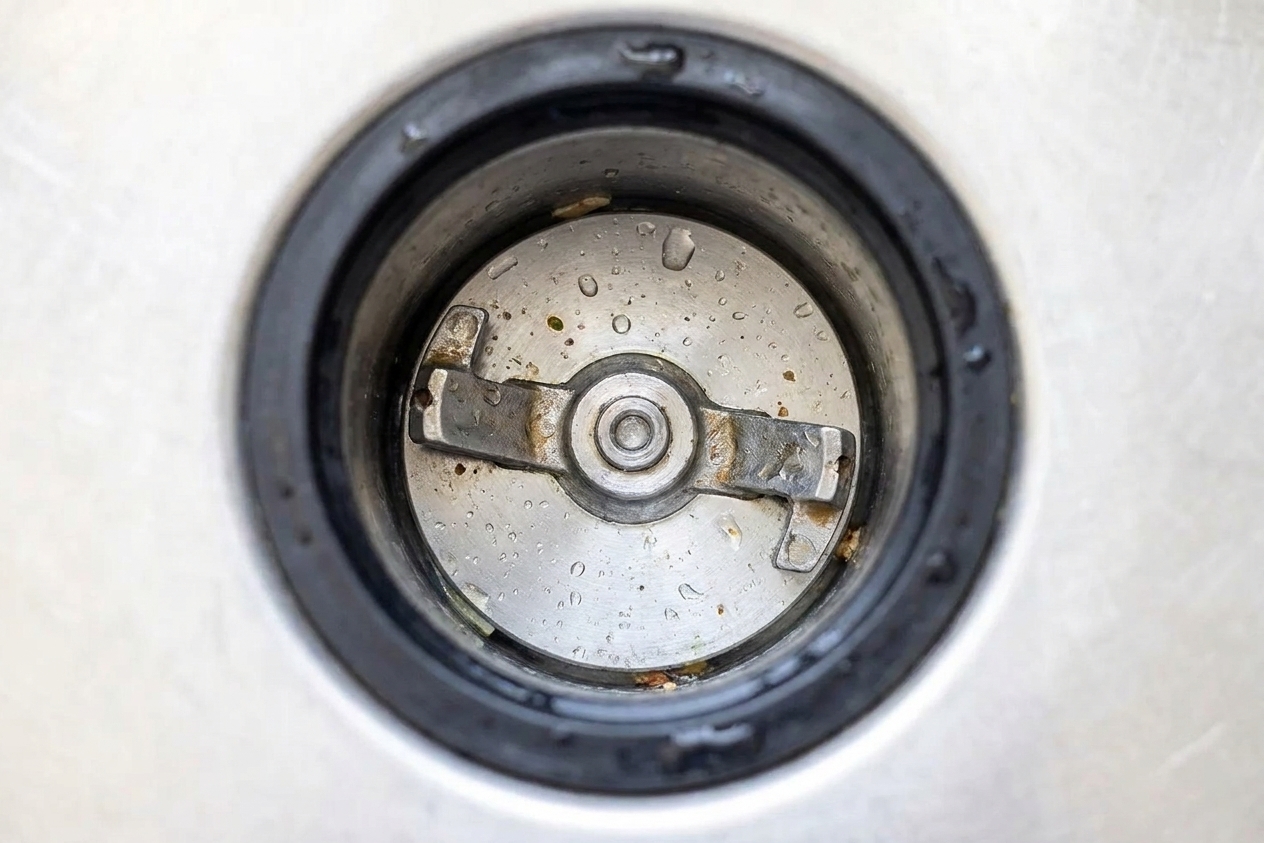
Cause 2: Worn grind ring
That inner ring is the stationary surface food gets smashed against. Over many years, it can wear smoother, especially with heavy use and gritty scraps. When the ring is worn, the disposal may still spin happily while producing bigger granules and leftover chunks.
Signs
- Grinding takes longer and longer even though you are using it correctly.
- Food comes out as larger granules instead of a fine slurry.
- The unit is older and has seen heavy use.
A worn grind ring is usually a “replace, not rebuild” situation for most homeowners.
Cause 3: Less common internal drive wear
This one is less common than buildup, food choice, or a drain issue, but it happens. The spinning plate at the bottom of the chamber is what throws the impellers outward. If the plate is loose on its mount or the internal drive is worn, you can end up with a unit that spins, but does not deliver much grinding force under load.
Signs
- Food sits on the plate and does not get flung outward.
- The unit sounds like it is spinning freely, but bogs down as soon as you feed it.
- Grinding performance changed suddenly after a hard stall or after something tough went through.
A practical check
With power off, look down into the chamber and use a wooden spoon handle to gently push the turntable. You are checking for wobble or a sloppy feel, not trying to force it around. A little movement can be normal. Obvious looseness suggests wear.
Diagnosing internal drive wear is hard without disassembly, and most disposals are not designed for a meaningful internal rebuild. If you suspect drive wear, replacement is typically the safest and most cost-effective move.
Cause 4: The food and the method
Even a healthy disposal has limits. Some foods float, some wrap, some swell, and some just overwhelm smaller motors. Also, dumping a big load at once is a classic way to get “spins but leaves chunks.” Model size and quantity matter a lot.
Common troublemakers
- Fibrous foods: celery, corn husks, asparagus ends, artichoke leaves
- Starchy foods: potato peels (especially in large amounts), cooked rice, pasta (they can form a gluey paste)
- Expandable scraps: bread, oats
- Hard items: fruit pits, large bones (these can also cause damage)
- Stringy peels: onion skins, banana peels
How to run it so it actually grinds
- Use cold water and keep it running the whole time.
- Feed scraps slowly, not as one big dump.
- Cut larger pieces into smaller chunks.
- After grinding sounds “clear,” keep water running for 15 to 30 seconds, or until the line seems to run clear.
Try this before replacing
If the disposal spins and drains, these steps are worth a quick shot:
1) Clear what is above the disposal
- Lift and rinse the sink strainer, if you use one.
- Check the splash guard slots and underside for stuck scraps.
2) Flush and scrub
- Run cold water.
- Turn the disposal on for a few seconds to wet the chamber.
- Turn it off, then scrub the rubber splash guard and visible chamber walls with a long-handled brush.
3) De-gunk the grinding action (optional)
- If your manufacturer allows it, with cold water running and the disposal on, add a handful of ice cubes (some people add coarse salt).
- Let it run until the ice is gone, then keep water running briefly to clear the line.
4) Check for a “false clean”
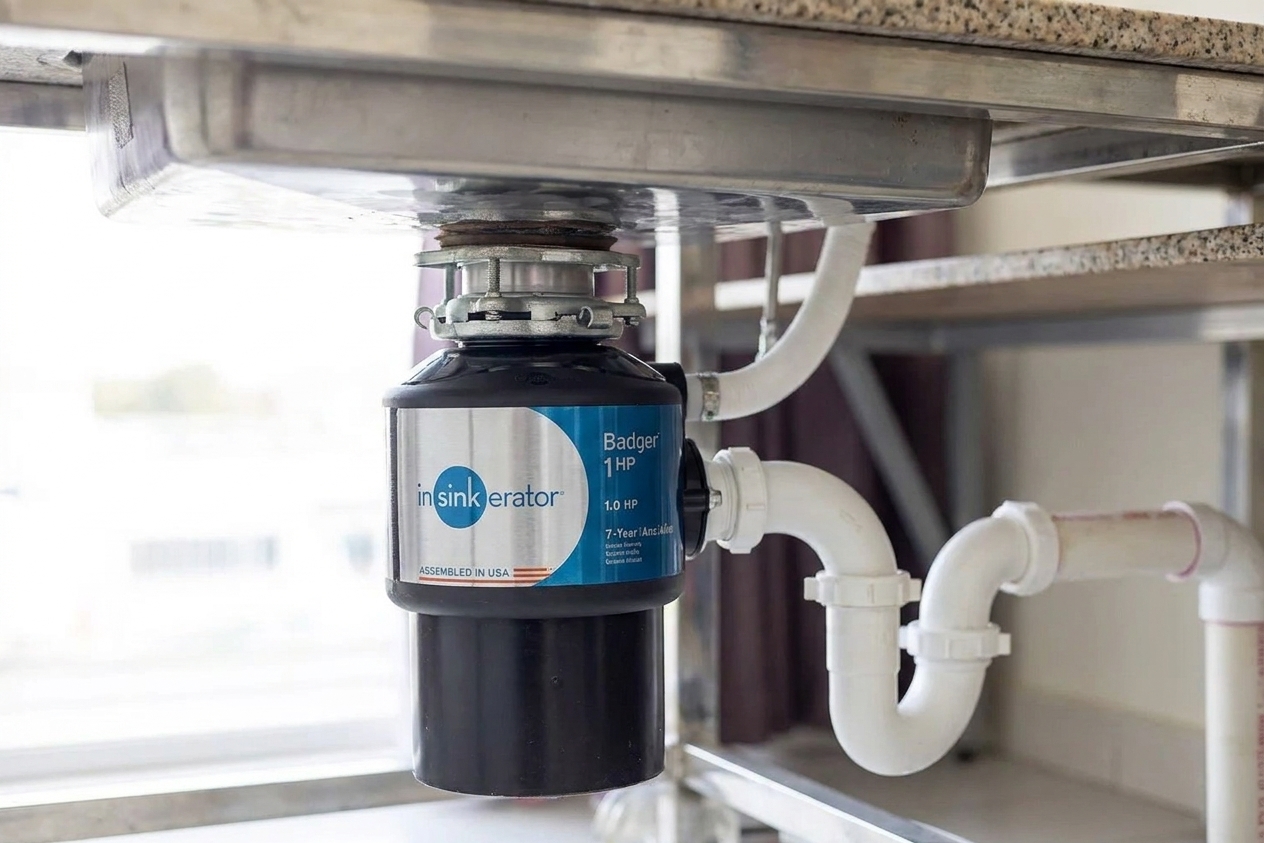
Sometimes the chamber empties fast, so it looks fine, but the P-trap or branch line is partially restricted. Water can still pass while heavier bits get caught, then drift back into the sink after the flow stops. If you see recurring chunks, gurgling, or slow draining, the issue may be in the drain line rather than the disposal itself.
When replacement makes sense
A disposal that spins but does not grind is often telling you the business end is worn out. Consider replacement if any of these are true:
- It is leaking from the body or seals (even if it still runs).
- Grinding performance is poor even after cleaning and you are not putting problem foods down it.
- The unit is older and has steadily lost grinding power over time.
- You need more capacity, a quieter unit, or a stronger motor for how your household cooks.
If you are on the fence, here’s the simple rule from the workshop bench: if the motor is spinning but the chewing parts are worn, you usually spend less time and less frustration by swapping the unit than by chasing a half-fix.
If you are dealing with repeated backups, multiple slow drains, or you are not comfortable checking a trap or drain connection, call a plumber. That is not defeat. That is good kitchen economics.
Quick FAQ
Why does my garbage disposal spin but not grind?
Most commonly: the impellers are stuck or worn, the grind ring is worn smooth, the disposal is being fed fibrous or starchy scraps, or it is being overloaded. Less commonly, internal drive components can wear so the unit spins but lacks grinding force.
Is it normal for a disposal to leave some particles?
A few tiny granules can be normal, especially with peels and skins. But repeated visible chunks that collect in the sink usually means the grinding action is weakened, the method is off, or the drain is catching solids.
Can I sharpen a garbage disposal?
Residential disposals are not designed to be sharpened. They do not use sharpened blades. Cleaning and correct use can restore performance, but worn grinding components generally mean replacement.
Could this be a plumbing clog instead of a disposal problem?
Yes. If the disposal chamber empties but food bits reappear, or the sink drains slowly, the P-trap or downstream line may be catching debris and letting it drift back. If multiple fixtures drain slowly, you may be looking at a larger drain issue.
What if this is a new install?
If it is newly installed and you are seeing poor draining or backups, check that the dishwasher inlet knockout plug was removed (only relevant if a dishwasher drain hose is connected). That issue usually shows up as drainage trouble more than “spins but leaves chunks,” but it is a common first-install miss.
Final takeaway
If your disposal spins quietly and drains but leaves food behind, you are usually not dealing with a jam. You are dealing with a grinder that has lost its bite, has buildup that is limiting movement, is being fed the wrong stuff too fast, or is pushing solids into a drain that is not fully clear.
Clean it, run it with cold water, be picky about what goes in, and if it still will not chew, it is probably time to retire that unit and bolt in a fresh one. A workshop companion like me loves a repair, but I love a reliable kitchen even more.