
Why Is the Water in My Toilet Bowl Too Low?
If your toilet still flushes but the standing water sits low, the fix is usually the tank-to-bowl refill path, mineral buildup in bowl openings, or siphoning from venting. Here’s how to check the refill tube, clean rim holes and the siphon jet, and spot clues that point to a clog or vent issue.
Good grain. Great questions.
A toilet bowl is supposed to hold a set amount of standing water. That water is not there for decoration. It blocks sewer gas, cushions the splash, and sets up the next flush. So if your toilet still flushes but the water line in the bowl sits noticeably low afterward, you are right to be suspicious.
One quick clarity point that helps with diagnosis: on most toilets, the final standing water level in the bowl is set by the toilet’s built-in trap (the internal S-shaped passage), not by a setting you can “adjust.” What you can affect is whether the bowl gets properly refilled after the flush and whether anything is quietly siphoning or draining that water away.
Most of the time, this is not a mystery leak under the house. It is either (1) the bowl is not getting enough refill water after the flush, or (2) something about the flush and refill pattern is off because openings in the bowl or venting are restricted.
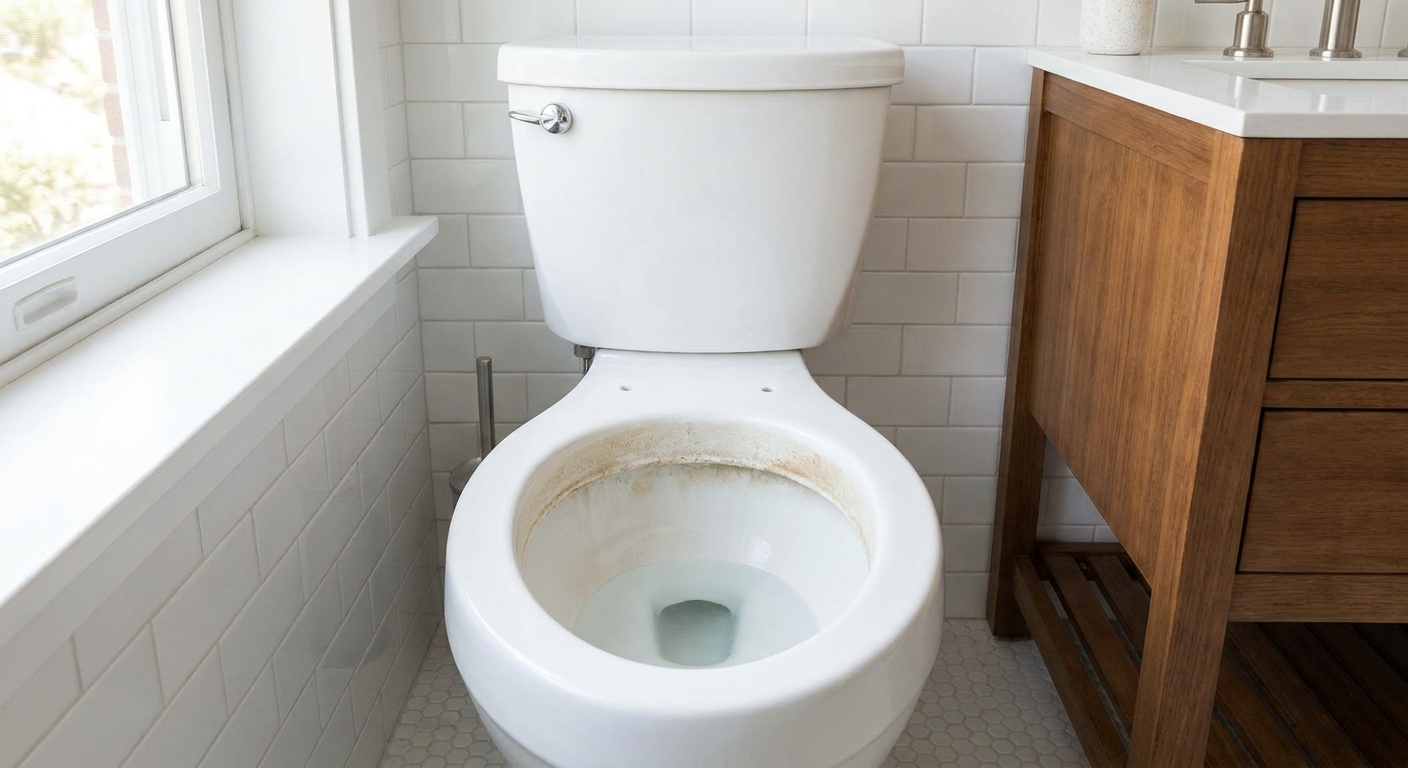
First, confirm what kind of problem you have
These symptoms look similar from across the room, but they are different fixes.
Low bowl water, but the tank refills normally
This article is for you. You flush, the tank refills to its normal level, but the bowl ends up low.
Low bowl water because the tank never fills high enough
If the tank water level is below the manufacturer’s marked waterline (or is noticeably lower than it used to be), the flush can be underpowered and the bowl can end up low. As a general rule, many toilets run best with the tank level roughly 1/2 to 1 inch below the top of the overflow tube, but designs vary. In that case, start by adjusting or repairing the fill valve and float so the tank reaches its proper level.
Bowl is low and it also will not flush well
Once you are dealing with a weak flush, slow flush, or repeated “half flush,” you are usually crossing into clog, venting, or jet blockage territory. I will still cover siphon jet and rim cleaning here, but if the flush is weak afterward, that is your handoff point to deeper clog or vent troubleshooting.
Quick safety and prep
- Skip harsh drain cleaners. They can damage parts and are rough on you and your pipes.
- Do not mix cleaners. If you use vinegar, do not combine it with bleach based bowl cleaners. Rinse well between products.
- Grab a flashlight and a pair of gloves. A small hand mirror helps too.
- Have towels ready if you are working in the tank. Small splashes happen.
- If you will scrub jets, have a stiff nylon brush, an old toothbrush, and white vinegar on hand.
The most common cause: the refill tube is not refilling the bowl
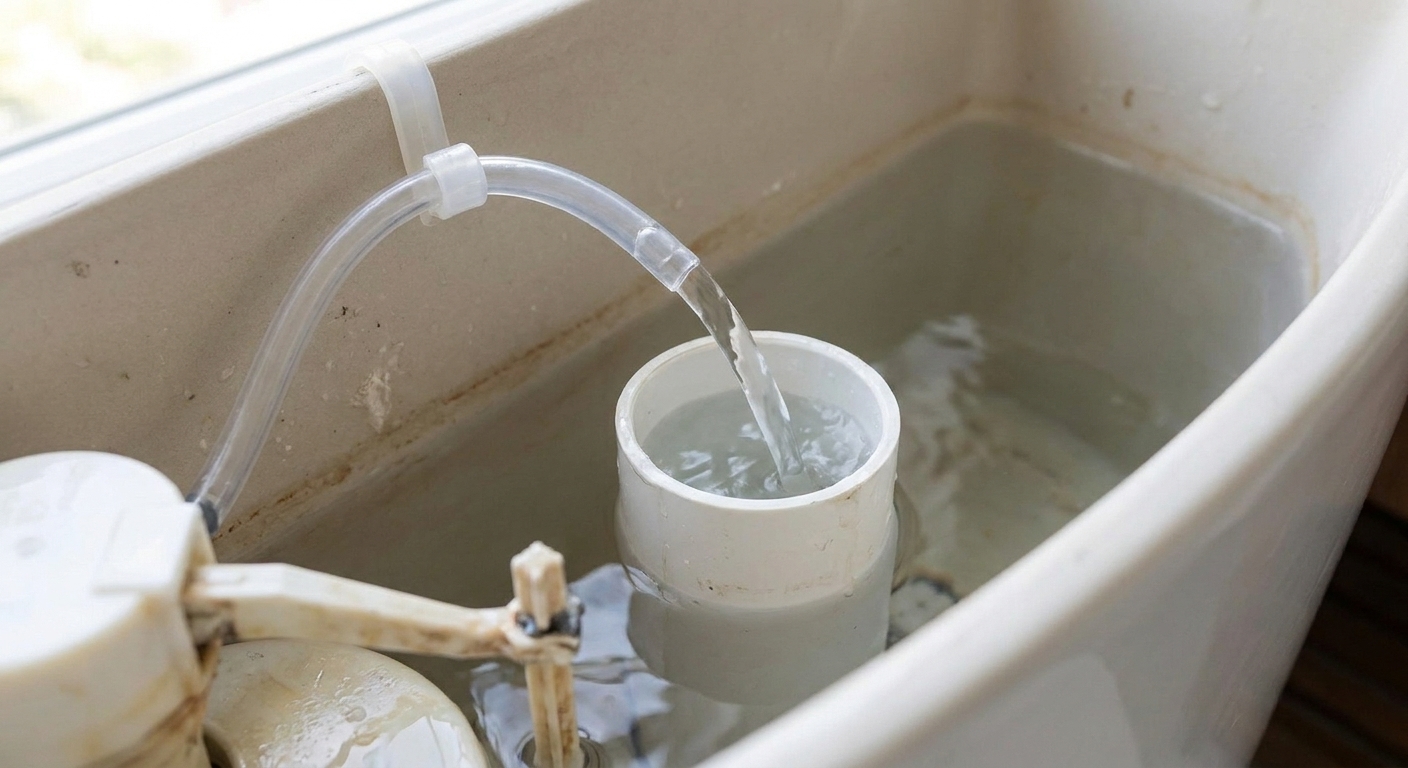
After you flush, the tank refills. While that happens, a small stream of water should flow through a thin tube into the overflow tube. That stream is what refills the bowl to its normal standing level.
What to look for
Pop the tank lid and flush while watching the refill tube. You are looking for a steady stream of water going into the overflow tube during the refill cycle.
Fixes that usually solve it
- Refill tube fell out of the overflow tube: Clip it back so it points down into the overflow tube.
- Refill tube is kinked or pinched: Straighten it or trim and reconnect if it is damaged.
- Refill tube is pushed too far down: It should not be submerged. Keep the tube end above the overflow tube opening, aimed down. This avoids back siphon behavior and other odd bowl level issues.
- No water comes through the refill tube: The fill valve may be clogged or failing. Sometimes a quick clean of the fill valve cap and screen helps, but if the valve is old or inconsistent, replacement is often the cleanest fix.
Quick note: That little refill tube is small, but it has a big job. If it is not sending water to the overflow tube during refill, your bowl will never quite “reset.”
If the refill tube is working: check rim holes and the siphon jet
If the bowl is receiving refill water but the standing level still ends up low, the next suspects are mineral buildup and debris in the bowl’s openings or early venting problems. Strictly speaking, the final waterline is set by the trap weir, but restricted openings can weaken the flush and change how the bowl refills and settles, which can look like a low bowl and can sometimes leave you with a lower than normal post-flush level.
Rim holes
Under the rim are small holes that rinse the bowl and help direct water around the bowl during the flush. When they clog with mineral deposits, you often get an uneven rinse and a weaker, sloppier flush. That can go hand in hand with an “off” bowl level after the cycle is done.
Siphon jet
Many toilets also have a larger opening at the bottom of the bowl, aimed toward the drain. This is the siphon jet. It helps kick-start the siphon action that makes a flush strong. If it is partially blocked, you can get weaker performance and weird bowl behavior after flushing.
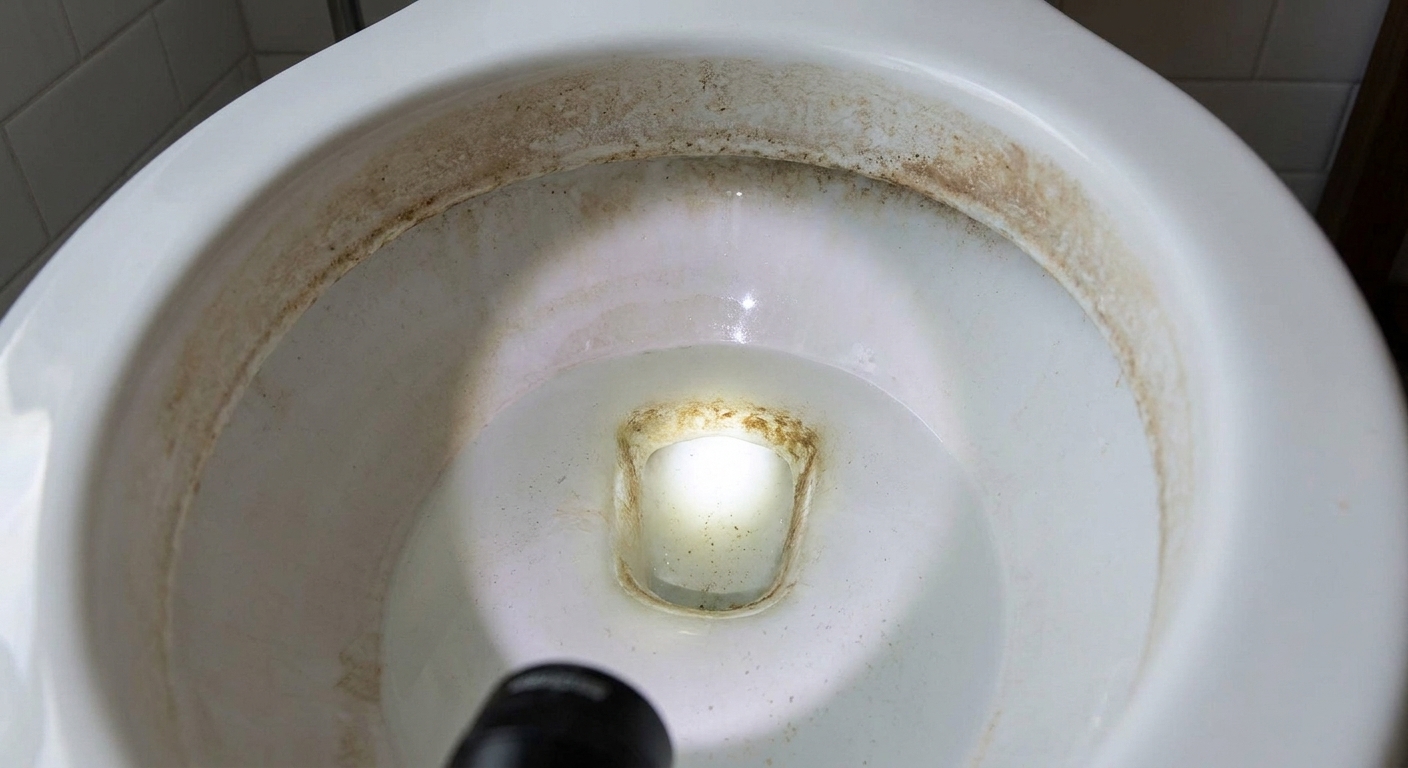
How to clean rim holes and the siphon jet
- Turn off the water at the shutoff valve behind the toilet.
- Flush once to lower the tank water level.
- Apply white vinegar to the rim holes and siphon jet area. You can soak paper towels in vinegar and press them under the rim to hold vinegar in place.
- Wait 30 to 60 minutes for buildup to soften. Keep the bathroom ventilated.
- Scrub the rim holes with a stiff nylon brush or toothbrush. For stubborn mineral plugs, start with a wooden toothpick or a plastic pick. Use metal wire only as a last resort and be gentle, since scratches in the porcelain can invite future staining.
- Scrub the siphon jet opening thoroughly.
- Turn water back on and flush a few times.
If you have very hard water, you may need a second round. The goal is not a perfect “like new” look under the rim. The goal is clear flow.
Rule out normal evaporation and quiet bowl level drop
If a toilet is rarely used, the bowl water can drop simply from evaporation. That one is more annoying than dangerous, but it does weaken the water seal and can let odor in. A quick flush or adding a little water restores the seal.
If the toilet is used regularly and the bowl level still drops between uses, then yes, something is pulling water out or letting it sneak away.
Easy check
- Do not flush for a few hours.
- Mark the bowl waterline with a piece of tape on the outside of the bowl, or take a quick photo.
- Come back later and see if the level dropped further.
If the level keeps falling on its own, think in these buckets: (1) a siphon effect from poor venting, (2) a partial restriction downstream that is messing with air and water movement, or (3) a crack in the bowl. A crack usually shows external moisture. If you see water on the floor or hairline cracks, that is a stop-and-assess moment.
Quick dye test (helps avoid a common misread)
People often assume “low bowl water” is caused by a bad flapper. A leaking flapper usually wastes water by letting tank water seep into the bowl, which more often shows up as random refills or running, not a bowl that settles low.
If you want to rule it out anyway, add a few drops of food coloring to the tank (not the bowl) and wait 15 to 20 minutes without flushing. If color shows up in the bowl, your flapper or flush valve seal is leaking and should be replaced.
Could it be siphoning from another drain?
Occasionally, a nearby fixture can pull water from the toilet trap if the plumbing venting is restricted or not doing its job. This is one of the more common ways a toilet can finish a flush, look fine, and then later sit low again.
Clues that point toward venting
- You hear gurgling in the toilet when other fixtures drain.
- The bowl level changes after running a nearby sink, tub, shower, or washing machine.
- Multiple drains in the house are slow or noisy.
Venting fixes can be simple or involved, depending on the home. If you suspect venting, that is often the point where a plumber or a dedicated vent troubleshooting guide is your best next step.
Troubleshooting flowchart (fast version)
- Tank level low? Fix the fill valve or float adjustment first.
- Tank level normal, bowl low? Watch the refill tube during refill.
- No refill stream into overflow tube? Reattach, unkink, or repair the fill valve.
- Refill stream looks good? Clean rim holes and siphon jet.
- Bowl level drops between uses? Consider evaporation (rare use) or venting siphon clues (gurgling, level changes after other drains).
- After cleaning, flush is weak or the bowl struggles to clear? Move on to clog or vent troubleshooting.
When low bowl water means you should switch to clog or vent help
If your toilet’s standing water is low and you notice any of these, stop chasing only the refill system:
- Flush is consistently weak, slow, or incomplete.
- Water rises in the bowl before draining, even briefly.
- Plunging helps temporarily, then the problem returns.
- Gurgling happens regularly, especially when other drains run.
At that point, the low water level is likely a symptom, not the main problem. A partial blockage, buildup in the trapway, or a venting issue can all change how the bowl refills and settles.
FAQ
Is low water in the toilet bowl dangerous?
It can be. A low bowl level means a weaker water seal, which can let sewer odors into the bathroom. It also can signal a developing flush or drain issue.
Can I just add water to the bowl?
You can add a bit of water to restore the seal temporarily, but it will not fix the cause. If the bowl level keeps ending low after flushes, the refill path, venting, or bowl openings need attention.
Why is my toilet bowl low but the tank is full?
The most common reason is the refill tube is disconnected, kinked, or not sending water into the overflow tube during the refill cycle. After that, look at rim and siphon jet buildup or signs of siphoning from venting problems.
How high should the water be in the bowl?
There is no universal measurement, but most toilets sit with water several inches deep, typically near the bowl’s designed waterline. The key is consistency. If it recently dropped below its normal level, something changed.