
Why Is My Toilet Tank Sweating?
A wet toilet tank is often condensation, not a leak. Learn why it happens, how to tell sweat from a real leak, and fixes like better ventilation, a drip tray, a tank liner, and tempered fill water.
The first time I saw a “leaking” toilet tank in my own 1970s fixer-upper, I did what any former carpenter with a toolbox and a little pride would do. I got down on the floor with a flashlight and stared at it like it owed me money. Nothing was dripping from the supply line, nothing was running down from the bolts, and yet the outside of the tank was damp enough to leave little puddles.
Good news: a wet tank is very often sweating (condensation), not a plumbing failure. Better news: you can often stop it with simple changes, and even when you do add a product, it is usually a straightforward DIY fix.
What toilet tank sweating is
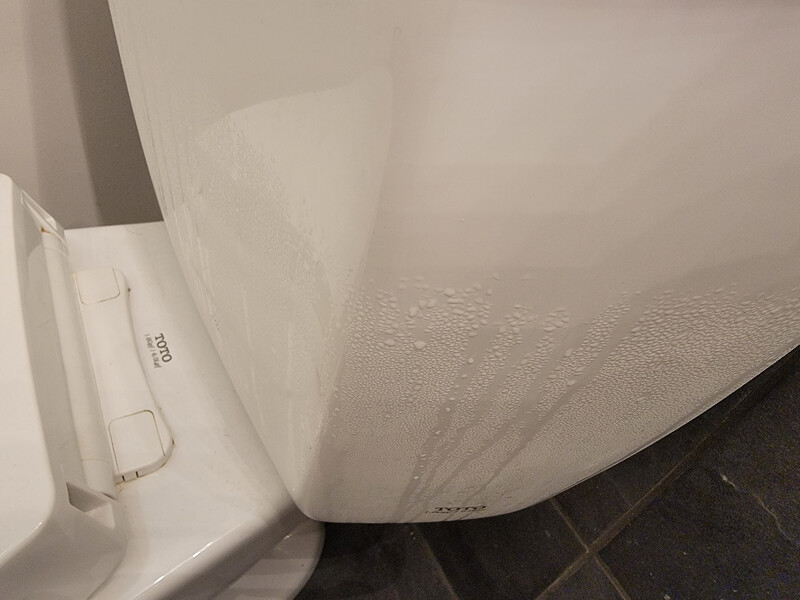
Toilet tank sweating is just condensation. The porcelain tank is being cooled by cold fill water. When warm, humid bathroom air touches that cooler surface, moisture in the air condenses into water droplets on the outside of the tank.
Think of a glass of iced tea on a hot day. Same physics, less refreshing.
Why it happens in some homes
- High humidity in the bathroom (long showers, weak ventilation).
- Cold incoming water (common in winter climates, or when supply lines run through a cool basement).
- Frequent flushing (more cold water cycling in, keeping the tank cooler).
- Warm room air meeting a cool tank (summer humidity, or a bathroom that stays warm).
Sweat or leak? Quick ways to tell
If the tank exterior is wet, your job is to figure out whether you are dealing with condensation or an actual leak. Here are the homeowner tests I use.
Clues it is condensation
- Water beads evenly across large areas of the tank, especially the sides and back.
- It gets worse after showers or on muggy days.
- You see droplets, not a stream, and the moisture looks like dew.
- The tank feels cool to the touch.
Clues it is a supply line or valve weep
- Moisture is concentrated under the shutoff valve, at the nut where the supply line connects, or where the line meets the bottom of the tank.
- You find one clear drip point rather than a generally damp tank.
- It happens even when the room is dry, like overnight with no showers.
Clues the supply line is sweating
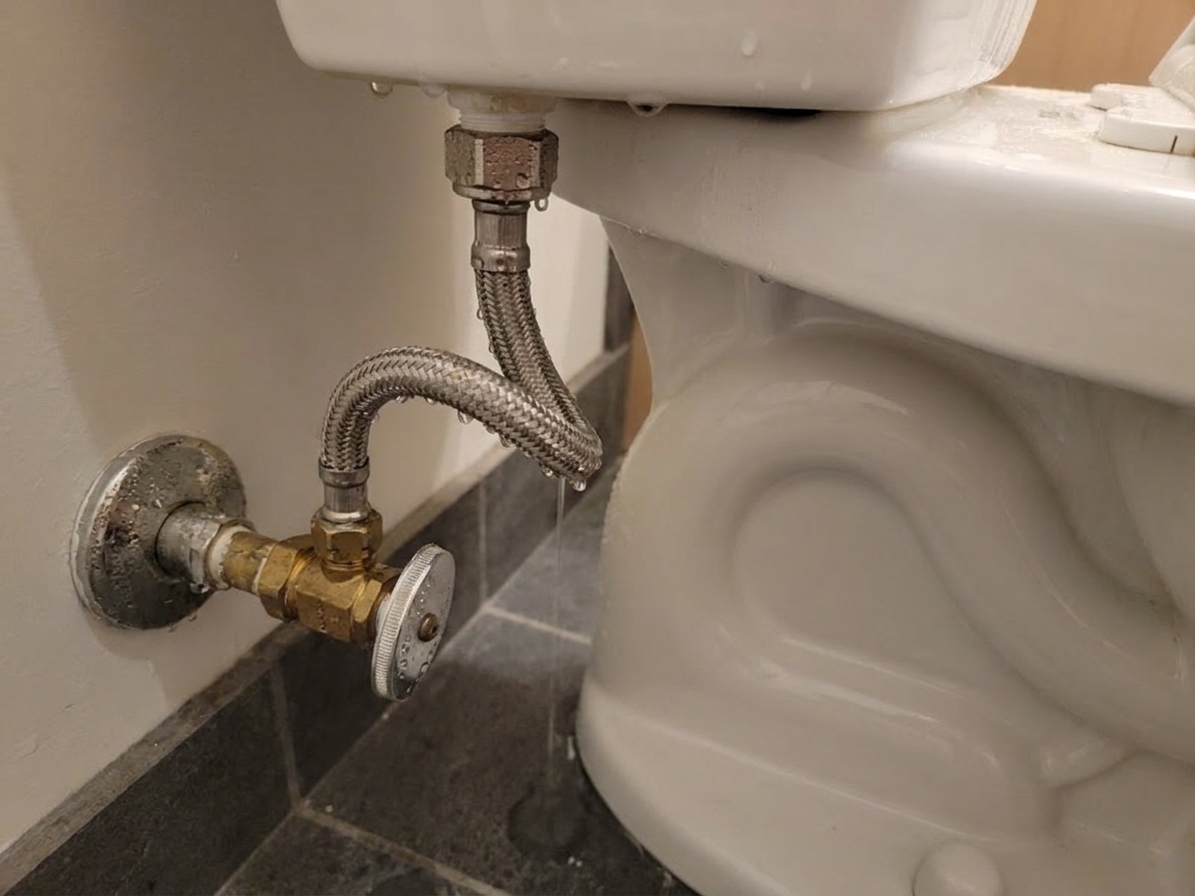
- The braided line or valve body is wet and droplets are forming there first.
- Water tracks down the line and lands on the floor or the back of the bowl, making it look like the tank is the problem.
- The tank itself is mostly dry except where that drip splashes.
Clues it is the tank-to-bowl area
- Water shows up on the back of the bowl directly under the tank.
- The tank bolts or the seam between tank and bowl looks wet, but the broad tank sides are not uniformly dewy.
- You see a thin trail that starts under the tank rather than a wide spread of droplets.
Clues it is leaking at the base
- Water appears on the floor around the toilet base, especially after flushing, but the tank itself is mostly dry.
- The toilet rocks when you sit on it (loose closet bolts can break a wax ring seal over time).
- There is a musty smell or soft flooring nearby (a sign this has been going on awhile).
Two simple tests in five minutes
1) Dry-and-watch test
Wipe the entire tank dry with a towel. Then:
- If droplets slowly form all over the tank surface, that is condensation.
- If you see a line of water running from a fitting, bolt, or supply connection, that is a leak.
2) Paper towel test
Wrap a dry paper towel around:
- the shutoff valve connection
- both ends of the supply line
- the fill valve shank under the tank
- the tank-to-bowl seam and bolt areas
Come back in 10 to 15 minutes. A wet spot on the towel points to the source.
Safety note: If the floor is wet, take slipping seriously. Put down a towel and keep kids and pets out until you know what you are dealing with.
How to stop toilet tank sweating
You can attack tank sweat from three angles: reduce humidity, warm the tank surface, or catch the drips. Often the best fix is a combination.
Option 1: Improve ventilation
If your bathroom air is humid, your toilet tank is just the messenger. The goal is to get humidity down so bathroom surfaces stay above the dew point.
- Run the exhaust fan during showers and for 15 to 30 minutes after, or until the mirror clears.
- Clean the fan grille so it can actually move air.
- Crack the door after a shower if the fan is weak.
- Use a small dehumidifier in a persistently damp bathroom or basement half-bath.
If you want to make “high humidity” less of a guessing game, a cheap hygrometer is handy. In most homes, keeping the bathroom roughly in the 30 to 50 percent relative humidity range helps cut condensation.
This helps not only the toilet, but also paint, trim, and mold prevention.
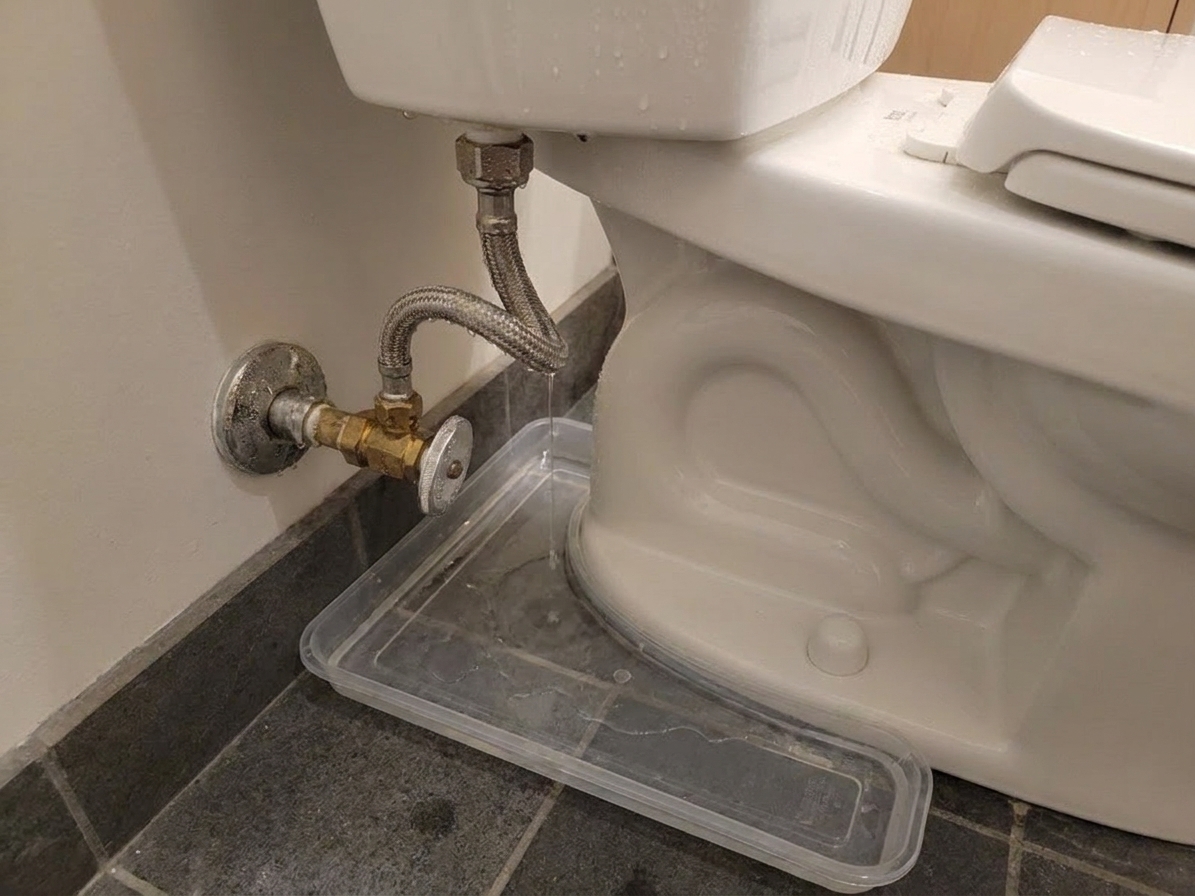
Option 2: Add a drip tray
A drip tray is the fastest way to stop puddles from hitting your floor. Some trays are made to sit behind the toilet and extend under the tank area, and some are shaped to nest tighter around a specific footprint. Fit varies a lot by toilet style, so measure and expect a little trial and error.
This is a great move if:
- you are renting and want something reversible
- you need a quick fix while you work on ventilation
- you are protecting wood or laminate flooring
Check it occasionally. If it is filling quickly, you still want to address the root cause.
Option 3: Add a tank liner
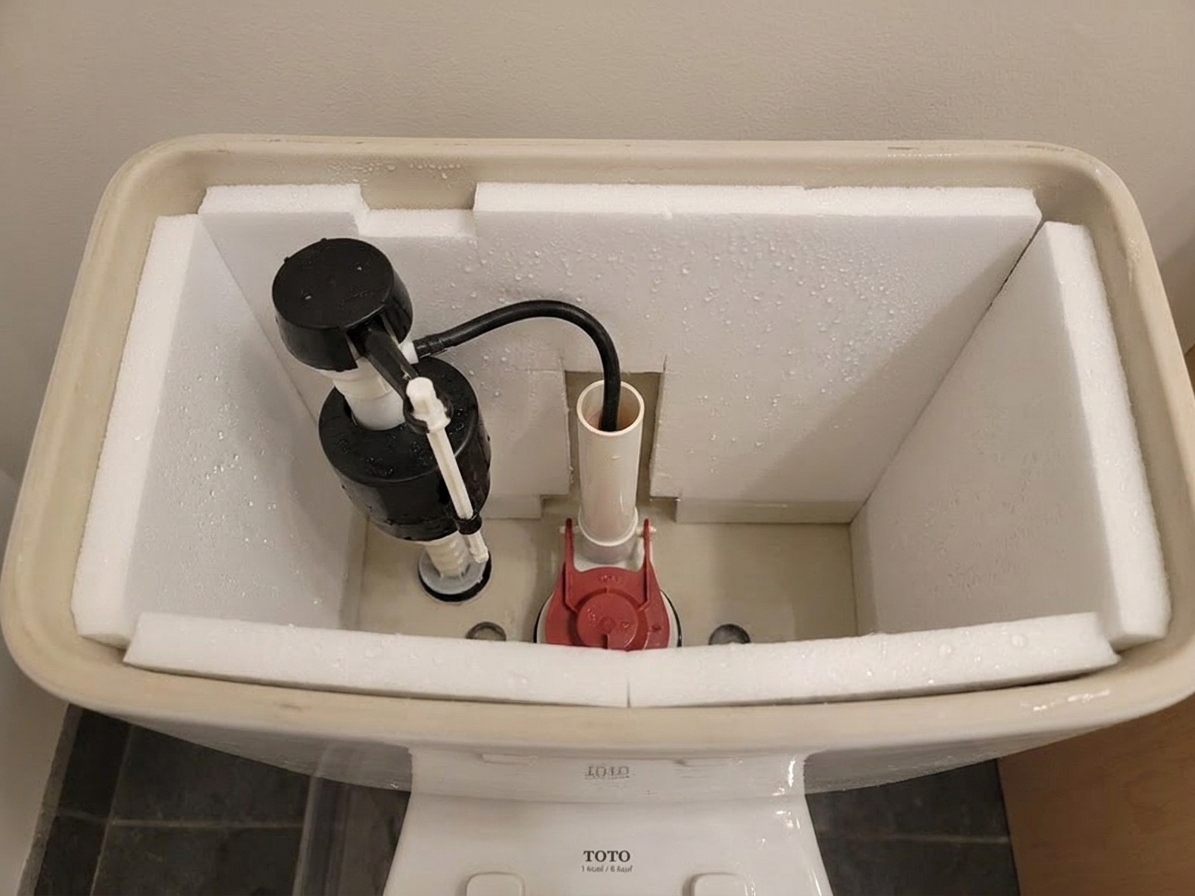
Insulating the inside of the tank helps because it separates cold water from the porcelain, which raises the outside surface temperature and reduces condensation.
Two common approaches
- Tank liner kit: Thin foam panels you cut to fit and stick to the inside walls of the tank.
- Insulating tank wrap: A fitted foam jacket around the outside of the tank (less common, and can look bulky).
Before you start
- Turn off the water at the shutoff valve.
- Flush and hold the handle down to drain as much water as possible.
- Sponge out the rest so surfaces are dry enough for adhesive to bond.
Tips I wish every DIYer heard first
- Do not block moving parts like the float, fill valve, or flapper.
- Keep foam clear of bolts and seals at the bottom of the tank.
- Take your time cutting. Neat edges help prevent panels from peeling.
- Let adhesive cure as directed before refilling the tank.
Done right, a liner kit is one of the most effective fixes when the incoming water stays cold for much of the year.
Option 4: Temper the fill water
If the tank stays icy cold, you can reduce sweating by raising the temperature of the water going into the toilet. This is not the first thing I try, but it can be the right tool for stubborn cases.
Start simple
- Insulate nearby cold water piping in a basement or crawl space to reduce extra cold water and condensation on the pipes themselves.
- Balance the bathroom temperature if the room gets unusually warm and steamy.
Plumbing approach: tempered supply
Some homes use a tempering valve or a mixed supply approach that blends a little warm water with the cold before it reaches the toilet. This can reduce condensation a lot, but it is not a universal DIY move.
Important: Any modification that ties warm water into a toilet supply should be done carefully and to code. In many areas, you should have a licensed plumber handle this so you do not create cross-connection or backflow risks. Also keep in mind that warmer toilet supplies can slightly increase energy use, and warm, stagnant water can create its own hygiene concerns in some setups. If you are not 100 percent sure what you are looking at, call a pro.
In my experience, most homeowners get excellent results from ventilation plus a tank liner, without touching supply plumbing.
What not to do
- Do not ignore puddles just because it is “only condensation.” Repeated wetting can ruin flooring and feed mold.
- Do not overtighten tank bolts trying to “fix” sweating. That can crack porcelain or create a real leak.
- Do not caulk the base to hide water until you are sure it is not a leak. Trapping moisture under a toilet is how subfloors rot quietly.
When to stop DIY
- Any crack in the tank or bowl, even a hairline that seems dry.
- Water at the tank-to-bowl gasket that persists when the bathroom air is dry.
- Water stains on the ceiling below or swelling around the toilet area.
- Persistent dripping from a valve, supply line, or bolt area after you have tried tightening gently and confirming the source.
FAQ
Is a sweating toilet tank dangerous?
It is usually not dangerous, but it can cause costly damage over time. Water on the floor can swell wood, stain ceilings below, loosen vinyl, and create slip hazards.
Why does my tank only sweat in summer?
Summer air often carries more moisture. That humid air hitting a tank full of cold water is the perfect recipe for condensation.
Can a running toilet cause tank sweat?
Yes. If the toilet is running, it is constantly refilling with cold water, which keeps the tank cooler for longer. Fixing the running issue can reduce sweating.
How do I know if water is coming from under the tank lid?
Dry everything, then place a paper towel under the tank lid edge and along the back of the tank. Condensation tends to show up broadly. A leak often leaves a more localized wet trail.
My quick game plan
If you just want the order of operations, here is what I recommend:
- Confirm sweat vs leak using the dry-and-watch and paper towel tests.
- Check the supply line for its own condensation or a slow weep.
- Protect the floor today with a towel or drip tray while you work.
- Run the bath fan longer and bring humidity down.
- Add a tank liner if the tank stays cold and sweating is frequent.
- Call a plumber if you suspect a base leak, see a steady drip at a fitting, spot water at the tank-to-bowl gasket, or want to temper the supply water safely.
If you want, tell me what you are seeing: Is the whole tank dewy, or is the wet spot concentrated near the supply line, the tank-to-bowl seam, or the toilet base? That one detail usually points to the right fix.