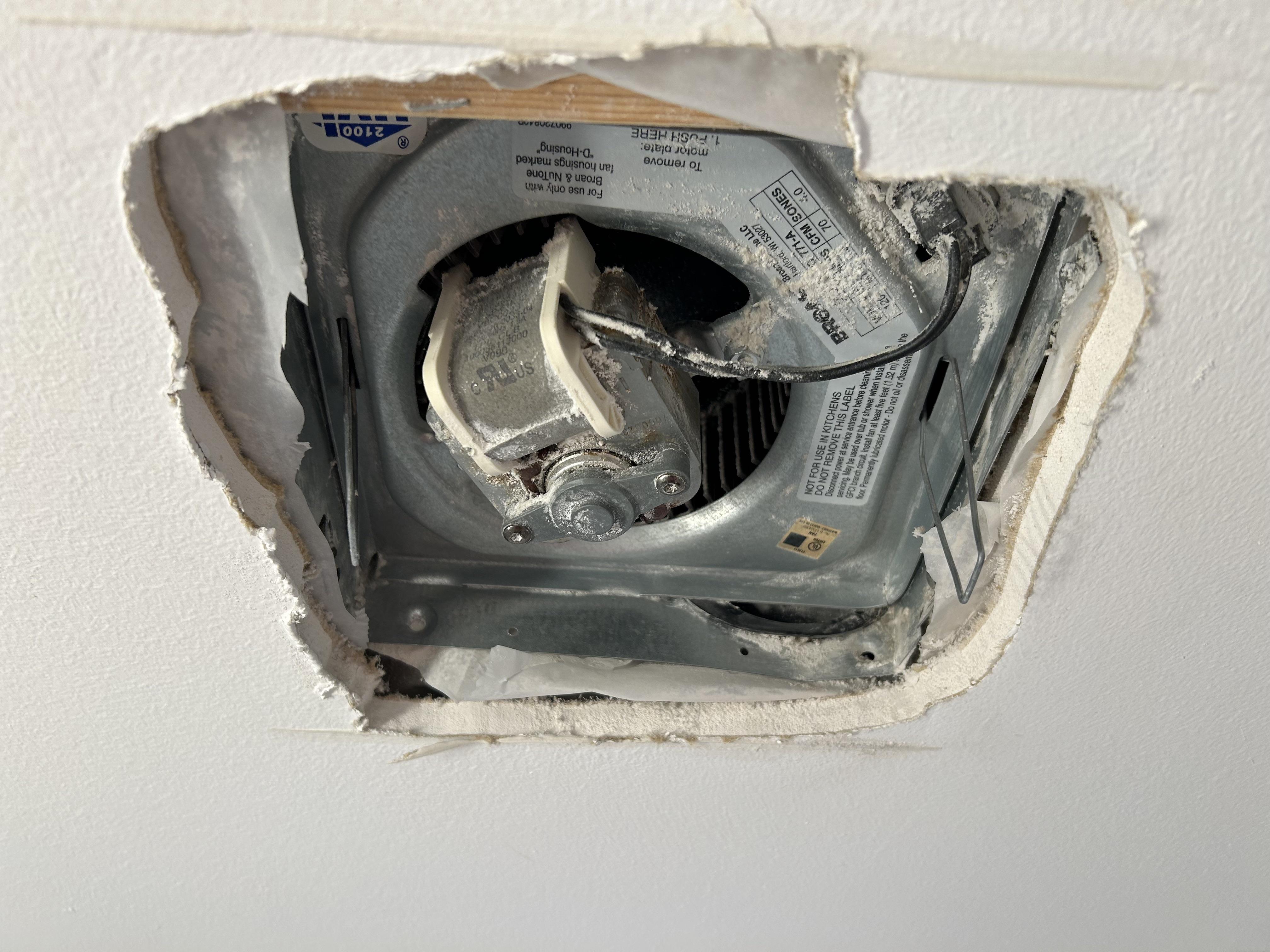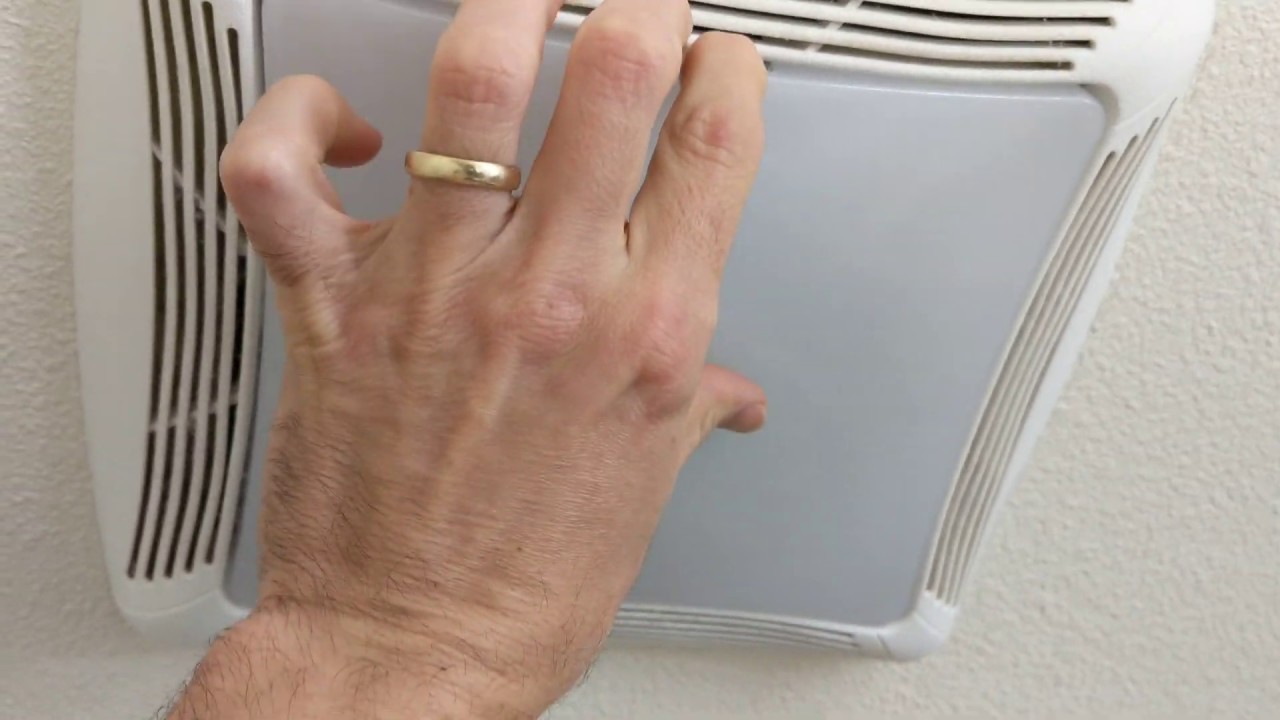
A step-by-step troubleshooting order for a bath fan that runs but does not clear humidity. Clean it, check airflow, inspect the damper and duct, confirm make...
The Homeroom Fix
September 27, 2026
•
By Marcus Delgado
Bathroom Fan Runs but Still Steamy? Fix the Airflow
If your bathroom exhaust fan runs but humidity lingers, the problem is usually airflow. Troubleshoot clogs, dirty grilles, duct issues, dampers, exterior vents, and undersized fans.

Marcus Delgado
Marcus Delgado is a former residential carpenter and lifelong DIY enthusiast who believes every homeowner has the power to transform their space. After a decade of swinging hammers for general contractors, he shifted gears to share practical, budget-friendly home improvement advice. When he's not renovating his own 1970s fixer-upper, you can find him hunting for salvaged wood or teaching weekend workshop classes.
A bathroom exhaust fan can sound like it’s working while your mirror says otherwise. If the room stays steamy long after a shower, you usually have one of two problems: not enough airflow (CFM) or airflow that is getting blocked somewhere between the grille and the outdoors.
The good news is you can diagnose most of this with a step stool, a screwdriver, and about 20 minutes. I will walk you through the most common causes in the order I check them on real homes.
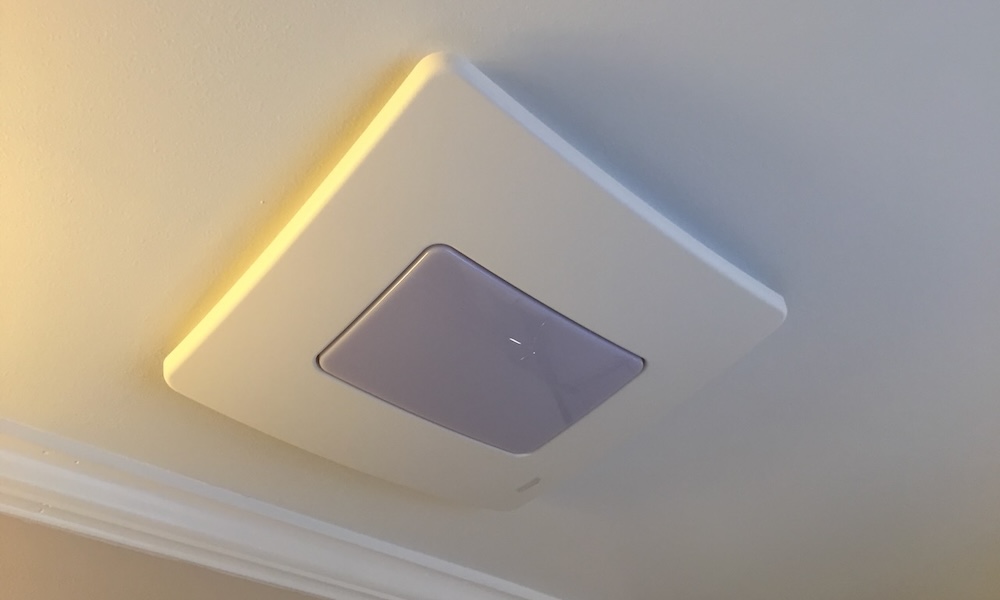
Safety first
- Turn off power at the switch before cleaning, and at the breaker if you will open the housing.
- Use a stable step stool, not the toilet. Your future self will thank you.
- If your fan is over the shower or tub, make sure it is rated for wet locations before you assume it is safe to service or replace in that spot.
- If you are going into an attic, watch your footing. Step on framing, not drywall, and keep an eye out for nails, wiring, and low-clearance hazards.
Fast tests
The tissue test
Turn the fan on and hold a single sheet of toilet paper or a tissue up to the grille.
- Good sign: It sticks firmly.
- So-so: It kind of hangs there, barely held.
- Bad: It falls off immediately or flutters like the fan is just making noise.
The door test
With the fan running, crack the bathroom door open 1 to 2 inches. If the fan suddenly “catches” and you feel better pull, you may have a makeup air problem . Bathrooms need a way for fresh air to enter so the fan can push humid air out. A tight door sweep or very tight house can reduce performance.
- Quick fix: leave the door cracked during showers.
- Better fix: make sure there is a reasonable gap under the door (often roughly 3/8 to 3/4 inch, depending on flooring and the rest of the house). In tighter homes, a transfer grille or jumper duct can also help move air without leaving the door open.
Cause 1: Dirty grille and lint-packed fan
This is the most common “it runs but does nothing” issue. Dust sticks to humidity, then turns into a fuzzy filter that chokes airflow. If you have pets, it is even faster. Looking at you, fellow golden retriever owners.
Clean the grille
- Turn the fan off.
- Pull the grille straight down. Most are held by two spring wires you pinch together to release.
- Wash the grille in warm soapy water, rinse, and dry.
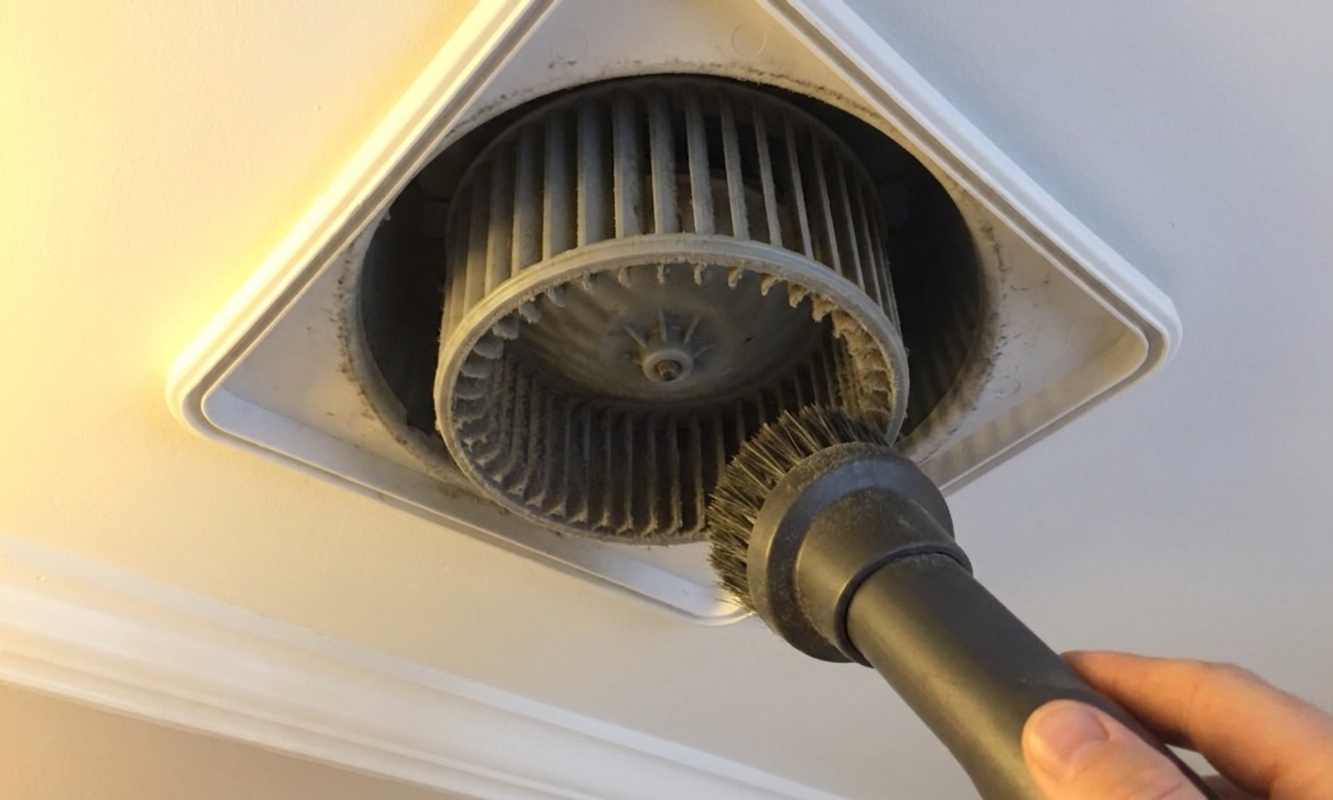
- While it is down, use a vacuum with a brush attachment to remove dust from the fan housing opening.
Clean the fan wheel
If you can see clumps on the blower wheel, cleaning can make a night-and-day difference.
- Turn power off at the breaker.
- Remove the grille.
- If your model allows, remove the fan motor plate (usually a few screws or a clip).
- Vacuum dust from the wheel and housing. A dry paintbrush helps loosen packed lint.
- Reinstall everything snugly, restore power, and re-test with tissue.
Cause 2: Duct problems
Bathroom fans are not built like leaf blowers. They need a reasonably short, smooth path to the outside. A few feet of crushed flexible duct can cut airflow dramatically.
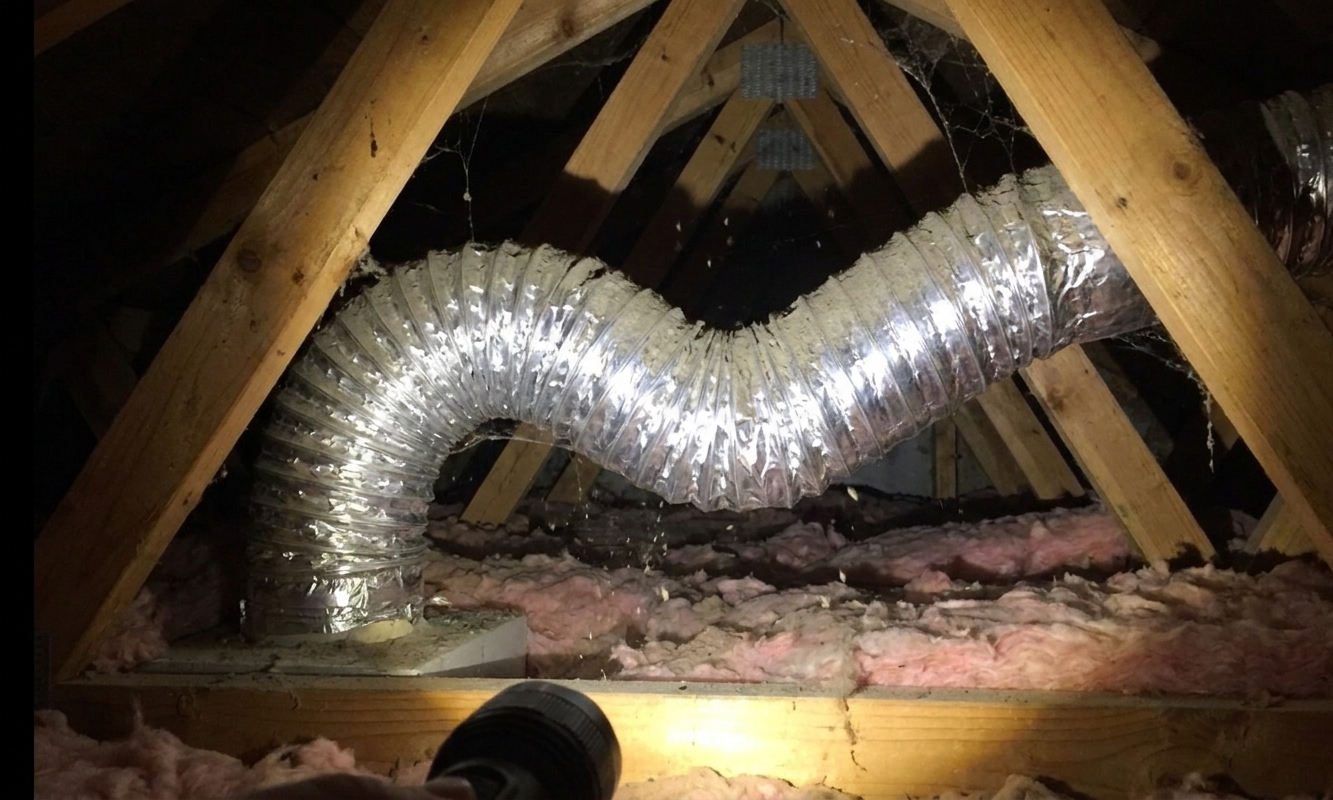
What to look for in the attic
- Kinks or sharp turns in flexible duct.
- Crushed sections from someone stepping on it or storing boxes against it.
- Sags or low spots where condensation can collect and partially block the duct.
- Very long runs with multiple elbows. Every turn adds resistance.
- Duct size mismatches such as a 4 inch fan neck choked down to a 3 inch duct, or a random reducer jammed in. That is like putting a straw on a shop vac.
- Leaky joints or disconnected sections. If you see gaps, torn flex, or a loose clamp, you might be “venting” into the attic.
Fixes that usually help
- Straighten flex duct and support it continuously with wide straps so it does not sag.
- Maintain a consistent slight slope with no low points. The goal is to keep condensation from pooling anywhere in the run.
- In cold attics and other unconditioned spaces, use insulated duct or add duct insulation to reduce condensation and dripping.
- If possible, replace long flex runs with smooth rigid duct (metal). It moves air much better.
- Keep turns gradual and minimize the number of elbows.
- Seal joints with foil HVAC tape or mastic, not standard cloth duct tape. The real stuff lasts.
Carpenter’s note: I see a lot of fans “vented” into the attic. That is not venting. That is making your attic a swamp and inviting mold. The duct must terminate outdoors through a roof cap, gable cap, or wall cap.
Cause 3: Stuck backdraft damper
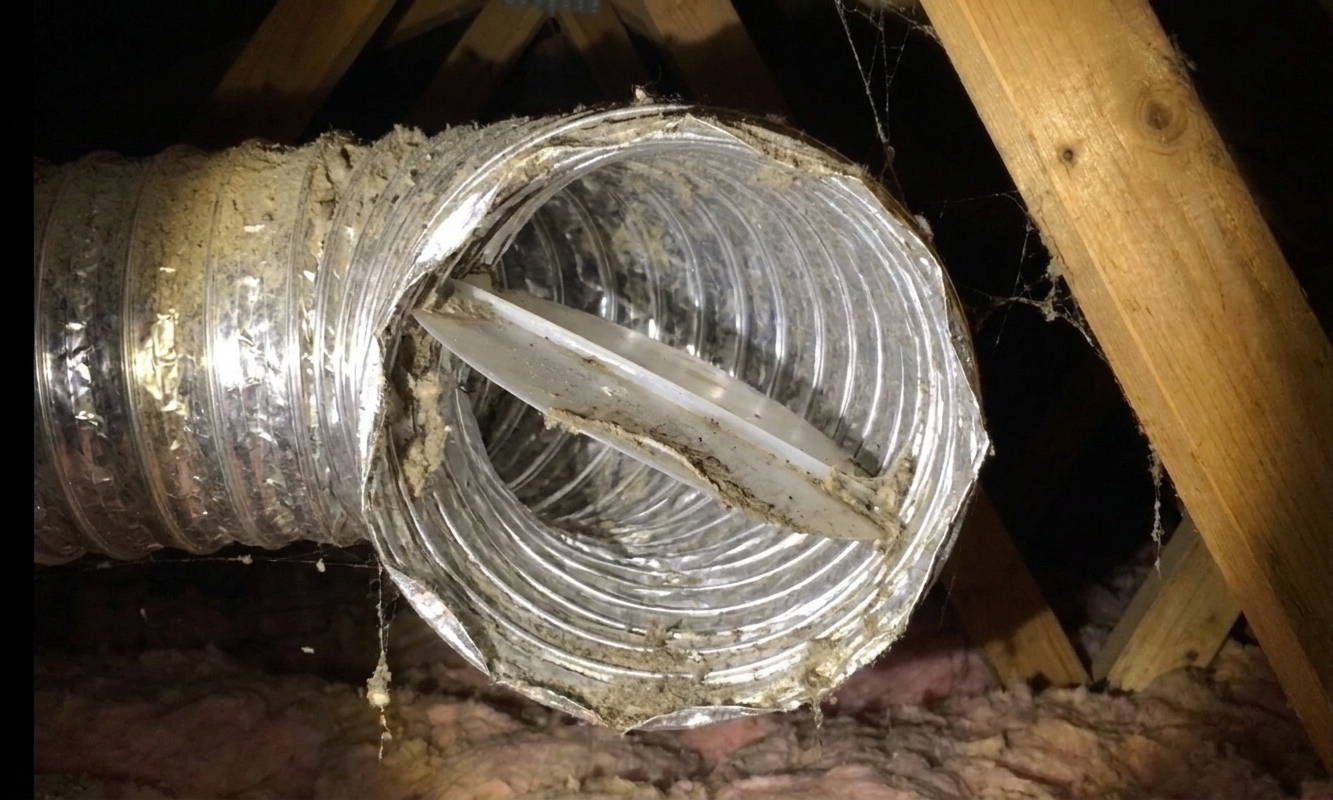
Most fans and exterior vent caps include a backdraft damper , a little flap that opens when the fan runs and closes when it is off to keep cold air, pests, and smells from coming back in. When that flap sticks shut, your fan is basically trying to breathe through a closed door.
Where dampers hide
- Inside the fan housing (common).
- At the exterior wall or roof cap (also common).
- Sometimes both, which can be fine. Many exterior caps have light flappers and do not cause trouble. The issue is when you end up with two stiff dampers on a weak fan, or one that is sticking.
What to do
- With power off, check the damper flap for paint, drywall dust, insulation, or warped plastic.
- Make sure the duct is connected in the correct direction so the damper can swing open.
- Clean the hinge area and confirm it moves freely.
Cause 4: Exterior vent blockage
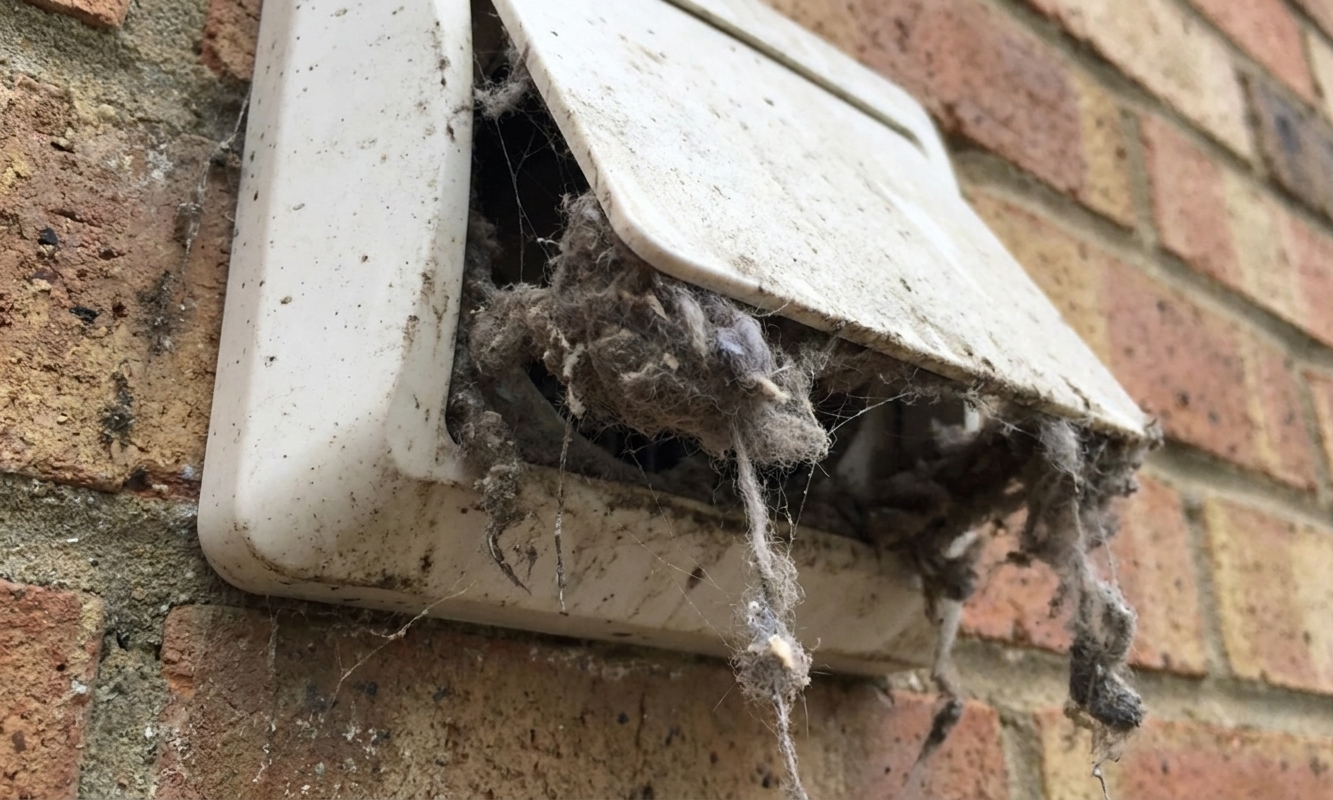
If the fan is clean and the duct looks decent, go outside and check the termination point. Exterior hoods can clog with lint, spider webs, and in some cases, bird nests.
How to check it
- Turn the fan on.
- Go outside and feel for airflow at the vent hood.
- If airflow is weak or nonexistent, remove the hood cover if accessible and safe.
Fix
- Clear lint and debris by hand (gloves help) and vacuum what you can.
- Confirm the louvers open when the fan runs.
- If you find nesting material, remove it and consider a pest-resistant vent hood designed for bath fans (not a screen that clogs instantly).
Quick reality check: If you cannot find the exterior termination, that is a clue by itself. Track the duct and confirm it actually goes outdoors. In a pinch, a little incense smoke near the grille can help you confirm direction of airflow, but do not set off your smoke alarm for fun.
Important: If the vent is on a roof and you are not comfortable up there, do not force it. This is one of those times where paying for a service call is cheaper than a fall.
Cause 5: Fan is undersized
Sometimes everything is clear, but the fan simply is not powerful enough. Builder-grade fans are often minimal, and years later we add better showers, thicker towels, and longer hot showers. The humidity load goes up, the fan stays the same.
Right-sizing basics
A common quick guideline is 1 CFM per square foot of bathroom area, with a practical minimum of 50 CFM for small baths. Example: a 70 sq ft bathroom often does well with a 70 CFM fan, and many homeowners choose 80 to 110 CFM for better real-world performance.
Worth knowing: Codes and standards vary. Many guidelines reference targets like 50 CFM intermittent or about 20 CFM continuous for a bathroom. Also, the fan’s rated CFM is typically measured at a specific test pressure (often around 0.1 in. w.g.). Real ducting adds resistance, so what you get at the grille can be lower, sometimes a lot lower if the duct run is long or undersized.
Two sizing gotchas
- Long duct runs need more fan. The longer and twistier the duct, the more CFM you lose to resistance.
- Quiet fans get used. If your current fan is loud, people shut it off early. A quieter unit (lower sones) often improves humidity removal simply because it actually runs.
Also, if you have a jetted tub or a large shower, consider bumping the fan size up. Steam does not care that the builder saved $18 in 1998.
Cause 6: Fan is worn out or wrong type
Fans get tired. Motors weaken, blower wheels crack, bearings get noisy, and performance drops even if it still spins.
Also, double check you actually have an exhaust fan, not a rare oddball that recirculates air through a filter. Most bathroom fans exhaust outdoors, but I have seen some strange choices in remodels.
Signs replacement is smarter
- The fan is very loud (grinding, rattling, squealing).
- The tissue test fails even after cleaning the grille and blower.
- You have verified the duct is clear, appropriately sized, and properly routed to the exterior.
- The housing is old and parts are not worth hunting down.
- You see recurring mold spots on the ceiling or peeling paint despite running the fan.
Replacement upgrades that help
- Higher CFM (right-sized for your room and duct run).
- Lower sones (quieter).
- Humidity-sensing switch or fan that runs until moisture drops, not until someone remembers.
- Better ducting at the same time if yours is crushed, too long, or too small.
- Air sealing around the fan housing (from the attic side) to keep moist air from leaking into the attic around the box. This matters more than people think.
Code note: If your fan is over a tub or shower, local code may require specific wet-location ratings and GFCI protection depending on the setup. If you are not sure, this is a good time to ask an electrician or your local inspector what they want to see.
Troubleshooting order
- Clean the grille. Re-test.
- Clean the blower wheel if accessible. Re-test.
- Confirm makeup air by cracking the door. Note improvement.
- Inspect duct for kinks, sags, crushed sections, leaks, wrong size, or exhausting into the attic.
- Check exterior vent hood for blockage and proper flap movement.
- Check backdraft damper for sticking.
- Evaluate fan size and condition. If everything else is good, it is likely undersized or worn out.
Common questions
How long should the fan run?
Many bathrooms do better with 20 to 30 minutes after a hot shower. Use the mirror and humidity as your guide. If the fog clears quickly and the room does not feel damp, you are in the right ballpark. A timer switch makes this painless.
Why does it work better in summer?
Cold weather can make dampers stick, increase backdraft issues, and make duct condensation more likely. Also, winter air is often drier indoors, so steam behavior can feel different. If performance drops only in winter, check the exterior hood flap and the backdraft damper first, then look for condensation sagging the duct.
Can I vent into the attic?
No. You are dumping warm, wet air into a cold space. That is a recipe for mold and roof sheathing damage. Always vent to the outdoors.
My mirror still fogs. Is that normal?
A little fogging can be normal, especially with very hot showers. But if the room stays humid long after, or you see peeling paint or mildew, your ventilation is not keeping up and you should troubleshoot.
When to call a pro
DIY is great, but I also like everyone staying alive and mold-free.
- If you suspect the fan is venting into a wall or attic and you cannot trace the duct safely.
- If the vent termination is on a steep roof.
- If you find significant mold, soaked insulation, or rotted roof sheathing.
- If electrical wiring looks damaged or improvised.
If you do end up replacing the fan, consider doing it once and doing it right: correct CFM, quiet enough to actually use, ducted properly to the outdoors, and sealed and insulated where needed. Your bathroom will feel less like a sauna, and your paint will stop trying to escape the ceiling.