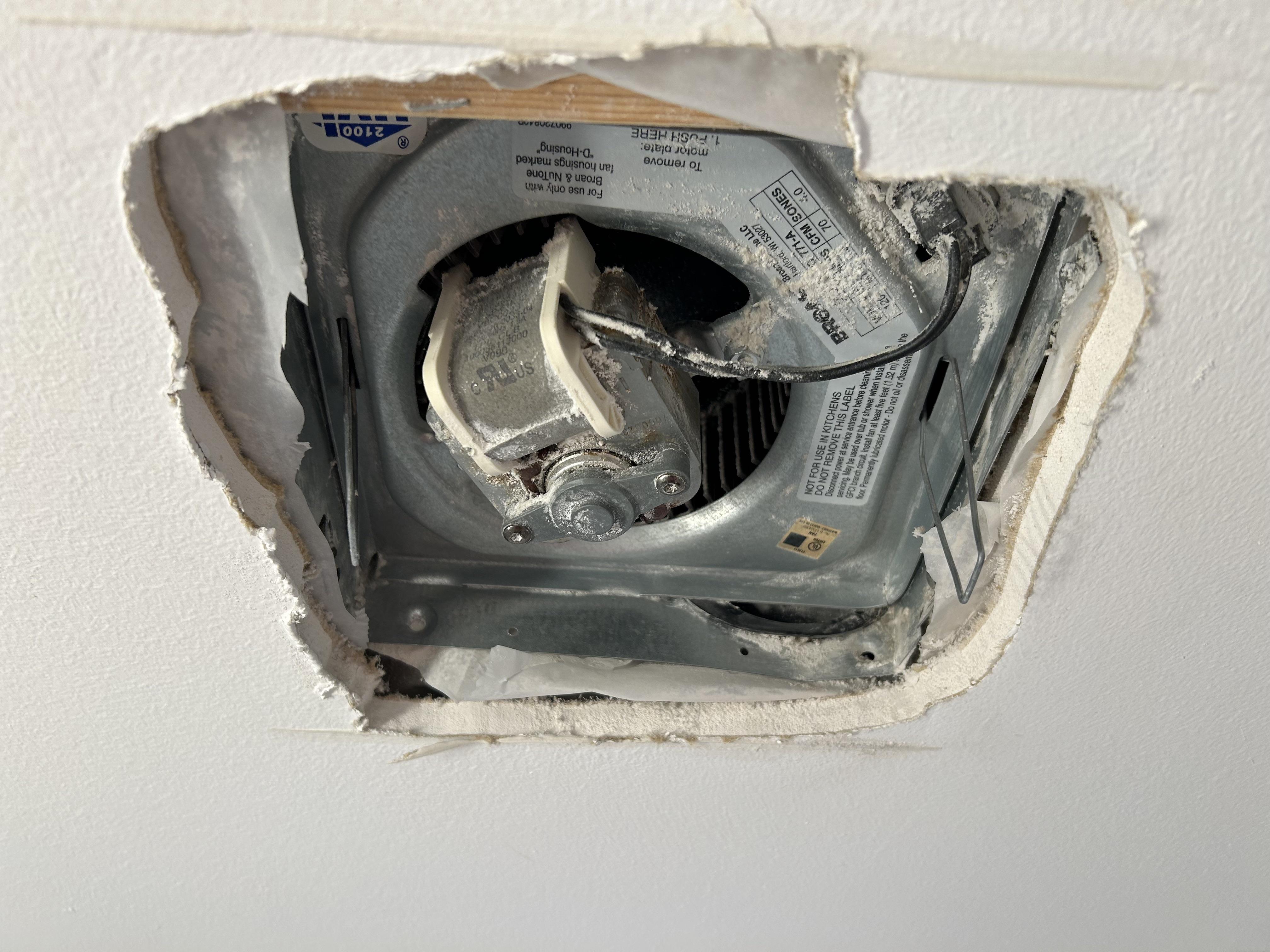
Troubleshoot a weak or noisy bathroom fan with safe checks you can do first, plus clear decision points for when it is time to call a pro.
The Homeroom Fix
September 26, 2026
•
By Marcus Delgado
Bathroom Fan Not Removing Steam? 7 Fixes to Try First
If your bathroom fan runs but the mirror still fogs up, work through these 7 DIY fixes in order, from cleaning the grille to checking the duct, makeup air, and sizing the fan.

Marcus Delgado
Marcus Delgado is a former residential carpenter and lifelong DIY enthusiast who believes every homeowner has the power to transform their space. After a decade of swinging hammers for general contractors, he shifted gears to share practical, budget-friendly home improvement advice. When he's not renovating his own 1970s fixer-upper, you can find him hunting for salvaged wood or teaching weekend workshop classes.
If your bathroom exhaust fan sounds like it is doing its job but your mirror still looks like a ghost is writing messages on it, you are not alone. Most of the time the fan is not “broken” so much as it is blocked, leaking, or asked to do more than it can.
Below is the order I use when I am troubleshooting a steamy bath in a real house. Start at Step 1 and stop as soon as you find the issue. You will save time, avoid attic gymnastics, and keep your drywall from becoming a science experiment.
Before you start: 2-minute check
Make sure it vents outdoors
I have opened plenty of ceilings where the “exhaust” fan was dumping moist air straight into the attic. That will never clear steam well, and it can lead to mold and roof sheathing damage.
- Look outside for a roof cap or an exterior wall hood. You might find a wall hood under the eave area, but it should be venting through the wall, not into the soffit.
- Run the fan and see if you feel air coming out at the exterior cap.
- No exterior vent you can find? Put “inspect duct routing” (Fix #4) at the top of your list.
Ventilate long enough
Most bathrooms need the fan running during the shower and for 15 to 20 minutes after. If your switch has no timer, this is one of the cheapest upgrades you can make.
The fast diagnostic order
- Grille and housing clogged with dust? Fix #1
- Weak airflow at the grille? Fix #2
- Backdraft damper stuck closed? Fix #3
- Duct problem (disconnected, crushed, too long, sagging, uninsulated)? Fix #4
- Makeup air issue (tight room, door sealed)? Fix #5
- Electrical or control issue causing low speed? Fix #6
- Fan undersized or wrong type for the room? Fix #7
Fix #1: Clean the grille and housing
Bathroom fans are lint traps. Over time, dust mats onto the grille and blades, cutting airflow dramatically even though the motor still runs.
What you need
- Step stool
- Vacuum with brush attachment
- Warm soapy water and a rag
- Screwdriver (sometimes)
Steps
- Turn off power at the breaker. The switch is fine for popping the grille off, but breaker off is the safer default when you are vacuuming up inside the housing.
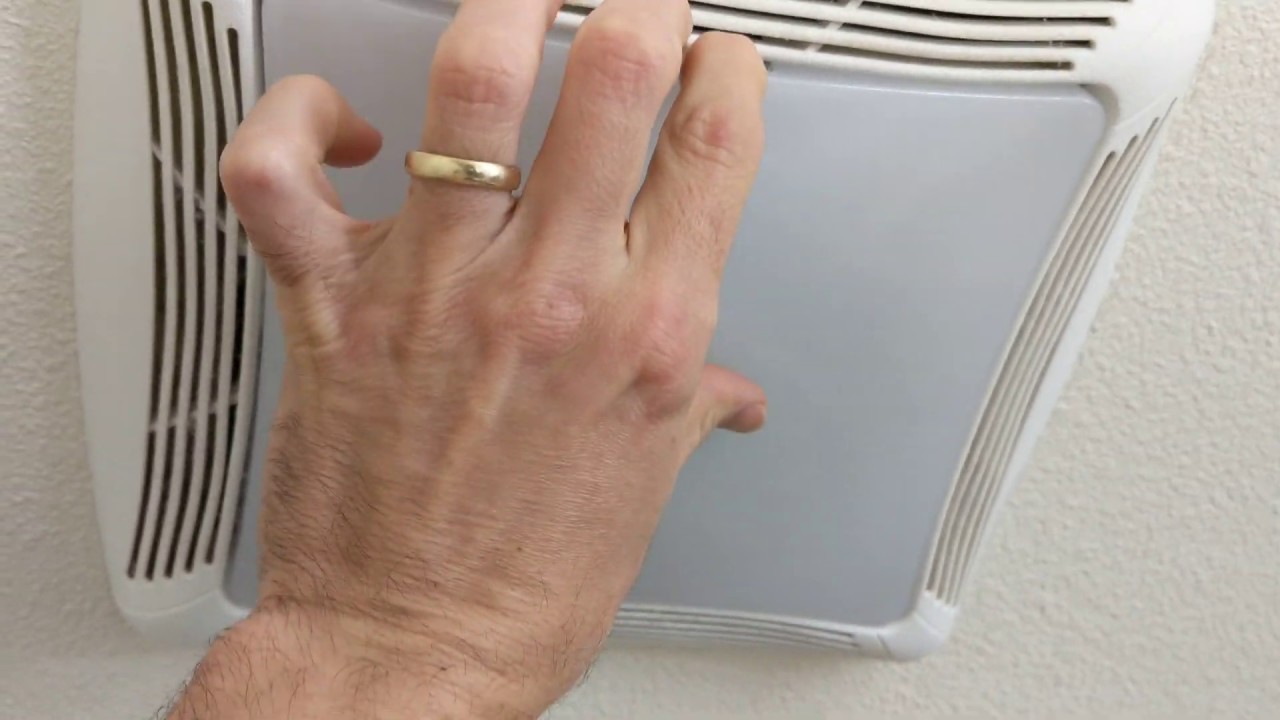
- Pull down on the grille. Most are held by two spring clips. Squeeze the clips to release.
- Do not bend the spring clips. Pinch them, guide them out, and guide them back in. If you warp them, the grille never sits flat again.
- Wash the grille in the sink, dry it well.
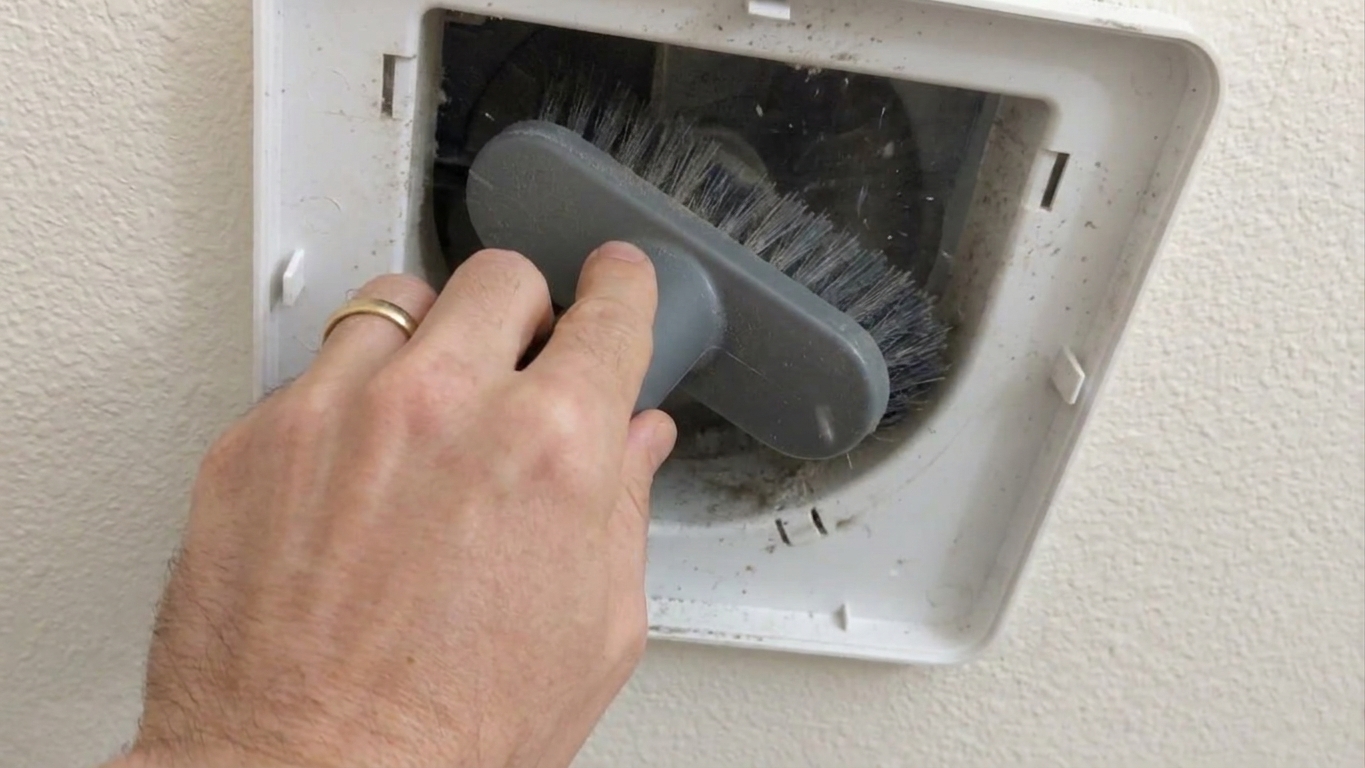
- Vacuum inside the housing. If you can see the blower wheel, vacuum what you can reach without forcing anything.
- Put the grille back and test.
Pro tip: If the grille is yellowed and greasy, that is fine. If it is fuzzy with dust, that is airflow you are losing.
Fix #2: Test airflow (do not trust noise)
A loud fan can still move very little air. Let’s check whether it is actually pulling.
The tissue test
- Turn the fan on.
- Hold a single square of toilet paper or tissue flat against the grille.
- Good: it sticks firmly.
- Bad: it barely hangs on or falls.
If it fails this test after cleaning, move on. You likely have a damper or duct issue, a makeup air issue, or the fan is simply too weak for the setup.
Fix #3: Check the backdraft damper
Most fans have a damper, either built into the fan housing or at the exterior wall or roof cap. It is a simple flap that opens when the fan runs and closes when it is off to keep cold air and critters out.
If the damper is stuck closed, your fan is basically trying to breathe through a closed door.
What to do
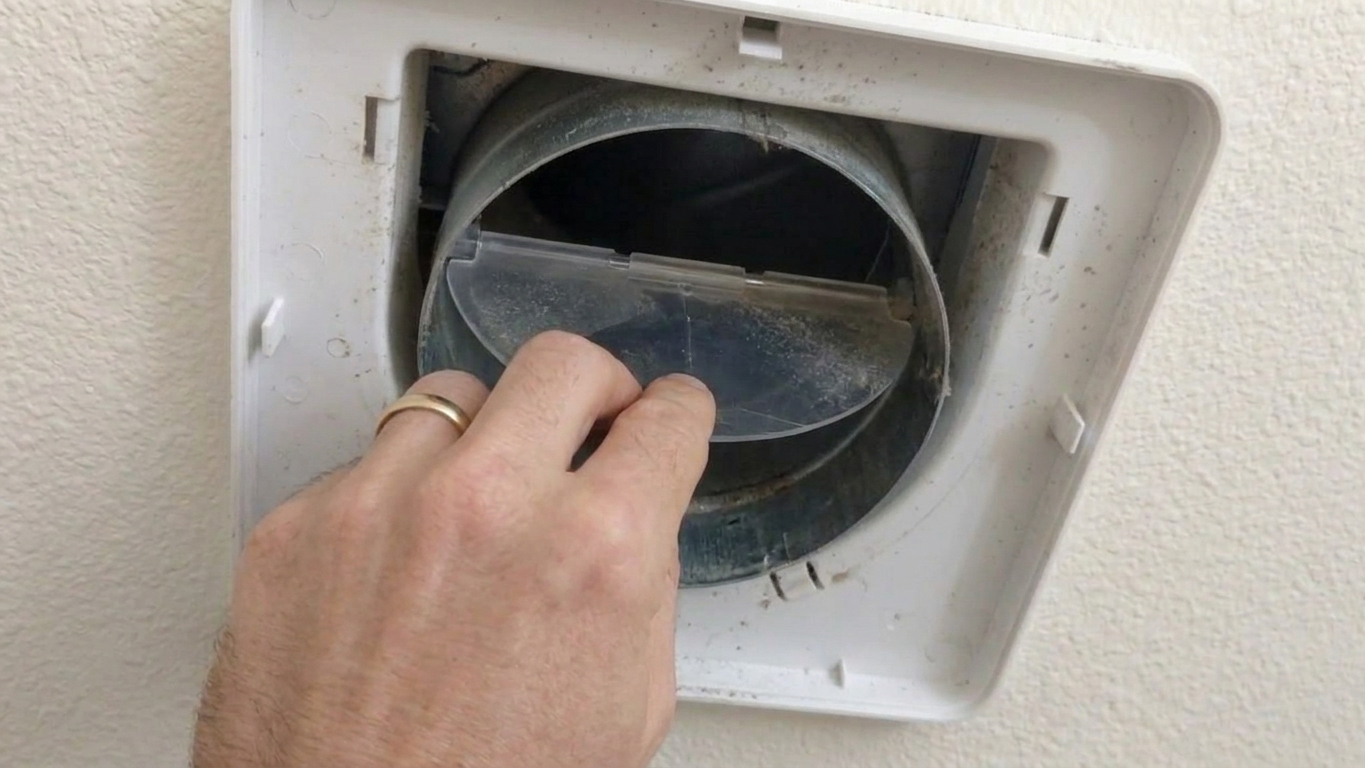
- At the fan: With power off, remove the grille and look for a plastic or metal flap near the duct connection. Gently move it. It should swing freely.
- At the exterior vent: If you can safely reach it, make sure the louvers move when the fan is on. Bird nests and paint overspray are common culprits.
Safety note: If checking the roof cap means climbing on a roof you do not feel 100 percent comfortable on, skip it and check from the attic instead, or hire it out. No bathroom is worth a fall.
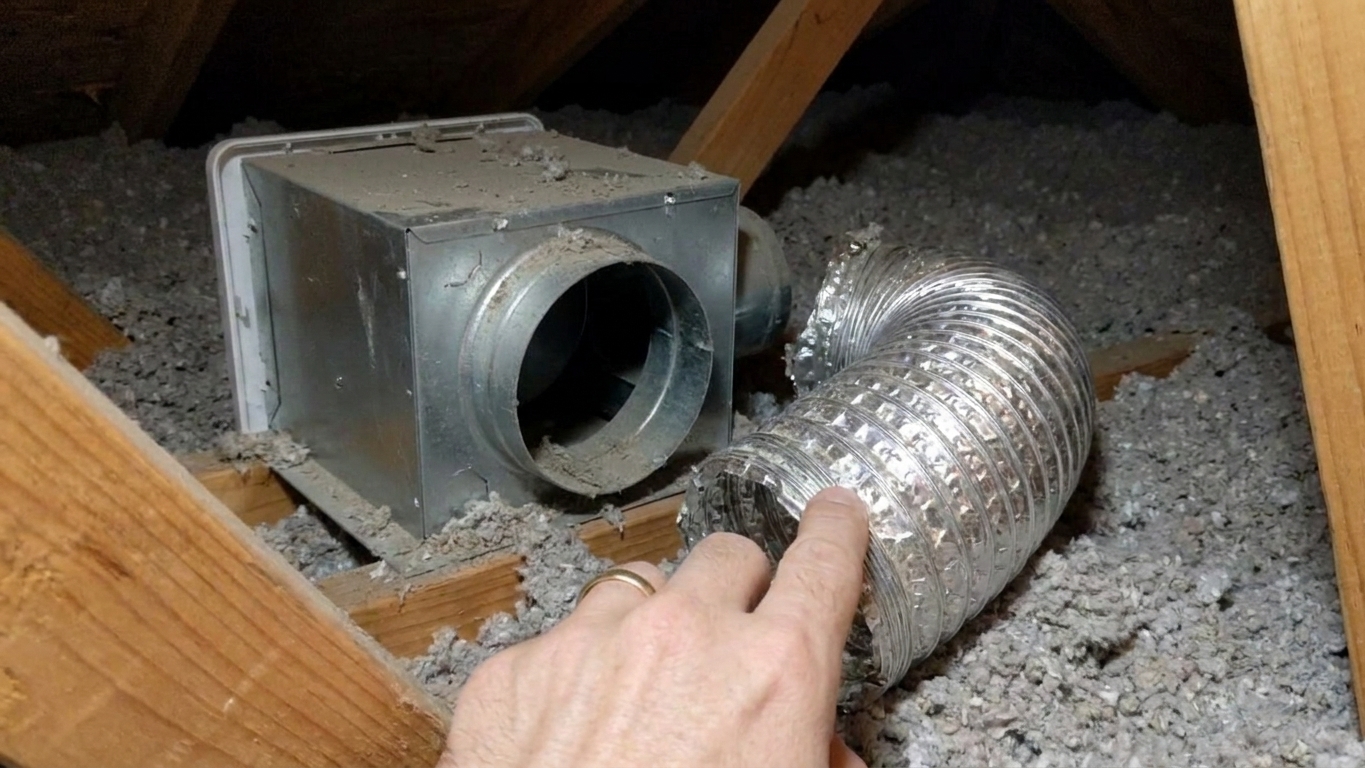
Fix #4: Inspect the duct run
If the fan is clean and the damper moves, the next suspect is the duct. A bath fan can be perfectly fine but still underperform because the duct is fighting it the whole way.
Common duct problems
- Disconnected duct in the attic, so it is venting into the attic.
- Crushed or kinked flexible duct that chokes airflow.
- Too long or too many turns, especially with 3-inch ducting.
- Sags that collect condensation like a little humid air hammock.
- Uninsulated duct in cold climates, which encourages condensation and dripping back toward the fan.
- Wrong termination, such as ending at a soffit where moist air can get pulled right back into the attic.
What good looks like
- Duct is connected tight to the fan and to the exterior cap with foil HVAC tape or clamps.
- Run is as short and straight as possible.
- Duct is supported so it does not droop.
- In cold areas, the duct is insulated or you are using insulated flex.
- Where you have the choice, 4-inch smooth-wall duct tends to move air better than long, twisty flex.
If you find a disconnected duct, reconnecting it properly can be a night-and-day fix.
Fix #5: Check makeup air
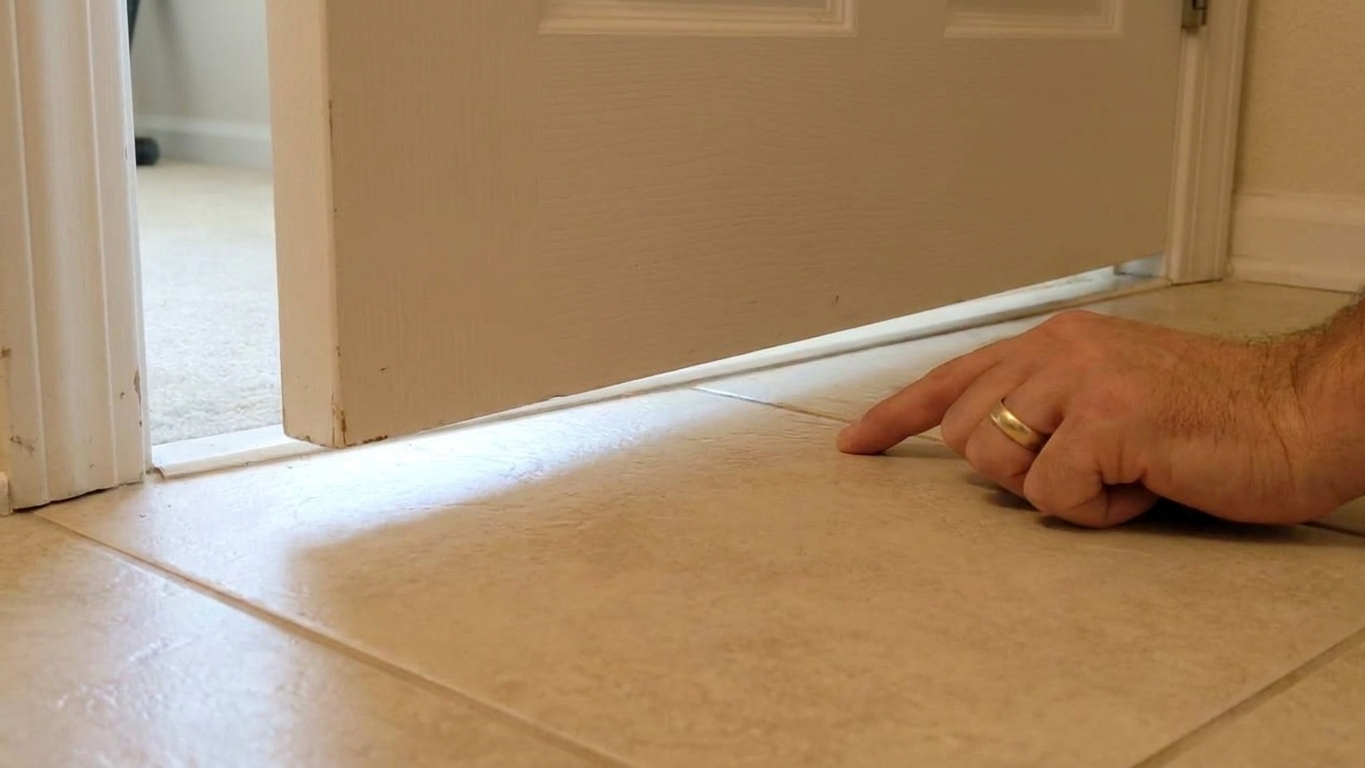
Exhaust fans cannot pull much air out if fresh air cannot get in. This is more common in tight homes, newly weatherstripped bathrooms, and baths with a door sweep that seals the bottom like a submarine hatch.
Quick checks
- Crack the door during the tissue test. If airflow improves, you have a makeup air problem.
- Look at the door undercut. Many bathrooms need a bit of gap at the bottom of the door (or a transfer grille solution) so air can flow.
- If there is a window, cracking it briefly can help, especially during a very hot shower.
This is not a substitute for a properly ducted fan, but it can be the missing link when everything else looks fine.
Fix #6: Rule out electrical and control issues
Bath fans are usually simple, but a few electrical quirks can make them underperform.
Things to check
- Is the fan on a dimmer or generic speed control? Exhaust fans should be on a standard switch, a timer, or a control that is specifically fan rated and approved for that model. Some fans do support variable speed with the right control, but many do not.
- Does it sound strained, or does it start slowly? That can point to a failing motor or a blower wheel dragging due to grime.
- Loose wiring connections can reduce performance or cause intermittent running. If you are not comfortable working in an electrical box, this is a good “call a pro” moment.
When to stop and call an electrician: If the breaker trips, you smell burning, the housing is hot to the touch, or wiring insulation looks damaged, shut it down and get help.
DIY-friendly upgrade: A 5-10-15-30 minute timer switch makes it much more likely the fan actually runs long enough to clear humidity. This is one of my favorite small bathroom upgrades.
Fix #7: Make sure the fan is sized right
Sometimes everything is “working” and it still steams up because the fan is undersized, especially in older homes. A small fan with a long duct run is like trying to drink a milkshake through a coffee stirrer.
Easy sizing rule
For a standard bathroom ceiling height, a quick guideline is:
- Bathroom square footage = minimum CFM (cubic feet per minute)
Example: A 5 ft by 8 ft bathroom is 40 square feet, so 40 CFM is the math-based minimum.
Real-world caveat: Many local codes and common manufacturer recommendations effectively land at 50 CFM minimum for a typical full bathroom (or around 20 CFM continuous with a continuous-duty setup). If you are choosing between sizes, it is rarely a mistake to step up to a quiet 50 to 80 CFM unit, especially if your duct run is not perfect.
When to go bigger
- High ceilings
- Long duct run or multiple elbows
- Steam-heavy showers (multiple daily showers, very hot showers)
- Older leaky bathrooms where moist air migrates into walls and ceilings
Noise matters (sones)
If you are upgrading anyway, look at the sone rating too. Lower sone is quieter. Quiet fans tend to get used more, and a fan that runs is better than a fan everyone avoids because it sounds like a leaf blower.
Why it matters
Persistent humidity in a bathroom is hard on your home:
- Peeling paint and bubbling drywall
- Mildew and mold growth on ceilings and grout
- Swollen trim and sticking doors
- Musty smells that never quite leave
If you have a window, crack it during and after showers too. Think of it as giving your fan a helpful sidekick.
Quick FAQ
How long should a bathroom fan run after a shower?
Typically 15 to 20 minutes. If your mirrors stay fogged longer than that, you likely have an airflow, duct, makeup air, or sizing issue.
My fan is venting into the attic. Is that really a big deal?
Yes. Moist air in an attic can lead to mold and rot. The duct should terminate at a proper roof cap or exterior wall hood.
Can I just install a stronger fan in the same opening?
Sometimes, but not always. Higher CFM units may need a different housing size, a larger duct (common jump is 3-inch to 4-inch), and solid duct routing to get the benefit. If the duct is the bottleneck, a stronger fan alone will not fix it.
What is the quickest win if I do not want to open the attic today?
Clean the grille and housing (Fix #1), then add a timer switch so the fan runs long enough. If you suspect a tight room, crack the door and repeat the tissue test.
When to replace the fan
If you have cleaned it, confirmed the damper and duct are correct, and it still fails the tissue test, replacement is usually the practical move. Fans do wear out, and older units were often smaller and louder.
To ballpark your replacement size, measure your bathroom’s length and width to get the square footage, then use that number as your starting CFM target. In many full baths, you will end up at 50 CFM or more once you account for real ducts, real elbows, and real life.