
Why Is My Garbage Disposal So Loud?
If your garbage disposal still spins but it’s suddenly rattling, clanking, scraping, or squealing, it usually comes down to a loose object, internal wear or damage, or a loose mounting ring. Here’s how to diagnose and quiet it safely.
The first time a garbage disposal gets loud, it can feel like a tiny wood chipper is trying to escape through your sink. The good news is this specific situation matters: if the disposal still turns and grinds, you are usually looking at a simple mechanical issue like something rattling around in the chamber, a worn internal part, or a mount that has loosened up over time.
This guide focuses on disposals that do spin but are noisy. If yours is humming and not turning, or totally silent, that is a different problem with a different fix.
Quick checklist if it spins but is loud
- Run cold water, flip it on for 1 second, then off.
- Kill power.
- Check for a loose object in the chamber.
- Rotate the plate from below with a hex key if your model has the socket.
- Check for loose mounting and anything touching the unit under the sink.
- Test again with cold water, then with a small amount of scraps.
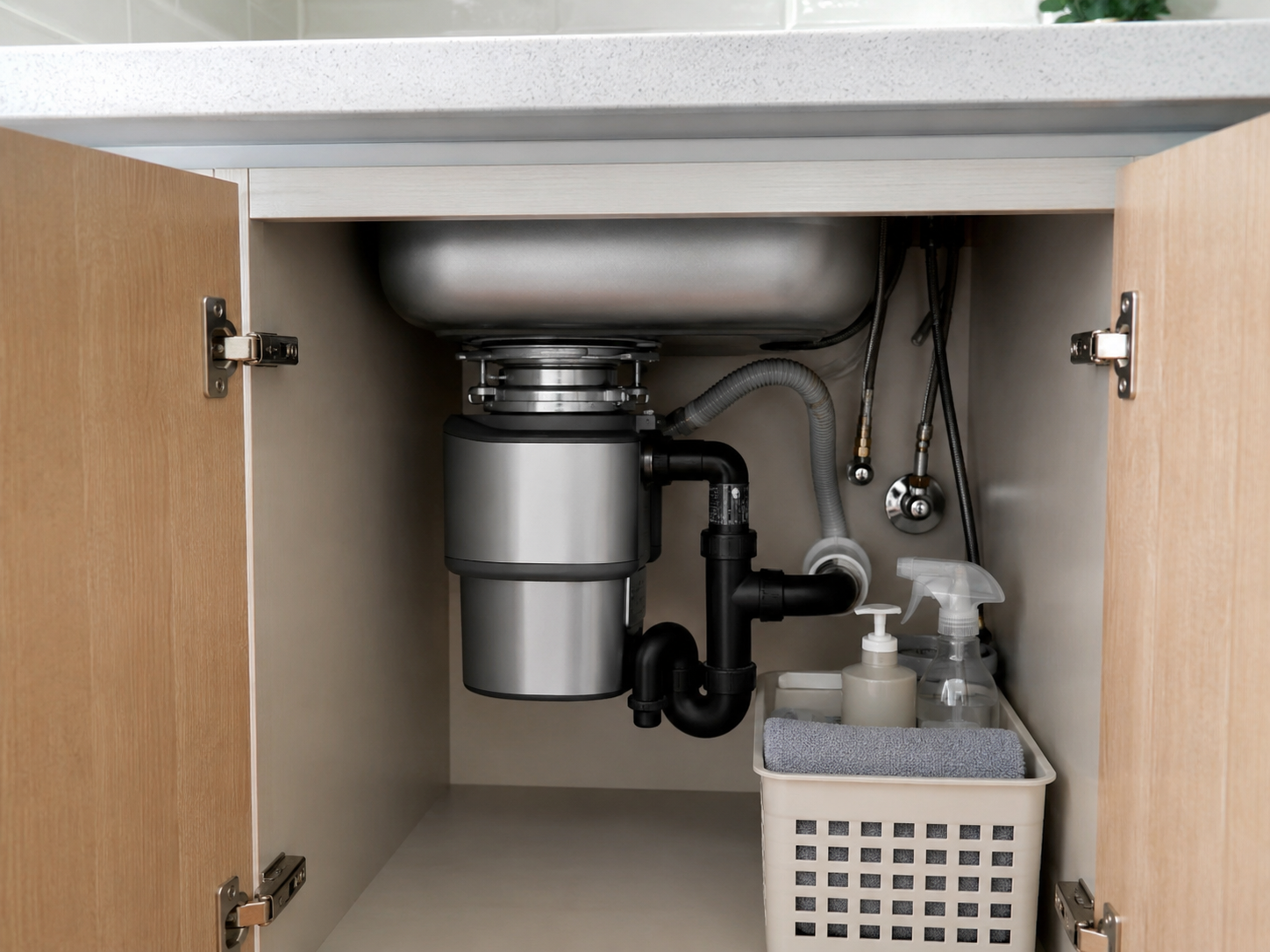
Identify the noise
The sound you are hearing is your biggest clue. Here are the most common noise types for a disposal that still spins:
- Rattling or clanking (like a coin in a dryer): usually a loose object inside the grinding chamber.
- Metallic scraping: something hard is being dragged around, or an internal part is bent, warped, or worn.
- High-pitched squeal or scream: can indicate a failing motor or bearing set, or something rubbing internally. In most homeowner units, it is not a serviceable repair.
- Violent shaking under the sink: a loose mounting ring or loose hardware, or the disposal body vibrating against a pipe or cabinet wall.
Before you do anything else, run a quick test: turn on cold water, then flip the disposal switch for one second, then off. If the noise is immediate and harsh, stop and inspect. Letting it “grind it out” is how small problems become replacement day.
Safety
I know, I know. You just want to reach in and grab whatever is making the racket. Do this instead:
- Turn off the switch at the wall.
- Unplug the disposal under the sink if it has a cord.
- If it is hardwired, turn off the breaker that feeds the disposal.
- Confirm power is off by flipping the switch. Nothing should happen.
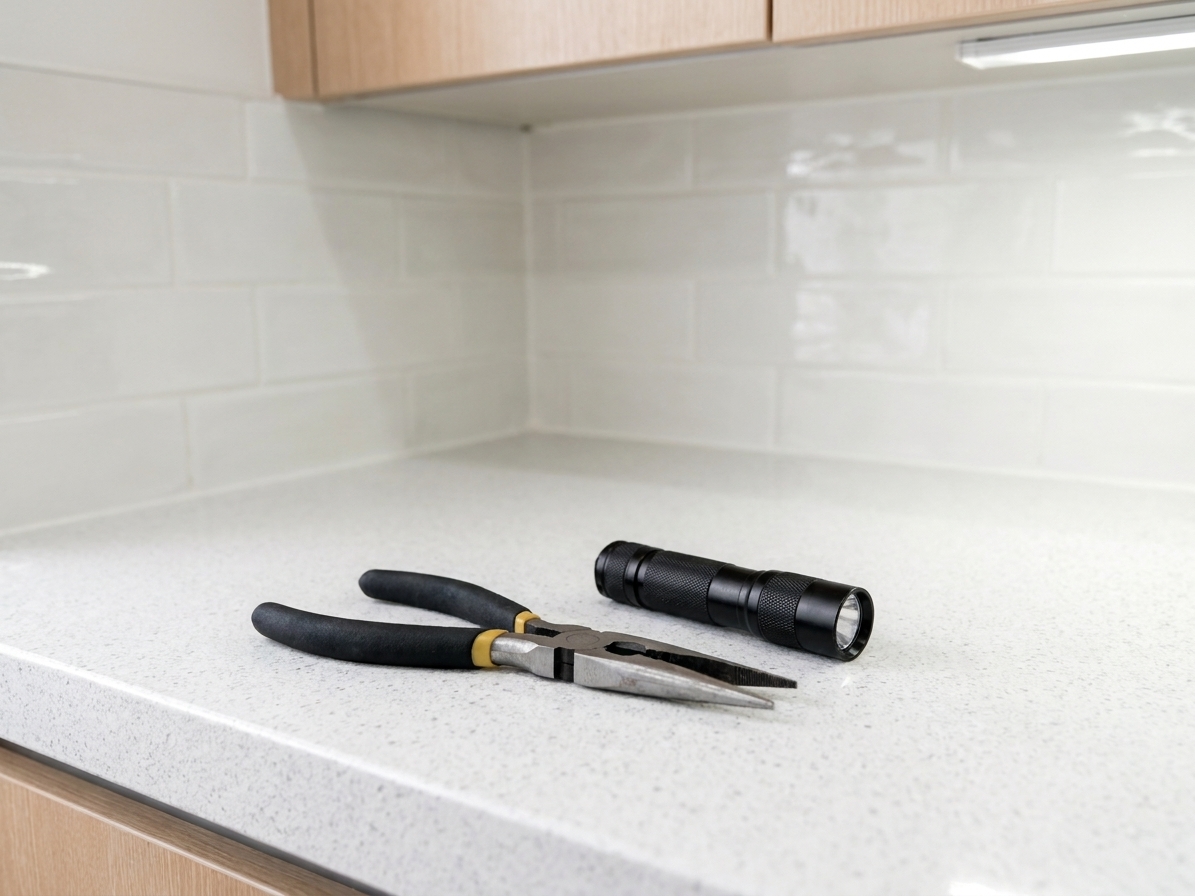
Important: Never put your hand into a disposal chamber, even “just a little.” Use tongs, pliers, or a grabber tool.
Cause 1: Loose object
This is the classic. A bottle cap, small bone fragment, fruit pit, twist tie, piece of glass, or a dropped spoon can get bounced around by the spinning plate and make a nasty clatter.
How to check
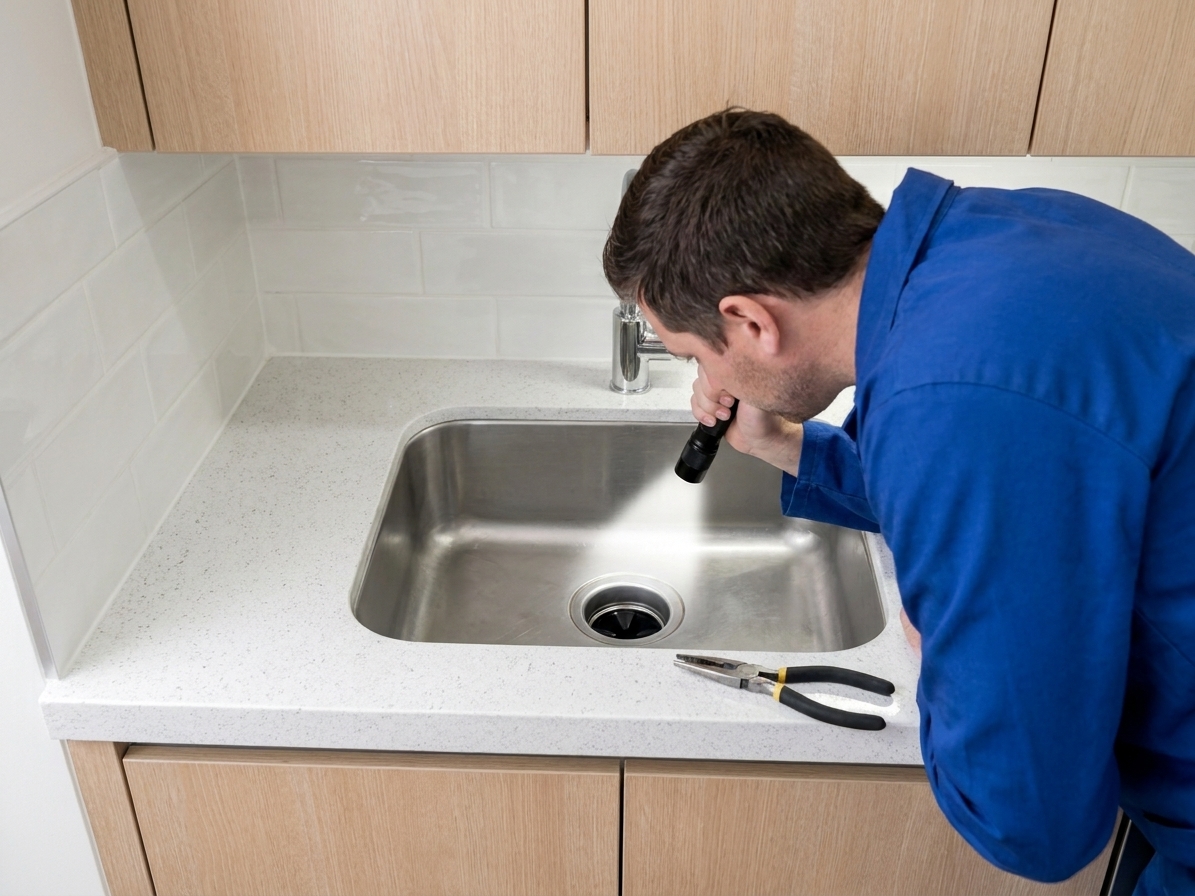
- Shine a flashlight down into the drain opening.
- Look for anything wedged between the rubber splash guard flaps and the inner wall.
- Use tongs or needle-nose pliers to pull it out.
After you remove it
- Restore power.
- Run cold water.
- Turn the disposal on for 3 to 5 seconds.
- If it sounds normal again, you are done.
If it is still rattling, you may have a second object or something that is not obvious from above.
Deeper check
With power off again, try rotating the grinding plate from below if your model has an access point:
- Look under the disposal for a hex socket in the center of the bottom.
- Insert an Allen wrench (commonly 1/4 inch, but it varies).
- Rotate back and forth to help dislodge hidden debris.
Then recheck from above with the flashlight.
Cause 2: Bent or damaged grind ring
If your disposal makes a sharp scrape or a steady metal-on-metal sound, the problem is sometimes not “a thing stuck in there” but a part that got tweaked by a hard object. The grind ring (also called a shredder ring on some models) can get nicked or warped, or an impeller can get bent. The unit may still spin, but it will sound awful doing it.
Clues this is the issue
- The noise started right after grinding something hard (fruit pit, bone, utensil).
- You removed the obvious debris, but the scraping sound stayed.
- The disposal runs, but it feels rougher and louder than it used to even with mostly water.
What to do
On some models, certain components are replaceable. In practice, most homeowner-grade disposals are not economically rebuildable, and the labor and parts often get you uncomfortably close to the price of a new unit. If the sound is clearly metal-on-metal and you cannot find a loose object, replacement is usually the sane move.
Cause 3: Worn internal parts
Inside the disposal, the spinning plate and impellers do the work of slinging food into the grind ring. Over time, those parts can wear down, get pitted, or loosen slightly. When that happens, the unit may still “work,” but it gets louder and harsher, especially with normal loads like potato peels or ice.
Signs wear is the real issue
- The disposal is getting louder over months, not suddenly overnight.
- You hear a higher-pitched squeal or a rough grinding sound even with mostly water.
- It vibrates more than it used to, and you cannot find any foreign object inside.
- The unit is older and has processed a lot of tough waste (bones, fibrous peels, coffee grounds).
What you can do
Most disposals are sealed and not designed for a meaningful DIY rebuild. Some models have replaceable parts (like splash guards, and occasionally internal rings), but it is often not cost-effective versus swapping the unit. Realistically, your options are:
- Reduce what you feed it and see if it stays tolerable for a while.
- Quiet it a bit by tightening the mount (next section) and checking for vibration contact.
- Replace the disposal when the noise is unbearable or performance drops.
If your disposal sounds like metal-on-metal even with nothing inside and a tight mount, wear or internal damage is usually the answer. At that point you are not doing something wrong. The unit is just telling you it is tired.
Cause 4: Loose mount or vibration
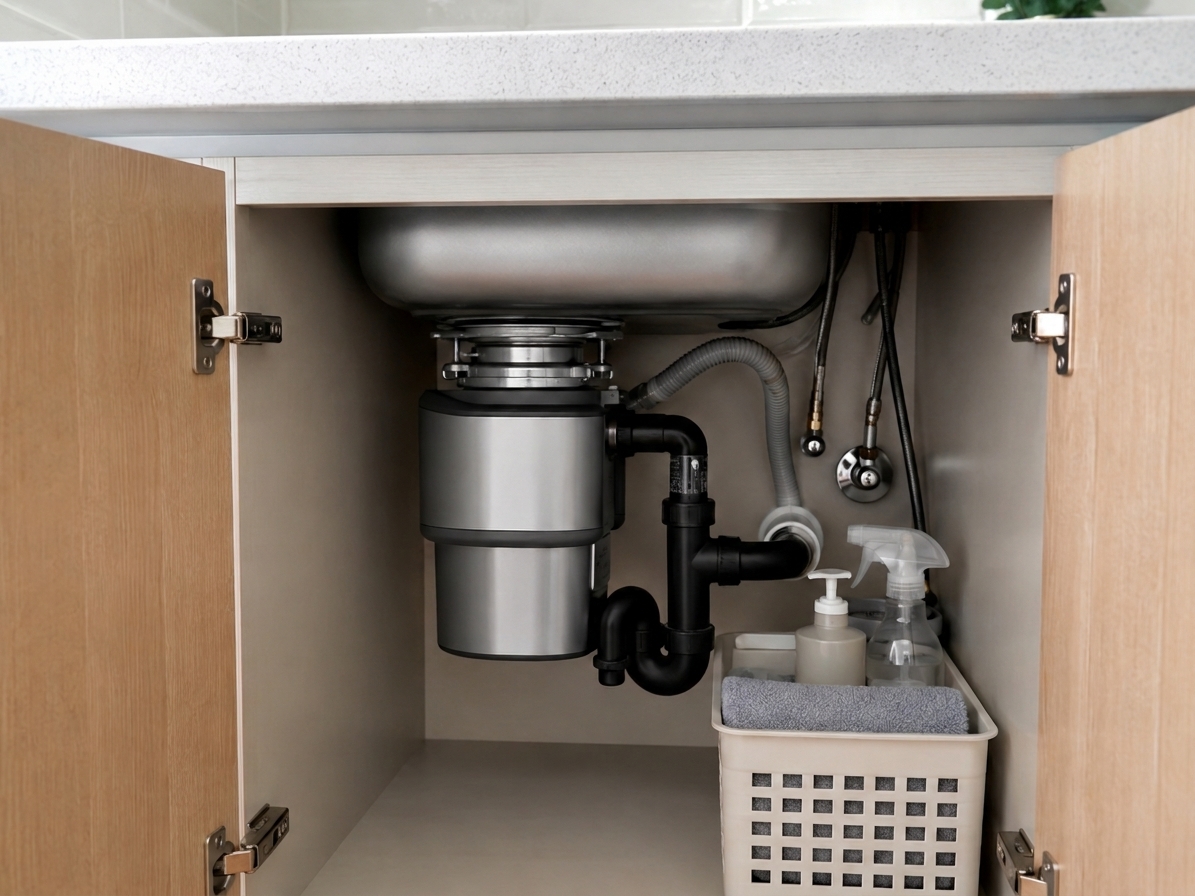
A garbage disposal hangs from the sink flange using a mounting ring assembly. If that ring loosens, or if the body of the disposal is touching a cabinet wall, drain pipe, or supply line, the vibration turns into a loud rattle fast.
Quick vibration check
- With the disposal off, crawl under the sink with a flashlight.
- Look for anything touching the disposal housing: cabinet side panels, cleaning bottles, a fallen sponge, the drain trap, or a water line.
- Move anything that is in contact.
How to tell the mount is loose
- Grab the disposal body with both hands and gently try to wiggle it.
- A tiny bit of movement can be normal, but clunking or obvious shifting is not.
Tighten the mounting ring
Mount styles vary, but the basic idea is the same: you snug the mounting ring so the unit is firmly clamped to the sink flange.
- Turn power off (unplug or breaker).
- Support the disposal from below with one hand or rest it on a small box.
- Locate the mounting ring just below the sink bowl.
- Use a screwdriver to turn the tightening lugs or ring tabs in the tightening direction until snug.
- Recheck: the disposal should feel secure, not wobbly.
Do not crank it like you are tightening lug nuts on a truck. Snug and stable is the goal.
Quiet test
Once you have checked for objects and snugged the mount, test in a controlled way:
- Turn on cold water and let it run.
- Flip the disposal on for 5 seconds.
- Listen for the original noise.
- If it sounds normal, add a few small scraps and test again.
If the noise only happens when you add food, you may be dealing with either a small object you missed or worn grinding components that are struggling under load.
What not to do
- Do not pour harsh drain chemicals into the disposal hoping it “lubricates” something. It will not fix a rattle and can damage seals and plumbing.
- Do not stick a wooden spoon handle inside to “hold it still” while you look around. Power can be restored accidentally.
- Do not keep grinding if you suspect a hard object. That is how you chip the grind ring and turn a simple fix into a replacement.
- Go easy on coffee grounds and fibrous peelings. They can contribute to sludge, clogs, and extra wear over time.
Replace or call a pro
I am all for repairing instead of replacing. I also like sleep, and a screaming disposal at 10 p.m. is not helping anyone.
Replacement is usually the practical move if:
- You have removed debris, tightened the mount, and it is still loud.
- The sound is a constant high-pitched squeal that seems to come from the motor area.
- The unit is leaking (even a little) from the body or bottom.
- It is older and performance is declining along with increased noise.
If you are on the fence, a good rule is: if it is loud with nothing but running water, the internal parts are likely worn or damaged enough that you will not “tune” it back to quiet.
When to call a pro
- It is hardwired and you are not comfortable working at the breaker or disconnecting wiring.
- The sink flange or mounting hardware looks cracked, corroded, or compromised.
- You see leaking at any plumbing connection and you cannot stop it with simple tightening.
- You suspect internal damage and you would rather not gamble on a DIY teardown or replacement.
FAQ
Is a loud garbage disposal dangerous?
Not automatically, but it is a warning sign. A rattle often means a hard object is inside, which can damage the grinding components. A loud squeal can indicate wear that may lead to failure. If the disposal is vibrating violently, it can stress plumbing connections over time.
Why did my disposal get loud all of a sudden?
Sudden noise is most often a foreign object that dropped in, or something like a fruit pit that finally worked its way into a spot where it can bounce around.
Can I use ice to quiet it down?
Ice can help knock gunk off the grinding area, but it will not fix a loose object, a loose mount, or worn or damaged parts. If your disposal is already making a harsh metallic noise, skip the ice until you inspect for debris first.
My disposal spins but sounds like rocks. What is that?
Usually glass, a small bone fragment, a fruit pit, or a piece of broken utensil. Kill power and fish it out with tongs or pliers.