
Why Does My Air Conditioner Smell Musty?
A musty, dirty-sock smell from your AC most often comes from moisture on the evaporator coil, a slimy drain pan, or a constantly damp condensate drain. Here’s how to track it down, clean it safely, and know when to call a pro.
Good grain. Great questions.
If your air conditioner smells musty, like a basement or dirty socks, the culprit is most often moisture plus something organic that wants to move in. That smell often shows up at the supply registers because the blower is doing its job: it is delivering air. Unfortunately, it can deliver odors too.
Let’s walk through the most common sources, how to tell them apart, and what you can clean yourself without turning your mechanical closet into a science project.
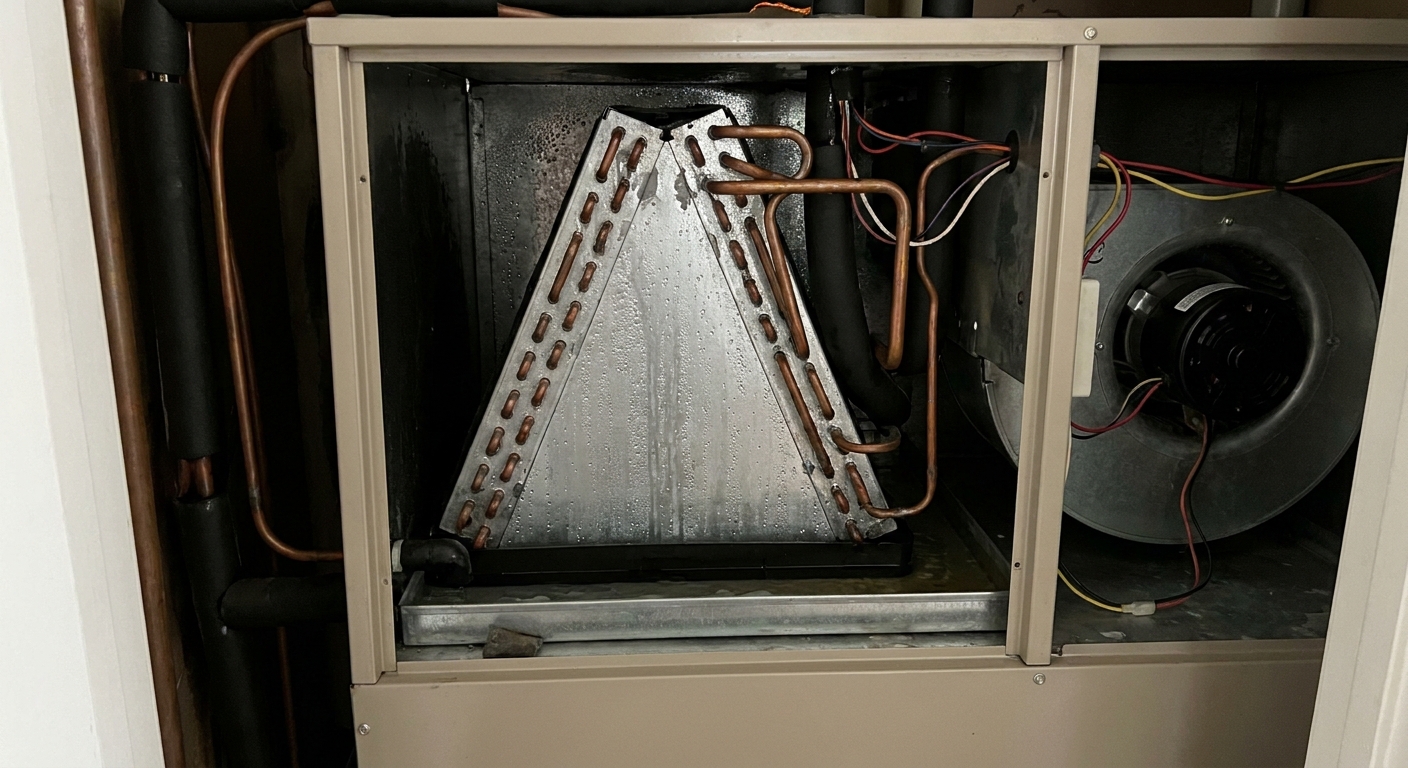
What a musty AC smell usually means
That musty odor is typically microbial growth (mold or mildew) feeding on dust, skin cells, or other debris that collected where the system stays damp. You can have a musty smell even if your condensate line is technically draining. All it takes is a wet surface that never fully dries, plus some buildup.
The usual trouble spots:
- Evaporator coil: constantly wet during cooling and great at catching dust.
- Drain pan: holds water if it is not sloped right, not draining fast enough, or is coated with slime.
- Condensate drain line and trap: can stay damp and biofilm-coated even when it is not clogged.
- Ductwork: less common, but possible if ducts got wet or are pulling humid air from a crawl space or attic.
Quick triage: where is the smell coming from?
First, rule out the “not musty” smells
A true musty or dirty-sock smell is usually moisture and buildup. But if the odor is not musty, do not troubleshoot it like a coil problem:
- Electrical, burning, fishy, or melting plastic: shut the system off and call a pro. That can be overheating wiring or a failing motor/component.
- Rotten egg or sewer smell: could be sewer gas from a dry trap or plumbing issue, or a gas issue depending on your setup. Treat it as urgent and get help.
- Dead animal: usually sharp, rotten, and localized. You will not fix that with a filter change.
Start with these clues
- Smell happens mostly when the AC first turns on: often the evaporator coil and drain pan. Odor builds while the system is off and damp.
- Smell gets worse the longer it runs: could be ongoing moisture issues, heavy coil buildup, or contaminated duct insulation.
- Smell is strongest near the indoor unit (air handler or furnace): coil, pan, or drain line is most likely.
- Smell is strongest at one or two registers only: that branch duct could be dirty, damaged, or pulling musty air from a wall cavity or crawl space.
A fast check you can do today
- Turn the system off at the thermostat.
- Remove the filter and sniff it. If it smells musty, replace it and keep investigating. A stinky filter is usually a symptom, not the root cause.
- With the system still off, sniff near the return grille and then near a supply register. If the odor seems to originate at the return, the source is often near the indoor unit.
Cause #1: A wet, dirty evaporator coil
Your evaporator coil is like a cold sponge for humidity. Warm, humid air hits a cold coil, moisture condenses, and dust in the air sticks to that moisture. Over time, you get a damp mat of grime. That is where the musty smell starts.
What you might notice
- Musty odor strongest at startup
- Reduced airflow (a dirty coil can restrict air movement)
- Filter looks dirty unusually fast
What you can do safely
1) Replace the filter first. Use the correct size and a reasonable MERV rating for your system. An overly restrictive filter can reduce airflow and keep the coil colder and wetter.
2) Inspect the coil area. Turn power off to the indoor unit at the breaker or service switch. Open the access panel if it is designed to be opened by homeowners. If you are not sure, stop here and call a technician.
3) Light cleaning only, unless you have proper access. If you can see dust on the coil face, you can gently vacuum with a soft brush attachment. Do not bend fins.
4) Consider a no-rinse evaporator coil cleaner if accessible. These are made for HVAC coils, but only use them if you can apply them without soaking electrical components and without forcing liquid into places it should not go.
Basic safety: wear gloves and eye protection, and avoid breathing any cleaner mist. If you see heavy, fuzzy growth inside the cabinet, do not start scraping. That is a “call a pro” situation.
Reminder: Do not use bleach on the coil or inside the air handler. Bleach is corrosive, can damage metals, and can create strong fumes in an enclosed space.
If the coil is heavily matted with debris or you cannot access it easily, professional cleaning is the right move. Techs can open panels safely, protect electronics, and clean without destroying delicate fins.
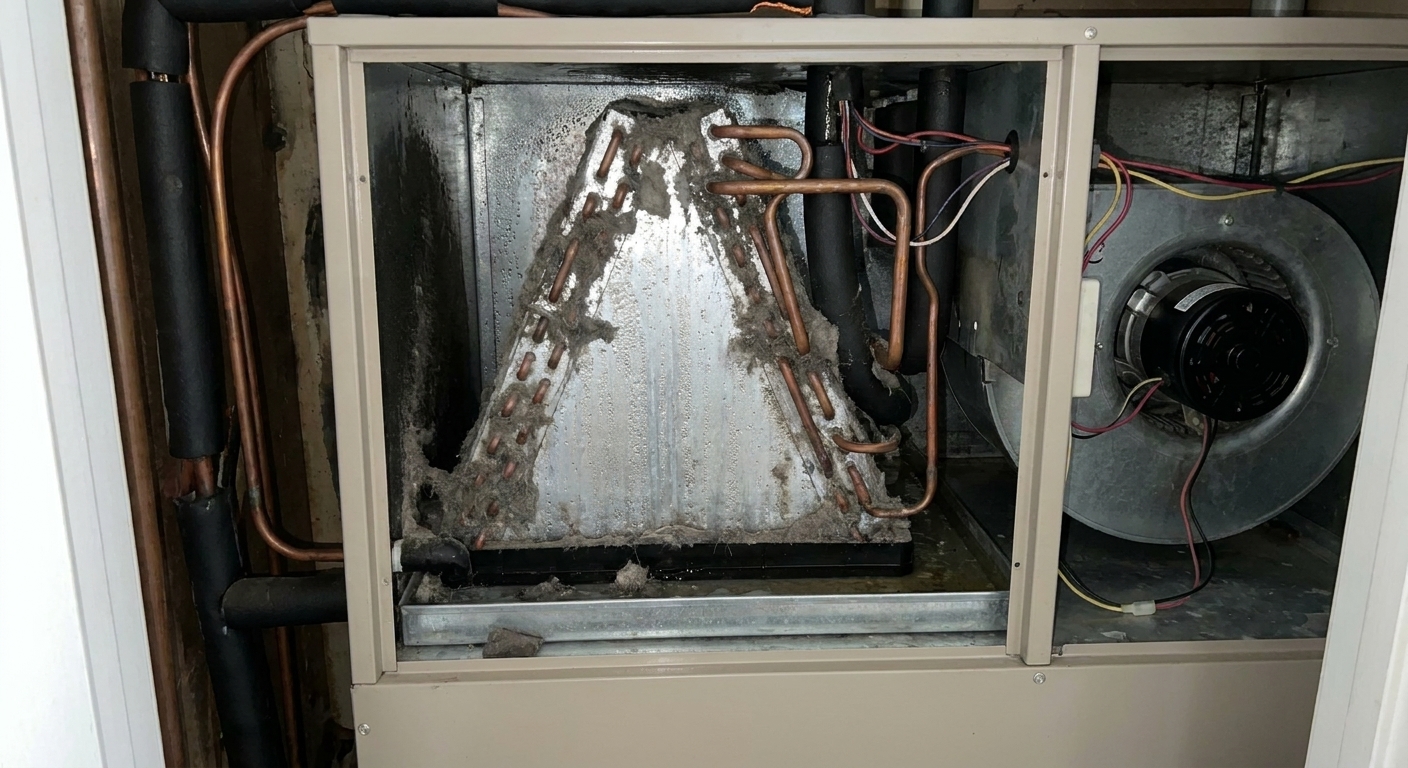
Cause #2: A slimy drain pan
The drain pan under the coil is supposed to collect condensate and send it down the drain line. If the pan stays wet, gets coated in biofilm, or holds standing water, it can smell like a swamp that learned to run on electricity.
Common reasons a drain pan gets gross
- Partial blockage in the drain line that slows draining
- Pan not sloped correctly
- Cracks or rust that hold debris
- Algae and slime buildup from constant moisture
Cleaning steps
- Shut off power to the indoor unit.
- Find the drain pan under the coil. Look for standing water, slime, or rust flakes.
- Remove water with a wet-dry vacuum if you can reach it safely.
- Wipe the pan with disposable rags or paper towels. A mild detergent solution is usually sufficient for the pan surface.
- Flush the pan outlet by pouring a small amount of warm water into the pan near the drain outlet and confirming it flows out freely.
After cleaning, a common maintenance step is adding condensate pan tablets rated for HVAC use. Follow the product directions and do not overdo it. You are aiming to reduce slime, not create a chemistry set.
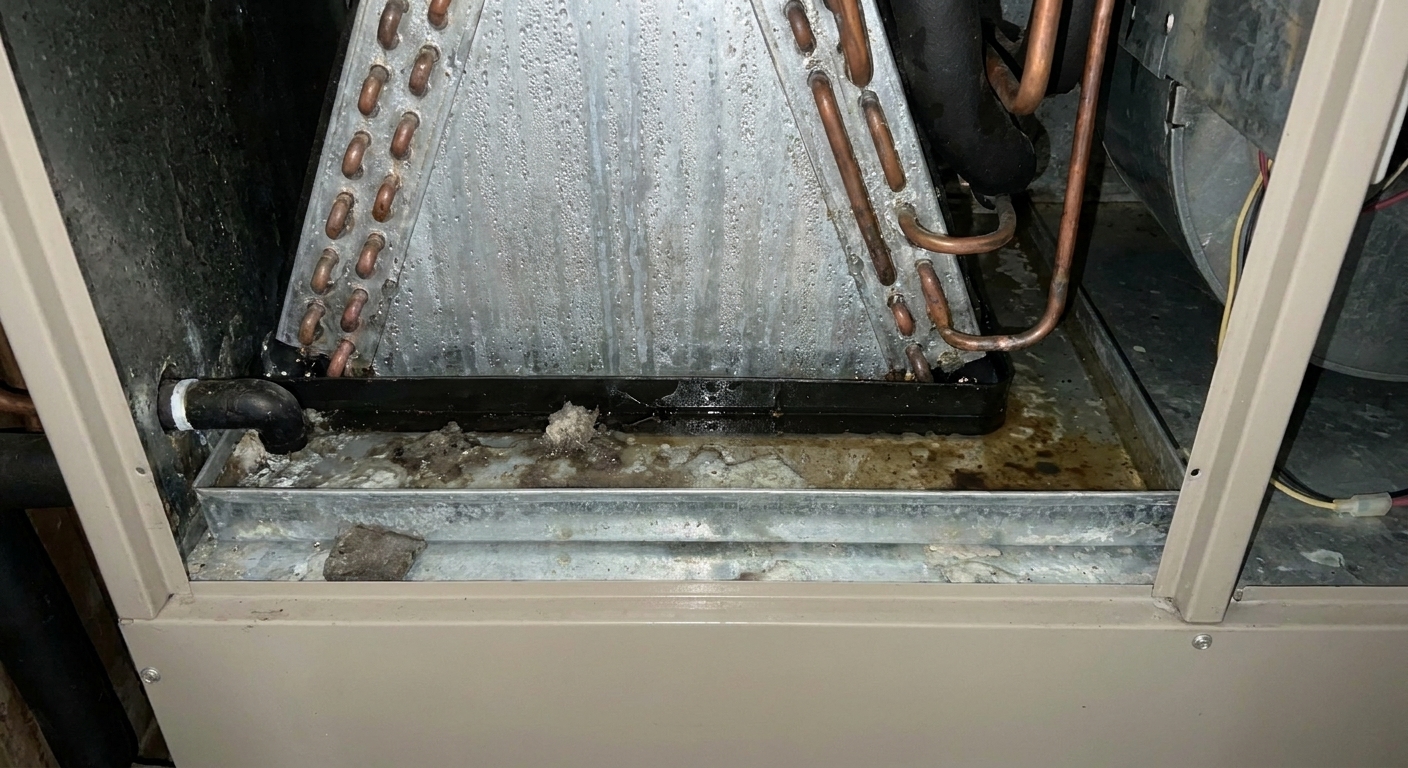
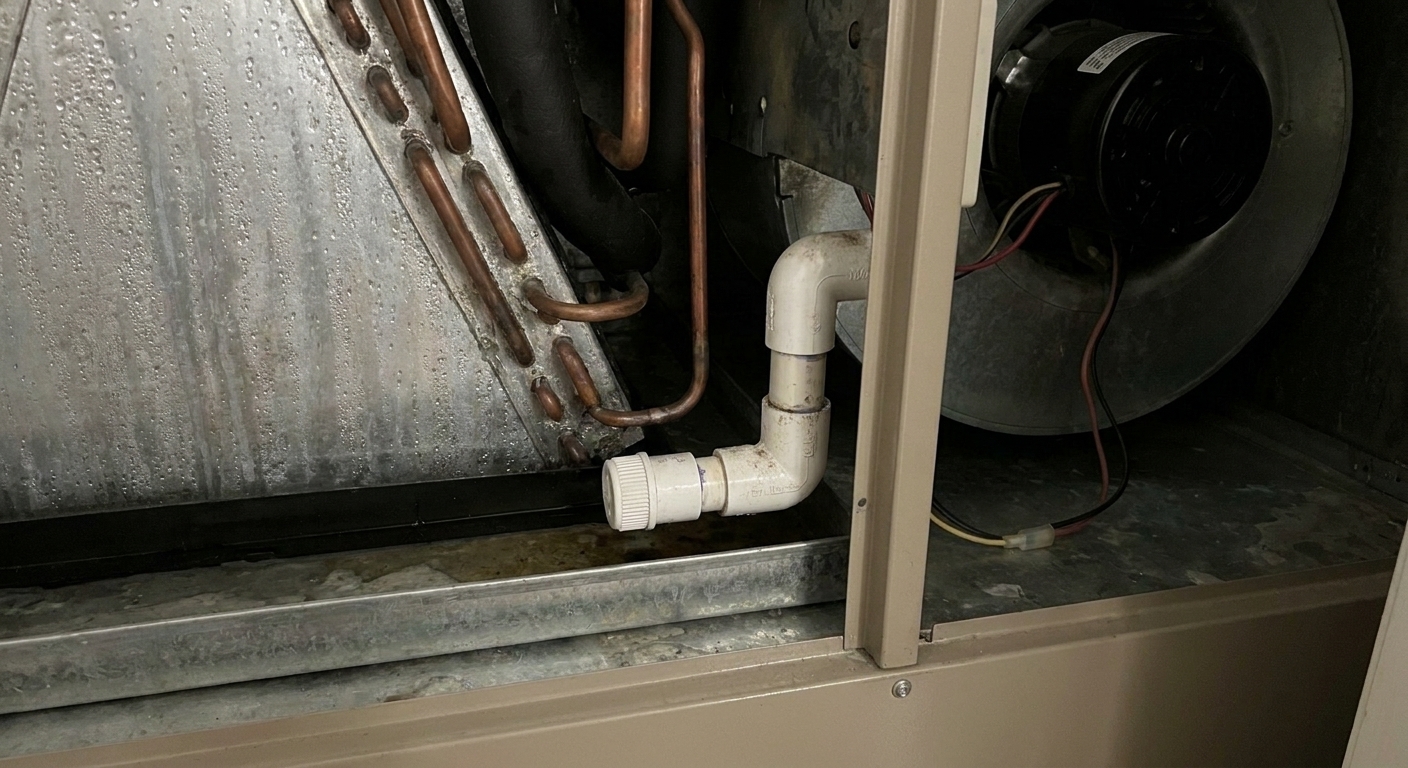
Cause #3: A condensate drain that stays damp and funky
Even a properly draining condensate line can develop a biofilm. That slick layer can smell on its own, and once air starts moving, those odors can become noticeable around the air handler and then ride along into the house.
What to check
- Drain line exit: Find where it terminates, often near an exterior wall or floor drain. If the outlet smells musty, that is a big clue.
- Trap and vent: Many systems have a P-trap, but the correct configuration depends on whether the coil is on the negative- or positive-pressure side of the blower. If the trap is wrong for the setup, it can drain poorly and contribute to odor and overflow issues.
- Standing water: Any section that holds water longer than needed can get smelly.
Cleaning the drain line (when it is not fully clogged)
- Turn off the system.
- Use a wet-dry vacuum at the line termination to pull out gunk (seal the connection with a rag for better suction).
- Flush the line from the cleanout with warm water. If you use vinegar, keep it modest and rinse afterward. Avoid harsh chemicals that can damage components.
- Confirm steady flow at the outlet.
Stop and call a pro if water is overflowing, you see water damage around the air handler, or you cannot identify the drain path. Moisture problems can turn into ceiling or flooring repairs fast.
Cause #4: Ductwork that is dirty or was wet
Most musty smells originate at the coil and pan, but duct issues do happen. Ducts can smell musty if:
- Flexible duct liner got wet from a leak or condensation
- Ducts run through a humid crawl space and are pulling in damp air
- Return ducts are leaky and drawing air from a musty basement, attic, or wall cavity
How to tell if ductwork is involved
- The smell is strongest at a particular room or register
- You see dust trails or gaps around duct connections
- There is known water intrusion in the attic or crawl space
Be cautious with duct cleaning services. Duct cleaning can help in specific cases, but it is not a cure-all for coil and pan odors. If duct insulation is contaminated or wet, replacement may be the real fix.
Step-by-step: track the smell like a shop project
When something stinks in the workshop, I start at the source and follow the trail. Same idea here.
- Replace the filter. It is step zero.
- Check the condensate drain outlet. Make sure it is flowing during cooling and does not smell foul.
- Inspect the drain pan. Look for standing water or slime.
- Inspect the coil area. Dust plus moisture equals odor.
- Check for air leaks. Return leaks can pull musty air from unwanted places.
- Sniff test by zone. If one register is worse, focus on that branch duct and nearby building cavities.
Keep it from coming back
- Keep airflow up: change filters on schedule and keep returns unblocked.
- Keep the drain system clean: periodic drain line maintenance reduces biofilm.
- Control humidity: if indoor humidity stays high, investigate system sizing, runtime, and ventilation. High humidity keeps everything damp longer.
- Consider fan settings: leaving the fan set to ON can re-evaporate moisture off the coil and distribute odors. AUTO is usually better for humidity control. If you have a variable-speed system with a dedicated dehumidify mode, follow the installer or manufacturer settings.
- Annual HVAC maintenance: a proper service includes checking drainage, coil condition, and blower cleanliness.
What about UV lights?
UV lights can help keep coil surfaces and drain areas cleaner in some setups, especially when installed and sized correctly. They are not a fix for drainage problems, a dirty blower, leaky ducts, or high indoor humidity. Think of UV as a helper, not the foundation.
When to call a professional
Musty smells can be DIY-friendly up to a point. Bring in a licensed HVAC technician if:
- You cannot safely access the coil or pan
- The coil is heavily impacted with debris or you suspect mold growth inside the cabinet
- There is recurring standing water in the pan
- The drain line repeatedly clogs or drains slowly
- You suspect duct insulation is wet or contaminated
- Anyone in the home has asthma, severe allergies, or sensitivities and the odor persists
Pros can also evaluate whether the system is oversized (short cycling can leave humidity high), whether the blower speed is set correctly, and whether drainage and traps are configured properly for your setup.
FAQ
Why does my AC smell musty but only for a few minutes?
That is commonly odor sitting on a damp coil or in the drain pan while the system is off. When cooling starts, the first blast of air carries it out. Cleaning the coil area, pan, and drain path usually helps.
Can I spray disinfectant into the return vent?
It is not a great plan. Sprays rarely reach the coil where the problem lives, and you can end up coating ducts or filters with sticky residue that catches more dust. Focus on cleaning the coil, pan, and drain system instead.
Is a dirty-sock smell always mold?
Not always, but it is often microbial growth feeding on debris in a damp area. Even if it is not visible mold, the fix is the same: remove buildup and stop the area from staying wet and dirty.
Could the smell be from outside, not the AC?
Yes. Leaky return ducts can pull air from a crawl space, attic, or wall cavity. If the odor is stronger at the return grille or you have known musty spaces nearby, air sealing and duct repairs can be the real solution.