
How to Unclog an AC Condensate Drain Line
Clear algae and gunk from your AC condensate drain line using a wet-dry vac, checking the float switch and overflow pan, then flushing the line safely to prevent water damage.
The AC condensate drain line is one of those “tiny part, big consequences” items. When it clogs, your air conditioner can shut off, your ceiling can stain, or your furnace closet can turn into a surprise kiddie pool. The good news is most clogs are just algae and slime, and you can usually clear them with a wet-dry vac and a simple flush.
I learned to respect this little line the hard way on an August weekend in my 1970s fixer-upper. The AC was running, but the thermostat would not drop, and the unit kept cycling off. The culprit was not the compressor. It was a blocked drain line tripping a float switch, doing its job and saving me from a water mess. Let’s get yours flowing again.
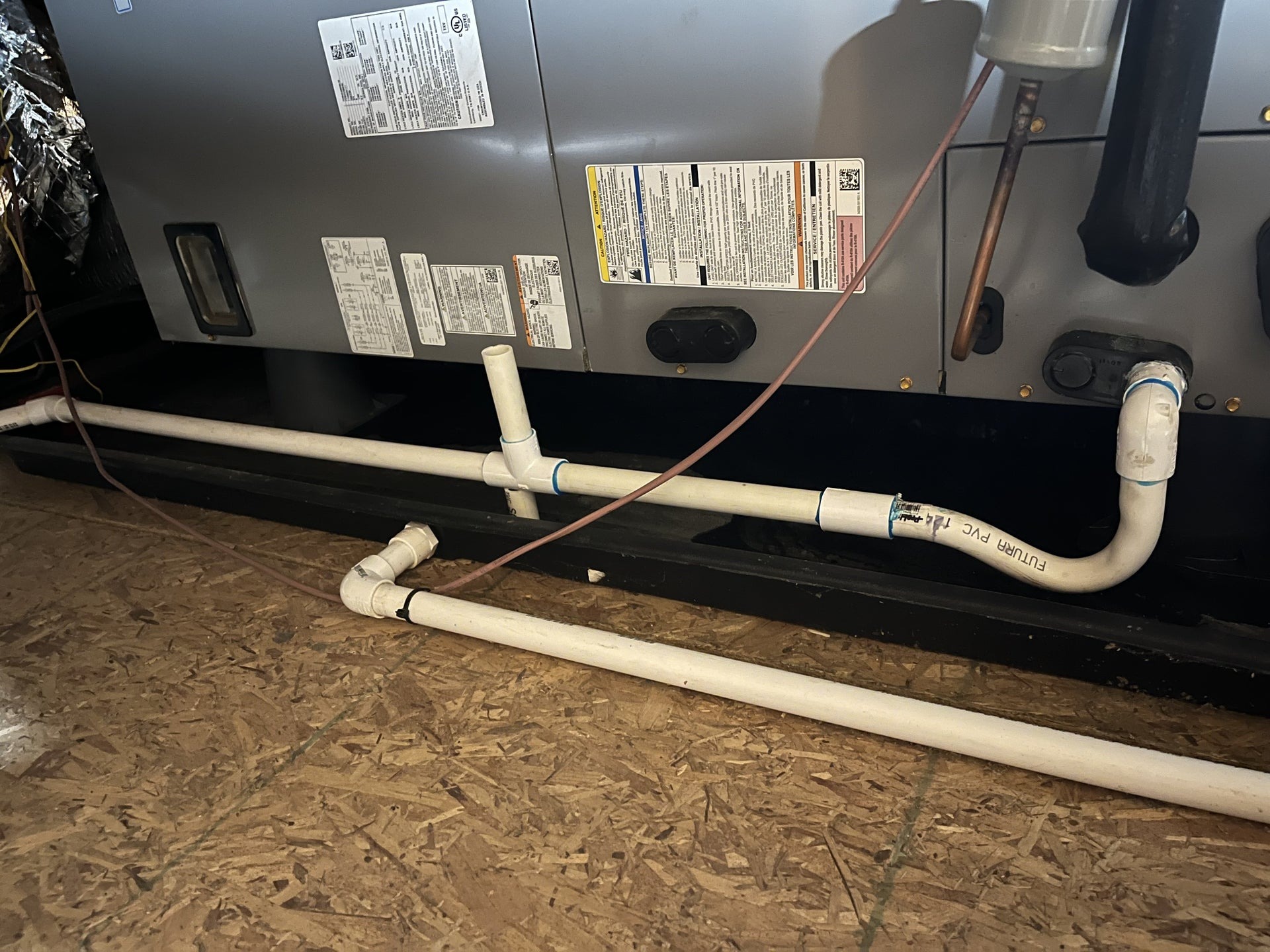
What the drain line does
Your AC removes humidity from indoor air. Moisture condenses on the cold evaporator coil, drips into a drain pan, and then flows out through a small drain line, usually PVC or vinyl tubing.
This line is separate from kitchen, bath, or sewer drains for a few reasons:
- It carries mostly water (condensate), but it is not “clean” in real life. It can pick up dust, insulation particles, and microbial growth, which is why it slimes up.
- It often drains outdoors through a dedicated outlet on the side of the house (sometimes near the outdoor condenser, even though the water starts at the indoor unit). It may also tie into a dedicated plumbing connection. Either way, the line is typically small, which makes it easier to plug up.
- It is designed to protect the equipment. Many systems have a float switch that shuts the AC off if water backs up, preventing overflow damage.
- Some setups include a trap on the line. Traps are commonly needed on negative-pressure air handlers so the system drains correctly without pulling air through the pipe. Whether you need one depends on the equipment design and manufacturer instructions, and a poorly installed trap can cause problems.
Signs the line is clogged
- Water around the indoor unit, furnace, or air handler
- Rusty or wet overflow pan, especially in an attic
- AC shuts off randomly or will not run, especially if you have a float switch
- Musty smell near the unit
- No dripping or water flow at the outdoor drain outlet during humid weather
- Water coming out of a secondary drain line (or a secondary outlet) which is basically your system waving a red flag
Safety first Turn off power to the system at the thermostat and the furnace or air handler switch. If you are working near electrical components, do not rely on the thermostat alone. If you have ceiling staining or active dripping from an attic unit, stop cooling and address the drainage issue immediately.
Tools and supplies
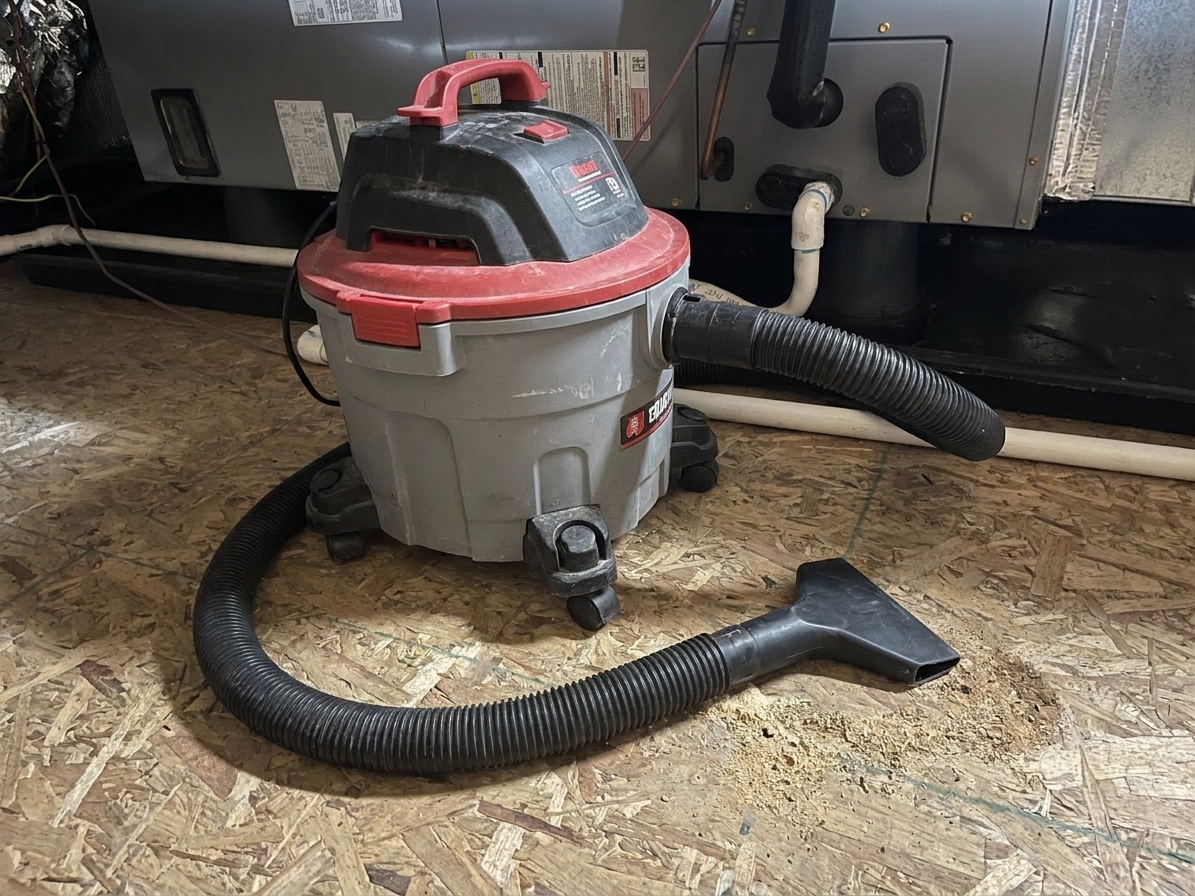
- Wet-dry shop vac (wet pickup capable)
- Duct tape or a rag to help seal the vacuum hose
- Flashlight
- Small bucket or towels
- Distilled white vinegar (my preference) or warm water with a little dish soap
- Optional: small funnel
- Optional: pipe cleaner or a zip tie for gently clearing the opening (no sharp metal)
Quick shop-vac note: Some vacs want the paper filter removed for wet pickup, others require a foam sleeve or specific wet filter. Follow your vacuum’s manual so you do not ruin the vac or lose suction.
Step 1: Find the drain outlet
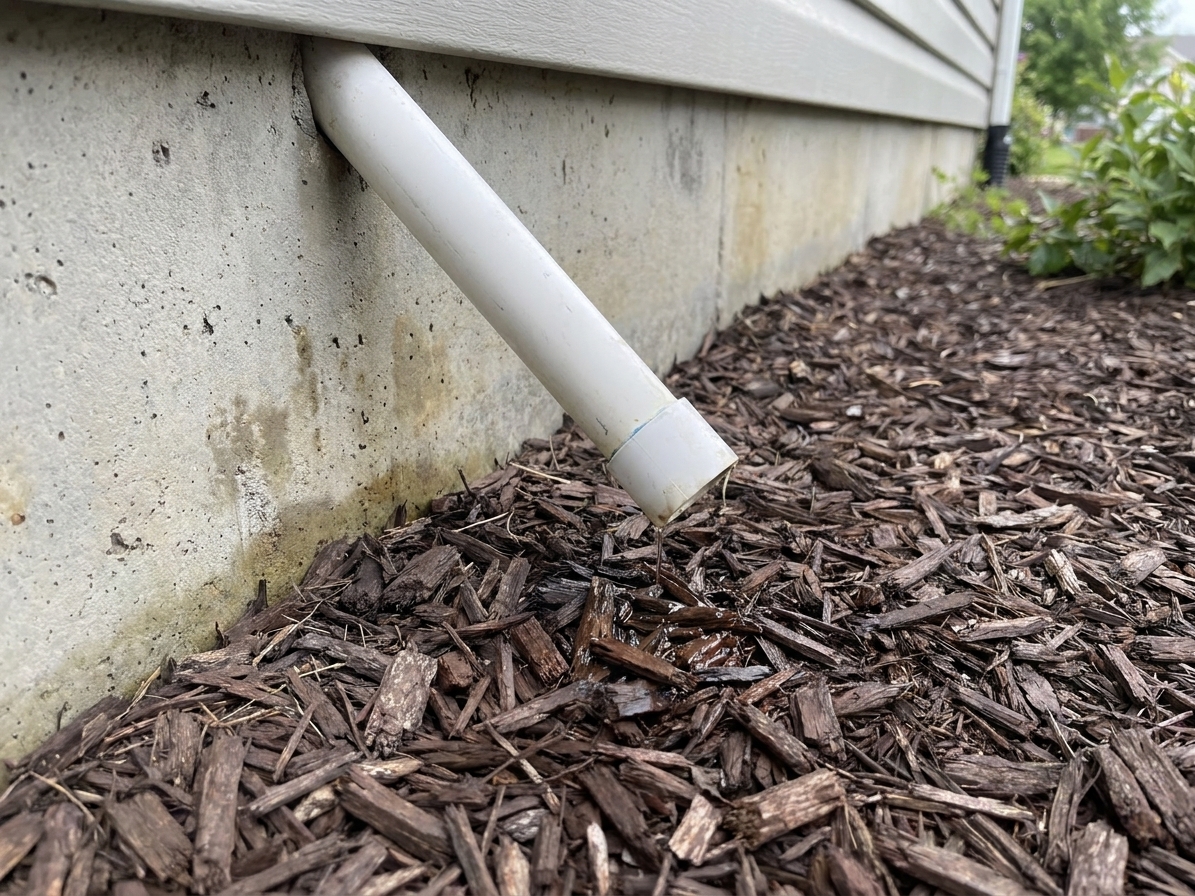
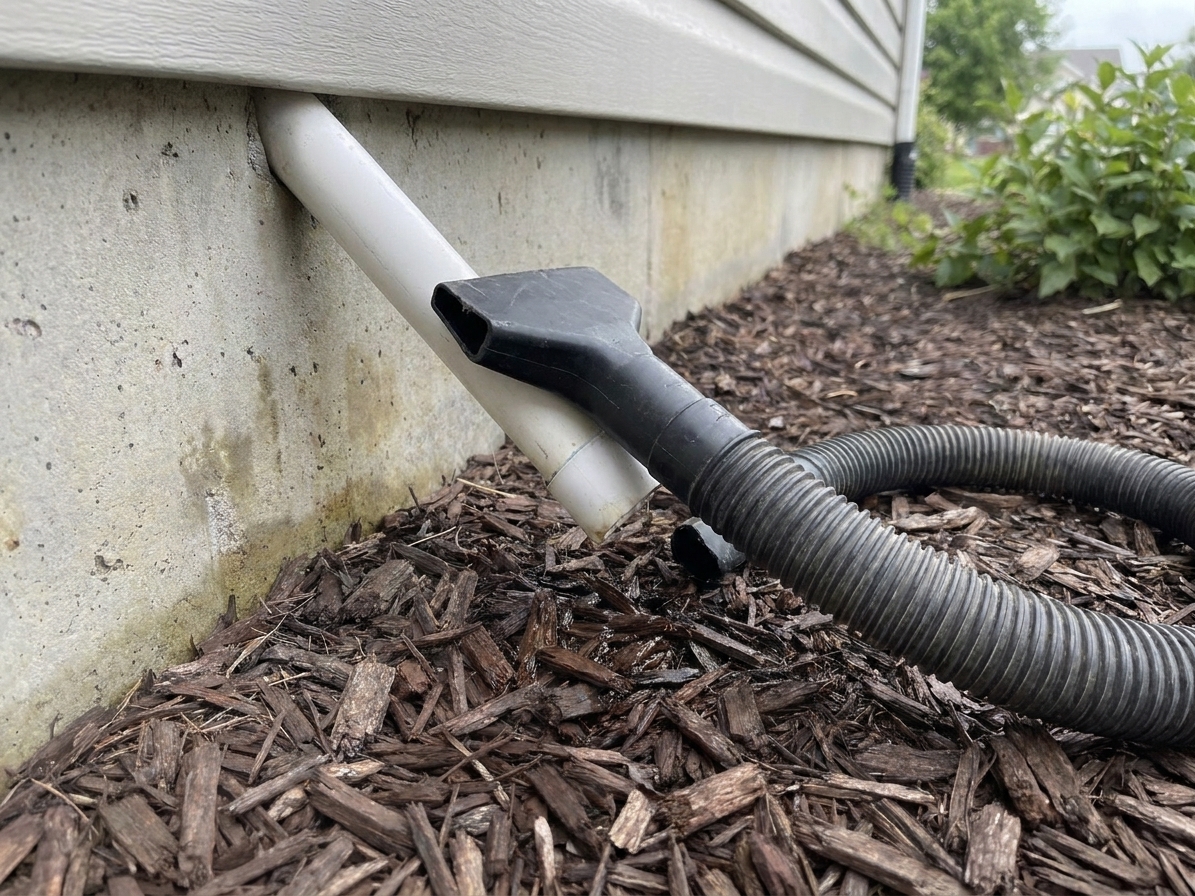
Start at the easiest end. Many homes have a little PVC pipe stub on the exterior wall, often near the outdoor condenser area or near the foundation. That is just where the pipe terminates, even though the drain starts at the indoor unit.
If you cannot find it:
- Look around the outdoor unit area for a 3/4 inch white PVC pipe pointing down.
- Check near a bathroom group or laundry area if it ties into plumbing (varies by home).
- Look by the garage or utility room exterior wall if the air handler is on that side of the house.
Step 2: Check the pan and float switch
Before you start sucking and flushing, take a quick look at what the system is telling you.
Overflow pan
If your unit is in an attic or above a finished ceiling, you may have a secondary overflow pan under the air handler. If that pan has water in it, the primary drain is likely blocked. If you are seeing ceiling stains below an attic unit, treat it as urgent.
Float switch
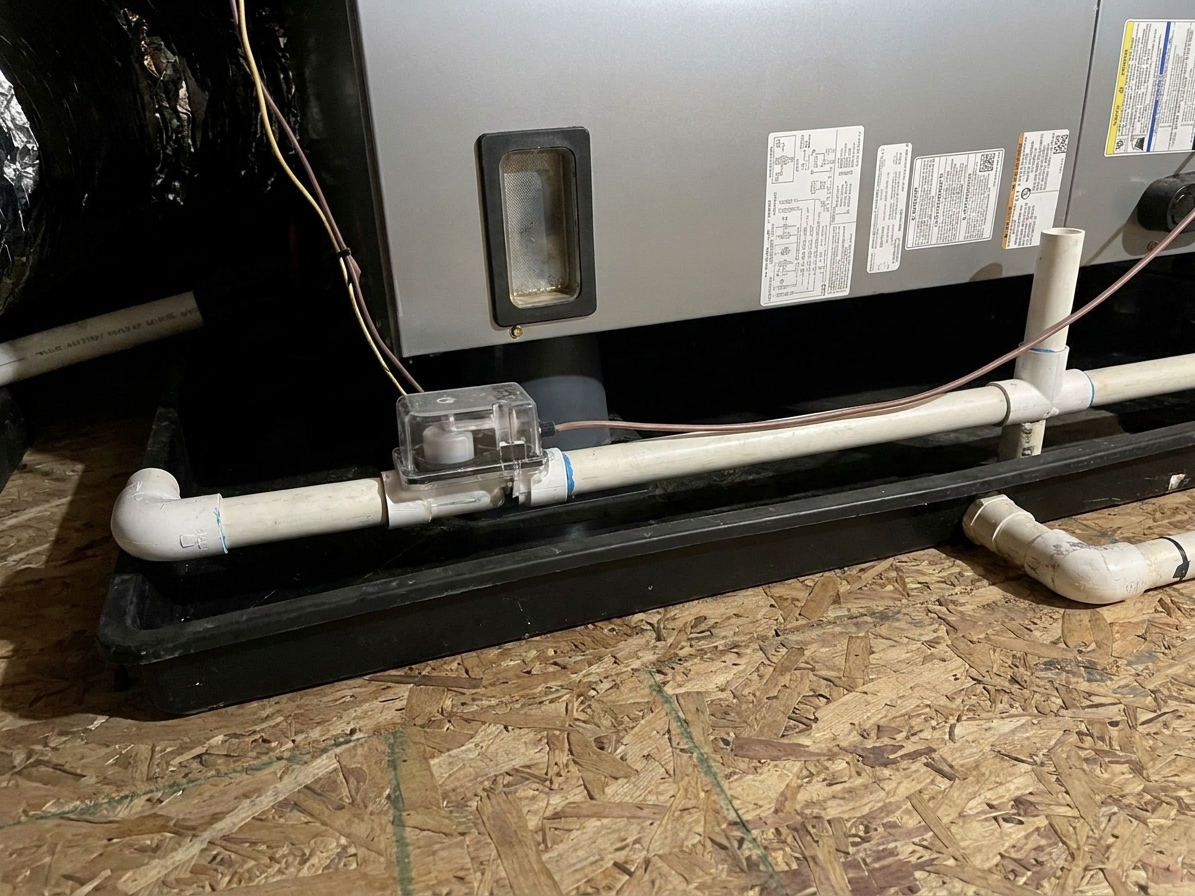
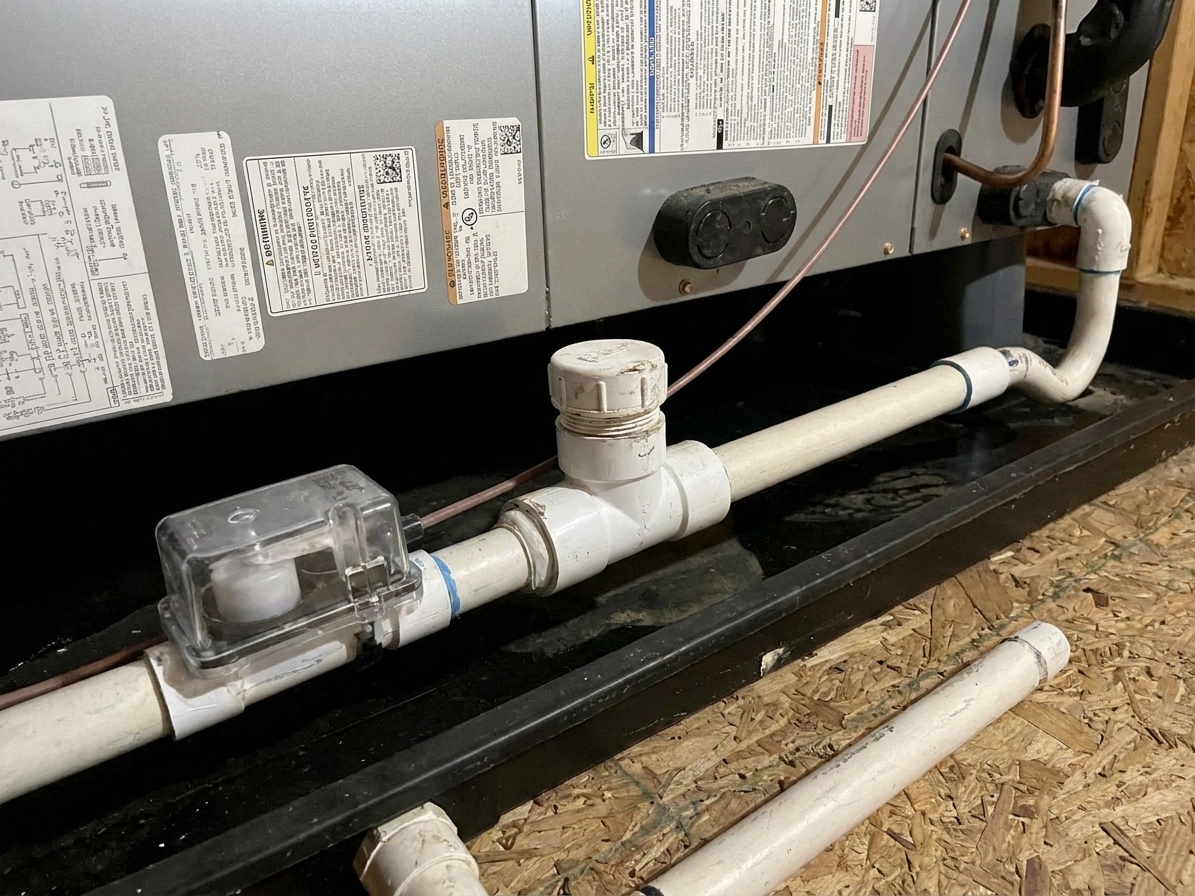
Many systems have a float switch either in the overflow pan or mounted in-line on the drain pipe. When water rises, it shuts the AC off to prevent a leak. If your AC will not run, this is often why.
- If the pan is full, do not bypass the switch. Clear the clog instead.
- Soak up or vacuum out standing water in the pan so you can see if it refills.
Step 3: Vacuum from outside
This method clears a lot of clogs without opening anything indoors.
- Set the shop vac to wet pickup. Configure filters the way your vac manual requires for wet pickup.
- Seal the connection. Hold the vac hose to the drain outlet and wrap the gap with duct tape, or use a rag as a gasket. The goal is strong suction.
- Run the vacuum 1 to 2 minutes. You may hear gurgling. That is good.
- Check the canister. If you pull out water, slime, or algae chunks, you are on the right track.
- Repeat once more. Sometimes a second pull gets the stubborn bit.
Pro tip from my carpenter days: if you have a helper, have them pour a cup of water into the drain pan (or into the cleanout tee if you have one) while you vacuum outside. It can help the vacuum grab the clog, but only do this if you are confident nothing will overflow.
Avoid blasting compressed air into the line unless you can control the pressure and you know the fittings are solid. It is easy to blow apart a PVC joint or pop a connection loose inside a wall or ceiling.
Step 4: Use the cleanout tee
If vacuuming does not do it, move inside. Many condensate lines have a vertical tee with a cap near the air handler or furnace. That is your cleanout.
- Lay down towels and put a small bucket under the tee.
- Remove the cap slowly. If the line is backed up, water may spill.
- Inspect the opening. If you see visible slime, gently clear the first inch or two with a pipe cleaner or a zip tie. Do not shove anything deep that could puncture tubing or jam the clog tighter.
Where to pour: This cleanout tee is the right place to pour vinegar or rinse water. Do not pour anything into the furnace or coil cabinet, and do not dump cleaners into the emergency overflow pan.
Step 5: Flush the line
Once you have suctioned and opened the cleanout, a flush helps wash away the remaining biofilm so you are not doing this again next week.
What to flush with
- White vinegar is my go-to for light slime and routine maintenance.
- Warm water with a few drops of dish soap works if vinegar smell bothers you.
- Avoid harsh chemicals unless your HVAC manufacturer or a pro specifically recommends them. Strong drain openers can damage components and create fumes in a tight mechanical space.
Not every manufacturer calls for vinegar. If you have your unit manual or your installer left instructions, follow those first.
How to flush
- With the cleanout cap off, pour in about 1 cup of vinegar (or warm soapy water).
- Wait 15 to 30 minutes.
- Follow with 1 to 2 cups of clean water to rinse.
- Replace the cleanout cap snugly. Do not overtighten plastic fittings.
Now go outside and confirm you have a steady drip or small flow at the outlet when the system runs.
Step 6: Restore power and test
- Turn the system back on at the switch and thermostat.
- Run cooling for 10 to 15 minutes.
- Watch the drain pan area for new water.
- Confirm the outdoor drain outlet is dripping.
In humid weather, you should usually see noticeable dripping. In very dry climates, you may see little to no water even when everything is working normally.
If you had a float switch tripped, it should reset once the water level drops. Some float switches reset automatically, others need a moment after the water clears.
If it still will not drain
A few things can make a “simple clog” turn into a more stubborn situation.
Possible reasons
- Kinked or sagging tubing in a long run that is holding water and sludge
- Blocked trap that needs to be cleaned (or a trap that is not appropriate for your setup)
- Crushed PVC where it passes through a wall or near a strap
- Improper slope so water cannot flow downhill
- Pan problem like a cracked primary pan or misaligned coil drain connection
When to call a pro
- Water is leaking into ceilings or walls
- You cannot access the air handler safely (tight attic, steep pull-down stairs, etc.)
- The drain line is glued in a way that requires cutting and reworking to service
- You suspect the evaporator coil is iced up or there is a refrigerant issue along with the drainage problem
Do not ignore overflow pan water Even if the AC is still running, a slow clog can turn into a full blockage fast. Water damage repair is always more expensive than ten minutes with a shop vac.
Prevent clogs
- Pour a little vinegar into the cleanout every month or two during cooling season if your manufacturer allows it. A half cup is plenty for most systems.
- Change your air filter on schedule. Less dust in the system means less sludge in the pan.
- Keep the drain outlet visible. Do not bury it in mulch or let it get swallowed by landscaping.
- Ask during maintenance visits for the tech to confirm proper slope and trap condition.
FAQ
Is the condensate line supposed to have water in it?
Often, yes. If your system has a trap, there will be water sitting in that low point. What you do not want is water rising into the overflow pan or backing up out of the drain connection.
Can I use bleach in the condensate drain?
Some homeowners do, but I prefer vinegar because it is less harsh. Bleach can be irritating to breathe in a small closet and can be tough on certain materials over time. If you choose bleach, use a small amount, ventilate the area, and never mix it with other cleaners.
Why is my AC running but not cooling after I clear the drain line?
If the drain clog caused the system to shut off, clearing it may get you back in business. But if the coil is iced up, airflow is restricted, or there is a refrigerant issue, cooling can still be weak. If you see ice on the refrigerant line or coil area, shut the system off and let it thaw, then check filters and airflow.
How do I know if I have a float switch?
Look for a small switch in the overflow pan or a device mounted on the condensate drain pipe near the air handler, usually with low-voltage wires connected. If your AC shuts off when water backs up, that is typically the float switch doing its job.