
Why Is Ice Forming on My Air Conditioner?
Ice on your indoor coil or refrigerant line points to airflow restriction or refrigerant trouble. Learn what to check first, how to thaw safely, and when to call a pro.
Good grain. Great questions.
If you can see ice on your air conditioner, your system is not “extra cold.” It’s actually struggling. In cooling mode, the indoor evaporator coil is supposed to be cold, but not freezing. When something keeps warm air from moving across that coil, or the system cannot manage refrigerant pressure correctly, the coil temperature drops below freezing and moisture in the air turns into ice.
Most importantly: running an iced-up system can damage it. So we start with the safe steps, then work through the likely causes without wandering into unrelated checklists.
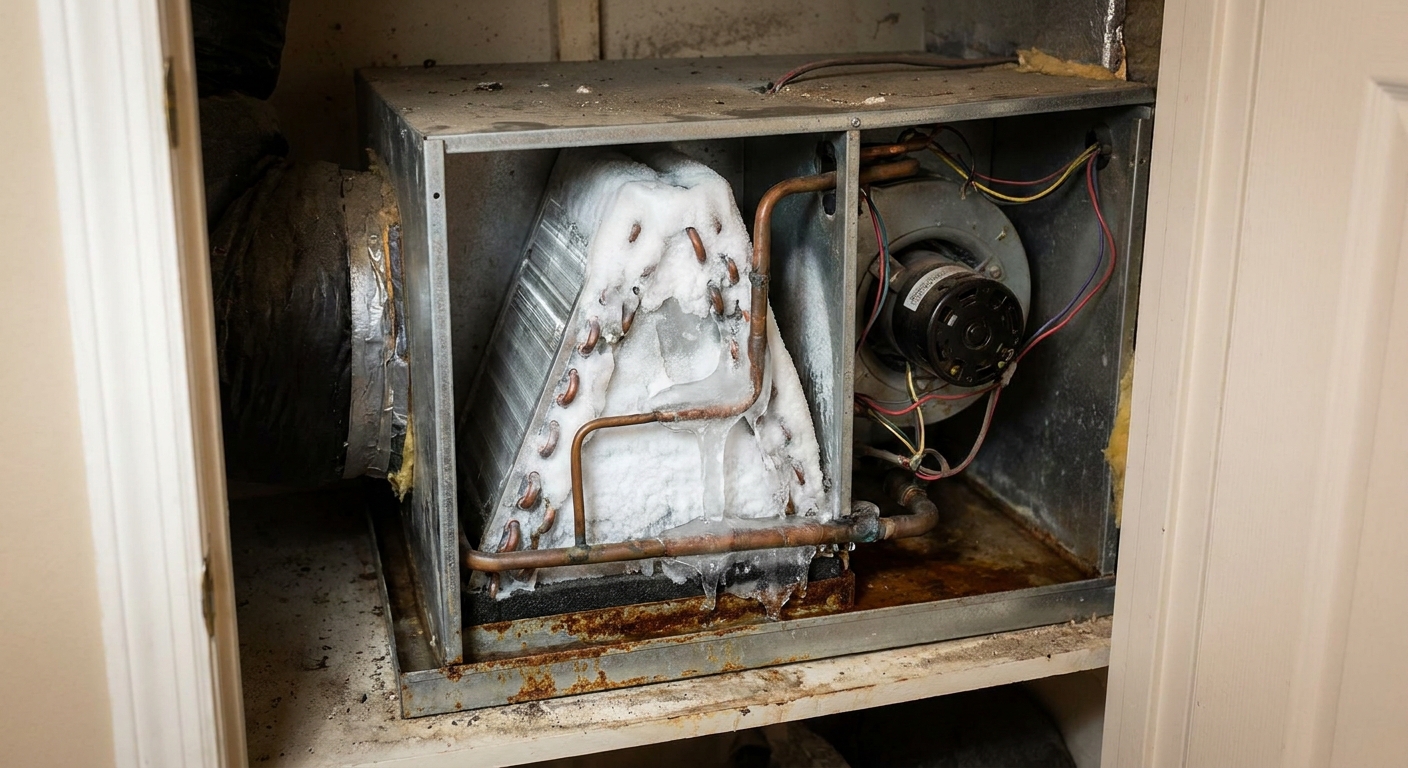
First: shut it down and thaw
If your indoor coil or the thick insulated refrigerant line has ice, do this:
- Turn cooling off at the thermostat right away.
- Set the thermostat fan to ON (not Auto) to help thaw the coil. If you cannot run the fan without cooling, just leave the system off.
- Let it thaw completely. Depending on how much ice is built up, that can take a few hours to a full day (and sometimes longer).
If your filter is inside the air handler and the access panel is iced shut, do not force it. Let things thaw first.
Stop and call for service now if you see water dripping near electrical components, hear unusual buzzing at the air handler, smell burning, or the system repeatedly trips a breaker.
Why the hard stop? Ice blocks airflow. Low airflow makes the coil even colder. It snowballs, and you can end up flooding the drain pan when it finally melts.
Where the ice is matters
Ice on the indoor coil
This most often points to low airflow or a coil that is not getting enough warm air moving across it.
Ice on the suction line
A little sweating is normal. Ice is not. Ice on the suction line often goes with an iced indoor coil, and it can point to airflow issues or refrigerant problems.
Either way, treat visible ice as a “pause the system and investigate” moment.
Most common cause: low airflow
Air conditioners freeze up when the evaporator coil cannot absorb enough heat from your house air. The usual culprit is simple: not enough air is getting pulled through the return and pushed across the coil.
1) Dirty filter
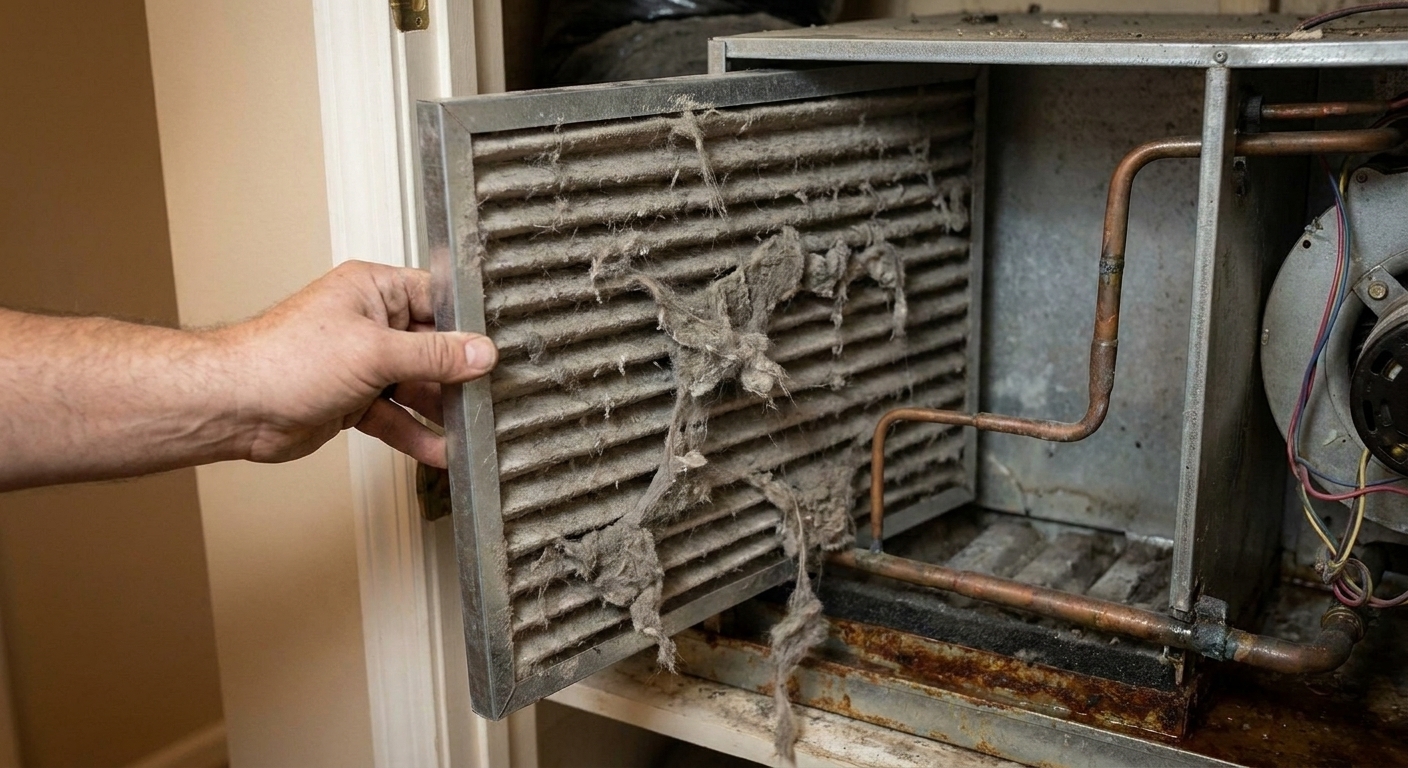
A clogged filter reduces airflow, which can drop coil temperature below freezing. Check the filter at the return grille or at the air handler slot.
- If it is gray, fuzzy, or bowed inward, replace it.
- Make sure the arrow on the filter frame points toward the blower (direction of airflow).
After that, let the system fully thaw before you try cooling again.
2) Closed or blocked vents and returns
It sounds too basic, but it matters. If several supply vents are closed, furniture is shoved over returns, or a return grille is packed with dust, total system airflow can drop enough to freeze the coil.
- Open supply vents that were shut.
- Make sure return grilles are not blocked by rugs, baskets, or sofas.
- Vacuum heavy dust off grilles so the blower can breathe.
3) Blower problems
If the filter is clean and vents are open, the blower may not be moving enough air. Signs include:
- Weak airflow from vents even with a clean filter
- Blower that cycles oddly, squeals, or will not ramp up
- Fan runs, but airflow is far lower than usual
At this point, consider calling a pro. A failing blower motor, bad capacitor, or control issue can lead right back to icing.
4) A dirty evaporator coil or return duct issue
This one surprises people: you can have a clean filter and still have a coil that is basically wearing a sweater. Dust, pet hair, and nicotine residue can mat up on the coil face and restrict airflow enough to freeze.
Other airflow thieves in the same family:
- A collapsed or disconnected return duct
- A return plenum full of debris
- A coil compartment that is partially blocked by insulation that has come loose
If you can clearly see a matted coil face, that is typically a pro cleaning job. The fins are delicate and the wrong approach can bend them or drive dirt deeper.
Airflow vs. a “starved coil”
Here’s the sorting bin I like for this problem: restricted airflow versus a starved coil.
Restricted airflow
- Filter is visibly dirty or collapsed
- Airflow from vents is weak
- Ice often begins unevenly at the coldest section and spreads as airflow gets worse
Starved coil
“Starved” means the coil is not getting the right refrigerant flow. Low charge (often from a leak) or a restriction at the metering device can drop the coil’s saturation temperature below freezing.
- Filter is clean and airflow feels normal
- Ice shows up quickly after starting cooling
- Cooling performance has been declining over time
- You may hear hissing or bubbling near the indoor unit (not always)
Important: Refrigerant is sealed inside the system. If it is low, it is usually because of a leak. Adding refrigerant without fixing the leak is a temporary patch, not a cure.
A technician can confirm what’s happening with pressure and temperature readings and check for leaks or a restricted metering device. From the homeowner side, your smartest move is to shut it off, thaw it, and document what you saw.
Drain clogs: usually a side effect
A clogged condensate drain is real, common, and messy. But it usually causes water problems, not the initial freeze.
What it looks like
- Water pooling around the indoor unit
- Water staining near the air handler or ceiling below it
- Drip pan holding water or the float switch shutting the system down
What it usually does not do
- Directly cause the coil to ice up when airflow and refrigerant conditions are otherwise healthy
The relationship is usually indirect: an iced coil can melt fast and overwhelm a partially clogged drain, causing overflow. So you might see a wet mess after an icing event. If you have both symptoms, treat them as two tasks: thaw the system, then address drainage.
How to thaw without making it worse
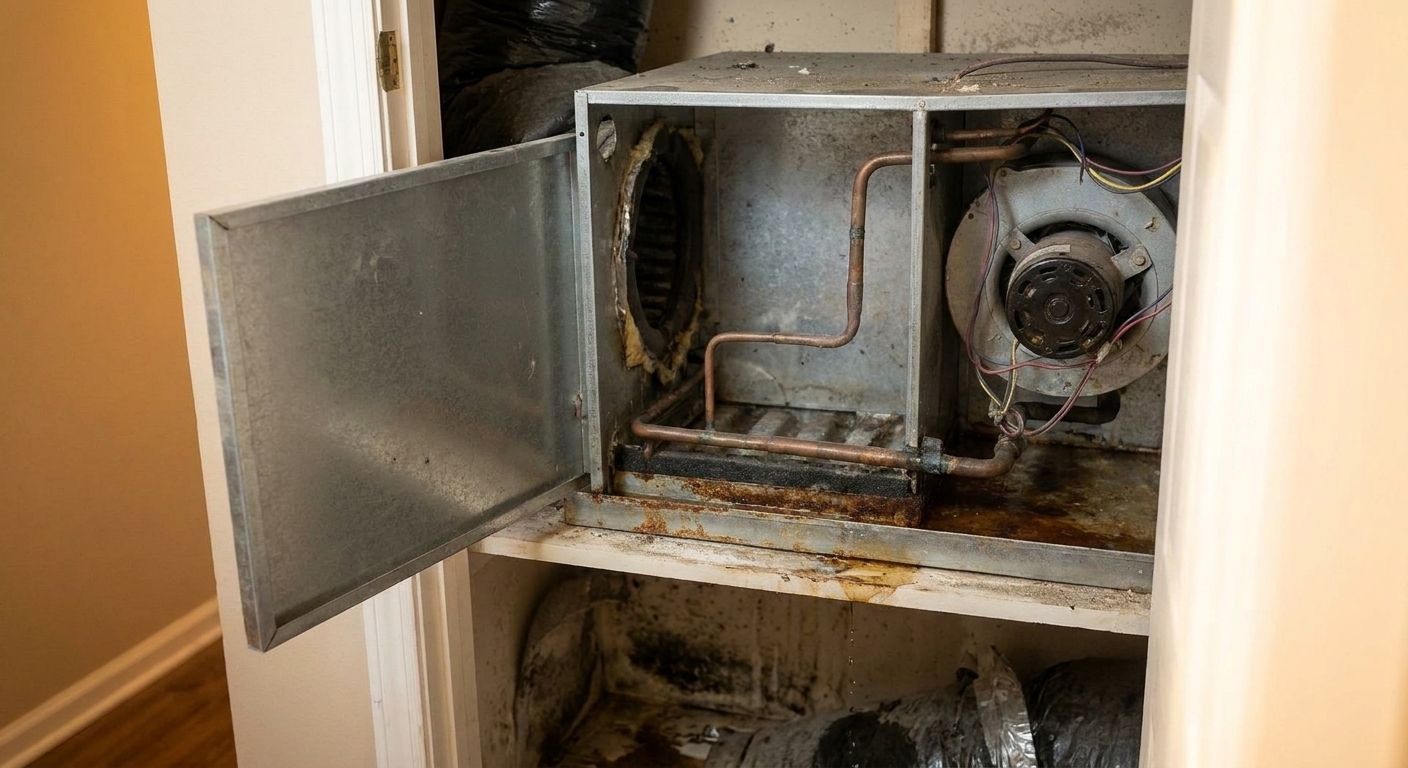
Thawing is mostly patience. The goal is to melt ice without bending delicate fins or flooding your space.
- Cooling off. Thermostat set to Off.
- Fan on if possible to speed melting.
- Protect the area. Put towels down, and if you can access the pan area safely, set a shallow tray to catch drips.
- Do not chip ice. Coil fins are easy to damage, and puncturing a coil is an expensive day.
- Avoid heat guns. Rapid heat can warp plastic parts or damage insulation. Room-temperature air and airflow are safer.
Once thawed, correct any airflow issues you found, then try cooling again. If it ices back up within an hour or two, stop and schedule service.
Quick checks before you call
These take a few minutes and give you useful info to pass along.
- Look at the filter. Dirty? Replace.
- Check airflow. Is it noticeably weaker than normal?
- Make sure vents and returns are open. No closed supplies, no blocked returns.
- Note where the ice was. On the coil, on the suction line, or both?
- Listen. Any new hissing, gurgling, or unusual blower noises?
- Look for water. Overflow near the unit suggests meltwater plus a drain or pan issue.
When to call an HVAC pro
Call for service if any of these are true:
- You replaced the filter and opened vents, but the system ices again after thawing.
- Airflow seems normal, but the coil freezes anyway (possible refrigerant leak or restriction).
- You see ice repeatedly on the suction line outside or near the indoor unit.
- There is water damage, a full pan, or signs the drain is not handling condensate.
If you want to be extra helpful, take a clear photo of the ice location and the filter condition before everything thaws. That one snapshot can save time in diagnosis.
FAQ
Can I keep running my AC if there is only a little ice?
No. Ice is a sign the system is operating outside normal conditions. Continuing to run it usually makes the freeze worse and can lead to water overflow when it melts.
Why does my AC freeze at night?
Nighttime can expose a marginal system. Cooler return air and a lower indoor heat load mean the coil has less heat to absorb. If airflow is already restricted (dirty filter, blocked return, dirty coil) or refrigerant charge is low, coil temperatures can dip below freezing more easily. The root cause is still usually airflow restriction or a refrigerant-side issue, not “the night air” by itself.
Will turning the thermostat colder fix it?
That tends to do the opposite. Longer run time with poor airflow can deepen the freeze. The fix is restoring proper airflow or addressing refrigerant issues, not pushing the setpoint down.
Is ice on the copper line outside always refrigerant?
Not always. It can happen with restricted airflow too, because the indoor coil is freezing and that cold condition carries back along the suction line. If airflow is good and it still freezes, refrigerant issues move higher on the list.
Can running AC in cool weather cause icing?
It can. Many systems are not designed to run in cooling mode below the manufacturer’s minimum outdoor temperature unless they have low-ambient controls. In shoulder seasons, low outdoor temps plus low indoor load can make freezing more likely if anything else is slightly off.
Knob’s last pass: Ice is a symptom, not a setting. Shut cooling off, thaw completely, fix the airflow basics first, and if it freezes again, let a pro check refrigerant charge and restrictions. That’s the cleanest path back to steady, boring, no-drama cold air.