
How to Use a Drain Snake Without Damaging Your Pipes
Learn how to choose the right drain snake, feed and rotate it safely, recognize a clog, and pull the cable back out without scratching or breaking pipes.
Good grain. Great questions.
A drain snake is one of those tools that looks simple until it isn’t. Used gently, it clears a lot of common clogs quickly. Used like you’re trying to start a lawn mower, it can scratch up old metal pipe, chew at plastic fittings, or pop a slip nut loose under your sink. Let’s keep your pipes happy and your water moving.
First, make sure a snake is the right move
A snake is often the right next step after hot water and a plunger fail, especially for hair, soap scum, food sludge, and paper buildup that sits beyond the trap.
Skip the snake and rethink the plan if:
- Multiple fixtures back up at once (shower and toilet, or tub and sink). That can be a main line issue.
- Sewage is coming up from a floor drain or tub. Time to call in backup.
- You used chemical cleaner recently. Snaking can splash caustic liquid.
Chemical cleaner caution: If you recently poured a chemical drain opener, do not snake right away. If the drain is holding liquid, assume it is caustic. Wear eye protection and gloves, bail out standing liquid if you safely can, follow the product label, and strongly consider calling a plumber, especially for a totally blocked line.
Safety reminder: Wear eye protection and gloves. Keep a bucket and rags handy. Go slow. Most pipe damage comes from rushing and forcing the cable.
Pick the right snake
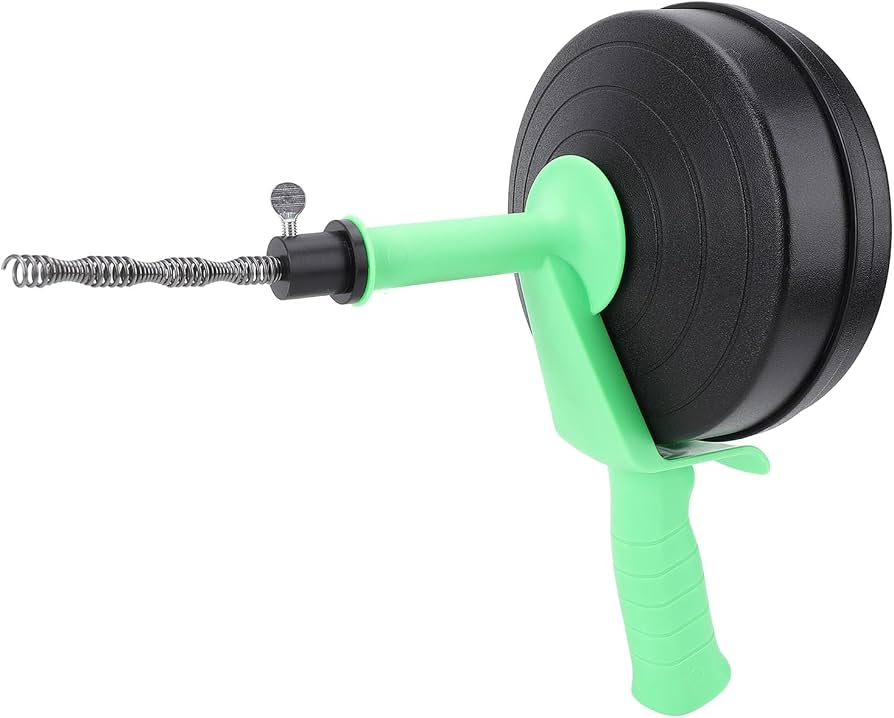
Hand auger (small hand-crank)
This is the friendliest option for most home clogs.
- Best for: bathroom sinks, tubs, showers, laundry standpipes, and some kitchen lines.
- Why it’s safer: You can feel what’s happening, and the torque is limited by your hand strength.
- Typical size: 1/4-inch cable, 15 to 25 feet.
Drum auger (bigger drum, longer cable)
More reach and more torque, which means you have to be more deliberate.
- Best for: longer branch lines, stubborn buildup, and clogs beyond the trap.
- Typical size: 1/4-inch or 5/16-inch cable, 25 to 50 feet.
Toilet auger (closet auger)
Different tool, same idea. A toilet auger has a protective sleeve to help prevent scratching the porcelain.
- Best for: toilet bowl clogs. Avoid using a regular drain snake in a toilet.
Powered snakes
These clear tough blockages fast, but they can also damage pipes fast. If you use one, keep the speed low and do not force the cable. For older plumbing, uncertain pipe condition, or repeated clogs, a plumber is often the safer bet.
- Electricity matters: Use a GFCI-protected outlet, keep the cord and tool dry, and never stand in water.
- Keep hair and clothing clear: Rotating cables grab loose sleeves, long hair, and gloves fast. Follow the tool manual and use the right protective gear.
Know your pipe before you feed the cable
Most under-sink drains are one of these:
- PVC/ABS plastic: common and forgiving, but slip joints can loosen if you yank or twist hard.
- Chrome-plated brass: common on bathroom sinks. Can dent or scratch.
- Old galvanized or cast iron: can be rough inside and may be heavily corroded, occluded, or thinned.
If you have very old metal piping, treat the snake like you’re guiding a ribbon through a mailbox slot. Gentle, patient, steady.
Prep the workspace
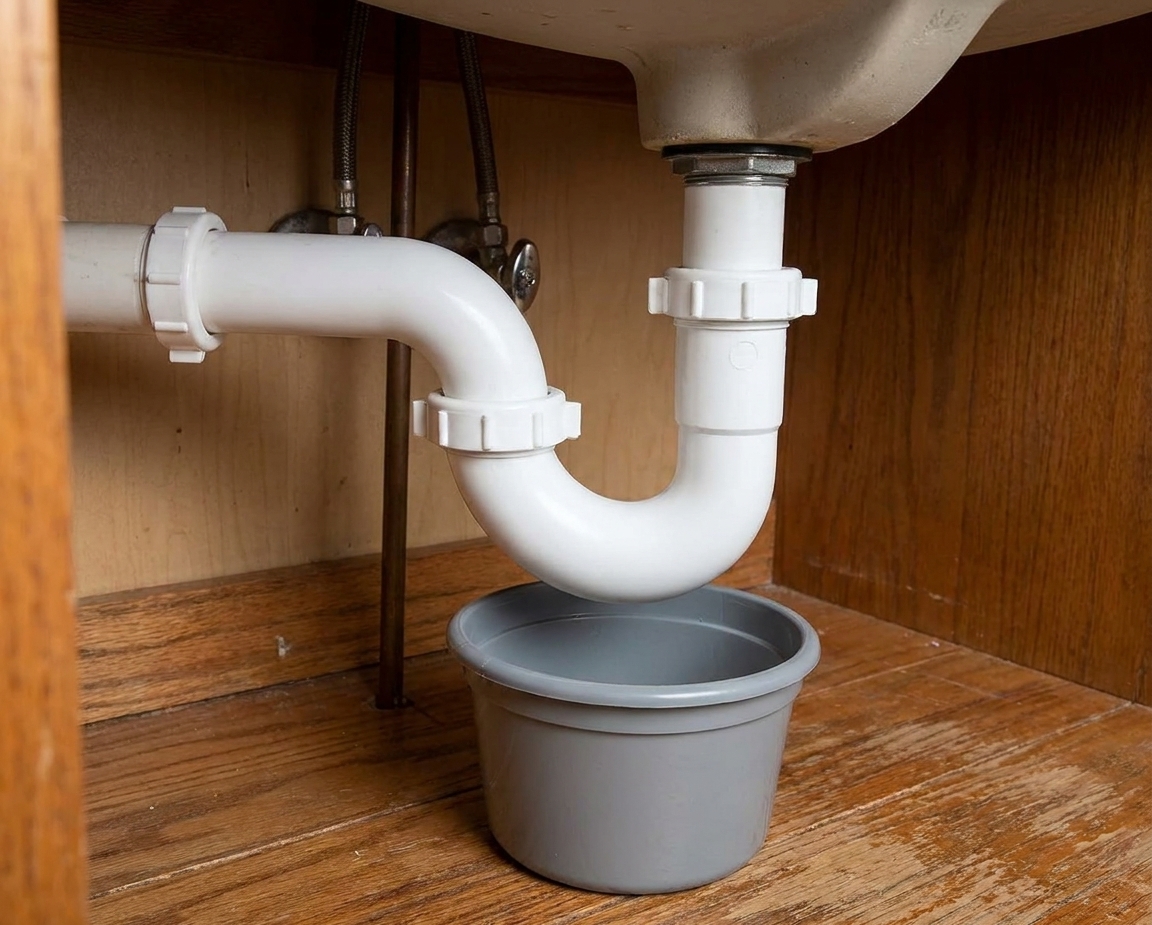
- Protect the area: lay down a towel and set a bucket under the trap.
- Remove the stopper if needed: bathroom sink stoppers can snag the snake cable.
- Have a rinse plan: keep hot water ready to flush after you break through.
- Shut off power when needed: if you are working near a garbage disposal or its inlet, switch it off and unplug it (or flip the breaker) before you start.
- Open a cleanout when possible: if there’s a cleanout plug nearby, that’s often a safer entry point than going through a delicate trap.
Where to insert the snake
Option A: Through a cleanout
A cleanout is designed for this job. It reduces the chance you’ll kink the cable in a tight bend.
Option B: Through the trap arm (often best under a sink)
Under a sink, the safest technique is usually:
- Place a bucket under the P-trap.
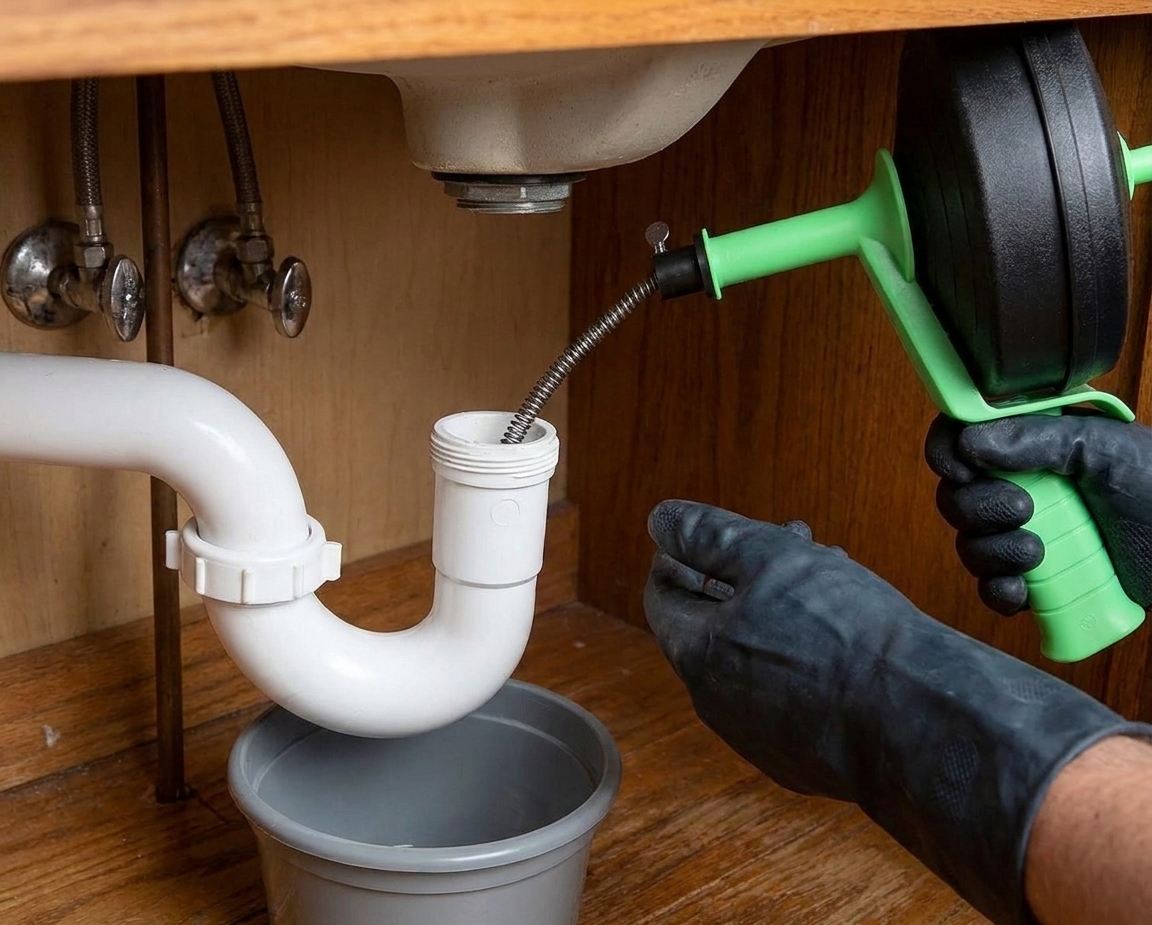
- Loosen the slip nuts.
- Remove the trap and set it aside.
- Snake into the wall drain (trap arm), not down into the removed trap.
Quick definition: the trap arm is the straight-ish pipe section that runs from the P-trap into the wall. It is your pathway to the clog, and it is usually easier to snake than the trap’s tight curve.
This approach keeps you from gouging the trap and helps you reach the clog that’s usually beyond it.
Option C: Through the drain opening
You can snake from the fixture opening, but it’s easier to snag stopper linkage and harder to feel what’s going on through the trap’s bends. Use this when you can’t access the plumbing underneath.
The core technique: feed, rotate, relax
Here’s the motion that clears clogs without chewing up pipe walls.
1) Start with the cable controlled
- Pull out 6 to 12 inches of cable.
- Keep two hands involved: one guiding near the entry, one on the crank or drum.
- Feed with the cable as straight as possible going in.
2) Rotate as you advance
Turn the handle while gently pushing forward. The rotation helps the head ride through bends and bore into soft clogs. If you only push, the cable can buckle and kink.
3) Use light pressure and let the head work
Think “steady pressure,” not “shove.” If the cable stops dead, back off an inch, rotate a few turns, then advance again.
4) Pause when you feel a change
Most pipe damage happens right at the moment you get impatient. When the feel changes, slow down and diagnose before forcing anything.
Clog vs. bend vs. trouble
You’re probably at a bend if:
- Resistance feels smooth and springy.
- The cable wants to coil back at you.
- A little rotation makes it slip forward again.
You’re probably at the clog if:
- Resistance feels spongy or grabby, like wet felt or mashed food.
- You can advance a little, then it stops again.
- The cable comes back with gunk or hair.
Stop immediately if:
- You feel a sharp catch that doesn’t change with gentle reverse and rotation.
- The cable suddenly surges forward and you lose resistance completely, then hear dripping under the sink.
- A slip nut starts turning or the trap arm shifts.
That last batch can mean you’re snagged on a joint, you have hit an odd fitting or tee, or you’re stressing a connection. Back the cable out, inspect connections, and reassess your entry point.
Breaking through without damage
Once you’re at the clog, your goal is to work it gradually, not ram through it.
- Rotate and advance 1 to 2 inches.
- Rotate and retract a few inches to pull debris back.
- Repeat until the cable moves more freely.
If the clog is hair, a few short in-and-out passes work better than one deep push.
When you think you’ve opened the line, run a thin stream of warm water (if the plumbing is reassembled) to confirm flow improves before you declare victory.
One thing to not expect: snaking can restore flow without fully cleaning pipe walls. If the drain improves but still feels lazy, you may have heavy buildup that needs more cleaning than a simple cable can provide.
How to pull the snake back out
Pulling the snake out is where cabinets and sleeves get baptized. Slow and controlled wins.
Do this:
- Keep light rotation as you retract so the head doesn’t snag on edges and joints. This is especially helpful with hand augers. With powered units, follow the tool instructions and do not withdraw at high speed.
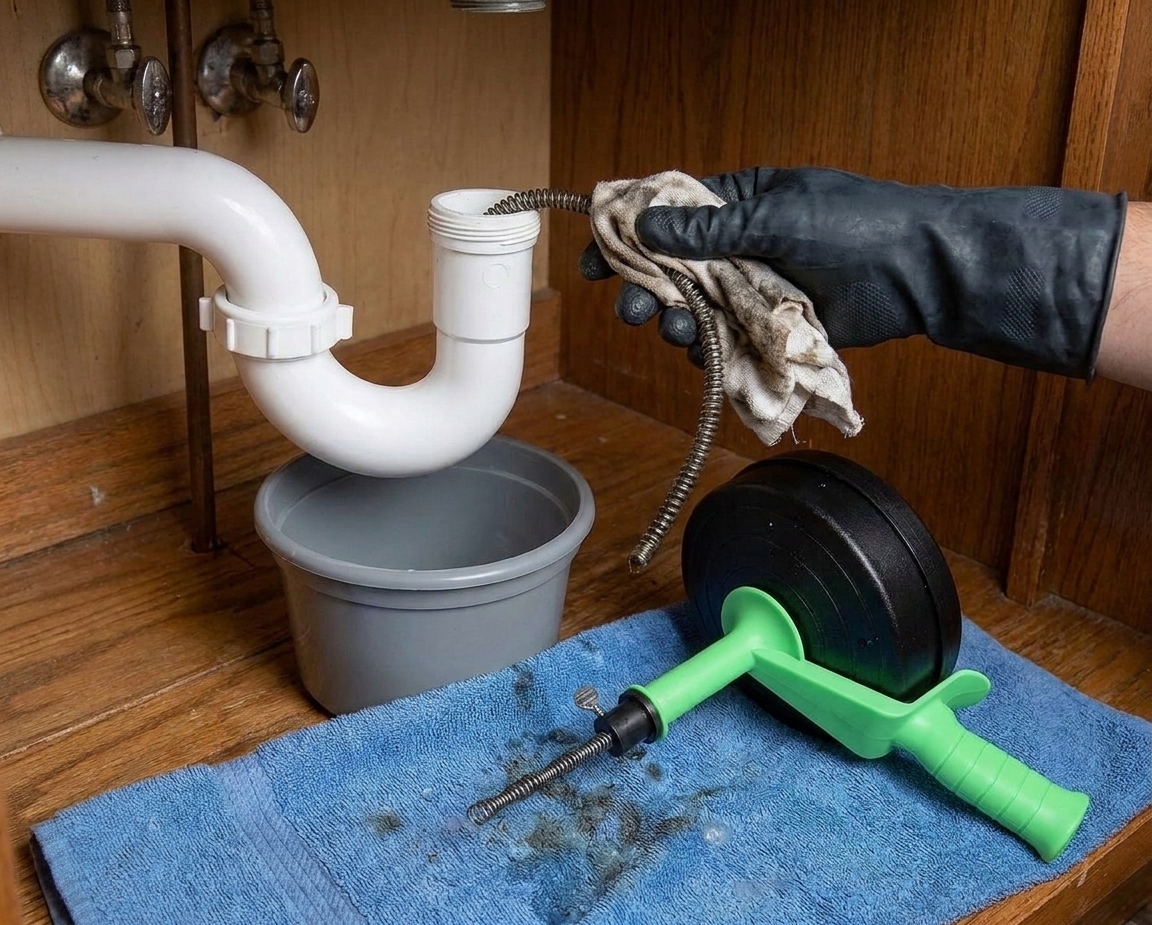
- Wipe the cable with a rag as it comes out. Move the rag down the cable, do not pinch hard.
- Guide the cable straight out of the opening to reduce kinks.
- Contain the mess by feeding the cable directly back into the drum or a bucket.
Do not do this:
- Do not let the cable whip back into the room.
- Do not yank when it’s snagged. Rotate gently, push forward an inch, then try retracting again.
- Do not drag the cable over finished surfaces. It is basically a dirty spring.
If the cable gets stuck
It happens. The key is to stop before you turn a minor snag into broken pipe or a kinked cable.
- Stop and relax tension: do not keep cranking.
- Reverse gently: a few turns backward can free the head from a joint or debris.
- Push forward a touch, then pull back: sometimes you need to unhook the head before it will retreat.
- Change your entry point: if possible, switch to a cleanout or remove the P-trap and work from the trap arm.
- Know when to call it: if it will not free with gentle moves, call a plumber. Forcing it is how fittings crack and cables become permanent residents.
Mistakes that damage pipes
1) Forcing the cable through a trap bend
The trap is a tight turn. If you must snake through it, go gently and keep the cable rotating. Often it’s better to remove the trap and snake the wall pipe directly.
2) Using too large of a cable
Bigger is not always better. A thick cable in a small drain can scrape aggressively and get stuck.
3) High-speed power snaking on unknown plumbing
Speed increases torque. Torque finds the weak point. If you use a powered unit, run it slowly and stop at the first sign of a bind.
4) Letting the cable kink
A kinked cable becomes a little battering ram. If you see the cable starting to buckle near the entry, pull back, straighten, and continue with lighter pressure.
5) Snagging the stopper linkage
Bathroom sink rods and pivot balls love to catch snake heads. Remove the stopper when possible, or snake from the trap arm instead.
6) Skipping the flush
Even if you punch a hole through a clog, leftovers cling to pipe walls. Flush with warm water, then check again. If the drain slows back down quickly, you may have heavy buildup rather than a single plug.
Aftercare
Flush it well
- Kitchen: hot water for a few minutes. A little dish soap can help move grease along.
- Bathroom: warm water and a brief test of full flow.
If you removed a P-trap
- Inspect the slip washers for cracks or deformation.
- Hand-tighten slip nuts, then give a small additional snug if needed. Do not crank down hard.
- Run water and check for leaks with a dry paper towel.
Basic prevention that actually works
- Hair strainer in tubs and showers.
- No grease down the sink. Wipe pans first.
- Monthly hot-water flush for kitchen drains that see a lot of cooking oils.
When to call a plumber
A snake is a great tool, but it is not a magic wand. Bring in a pro if:
- The clog returns quickly after snaking.
- You can’t get the cable to pass a point without heavy force.
- You suspect tree roots, collapsed pipe, or a main line issue.
- You have frequent backups across multiple drains.
Sometimes the right fix is a camera inspection, a proper cleanout access, or a repair. That’s still a win, just a different kind.
FAQ
How far should I feed a drain snake?
Far enough to reach the clog, plus a little extra to work it. Many sink clogs are within the first 5 to 15 feet past the trap, but every house is different. If you hit solid resistance early, treat it like a bend first, not a clog, and work gently.
Should I rotate clockwise only?
Mostly, yes. Clockwise rotation is common for keeping the cable from unlaying. A brief counter-rotation can help free a snag, but avoid whipping back and forth aggressively.
Why did my snake come back clean but the drain is still slow?
You might have a coating clog (grease or soap scum lining the pipe) rather than a plug. Snaking can poke a small tunnel without removing the buildup. Multiple gentle passes, lots of flushing, or a professional cleaning method may be needed.
Can a drain snake puncture PVC?
It is uncommon with a hand auger used gently, but forcing a bound cable or using a powered snake can crack fittings or pull joints apart. The bigger risk in PVC setups is loosening slip joints and stressing glued fittings by yanking.