Walk your home like a pro this spring. Use this step-by-step checklist for exterior inspection, HVAC prep, gutter cleaning, caulking, and safety items that p...
The Homeroom Fix
September 11, 2026
•
By Marcus Delgado
DIY Gutter Cleaning vs. Gutter Guards
Should you keep cleaning gutters yourself or install gutter guards? Compare costs, upkeep, clog prevention, and what actually works for leaves, pine needles, and roof grit.
If you own a house with a few trees anywhere nearby, you already know the annual tradition: grab a ladder, scoop out the mystery compost, and promise yourself you will “do it more often next year.” Then next year arrives and your downspout is auditioning to be a water feature.
So which is actually worth it long-term: cleaning your gutters yourself or installing gutter guards? The honest answer is that both options still involve maintenance. The difference is how often, how annoying, and how much you pay up front.

What gutters need to do
Before we talk products and prices, here is the job description for your gutter system:
- Catch roof runoff and move it to downspouts.
- Discharge water away from the foundation so you do not get basement leaks, soil erosion, or cracked walkways.
- Stay open during heavy rain so water does not overflow behind the gutter and rot fascia boards.
Anything that keeps the channel open and the downspouts flowing is a win. A lot of everything else is marketing.
Option 1: DIY gutter cleaning
Typical cost
If you already own a solid ladder, DIY cleaning is the cheapest route by far.
- Tools and supplies: $15 to $60 for a gutter scoop, heavy gloves, a bucket, and a hose nozzle. Add $25 to $80 for a small wet/dry vac attachment kit if you like that method.
- Ladder costs (if you need one): $180 to $350 for a safe, sturdy extension ladder is common. Please do not “make do” with a wobbly hand-me-down. That is not thrift. That is a future urgent care bill.
- Ongoing cost: basically $0, unless you replace gloves or buy a new nozzle once in a while.
Note on pricing: These ranges are typical big-box DIY numbers as of 2026. Pro-grade tools and regional pricing can swing higher (or occasionally lower on sale).
Time and frequency
Many homes need gutter cleaning 1 to 3 times per year, depending on trees and roof debris. Some setups need it more often (tight roof valleys, heavy pine, frequent storms).
- Once per year: minimal trees, newer roof, little wind-blown debris.
- Twice per year: typical suburban yard, deciduous trees, fall leaf drop plus spring cleanup.
- Three or more times: heavy tree canopy, pine needles, helicopters from maples, or lots of roof granules.
Effectiveness
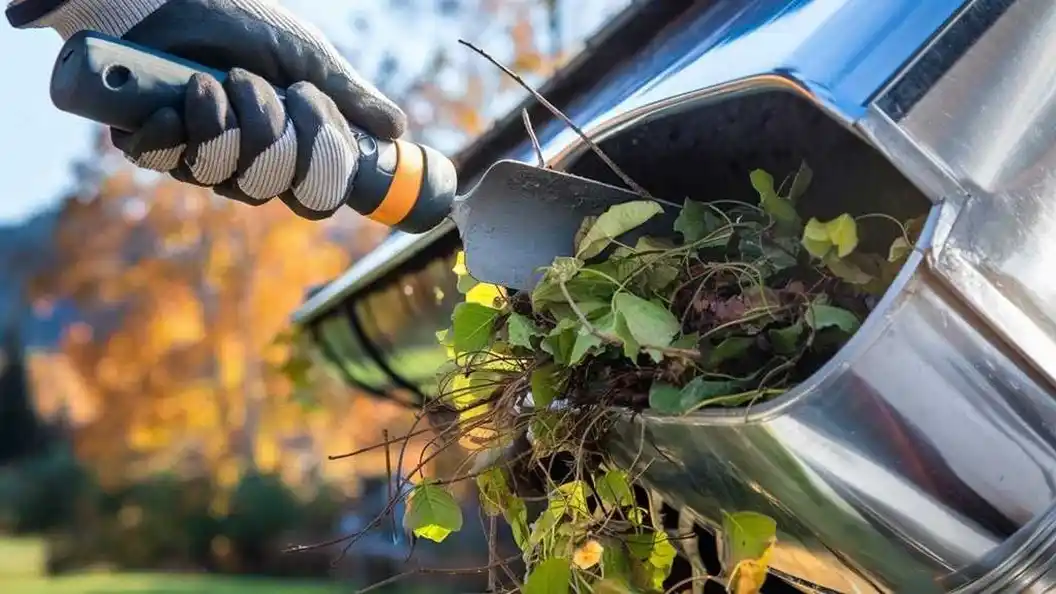
Cleaning by hand is brutally effective because you are removing the problem. You can also check for the stuff that quietly causes expensive repairs:
- Loose gutter hangers
- Separated seams
- Rust spots or pinholes
- Downspout clogs at elbows
- Overflow stains on fascia
Downsides
- Safety risk: ladders are no joke. If heights make you nervous, listen to that instinct.
- It is messy: expect wet sludge, roof granules, and the occasional acorn army.
- Easy to procrastinate: until the first heavy rain reminds you in the least gentle way possible.

Option 2: DIY gutter guards
Gutter guards are covers or inserts that aim to keep leaves and debris out while letting water in. The key phrase is “aim to.” In the real world, guards reduce maintenance, but they do not delete it.
Types
1) Screen or mesh guards
- Best for: big leaves, twigs, roof granules (depending on mesh size)
- Not great for: fine pine needles, seed pods, and heavy granule shedding on some asphalt shingles
- DIY friendliness: high
2) Micro-mesh guards
- Best for: small debris and many pine needle situations
- Not great for: buildup on top of the guard, and any system installed with poor pitch
- DIY friendliness: medium (more fussy install, more steps)
3) Foam inserts
- Best for: quick installs, lower upfront cost
- Not great for: long-term durability in some climates, seed germination (yes, you can grow a garden up there)
- DIY friendliness: high
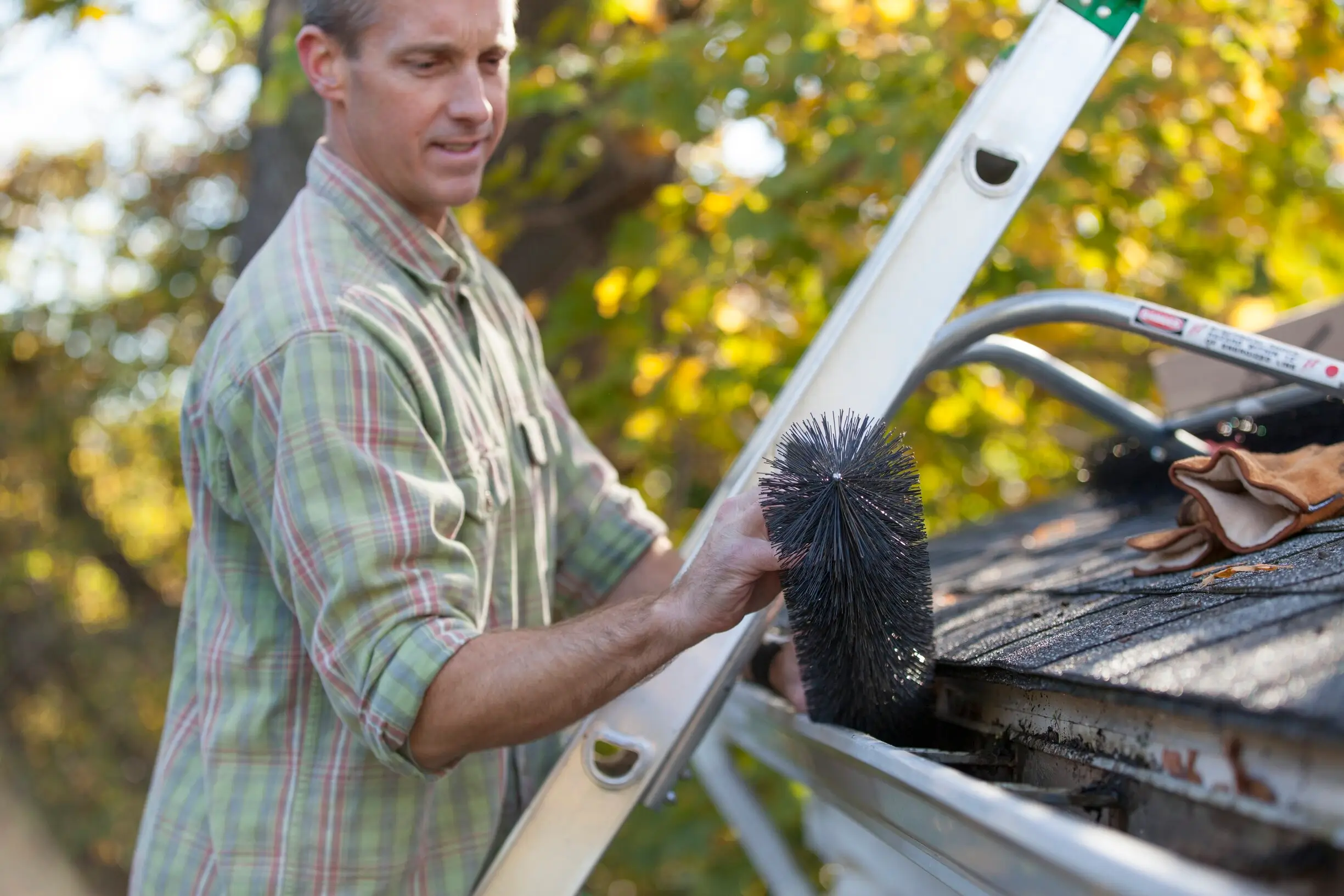
4) Brush inserts
- Best for: keeping big debris from fully blocking the gutter
- Not great for: trapping small debris inside the bristles, making the eventual cleanup more annoying
- DIY friendliness: high
5) Surface-tension “helmet” covers
- Best for: shedding larger debris when installed correctly and paired with proper gutter size and pitch
- Not great for: DIY installs when instructions are vague, or when roof water overshoots in heavy rain
- DIY friendliness: medium to low depending on your roof edge and comfort level

Long-term cost
Let’s compare the two options the way homeowners actually experience them: in money, time, and hassle.
DIY cleaning
- Upfront: low (especially if you own a ladder)
- Ongoing: your time, every year
- Hidden cost: if you skip it, you can pay later with fascia rot, landscape washouts, and basement moisture issues
DIY gutter guards
- Upfront: moderate to high depending on guard type and linear feet
- Ongoing: periodic roof-edge and guard-top cleaning, plus occasional troubleshooting
- Hidden cost: if guards are poorly installed, you can create new overflow patterns that soak fascia and siding
Typical price ranges (DIY materials only)
Every house is different, but here are ballpark ranges you will commonly see for DIY guard systems (as of 2026):
- Basic mesh/screen: roughly $0.75 to $2.50 per linear foot
- Micro-mesh: roughly $2.50 to $6.00 per linear foot
- Foam/brush inserts: roughly $1.50 to $4.00 per linear foot
My carpenter-brain takeaway: If you plan to live in the house for a while and you hate ladders, guards can pay you back in time and peace of mind. If you do not mind a couple cleanouts a year and you can do it safely, DIY cleaning wins the pure budget contest.
Maintenance reality
This is the part the box does not shout from the shelf. Even the best guard systems still require maintenance because debris can:
- Build up on top of the guard (especially in roof valleys, where grit and leaf mush collect)
- Slip in at seams, corners, and end caps
- Clog the downspout from the few things that do get through
- Cause water to overshoot the gutter in very heavy rain if the guard surface gets dirty
How often will you clean with guards?
In many “trees + seasons” neighborhoods, guards can reduce full gutter cleanouts to once a year or every other year. Results vary by guard type, roof pitch, and tree load. You may still need to:
- Brush or blow off the top of the guards in fall
- Check downspouts after big storms
- Inspect for ice and freeze issues in winter climates

What works for your debris
Big leaves (oak, maple)
Guards help a lot. Basic mesh often does fine if installed tight and supported well. You will still want to knock off leaf piles so water can get in.
Pine needles
Micro-mesh is usually the better bet. Pine needles love to weave into coarse screen and create a felt-like mat that blocks water. If you have pines over the roofline, cheap screens can become a recurring headache.
Roof granules (asphalt shingle grit)
Mixed bag. Micro-mesh can keep granules out of the trough, but that grit may accumulate on top and reduce water intake unless you periodically rinse or brush it. If your roof is older and shedding a lot of granules, you will notice it either way.
Seed pods and “helicopters”
Depends on the mesh size. They can sit on top and block the openings. Guards still beat bare gutters here, but do not expect zero maintenance.
When guards are worth it
Gutter guards are most worth it when at least one of these is true:
- You have a lot of trees and cleanouts happen constantly.
- You have a steep roof or tall house where ladder work feels risky.
- You travel often and want fewer surprise overflows.
- You have a history of clogs at specific valleys or downspouts.
When to skip (for now)
- Your gutters are already failing (sagging, leaking seams, wrong pitch). Fix the system first.
- You only clog once a year and it is a simple, safe ladder job.
- You have complex rooflines with tons of short runs, inside corners, and weird transitions. Guards can still work, but DIY install gets fussy fast.
Before you install
If you slap guards on a broken system, you are just putting a hat on a headache. Do this prep first:
- Clean and flush the gutters and downspouts.
- Fix pitch so water actually flows to the outlets.
- Re-secure loose hangers and address any sagging sections.
- Seal leaky corners and seams (when dry) with the right gutter sealant.
- Confirm discharge so downspouts send water several feet away from the foundation.
Capacity still matters
Guards do not fix an undersized system. If your house needs more flow (common culprits: long runs, steep roofs, big roof areas dumping into one corner), look at:
- Whether you have 5-inch vs 6-inch gutters
- Whether you have enough downspouts for your roof area
- Whether downspouts are crushed, undersized, or clogged
Safety and setup
I have worked construction long enough to say this with love: gutters are not worth a fall.
Ladder basics
- Use a ladder that extends at least 3 feet above the roof edge if you step onto the roof.
- Set the ladder on stable ground and use the 4:1 rule (1 foot out for every 4 feet up).
- Wear shoes with good traction. No flip-flops. No “these Crocs have sport mode.”
- Do not overreach. Climb down, move the ladder, repeat.
- If you are not comfortable, hire it out or ask a friend to spot you.
When to hire a pro
- Two or three stories, steep pitches, or sketchy ground around the house
- Brittle roofing, slick metal roofs, or anything that feels unsafe underfoot
- Physical limitations, prior falls, or you are simply not comfortable at height
- You want guards but your roof edge details are complicated (drip edge, shingle overhang, odd fascia)
Downspouts are half the battle
Whether you clean or install guards, do not ignore the exit path:
- Flush downspouts with a hose after cleanout.
- Make sure water discharges at least several feet away from the foundation.
- Consider a downspout strainer or cleanout fitting if clogs are common.

Quick decision guide
Choose DIY cleaning if:
- You can do ladder work safely and comfortably.
- You only need 1 to 2 cleanings a year.
- You want the lowest upfront cost.
Choose gutter guards if:
- You battle constant clogs or pine needles.
- You want fewer cleanouts and less mess.
- You plan to stay in the home and prefer a one-time project over recurring chores.
Best of both
For a lot of homeowners, the sweet spot is micro-mesh guards on the worst sections (under trees, in valleys, above problem downspouts) and leaving the low-debris runs alone. It trims cost and still knocks down the maintenance where it counts.
FAQ
Do gutter guards stop ice dams?
No. Ice dams are mostly about heat loss, attic insulation, ventilation, and roof temperature. Guards can sometimes make winter cleanup more annoying, but they are not an ice-dam solution.
Will gutter guards cause water to overshoot the gutter?
They can, especially during heavy rain if the guard surface is dirty, installed with the wrong pitch, or the gutters are undersized. Roof pitch and drip edge alignment also matter. Watch things during the first couple big storms and adjust if needed.
Can I install guards over dirty gutters?
You can, but you should not. Clean and flush first. Otherwise you are sealing in gunk and starting the “new system” with a clog already in the pipeline.
Will guards mess with my roof warranty?
Sometimes. Any guard that tucks under shingles or alters the roof edge can cause trouble if installed wrong (shingle lift, fasteners in the wrong spot, trapped water). Follow the guard manufacturer instructions and your roofing manufacturer guidance, and avoid improvising at the shingle edge.
What is the biggest DIY mistake with gutter guards?
Leaving gaps and loose sections. Debris finds the weak spots, then clogs build up right where you cannot easily reach them. Take your time on corners, seams, and downspout areas.
The bottom line
If you want the cheapest solution and you are comfortable on a ladder, DIY gutter cleaning is hard to beat. It is also the best way to spot early problems before they become expensive.
If you want to cut the number of cleanouts, reduce clogs, and make gutter maintenance feel less like an annual mud-wrestling event, DIY gutter guards can be worth it, especially in heavy-leaf or pine-needle zones. Just go in with realistic expectations: guards are a maintenance reducer, not a maintenance eraser.