
Why Won’t My Washing Machine Drain?
Washer finished the cycle but the drum is still full of water? Here’s how to troubleshoot the lid switch, pump filter (coin trap), drain hose, household drain, and a clogged or failing drain pump.
The first time my washer refused to drain, I did what any confident DIY-er does: I pressed the Start button again like it owed me money. The washer disagreed, and I ended up staring at a drum full of gray water and one very unimpressed golden retriever.
If your washing machine finishes the cycle with water still sitting in the drum, the most common culprits are a lid switch or door lock problem, a clogged pump filter (coin trap), or a clogged or failing drain pump. But there are a few other usual suspects too, like a kinked drain hose, a standpipe or household drain that is backing up, or a siphoning issue.
Safety first (seriously)
Before you poke around a machine that holds water and electricity, take two minutes to make it safe.
- Unplug the washer or switch off the breaker.
- Turn off the water supply valves if you will be moving the machine.
- Have towels, a shallow pan, and ideally a wet/dry vacuum ready.
- If the drum is full, plan your water removal before you open anything. Water will win every time.
Heads up: If your washer is full of water, the moment you open a pump filter or lower hose, it can dump fast. Keep a pan low and wide, and go slow.
Quick triage: what happened?
A few details will point you in the right direction.
- Does it still spin? If it will not spin and the water stays put, suspect the lid switch or door lock first. Also watch for an unbalanced load situation, especially in top-loaders, where it may stop short of the final spin and leave water behind.
- Do you hear the pump humming? A loud hum with no draining often means a clogged filter, a jammed pump, or a pump motor that is starting to fail.
- Any error codes? Many modern washers will throw a drain-related code. Your user manual (or the sticker inside the door) can translate it.
- Is it a top-loader or front-loader? Front-loaders commonly have a pump filter you can clean. Some top-loaders do not.
Get the water out first
If you are dealing with a drum full of water, getting it down to a manageable level makes everything easier and less messy.
- Use the drain and spin option one more time if the machine will cooperate. Sometimes it will.
- Use the small drain tube (common on front-loaders) behind the lower access door to drain slowly into a pan.
- Shop-vac method: If you can access the standpipe or sink drain, a wet/dry vacuum can pull water out through the drain hose.
- Last resort: Bail it out with a cup. It is not glamorous, but it works.
Step 1: Check the easy stuff
Make sure the drain hose is not kinked or crushed
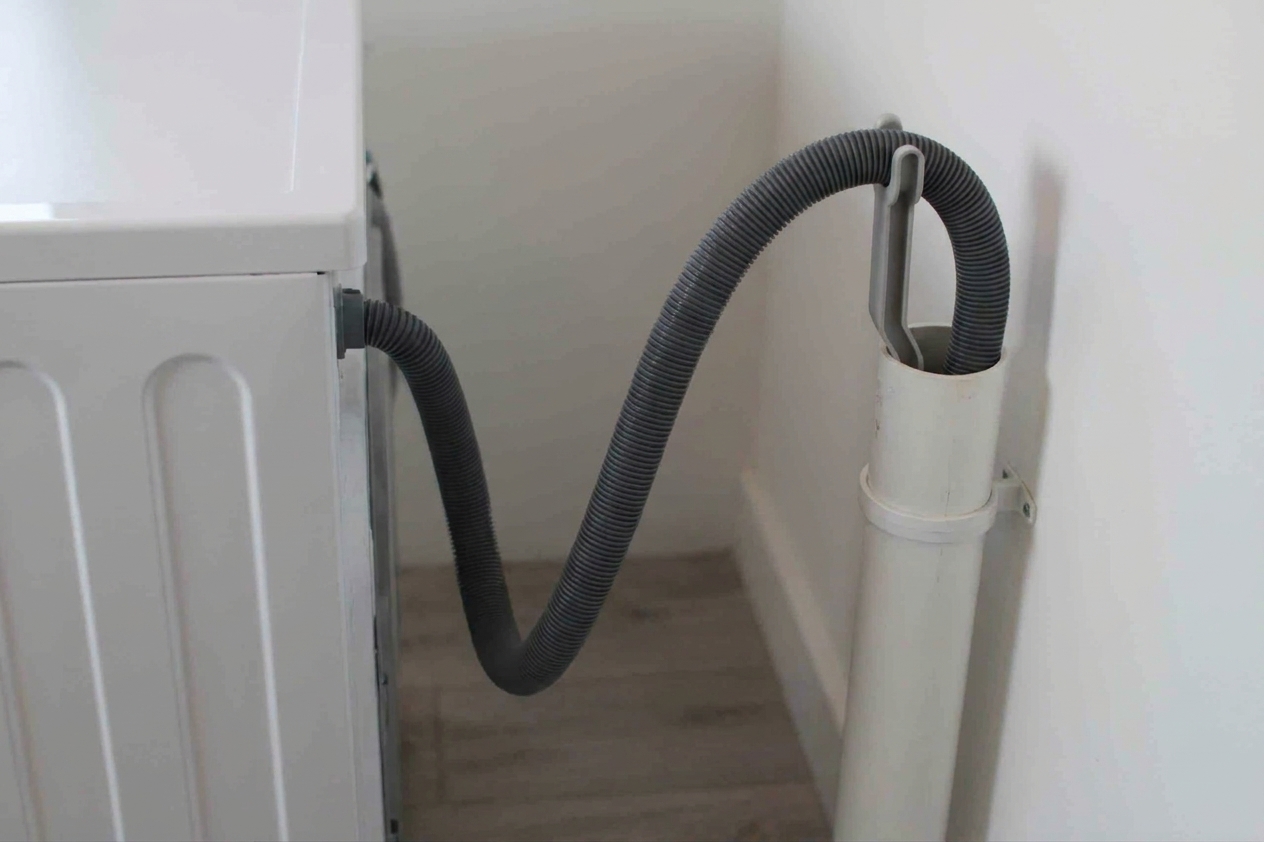
Slide the washer out and inspect the hose from the back of the machine to the wall drain.
- Look for hard kinks, pinched spots, or a hose flattened by the washer.
- If you suspect a clog, remove the hose and flush it outside with a garden hose. Use moderate pressure and do not blast it like you are pressure-washing a driveway.
Make sure the standpipe setup is not fighting the pump
If the drain hose is routed too high, shoved too far down the standpipe, or sealed too tightly, the pump can struggle or the washer can siphon.
- Check standpipe height: Manufacturers specify a range. A common ballpark is roughly 24 to 96 inches (60 to 240 cm), depending on model. Your manual is the final word.
- Do not jam the hose deep: As a general guideline, insert it about 4 to 6 inches (10 to 15 cm) into the standpipe unless your manual says otherwise.
- Let it breathe: Avoid taping it airtight. You want an air gap so it does not airlock or siphon.
If you have ever seen the washer drain and then water seems to creep back in, or you hear gurgling at the standpipe, siphoning or a slow household drain is high on the list.
Step 2: Check the house drain
Sometimes the washer is pumping just fine, but the plumbing cannot accept the flow. That can leave water in the drum and make you think the machine is the problem.
- Look for signs of backup: Water coming up in the standpipe, a nearby sink gurgling, or a floor drain burping water when the washer drains.
- Quick test: With the washer drain hose in a bucket or large tub (and a helper nearby), try a Drain and Spin. If it pumps a strong stream into the bucket, your washer is likely fine and your standpipe or household drain is the bottleneck.
Step 3: Test the lid switch or door lock
On many washers, the machine may not spin and may stop before draining if it thinks the lid or door is open. That is a safety feature, not the washer being stubborn.
Top-load washers: lid switch basics
- Symptom pattern: Washes or agitates, but will not drain or spin. You might hear nothing when it should transition to drain.
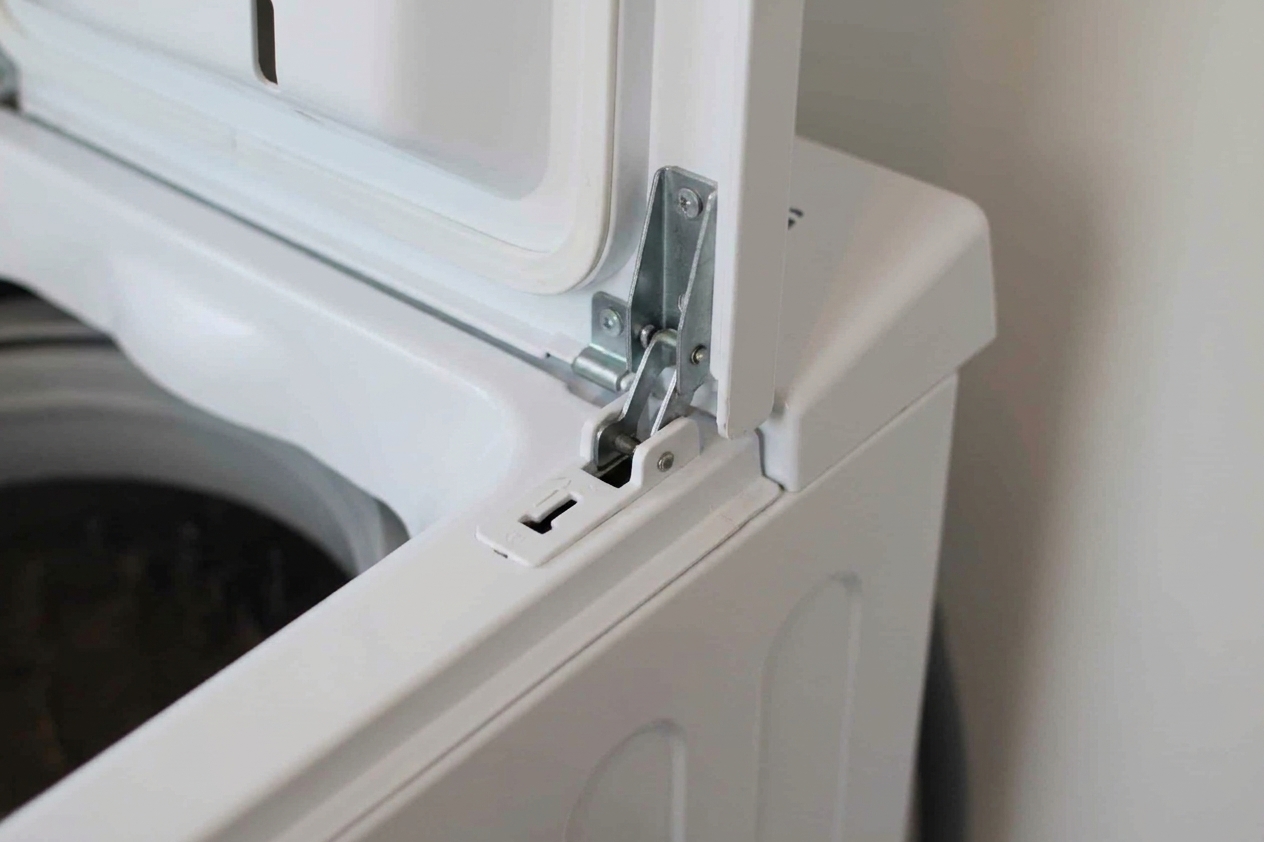
- Quick check: Close the lid firmly. Listen for a click near the lid hinge area.
- Look for a broken lid strike: That is the little plastic tab on the lid that presses the switch. If it is snapped off, the washer may act like the lid is open.
If the strike looks intact but you never hear the switch engage, you may be looking at a failed lid switch. Replacement is usually straightforward, but the steps vary by model.
Front-load washers: door lock issues
- Symptom pattern: Door stays locked, cycle ends early, water remains, or the machine refuses to spin.
- Quick check: Press on the door near the latch and try starting a Drain and Spin cycle. If it intermittently works, the lock can be failing.
Do not bypass safety switches. It is tempting to “trick” the lid switch to get the water out. That can create a real injury risk if the machine starts spinning with the lid open.
Step 4: Clean the pump filter
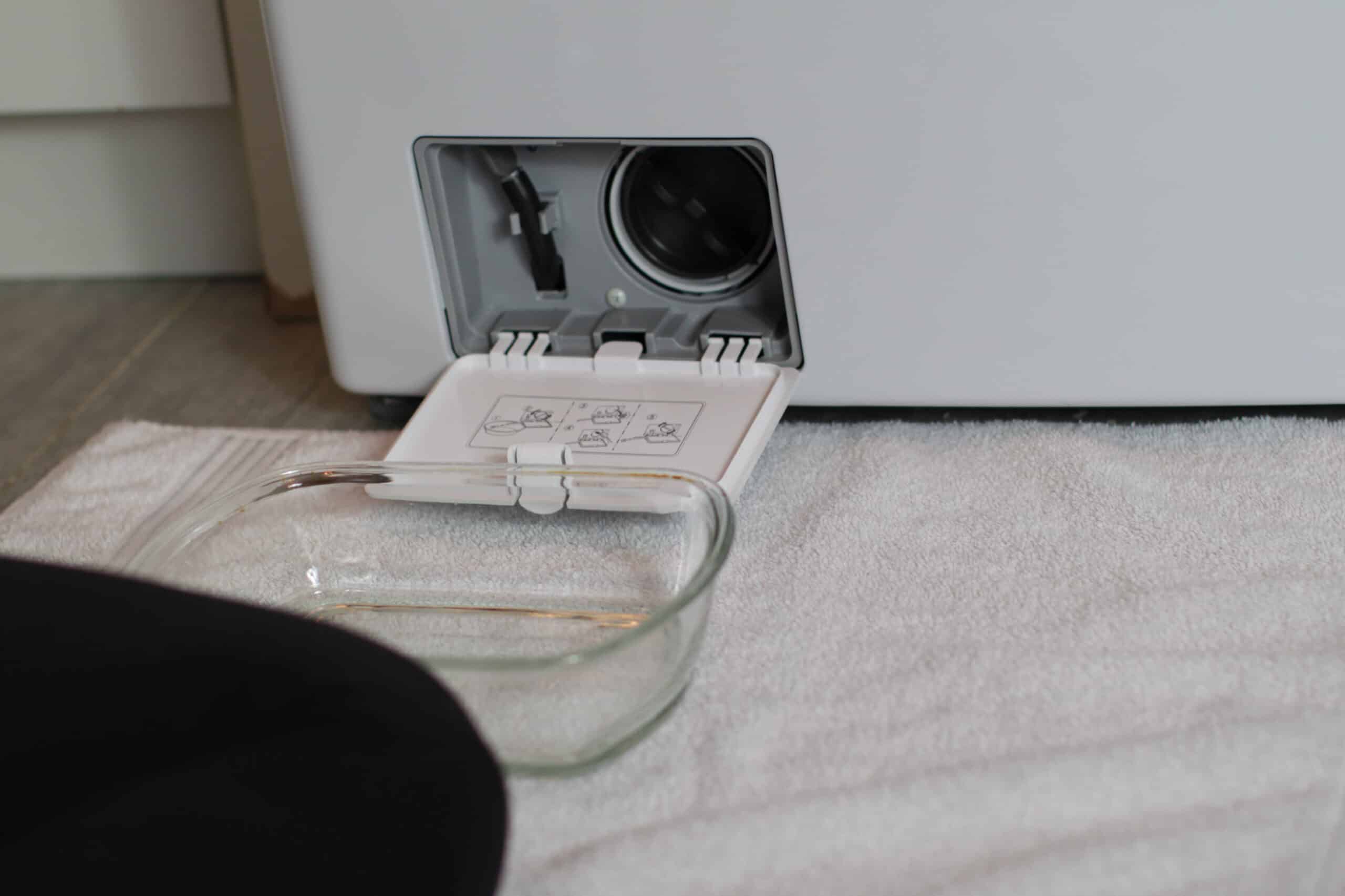
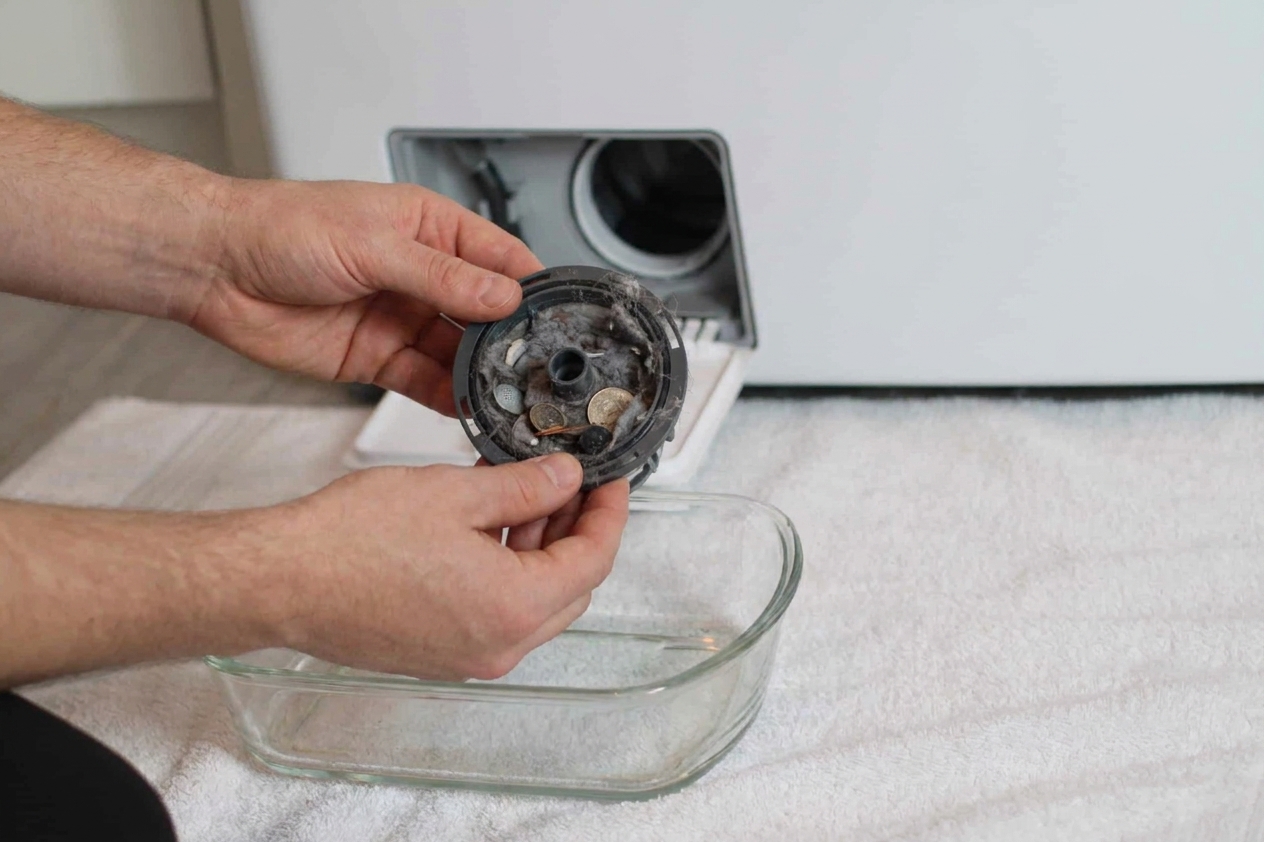
If your washer has a little access door down low on the front, congratulations: you likely have a pump filter. Less congratulations: it is probably full of lint, coins, hairpins, and one mystery LEGO.
What the pump filter does
It catches debris before it hits the pump impeller. When it clogs, the pump cannot move water out of the drum.
How to clean it
- Unplug the washer.
- Locate the access panel at the lower front. Some have a small door, others require removing a toe kick panel.
- Get towels and a shallow pan ready. Some models also have a small drain tube you can pull out to slowly drain first.
- Open the filter slowly. Turn it a little at a time to control the flow.
- Do not force it. Some filters are very tight. Steady pressure beats brute strength.
- Remove debris from the filter and rinse it in the sink.
- Check inside the housing for gunk, socks, or sludge. Wipe it clean.
- Inspect and reseat the gasket or O-ring so it does not drip when you put it back.
- Reinstall the filter snugly and run a Drain and Spin.
Pro tip from too many Saturday afternoons on my laundry room floor: if you find a lot of sand or pet hair, clean the filter monthly for a while. Your pump will thank you quietly by not dying.
Step 5: Check the drain pump
If the filter is clean (or your model does not have one) and the washer still will not drain, the pump itself may be blocked or failing. Another common spot for clogs is the tub-to-pump hose (sometimes called the sump hose), which can trap strings, lint mats, and small socks.
Signs of a clogged or failing pump
- You hear the pump humming but water barely moves.
- The washer drains very slowly and leaves water behind.
- You hear grinding (a coin, bra wire, or button stuck in the impeller).
- The washer stops mid-cycle and throws a drain error.
Basic pump check (general approach)
Exact access varies, but many front-load washers let you reach the pump from the lower front after removing a panel. Many top-loaders require tilting the machine back or accessing from the bottom.
- Unplug the washer.
- Remove the lower front panel or access the pump from underneath (if your model allows).
- Expect water. Keep a pan handy.
- If you clamp hoses, do it safely. Use hose pinch pliers if you have them. Avoid locking pliers that can damage the hose.
- Remove the inlet and outlet hoses from the pump and check for socks, lint clumps, and hardened detergent gunk. Also check the tub-to-pump hose if you can access it.
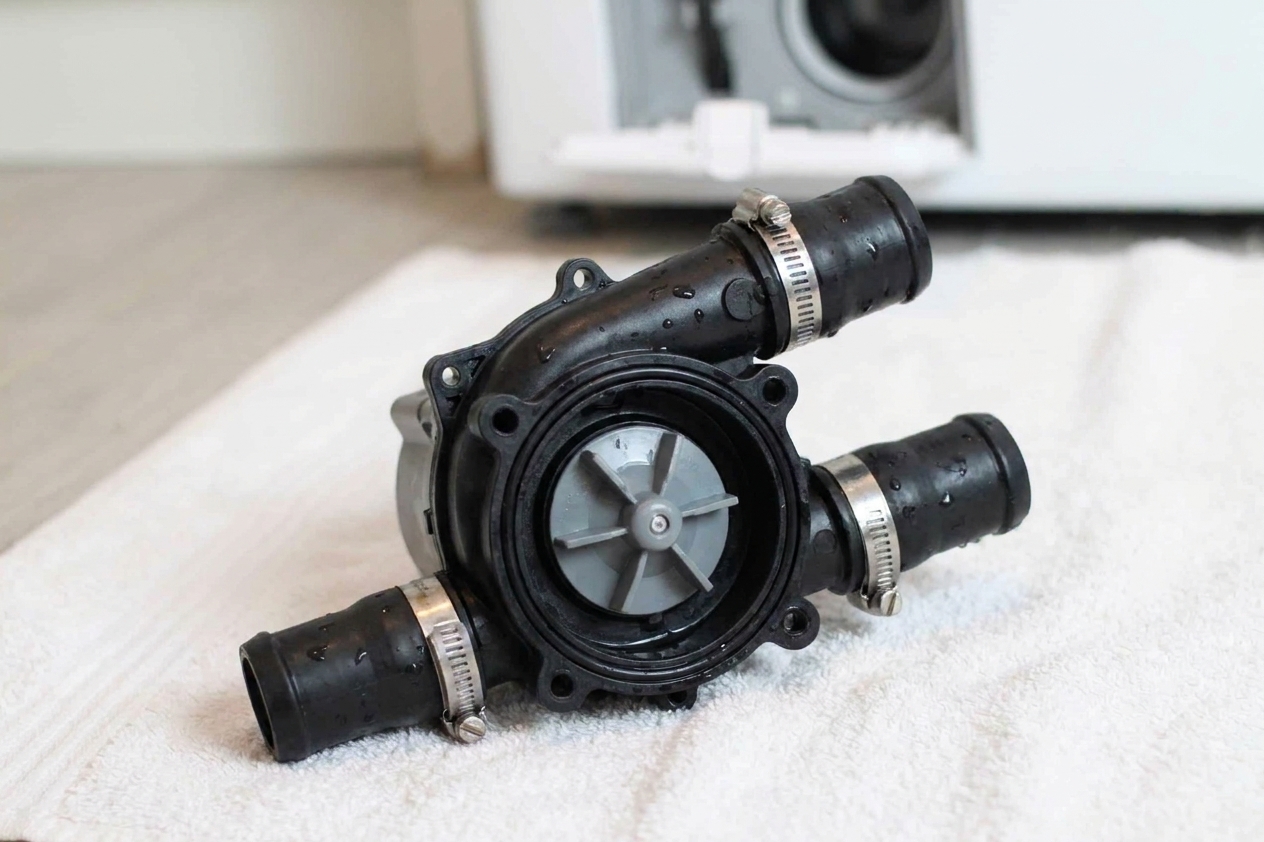
- Check the impeller (the little fan inside). It should spin, but it should not be jammed. Some pumps may feel a slight magnetic “cogging” as you turn it.
If the impeller is damaged, loose, or the pump motor is dead, cleaning will not fix it. At that point, replacing the pump is often the practical DIY repair, assuming the part cost makes sense for the age of the machine.
Step 6: Run a drain test
Once you have checked the switch and cleared the filter, hose, or pump, run a short drain cycle to test.
- Select Drain and Spin or Rinse and Spin.
- Listen for the pump to run and watch the drain hose for a steady flow.
- If it drains and spins normally, you are back in business.
If it drains but does not spin, circle back to the lid switch or door lock, load balance, and any error codes.
Other possibilities
If you have cleared the usual clogs and the washer still acts weird, here are a few less-DIY-friendly causes that can still be real:
- Pressure switch or air dome issues: If the washer thinks it is still full, it may refuse to finish draining or spinning.
- Control board or timer faults: The pump is fine, but it is not being told to run.
- Belt or motor issues (some designs): If the machine cannot spin or drive the pump, it may leave water behind.
- Front-loader door boot drainage: Some models have small drain paths that can clog and contribute to slow draining and funk. While you are there, confirm the washer is level, too.
When to call a pro
I am all for DIY, but here are the situations where it is smart to bring in help.
- The washer is under warranty and opening panels may affect coverage.
- You smell burning, see smoke, or the breaker trips when it tries to drain.
- You cleared the filter and hoses, but the pump is still not running, and you are not comfortable testing electrical components.
- The machine is older and the repair cost is close to replacement. Sometimes the most budget-friendly fix is not sinking money into a tired washer.
FAQ
Why is there water in the drum after the cycle but the clothes are not that wet?
That usually means the washer drained some water but not all of it. A partially clogged pump filter, a small sock stuck in the pump or tub-to-pump hose, or a restricted drain hose can cause slow draining that leaves a few inches behind.
My washer drains sometimes. What causes intermittent draining?
Intermittent issues often point to a door lock or lid switch beginning to fail, debris that shifts around and occasionally blocks the pump impeller, or a household drain that is borderline and backs up only on heavy loads. Clean the filter and check the latch mechanism first.
Can too much detergent keep a washer from draining?
Too much detergent can create heavy suds that confuse water level sensing and slow down draining. It typically does not stop draining entirely, but it can contribute to gunky buildup in the pump filter and hoses over time.
What is the most common thing you find in pump filters?
Coins, bobby pins, lint mats, small kids’ socks, and pet hair. In my house, it is usually a coin and a dog hair tumbleweed.