
Why Won’t My Sump Pump Turn On?
If your sump pit is filling but the pump stays silent, don’t panic. Walk through power, GFCI, float problems, jammed impellers, and simple fixes before calling a pro.
The first time a sump pit fills up and the pump just sits there silently, it is a special kind of basement panic. I have been there. In my 1970s Michigan fixer-upper, I once stood over a rising pit with a flashlight in my teeth, convinced I was about to spend my weekend shop-vacuuming groundwater like it was a new hobby.
The good news: when a sump pump will not turn on at all, the causes are usually pretty consistent. This page sticks strictly to a pump that will not start. (A pump that runs nonstop is a different problem, and a full replacement guide is its own project.)
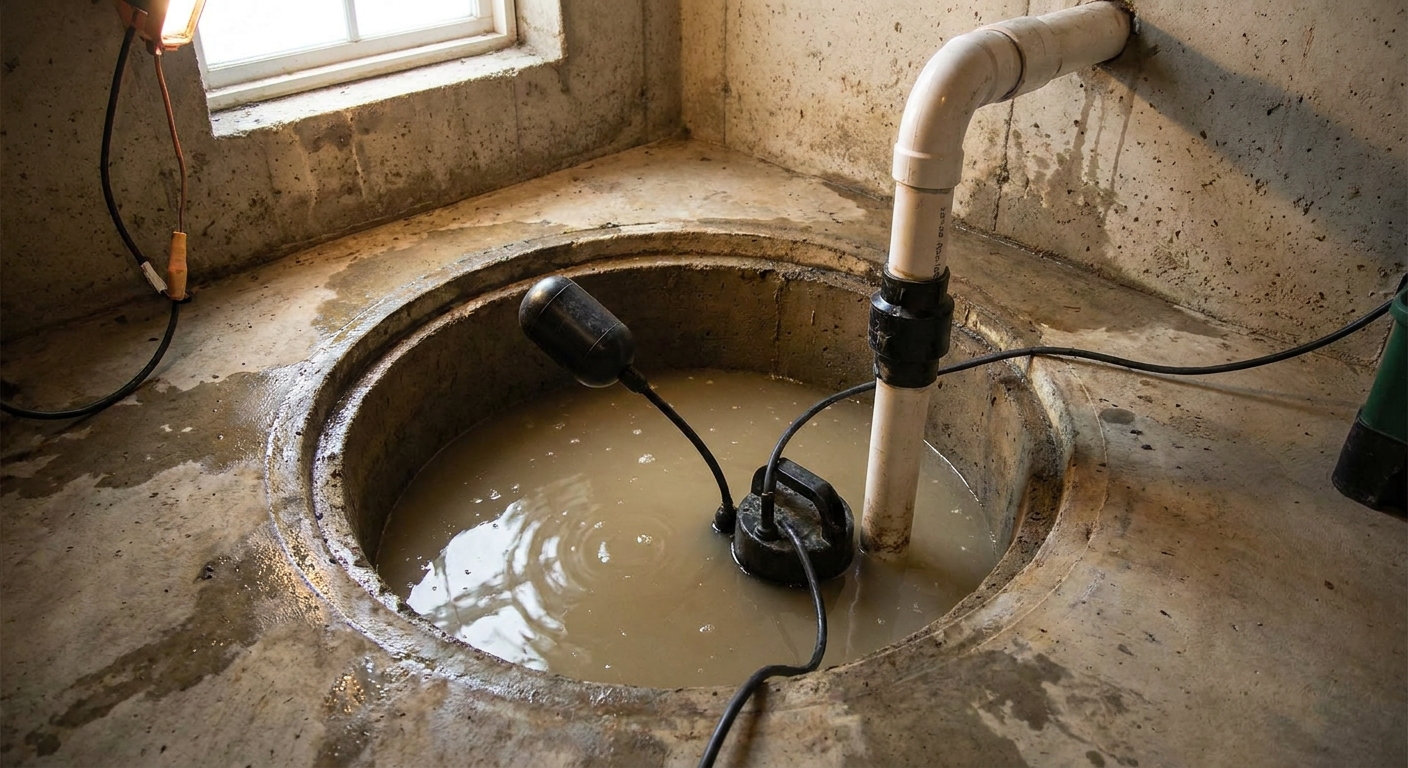
Safety first: what to do now
Quick safety reminder If the pit is filling and water is anywhere near outlets, extension cords, or the pump plug, treat it like an electrical hazard. Water and electricity do not negotiate.
- If water is close to the outlet, shut off power to that circuit at the breaker before you touch anything.
- If the basement is already wet, wear rubber-soled shoes and avoid standing water while checking cords and plugs.
- If you smell burning, hear buzzing, or see melted plastic on the plug or outlet, stop and call an electrician.
- If water is rising fast, start damage control while you troubleshoot: move valuables up, set up a backup pump if you have one, and consider calling a plumber for an emergency pump-out.
What not to do: Do not stand in water while handling cords. Do not use a “cheater” adapter to defeat grounding. Do not keep resetting a breaker that trips repeatedly.
Start with the fast checks
When a sump pump stays silent, I like to troubleshoot in this order: power, GFCI, float, jammed pump, then wiring and controls.
1) No power at the outlet
This sounds obvious, but it is one of the most common reasons a sump “dies” during a storm. Someone bumps the plug, a power strip fails, a breaker trips, or the outlet itself is dead.
What to do
- Make sure the pump is plugged in firmly. Sump cords can wiggle loose from vibration.
- Test the outlet with a lamp or a simple outlet tester. If the lamp does not turn on, you have an outlet or circuit problem, not a pump problem.
- Check the breaker in your panel. Sump pumps are commonly installed on a dedicated circuit, and it is often recommended, but older homes can be a little… creative. If you are unsure what is allowed in your area, check local code or ask an electrician.
Pro tip: If the pump is plugged into a power strip or extension cord, remove that from the equation. Plug the pump directly into the outlet. Power strips and long, light-duty cords can overheat or drop voltage.
2) Tripped GFCI (or an upstream GFCI)
Many sump pumps are plugged into a GFCI outlet, or they share a circuit with one. The tricky part is the sump outlet might look normal, but it can be protected by a GFCI outlet somewhere else on the same circuit, like a bathroom, utility sink, garage, or unfinished basement outlet.
Also worth noting: whether a sump outlet must be GFCI protected can vary by jurisdiction and installation details. Some installs use GFCI protection, others prioritize reducing nuisance trips on a dedicated sump circuit. When in doubt, confirm local requirements.
What to do
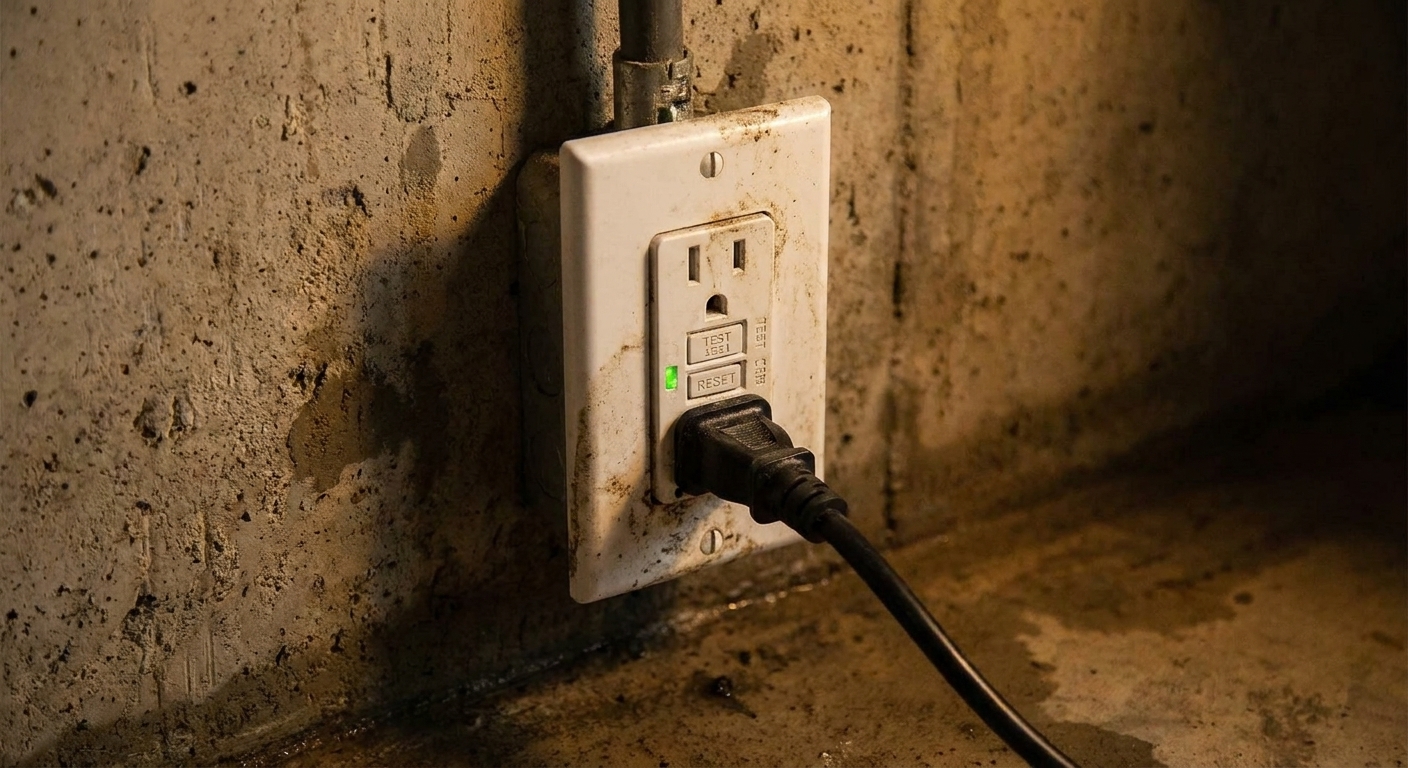
- Look for a GFCI outlet with “Test” and “Reset” buttons near the sump. Press Reset.
- If that does not do it, check nearby bathrooms, garage, and basement outlets for a tripped GFCI and reset them too.
- If the GFCI trips again immediately, unplug the pump and reset. If it holds without the pump plugged in, the pump may have an internal fault or water intrusion.
Float problems
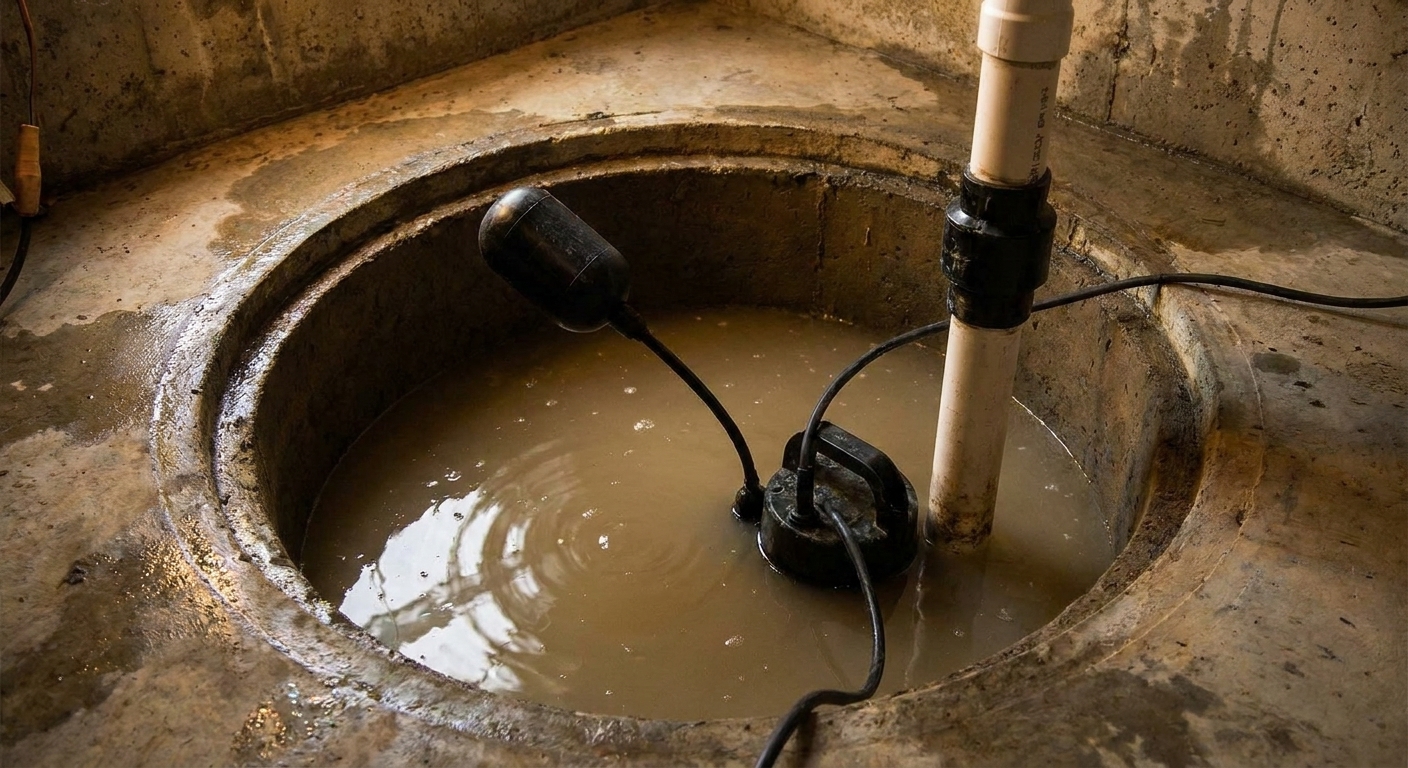
In a typical sump setup, the float switch is the on-off brain. If the float cannot rise, the pump never gets told to start.
3) Float stuck or blocked
This is incredibly common in pits with a narrow diameter, a crooked discharge pipe, loose cords, or debris in the bottom.
What to look for
- The float wedged against the pit wall
- The float tangled in the pump cord or zip ties
- The float bumping the discharge pipe and unable to lift
- Rocks, silt, or sludge preventing movement
What to do
- Unplug the pump.
- Reach in and gently lift the float. (If it is tethered, lift the float and the tether point slightly.)
- Clear any obstructions and re-route cords so the float has a clean path.
- Only after your hands are out of the pit, plug the pump back in and see if it starts when you lift the float.
If it runs when you lift the float by hand, your problem is float movement, float adjustment, or how the pump is positioned in the pit.
If the float moves but it is still silent
Now we are getting into “either the switch is not closing” or “the motor cannot start.”
4) Bad float switch
Some pumps have a built-in vertical float, others use a tethered float, and some use a separate piggyback float switch. Any of these can fail.
Piggyback float, in plain English: it is the two-plug setup where the float plugs into the wall, and the pump plugs into the float.
Easy test (piggyback style)
- Unplug everything.
- Double-check the basics: the pump should be plugged into the float’s “pump” receptacle, and the float plugs into the wall.
- To test the pump, bypass the piggyback float temporarily by plugging the pump directly into the wall outlet.
- If the pump turns on when plugged directly into the wall, the float switch is the likely culprit.
Note: Do not leave it bypassed as a long-term solution. Without a float, a sump pump can run dry, overheat, and fail.
5) Impeller jammed or pump seized
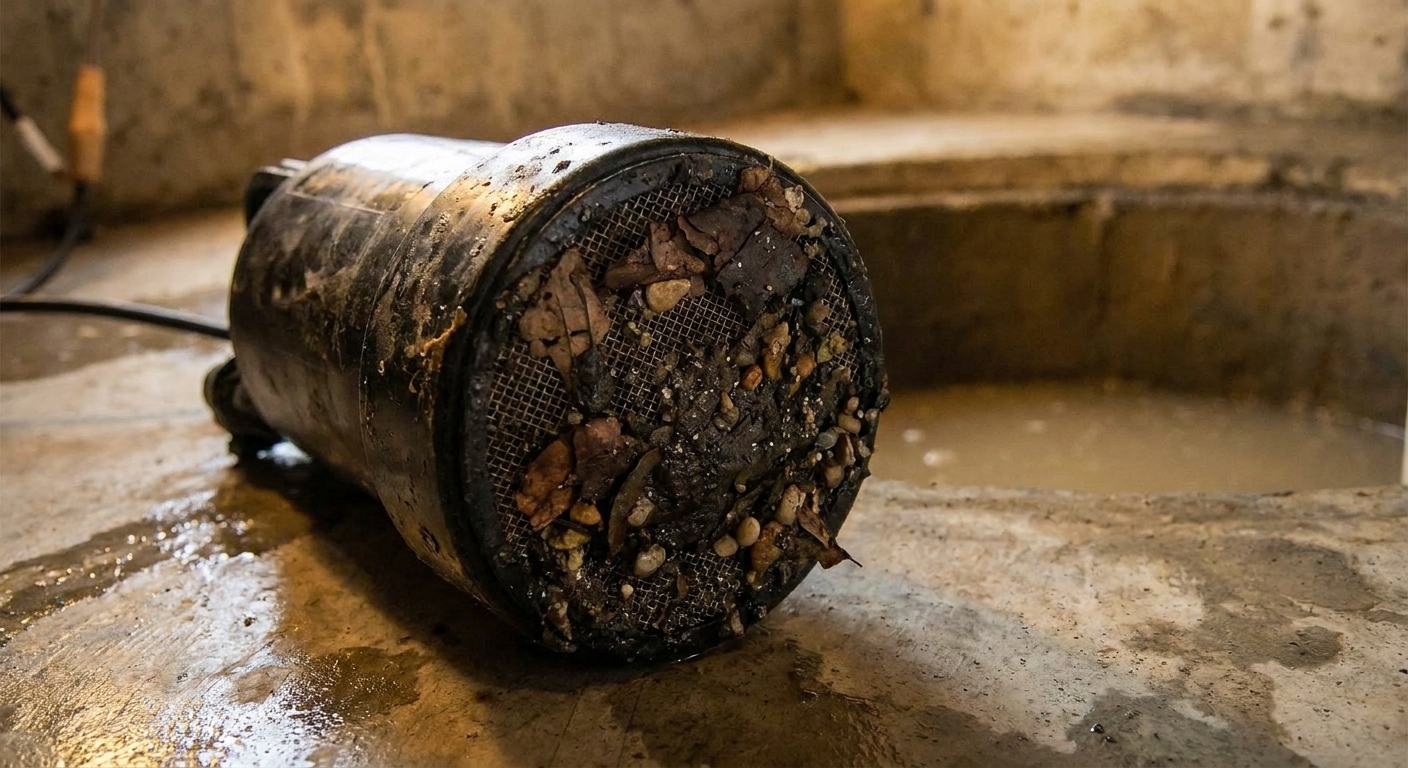
If the pit has gravel, bits of plastic, mud, or iron ochre slime, the impeller can jam. A seized pump might hum, trip a breaker, or do absolutely nothing.
What to do
- Unplug the pump.
- Pull the pump up and set it in a bucket or on a plastic tray. Expect some water mess.
- Check the intake screen on the bottom for stones, sludge, or buildup.
- Try spinning the impeller area if accessible (some designs allow a finger check through the intake, others do not). Do not force anything.
- Clean the intake and rinse off grit.
If the pump is older and has been sitting in silt for years, sometimes it is not “broken” so much as “glued together by basement soup.” Cleaning helps, but not always.
One more caution: avoid repeated “dry” testing out of the pit. Many submersible pumps rely on surrounding water for cooling and can overheat quickly if they run without water.
Electrical issues beyond the outlet
If you have confirmed the outlet has power and the float is calling for the pump to run, the remaining possibilities are electrical problems inside the pump or in the control setup.
6) Thermal overload tripped
Many sump pumps have thermal protection. If the motor overheated, it can shut off until it cools down. In that case, it may appear “dead” for a while.
- Unplug the pump and let it cool for 20 to 30 minutes.
- Check for reasons it overheated: clogged intake, running dry, a jammed impeller, or a tightly lidded basin with limited airflow.
7) Failed capacitor or motor
Some pumps will hum but not spin if a start capacitor fails or the motor is failing. A few pumps have serviceable capacitors, but most homeowners do not end up repairing this safely or cost-effectively.
- If it hums then trips a breaker or GFCI, stop testing and plan on service or replacement.
- If it is silent but you have verified power and a working switch signal, internal failure is likely.
8) Backup system or controller issue
If your system uses a controller, alarm, or battery backup, the pump may be routed through that device. A loose connection, blown fuse, or failed controller can keep the main pump from starting.
- Check for error lights or alarms on the controller.
- Confirm plugs are fully seated.
- Look for an inline fuse on the controller if the manual specifies one.
- If you have a combo system (primary plus backup), make sure you are testing the pump you think you are testing. It is surprisingly easy to lift the wrong float and chase the wrong problem.
A simple order to follow
If you are standing over a full pit and want a clear path, here is the sequence I use at home:
- Confirm the outlet works (lamp or tester).
- Reset GFCI at the sump and any upstream locations.
- Check float movement and lift the float by hand (plug back in only after your hands are out of the pit).
- If piggyback style, verify plug orientation, then bypass briefly to test the pump directly.
- Unplug, remove pump, clean intake and check for jams.
- Let it cool (thermal overload) and retest.
- If none of this works, assume internal electrical failure and move to pro help.
When to call a pro
I am all for DIY, but I am even more for dry basements and safe wiring. Call a plumber or electrician when:
- The outlet has no power and you cannot identify a tripped breaker or GFCI.
- The breaker or GFCI keeps tripping when the pump is plugged in.
- You see melted insulation, scorch marks, or smell burning.
- The pump is hardwired, or tied into an alarm/controller you are not comfortable testing.
- The pit is actively flooding and you need emergency pumping fast.
FAQ
How do I know if my sump pump is getting power?
The easiest way is to test the outlet with a lamp or outlet tester. If the outlet works but the pump does not respond when the float is raised, the issue is at the switch or pump.
Is it okay to plug my sump pump into an extension cord?
For a quick emergency test, maybe, but it is not a great permanent setup. Many extension cords are not rated for the starting load of a pump, and voltage drop can make motors run hot. If you must use one temporarily, use a heavy-duty cord and keep connections off the floor and away from water.
My sump pump is silent, but the pit is full. Could the discharge line be clogged?
A clogged discharge line more often causes a pump to run but not move water effectively. If your pump is truly not turning on at all, start with power and the float switch first.
Should I test my sump pump by pouring water into the pit?
You can, but do it carefully and slowly, and only when you are confident the discharge line is connected and routes water away properly. A safer quick test is lifting the float by hand to trigger the switch.