
Why Does My Sump Pump Run All the Time?
If your sump pump won’t shut off, the cause is usually a stuck float, a failed check valve, a discharge restriction, airlock, or nonstop groundwater. Here’s how to diagnose it safely.
If your sump pump is running all the time, it is doing one of two things: it is correctly responding to water that keeps coming in, or it is incorrectly being told to run even when the water level is not rising.
Either way, nonstop running is hard on the motor, hard on your electric bill, and a fast track to finding out what your basement looks like when the pump quits at 2 a.m. Let’s walk through the most common causes and how to diagnose them without turning your basement into a science experiment.
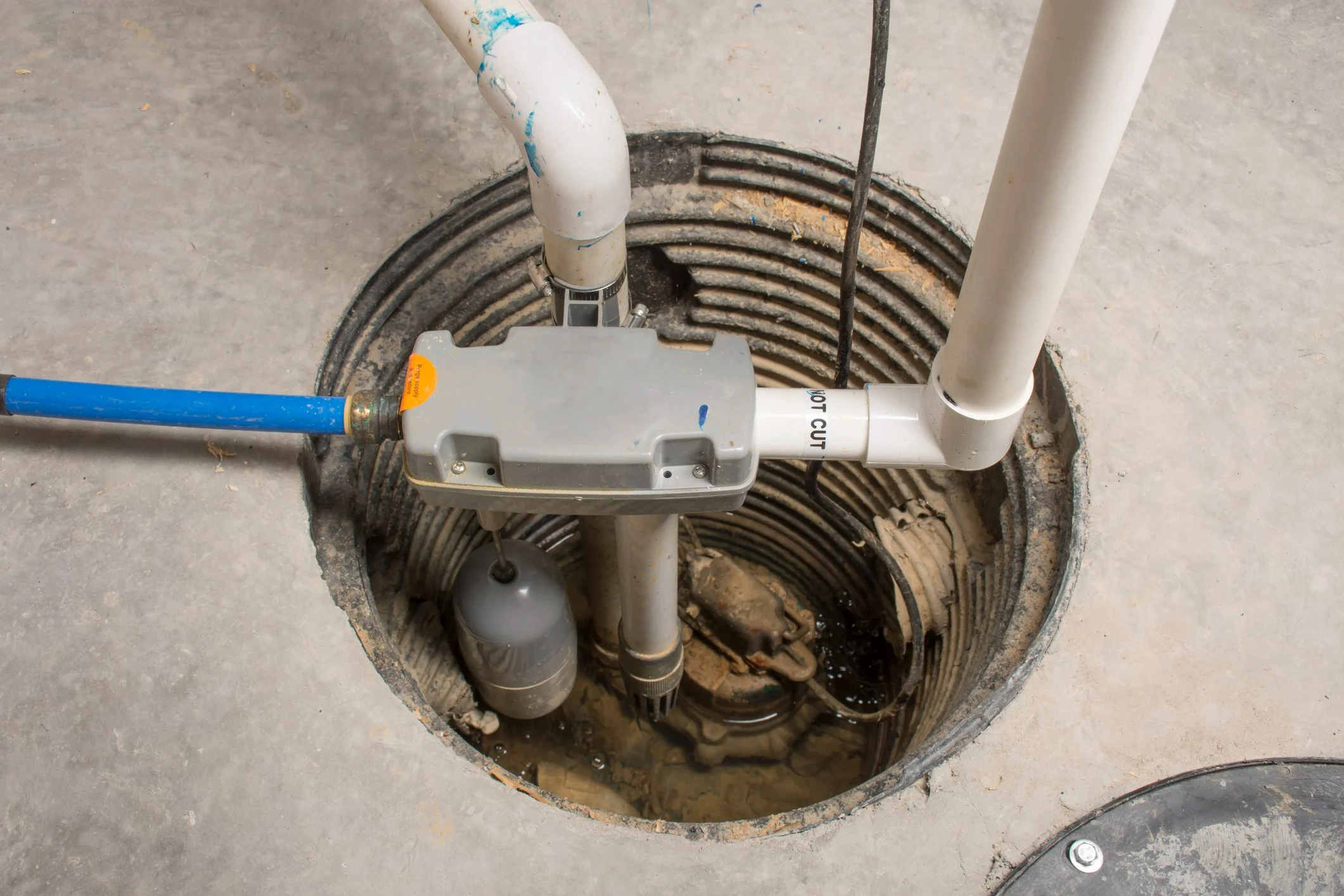
First, a quick safety check
Before you start poking around in a sump pit, treat it like the combo of electricity and water that it is.
- Unplug the pump before reaching into the pit.
- GFCI protection: Many areas require GFCI protection for basement outlets (often including sump pumps), but rules and real-world nuisance-trip risk vary by location and by how your sump is wired. If you are unsure, check your local code or ask an electrician. A dedicated circuit, a high-water alarm, and a battery backup are smart upgrades either way.
- Wear gloves. Sump pits are groundwater pits, but they are still gross pits.
- If you smell strong sewage, stop and investigate. A sump pit should not smell like a sewer, but confusion happens because some homes also have a sewage ejector pit (that one does handle wastewater and should be sealed and vented). If you have sewer smell concerns, check that the lid is sealed and any pipe penetrations are gasketed, and confirm you are working on a sump pit and not an ejector pit.
Nonstop or short-cycling?
Homeowners describe two different problems the same way:
- Continuous running: the pump turns on and just does not stop.
- Short-cycling: the pump turns on for a few seconds, shuts off, then turns on again a minute later. Repeat forever.
This matters because continuous running often points to high inflow, a weak pump, or a restriction, while short-cycling often points to a float issue or water falling back into the pit.
Do this 60-second test
- Watch the water level in the pit while the pump is running.
- If the pit is basically empty (water is below the normal “off” level) and it still runs, the switch is likely stuck on or misadjusted. Do not let it run dry. Unplug it and move to the float and switch checks.
- If the water level stays high and never catches up, the pump cannot keep up or the discharge is restricted.
- If the water level drops, the pump shuts off, then the water level rises quickly again, suspect the check valve or a discharge problem letting water return.
Common cause: a stuck float
The float is the on-off “brain” for many sump pumps. If it gets hung up on the pit wall, wrapped around the power cord, or jammed under the discharge pipe, the pump can run constantly.
What to look for
- Float wedged against the side of the basin
- Float trapped under the discharge pipe
- Zip ties or cords pulling the float into an always-on position
- Debris in the pit keeping the float from dropping
How to check it
- Unplug the pump.
- Remove the pit lid (if you have one) and use a flashlight.
- Gently lift the float up and down by hand. It should move freely and click the switch (on many models you can hear or feel it).
- Make sure the float has clearance on all sides through its whole travel.
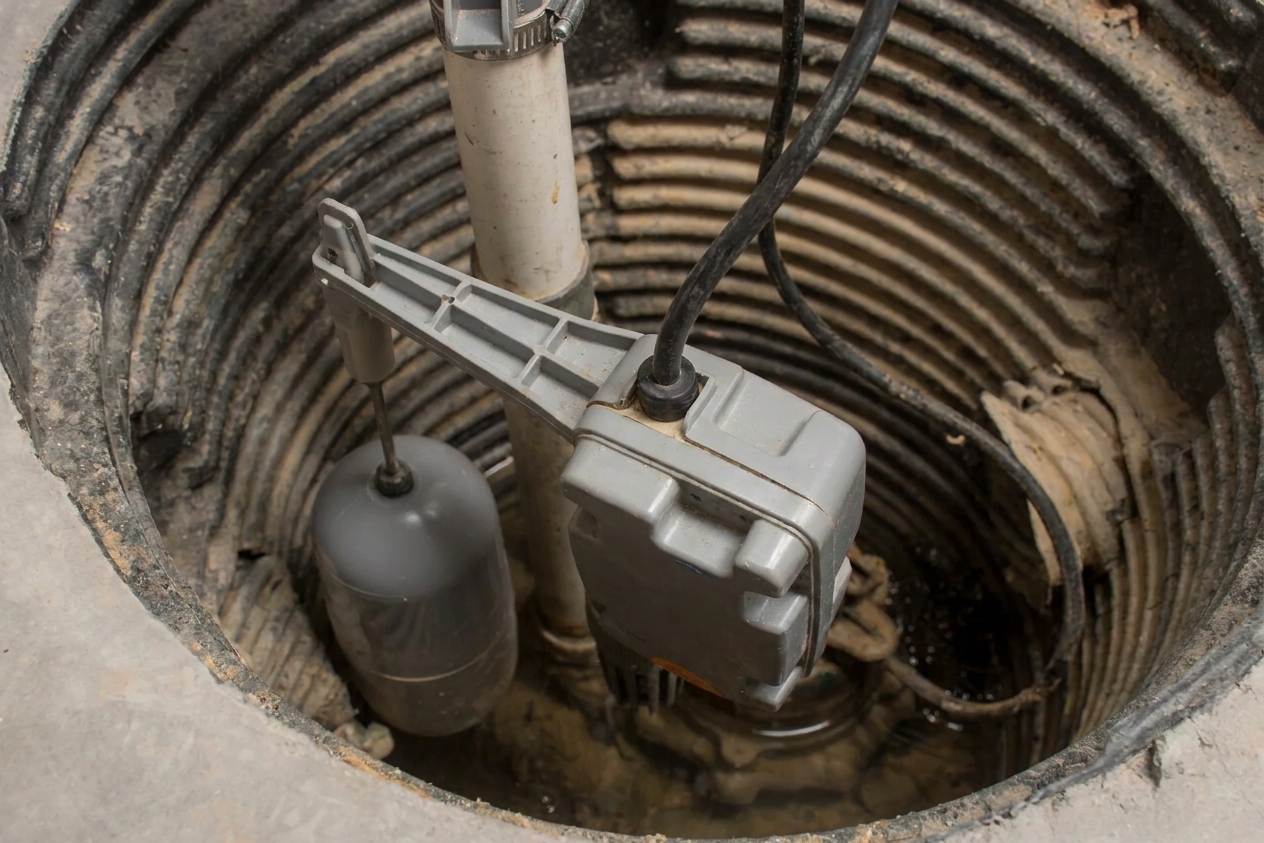
Fixes that usually work
- Reposition the pump so the float has more room. Sometimes the pump is just too close to the basin wall.
- Reroute cords so they cannot snag the float. Use a clip or zip tie to tidy cords, but do not bind the float movement.
- Clean the pit of gravel, silt, or chunks that can jam the float.
- Replace the switch if it feels sticky, intermittent, or fails the lift test.
Important: If your pump has an integral float (built into the housing), you may not see much movement, but you can still check for debris, sludge, and obstructions around the switch area.
Common cause: a bad check valve
A check valve is a one-way valve on the discharge pipe. It prevents the column of water in the vertical discharge line from draining right back into the pit when the pump shuts off.
If the check valve fails, you get a frustrating loop: pump empties pit, pump shuts off, water falls back down the pipe into the pit, float rises again, pump starts again.
Signs the check valve is the issue
- The pump shuts off normally, then turns back on within seconds to a minute
- You hear a noticeable rush of water back into the pit right after shutoff
- You feel a “thunk” or chatter in the discharge line (some noise is normal, but constant chatter is not)
How to test it
- Add water to the pit (a bucket works well) until the pump turns on. Avoid adding water if the pit is already close to overflowing or if you suspect a blocked discharge.
- Watch it pump down and shut off.
- Listen and watch the pit immediately after shutoff.
- If the water level jumps up quickly without any new groundwater rushing in, that is often the discharge line draining back.
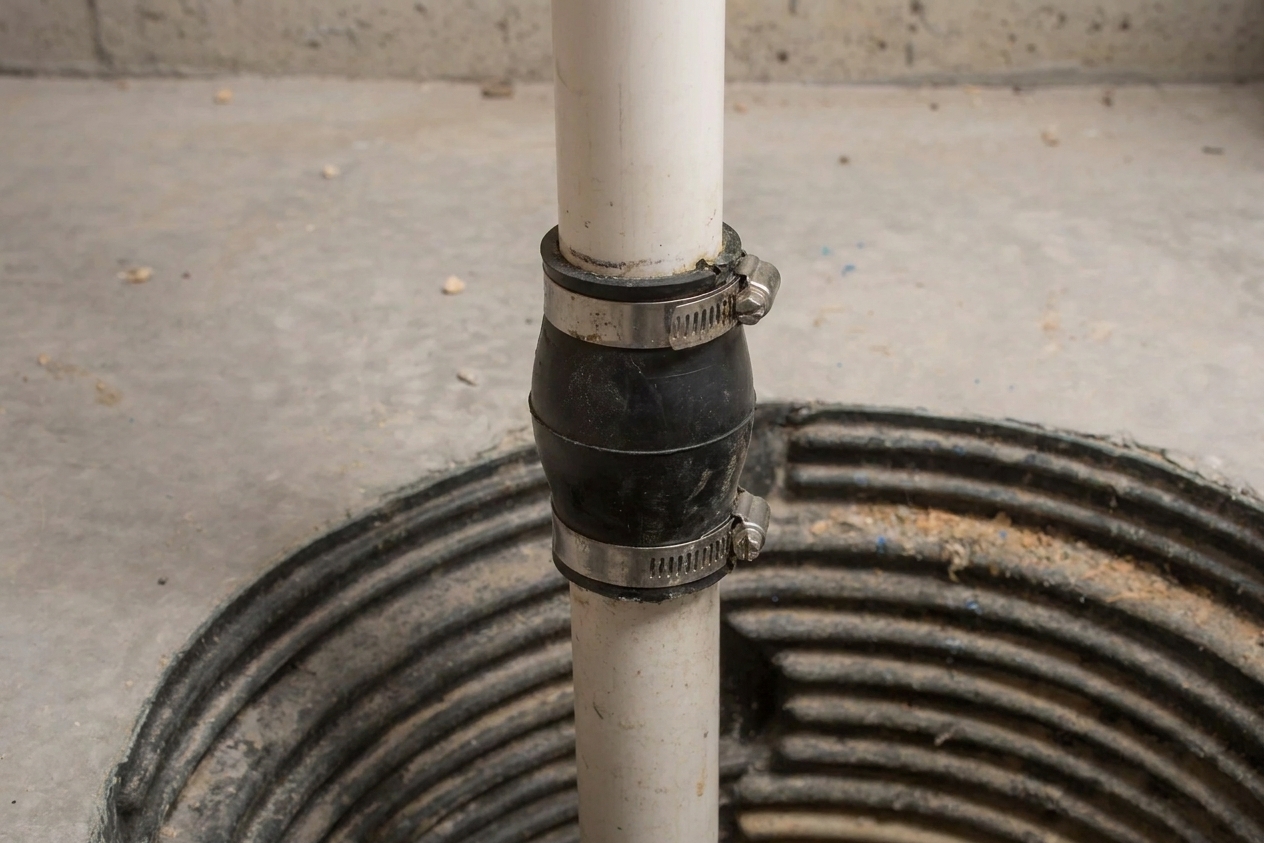
Fix
Replacing a check valve is usually a straightforward DIY job if you are comfortable cutting and reconnecting PVC, or loosening clamps on a rubber coupling depending on your setup. The big gotcha is install direction: the valve body will have an arrow that must point away from the pump (toward the discharge).
Pump cannot keep up
If the pump runs constantly and the water level in the pit barely drops, you have a capacity problem. That can be caused by too much incoming water, a partially blocked discharge, or a tired pump that is not moving water like it used to.
Common reasons capacity drops
- Clogged intake screen from silt, small stones, or sludge
- Blocked or kinked discharge line
- Frozen discharge line in cold climates (hello from Michigan)
- Worn impeller or failing motor
- Too much head height (pumping higher or farther than the pump is rated for)
What to check step-by-step
- Confirm water is actually leaving the house. Go outside and locate where the discharge exits. While the pump is running, you should see steady flow.
- Check for obvious restrictions. Look for crushed flexible hose, blocked pop-up emitters, or a discharge that is buried in mud.
- Inspect the pump intake. Unplug the pump, pull it up, and check the bottom screen for gunk.
- Listen for strain. A pump that hums, rattles, or sounds like it is grinding is not happy.
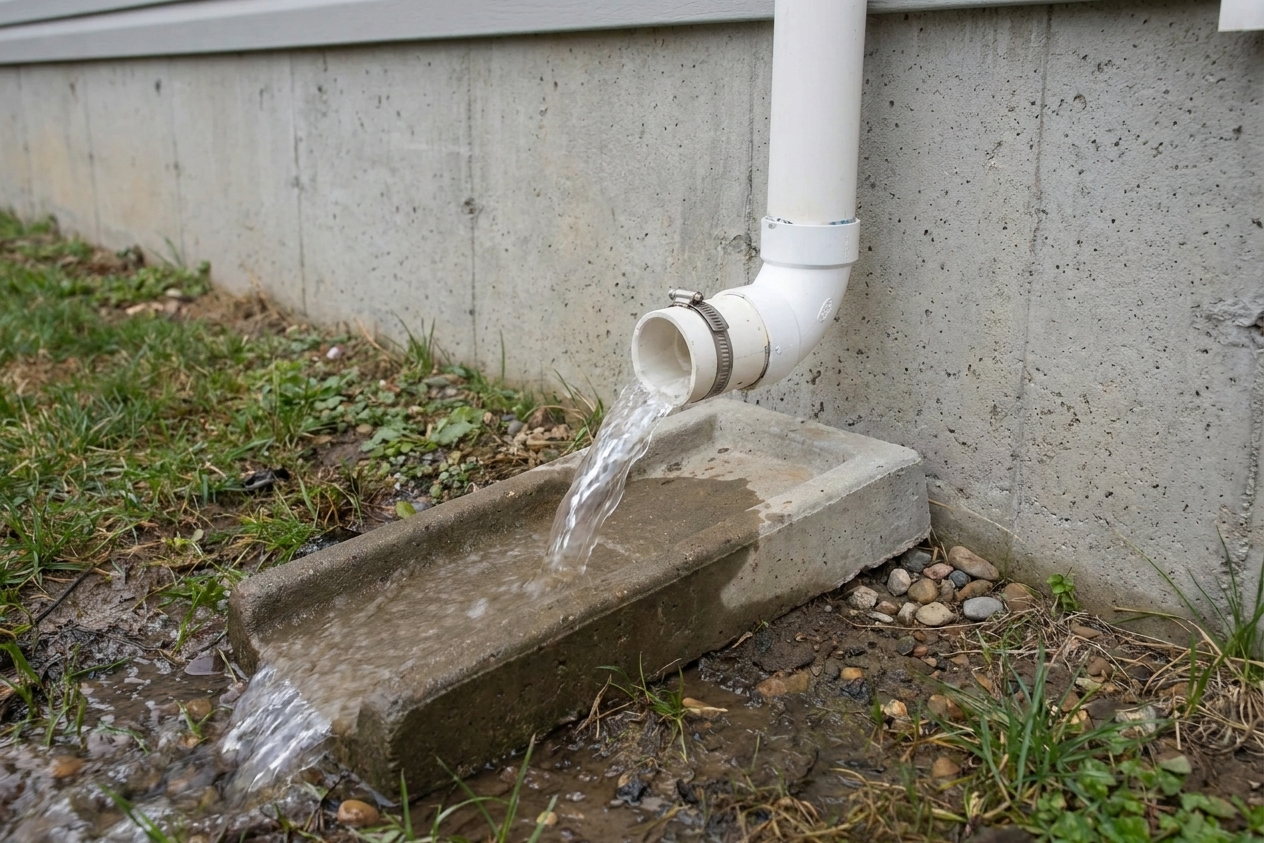
If your discharge line might be frozen
In winter, a discharge line that slopes poorly or terminates into a frozen splash area can ice up. The pump runs, but water cannot get out fast enough. If you suspect freezing:
- Check if water is coming out of the discharge outside.
- If there is little or no flow, shut the pump off for a moment and see if the pit rapidly refills (it will if inflow is high).
- Safest long-term fix is correcting the discharge setup so it drains fully after each cycle and is protected from freezing, not trying to nurse it along with a space heater.
Stop here and call a pro if: the pump runs but moves almost no water, the breaker trips repeatedly, you see sparks, or the pit is close to overflowing and you cannot get flow restored quickly.
Airlock and weep hole
One more sneaky cause of “it runs but it is not moving water like it should” is an airlock in the discharge line. Some sump pumps are designed to bleed trapped air through a small weep hole drilled in the discharge pipe just above the pump.
- If your pump manual mentions a weep hole and yours does not have one, that can be worth addressing.
- If your manual does not call for a weep hole, do not start drilling pipes as a hobby. Some setups already handle air, and an unnecessary hole can spray water into the pit area or create annoying noise.
If you cannot find the manual, look up your exact model number and follow the manufacturer instructions.
Sometimes water really is continuous
Occasionally, the pump is not the problem at all. The water table is simply high, or you have surface water being directed right to your foundation. In those situations, the pump may run for long stretches during:
- Heavy rain
- Rapid snowmelt
- Spring thaw when the ground is saturated
- After a plumbing leak is dumping water near the foundation
How to tell
- The pump is moving a strong stream outside the whole time it is running.
- The pit refills steadily even when the discharge is working properly.
- You notice the issue lines up with weather.
How to reduce run time
- Clean gutters and extend downspouts well away from the foundation.
- Fix grading so soil slopes away from the house (no dips that hold water).
- Check for yard drainage issues that pool water near the basement wall.
- Confirm the discharge ends far enough away that it cannot recycle water back to the foundation.
If your pump runs constantly even in dry weather, that is when I start thinking less about seasonal groundwater and more about something mechanical, like a float, a check valve, or a discharge restriction.
Other culprits people miss
Float settings and basin size
Some pumps let you adjust the tether length or switch position. Too high can mean the pump runs a long time each cycle. Too low can cause rapid cycling. Also, a small basin paired with a sensitive float can make a normal seepage pattern look like a problem because the water level changes quickly.
Undersized pump
If the pump is correctly installed and working but cannot keep up during normal wet periods, it may be undersized for your basin and inflow rate. This is especially common after finishing a basement or after exterior drainage changes in the neighborhood.
Power issue or failing motor
A pump nearing the end of its life can run but move less water. The result looks like nonstop running because the pit never empties. If your pump is older, loud, or has been running hard for years, replacement can be cheaper than chasing weird symptoms.
Two pumps fighting each other
If you have a primary and a backup pump in the same pit, a mis-set float can cause one to keep triggering the other, or cause constant cycling. The floats need proper spacing so each pump has a clear job.
No alarm, no backup
This does not cause nonstop running, but it turns a nonstop-running problem into a disaster. If your pump is running constantly during storms or thaw, consider a high-water alarm and a battery backup pump so you get warned and you have options when the power flickers.
When to replace the pump
If you have verified the float moves freely, the discharge is clear, and the check valve is doing its job, but the pump still cannot lower the water level, replacement is often the smart move.
- Replace now if the motor is hot to the touch, trips the breaker, makes grinding noises, or cannot move water with a clear discharge line.
- Consider upgrading if the pump runs for long stretches every wet season and you are on the edge of overflow. This is also a good time to add a backup pump and an alarm.
And if you do replace it, keep the old one only if it still works well enough to serve as an emergency backup. A dead pump is not a “backup.” It is basement clutter.
FAQ
Is it bad if my sump pump runs constantly?
Yes, because it can overheat and wear out fast. Continuous running usually means a mechanical issue (float or switch), a failed check valve that causes repeated cycling, a discharge restriction, or inflow that exceeds the pump capacity.
Should a sump pump run every few minutes?
During heavy rain or snowmelt, it can. During dry weather, cycling every few minutes is a red flag. Common causes include a bad check valve (water draining back), a float with too short a tether, a float set too low, or a basin and seepage pattern that makes the water level bounce quickly.
Why does my sump pump run but the pit does not empty?
Most often: the intake is clogged, the discharge line is blocked or frozen, the check valve is installed backward, the pump is airlocked, or the pump is worn and not producing enough flow. Check outside discharge flow and inspect the intake screen.
Can a sealed sump pit lid help with smells?
Yes. While a sump pit is not supposed to be a sewer connection, a loose lid can let musty odors into the basement and in some situations can be one path for unpleasant smells. A tight-fitting lid with gaskets around pipes is a good upgrade.