
Why Water Comes Up in the Sink When the Dishwasher Drains
If dishwasher drain water backs up into your sink, it’s usually a hose routing issue, a blocked air gap, a disposal plug, a partial clog, or a clogged dishwasher drain hose. Here’s how to pinpoint the cause and fix it.
Good grain. Great questions.
When your dishwasher drains and suddenly the sink fills like it is trying to share the workload, that is not the dishwasher being generous. It is your plumbing telling you the drain path is restricted or the dishwasher hose is letting dirty water take the easiest route.
The good news: this is usually a simple routing or clog issue under the sink. The trick is figuring out which one, without turning your cabinet into a splash zone.
What’s actually happening
A dishwasher pump pushes water out fast, in a short burst. That surge is supposed to go from the dishwasher drain hose into your sink drain system, usually through a garbage disposal inlet or a branch fitting on the sink tailpiece, and then on to the main drain line.
If anything along that route is blocked, kinked, or set up so sink water can flow back toward the dishwasher connection, the sink basin becomes the pressure relief valve. It is simply the lowest open reservoir when the drain line cannot accept the discharge quickly enough. You see water rise in the sink, even if the dishwasher itself ends the cycle empty.
Fast diagnosis: two questions
1) Does the sink drain slowly even when the dishwasher is not running?
If yes, suspect a downstream clog in the sink drain or branch line. The dishwasher surge just makes the symptom obvious.
If no, and the sink only backs up during dishwasher draining, suspect a dishwasher drain connection issue such as a missing high loop, clogged air gap, or a disposal hookup problem.
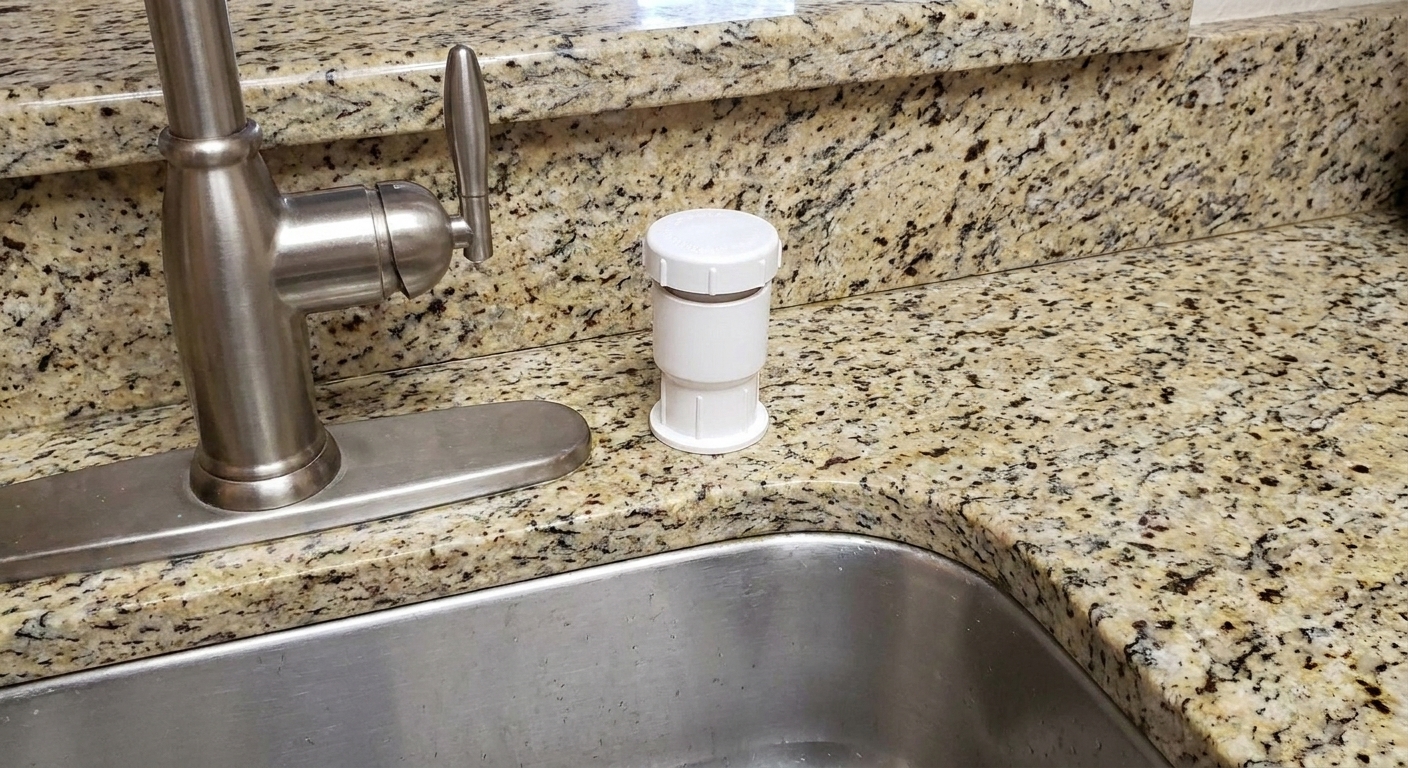
2) Is the dishwasher connected to an air gap (a small cap on the countertop or sink deck)?
If yes, you have one more helpful checkpoint: the air gap can clog and force water to take the wrong exit.
Cause #1: Missing (or sagging) high loop
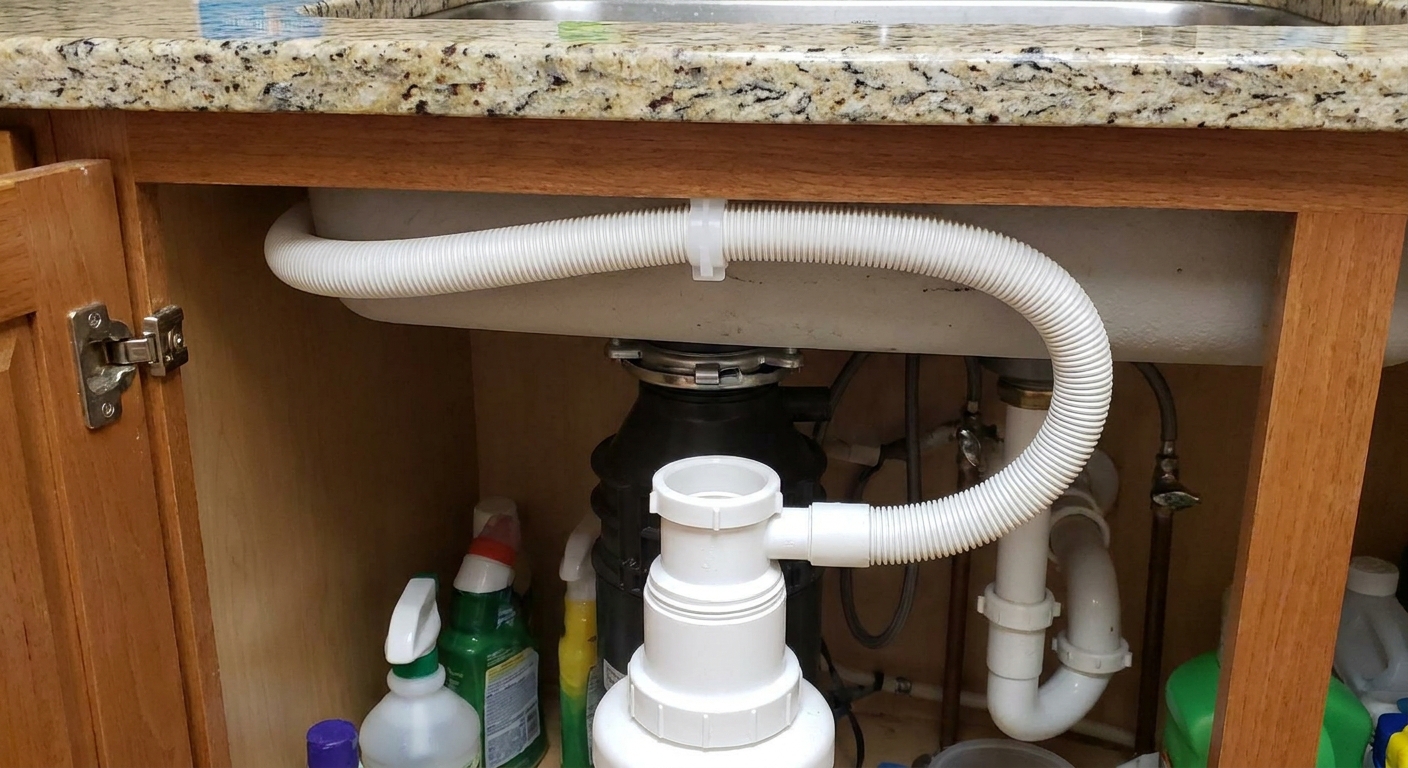
The high loop is the section of dishwasher drain hose that is routed as high as possible under the countertop before it drops down to the drain or disposal. It helps reduce the chance of backflow and siphoning and it improves how the system handles surges.
Quick reality check: A high loop is helpful, but an air gap is the stronger, code-recognized backflow prevention method in many jurisdictions. Some areas allow a high loop instead. If you are unsure, check local code or the dishwasher installation instructions.
Signs it’s the high loop
- Water rises in the sink when the dishwasher drains.
- You look under the sink and the dishwasher hose droops low, sometimes laying on the cabinet floor.
- No countertop air gap is installed (or it is present but the hose routing is still sloppy).
- The hose drops low first, then rises, then drops again. That low spot can hold gunk and act like a speed bump.
How to fix it
- Turn off the dishwasher and clear the cabinet area.
- Have a towel and a small bucket ready. Expect a little water in the hose.
- Find the dishwasher drain hose under the sink.
- Lift the hose up as high as it will go under the countertop.
- Secure it with a strap, clamp, or a screw-in hanger so it stays high.
- Make sure the hose is not kinked and still slopes down to the drain connection.
Knob’s workshop note: “High loop” means high enough that it stays above the drain inlet. If it keeps slipping down, you have not solved it. You have negotiated with it.
Cause #2: Blocked air gap
An air gap is the small fitting mounted on the sink deck or countertop near the faucet (common in many areas). It prevents dirty sink water from siphoning back into the dishwasher.
If the air gap clogs, dishwasher discharge hits a blockage. Most often, water shoots out of the air gap vent onto the sink or counter. Depending on where the restriction is, you may also see the sink back up during the drain burst.
Signs it’s the air gap
- Water burps or sprays from the air gap cap during draining.
- The sink fills during drain cycles, but the sink otherwise drains fine.
- You recently ran the disposal with lots of food debris, or you have had gritty buildup.
How to clear it
- Remove the air gap cap (most lift off).
- Look inside for gunk. Clean out debris with a small brush.
- Check the hose running from the air gap to the disposal or tailpiece. Make sure it is not kinked.
- If you can safely do so, disconnect the hose and rinse it out in a bucket.
Cause #3: Disposal knockout plug still in place
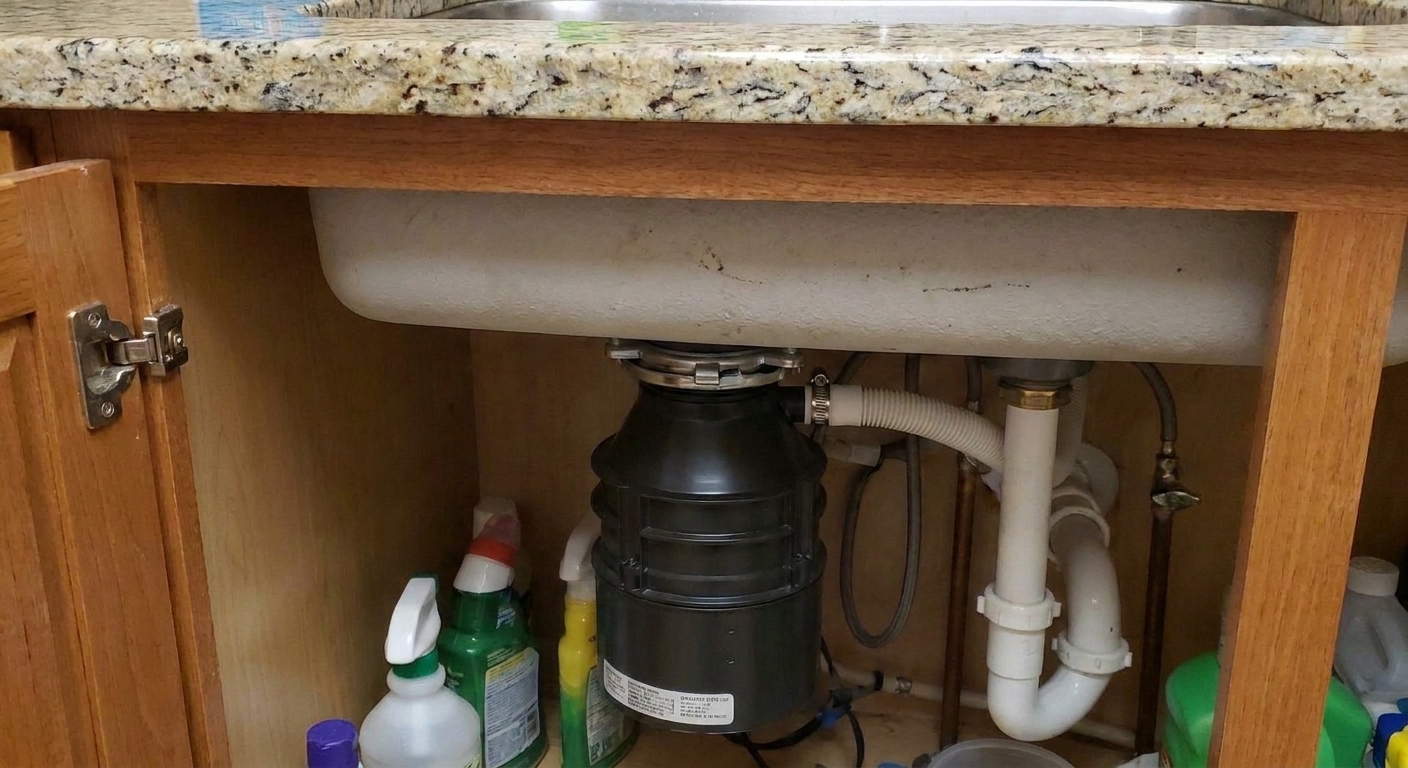
If your dishwasher drains into a garbage disposal, there is a small knockout plug inside the disposal’s dishwasher inlet. On a new disposal installation, that plug must be punched out before the hose is connected. If it is not removed, the dishwasher cannot discharge properly and you can get backup behavior at the sink.
Signs it’s the disposal knockout
- The disposal is new or was recently replaced.
- The dishwasher drains poorly or causes water to rise in the sink.
- You never confirmed the knockout was removed during installation.
How to check (and fix) it
Safety first. Unplug the disposal or turn off the breaker before putting hands or tools near it.
- Locate the dishwasher hose where it connects to the disposal side inlet.
- Place a bowl or towel underneath, then loosen the hose clamp and pull the hose off.
- Do not run the disposal with the dishwasher hose disconnected.
- Look into the disposal inlet. If the knockout is still there, it will look like a solid disk blocking the port.
- Use a screwdriver and a hammer to tap the plug inward, then retrieve it from inside the disposal (tongs help). Never leave it rattling inside.
- Reconnect the hose and clamp securely.
Cause #4: Sink drain cannot handle the surge
This one is sneaky: your sink can seem to drain “fine” day to day, but still be partially restricted. Then the dishwasher pumps out a lot of water fast, hits that restriction, and the sink fills temporarily.
Common restriction points
- Sink strainer or tailpiece buildup (grease, coffee grounds, gunk)
- P-trap with sludge or a small obstruction
- Disposal outlet elbow packed with fibrous food
- Branch line in the wall starting to clog
What to do
- Run the disposal (if you have one) with cold water for 15 to 30 seconds.
- Fill the sink a few inches, then release it. Watch if it forms a whirlpool fast (good) or hesitates and glugs (restriction). This is a quick clue, not a lab test.
- If you are comfortable, place a bucket under the P-trap and remove it for cleaning. Replace washers if they are worn.
- If the clog seems deeper than the trap, try a hand-crank drain snake from the sink drain or cleanout, if accessible.
Skip the gamble: Chemical drain openers are hard on plumbing and can be dangerous if you end up disassembling the trap afterward. Mechanical cleaning is usually the better play. If you already used chemicals, avoid taking pipes apart until everything has been thoroughly flushed with plenty of water. When in doubt, call a pro.
Cause #5: Clog in the dishwasher hose or check valve
If your sink drain seems healthy, the high loop is right, and the air gap or disposal connection checks out, the restriction can be in the dishwasher drain line itself. Grease and fine food debris can build up inside the hose, and some dishwashers also have a small check valve that can stick or clog.
Signs it’s the dishwasher hose
- The sink does not back up when you drain it normally, but the dishwasher discharge seems weak or intermittent.
- You find a low sag in the dishwasher hose that holds dirty water between cycles.
- You recently had gritty debris, grease, or a “mystery plug” situation after a big cooking weekend.
What to do
- Turn off power to the dishwasher at the breaker before working near wiring or the unit.
- Put a towel and bucket under the hose connection at the disposal or tailpiece.
- Disconnect the hose and check for obvious blockage at the end.
- If the hose is greasy or packed, flush it outdoors with a garden hose, or replace it if it is old and stubborn.
- If your model has a check valve in the drain path, consult your manual for location and cleaning. If you do not have the manual, look up the model number and follow the manufacturer’s guidance.
Knob’s workshop note: If the hose smells like a science project and feels like it is full of pudding, you have found your villain.
If the sink drains slowly on its own
If your sink is slow even when the dishwasher is off, the dishwasher is not the true culprit. It is simply the loudest complainer.
Clues the clog is farther down
- Both sides of a double sink rise or drain unevenly.
- You hear gurgling when other nearby fixtures drain.
- Water backs up more when you run the disposal.
- The dishwasher causes backup even after you fix the high loop and confirm the air gap and disposal inlet are clear.
When to call a pro
- Repeated backups despite cleaning the trap and snaking a short distance
- Backups affecting multiple fixtures (sink and tub, sink and toilet)
- You suspect a main line issue or you have an older home with frequent drain problems
Stop and switch off. If wastewater is backing up repeatedly or you see signs of overflow risk, stop running the dishwasher until the drain issue is resolved.
Quick checklist
- High loop: Dishwasher hose is secured high under the countertop.
- Air gap: Clear cap and hoses, no clogs, no kinks (and required in some areas).
- Disposal knockout: Plug removed from dishwasher inlet.
- Hose routing: No sharp bends, no sags that collect gunk, no low dip before it rises.
- Drain path: Trap and branch line are clear enough to handle a fast discharge.
FAQ
Is it normal for a little water to come into the sink when the dishwasher drains?
A brief rise can happen in some setups, especially with partial restrictions or certain sink layouts, but it should not be dramatic and it should drain away quickly. If it keeps pooling or brings food debris up with it, treat it as a fixable problem, not a personality trait.
Can a clogged dishwasher filter cause sink backup?
Usually no. A clogged dishwasher filter more commonly causes poor cleaning or standing water inside the dishwasher. Sink backup during draining points more to the discharge path under the sink or the sink drain itself.
Why does it happen only when the garbage disposal is installed?
Disposals add extra bends and a narrower flow path, and they have that knockout plug that must be removed for dishwashers. A partially clogged disposal outlet or an uncleared knockout is a common reason this starts after a disposal change.