
Why the Tub Spout and Shower Run at the Same Time
When water comes from the tub spout and shower head together, the diverter is usually the culprit. Here’s how to diagnose and fix common tub spout and diverter problems safely.
Good grain. Great questions.
If your tub spout and shower head run at the same time, your faucet is basically saying, “I can’t decide.” Most of the time, that is not a mystery deep in the walls. It is a diverter problem: the part that’s supposed to send water either down to the tub spout or up to the shower head is not sealing like it should.
This guide sticks to the “both run while the valve is on” problem. If your issue is a drip that continues after the valve is shut, or a tub that will not hold bath water, those are different fixes and deserve their own troubleshooting path.
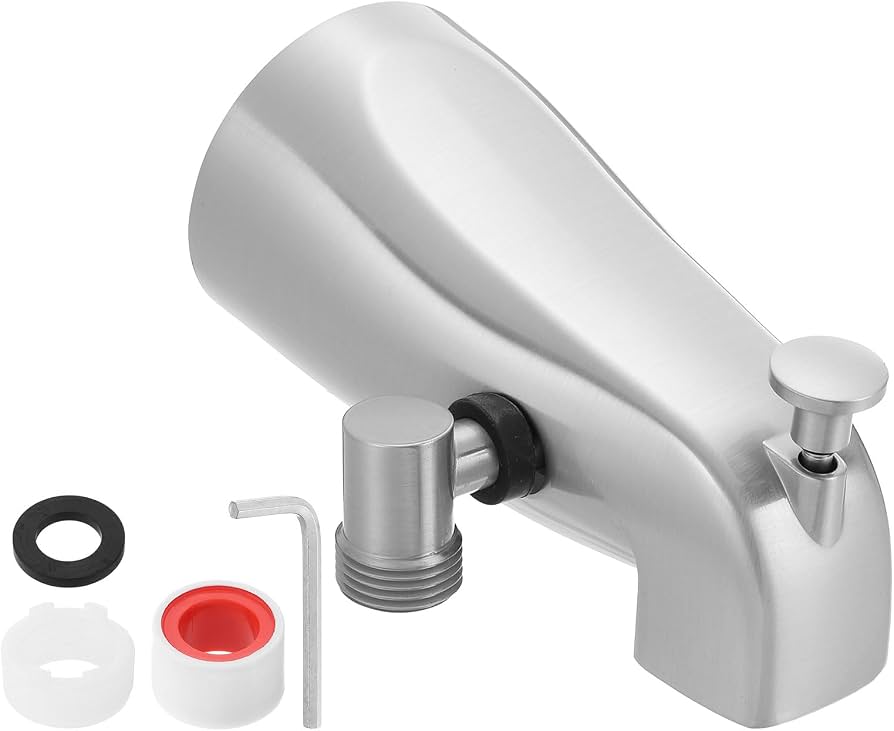
What’s supposed to happen
In a tub shower combo, water comes out of the tub spout by default. When you pull the diverter (the little pin, knob, or lever), a gate inside the spout or valve body blocks the tub outlet. That backpressure forces water up the riser pipe to the shower head.
When the diverter cannot block the tub outlet well enough, some water still escapes at the spout while the rest heads up to the shower. The result is the “two places at once” show.
Quick diagnosis: where is the diverter?
1) Diverter on the tub spout (most common)
If your tub spout has a pull-up knob or a small lever, your diverter is built into the spout. These are usually the easiest to fix because the parts are accessible.
2) Diverter is a separate handle or knob
Some setups have three controls: hot, cold, and a third diverter handle. In that case, the diverter is in the valve body behind the wall. Repairs can still be DIY, but they are more brand and model specific.
3) Shower arm is “helping” water bypass the diverter
Less common, but real: a restriction or blockage at the tub spout outlet (or a mismatch at the spout connection) can increase backpressure and encourage water to climb the shower riser even when you are not trying to divert.
Before you touch anything: two safety steps
- Turn off water at the bathroom shutoffs if you have them. If you do not, shut off the main.
- Plug the drain or toss a rag over it. Small screws and clips love disappearing acts.
Important: If you have an older home and suspect lead or galvanized piping, or you see crumbling tile and soft wallboard around the valve, pause and consider bringing in a pro before you turn a small repair into a big opening.
Most likely cause: a worn tub spout diverter
Tub spout diverters fail in a few predictable ways: mineral buildup, a worn rubber seal, or a gate that no longer seats tightly. Any of these lets water keep flowing out of the spout while the shower runs.
Signs it’s the spout diverter
- The shower works, but the tub spout still pours or streams noticeably.
- You have to hold the diverter up to keep it in shower mode.
- The diverter feels gritty, stiff, or loose.
- The spout spits or the shower pressure is weak because flow is splitting.
Try this first: clean mineral buildup
If you have hard water, mineral scale can keep the diverter gate from sealing. Cleaning is worth a shot if the diverter still moves normally.
- Remove the tub spout (steps in the next section).
- Soak the diverter end in a 50/50 mix of warm water and white vinegar for 30 to 60 minutes.
- Scrub with an old toothbrush, rinse, and test.
If the diverter seal is worn or the gate is damaged, cleaning will not bring it back for long. Replacement is usually the right move.
Fix: replace a tub spout diverter
Replacing the spout is often cheaper and more reliable than trying to rebuild a basic spout diverter. The key is buying the right type of spout for your pipe connection.
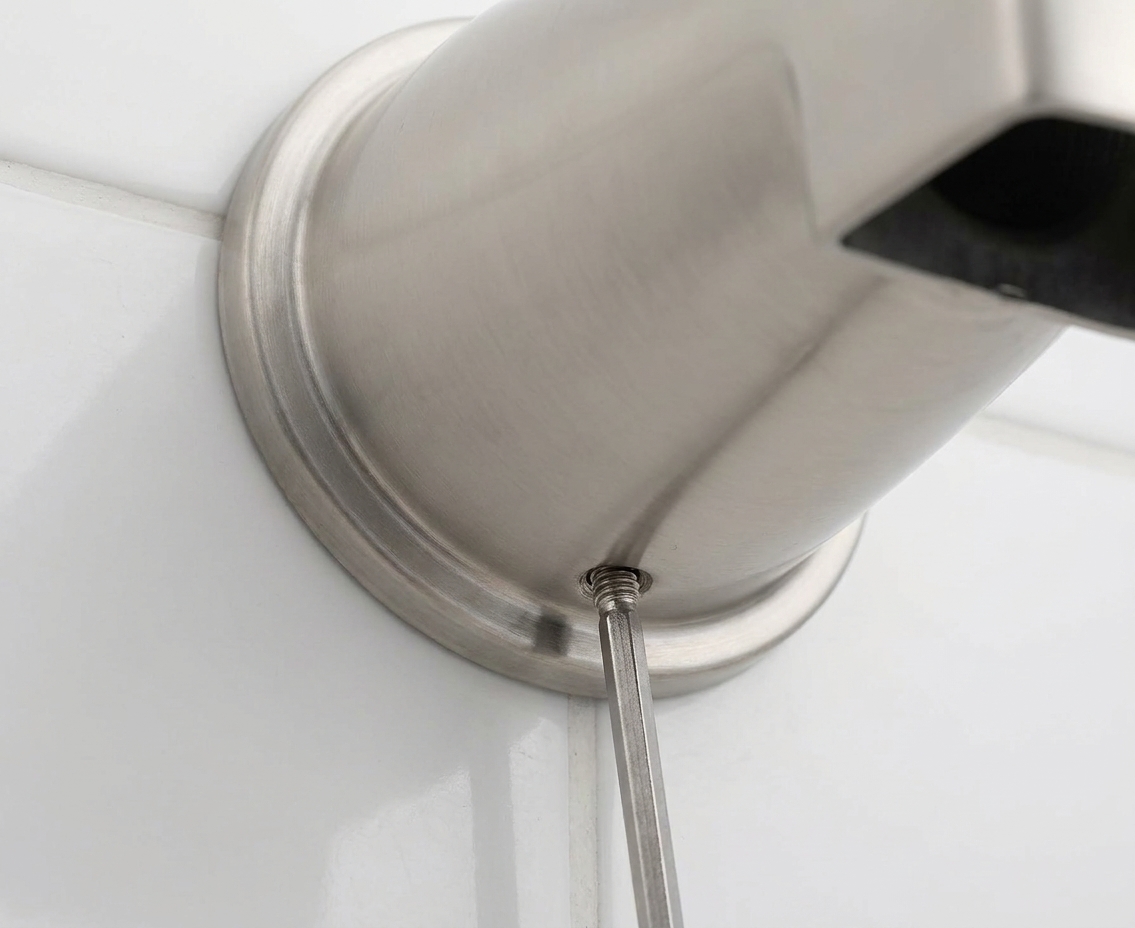
Step 1: figure out how your spout attaches
- Slip-on spout (set screw): there is a small set screw underneath near the wall. These usually go onto copper pipe.
- Screw-on spout (threaded): no set screw. The whole spout unscrews from a threaded nipple (often galvanized or brass).
Step 2: remove the old spout
- Slip-on: loosen the set screw with an Allen key, then pull and twist the spout straight off.
- Threaded: wrap the spout with a towel to protect the finish, then turn counterclockwise. If it is stubborn, use a strap wrench so you do not crush it.
Step 3: prep the connection
- Clean corrosion and mineral crust off the pipe end.
- For a threaded nipple, apply fresh PTFE tape (pipe thread tape) in the direction of tightening.
- For a slip-on, make sure the copper stub-out is smooth and round, not gouged or dented.
Step 4: install the new spout
- Slip-on: slide it on fully so it sits flush to the wall, then snug the set screw. Firm is good. Stripped is not.
- Threaded: thread it on by hand first, then tighten until it is straight and flush. Do not over-tighten and crack tile or stress the plumbing.
Step 5: test
Turn water on. Run the tub, then pull the diverter. A small dribble from the spout during shower mode can be normal on some spouts, but a steady stream means the diverter is still not sealing or something else is driving water upward.
If the spout diverter will not lift or won’t stay up
This usually comes down to friction, wear, or a broken internal linkage.
Things to try
- Clean and descale: mineral buildup can make the mechanism bind.
- Check the knob and stem: if the knob feels sloppy or detached, internal parts may be cracked.
- Replace the spout: if the diverter will not stay engaged, replacement is typically the most time-efficient fix.
If you have a 3-handle diverter (separate diverter handle)
When the diverter is a separate handle, the “gate” that seals the tub outlet lives behind the wall. Over time, washers and seals wear and let water slip past.
What you can do without opening the wall
- Turn off water.
- Remove the diverter handle and trim.
- Pull the diverter stem or cartridge (method depends on brand and age).
- Inspect for torn rubber, a grooved seat, or heavy scale.
- Replace the diverter stem or cartridge with an exact match.
If you cannot identify the valve, take clear photos of the stem or cartridge and the trim. A local plumbing supply counter can often match it faster than guessing online.
Stop and call for help if the diverter is seized in place, the plumbing moves when you pull on it, or you see signs of water damage behind the trim plate. Those are “bigger than the knob” clues.
If water goes to the shower even when you are not diverting
If the shower head runs when the diverter is down, or the tub flow is weak while the shower trickles, backpressure is likely involved. Here are common causes.
1) Partially blocked tub spout outlet
Mineral buildup or debris inside the spout can restrict flow, raising pressure and encouraging water to climb the riser.
- Remove the spout and check for obstructions.
- Replace the spout if it is scaled up internally.
2) Wrong tub spout style for your setup
A tub spout must be a true tub spout, not a “looks similar” part. Some spouts have a smaller internal waterway or different geometry that increases restriction.
- If the problem started right after a spout replacement, double-check you used a tub spout designed for a tub shower diverter application.
3) Shower head flow restrictor plus other restrictions
A low-flow shower head alone usually does not cause the spout and shower to run together, but combined with other restrictions it can make the system act weird. If your shower head is heavily scaled, clean it.
Tool and supply list
- Allen key set (for slip-on spouts)
- Strap wrench (helpful for threaded spouts)
- Adjustable wrench (use carefully)
- PTFE tape (for threaded connections)
- Old towel or rag (protect finishes)
- White vinegar and an old toothbrush (descaling)
FAQ
Is it normal for a little water to come out of the tub spout in shower mode?
A small dribble can be normal on some diverter spouts. A steady stream is not. If your shower pressure is noticeably lower because the tub is still flowing, the diverter is not sealing.
Will replacing the shower head fix it?
Usually no. This symptom nearly always points to the diverter or a restriction at the tub spout. A scaled shower head is worth cleaning, but it is rarely the root cause of split flow.
Why does the diverter work better when I run the water hotter?
Heat can slightly change how rubber seals flex, and it can loosen mineral deposits. That can make a failing diverter seem better sometimes, but it is still on the way out.
How do I know which replacement spout to buy?
First match the attachment type: slip-on with a set screw, or threaded screw-on. Then match the length so it reaches the wall cleanly. When in doubt, remove the old spout and bring it to the store, or take photos of the connection and the inside of the spout inlet.