
Why Is My Heat Pump Blowing Cold Air?
If your heat pump is set to heat but blowing cold air, it may be normal (lower-temp supply air or defrost) or a problem like AUX heat not working, thermostat settings, airflow issues, or an outdoor unit blocked by snow or ice.
The first winter I lived in my 1970s Michigan fixer-upper, I was convinced my heat pump was broken. Thermostat said HEAT. Vents felt like a gentle stream of “nothing” at best and “did I accidentally install air conditioning?” at worst. Turns out, a heat pump can blow air that feels cool and still be working as designed. Other times, cold air is your system waving a little white flag.
Let’s sort out what’s normal, what’s a quick homeowner fix, and what’s time to call an HVAC pro. This article is specifically for heat pumps in heating mode. If your system is in cooling mode and not cooling, that is a different troubleshooting path.
Reality check
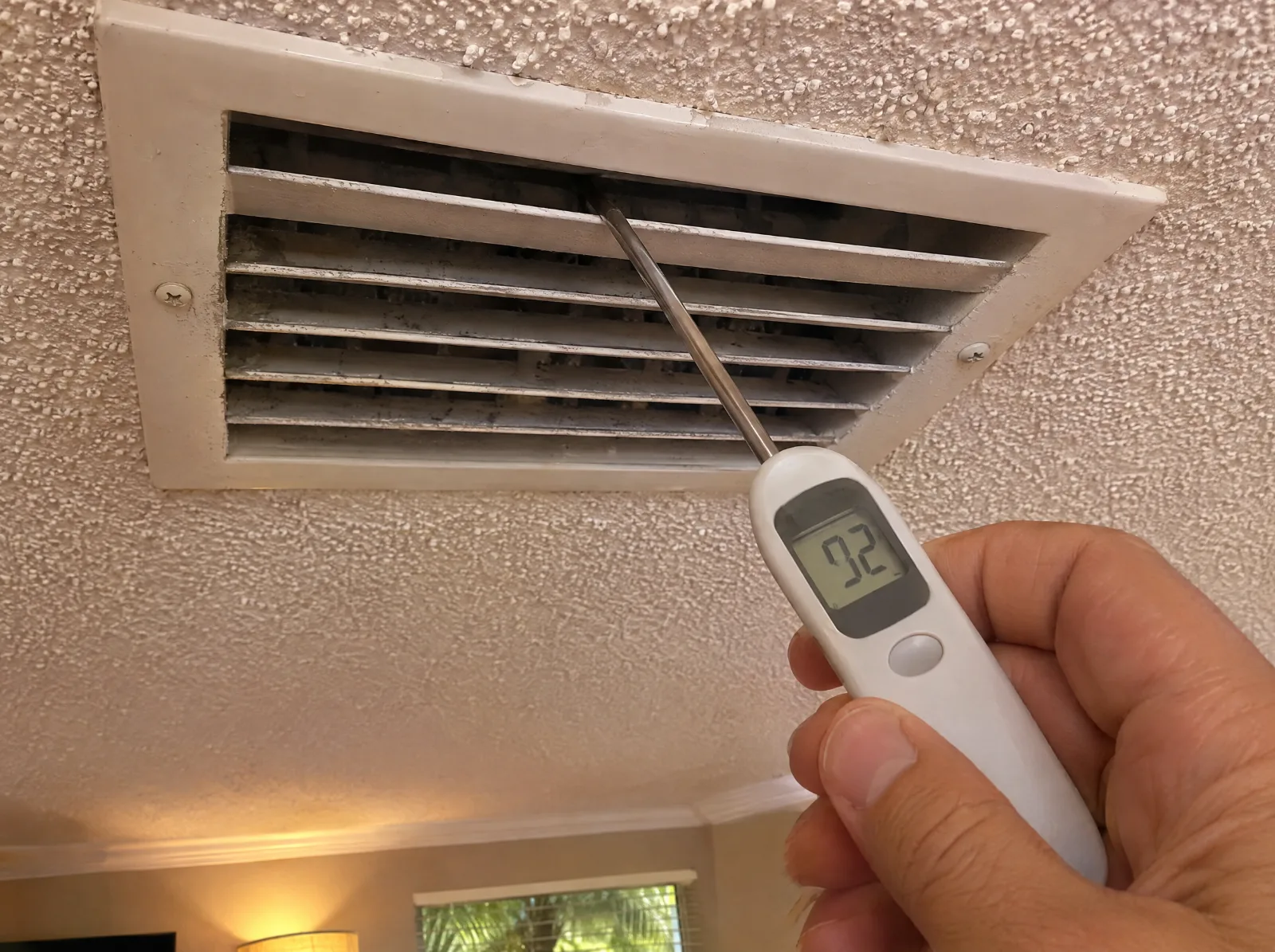
A gas furnace often sends out air around 120 to 140°F. A heat pump usually delivers air that is much less “toasty,” commonly somewhere around 85 to 100°F depending on outdoor temperature, airflow, and the system itself. That can feel “cool” on your skin, especially if you are standing in the airflow, even though it is warming the house over time.
One key concept: vent air can feel cool and still heat your home as long as it is warmer than the room air and the system is moving a lot of it.
A simple test (no tools)
- Check the room temp trend: If the thermostat setpoint is 70 and the room temp is 66, does it climb to 67, 68, 69 over the next 30 to 60 minutes? If yes, you might be seeing normal heat pump behavior.
- Compare supply vs room air: Put your hand at a return grille (where air is sucked in) and then at a supply vent (where air blows out). Supply should feel warmer than room air, even if it is not “hot.”
If the house temperature is dropping while the system runs nonstop, keep reading.
Optional quick measurement
If you want something more objective than “feels warm,” a cheap kitchen thermometer can tell you a lot.
How to check delta T
- Let the system run in HEAT for 10 to 15 minutes.
- Measure the air temperature at a return grille.
- Measure the air temperature at the nearest supply vent (avoid the vent that is right next to the air handler if possible).
- Subtract: supply minus return equals your delta T.
Many properly running ducted heat pumps show a delta T in the ballpark of 15 to 30°F in heating mode, but it varies with outdoor temps, staging, airflow, and whether aux heat is running. If your delta T is near zero (or negative) while the system is supposed to be heating, that is a strong clue something is off.
Normal culprit: defrost cycle
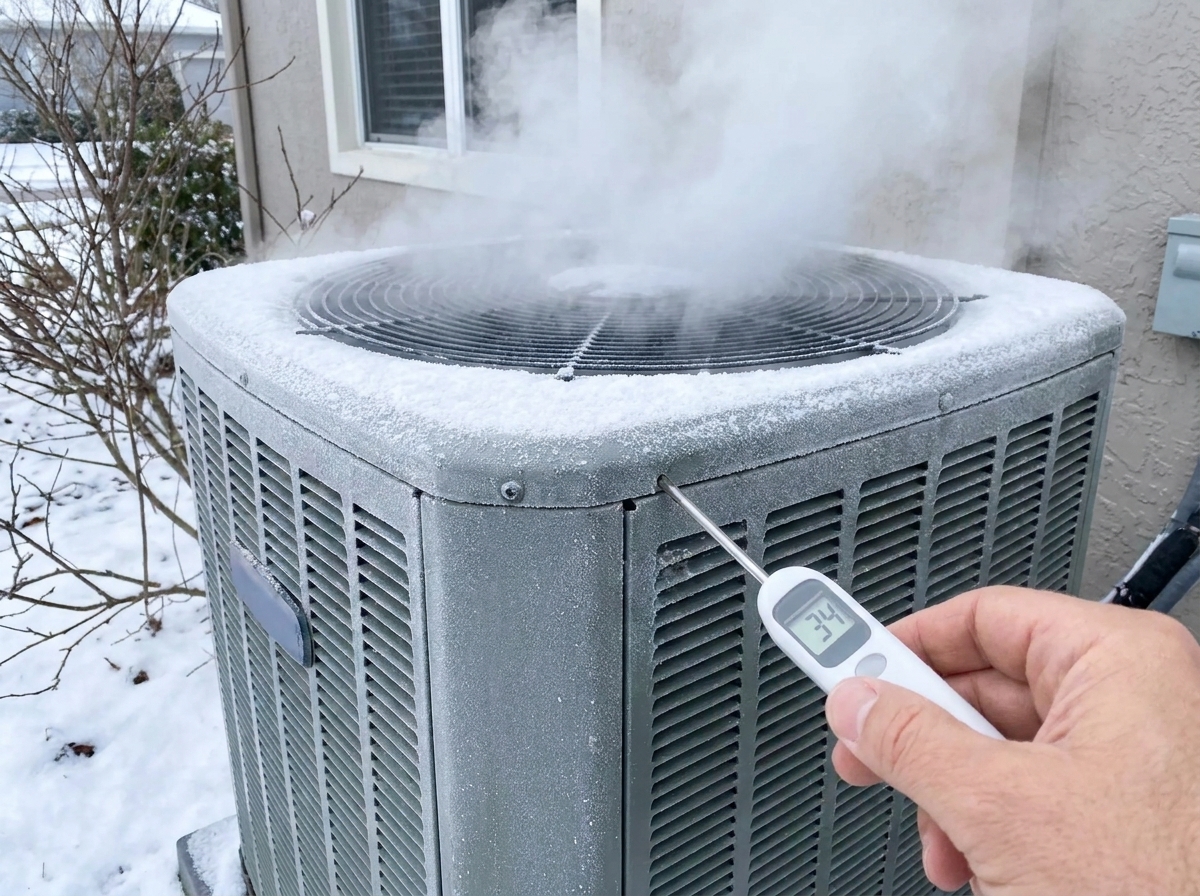
When it is cold and damp outside, your outdoor coil can frost up. Your heat pump has to periodically melt that frost so it can keep doing its job. During a defrost cycle, the system temporarily switches into an air conditioning-like mode to heat the outdoor coil. That means the indoor side can blow cooler air for a few minutes.
What defrost often looks like
- Cold or lukewarm air at vents for a short stretch, typically a few minutes (often around 5 to 15 minutes).
- Steam rising from the outdoor unit as frost melts. Steam is normal. Smoke is not.
- Outdoor fan may stop briefly while the unit defrosts.
- You might hear whooshing as the reversing valve shifts.
AUX and EM HEAT
Most heat pump setups have backup heat strips (electric) or another backup source. This backup is often labeled AUX (auxiliary) or EM HEAT (emergency heat) at the thermostat.
Aux heat (automatic backup)
Aux heat is typically automatic. It kicks on when:
- Outdoor temps are low enough that the heat pump cannot keep up.
- The thermostat senses the home is heating too slowly.
- The system is in defrost and needs help keeping indoor air comfortable.
If your heat pump is blowing cold air and the house temp is falling, a common issue is that the heat pump is running but aux heat is not coming on when it should.
Emergency heat (manual backup)
Emergency heat is a manual setting. It tells the thermostat to stop using the heat pump and run backup heat only. This is typically used if the outdoor unit is damaged or the refrigerant system is not working.
Safety note: Emergency heat often costs more to run, especially if it is electric strips. Use it as a temporary solution, not a permanent “winter mode.”
What you can check
- Thermostat display: If it says AUX and you still get cold air, that points to a backup heat problem (or an airflow issue).
- Breaker panel: Many systems have separate breakers for the air handler and the heat strips. A tripped breaker can leave you with “fan air” or weak heat. Reset once. If it trips again, stop and call a pro.
- Thermostat setup: If you recently replaced the thermostat, a wrong heat pump setting can keep aux heat from energizing when it should. One common example is an incorrect O/B setting (reversing valve energized in heat vs cool) or a thermostat not configured to control heat strips properly.
- Air filter: A clogged filter can cause poor airflow and comfort problems that feel like “cold air,” and it can contribute to icing issues.
Thermostat settings
This one is more common than you would think, especially after a battery change, a power outage, or somebody bumping settings while half asleep.
Check these first
- Mode: Make sure it is set to HEAT, not COOL. In winter, I generally recommend using HEAT rather than system AUTO, because AUTO can switch modes during shoulder-season weather and cause surprise behavior.
- Fan setting: Set fan to AUTO. If the fan is set to ON, it will blow air even when the system is not actively heating, which can feel cold between cycles.
- Program schedule: A schedule can drop the setpoint or switch modes if it is misconfigured.
- Temperature setpoint: Raise the setpoint 2 to 3 degrees and listen. You should hear the system engage within a minute or two (some have built-in delays).
Heat pump wiring and setup
If a heat pump thermostat is wired incorrectly or configured for the wrong equipment type, it can trigger odd behavior like cool air in heat mode, aux heat not working right, or short cycling.
If you recently replaced the thermostat and the problem started immediately after, that is a big clue. At that point, I recommend calling an HVAC tech unless you are comfortable verifying wiring against your thermostat manual and your air handler control board labeling.
Outdoor unit snow or ice
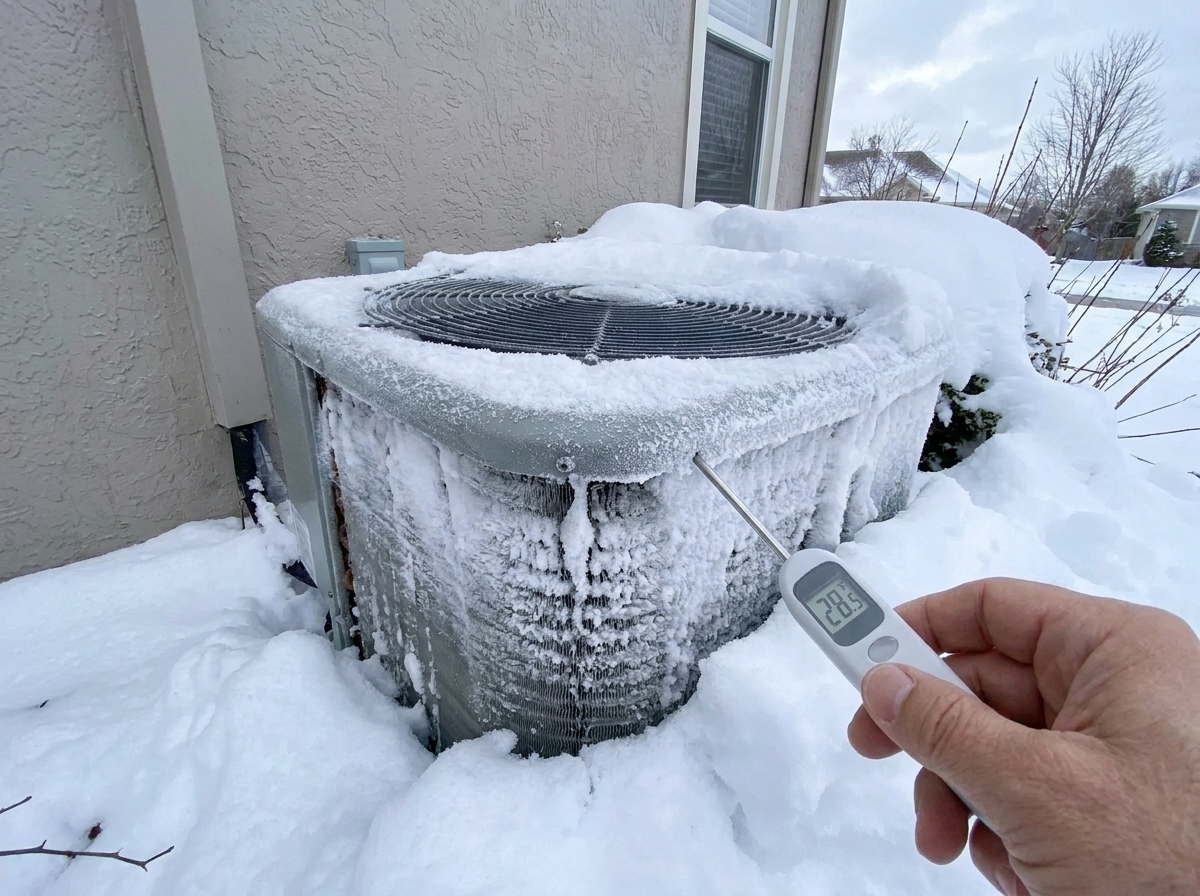
Heat pumps need airflow across that outdoor coil. If the unit is packed in snow, fenced in too tightly, or coated in solid ice, it cannot pull enough heat from outside air. That can lead to weak heat indoors and longer run times. In some cases, the system may blow noticeably cooler air inside because it is basically struggling to move heat.
What to look for
- Snow drifts against the sides: The coil needs breathing room.
- Leaves or debris matted on the coil: Air has to pass through those fins.
- Ice encasing the coil: Light frost is normal. A solid ice shell is not.
- Blocked discharge on top: Keep the top clear so air can exhaust upward.
What you can do safely
- Turn the system off at the thermostat before doing anything near the unit.
- Clear snow gently with a broom. Do not use a shovel against the coil.
- Do not chip ice off the coil. The fins are fragile.
- Do not pour hot water on the unit. It can damage fins or plastic components, create an electrical hazard if water goes where it should not, and it often refreezes into a worse mess.
If the unit is iced into a block repeatedly, that can indicate a deeper issue like a defrost control problem, low refrigerant charge, a bad sensor, or airflow problems.
Bigger problems
If you have ruled out defrost, thermostat settings, and obvious snow blockage, cold air can point to a genuine heating failure. These are the big ones I see homeowners bump into.
Dirty filter or airflow restrictions
A restricted filter can reduce airflow and cause comfort issues that feel like cold air, and in some conditions can contribute to coil icing.
- Replace or clean the filter.
- Make sure supply vents are open and not buried under rugs or furniture.
- Check return grilles are not blocked.
- If you have manual dampers, make sure they are not closed.
Duct problems
Sometimes the heat pump is making heat, but it is not getting to you.
- Disconnected or fallen duct: You may feel weak airflow at vents, or find one area of the house suddenly freezing.
- Crushed or kinked flex duct: Common in attics and crawlspaces.
- Leaky return: Pulling in very cold air from a garage, attic, or crawlspace can make supply air feel disappointing fast.
Low refrigerant or a leak
A heat pump uses refrigerant to move heat. If charge is low, it will struggle to heat and may run constantly with lukewarm or cool air at the vents. This is not a DIY fix. Refrigerant work should be handled by a licensed or certified technician (EPA certified in the U.S.).
Reversing valve issues
The reversing valve is what lets a heat pump switch between heating and cooling. If it sticks or fails, the system can behave like it is in the wrong mode. Diagnosis is technician territory.
Aux heat not working
When temps drop, a heat pump often depends on auxiliary heat to stay comfortable. If aux heat has failed, you can get that “cold air while running” experience as the system falls behind. Common causes include a bad sequencer or relay, a failed heat strip, a tripped breaker, or thermostat setup problems that never call for AUX.
Checklist
- Confirm thermostat mode is HEAT and fan is set to AUTO.
- Raise the set temperature 2 to 3 degrees and wait 10 minutes.
- Check the room temperature trend over 30 to 60 minutes.
- Watch for defrost behavior (brief cool air, possible steam outside).
- Look at the outdoor unit for snow, debris, or heavy ice.
- Replace the air filter if it is dirty or you cannot remember the last change.
- Check breakers for the air handler and heat strips. Reset once if tripped.
- Optional: Measure delta T (return vs supply) with a thermometer.
- Switch to Emergency Heat temporarily if the house is losing temperature and you suspect the outdoor unit is not heating. If EM heat warms the home normally, your backup heat works and the heat pump side likely needs service.
Call an HVAC pro now if: you smell burning plastic, hear loud grinding or metal screeching, see wiring damage, the breaker trips repeatedly, or the outdoor unit is encased in solid ice and will not clear after a normal defrost cycle.
FAQ
How cold is too cold at the vents?
It varies, but if your system has been running for a while and the air coming from supply vents is basically room temperature (or cooler), and the home temp is not rising, that is not normal heating performance. If you want a more objective check, compare supply vs return temperature. Many systems land somewhere around 15 to 30°F warmer at the supply than at the return, but conditions and equipment matter.
Is cold air at night normal?
It can be, especially during defrost cycles and when outdoor temps drop. Nighttime is often when frost builds faster, so defrost can happen more frequently.
Should I leave EM HEAT on all winter?
No. Emergency heat is meant for temporary use when the heat pump side is not working right. It is often significantly more expensive to run, especially with electric heat strips.
Why does it feel colder when the fan is ON?
Because the blower keeps circulating air even when the system is not actively heating. Between cycles, that moving air can feel cool. AUTO usually feels more comfortable and costs less to run.
Final tip
If your heat pump is working but the air feels cooler than you expect, focus less on “vent temperature” and more on whether the house temperature is steadily climbing. Heat pumps are marathon runners, not sprinters.
But if the house temp is dropping, the outdoor unit is iced up, aux heat is not kicking on, or the thermostat is acting possessed, you are not being picky. You are catching a problem early, which is almost always cheaper than waiting.