
Should You Cover an Outdoor AC Unit in Winter?
Covering an outdoor AC unit can help with falling ice and leaves, but full plastic wraps can trap moisture and cause rust. Here’s when to cover your condenser and how to do it safely.
I live in Michigan, which means winter does not politely “arrive.” It shows up with sideways snow, freezing rain, and the kind of wind that turns leftover leaves into tiny lawn darts. Every fall, I see the same question pop up from neighbors: should you cover that outdoor AC unit or just let it ride?
Here’s the honest answer from a former residential carpenter who has shoveled a lot of slush off patios: sometimes yes, sometimes no. The key is protecting the top from junk and ice without sealing the whole unit in a moisture trap.
What you are protecting
Your outdoor AC unit is the condenser. It is built to live outdoors year-round. Rain, snow, and cold temps by themselves are usually not what kills a condenser. The bigger issues are:
- Falling ice from rooflines and icicles
- Roof snow sliding and hitting the cabinet or fan guard
- Wet leaves and mulch packed against the coil fins
- Rodents nesting inside for warmth
- Corrosion when moisture gets trapped against metal for months
So if you do cover it, the goal is debris protection, not “keeping it warm.”
Cover it or not
In many homes, leaving the condenser uncovered is perfectly fine. That is especially true if the unit is:
- Not under a roof drip line where ice can crash down
- In a relatively open area where leaves do not pile up
- Not in a spot where snow slides off a roof directly onto it
On the other hand, a cover can make sense if you routinely deal with heavy leaf fall, roof ice, or windblown debris that ends up inside the top grille.
My rule of thumb: If you are covering for impact and debris, a cover can help. If you are covering because you think the unit “needs insulation,” skip it.
AC vs heat pump
Before you buy anything, figure out what you have:
- AC-only condenser: It sits idle in winter. A top-only debris shield can be helpful in the right location.
- Heat pump (including most mini-splits): It runs in winter. It needs open airflow and clear space around it. Do not cover it in a way that blocks the sides or top discharge.
If you are not sure, check the outdoor unit label. If it says “heat pump” or you use it for heating, treat it like a heat pump.
Top cover vs full wrap
Top-only is usually best
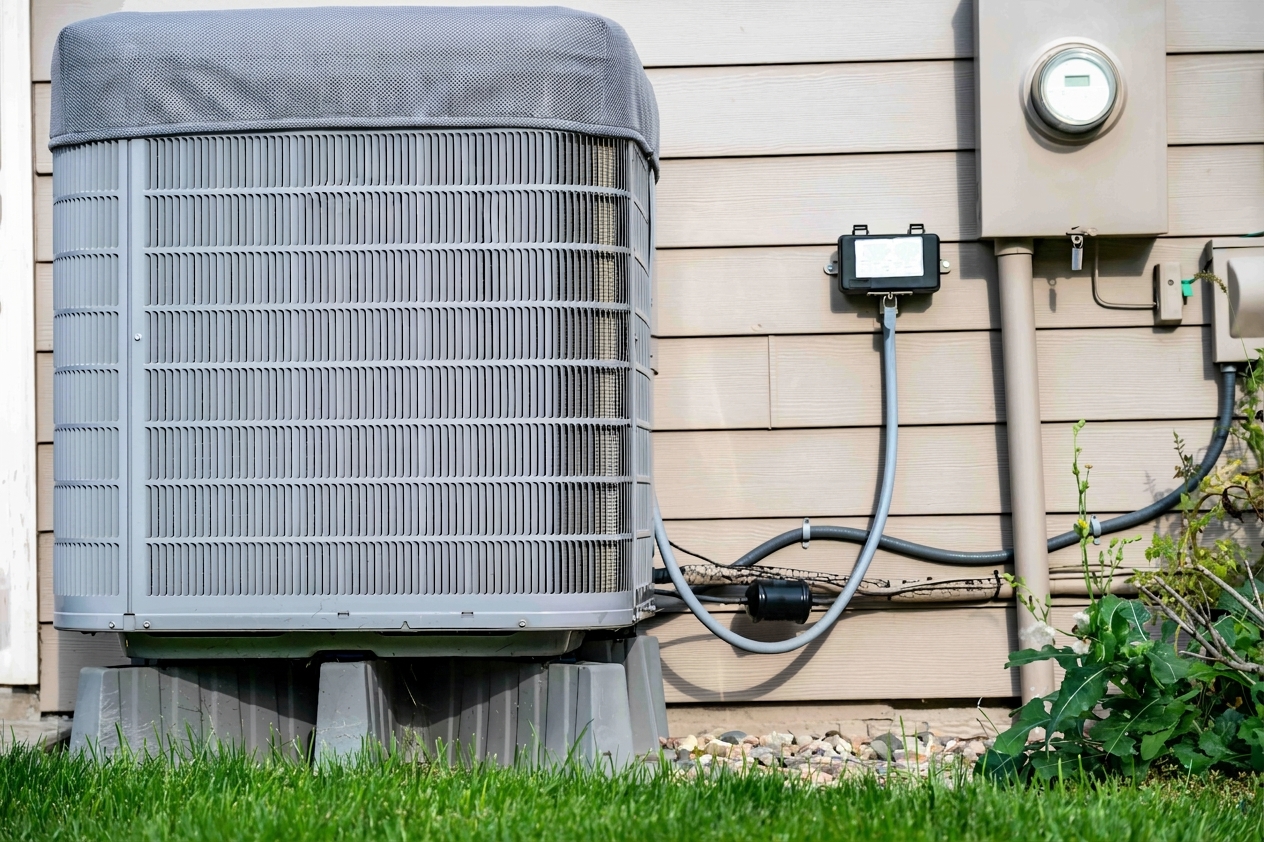
A simple cover over the top only keeps leaves, twigs, and roof grit from dropping straight into the fan area, while still allowing air to circulate around the sides.
Look for a cover marketed as breathable (often heavy fabric with ventilation). You can also use a piece of exterior plywood cut slightly larger than the unit top, lightly weighed down. The point is to shield from above, not seal it like leftovers.
Full plastic wrap can backfire
Wrapping the entire condenser in plastic seems logical until you remember one thing: outdoor temperatures swing. Sun hits the unit, snow melts a little, and moisture becomes condensation under that plastic. Now you have a damp environment sitting against metal parts for months.
That can lead to:
- Rust on fasteners and cabinet edges
- Mildew and musty smells when you uncover it
- Frozen moisture expanding in places you do not want it
- Rodents being more likely to take shelter, depending on your yard and landscaping
Important: Avoid shrink wrap or tightly taped plastic around the entire unit. If you do use a full cover, it should be made for condensers and specifically allow ventilation.
How to cover it safely
If you decide a cover makes sense for your yard and your winter, here is the approach I recommend.
Step 1: Check the manual
Some manufacturers discourage covers, and some have specific guidance. If you still have your owner’s manual, it is worth a quick scan for “cover” or “winter.” If you cannot find it, look up your model number and check the manufacturer’s support page.
Step 2: Shut power off at the disconnect
For an AC-only condenser, flip the small outdoor disconnect to off (or pull the disconnect) before cleaning. This is mainly about electrical safety while you are working and avoiding accidental startup during an unseasonably warm spell or a test cycle.
If you rely on a heat pump for heat, do not shut it off for the season. Leave it powered and keep it clear instead.
Step 3: Clean leaves and debris
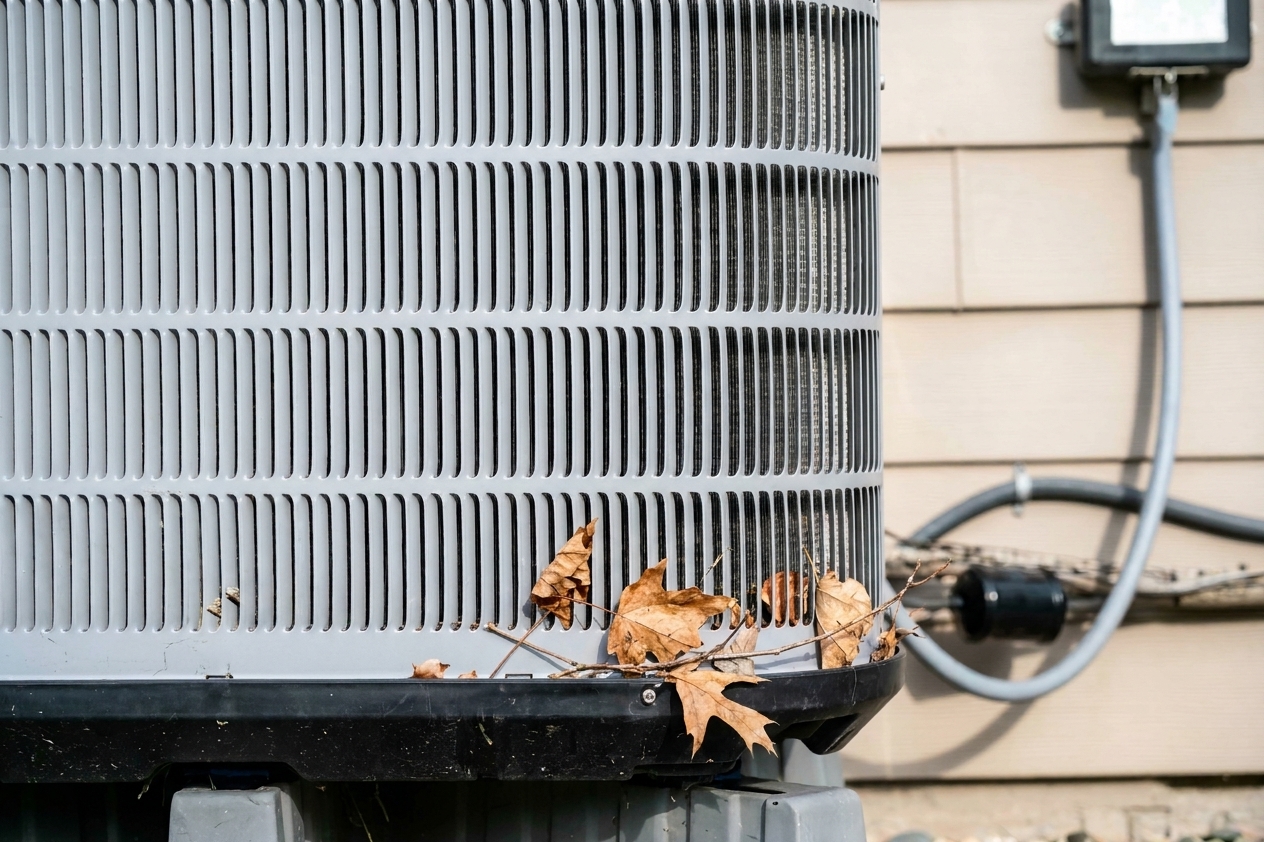
With gloves on, gently remove leaves and twigs from the top grille and around the base. If you see cottonwood fuzz or packed debris on the sides, use a soft brush or a shop vac with a brush attachment.
Do not bend the fins. Those thin metal fins are easy to damage and can reduce airflow. If fins are already bent, a fin comb can help, or you can call an HVAC pro to straighten them.
Step 4: Give it breathing room
Before you cover anything, make sure you are not creating a leaf trap or a snow dam:
- Rake back mulch and leaves at least 18 to 24 inches from the unit
- Trim back shrubs so air can move freely around the cabinet
- Make sure gutters and downspouts are not dumping water right onto it
- Plan for snow: avoid letting drifts bury the sides of the unit
Also, do not stack firewood, patio cushions, or random “winter storage” against the condenser. It blocks airflow, holds moisture, and gives critters one more place to hide.
Step 5: Install a top cover only
Use a breathable condenser cover designed to sit over the top, or use a flat rigid panel that overhangs the top slightly.
- Do not seal the sides with tape
- Do not wrap it tight like a boat shrink wrap job
- Do secure it so wind cannot turn it into a sail
If you go the plywood route, keep it simple: one piece on top, then just enough weight to keep it from lifting. Too much weight can bend a fan guard on some units, so do not treat it like a workbench.
Rodents and critters
Rodents are a real concern, especially if the unit is near tall grass, wood piles, or dense landscaping. A cover can sometimes make the problem worse if it creates a sheltered cavity that stays dry and quiet.
Instead of sealing the unit up, focus on smart prevention:
- Keep vegetation trimmed back around the condenser
- Remove leaf piles and clutter near the unit
- Consider placing a rodent deterrent nearby (follow product directions and keep pets safe)
If you discover chewed wires or nesting material, stop and call an HVAC pro. Rodent damage can turn into an electrical hazard fast.
The spring mistake
Let me save you from the most common “why is my AC not working” moment: forgetting the cover is on.
If you used a full cover or anything that blocks the sides, and you run the AC, you can starve the unit of airflow. Best case, it cools poorly. Worst case, you stress the system.
Do this in spring: Remove the cover before you run the AC, then do a quick leaf check around the base and inside the top grille.
I tell people to set a phone reminder for the first warm week, or tie a bright tag to the thermostat as a reminder. It sounds silly until you are sweating indoors wondering what broke.
Common questions
Will snow damage my condenser?
Normal snowfall typically will not hurt it. The unit is designed for outdoor exposure. The bigger risk is roof snow sliding or falling ice hitting it from above, or heavy buildup that blocks airflow around the cabinet.
Should I cover a heat pump the same way?
No. A heat pump runs in winter and needs open airflow. Do not cover it in a way that restricts airflow or traps ice around it. Keep it clear of drifting snow, and make sure it can breathe.
Is it OK to put a tarp over it?
A tarp can work as a temporary top shield only if it is secured and does not wrap down the sides. Most tarp jobs end up flapping, trapping moisture, or becoming a critter hangout. A fitted breathable top cover or rigid top panel is usually the better move.
Should I cover it to prevent rust?
Counterintuitively, wrapping it tight can cause rust by trapping condensation. If rust prevention is your goal, ventilation beats plastic every time.
Bottom line
If your outdoor condenser sits in a spot where it gets hammered by falling ice or constantly filled with leaves, a breathable top cover (or a rigid top shield) is a practical winter upgrade.
Skip the full plastic wrap. It can trap moisture, encourage rust, and make your unit more inviting to pests. And whatever you do, take the cover off before the first hot week, unless you enjoy troubleshooting in a sweaty panic.
If you want, tell me what kind of winter you get, where your unit is located (under an eave, near trees, etc.), and whether it is an AC-only unit or a heat pump, and I will point you to the safest approach.