Why Is My Furnace Blowing Cold Air?
If your gas furnace blower is running but the air feels cold, check thermostat fan settings, diagnostic LED codes, burner ignition, air filter, and safety switches. Here’s a clear step-by-step troubleshooting path.
Good grain. Great questions.
A furnace blowing cold air can feel like a personal attack, especially when the blower is clearly working and the house is clearly not warming up. The good news is that if the fan runs, that narrows the problem. Your thermostat is calling for heat (and the blower is running), but the furnace is not producing steady heat or the heat is not making it into the airstream.
This guide is for a gas furnace with a blower that runs while the vents feel cool. I will also help you spot the lookalike situations, like a heat pump in defrost mode or a furnace that lights briefly and then shuts off.
First, a quick safety pause
Safety first If you smell gas, hear a strong hissing near the furnace, or feel dizzy or nauseated, leave the house and contact your gas utility or emergency services. If your carbon monoxide alarm sounds, leave immediately and call emergency services. If you see soot, scorching, melted wiring, or water around electrical parts, shut the system off and call an HVAC technician.
You can do several safe checks yourself, but anything involving gas piping, combustion tuning, or inside-the-burner adjustments belongs to a pro.
Quick checks you can do in 3 minutes
1) Thermostat settings: Heat and Auto
This one is simple, and it catches a surprising number of cold-air complaints.
- Set the mode to Heat (not Off, not Cool).
- Set the fan to Auto (not On).
- Raise the set temperature at least 3 to 5 degrees above room temperature.
If your fan is set to On, the blower will run continuously even when the burners are off. That means you will often feel room-temperature or cool air from the vents between heating cycles.
2) Give it a full heating cycle
Many furnaces start with a short delay: the burners heat the heat exchanger first, then the blower turns on. If you just changed the thermostat, wait 3 to 5 minutes to see whether the air warms up.
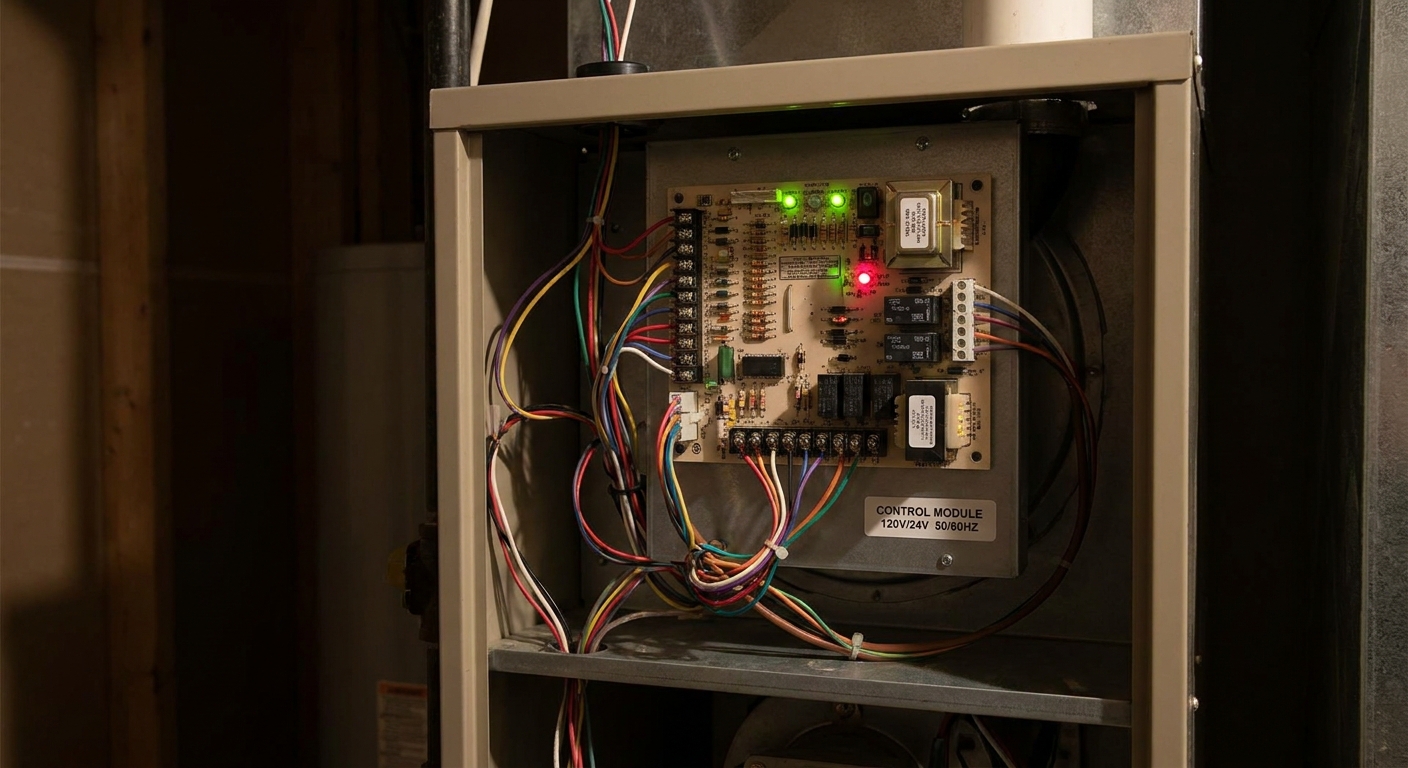
3) Check the diagnostic LED code
Many modern furnaces have a small LED on the control board that flashes an error code. The legend is often printed on the inside of the blower door. If your furnace is acting up, that code is often the fastest clue to what the furnace thinks is wrong.
4) Replace a clogged air filter
A severely clogged filter can cause the furnace to overheat and open a safety limit switch. When that happens, the burners shut down but the blower may keep running to cool the furnace. Depending on the control board, the blower may eventually shut off after a cool-down, or the furnace may lock out and need a reset or service.
- Turn the thermostat to Off.
- Pull the filter and check if it is matted with dust.
- Replace it with the correct size and airflow direction.
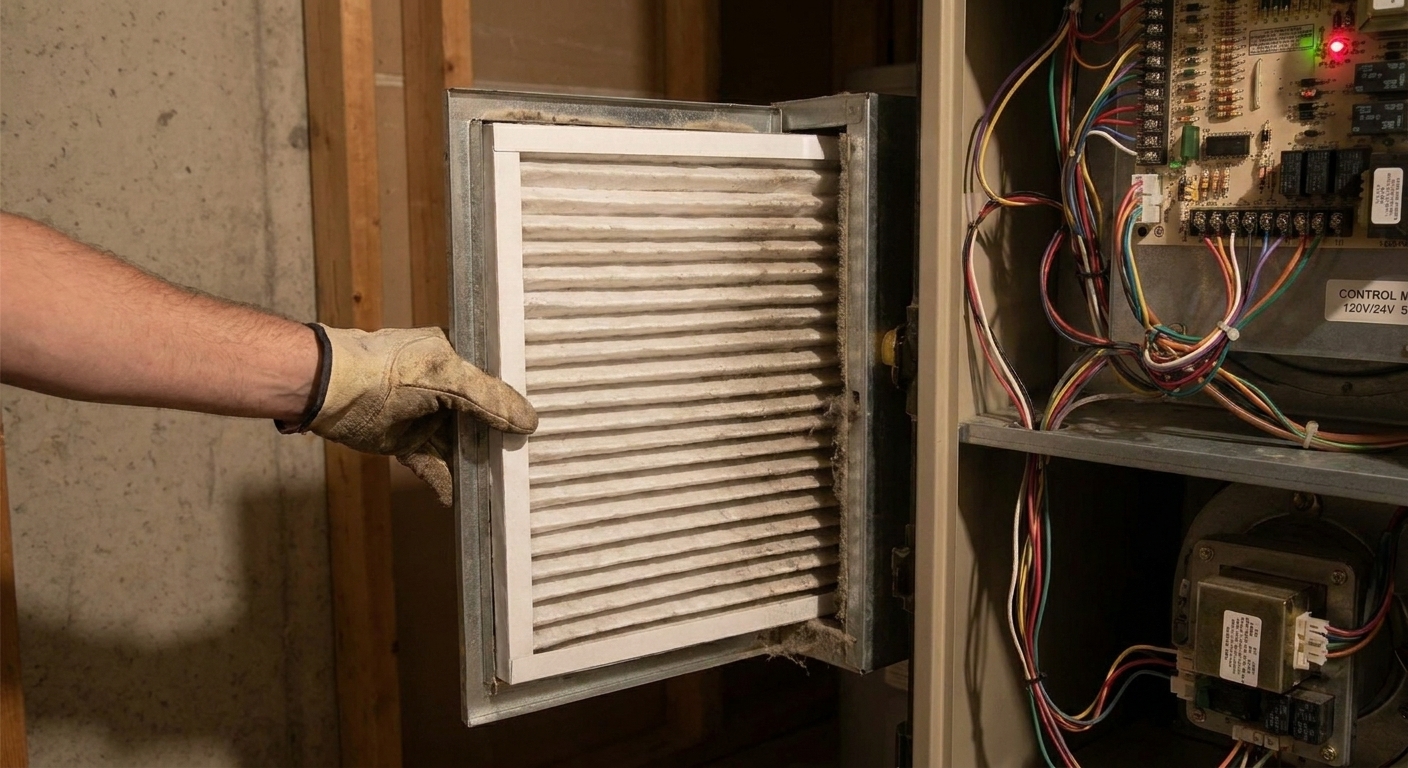
Figure out which cold-air situation you have
Stand by the furnace with the front panel in place. Most units need the door on to run because of a door interlock switch. Listen through a full heat call. Your goal is to answer one question:
Does the furnace actually light? If the burners never ignite, you will get cold air. If the burners ignite and then shut off quickly, you may get warm air briefly, then cool air as the blower keeps running.
Case A: Blower runs but burners never light
This often points to a thermostat/controls issue, an ignition issue, or a safety switch that will not allow ignition.
Case B: It lights, then the flame drops out
If the burners light and then shut off in under a couple of minutes, that is often a flame-proving problem (commonly the flame sensor) or a safety opening. People often call it “short cycling,” but the key detail is the flame will not stay established.
Case C: It heats, but vents still feel cool
That can be duct leakage, very low airflow at some registers, a blower set to the wrong speed, or long duct runs through a cold attic or crawlspace.
If the burners never light: what to check next
1) Check power and the furnace switch
- Make sure the furnace service switch is On (it looks like a light switch near the unit).
- Check the breaker for the furnace or air handler.
- If you saw a flashing diagnostic LED earlier, match the code to the legend on the door panel.
2) Make sure the furnace door is seated
If the blower door is not fully in place, the door switch can keep the furnace from running properly. Re-seat the panel and try again.
3) Confirm the gas is on
If you have a gas shutoff valve near the furnace, the handle should be parallel to the pipe when On. If you recently had work done, the gas might be off at the appliance even if other gas appliances work.
If you are not comfortable verifying gas valves, stop here and call a technician.
4) Pilot light vs electronic ignition
Most modern furnaces use electronic ignition. Older furnaces may have a standing pilot light. If you have a standing pilot and it is out, relighting procedures vary by model. If you are not confident, call a technician. Do not guess with gas.
5) Inducer motor and pressure switch issues
Before ignition, most modern furnaces run a small draft fan called an inducer. If the inducer does not run, or if the pressure switch does not prove proper venting, the furnace will not light.
- If you hear the inducer start and then stop, the unit may be failing a safety check.
- Blocked intake or exhaust pipes (snow, leaves, nests) can prevent proper airflow and stop ignition.
Anything venting related should be handled carefully. If you suspect a blocked vent, power the unit off and call for service.
6) Condensate problems on high-efficiency furnaces
If you have a 90 percent or higher efficiency furnace (usually plastic PVC vent pipes and a condensate drain line), a clogged drain, blocked trap, frozen condensate line, or tripped float switch can stop ignition or shut the burners down. If you see water backing up, water on the floor, or an obvious kinked drain hose, shut the system off and call for service.
7) Hot surface igniter or spark ignition problems
If the furnace tries to light but fails, you might hear clicking (spark) or see a brief glow (hot surface igniter) through a viewing port. Failed igniters are common wear items.
This is generally a technician repair, but your takeaway is useful: if ignition never happens, the blower might still run as part of the control sequence, or because the thermostat fan is set to On.
If it lights, then goes cold: common shutdown causes
1) Dirty flame sensor
A flame sensor is a small metal rod that proves the flame is present. If it is dirty, the furnace may light and then shut off quickly, often repeating in attempts. The blower can keep running, sending cool air after the brief heat is gone.
If you are comfortable doing light maintenance, cleaning a flame sensor is usually straightforward, but it requires shutting off power to the furnace and removing a small screw. If you are unsure, it is a good pro call.
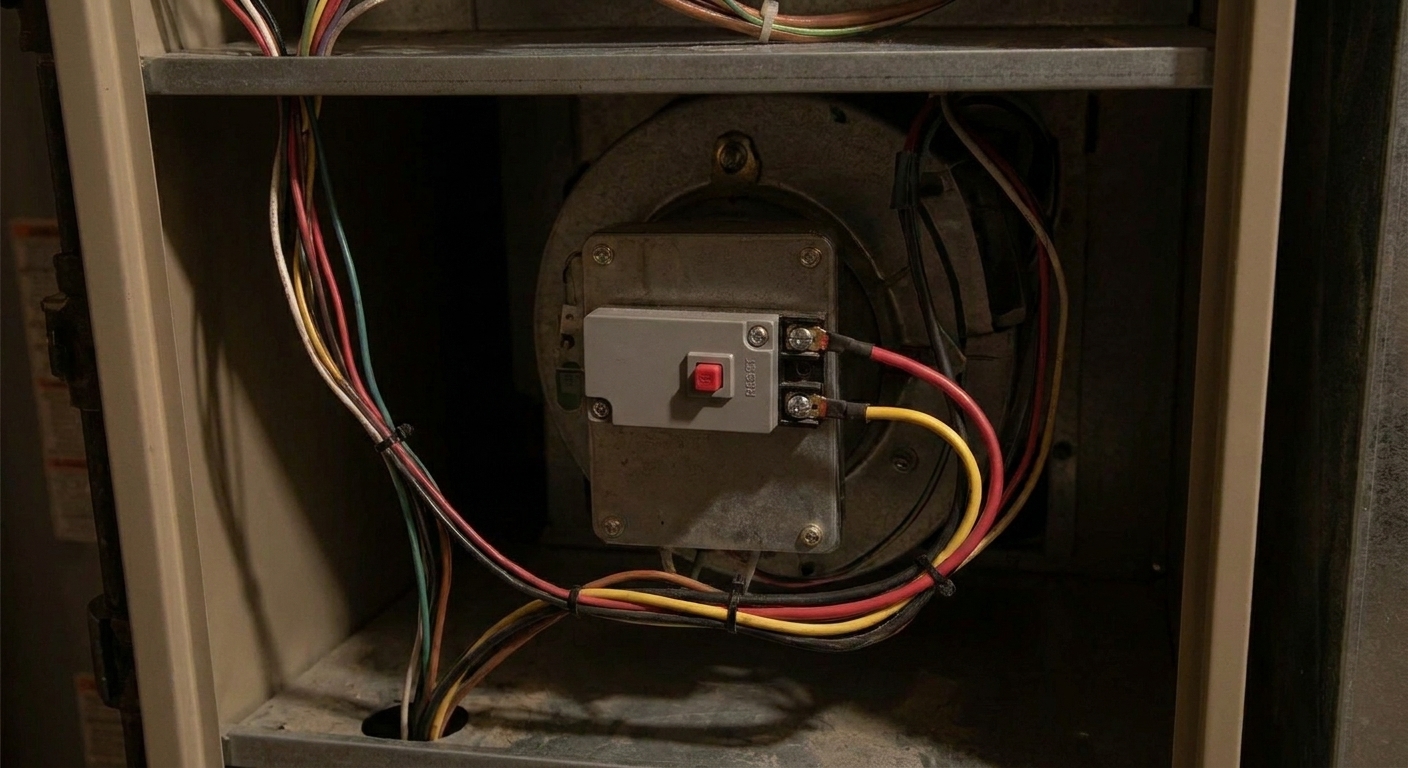
2) Overheating and the limit switch
The limit switch is a safety that shuts burners off if the furnace gets too hot. When it opens, the blower often stays on to cool things down. That means: burners off, fan on, cooler air at the vents.
Common reasons a furnace overheats:
- Clogged filter
- Closed or blocked supply registers
- Dirty blower wheel
- Dirty evaporator coil (the A-coil above the furnace)
- Collapsed or disconnected ductwork
Do you actually have a heat pump?
Some homes have a heat pump with electric backup heat, and the indoor unit can look furnace-like. A heat pump can blow air that feels cool even while it is heating, especially in mild weather.
Clues it is a heat pump situation
- Your outdoor unit runs in winter and looks like an AC condenser.
- The thermostat has settings like “Aux Heat” or “Emergency Heat.”
- The air is not ice-cold, just cooler than you expect, and the home still warms slowly.
Defrost mode: the cold-air lookalike
In freezing conditions, a heat pump periodically goes into defrost. During defrost, the system can send cooler air indoors. Many systems energize auxiliary heat during defrost to mask this. If aux heat is not present or not working, you will notice the chill.
If you suspect a heat pump issue, the troubleshooting path is different than a gas furnace ignition problem.
Why vents feel cold even when it is running
Sometimes the furnace is making heat, but it is not reaching you in a satisfying way.
1) Fan set to On mixes cool air between cycles
Even a properly working furnace will feel cool at the vents when it is not actively heating. Set the fan to Auto if you want air only during heat calls.
2) Leaky ducts or uninsulated runs
If ducts run through an attic, crawlspace, or unconditioned garage, the air can lose heat fast. Leaks can also dump warm air into those spaces and pull cold air into the system.
3) Do a simple temperature check
If you have a basic thermometer, compare the air temperature at a return grille and at a nearby supply register after the furnace has been heating for several minutes. A gas furnace should typically deliver noticeably warmer supply air once it is running. For a more precise target, look up the “temperature rise” range on the furnace rating plate. If your measured rise is far outside that range, it is time for a technician.
If you have a heat pump instead, it is normal for supply air to feel only mildly warm on a 40 to 55 degree day, as long as the home temperature rises steadily.
A simple troubleshooting path
- Thermostat: Heat mode, fan on Auto, set temperature raised above room temp.
- LED code: Look for a flashing diagnostic light and match it to the door chart.
- Filter: Replace if dirty or unknown age.
- Listen and look: Do you hear the inducer? Do burners light and stay lit?
- If no ignition: verify power, confirm the door is seated, check for obvious vent blockages outside, then call for service.
- If it lights then drops out: suspect flame sensor, condensate/float issues (high-efficiency units), or overheating limit trips, then call for service if you cannot safely address airflow basics.
- If you have a heat pump: consider defrost or aux heat issues instead of furnace ignition problems.
When to call a pro
Call an HVAC technician if:
- The furnace attempts ignition repeatedly or locks out.
- You suspect a venting problem, pressure switch issue, condensate/float problem, or cracked heat exchanger.
- The burners light but shut off quickly after every attempt.
- You replaced the filter and confirmed thermostat settings, but the issue persists.
Describe what you observed in plain terms: “blower runs, inducer runs, burners never light” or “burners light for 20 seconds, then shut off, blower keeps going.” That helps the tech arrive prepared.
FAQ
Why is my furnace blowing cold air when it is set to heat?
Most commonly: the thermostat fan is set to On, the furnace is failing to ignite, or the burners are shutting down due to a safety issue (often airflow related) while the blower continues running.
Is it normal for a furnace to blow cold air at the beginning?
A short cool draft can happen if the blower starts before the heat exchanger warms up. Most systems delay the blower to avoid this, so if it stays cool for more than a few minutes during a heat call, it is time to troubleshoot.
Can a dirty filter make my furnace blow cold air?
Yes. A clogged filter can contribute to overheating and open the limit switch. The burners shut off, the fan often keeps running, and the vents feel cool.
What does a bad limit switch look like?
You usually will not see it “look” bad. The symptom is the furnace overheating and shutting off burners, sometimes with diagnostic codes. The underlying cause is often restricted airflow, not the switch itself.