
How to Unclog a Furnace Condensate Line
If your high-efficiency furnace keeps shutting off, a clogged condensate trap or drain line might be the culprit. Here is how to clear it safely with simple tools and a quick flush.
The first time my high-efficiency furnace quit on me mid-January, I did what any reasonable Michigan homeowner would do. I stared at it like it had personally betrayed me. Thermostat calling for heat, blower trying, then nothing. Turns out, the furnace was fine. The little condensate drain was not.
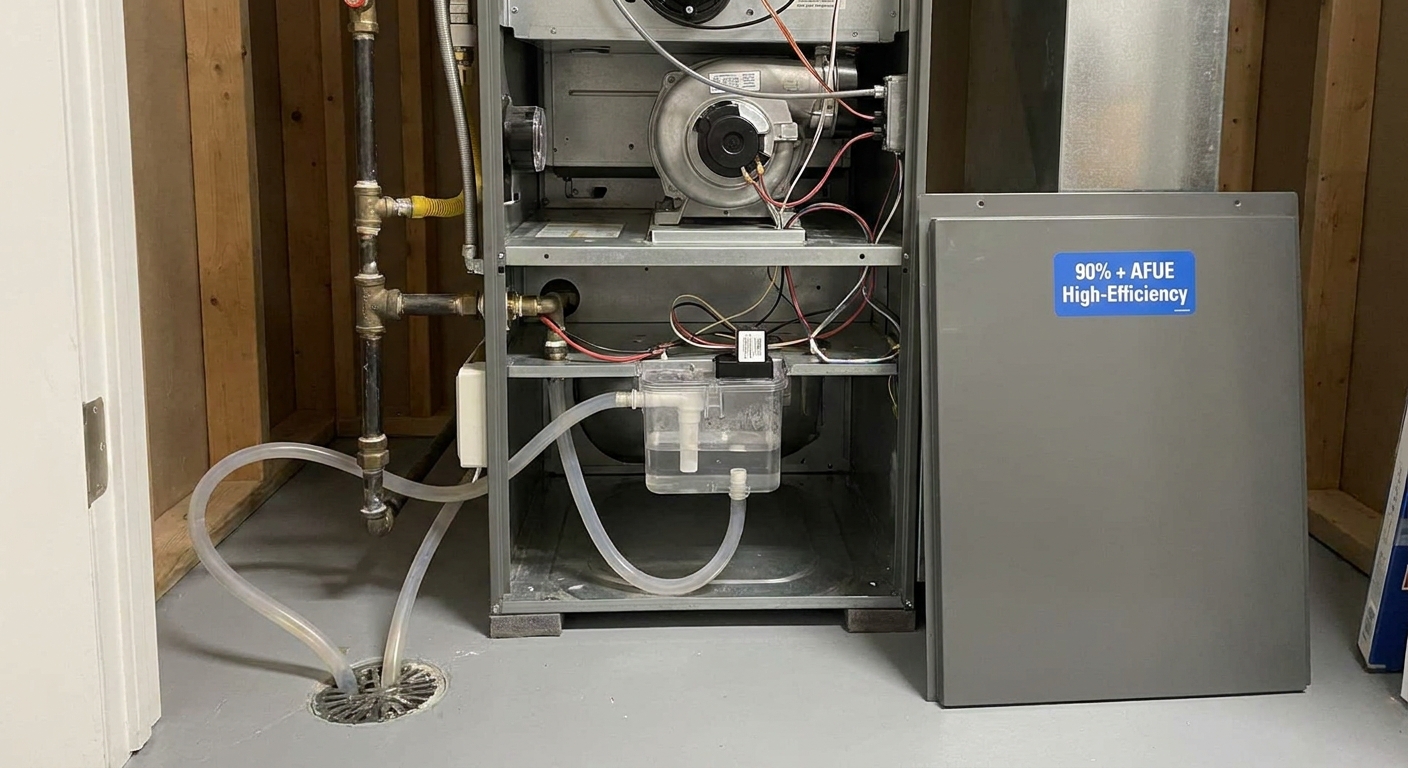
If you have a condensing, high-efficiency furnace (typically 90%+ AFUE), it makes water as it runs. That water has to drain through a condensate trap and out a PVC line to a floor drain, a condensate pump, or a utility sink. When that trap or line clogs, many furnaces shut down on purpose to prevent water backing up into the cabinet.
How to tell the line is clogged
Different brands flash different codes, but the symptoms are pretty consistent. You might see:
- Furnace starts, then stops after a short run, sometimes repeating the cycle.
- A blinking error code related to pressure switch, condensate, or drainage.
- Water on the floor near the furnace, or water staining around the trap area.
- Gurgling sounds from the trap or drain while the furnace tries to run.
- Inducer motor runs but no ignition, or it lights briefly and then shuts down.
One important note: a condensate clog is most commonly noticed during heating season because that is when the furnace is making condensate. But it can also show up in shoulder seasons, and in some homes the furnace and AC share part of the same drain path. So if you are seeing water issues during cooling season, do not assume it is only an AC problem.
If your issue is happening during cooling season, see our guide on unclogging an AC condensate drain line.
Safety first
Furnace condensate is mildly acidic because it is produced from combustion byproducts. It is not a hazmat event, but wear gloves and avoid splashing it in your eyes.
Before you touch anything: turn off power to the furnace at the switch next to it or at the breaker. If you smell gas, stop and call your gas utility or an HVAC pro.
Also, do not stick a shop vac hose onto anything that is clearly part of the intake or exhaust venting system. We are working only on the condensate plumbing here.
What to look for
Most condensing furnaces have three parts in play:
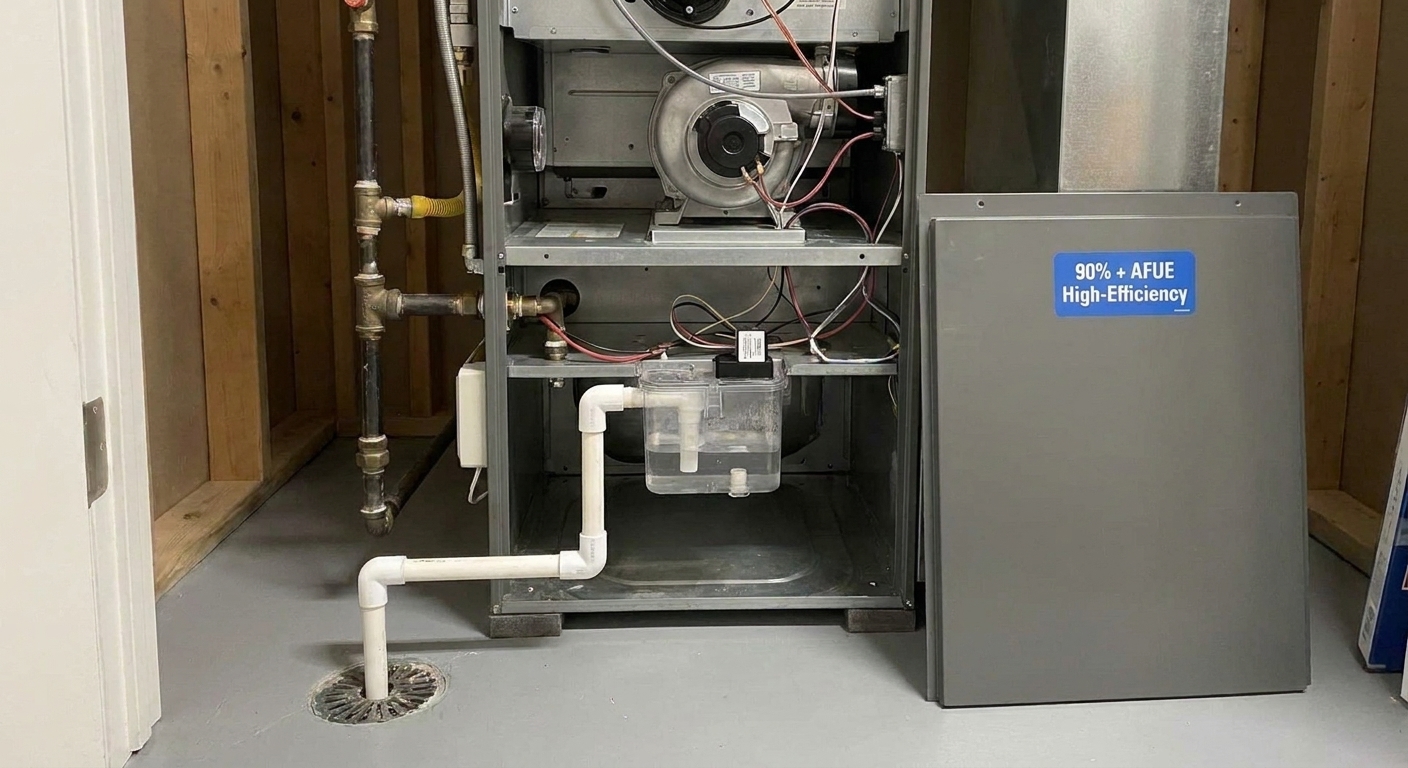
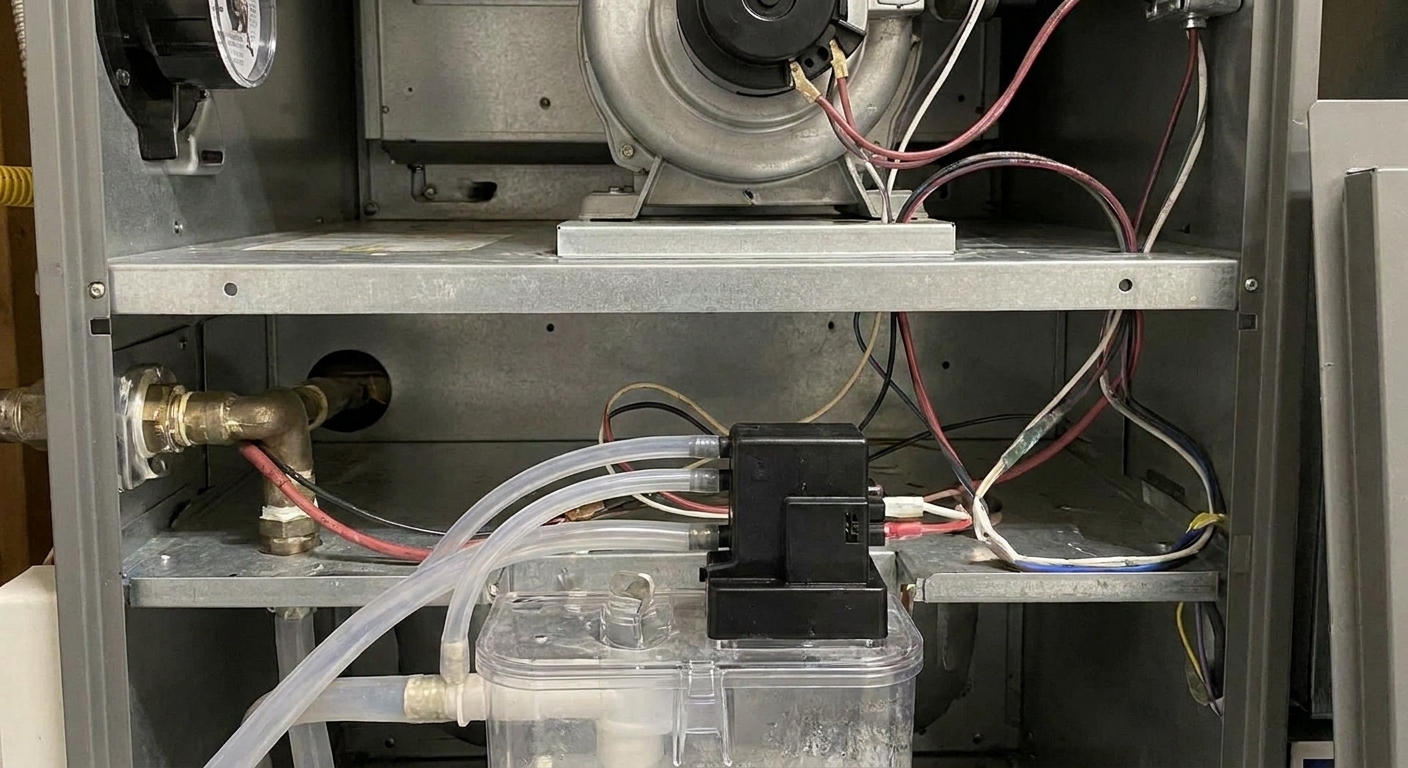
- Condensate trap: often a plastic box or U-shaped assembly near the bottom of the furnace with multiple small hoses feeding into it.
- PVC drain line: white PVC pipe leaving the trap and heading to a floor drain, condensate pump, or utility sink.
- Overflow safety switch (sometimes): could be a float switch in a condensate pump, or a separate overflow switch on the drain path that shuts the furnace off when water backs up.
Some systems also have a condensate neutralizer, which is a small tube or canister filled with neutralizing media (often limestone). If you have one, it is usually installed in-line on the drain. It can clog, too.
Tools and supplies
- Wet dry shop vac (helpful but not always required)
- Bucket or shallow pan
- Towels or rags
- Screwdriver or nut driver (for furnace door panel)
- Adjustable pliers (for hose clamps if you have them)
- Small bottle brush or old toothbrush
- Warm water for flushing
- Optional: white vinegar (for a mild cleaning rinse)
- Optional: flashlight or headlamp
I avoid harsh chemicals in furnace drains. Drain openers and heavy bleach use can shorten the life of some pumps, seals, and tubing, and they can create nasty fumes. Warm water and a good physical clean solve most clogs.
Step-by-step: clear the trap and drain
1) Shut off power and remove the panel
Turn off the furnace power switch or breaker. Remove the front panel. Many furnaces have a door switch that cuts power when the panel is off, but do not trust that as your only safety step.
2) Find the trap and protect the floor
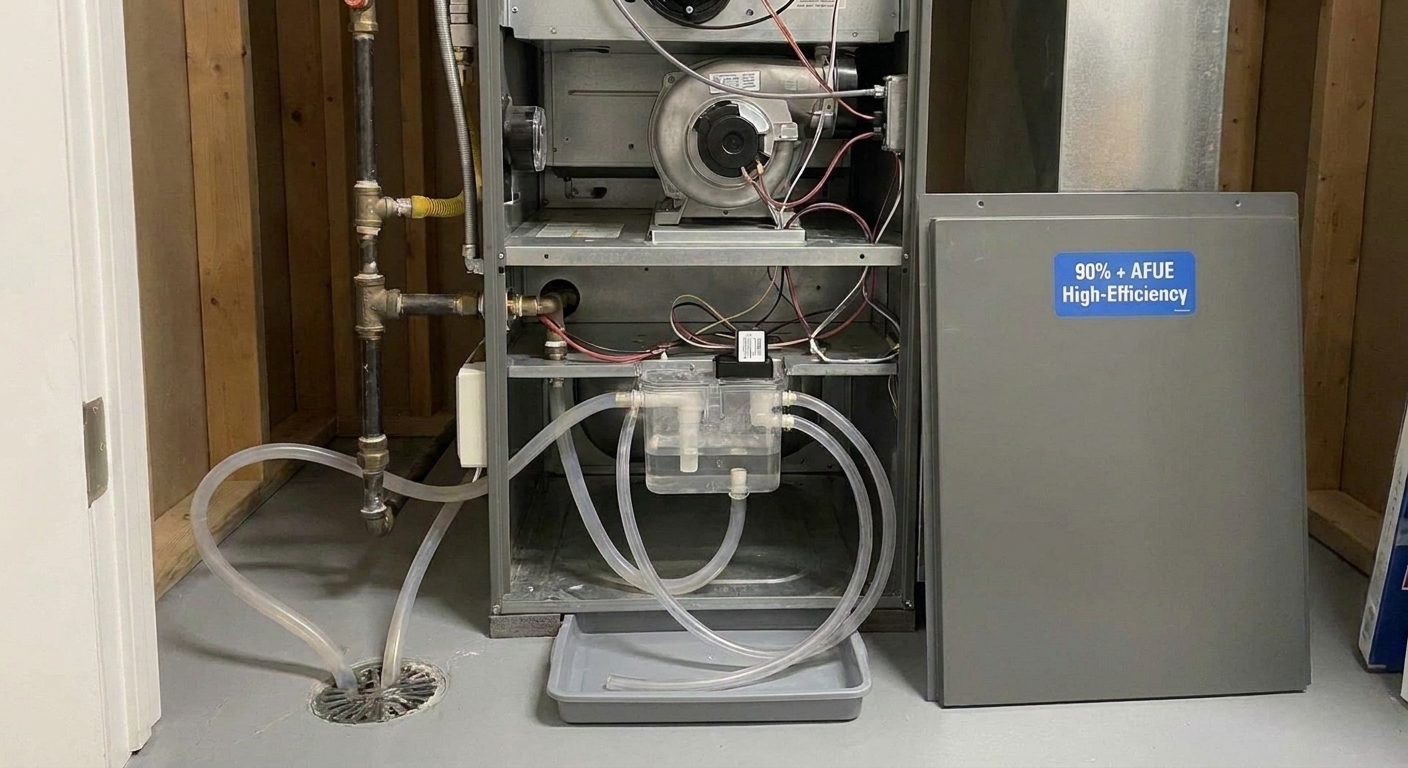
Look near the bottom of the furnace for a plastic trap assembly and the hoses running to it. Put a shallow pan under it and lay down towels. Some water is going to come out, even on a “clean” system.
3) Check for a kink or freeze
Before you disassemble anything, run your hand along the tubing and drain line.
- If a flexible hose is kinked, straighten it.
- If the furnace is in an unheated space and the line feels icy or solid, you may have a freeze. Thaw gently with warm towels and address why it froze, which is often poor routing, missing insulation, or a cold spot near an exterior wall.
4) Disconnect at the easiest access point
On many setups, the simplest way to clear the system is to disconnect the PVC drain line at the outlet of the trap. Have your bucket ready. Pull the hose or pipe free carefully.
If you have a condensate pump, you might instead disconnect the line that feeds the pump reservoir.
Quick tip before you go further: identify where the drain ends (floor drain, sink, standpipe, or pump discharge). Knowing the endpoint makes it much easier to confirm you actually cleared the clog.
5) Vacuum or flush the line
Option A: Shop vac
Ideally, put the shop vac at the downstream end of the drain line (at the floor drain, standpipe, or near the pump inlet) so you are pulling debris out in the direction it wants to go. If the downstream end is not accessible, vacuum from the disconnected section you can reach. Seal the connection with your hand or a rag and run the vac for 30 to 60 seconds.
Option B: Warm-water flush
If you do not have a shop vac, you can flush with warm water. Pour warm water into the drain line (or into the trap outlet) using a small funnel, and watch for steady flow at the drain destination. A turkey baster works surprisingly well for controlled squirts.
If nothing moves, the clog is likely in the trap, the neutralizer (if present), or right at the outlet.
6) Clean the trap (and neutralizer if you have one)
Some traps twist off, some unclip, and some are held with screws. Take a quick photo with your phone before pulling hoses so you can put everything back exactly the same. This is not optional. Misrouted hoses can cause drainage problems and pressure switch faults that will drive you nuts.
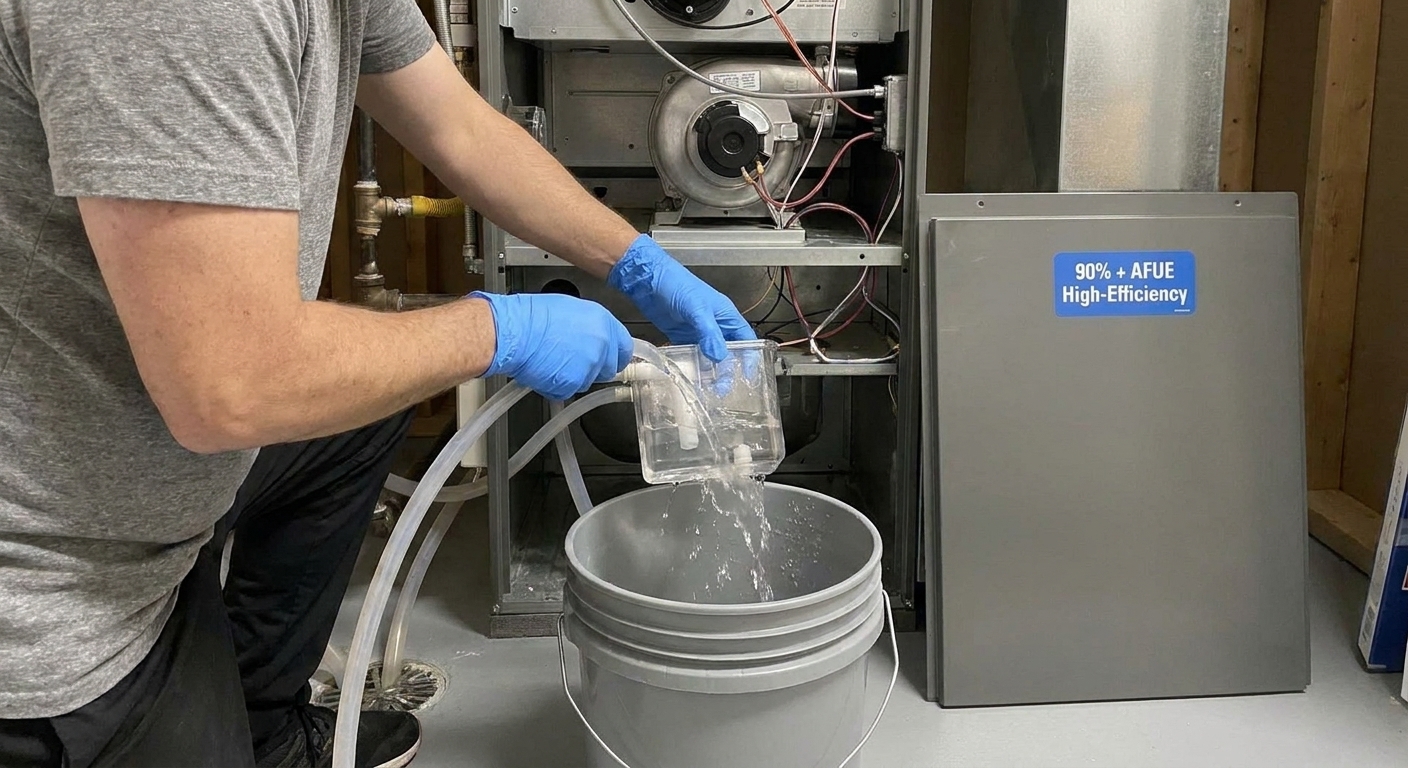
Dump the trap into a bucket. Clean it with a bottle brush or toothbrush. You are looking for:
- Sludge buildup
- Little chunks of debris
- Crystallized scale
- Any obstruction at the ports
Rinse with warm water. If you want to do a mild cleaning rinse, a little vinegar and then a warm-water rinse is fine. Do not leave vinegar sitting in there for hours. We are cleaning, not pickling.
If you have a condensate neutralizer, check it for buildup and restrictions. Some are meant to be replaced periodically when the media is exhausted or packed with gunk. If it looks like a clogged chalk tube, it is not helping flow.
7) Reassemble and prime the trap
Reinstall the trap and reconnect every hose and clamp snugly. Double check against your photo so every hose goes back to the same port.
Most furnace condensate traps need water in them to seal properly. Many traps will naturally refill as soon as the furnace runs, but I like to prime it:
- Pour a small amount of clean water into the trap inlet, or
- Pour a small amount into a service port if your furnace has one
Your goal is to make sure the trap is not bone dry.
8) Check pressure switch tubing (gently)
This step is often the missing piece when the furnace still refuses to run. Many furnaces use a pressure switch to confirm the inducer draft is correct. If condensate backs up, water can get into small pressure tubes and cause the switch to stay open.
Look for a small round switch with one or two rubber tubes attached. If a tube has water in it, gently remove the tube and drain it into your pan, then reconnect it.
Two cautions: Do not blow into the pressure switch, and do not poke anything into the ports. If you keep finding water in that tubing, it usually means you still have a drainage restriction or a collector box issue that may need professional service.
9) Restore power and test
Put the furnace door back on, turn power back on, and call for heat at the thermostat. Watch for:
- Normal ignition and steady run
- No water leaking at the trap connections
- Steady dripping or flow at the drain destination
If you have a clear vinyl drain hose anywhere in the setup, it is a nice bonus because you can see if the water is moving.
If it still shuts down
If you cleaned the trap and confirmed the drain line is open but the furnace still will not run, here are the common culprits I see in the real world:
Float switch or condensate pump issue
If your furnace drains into a condensate pump, pop the pump cover and check:
- Is the reservoir full of sludge?
- Is the float stuck?
- Is the discharge line clogged or frozen?
- Is the pump plugged in and powered?
A stuck float can shut down the furnace even when the drain line is technically open.
Blocked intake or exhaust vent
Condensing furnaces have PVC intake and exhaust pipes. Snow, leaves, animal nests, or ice can block them and trigger pressure switch errors that look a lot like condensate issues. If you go outside and see a vent buried in snow, that is your sign.
Cracked or misrouted tubing
Any loose, cracked, or incorrectly connected condensate hose can cause poor drainage or allow air leaks that interfere with pressure switch operation. Compare everything to your “before” photo and make sure clamps are tight.
Water where it should never be
If you are seeing persistent water inside the cabinet, especially in areas that stay wet even after you cleared the drain, stop. Issues in the collector box, internal drains, or secondary heat exchanger are not a simple DIY clean-out.
Call a pro if: you have recurring clogs every few days, you find water inside places it clearly should not be (like around the burner area), you suspect a venting issue you cannot safely access, or your furnace is tripping rollout or limit safeties.
Prevent future clogs
You do not need a complicated maintenance schedule to keep this line happy. Here is what I recommend:
- Once each heating season: inspect the trap area for leaks and confirm the drain is flowing.
- Mid-season check: make sure the drain termination is not frozen or blocked.
- Keep the area clean: store paint cans and sawdust projects somewhere else. Dust and debris find their way into everything.
- If you have a pump: flush the reservoir with warm water and clean sludge once a year.
- If you have a neutralizer: inspect it for restrictions and replace media or the cartridge as needed.
In my own 1970s fixer-upper, the best “tool” is just paying attention. If the furnace starts acting weird, I go look for water where water should not be before I go chasing fancy electrical problems.
Furnace drain vs AC drain
This trips up a lot of homeowners, so it is worth stating plainly.
- Furnace condensate (heating): created by a condensing gas furnace during heat. It runs through a trap and out a drain.
- AC condensate (cooling): created by the evaporator coil while cooling. It usually drains from a coil pan into its own drain line.
Some homes tie these together downstream. Some keep them separate. Either way, the cleaning approach is similar, but the components you are working on and the season you notice the problem are different.
If your issue is happening during cooling season, see our guide on unclogging an AC condensate drain line.
Quick FAQ
Can I use bleach in the condensate line?
I do not recommend it. It is overkill for most clogs, it can create fumes, and it can shorten the life of some pumps and tubing. Warm water, a physical clean of the trap, and a shop vac pull solve the vast majority.
Is condensate supposed to drip constantly?
During a long heat run, yes, you should see periodic draining. In very cold weather, high-efficiency furnaces can produce a surprising amount of water.
Why does a clogged drain trip the pressure switch?
When condensate backs up, it can block the drainage path from the inducer and collector box. That changes the pressure conditions the switch is monitoring, so the furnace shuts down for safety.
What if I cleaned everything and the code is still the same?
At that point, it could be a venting blockage, a failing pressure switch, a cracked hose, a clogged neutralizer, or an internal drainage issue. If you are not comfortable diagnosing beyond the condensate system, it is a good time to bring in an HVAC tech.