
Why Is My Dishwasher Leaking?
Find where dishwasher water is escaping: door gasket, spray arm, door vent, overfill, hoses, or a leak underneath. Follow a quick check order and know when to call a tech.
Good grain. Great questions.
A leaking dishwasher feels personal. One minute you are loading plates, the next you have a mysterious puddle creeping across the kitchen floor. The trick is to figure out where the water is coming from. Water outside the dishwasher tub can come from the door area, a hose, an overfill, a spray arm spraying out of pattern, a door vent, or a leak underneath.
Let’s sort it like a tidy workbench: quick safety first, then a simple check order that helps you pinpoint the source.
Do this first (before you chase the leak)
Safety check Turn off power at the breaker if you see water near the toe-kick area or any wiring, and shut off the dishwasher water supply valve (usually under the sink) before pulling the machine out.
- Stop the cycle and cancel or drain if your model allows it.
- Dry the puddle so you can tell how fast fresh water appears and from which direction it travels.
- Pull the bottom rack out so you can inspect the door opening, spray arm, and float area.
- Grab a flashlight, a couple of paper towels, and if you have one, a small mirror.
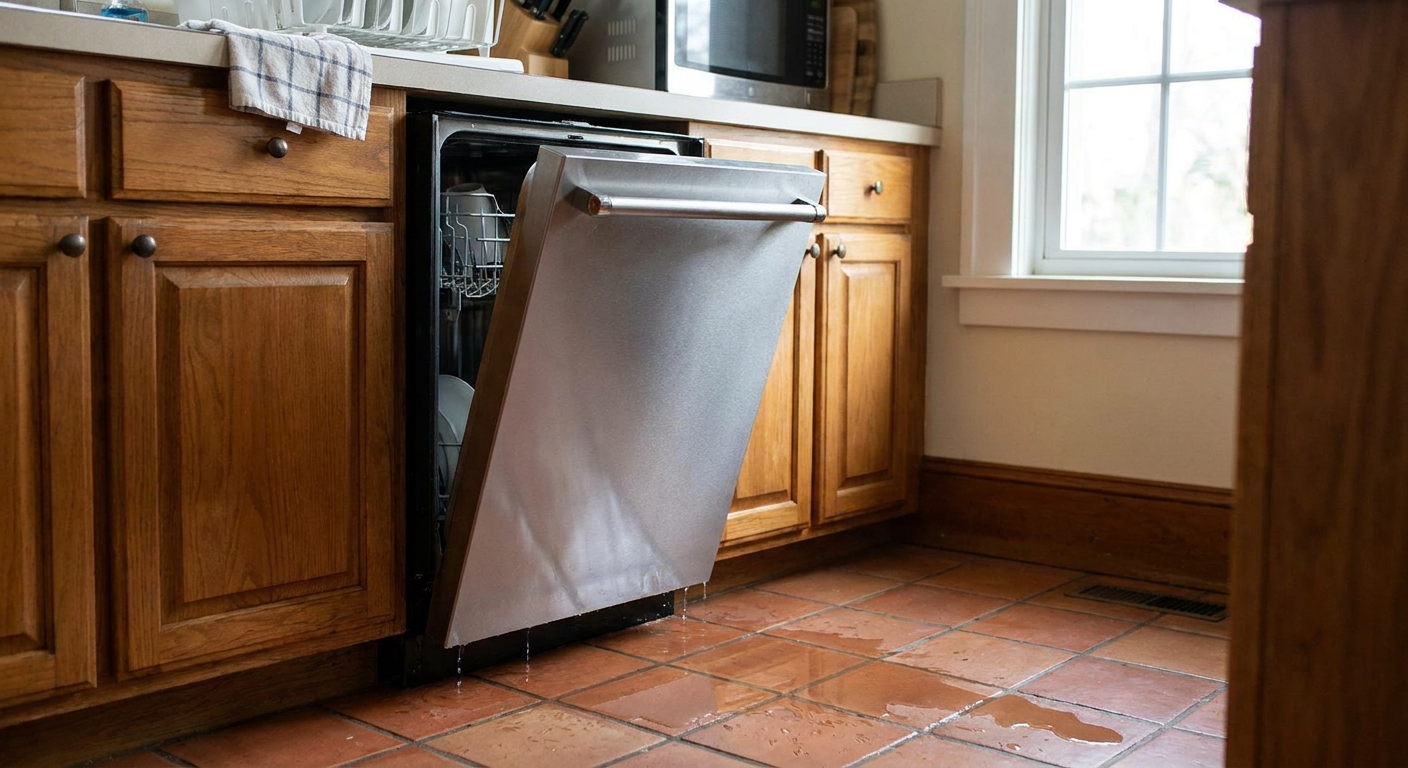
Is it really a leak, or just water left inside?
Two different problems get mixed up all the time:
- Leak: Water is outside the dishwasher tub, on the floor, or dripping from the door or underneath.
- Not draining: Water is inside the bottom of the tub after a cycle. That can look alarming, but it is a different diagnosis.
If your puddle is on the floor, keep going. If the “leak” is actually standing water inside the machine, focus on draining and drain-path checks instead.
The best check order for finding a dishwasher leak
Here is the sequence I like because it starts with the most common, easiest-to-see causes. After each step, run a short rinse cycle and watch with a flashlight.
- Door and gasket area
- Loading and spray-arm splash issues
- Door vent or dispenser drips
- Overfill and float checks (if your model has one)
- Hoses under the sink
- Leaks under the machine (pump, clamps, inlet valve)
1) Leak at the front: door seal and alignment
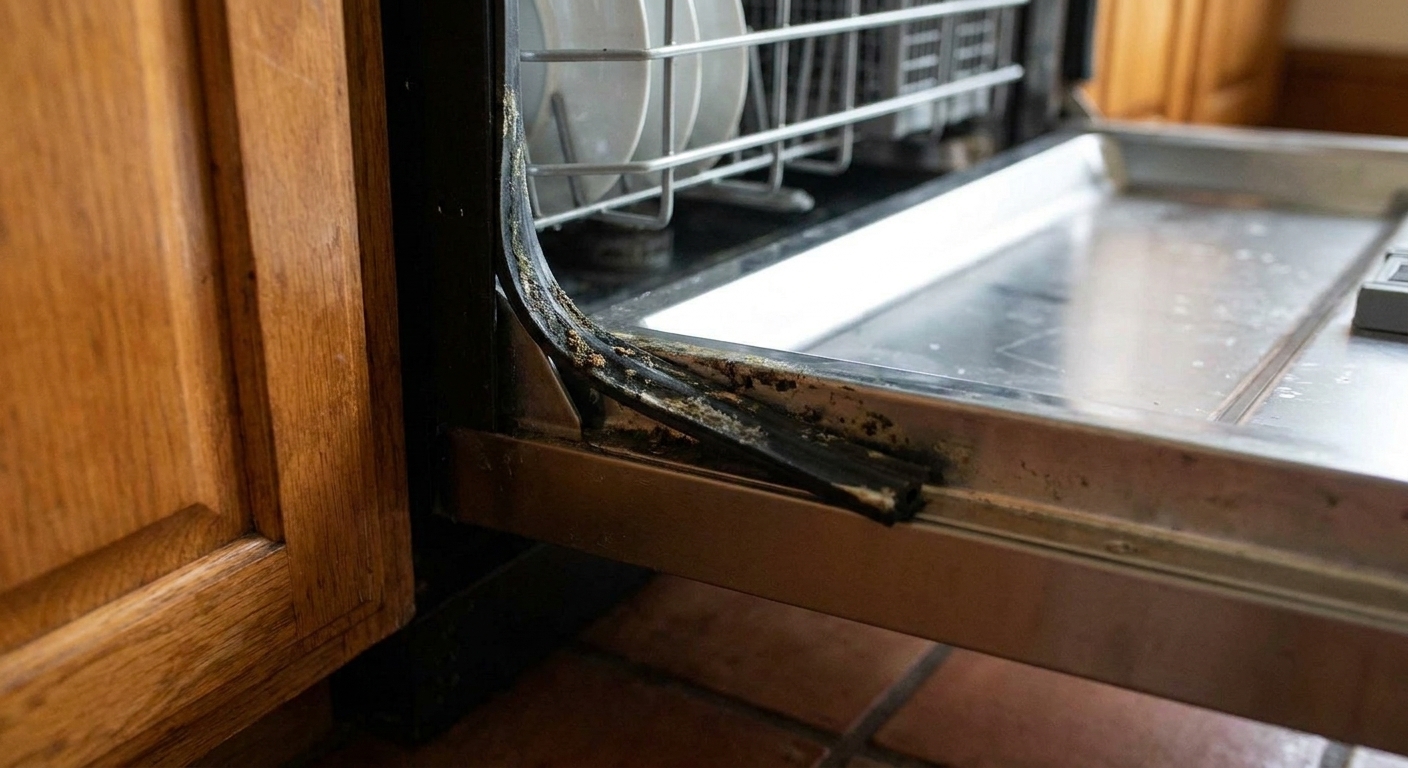
Worn, dirty, or displaced door gasket
If water shows up directly under the door, the door seal is the first suspect. Some dishwashers use a gasket around the tub opening, and many also have a lower door seal at the bottom edge.
- Look for: cracks, tears, flattening, hard or brittle rubber, or sections that are pulled out of their channel.
- Feel for: grit, grease, or bits of food stuck to the gasket that can hold the door slightly open.
- Clean: wipe the gasket with warm water and a little dish soap, then rinse and dry. Avoid harsh cleaners that can dry out rubber.
Door not closing flat
If the gasket looks fine, check the door itself.
- Racks: A rack that is off-track can keep the door from sealing.
- Dishes: A pan handle or cutting board sticking out can bump the door or block the spray arm, sending water forward.
- Leveling: If the dishwasher leans forward, water is more likely to pool at the door. Check with a small level across the door opening if you have one.
2) Spray arm problems (water going out of pattern)
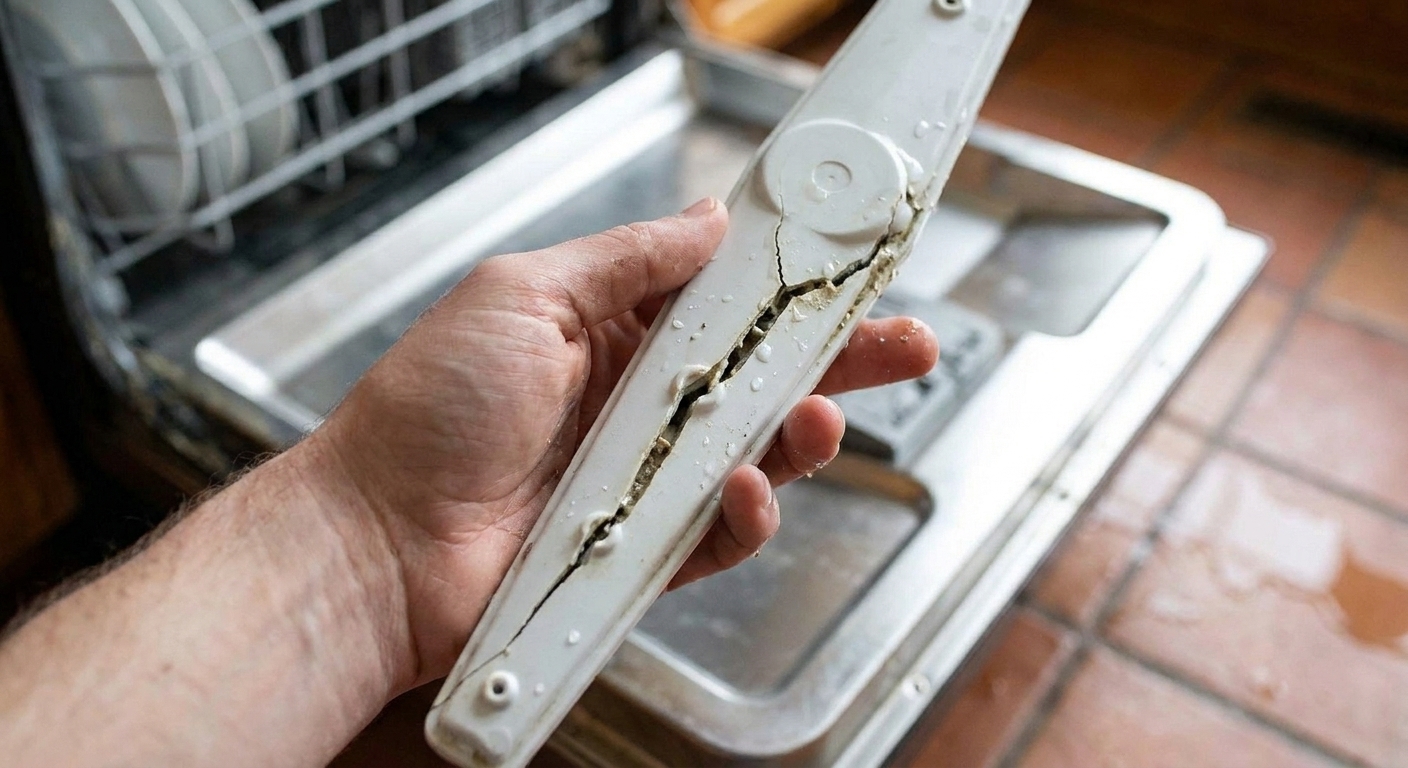
A cracked or loose spray arm can create a high-pressure stream that hits the door area or vents and makes it look like a bad seal.
Cracked spray arm
- Look for: hairline cracks, split seams, or melted spots on the spray arm.
- Check the hub: If the spray arm is not seated or is wobbling, it can spray unpredictably.
Clogged spray holes causing odd spray patterns
Mineral buildup and food bits can redirect spray. If you see a strong jet instead of a fine pattern, clean the spray-arm holes with warm water and a soft brush or toothpick.
3) Door vent and dispenser drips
A lot of “door leaks” are actually water tracking down the inside of the door. Two places to check are the steam vent (often on the inner door) and the detergent dispenser area.
Steam vent or vent gasket
- Look for: moisture streaks or mineral tracks starting at the vent and running down the inner door.
- Check for: a loose vent cover, a damaged seal, or a vent that is clogged and forcing water to dribble where it should not.
Dispenser or inner door panel issues
- Look for: drips around the dispenser housing, a warped inner door panel, or cracked plastic near screws and corners.
- What it looks like: water collects at the bottom edge of the door and spills out, even when the main tub gasket looks okay.
4) Overfilling: float and fill issues
If the dishwasher is taking on too much water, it can push water out through the door area or vents. Fill-related leaks often show up during the initial fill, but some models top up water later too, so keep an eye on it throughout a short cycle.
Float stuck up or blocked (if your model has one)
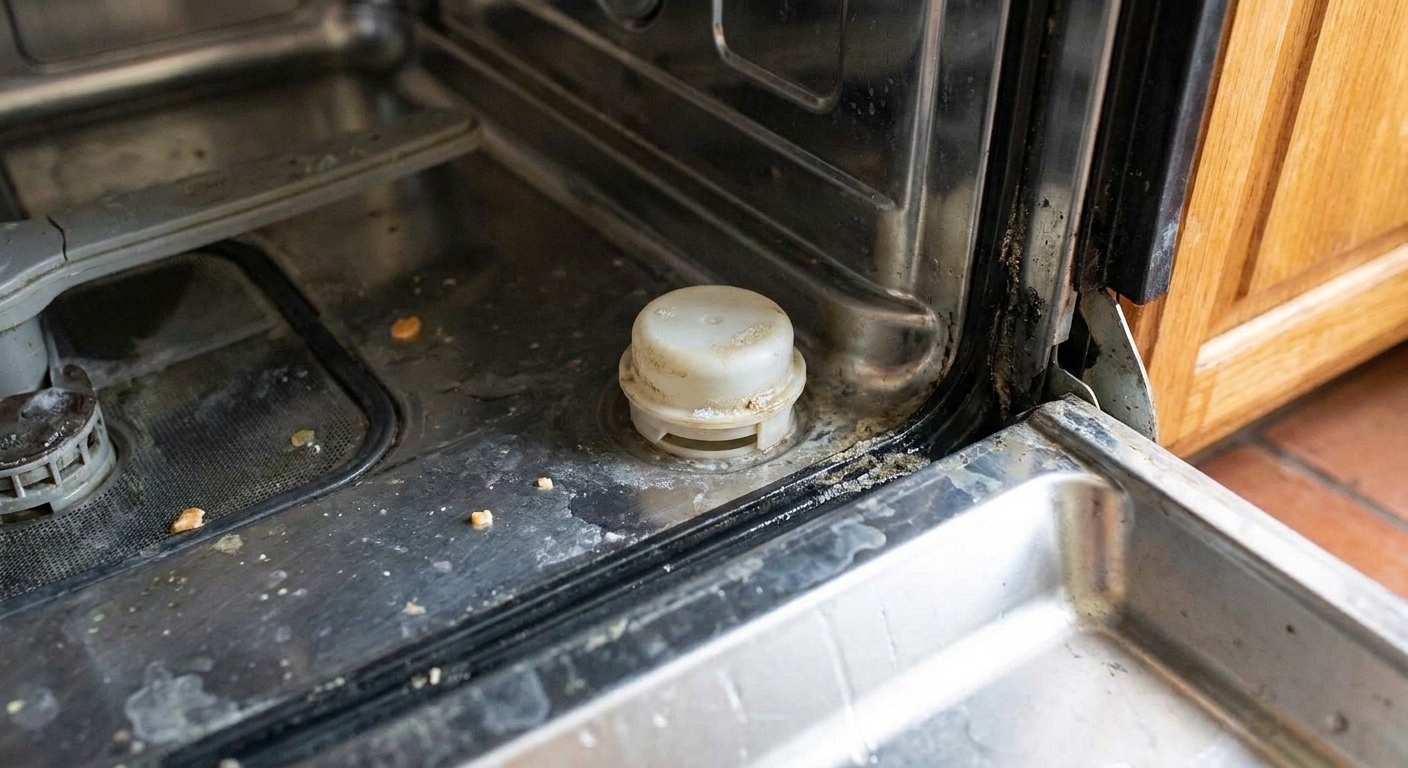
Many dishwashers have a small float inside the tub, often near the front corner. Some newer models use pressure sensing instead, so you may not see a traditional float.
- Lift test: If you have a float, gently lift it. It should move smoothly and drop back down.
- Clear debris: Remove any utensil, label, or food buildup preventing movement.
Too much detergent or wrong detergent
Not a direct “leak,” but it sure looks like one. Excess suds can foam up and escape at the door.
- Use dishwasher detergent only, never dish soap.
- If you have soft water, use less detergent than the bottle suggests.
- If you see foam, stop the cycle and let the suds settle. Running a rinse cycle without detergent can help clear it.
When overfill needs a technician
If your dishwasher keeps filling too high, the issue may involve the fill valve, a sensor, or controls. That is a good time to call for service, especially if water rises rapidly.
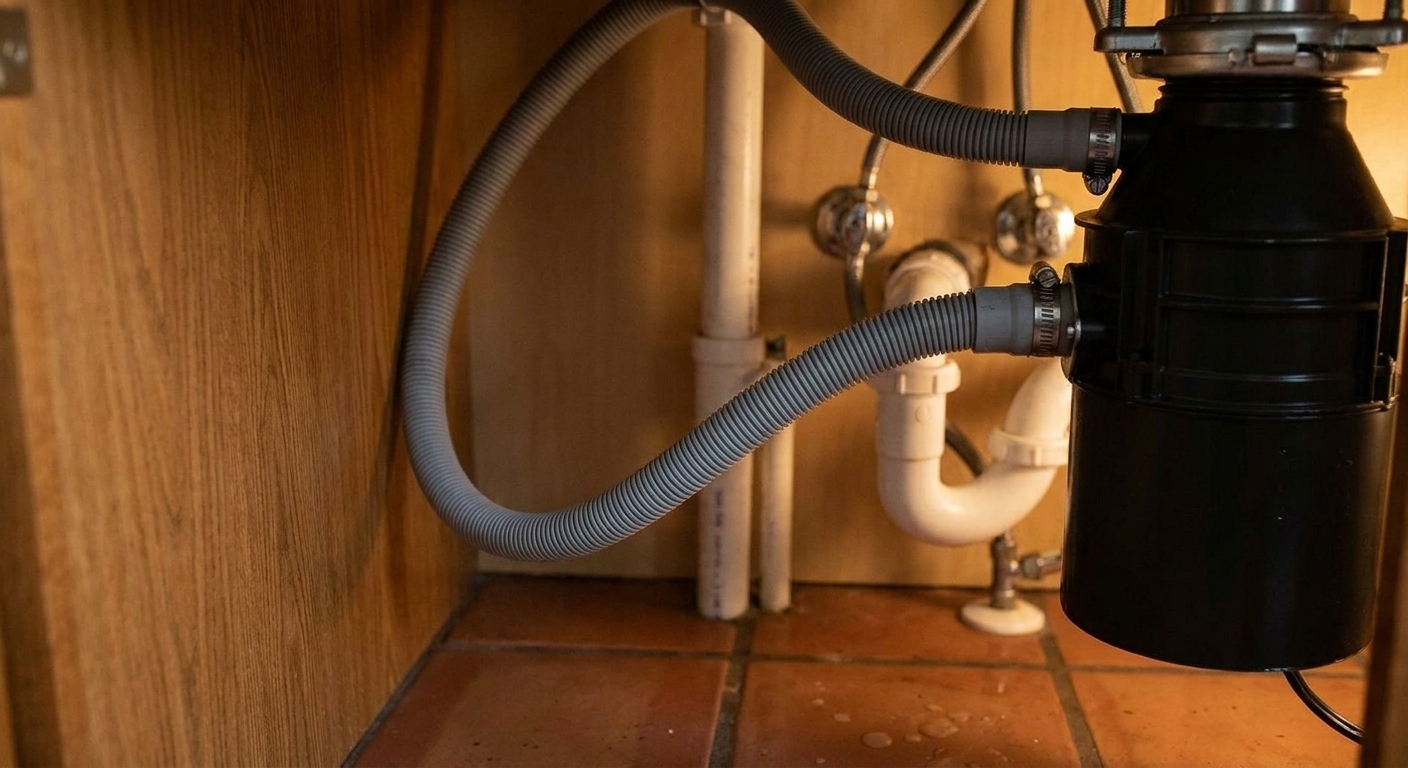
5) Under-sink leaks: supply line and drain hose
If the puddle seems to start near the cabinet next to the dishwasher, look under the sink while the dishwasher runs.
- Water supply line: Check the shutoff valve connection and the line running to the dishwasher.
- Drain hose: Feel along the hose for moisture, cracks, or a loose clamp at the garbage disposal or sink drain tailpiece.
- Air gap (if you have one): If water spills from the air gap cap on the sink, the drain path may be restricted.
- High loop: If your setup uses a high loop (the drain hose routed up under the counter before dropping to the drain), make sure it is still clipped up high. A low-slung hose can contribute to odd drain behavior and air gap overflow confusion.
6) Leaks underneath: what to check at the toe-kick
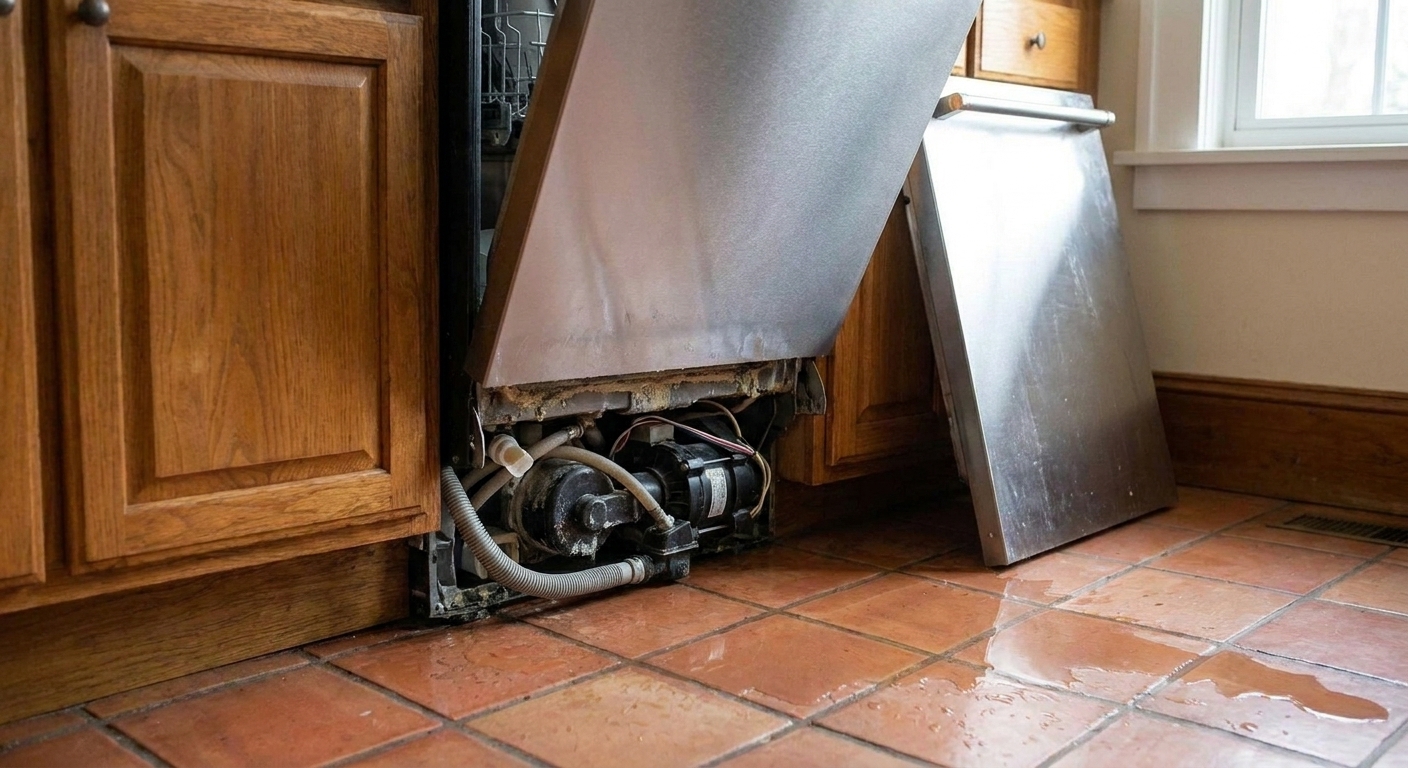
If water appears from under the dishwasher, remove the toe-kick panel if your model has one (usually a couple screws). Then run a short cycle and use a flashlight to spot drips.
Loose hose clamps or aging hoses
Look for slow drips at connection points, especially where rubber hoses meet plastic or metal fittings.
Inlet valve seepage
The inlet valve is where the water supply enters the machine. If it is leaking, you may see water tracking down the frame near the front left or right (varies by model).
Pump or motor seal leaks
Water from the center underside can indicate a pump seal issue. This is often not a beginner repair because it may require pulling the dishwasher and disassembling parts underneath.
Pause and protect your floor If you suspect an under-machine leak, do not keep running cycles “to see what happens.” Put towels down, shut off the supply valve, and schedule repair if you cannot clearly identify a loose hose connection.
Quick clues: where the water shows up tells you a lot
| Where you see water | Most likely causes |
|---|---|
| Right under the door center | Lower door seal, door not closing fully, excess suds, door vent dripping |
| Front corners by the door | Side gasket not sealing, tub gasket out of place, dishwasher not level |
| Left or right side under the cabinet area | Supply line connection or drain hose under the sink |
| Water coming from underneath, mid-machine | Pump seal, internal hose, clamp, or component leak |
| Water during fill or during later top-ups | Fill valve area leak, overfill condition, hose connection |
When to call a technician
Some leaks are simple. Others are “shut it down and get help.” Call a technician if:
- You see water near wiring, the junction box, or any electrical parts.
- The dishwasher appears to be overfilling, or you suspect a fill control problem you cannot verify safely.
- The leak is clearly coming from the pump, motor, or center underside.
- You find a cracked tub or damage to a major internal component.
- You have tightened obvious loose connections and the leak persists.
Also: if the floor is swelling, the baseboards are darkening, or the leak has been going on a while, it is worth getting both the dishwasher and any water damage assessed sooner rather than later.
FAQ
Why is my dishwasher leaking from the bottom of the door?
Most often it is a dirty or worn lower door seal, a tub gasket that is not sealing at the corners, or something preventing the door from closing flat like a rack off track or a dish sticking out. Too many suds can also push water out at the door. Another common one: a dripping door vent or dispenser area that lets water run down the inner door and spill out at the bottom edge.
My dishwasher has water in the bottom. Is it leaking?
Not necessarily. A small amount of water in the sump area can be normal. A leak is water outside the dishwasher. If you have standing water inside the tub after a cycle, that points more toward a draining issue than a leak.
Can a clogged filter cause leaking?
Usually, no. A clogged filter is more likely to cause poor cleaning or drainage. That said, if the dishwasher is not draining well, water can hang around where it should not, and combined with oversudsing it can sometimes contribute to water sloshing toward the door. Either way, cleaning the filter is good maintenance and a smart early step.
How can I tell if it is the hose or the door?
Dry everything, then run a short cycle and watch. Door leaks usually show up at the front edge and corners, or as water trails down the inner door from the vent or dispenser. Hose or valve leaks often show up under the sink cabinet or as drips behind the toe-kick.
Wrap-up: a calm plan beats a soggy mystery
Start at the door seal and loading issues, then move to spray arms, door vent and dispenser drips, overfill checks, and finally hoses and under-machine components. Most dishwasher leaks have a “tell” if you slow down, dry the area, and watch for the first fresh drop.
If you want the simplest next step: clean the gasket, confirm the racks glide straight, and run a rinse while you watch the front edge. Then, after any fix or adjustment, run one normal full cycle and re-check for moisture at the door and under the sink to make sure you truly nailed it.