
Why Is My AC Leaking Water Inside the House?
Water dripping from an indoor AC unit usually points to a drain, airflow, or frozen-coil problem. Learn the most common causes and the safest steps to stop damage fast.
Good grain. Great questions.
If your AC is leaking water inside the house, your system is basically doing the right thing in the wrong place. Air conditioners pull humidity from the air, and that moisture is supposed to drain safely away through a condensate line. When that path gets blocked, broken, or overwhelmed, water backs up and finds a new route, usually onto your ceiling, wall, or floor.
Let’s get you from “why is there a puddle?” to “here’s what I can check, safely and in order.”
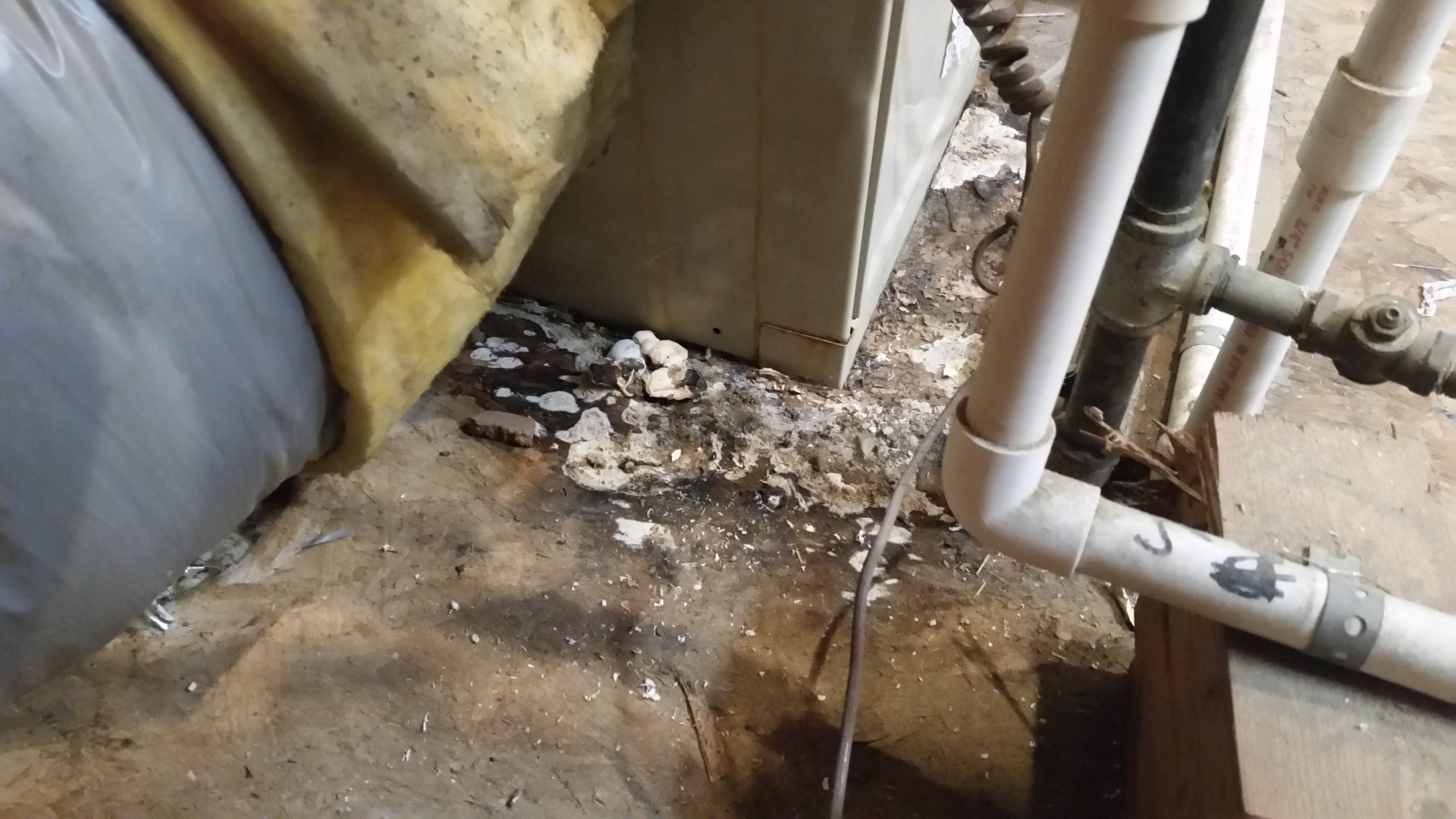
First: stop the water and limit damage
Before you troubleshoot, treat this like a small indoor plumbing leak. Water plus drywall, flooring, and electricity is a cranky combo.
- Turn the AC off at the thermostat. If water is actively dripping near electrical components, also shut the system off at the breaker.
- Catch and redirect water with a bucket, towels, or a shallow pan.
- If a ceiling is bulging, you can sometimes relieve pressure by making a small drain hole so it empties where you want (into a bucket) instead of where it wants (all over the room). Do this carefully: avoid any area near lights, fans, vents, or known wiring runs; use a screwdriver or awl gently; and have a bucket and plastic sheeting ready. If you are unsure what’s above that spot or you see any electrical risk, skip this step and call for help.
- Use fan-only to thaw only if your system allows it and you are not seeing water near electrical parts. Fan-only can help thaw a frozen coil, but do not switch cooling back on until everything is fully thawed and you have checked the filter and airflow.
- Dry the area with a box fan or dehumidifier. Wet insulation and drywall can grow mold surprisingly fast.
Safety note If the water is coming through a light fixture, near a breaker panel, or you smell burning or see sparks, shut off the breaker and call for help. This one is not a “let’s see what happens” moment.
How indoor AC water leaks happen
Your indoor unit (often called the air handler or furnace with an evaporator coil) makes condensation as it cools air. That water drips into a primary drain pan and exits through a condensate drain line. Many systems also have a secondary pan under the unit as a backup, especially in attics.
An indoor leak usually comes from one of these categories:
- Drainage problem: clogged drain line, disconnected line, failed condensate pump, clogged trap.
- Overflow problem: cracked or rusted pan, pan not level, blocked outlet, secondary pan overflowing.
- Freezing problem: evaporator coil freezes, then thaws and dumps more water than the pan or drain can handle.
- Airflow problem: dirty filter, blocked return, closed vents, blower issues leading to freezing and overflow.
- Too much moisture: very humid weather, a fresh-air intake damper stuck open, or a whole-home humidifier running when it should not can increase condensate volume and expose a marginal drain setup.
Most common causes
1) Clogged condensate drain line
This is the usual suspect. Dust, algae, and gunk can plug the drain line and back water up into the pan. Once the pan fills, it spills into the cabinet and out into your home.
Clues
- Water around the indoor unit or dripping from the unit’s access panel
- AC recently ran a lot (humid weather often speeds up clogs)
- Gurgling sounds near the drain
- Water in the secondary pan or at a safety overflow outlet
What you can do now
- Find the drain line outlet (often a small PVC pipe exiting near an exterior wall). If it is dripping normally, that is a good sign.
- If it is not dripping while the AC has been running, that may point to a clog, but it can also mean the drain terminates somewhere you cannot see (crawlspace, plumbing connection, condensate pump) or that conditions are dry enough that little condensate is being produced.
- Check the drain connection at the indoor unit for obvious blockages.
- Use a wet/dry vac at the outside drain outlet to pull the clog (hold a rag around the pipe to improve suction).
If your system has a cleanout tee near the indoor unit, that is often the easiest place to service the line. Be cautious with compressed air because it can blow fittings apart and make a bigger mess.
2) Cracked, rusted, or overflowing drain pan
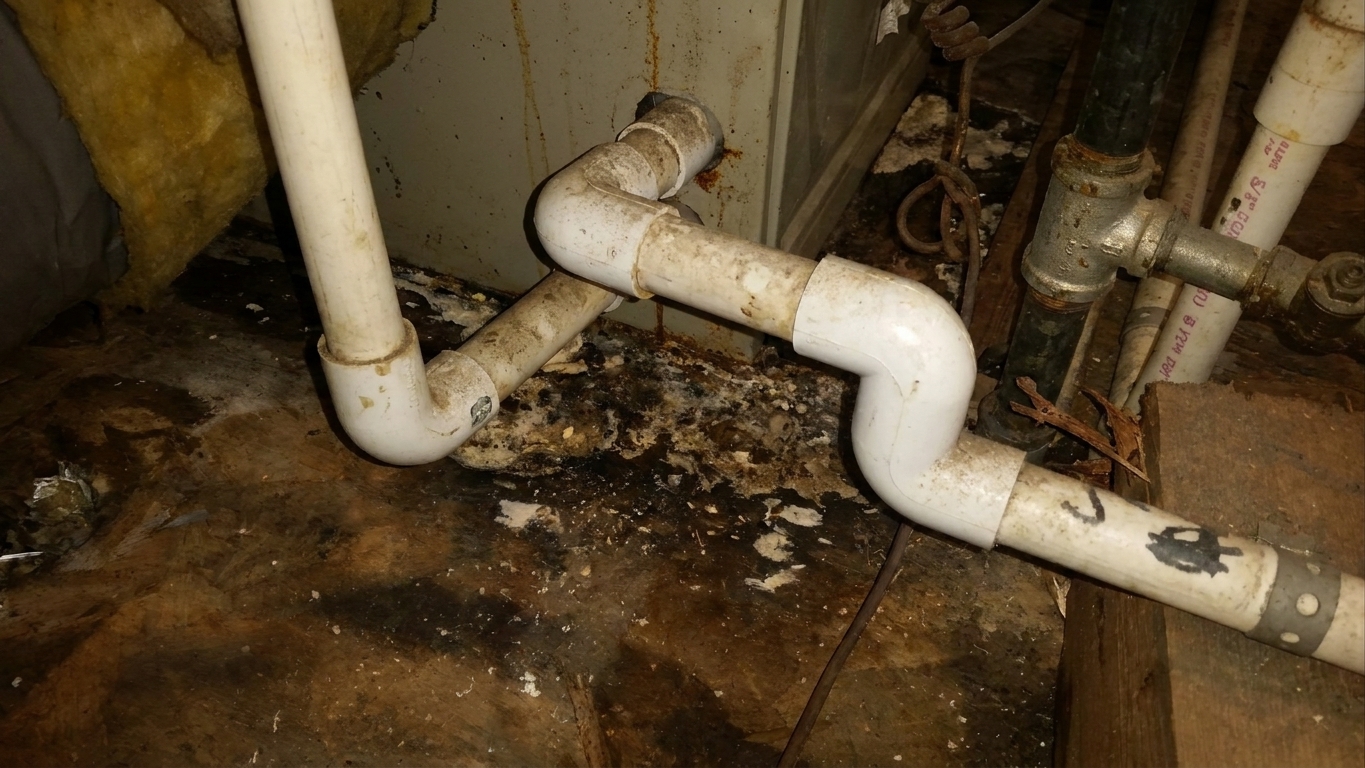
Drain pans live a wet life. Over time, metal pans can rust through and plastic pans can crack. If the pan is damaged, water leaks even if the drain line is clear.
Clues
- Water appears quickly after the AC turns on
- You see rust, corrosion, or mineral buildup in the pan area
- The drain line is flowing at its termination point, but you still have indoor water
What you can do now
- Turn the system off and remove the access panel if you can do so safely.
- Inspect the pan with a flashlight for cracks, pinholes, or rusted-through spots.
- Do not rely on sealants as a long-term fix. A replacement pan or coil case repair is usually the real solution, and sometimes the coil must be removed to replace the pan.
3) Disconnected or poorly sloped drain line
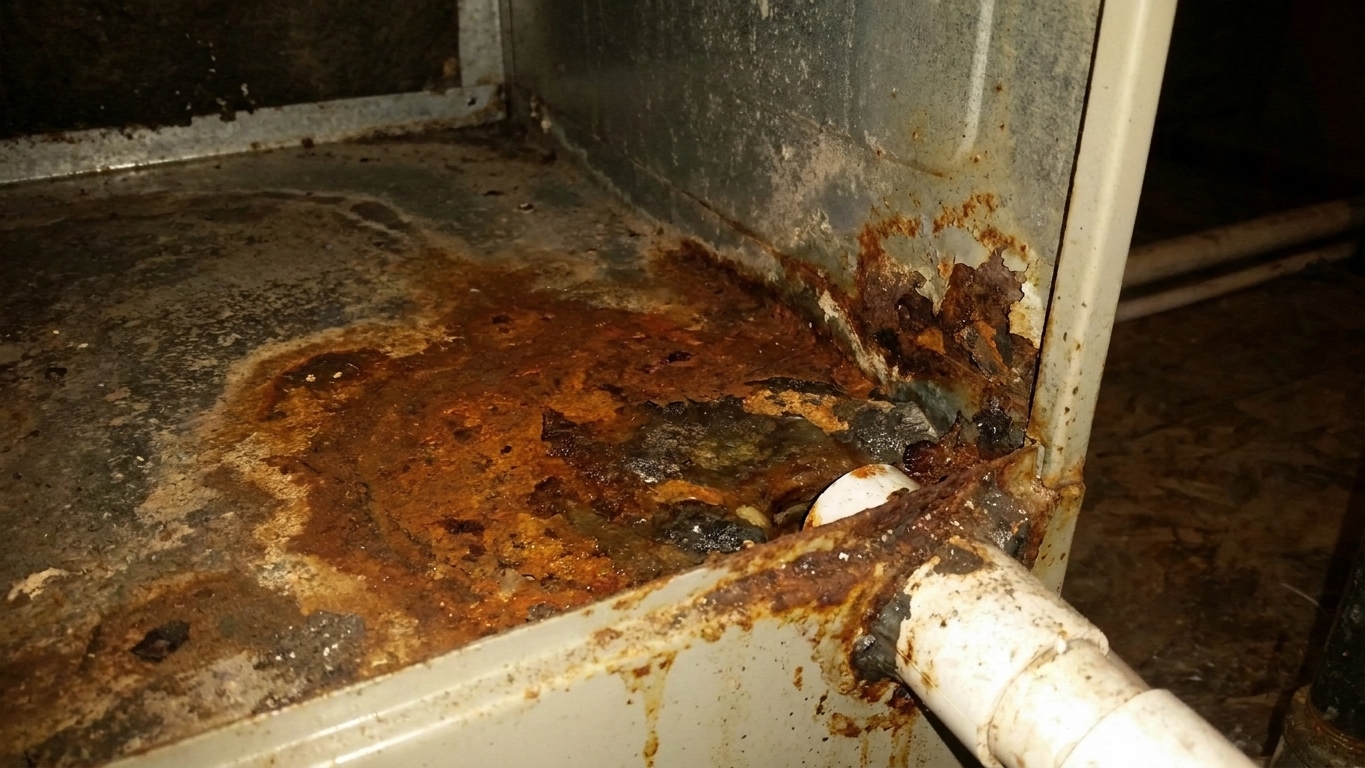
If the condensate line has separated from its fitting, or if it is sagging and holding water, condensation may spill near the unit instead of draining away.
Clues
- Water shows up near the unit soon after startup
- You recently had HVAC work done or items moved in the attic
- The line visibly dips, bows, or looks pulled loose
What you can do now
- Look for an obvious separation at the air handler drain port or at any coupling.
- Check slope: the pipe should gently pitch downward to its exit. If it runs uphill or sags, water can stall and back up.
- Re-seat a loose line only if it is a simple slip fitting and you are confident it is not glued PVC that cracked. If glued sections are broken, a pro repair is safer and cleaner.
4) Dirty air filter leading to a frozen coil
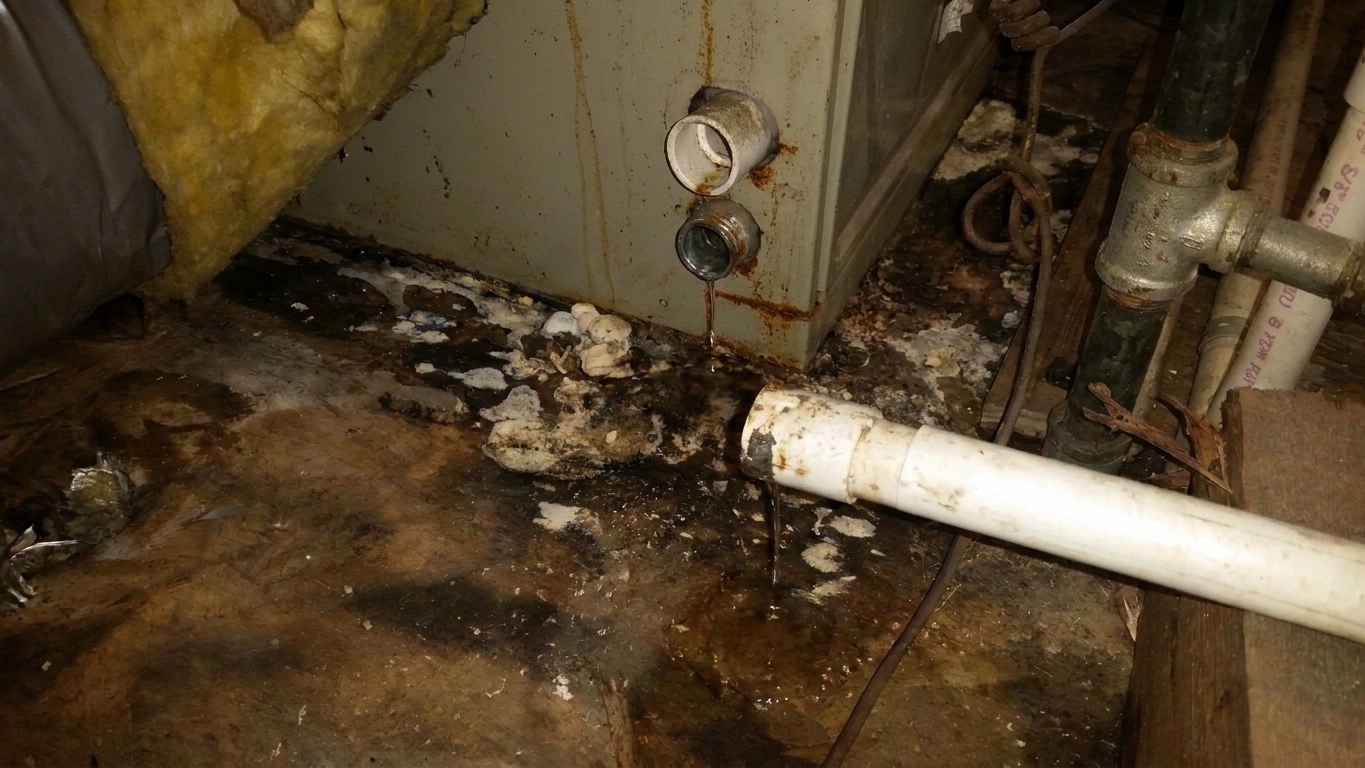
A dirty filter restricts airflow. Low airflow can drop the evaporator coil temperature too far, causing it to freeze. Later, when the system cycles off or you switch to fan-only, that ice melts fast and can overwhelm the drain system.
Clues
- Weak airflow at vents
- AC running constantly but not cooling well
- Ice on the refrigerant line (the larger insulated copper line) near the indoor unit
- Water leak shows up after a period of poor cooling
What you can do now
- Turn cooling off. If it is safe to do so, set the thermostat fan to ON to help thaw.
- Replace the air filter with the correct size. If it is extremely clogged, that alone could be the root cause.
- Let it thaw completely before restarting cooling. This can take several hours. Keep towels handy.
If freezing keeps happening after a clean filter and open vents, you may be dealing with low refrigerant, a dirty evaporator coil, or a blower problem. Those are usually pro-level fixes.
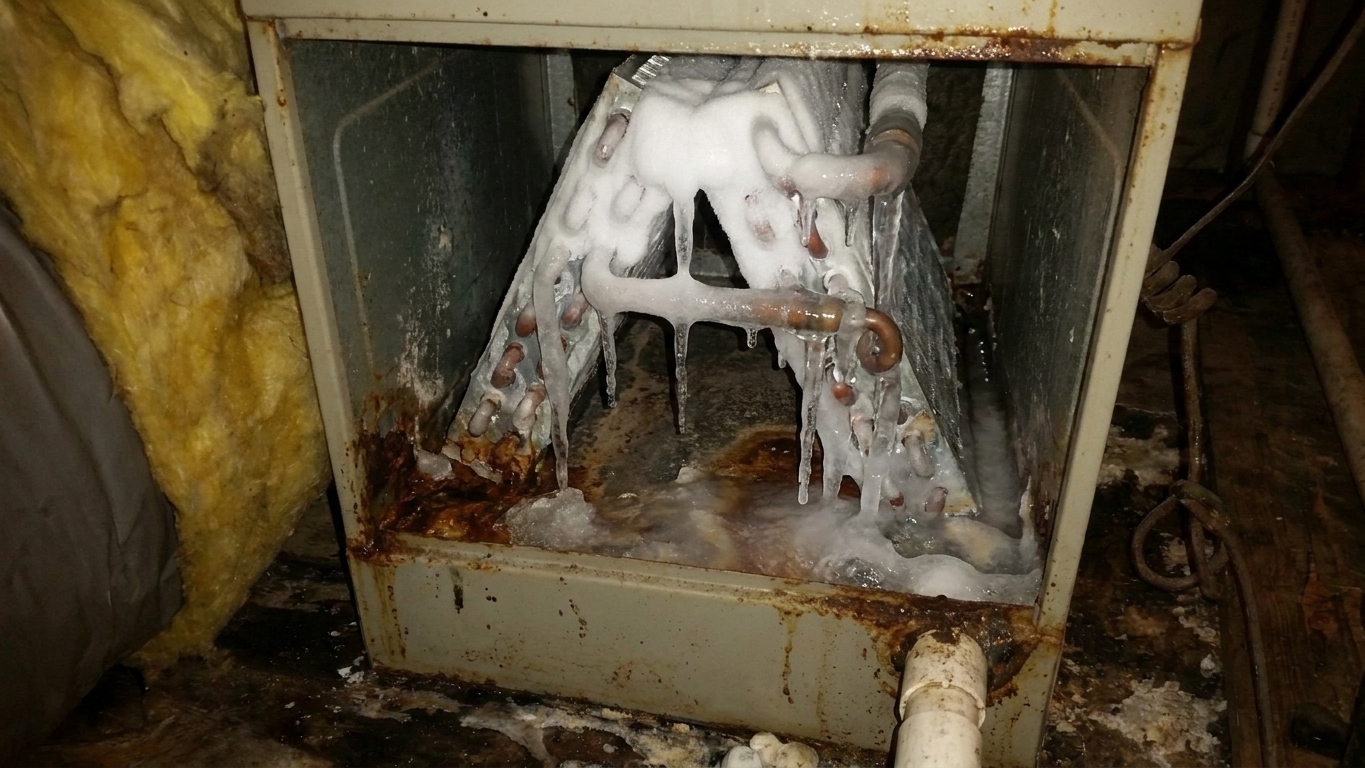
5) Secondary drain pan problems
Many attic installations sit in a big metal or plastic secondary pan. If the primary drain clogs, water is supposed to land in that backup pan. But if the secondary pan is cracked, not level, or its drain is clogged, you get a ceiling leak.
Clues
- Water stain on the ceiling below the attic unit
- Standing water in the secondary pan
- A safety switch shuts the AC off intermittently (some systems have a float switch to stop the system when the pan fills)
What you can do now
- Check the secondary pan with a flashlight. If it is full, bail it out carefully to prevent overflow while you address the primary drain.
- Confirm the secondary drain outlet is not clogged (if your setup has one).
- Do not defeat a float switch. If it is shutting the AC down, it is preventing a bigger mess.
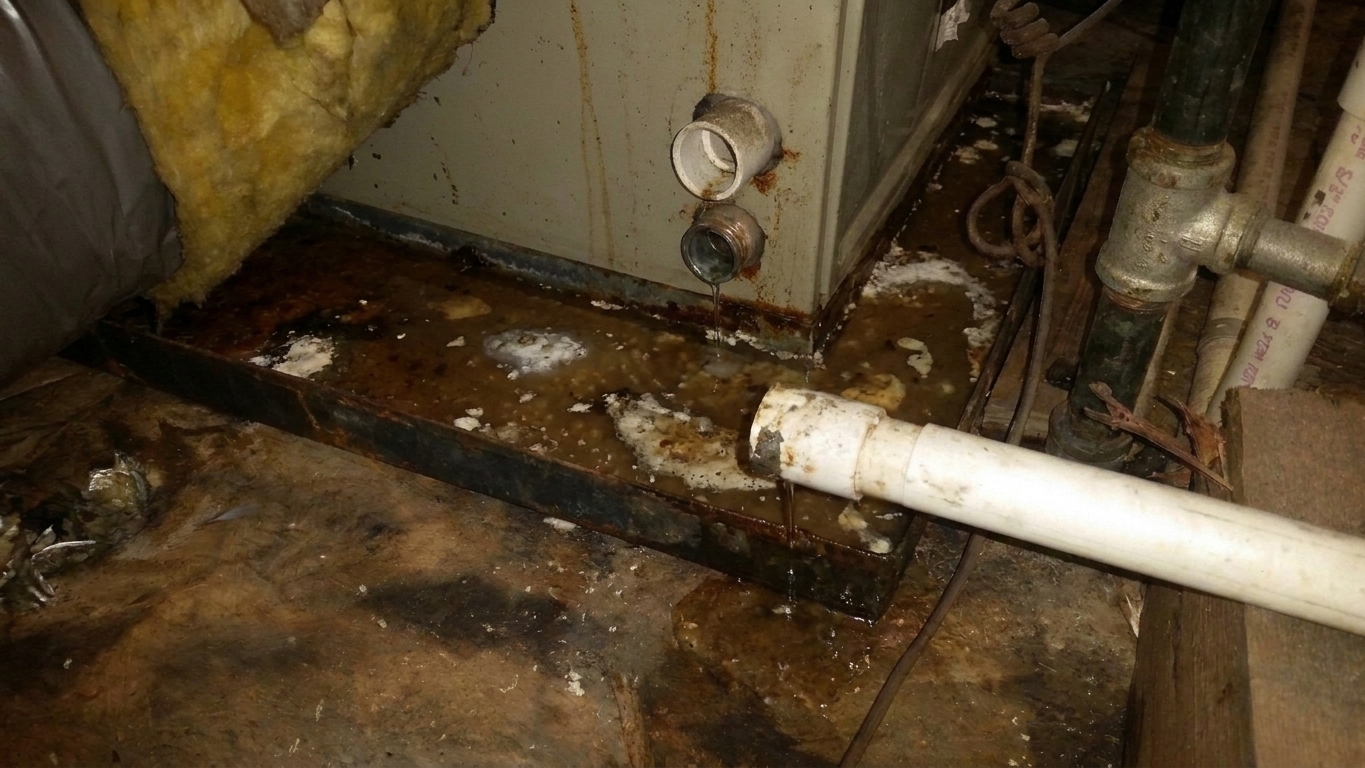
6) Condensate pump failure
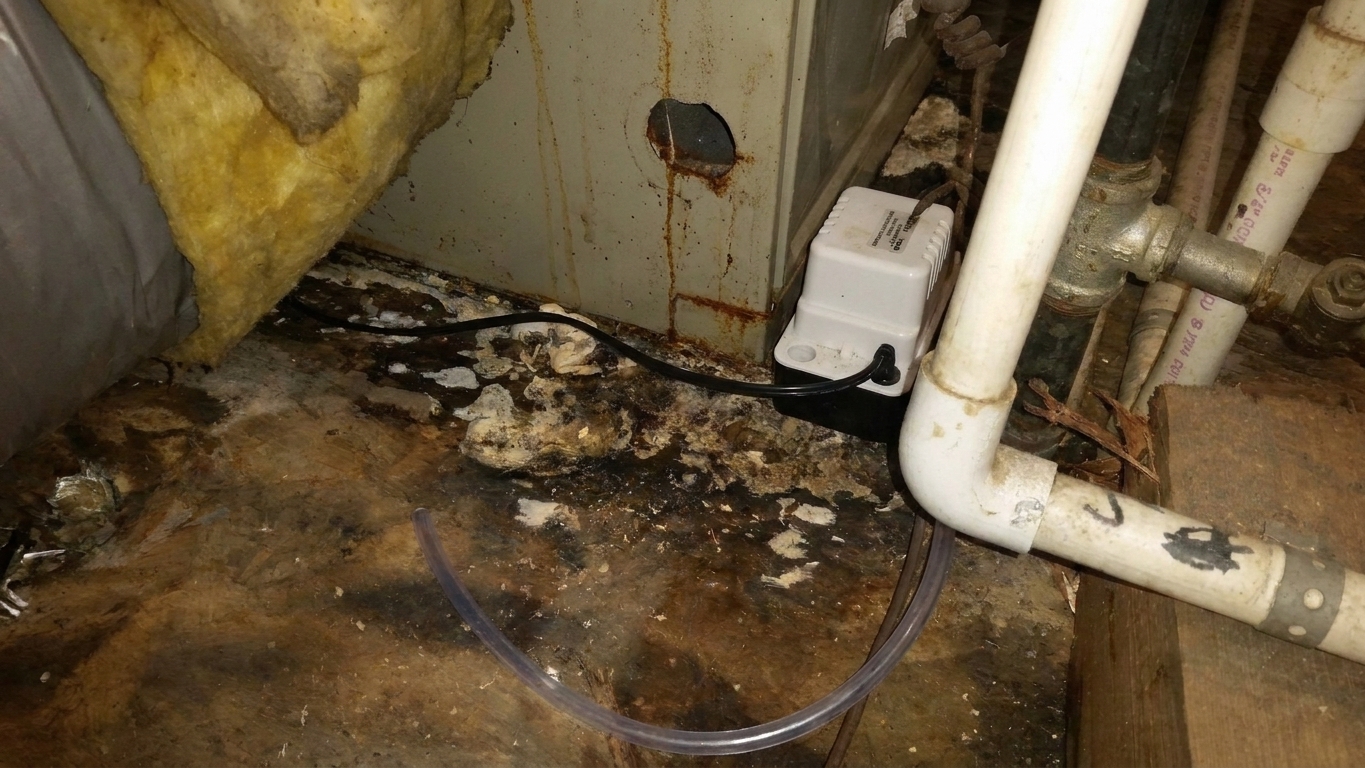
If your indoor unit sits below a proper gravity drain point, it may use a condensate pump to push water to a sink drain or outside. When the pump fails or its discharge tube clogs, water backs up.
Clues
- A small plastic pump box near the unit
- Water in or around the pump reservoir
- No pump sound during AC operation (some are quiet, but many make a brief hum when cycling)
What you can do now
- Cut power first. Unplug the pump and turn off the HVAC equipment before touching water around it.
- Check the discharge tube for kinks or clogs.
- Clean the reservoir if you can do so safely and you are comfortable reassembling it. If the pump is dead, replacement is often a straightforward job for a technician, and DIY-capable for some homeowners who follow the manufacturer instructions and local code requirements.
Troubleshooting order
- Turn the AC off and contain water.
- Check the air filter and replace if dirty.
- Look for freezing signs (ice on lines or coil). If frozen, thaw fully before restarting cooling.
- Inspect the drain pan for standing water and visible damage.
- Locate the drain termination (outside, plumbing connection, or pump) and verify where the system should be draining.
- Clear the drain line with a wet/dry vac if you can access an outlet or cleanout.
- Check a condensate pump and verify it is operating (if applicable).
- Do a brief test run after cleanup and thawing to see whether water is draining properly.
- If the leak continues, call an HVAC pro. A cracked pan, coil cabinet issues, refrigerant problems, or internal blockages can require disassembly.
Call a pro right away
- Water near electrical wiring, a control board, or a light fixture
- Repeated coil freezing after replacing the filter and opening vents
- Drain pan replacement needed (often requires coil removal)
- Ceiling sagging, widespread water staining, or soaked insulation
- You cannot access the indoor unit safely (tight attic, no flooring, unsafe ladder setup)
- The liquid does not look like clean water (oily residue, strong chemical smell). Rare, but a good reason to stop and get eyes on it.
Prevent the next indoor leak
- Change filters on schedule. Many homes do well at 1 to 3 months, but pets, renovations, and allergies can shorten that.
- Keep return vents clear (no rugs, furniture, or stacked storage bins blocking airflow).
- Maintain the condensate line. If your system has a cleanout, a periodic flush can help. Many homeowners and technicians use distilled vinegar because it is less harsh than bleach, but follow your equipment manual and local guidance.
- Ask about a float switch if you have an attic unit and do not already have one. It can prevent a surprise ceiling waterfall.
- Annual HVAC maintenance helps catch pan rust, drain issues, and coil dirt before they become indoor leaks.
- Watch the humidity sources. If you have a whole-home humidifier, fresh-air intake, or dehumidifier tied into the system, a stuck setting can change how much moisture your AC has to handle.
FAQ
Is it normal for an AC to leak water indoors?
No. Condensation is normal, but it should drain out through the condensate system. Indoor leaking means the drain path is blocked, broken, or overwhelmed.
Can I keep running my AC if it is leaking water?
It is not recommended. You risk more water damage and, if the leak is tied to freezing or electrical areas, you can create a bigger repair. Shut it off, contain water, then troubleshoot.
Why is my AC leaking water but still cooling?
A partially clogged drain line or a cracked pan can leak while the system still cools. Cooling performance does not rule out a drain problem.
Why did my AC leak after I changed the filter?
If the coil was already iced up from a previously dirty filter, improved airflow can speed thawing, and the meltwater can overflow a clogged drain or damaged pan. Let the coil fully thaw and then address the drain line.