
Why Does My Garbage Disposal Start on Its Own?
If your garbage disposal runs when nobody touches the switch, treat it like an electrical fault. Learn the most common causes, what to check safely, and when to shut off power and call a pro.
Good grain. Great questions.
If your garbage disposal starts running when nobody is at the switch, that is not a quirky appliance moment. It is a safety issue. A disposal should only run when a switch is intentionally activated, and a “ghost start” usually points to a switch, wiring, or moisture problem.
Safety first: If the disposal starts on its own even once, stop using it until you find the cause. Turn off power at the breaker (preferred) or unplug it under the sink. Do not rely on the wall switch alone.
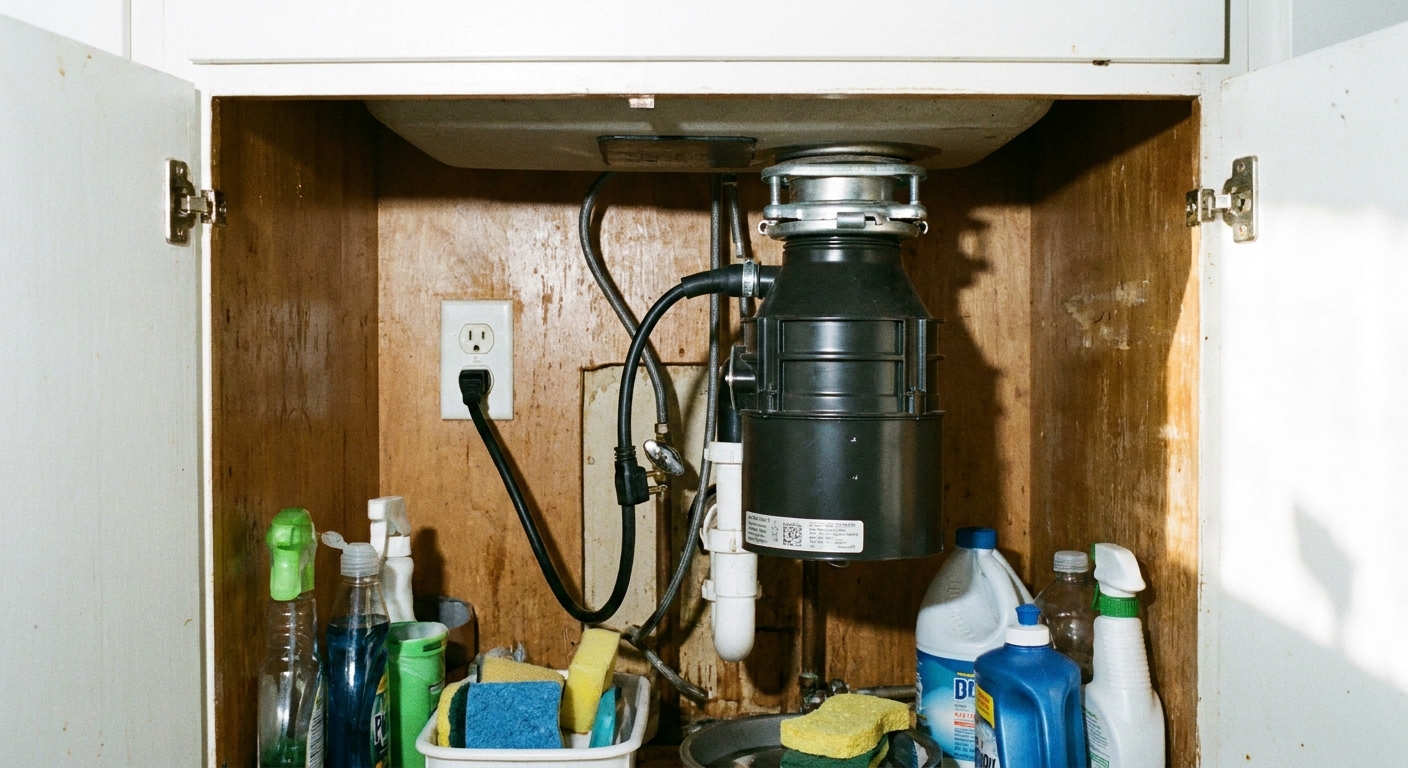
What “starts on its own” means
Most of the time, a disposal that runs without you touching the switch is getting power when it should not. That can happen if:
- A wall switch is sticking or failing and intermittently making contact.
- An air switch (pneumatic button) is sticking or the air tube is pinched or leaking in a way that keeps the actuator engaged.
- Moisture is getting into the switch box or wiring, causing corrosion, arcing, or a short that energizes the disposal when it should be off.
- A miswired or damaged circuit is feeding the disposal unexpectedly.
Less commonly, people describe “starting on its own” when the unit actually restarts after a power flicker and the switch was left on. Many disposals are controlled by a standard maintained-contact wall toggle. If it is left ON, the disposal can come back to life when power is restored. Some air switch setups also latch ON until you press the button again, so the same idea applies.
Make it safe first
Pick one of these and stick with it while you investigate:
- Best: Turn the disposal circuit OFF at the breaker.
- Also OK: Unplug the disposal under the sink (if it has a cord and plug).
Quick setup check that helps a lot: look under the sink and confirm whether your disposal is plug-in (cord to an outlet) or hardwired (cable into a metal junction box). Plug-in units are easier to isolate for testing. Hardwired setups are a better reason to bring in a pro sooner.
Then keep two habits that save fingers:
- Do not put your hand into the disposal chamber.
- Do not test it by flipping the switch on and off repeatedly. One controlled test after each change is plenty.
Quick triage
Different disposal problems sound similar in a busy kitchen. Here is the quick sort:
- Runs by itself: It actually turns on and spins, without you activating the switch. This article.
- Hums but will not spin: Motor hums, but the impeller plate (the turntable at the bottom) is stuck or jammed.
- Silent and will not run: No sound at all. That is often power, reset button, outlet, switch, or breaker.
- Trips breaker or GFCI: It starts then shuts off, or it will not stay powered.
If yours is humming, silent, or tripping a GFCI, do not force this “ghost start” checklist. You will get more traction by troubleshooting the symptom you actually have.
Common causes and checks
1) Wall switch trouble
A standard wall switch can wear internally. Contacts can arc, pit, and start behaving unpredictably. Sometimes it feels normal to the touch but still makes intermittent contact.
What to look for
- The disposal starts when you bump the switch plate or close a nearby cabinet door.
- The switch feels loose, crunchy, warm, or inconsistent.
- You hear a faint crackle, snap, or sizzle from the switch area (turn power off immediately if you do).
Safe checks
- With power OFF, remove the switch plate cover and look for moisture, discoloration, melted plastic, or scorch marks. If you see any, stop and call an electrician.
- If the disposal is plug-in, you can leave it unplugged while you monitor the switch. If the disposal cannot possibly run when unplugged, but you still notice heat, odor, or noise at the switch, you likely have a switch or wiring issue that needs a pro.
One more practical check: many disposals plug into a switched receptacle under the sink. If yours does, confirm the outlet is actually controlled by the disposal switch and not sharing a weird half-switched setup with something else.
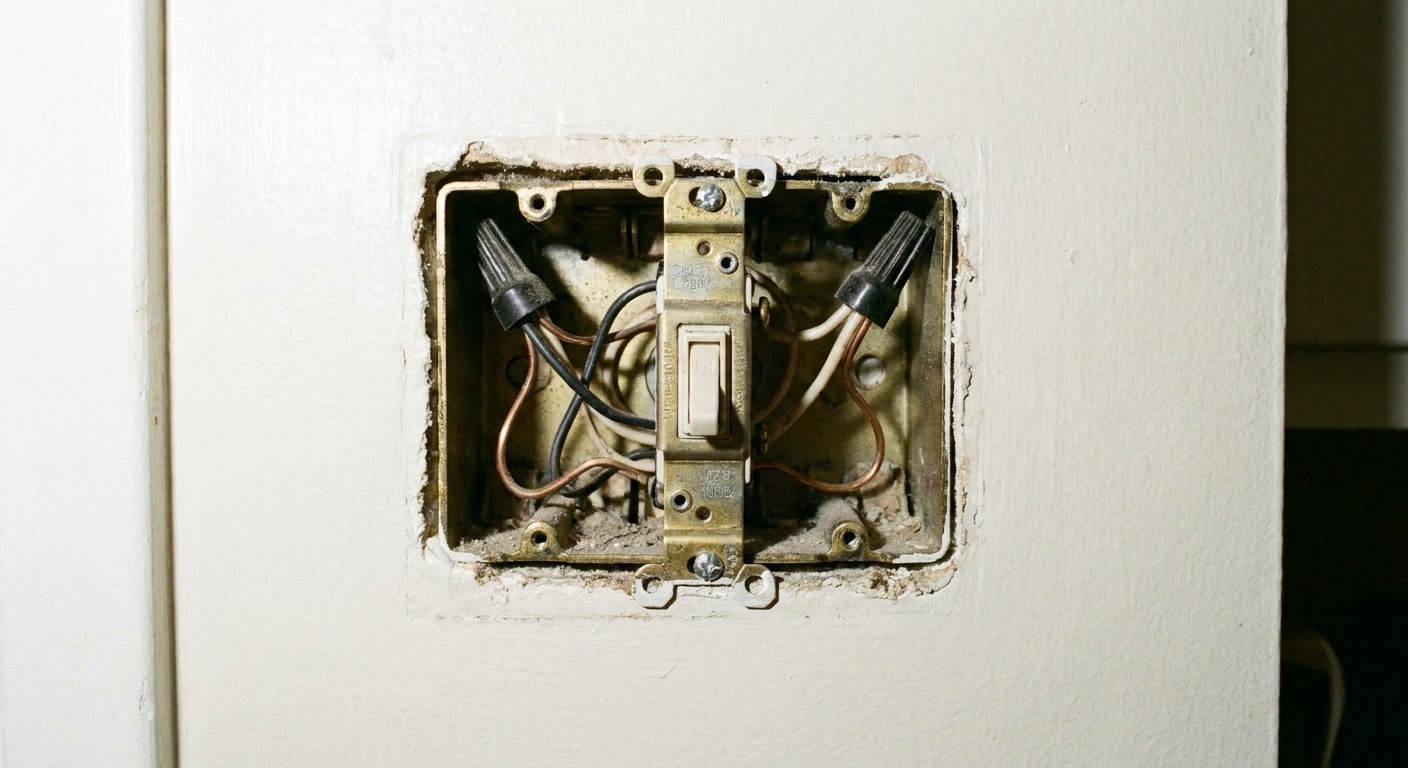
2) Air switch issues
Air switches are popular because the button on the counter is not electrical. It pushes air through a small tube to a switch module under the sink. When they fail, they can stick on, leak, or behave like they are being pressed.
What to look for
- The countertop button feels sticky or does not spring back cleanly.
- The disposal turns on when you touch the button lightly or wipe the counter near it.
- You find water under the sink near the air switch module, or the air tube looks loose.
Safe checks
- With power OFF, inspect the air tube for kinks, cracks, or a loose fit at either end.
- Dry the area around the switch module. If anything is wet, you have two problems: a moisture issue and a control issue.
- If your disposal is plugged into an outlet controlled by the air switch, keep it unplugged until the air switch is repaired or replaced.
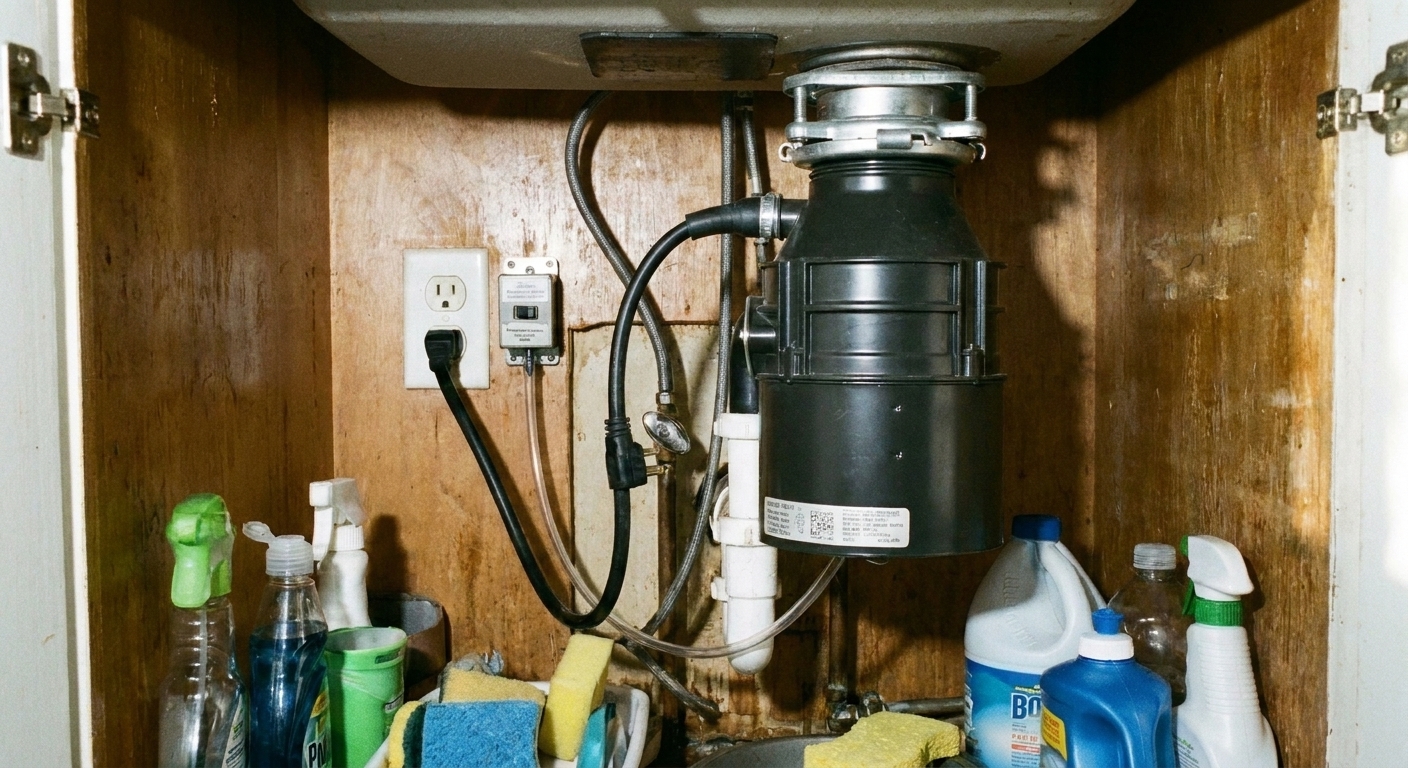
3) Moisture in electrical areas
Kitchens produce steam. Sinks produce leaks. And a damp switch box is a bad mix. Moisture does not intelligently “turn things on,” but it can cause corrosion, leakage current, arcing, and shorts that energize the load or bypass normal switching.
Common moisture sources
- A slow leak from the sink rim, faucet, sprayer, or drain.
- Condensation from a dishwasher line or cold water pipe.
- Cleaning spray that runs down the backsplash into the switch area.
What to do
- Turn off the breaker and keep it off.
- If you see active leaking, stop the water source and dry what you safely can.
- Call an electrician if there is any sign of scorching, melted insulation, or repeated ghost starts.
4) Miswiring or damaged wiring
If a disposal starts unexpectedly, and the switch itself looks fine, the issue can be in the wiring path. That includes a loose connection in a junction box, a nicked cable, or a shared circuit setup where the disposal, dishwasher, or an under-sink outlet is tied in a way that is not behaving correctly.
Because diagnosing this means opening boxes and verifying connections with a meter, this is the point where I recommend moving from DIY curiosity to a pro with the right tools.
What not to do
- Do not keep flipping the switch to see if it does it again. Intermittent electrical faults can get worse quickly.
- Do not stick a hand into the disposal to check for jams while the unit is still connected to power.
- Do not assume it is just a jam. Jams cause humming or stalling, not surprise starts.
- Do not ignore warmth, burning smell, buzzing at the switch, or flickering lights. Those are “kill power now” clues.
A safe troubleshooting path
If you want a tidy way to approach it, here is the order I like because it reduces risk and narrows the culprit.
- Turn off power at the breaker or unplug the unit.
- Confirm your setup: plug-in or hardwired? wall toggle, air switch, or both?
- Confirm the under-sink outlet (if you have one): is it switched, and does anything else share it?
- Look for moisture under the sink and around the switch location. Fix leaks first.
- Inspect the switch area (power off) for discoloration, melted plastic, or looseness.
- For air switch setups, inspect the tube and module for wetness, kinks, and loose connections.
- Restore power for one controlled test. If anything behaves oddly, shut it back down.
- Call an electrician if the problem persists or if you saw heat, scorch marks, or moisture in electrical areas.
Small note so you do not get sidetracked: if your issue is a GFCI or breaker trip, that is a different symptom than a ghost start. Handle trips as their own problem, especially if water is involved.
Call a pro
Some situations are not watch and wait. Bring in an electrician or qualified repair tech if:
- The disposal starts on its own more than once.
- The switch plate is warm, the switch is loose, or you smell burning.
- You see any melted plastic, dark staining, or arcing marks.
- There is water in or near the switch box, outlet, or wiring.
- The disposal is hardwired and you are not comfortable working inside electrical boxes.
A disposal is a powerful motor in a wet environment. That is exactly the kind of place where you want boring and correct electrical work.
FAQ
Can a garbage disposal turn on by itself?
Yes. It is uncommon, but it can happen when a switch fails, an air switch sticks, moisture affects wiring, or power is restored while the control is left ON. Treat it as a real electrical fault, not a mystery.
Could a jam cause random starts?
No. A jam can make a disposal hum, stall, or shut off on overload, but it does not create an on command. If it runs unexpectedly, look at the control and power path.
It came on after a power outage. Why?
If the switch was left ON, the disposal can run as soon as power returns. Many homes use a maintained-contact wall switch, and some air switches also stay latched until pressed again. Make it a habit to switch it OFF after each use.
Is it safe to keep using it if it only happened once?
No. One surprise start is enough reason to shut it down and investigate. The risk is not just the disposal. It is the possibility of overheating wiring, arcing, or someone reaching into the unit thinking it is off.
Knob’s wrap-up
A disposal that starts on its own is usually telling you something simple but serious: it is getting power when it should not. Shut off power, confirm what kind of switch and outlet setup you have, check for moisture, and do not keep testing it by cycling the switch. If you see heat, smell burning, or find wet electrical parts, call a pro and let them make it boring again.